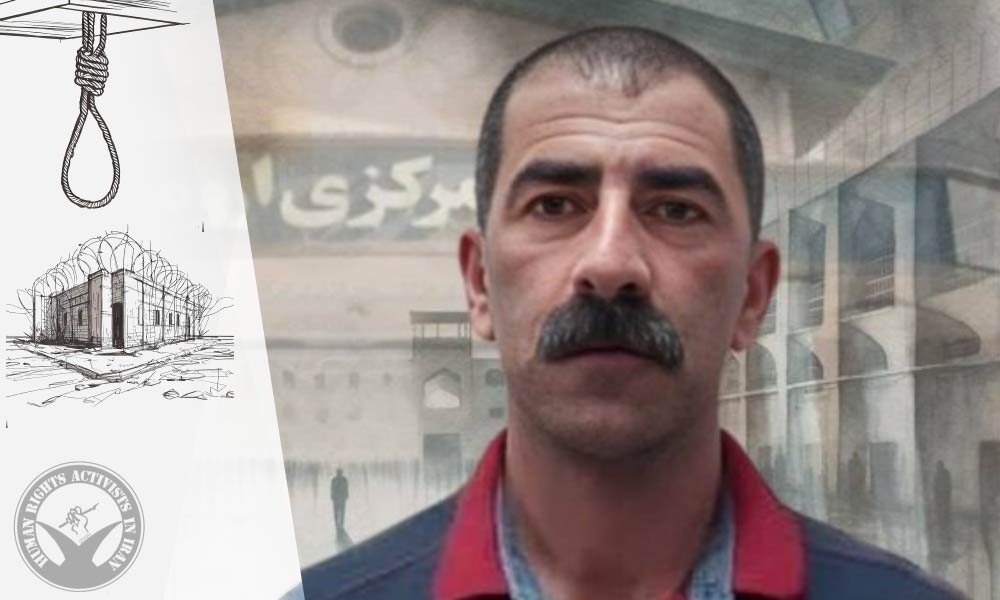
Political Prisoner Nayeb Askari Faces Execution in Urmia Prison on Baghi Charges

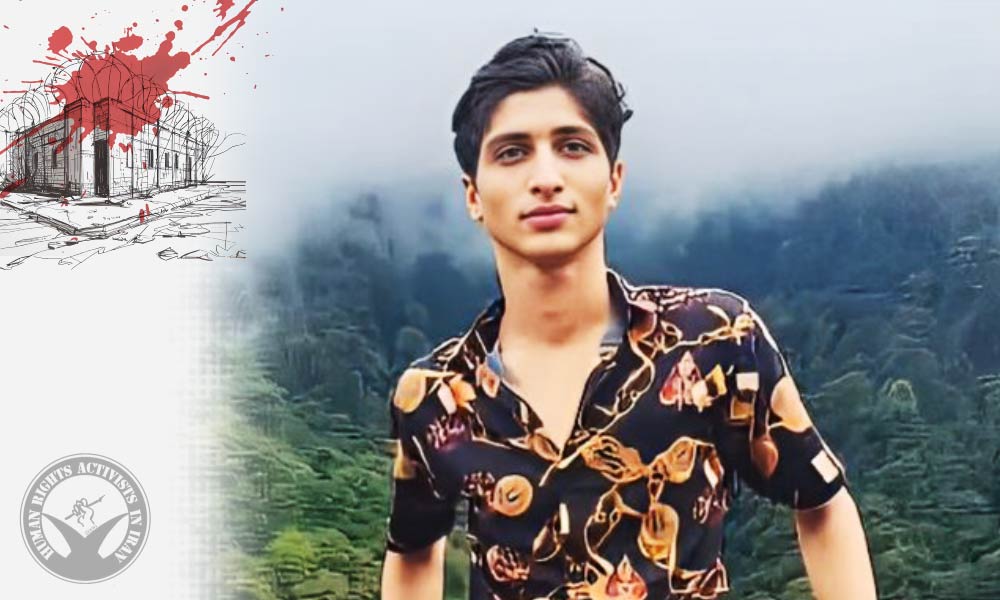
Nayeb (Naeb) Askari, held in Urmia Prison, is at risk of execution after the Urmia Revolutionary Court sentenced him to death for Baghi (armed rebellion) in a recent retrial.

Initially sentenced to death for “enmity against God (Moharebeh)” on April 15, 2023, his plea for a retrial was accepted, leading to a charge change to Baghi. In October 2023, the court reaffirmed the death sentence, with the hearings reportedly conducted without his lawyer’s presence. The charge is supported by his alleged membership in a Kurdish political opposition party.

Arrested by IRGC intelligence agents on March 27, 2021, in Urmia, Askari was later moved to a detention facility and, on June 17, 2021, to Urmia Prison.

HRANA’s source reveals another ongoing case accusing Askari of the murder of IRGC member Mostafa Soltani. In 2013-2014, Soltani was injured during a clash with a political opposition party member, passing away six years later from COVID-19. Soltani’s family claims alleged Askari’s involvement in the altercation caused the sustained injury leading to his eventual death.

A new case, opened on July 12, 2021, based on a complaint from the Urmia Prison head, resulted in a three-month imprisonment extension and 50 lashes for “disrupting prison order.”

According to HRA’s annual report, in 2023, Urmia Prison officials executed 29 inmates, positioning this facility as the sixth highest in terms of executions among the ranked prisons.
Execution of Inmate in Urmia Prison

Update: HRANA has received reports indicating the execution of another inmate, Hossein Habibi, convicted of murder, on January 31 in Urmia Prison.


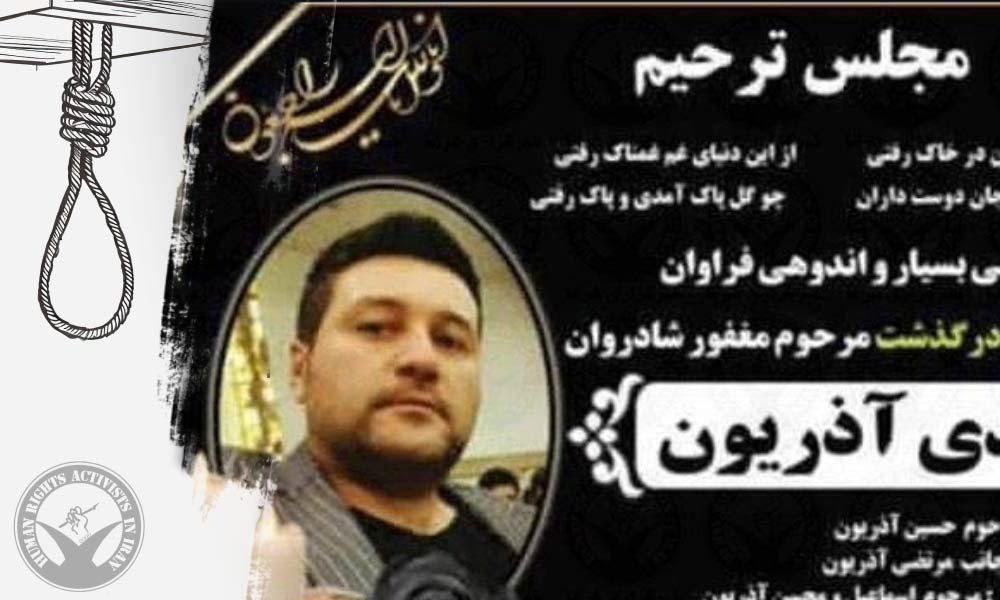
On January 31, 2024, Urmia Prison carried out the execution of Mehdi Azarioon, a resident of Urmia, convicted of murder.

HRANA has identified the executed individual as Mehdi Azarioon, who had been transferred to solitary confinement in anticipation of his imminent execution the day before.

As of now, there is no official confirmation from government sources or domestic media outlets in the country regarding these executions. The absence of official information raises apprehensions about transparency and accountability in the execution process.

According to HRA’s annual report, in 2023, Urmia Prison officials executed 29 inmates, positioning this facility as the sixth highest in terms of executions among the ranked prisons.
In 2023, the Department of Statistics and Publication of Human Rights Activists in Iran registered the execution of  746 individuals. Out of these, 6 were carried out in public. Among the executed individuals whose genders were identified, 597 were male and 20 were female. Additionally, 2 juvenile offenders, defined as individuals under the age of 18 at the time of their alleged crimes, were also executed. For a comprehensive examination of the details and statistics surrounding the executions in Iran, refer to HRANA’s annual report.

Iranian-Swedish Dual National Ahmad Reza Jalali Facing Execution

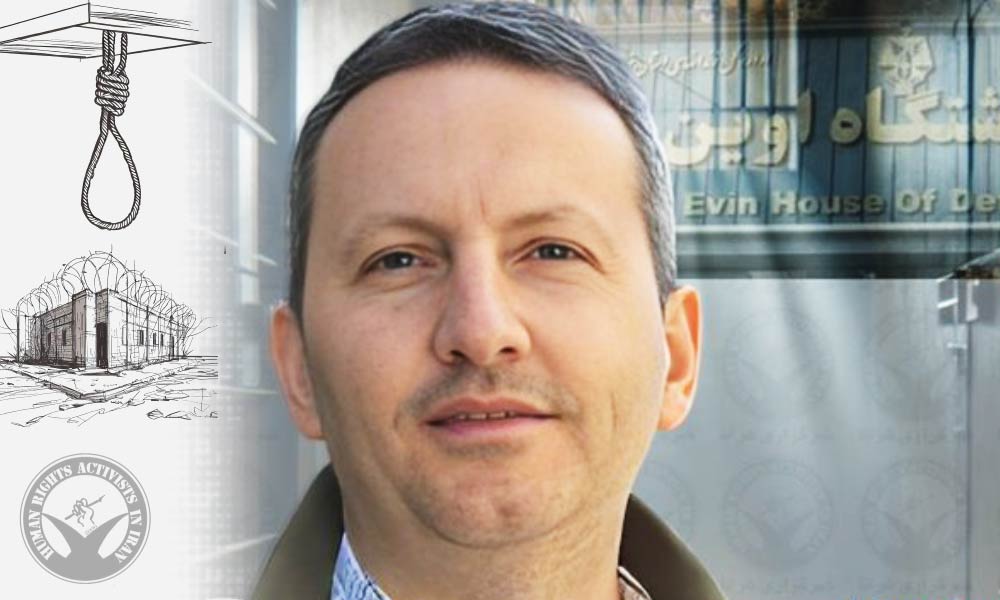
Ahmad Reza Jalali, currently held in Evin Prison, is confronting the threat of execution.

Arrested by security forces in May 2016, he was subsequently sentenced to death on charges of “spying.” The Supreme Court affirmed the verdict in the following year, and last year, the then-judiciary’s spokesperson, Zabihollah Khodaian, announced the finalization of this sentence.

While addressing the potential prison swap between Jalali and Hamid Nouri during a press conference, Khodaian asserted that “these two issues are not related, and there is no ongoing discussion about such a swap.” However, Amnesty International stated in a release that Iran’s authorities are using the threat of Jalali’s execution as leverage for the proposed prison swap.

Professor Jalali, invited to Iran by the University of Tehran in May 2016, was arrested on charges of “enmity against God (Moharebeh) through espionage for Israel.” Moharebeh, interpreted as “waging war against God,” is a component of Sharia Law typically applied to those suspected of involvement in acts against the state. The Tehran Prosecutor accused him of “transferring information about confidential projects in research, military, defense, and nuclear fields in exchange for citizenship for him and his family from Sweden.”

18-Year-Old Sepehr Shirani’s Suspicious Death in Custody

On January 30, 2024, Sepehr Shirani, 18 years old, died under suspicious circumstances after three days in the custody of a security institution in Zahedan, as reported by Haal Vsh.

IRGC Intelligence is said to be responsible for his arrest, notifying Shirani’s family of his demise via a phone call. As of now, his body has not been handed over to his family.

The agents cited the publication of critical social media posts as the reason for Shirani’s arrest.

The Baloch Activists Campaign, a human rights monitor in Sistan and Baluchestan Province, has reported that Shirani died under torture while in custody.

Notably, recent years have seen numerous cases of suspicious deaths or murders of citizens within police detention centers, security, and judicial institutions. In most instances, investigations have failed to definitively identify perpetrators or hold authorities accountable.

The agents had reportedly mentioned publishing criticizing posts on social media as the reason for Shirani’s arrest.

According to HRA’s annual report for 2023, a total of 1,386 violations of prisoners’ rights were documented. These include 27 cases of physical assault on prisoners, 1,390 instances of denial or neglect of medical care, 342 illegal transfers to solitary confinement, 114 attempted hunger strikes, 415 cases of forced transfer or exile of prisoners, 4,140 instances of threats and pressure on prisoners, 66 cases of denying prisoner visitation rights, 34 cases of psychological and physical torture, 7 deaths due to illness, 12 suicides, 1 case of self-immolation, 4 murders of prisoners, 208 instances of lack of access to legal counsel, 4,197 reports of prisoners being kept in unsuitable conditions, 80 cases of forced confession, 290 instances of non-segregation of crimes, 78 denials of medical leave, and 101 denials of the right to contact.

Five Individuals Detained by Security Forces in Salas-e Babajani

On January 31, 2024, Osameh Ayazi, Mazyar Ahmadi, Shahin Rahmani, Aryan Khal-Khal, and Barzan Yousefi were apprehended by security forces in Salas-e Babajani county, Kermanshah province. They were subsequently transported to the Ministry of Intelligence facility in the county.

A source close to one of the families confirmed this development to HRANA, disclosing that these individuals, aged between 18 to 20, were taken into custody by Ministry of Intelligence agents and are currently held in a detention facility.

As of now, the specific reasons for their arrest and the charges against them remain undisclosed.

Subscribe to Our Newsletter

Now is definitely not the time to stop reading!

Baha’i Citizen Hourieh Sadat Mohseni Receives Four-Year Prison Sentence

The Court of Appeals in Razavi Khorasan Province has recently sentenced Hourieh Sadat Mohseni, a Baha’i resident of Mashhad, to four years in prison.

A reliable source has confirmed this development to HRANA, revealing that Mohseni received three years for “membership in groups and communities to act against national security” and an additional year for “spreading propaganda against the regime.”

According to Article 134 of the Islamic Penal Code, Mohseni is set to serve three years in prison for the first charge.

The initial verdict was issued by the Revolutionary Court of Mashhad, led by Hadi Mansouri, in December 2023. The source reports that Mohseni’s private lawyer was not accepted by the Revolutionary Court, and the verdict was swiftly issued upon taking over the case. Earlier, her lawyer, Mohammad-Hadi Erfainian Kaseb, had conveyed the court’s rejection of his legal representation.

Mohseni was indicted on November 11, 2023, and was subsequently released on bail. This is not the first instance of arrest and conviction she has faced.

Baha’is are subjected to violations of their religious rights, comprising 82% of reports on infringements against religious minorities, according to HRA’s 2023 annual report.

The Baha’i faith is not recognized as a legitimate religion by Iranian authorities, leading to systematic and longstanding violations of the rights of Baha’is in the country. This includes the denial of their fundamental right to practice their religion, which constitutes a clear breach of both Article 18 of the Universal Declaration of Human Rights and Article 18 of the International Covenant on Civil and Political Rights. The United Nations covenant holds that every person has the right to freedom of religion, freedom of converting religion, as well as freedom of expression, individually or collectively; openly or secretly.

University Student Hamoon Soleimani Taken into Custody

On January 30, 2024, Hamoon Soleimani, a Master’s student at the University of Science and Technology, was apprehended during his appearance at Evin Courthouse.

Homayoun Soleimani, confirming his brother’s detention, revealed, “Hamoon was summoned to Evin Courthouse and subsequently held in custody. Approximately one hour after his apprehension, he managed to make a phone call, notifying our family of his relocation to Ward 1 of Evin Prison.”

As of now, the specific grounds for Soleimani’s arrest and the charges against him remain undisclosed.

Political Prisoner Majid Tavakoli Faces Upheld Six-Year Sentence Following Retrial

Branch 54 of the Court of Appeal in Tehran has affirmed a six-year sentence for political prisoner Majid Tavakoli.

A source close to his family confirmed to HRANA that Tavakoli was sentenced to six years in prison, along with internet and social media usage restrictions for two years, a two-year ban from residing in Tehran, and a travel ban for two years.

Tavakoli received notification of this verdict on January 29.

Previously, the Supreme Court accepted Tavakoli’s request for a retrial, transferring the case to another court branch. Notably, Tavakoli, a student activist and former political detainee, was arrested by security forces in Tehran on September 23, 2022, during the Mahsa Amini Protests. He was released on bail on December 19, 2022.

Subsequently, Branch 28 of the Tehran Revolutionary Court imposed a six-year sentence, which was upheld on appeal. On October 7, 2023, Tavakoli commenced serving his sentence in Evin Prison.

Tavakoli’s history of arrests and convictions is rooted in his activism.

Execution of Female Inmate in Sabzevar Prison

In Sabzevar Prison, Razavi Khorasan province, an inmate convicted of murder was executed on January 31, 2024. The hanged individual has been identified as 27-year-old Zahra Nazarian.

A reliable source confirmed Nazarian’s execution, revealing that she had been found guilty of killing her sister’s husband four years ago.

No official sources or domestic media outlets within the country have provided coverage of this execution at the time of writing. The lack of official information raises concerns about transparency and accountability in the execution process.

In 2023, the Department of Statistics and Publication of Human Rights Activists in Iran registered the execution of  746 individuals. Out of these, 6 were carried out in public. Among the executed individuals whose genders were identified, 597 were male and 20 were female. Additionally, 2 juvenile offenders, defined as individuals under the age of 18 at the time of their alleged crimes, were also executed. For a comprehensive examination of the details and statistics surrounding the executions in Iran, refer to HRANA’s annual report.

Woman Sentenced to 11 Months in Prison After Confrontation with Religious Vigilante Over Dog Walk

The Tehran Revolutionary Court has handed down an eleven-month prison term to Negin Chaparian for an altercation with a religious vigilante who harassed her while walking her dog.

According to the recent verdict from Branch 29 of the Tehran Revolutionary Court, Chaparian has been convicted of “spreading propaganda against the regime, provoking impurity and indecency, and outraging public decency.”

In August 2023, 34-year-old Chaparian, a Tehran resident, engaged in a dispute with a religious vigilante in a park who objected to her walking a dog, deeming it inappropriate by Islamic standards. Subsequently, she was arrested after sharing photos of the incident on social media. Chaparian spent three days in detention and was later released on bail.

This incident highlights a concerning violation of citizens’ privacy rights and freedom, as the Iranian regime encourages individuals to enforce the Islamic code in public as a religious duty.