Two Prisoners Executed in Tabriz Prison

HRANA News Agency – At dawn yesterday, two prisoners who had previously been sentenced to death in a joint case involving drug-related charges and the killing of an officer during their arrest were executed in Tabriz Prison.

The identities of the two prisoners executed on Monday, July 7, have been confirmed by HRANA as Amin Khosravi and Saeed Asadzadeh.

According to information received by HRANA, the two were arrested in 2021 in a joint case on charges related to drug offenses and the killing of an officer. They were initially arrested for drug-related crimes and allegedly killed a law enforcement officer during the arrest.

As of the time of this report, the execution of these individuals has not been officially announced by prison authorities or relevant institutions.

In 2024, according to 812 reports compiled by HRANA, the Iranian regime executed 930 individuals in its prisons—marking the highest number of executions in the past 12 years. Despite the scale of these executions, prison officials and other relevant authorities publicly acknowledged only 6% of them, highlighting the regime’s lack of transparency and accountability.

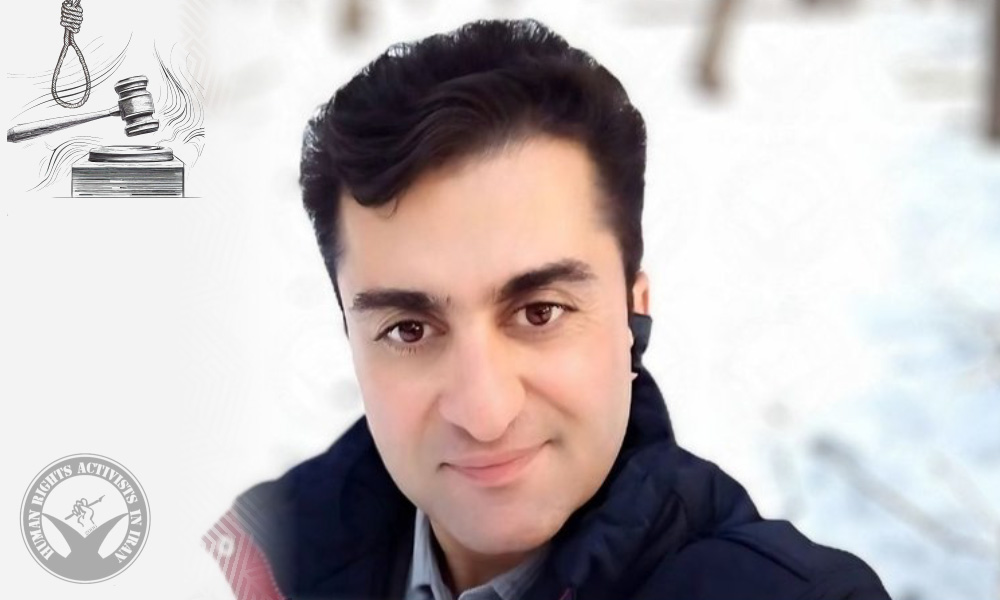
Five Protesters from the 2022 Nationwide Protests Sentenced to Death

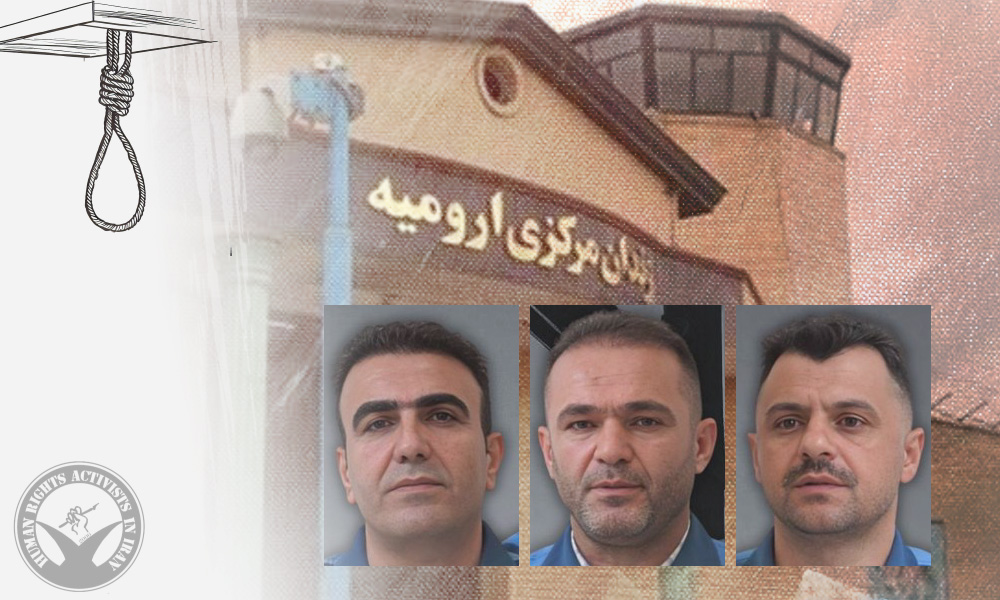
HRANA– Rezgar Beigzadeh Babamiri, Pejman Soltani, Ali (Soran) Ghasemi, Kaveh Salehi, and Teyfour Salimi Babamiri — all detained during the 2022 nationwide protests — have been sentenced to death by the Revolutionary Court of Urmia.

According to HRANA, the news agency of the Human Rights Activists in Iran, these individuals were jointly tried and sentenced to death in the same case. The charges against them include baghi (armed rebellion), moharebeh (enmity against God), and leading and forming a rebellious criminal group. Four of them were sentenced to death more than once. The verdicts were officially communicated to their lawyers today, Monday, July 7.

Ali (Soran) Ghasemi, Pejman Soltani, and Kaveh Salehi have each been sentenced to death three times on charges of baghi, moharebeh, and leading and forming a rebellious criminal group. Rezgar Beigzadeh Babamiri received two death sentences on charges of baghi and leadership in a rebellious group. Teyfour Salimi Babamiri has also been sentenced to death for allegedly leading and forming such a group.

Additionally, eight other defendants in the same case have received prison sentences and monetary fines.

Currently, Pejman Soltani, Rezgar Beigzadeh Babamiri, and Ali (Soran) Ghasemi are being held in Ward 2 of Urmia Prison. Previously, they were sentenced to death, 15 years, and 10 years in prison, respectively, for allegedly killing a security officer.

Pejman Soltani, Rezgar Beigzadeh Babamiri, Ali (Soran) Ghasemi, and Kaveh Salehi were arrested in April 2023. Teyfour Salimi Babamiri was arrested by security forces in March 2023 and released after approximately 18 months in detention.

Rezgar Beigzadeh Babamiri Sentenced to Death

HRANA – Rezgar Beigzadeh Babamiri, a detainee from the 2022 nationwide protests currently held in Urmia Prison, has been sentenced to death by Branch 1 of the Urmia Revolutionary Court.

His attorney, Othman Mozayan, told HRANA: “The verdict was issued by Branch 1 of the Urmia Revolutionary Court. Yesterday, a notice was sent to the legal team for the formal delivery and transcription of the ruling. It is still unclear which specific security-related charge the death sentence is based on.”

Beigzadeh Babamiri’s indictment had previously listed multiple charges, including moharebeh (enmity against God), baghi (armed rebellion), assembly and collusion against national security, financing terrorism, propaganda against the regime, espionage, and collaboration with hostile governments. Other allegations included possession of a Starlink device, unlawful possession of weapons, membership in banned groups, and orchestrating an assassination. His case had been referred to both the Revolutionary and Criminal Courts by Branch 10 of the Urmia Prosecutor’s Office.

Beigzadeh Babamiri, a farmer from Bukan, was arrested in April 2023 in connection with the 2022 protests. After four months in the custody of security agencies, he was transferred to Urmia Prison.

Prisoner Executed in Taybad Prison on Drug Charges

HRANA News Agency – At dawn on Monday, June 30, a prisoner previously sentenced to death for drug-related offenses was executed in Taybad Prison.

According to HRANA, the news agency of Human Rights Activists in Iran, the executed individual was an Afghan national. His identity is currently being verified by HRANA. Sources indicate that the prisoner had been arrested on drug-related charges and was later sentenced to death by the Revolutionary Court.

As of the time of this report, the execution has not been officially announced by prison authorities or relevant institutions.

In 2024, Iranian prisons witnessed the execution of 930 inmates. According to HRANA’s data, the number of executions carried out by the Iranian regime’s judiciary has risen steadily over the past five years. The percentage of executions related to drug charges has also increased year after year.

Prisoner Executed in Adelabad Prison, Shiraz on Drug-Related Charges

HRANA News Agency – On Monday, June 30, a prisoner previously sentenced to death for drug-related charges was executed in Adelabad Prison in Shiraz.

According to HRANA, the news agency of Human Rights Activists in Iran, the executed prisoner has been identified as Ahmadreza Didban. HRANA’s sources report that Didban had been arrested on charges related to drug offenses and later sentenced to death by the Revolutionary Court.

As of the time of this report, prison authorities and relevant institutions have not officially announced the execution.

In 2024, Iranian prisons witnessed the execution of 930 inmates. According to HRANA’s data, the number of executions carried out by the Iranian regime’s judiciary has risen steadily over the past five years. The percentage of executions related to drug charges has also increased year after year.

Subscribe to Our Newsletter

Now is definitely not the time to stop reading!

Three Prisoners Executed in Isfahan Prison

HRANA News Agency – At dawn on Wednesday, June 25, the death sentences of three prisoners previously convicted of murder in separate cases were carried out in Isfahan Prison.

According to HRANA, the news agency of Human Rights Activists in Iran, the identities of two of the executed individuals—Masoud Jafari and Mahan Mahini—have been confirmed. The identity of the third prisoner, an Afghan national, remains unknown.

These individuals had been arrested and sentenced to death by criminal courts in separate murder cases.

As of the time of this report, prison authorities and relevant institutions have not officially announced the executions.

In 2024, according to 812 reports compiled by HRANA, the Iranian regime executed 930 individuals in its prisons—marking the highest number of executions in the past 12 years. Despite the scale of these executions, prison officials and other relevant authorities publicly acknowledged only 6% of them, highlighting the regime’s lack of transparency and accountability.

Execution of Six Prisoners, Including One Woman, in Iranian Prisons

HRANA News Agency – The death sentences of six prisoners, including one woman, were recently carried out in the prisons of Tabriz, Qom, and Neyshabur. These individuals had been previously convicted on charges related to drug offenses, murder, and armed robbery.

According to Iran Human Rights, at dawn on Saturday, June 28, authorities executed a prisoner in Neyshabur Prison. The individual was identified as Babak Mostafavi, 27, a resident of Neyshabur. He had been sentenced to death by the judiciary on drug-related charges. Prior to his arrest, he worked as a forklift driver.

Additionally, on Tuesday, June 24, two prisoners, including a woman, were executed in Qom Prison. They were identified as Hassan Rostamnejad and Tal’at Sabzi, 47. Rostamnejad had been arrested four years ago on murder charges and later sentenced to death. Sabzi had been arrested five years ago for allegedly killing her husband and was also sentenced to death.

Earlier, at dawn on Sunday, June 18, authorities executed three prisoners in Tabriz Prison. The executed individuals were identified as Hadi Ahmadian, 37, Abbas Partovi, and Mohammad Shokri, 42, all from Tabriz.

According to the report, Shokri and Ahmadian were arrested three years ago in a joint case involving the possession of 80 kilograms of narcotics and were later sentenced to death. Partovi had been arrested around the same time on charges of armed robbery and was also handed a death sentence.

As of the time of this report, prison authorities and official institutions have not publicly announced these executions.

In 2024, according to 812 reports compiled by HRANA, the Iranian regime executed 930 individuals in its prisons—marking the highest number of executions in the past 12 years. Despite the scale of these executions, prison officials and other relevant authorities publicly acknowledged only 6% of them, highlighting the regime’s lack of transparency and accountability.

Two Prisoners Executed in Arak and Qom Prisons

HRANA News Agency – In recent days, the death sentences of two prisoners previously convicted of murder were carried out in Arak and Qom prisons.

On the morning of Tuesday, June 24, Azim Mohammadi was executed in Qom Prison. One day earlier, on Monday, June 23, Habib Soleimani was executed in Arak Prison.
Soleimani had been arrested on murder charges and later sentenced to death by a criminal court. Azim Mohammadi had also been arrested four years ago on charges of murdering his wife, who was also his cousin. He was subsequently sentenced to death by a criminal court.

As of the time of this report, prison and judicial authorities have not officially announced these executions.

In 2024, according to 812 reports compiled by HRANA, the Iranian regime executed 930 individuals in its prisons—marking the highest number of executions in the past 12 years. Despite the scale of these executions, prison officials and other relevant authorities publicly acknowledged only 6% of them, highlighting the regime’s lack of transparency and accountability.

Three Prisoners Executed in Urmia Prison for Alleged Collaboration with Israel

HRANA News Agency – Today, June 25, Mizan, the Judiciary’s Media Center, announced the execution of Edris (Idris) Ali, Azad Shojaei, and Rasoul Ahmad, three prisoners convicted of enmity against God (moharebeh) and spreading corruption on earth (efsad fel-arz) through alleged collaboration with Israel, at Urmia Prison.

According to the Judiciary’s statement, Ali, Shojaei, and Ahmad (also referred to as Ahmad Mohammad) were accused of “smuggling equipment into the country intended for assassinations,” and were prosecuted on charges of moharebeh and efsad fel-arz for cooperating with “hostile foreign governments on behalf of the Zionist regime.” The executions were carried out following the completion of legal proceedings and the Supreme Court’s confirmation of their death sentences.

Back in November 2024, Judiciary spokesperson Asghar Jahangir announced that the three had been sentenced to death. At the time, Jahangir alleged that the defendants had “smuggled assassination equipment used in the killing of Mohsen Fakhrizadeh (Iran’s nuclear scientist), under the cover of alcohol smuggling,” and also accused them of espionage.

Edris Ali, Azad Shojaei, and Rasoul Ahmad were arrested by security forces in early 2024 and transferred to Urmia Prison.

Mohammad Amin Mahdavi Shayesteh Executed

HRANA News Agency – Today, Monday, June 23, Mizan, the Judiciary Media Center, announced the execution of Mohammad Amin Mahdavi Shayesteh, a prisoner convicted of espionage for Israel. In June of this year, his death sentence, issued while he was held in Ghezel Hesar Prison in Karaj, had been upheld by Branch 39 of the Supreme Court.

The Judiciary Media Center stated that Mohammad Amin Mahdavi Shayesteh was hanged this morning on charges of “espionage and intelligence cooperation in favor of the Israeli regime.”

The report claimed that Mahdavi Shayesteh was “the head of a cyber team affiliated with Mossad” and knowingly collaborated with Israel’s intelligence service.

Mizan further alleged that his responsibilities included “transmitting orders from Mossad officers,” “conducting virtual operations,” and even “directing field operations.”

The report did not provide further details, including the exact location where the execution was carried out.

In June of this year, Mohammad Amin Mahdavi Shayesteh’s death sentence, issued by Branch 15 of Tehran’s Revolutionary Court presided over by Judge Abolghasem Salavati, was confirmed by the Supreme Court. Mahdavi Shayesteh, a political prisoner approximately 27 years old, had been arrested in the fall of 2023 and was charged primarily with “collaborating with a hostile government.”

Previously, a source close to Mahdavi Shayesteh’s family told HRANA: “The accusations against Mohammad Amin were presented without sufficient evidence, and he was forced, under severe pressure, to make confessions whose validity is highly questionable. Furthermore, his arrest and trial process were marred by clear injustices, and he was denied access to legal counsel of his choice.”