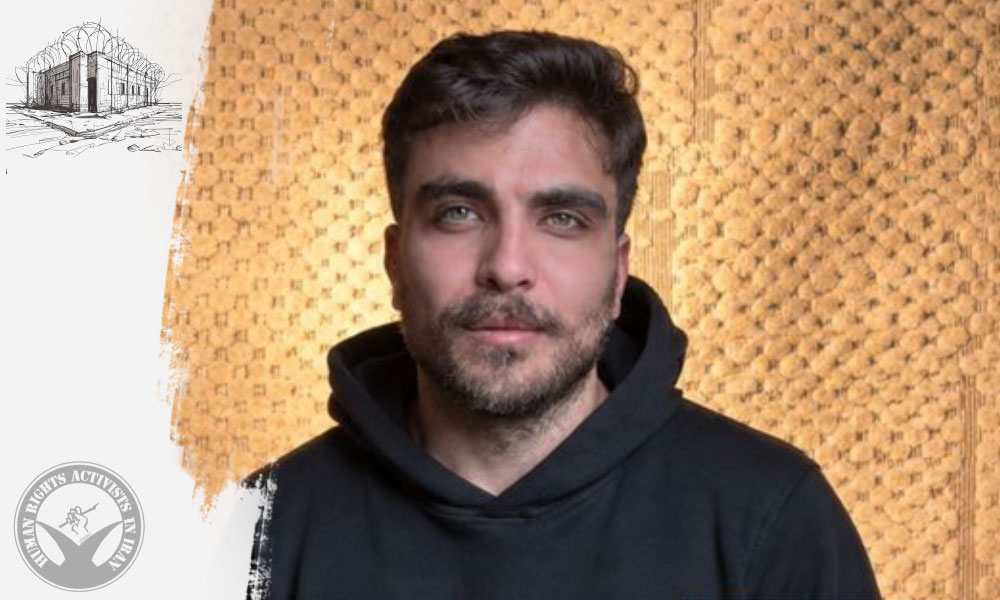
Ghezel Hesar Prisoners’ Hunger Strike Enters Tenth Day

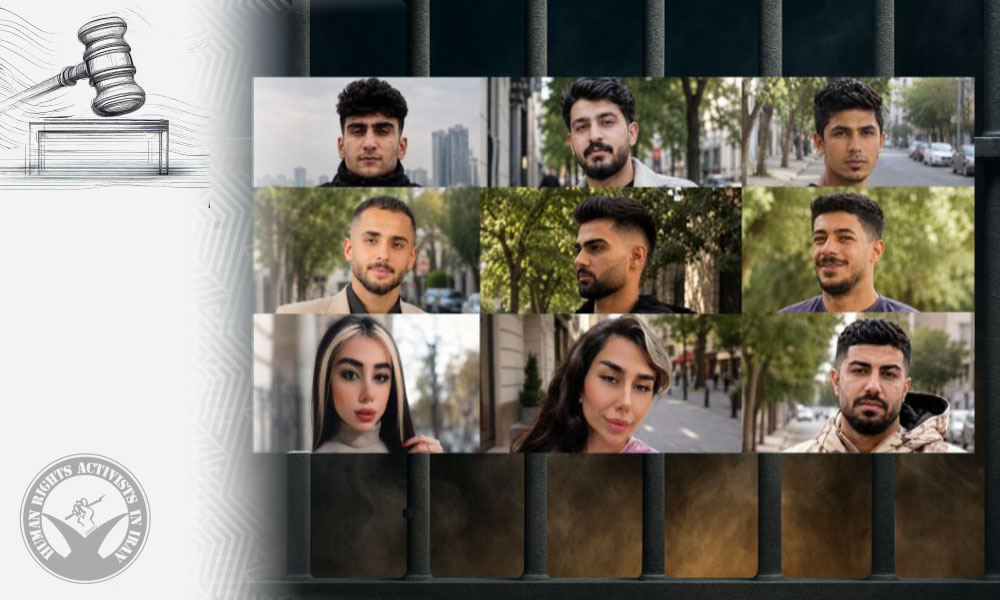
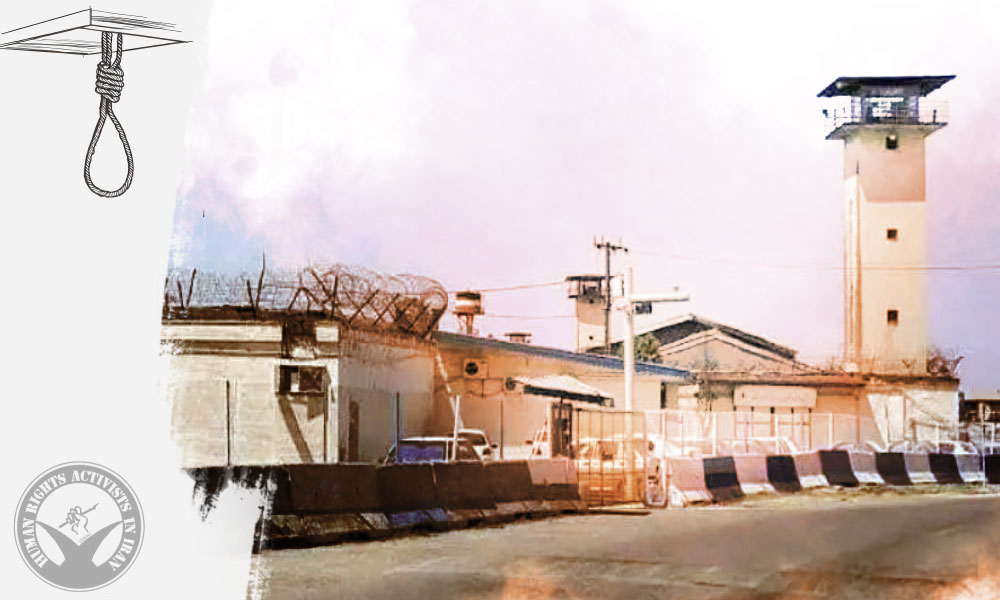
HRANA  – Yesterday, July 22, 2026, prisoners held in Ward 2 of Ghezel Hesar Prison in Karaj entered the tenth consecutive day of their protest against executions. The prisoners have continued both their sit-in and their refusal to accept prison food in response to the transfer of six inmates to solitary confinement for the implementation of their death sentences.

According to HRANA, the hunger strike by prisoners in Ward 2 of Ghezel Hesar Prison, which began on Monday, July 13, 2026, after six prisoners sentenced to death were transferred to solitary confinement, continued today.

Based on information received by HRANA, the prisoners gathered in the ward hall on Wednesday and once again refused to receive prison meals, marking the tenth day of their hunger strike. The protesting prisoners stated their opposition to the implementation of death sentences, particularly in cases involving drug-related offenses.

In recent days, videos recorded inside Ghezel Hesar Prison have also emerged, showing scenes from the prisoners’ hunger strike and sit-in.

The protests began on Monday, July 13, following the transfer of six prisoners sentenced to death in drug-related cases to solitary confinement. The move prompted a collective response from prisoners in Ward 2, who have continued their hunger strike and sit-in ever since.

It is worth noting that HRANA also reported last year on similar hunger strikes by a number of prisoners at Ghezel Hesar Prison protesting the implementation of death sentences.

A video showing yesterday’s sit-in and hunger strike by the prisoners of Ghezel Hesar Prison is provided below.

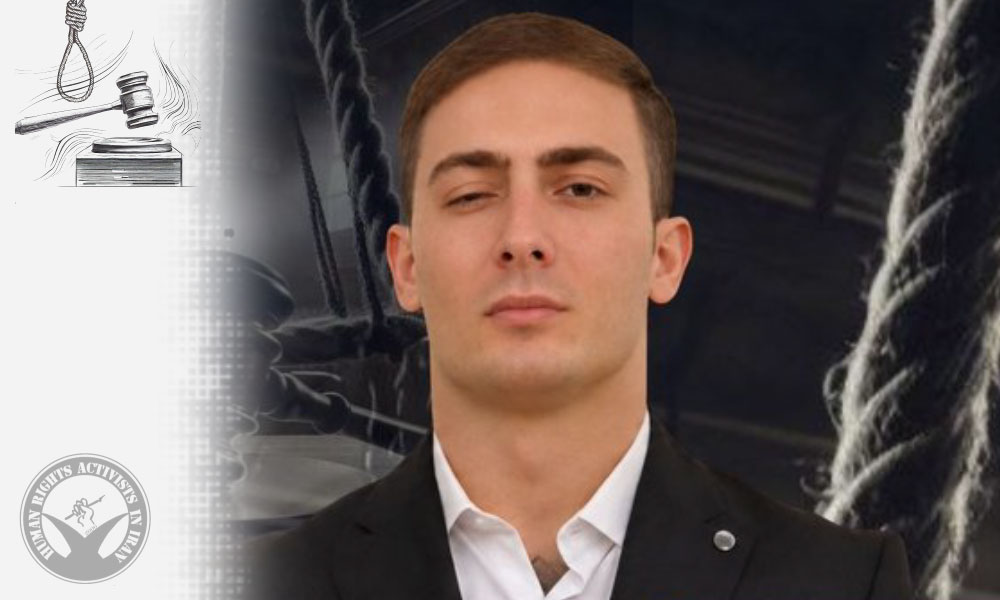
Political Prisoner Amirhassan Akbari Monfared Sentenced to Death

HRANA – Amirhassan Akbari Monfared, a political prisoner held in Evin Prison, has been sentenced to death by Judge Abolghasem Salavati on the charge of baghi (armed rebellion).

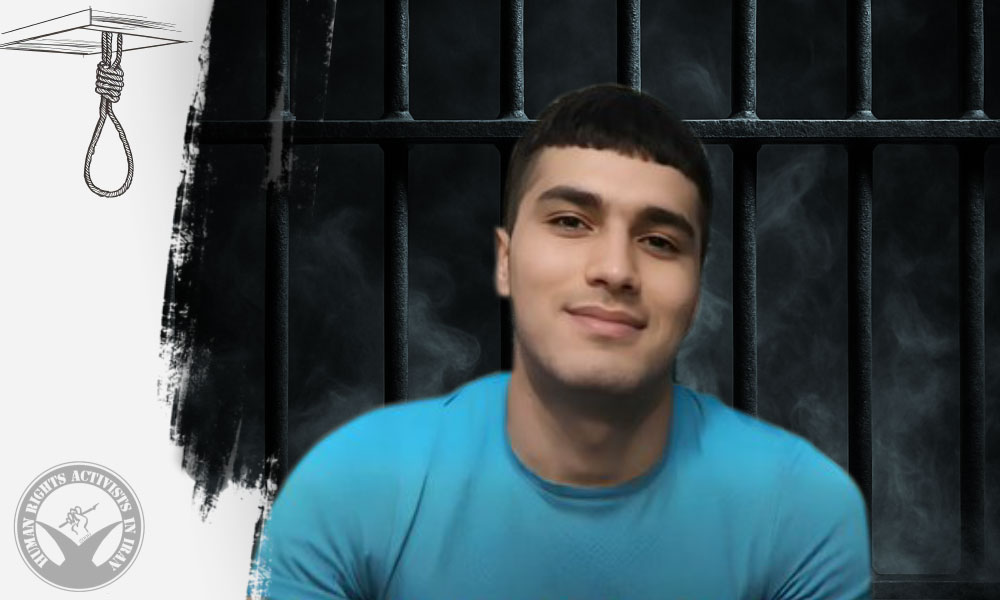
According to HRANA, 27-year-old Amirhassan Akbari Monfared has been sentenced to death.

According to a verdict issued by Branch 15 of the Tehran Revolutionary Court, presided over by Judge Abolghasem Salavati, and served on Mr. Akbari Monfared two days ago, he was sentenced to death on the charge of baghi (armed rebellion) through alleged membership in the People’s Mojahedin Organization of Iran (MEK). He is currently imprisoned in Evin Prison and had previously stood trial before the same court.

Amirhossein Akbari Monfared was arrested alongside his father, Mohammad Akbari Monfared, and his brother and sister, Amir hossein and Zeinab Akbari Monfared, by Ministry of Intelligence agents in Karaj during the winter of 2025. The three other family members were later released on bail.

So far, no information has been made available regarding the details of the charges brought against the other members of the family. However, a source previously informed HRANA that they are facing security-related charges.

Mohammad Akbari Monfared, aged approximately 58, Amirhassan Akbari Monfared, 33, Zeinab Akbari Monfared, 30, and Amirhossein Akbari Monfared, 27, are residents of Karaj.

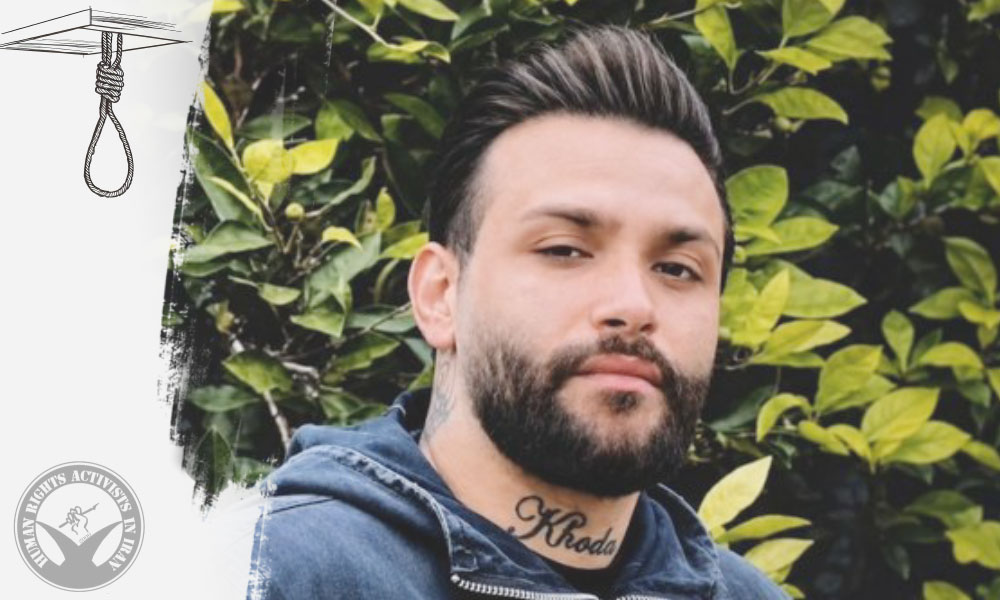
January 2026 Protests: Mahnam Navab Safavi Sentenced to Death

HRANA – Mehnam Navab Safavi, arrested during the nationwide protests of January 2026 who is currently imprisoned in Dastgerd Prison in Isfahan, was sentenced to death by Branch 5 of the Revolutionary Court of Isfahan on the charge of moharebeh (“enmity against God”).

According to HRANA, Mahnam Navab Safavi, one of the detainees from the nationwide protests of January 2026, has been sentenced to death.

Based on information obtained by HRANA, Branch 5 of the Revolutionary Court of Isfahan, presided over by Judge Hemati-Nejad, sentenced Mr. Navab Safavi to death on charges including moharebeh through alleged involvement in “the destruction of public property,” “propaganda against the regime,” “assembly and collusion against national security,” and “encouraging people to commit murder.”

A source informed and close to the family of this citizen confirmed the news in a conversation with HRANA, stating that one of the alleged acts cited against Mr. Navab Safavi was writing slogans.

Mahnam Navab Safavi, 22, is a Persian-language rapper and a resident of Isfahan. He was arrested on January 10, 2026, during the nationwide protests in the Sheikh Sadough area of Isfahan and was later transferred to Dastgerd Prison in this city.

It should be noted that protests and strikes by shopkeepers and bazaar merchants began in Tehran on Sunday, December 28, 2025, and within two days spread beyond markets and commercial centers. With the participation of students, citizens, and various social groups, these protests became one of the largest protest movements of recent years. Following the crackdown by security and law enforcement forces, thousands were killed or injured, and tens of thousands were arrested or summoned by security agencies. For more information, readers may refer to HRANA’s comprehensive report titled “Crimson Winter,” documenting the first fifty days following the outbreak of Iran’s nationwide protests.

January 2026 Protests: Mehdi Khanki Executed

HRANA – The Judiciary’s Media Center announced today that the death sentence of Mehdi Khanki, one of those arrested in connection with the Janauary 2026 nationwide protests, has been carried out. According to the state-run outlet, Khanki had previously been sentenced to death on charges of “carrying out operational activities on behalf of Israel, the United States, and hostile groups.”

Mizan, Iran’s Judiciary’s Media Center, announced today that Mehdi Khanki, one of those arrested in connection with the January 2026 protests, has been executed. According to Mizan, a branch of the Karaj Revolutionary Court had sentenced him to death and the confiscation of all his property under the Law on Intensifying Punishments for Espionage and Cooperation with the Zionist Regime and Hostile States Against National Security and Interests.
The charges against him included “carrying out operational activities on behalf of Israel, the United States, and hostile groups” and “manufacturing, obtaining, and possessing firearms and military ammunition, and using them.” The Judiciary stated that his sentence was carried out after being upheld by the Supreme Court.

According to the Judiciary’s claims, Mehdi Khanki was arrested at his residence in Karaj on February 10, 2026, by officers of the Alborz Province Police Intelligence Organization. Authorities alleged that firearms, ammunition, and explosive materials were discovered during a search of his home. The Judiciary further claimed that, during the judicial proceedings, he admitted to membership in a group opposed to the Islamic Republic, possession of firearms and military ammunition, manufacturing explosives, and distributing weapons during the protests.

The report did not provide further details, including the date or location of Khanki’s execution.

According to HRA’s Annual Report, in 2025 at least 2,063 citizens, including 61 women and 2 juvenile offenders, were executed. Of these, the sentences of 11 individuals were carried out in public. During the same period, 172 other individuals were sentenced to death.

January 2026 Protests: Supreme Court Overturns Death Sentence of Ali Fattah

HRANA – The death sentence issued against Ali Fattah (Kamali), arrested during the January 2026 protests, has been overturned by the Supreme Court. He had previously been sentenced to death by Judge Iman Afshari.

According to HRANA, the Supreme Court has overturned the death sentence imposed on Ali Fattah (Kamali), one of the detainees arrested during the January 2026 protests.

Based on information received by HRANA, the Supreme Court overturned the political prisoner’s death sentence some time ago.

A source familiar with the case told HRANA: “Following the onset of serious mental health issues, Ali Fattah (Kamali) is currently hospitalized at Razi Psychiatric Teaching and Treatment Hospital (Aminabad). He had previously been transferred to the same facility once before to receive medical treatment.”

Ali Fattah (Kamali) was arrested in Tehran on January 12, 2026, during the nationwide protests. Holding a Malaysian student residence permit, he had returned to Iran only a few days before his arrest.

Following his arrest, he was held at Greater Tehran Penitentiary before being transferred to Ghezel Hesar Prison in Karaj in late June.

In May of this year, Branch 26 of the Tehran Revolutionary Court, presided over by Judge Iman Afshari, sentenced him to death on the charge of “enmity against God” (moharebeh).

It should be noted that protests and strikes by shopkeepers and bazaar merchants began in Tehran on Sunday, December 28, 2025, and within two days spread beyond markets and commercial centers. With the participation of students, citizens, and various social groups, these protests became one of the largest protest movements of recent years. Following the crackdown by security and law enforcement forces, thousands were killed or injured, and tens of thousands were arrested or summoned by security agencies. For more information, readers may refer to HRANA’s comprehensive report titled “Crimson Winter,” documenting the first fifty days following the outbreak of Iran’s nationwide protests.

Subscribe to Our Newsletter

Now is definitely not the time to stop reading!

Six Prisoners Executed in Prisons in Tabriz and Shushtar Prisons

HRANA – The death sentences of six prisoners previously convicted on drug-related and murder charges have been carried out in Tabriz and Shushtar prisons.

According to the Iran Human Rights Organization, a prisoner was executed at Shushtar Prison in the early hours of Wednesday, July 15. He has been identified as Amin Khodari Mirghaed, 28.

According to the report, Mr. Mirghaed had been arrested approximately four and a half years ago on murder charges and was subsequently sentenced to death by the judiciary.

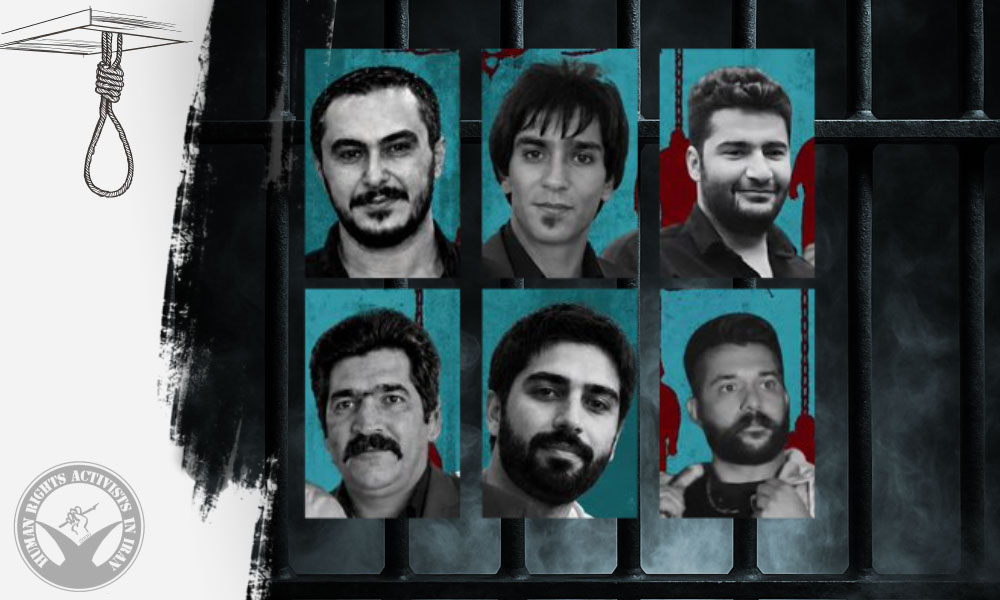
The death sentences of five other prisoners were also carried out at Tabriz Prison. The prisoners have been identified as:

• Javad Abolfathi, 36, from Tabriz;
• Ezzat Khosrownejad, approximately 30, from Hashtrud;
• Sohrab Nourmohammadi, 40, from Jolfa;
• Sajjad Alizadeh, 31, from Varzaqan; and
• Fardin Barnal, 31, from Tabriz.

According to the report, Nourmohammadi, Alizadeh, and Bernal were executed in the early hours of Tuesday, July 14, at Tabriz Prison. They had been arrested in separate cases on drug-related charges and later sentenced to death by Revolutionary Courts.

Additionally, Javad Abolfathi and Ezzat Khosrownejad were executed at Tabriz Prison in the early hours of Monday, July 13. Abolfathi had been arrested nine years ago and Khosrownejad two years ago, in separate murder cases, and were subsequently sentenced to death by judicial authorities.

It should be noted that three other prisoners, Abdolreza Heydari, Mehdi Latifi, and Salman Kakehkhani, who had also previously been sentenced to death in separate cases involving drug-related and murder charges, were executed during the same two-day period. Including the five prisoners named above, the total number of executions carried out at Tabriz Prison over those two days has risen to eight.

At the time of publication, prison officials and the relevant authorities had not officially announced these executions.

According to HRA’s Annual Report, in 2025 at least 2,063 citizens, including 61 women and 2 juvenile offenders, were executed. Of these, the sentences of 11 individuals were carried out in public. During the same period, 172 other individuals were sentenced to death.

Concerns Mount Over Possible Executions as Alireza and Abolfazl Sepahi Remain in Solitary Confinement

HRANA – Alireza Sepahi and Abolfazl Sepahi, two death row prisoners in the case known as the “Alikhani Square case” in Isfahan, have been held in solitary confinement at Dastgerd Prison since the early hours of Saturday. Their transfer to solitary confinement, a family visit that relatives believe was a “final visit,” and the execution of two other defendants in the same case at dawn today have intensified concerns that their death sentences may be carried out imminently. Information received by HRANA also indicates that the defendants and their lawyer were denied effective access to the case file, that the court failed to consider exculpatory evidence, and that allegations of coercion and torture during the investigation were never examined.

According to HRANA, Alireza Sepahi, aged approximately 25, and Abolfazl Sepahi, aged approximately 23, were taken from the general ward of Dastgerd Prison in Isfahan at 5:00 a.m. on Saturday, July 18, 2026, and transferred to solitary confinement.

The two prisoners are first cousins. One is married to the other’s sister, making them both cousins and brothers-in-law. They were arrested on January 10, 2026, in connection with the nationwide January protests.

According to information received by HRANA, the death sentences against Alireza and Abolfazl Sepahi were recently upheld by Iran’s highest judicial authority. However, their families remain unaware of the full details of the charges, the evidence in the case, and the judicial proceedings, while their lawyer has also been denied full access to the case file.

A source close to the families told HRANA:

“The lawyer said that after the death sentence was issued, an appeal was filed, and the verdict was later upheld by the Supreme Court. But even the lawyer was never given full access to the case file or a meaningful opportunity to pursue the case. Everywhere we go, no one provides any answers.”

According to the source, the lawyer was not permitted to photograph or obtain a copy of the verdict and was only allowed to take handwritten notes from portions of the ruling. As a result, the families remain unaware of the precise charges, the evidence relied upon by the court, and the details of the judgments issued against all defendants in the case.

The trial hearings for Alireza and Abolfazl Sepahi were held inside the prison via videoconference. According to the family source, the court failed to consider exculpatory evidence submitted by the defendants and their families during the proceedings.

The source said that CCTV footage and other evidence show that Alireza and Abolfazl Sepahi were not present at Alikhani Square at the time of the incident cited in the case and were elsewhere. Nevertheless, the presiding judge, Morteza Barati, issued death sentences against them, ordering Alireza to be executed four times and Abolfazl three times,without conducting an effective examination of this evidence.

The source added:

“There is video footage showing that they were somewhere else at that date and time, but Judge Morteza Barati ignored it. During family visits, Alireza repeatedly said, ‘We didn’t do anything. We weren’t there.'”

According to information received by HRANA, several other defendants in the same case have stated that they were subjected to pressure and torture during interrogations to force them to confirm that Alireza and Abolfazl Sepahi had been present at Alikhani Square.

The family source said that several defendants currently held in Dowlatabad Prison claimed investigators presented them with a pre-written statement and instructed them to confirm Alireza Sepahi’s presence at the scene. According to the source, they stated that they had been pressured to falsely identify both Alireza and Abolfazl Sepahi as being at the location of the incident.

Although these allegations were raised during the judicial proceedings, information received by HRANA indicates that no independent or effective investigation was conducted into the allegations of torture, ill-treatment, or coerced statements. The court also failed to conduct any transparent review of the reliability of the disputed statements or the circumstances under which they were obtained.

Under fair trial standards, any allegation of torture or ill-treatment must be investigated promptly, independently, and impartially, and any statement obtained through torture or coercion must not be admitted as evidence against a defendant. The lack of effective access to legal counsel and the case file, the court’s failure to consider exculpatory evidence, and the absence of any investigation into torture allegations have raised serious concerns regarding the defendants’ fundamental rights, particularly given that the sentences imposed carry the death penalty.

Meanwhile, according to information received by HRANA, Somayeh, the mother of one of the prisoners, who is herself serving a five-year prison sentence in the women’s ward of Isfahan Prison, was transferred to the men’s prison to visit her son and son-in-law. The circumstances of the visit, combined with the prisoners’ transfer to solitary confinement, have led their families to fear that it was arranged as a final visit before the executions.

The families’ last regular visit with Alireza and Abolfazl Sepahi took place approximately one month ago.

Unconfirmed reports received by HRANA also indicate that Alireza and Abolfazl Sepahi are among the first prisoners whose death sentences may be carried out. HRANA has not been able to independently verify these reports. However, their transfer to solitary confinement, together with the execution of two other defendants in the same case, has significantly heightened the families’ concerns.

At dawn today, Erfan Esfandiari and Gol-Mohammad Mohammadi, two other defendants sentenced to death in the Alikhani Square case, were executed in Isfahan. Their executions, carried out shortly after Alireza and Abolfazl Sepahi were transferred to solitary confinement, have intensified fears that the remaining death sentences in the case may soon be carried out.

At the trial court stage, 15 defendants in this case were sentenced to death. According to information provided by the defense lawyer, the death sentence of one defendant was overturned by the higher judicial authority, while the death sentences of the remaining 14 defendants were upheld.

In addition to Alireza Sepahi, Abolfazl Sepahi, Erfan Esfandiari, and Gol-Mohammad Mohammadi, HRANA has confirmed the identities of eight other individuals sentenced to death in this case: Ghaem Hosseini, Shervin Bagherian, Amirhossein Safari, Amirhossein Maleki, Ali Dashti, Abolfazl Ebrahimi, Alireza Raeisi, and Amirhossein Ebrahimi Analoucheh.

HRANA is continuing to investigate the case, including the identities of the remaining three defendants sentenced to death.

The family source also described the circumstances of Alireza Sepahi’s arrest, stating that security forces fired numerous rounds as they entered the family home, causing extensive damage to the building and its contents.

According to the source, bullet marks remain visible on the house, in the alley, and on the rooftop. Several months later, only the shattered windows have been replaced. Due to financial hardship, Alireza’s family has been unable to fully repair the home or replace the damaged belongings. Alireza’s father is a municipal employee.

It should be noted that protests and strikes by shopkeepers and bazaar merchants began in Tehran on Sunday, December 28, 2025, and within two days spread beyond markets and commercial centers. With the participation of students, citizens, and various social groups, these protests became one of the largest protest movements of recent years. Following the crackdown by security and law enforcement forces, thousands were killed or injured, and tens of thousands were arrested or summoned by security agencies. For more information, readers may refer to HRANA’s comprehensive report titled “Crimson Winter,” documenting the first fifty days following the outbreak of Iran’s nationwide protests.

January 2026 Protests:Execution of Erfan Esfandiari and Gol-Mohammad Mohammadi

HRANA – The Iranian Judiciary’s Media Center has announced the execution of Erfan Esfandiari and Gol-Mohammad Mohammadi, two individuals arrested during the January 2026 protests in Isfahan. The two had been tried in a case referred to as the “Alikhani Square case” and sentenced to death.

According to HRANA, citing Mizan, the executions of Erfan Esfandiari and Gol-Mohammad Mohammadi, both detained during the January 2026 protests in Isfahan, were carried out at dawn on Sunday, July 19, 2026.

The Judiciary’s Media Center claimed that during the protests on January 8, 2026, in Alikhani Square in Isfahan, four law enforcement officers were killed. It further alleged that a number of protesters attacked police forces using firearms, bladed weapons, and incendiary materials, while also damaging public property and facilities. The judiciary additionally claimed that, after attacking the officers, the defendants committed acts of violence, including setting the victims’ bodies on fire, mutilating them, and filming the scenes.

However, HRANA has not been able to independently verify these allegations. Moreover, no official or transparent information has been released regarding the judicial proceedings, including the defendants’ access to legal counsel of their own choosing, the conduct of the trial the evidence presented before the court, or their ability to mount an effective defense. Given the documented record of the Islamic Republic’s security and judicial authorities in relying on forced confessions, torture, and other forms of ill-treatment in security-related cases, there are serious concerns regarding compliance with fair trial standards and the defendants’ rights in this case.

The Judiciary’s Media Center stated that death sentences had been issued for several defendants in this case and that the sentences of two of them were carried out at dawn today.

Yesterday, Voice of America (VOA) claimed that Erfan Esfandiari and Gol-Mohammad Mohammadi, along with ten other death row prisoners, had been transferred from the general ward of Dastgerd Prison in Isfahan to solitary confinement. VOA also reported that 59 individuals were tried in connection with the case, 12 of whom were sentenced to death. According to VOA, the identities of the remaining ten death row prisoners are: Alireza Sepahi, Abolfazl Sepahi, Ghaem Hosseini, Shervin Bagherian, Amirhossein Safari, Amirhossein Maleki, Ali Dashti, Abolfazl Ebrahimi, Alireza Raisi, and Amirhossein Ebrahimi Analoucheh. The report further stated that Erfan Esfandiari and Gol-Mohammad Mohammadi were 18 and 23 years old, respectively.

HRANA has not yet been able to independently verify the information published by VOA regarding the identities of those sentenced to death, the total number of defendants, their ages, or other details of the case. HRANA is continuing to investigate and verify additional information. Further reports will be published if independent and reliable information becomes available.

It should be noted that protests and strikes by shopkeepers and bazaar merchants began in Tehran on Sunday, December 28, 2025, and within two days spread beyond markets and commercial centers. With the participation of students, citizens, and various social groups, these protests became one of the largest protest movements of recent years. Following the crackdown by security and law enforcement forces, thousands were killed or injured, and tens of thousands were arrested or summoned by security agencies. For more information, readers may refer to HRANA’s comprehensive report titled “Crimson Winter,” documenting the first fifty days following the outbreak of Iran’s nationwide protests.

Two Prisoners Executed in Khorramabad Prison

HRANA – The death sentences of two prisoners who had previously been convicted in a joint case on drug-related charges were carried out at dawn on Wednesday, July 15, in Khorramabad Prison.

According to HRANA, two prisoners were executed in Khorramabad Prison, at dawn on Wednesday, July 15.

HRANA has identified the prisoners as Mehdi Shahrisvand, 29, and Alireza Barani, 30.

Based on information received by HRANA, Mr. Barani and Mr. Shahrisvand were arrested approximately two years ago in a joint case on drug-related charges and were subsequently sentenced to death by the Revolutionary Court.

As of the time of writing, the executions have not been officially announced by prison authorities or the relevant institutions.

According to HRA’s Annual Report, in 2025 at least 2,063 citizens, including 61 women and 2 juvenile offenders, were executed. Of these, the sentences of 11 individuals were carried out in public. During the same period, 172 other individuals were sentenced to death.

Four Prisoners Executed in Sari and Aligudarz Prisons

HRANA – At dawn on Wednesday, July 15, the death sentences of four prisoners previously convicted on drug-related and murder charges were carried out in Sari and Aligudarz prisons.

According to HRANA, citing the Iran Human Rights Organization, four prisoners were executed in two separate prisons at dawn on Wednesday, July 15.

The three prisoners executed in Sari Prison were identified as Ferdows Memari, 47, a resident of Rasht and father of two; Shahin Sadr, 37, from Sari; and Saeed Armand, 35, also from Sari. The prisoner executed in Aligudarz Prison was identified as Karim Mirzaei, 27, from Aligudarz.

According to the report, Mr. Memari was arrested two years ago on drug-related charges involving the possession and transportation of 17 kilograms of heroin. He was subsequently sentenced to death by the Revolutionary Court.

Mr. Sadr and Mr. Armand were arrested approximately four years ago in a joint case on drug-related charges and were later sentenced to death by the Revolutionary Court.

Karim Mirzaei was arrested about five years ago, at the age of 22, on a murder charge after fatally attacking a man in what was described as an honor-related dispute involving the alleged harassment of his cousin. He was subsequently sentenced to death by a Criminal Court.

As of the time of writing, prison authorities and the relevant institutions have not officially announced the executions.

According to HRA’s Annual Report, in 2025 at least 2,063 citizens, including 61 women and 2 juvenile offenders, were executed. Of these, the sentences of 11 individuals were carried out in public. During the same period, 172 other individuals were sentenced to death.