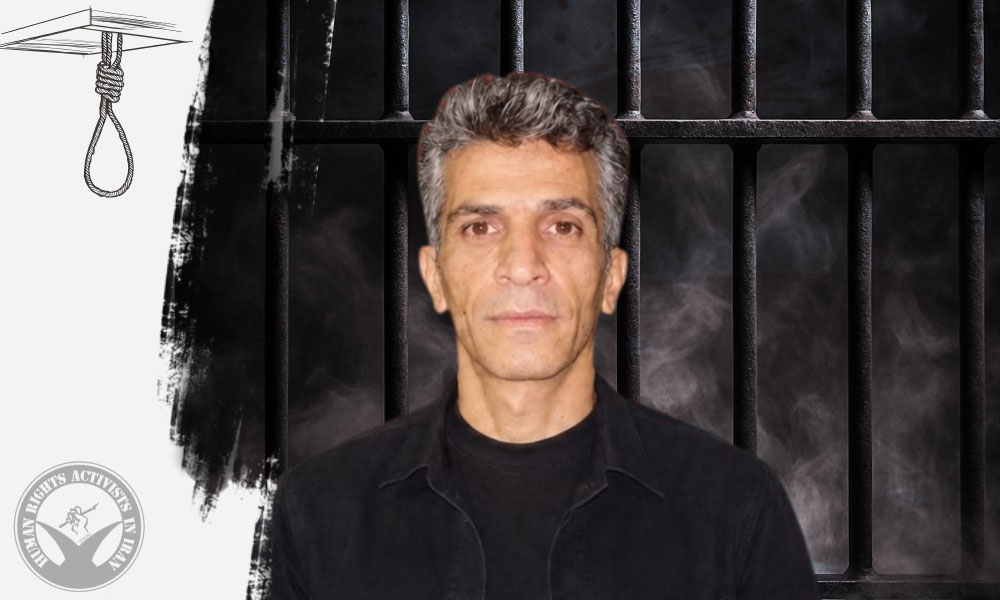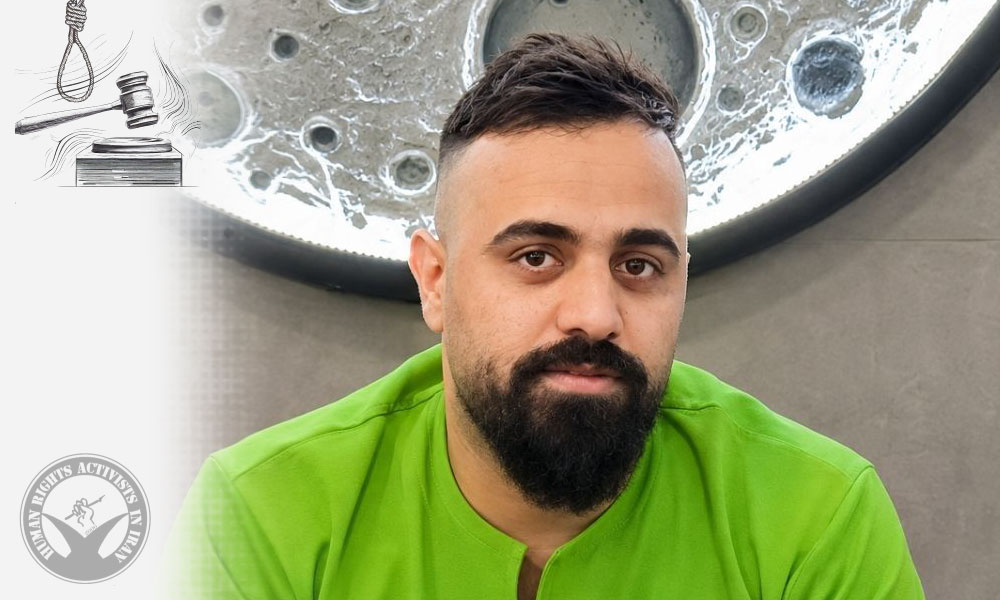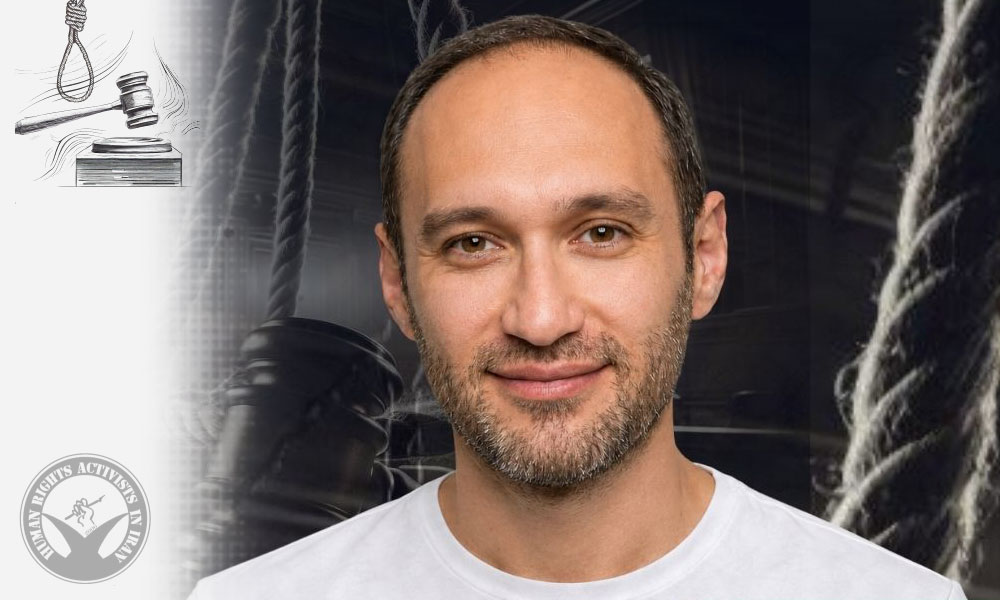
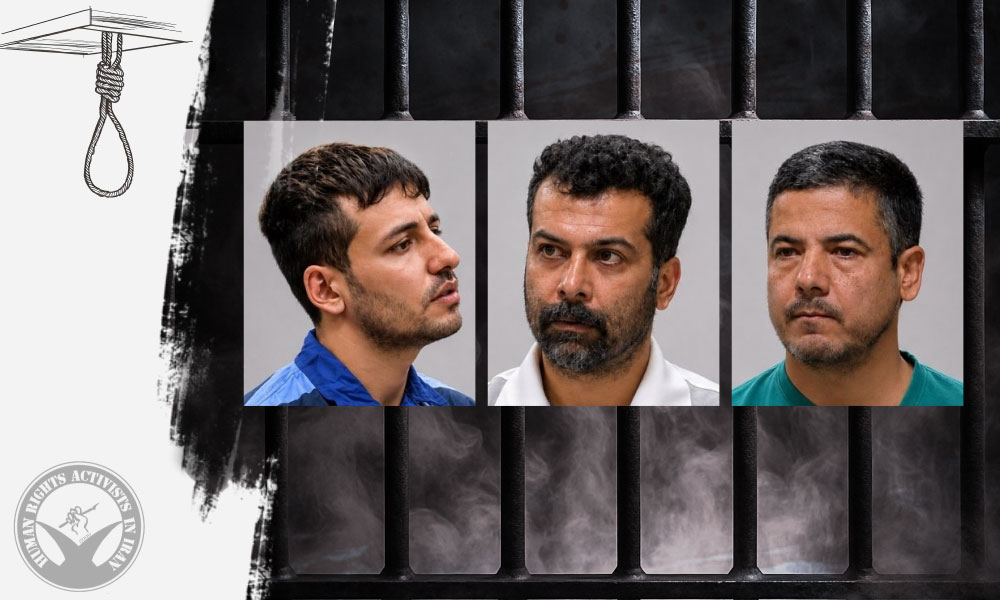
January Protests: Hassan Divband, Hamid Kazemi, and Reza Zanganeh Executed

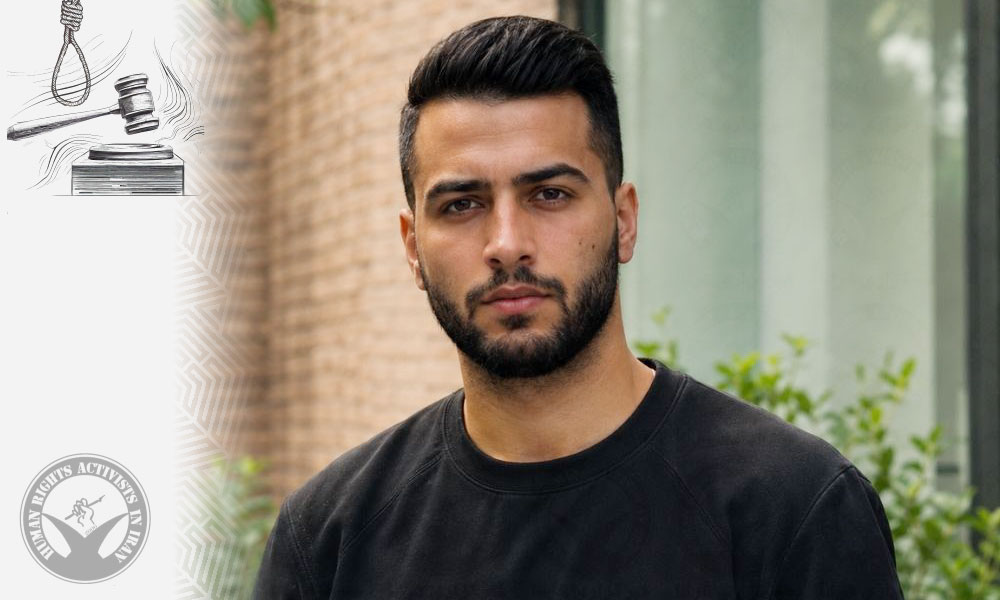
HRANA – The Iranian judiciary has announced the execution of Hassan Divband, Hamid Kazemi, and Reza Zanganeh, three individuals arrested during the January 2026 protests in Karaj. According to the judiciary, their sentences were carried out this morning, Sunday, November 8, following their confirmation by the Supreme Court.

According to HRANA, citing Mizan News Agency, Hassan Divband, Hamid Kazemi, and Reza Zanganeh, three individuals arrested during the protests of January 8 and 9, 2026, in Karaj, were executed this morning, Sunday, November 8, 2026.

According to the report, the three men had been sentenced to death and confiscation of all their assets by the Karaj Revolutionary Court on charges of “participating in operational activities on behalf of Israel, the United States, and hostile groups against national security and interests.” Their death sentences were carried out after being upheld by the Supreme Court, and the process of confiscating their assets is ongoing.

Mizan reported that the case involved a total of 11 defendants. Hassan Divband, the first defendant in the case, was accused of organizing several of his relatives and employees at his auto repair shop to participate in the protests. Hamid Kazemi, the second defendant, was accused of manufacturing Molotov cocktails and homemade grenades, while Reza Zanganeh, the third defendant, was accused of participating in the destruction of electrical infrastructure and causing power outages in parts of Karaj.

According to claims made by the state-affiliated news outlet, the defendants participated in activities during the January protests, including attacks on public and government facilities, destruction of public property, carrying weapons, and manufacturing and using 20 Molotov cocktails and 15 homemade bombs.

According to the report, Hassan Divband and Hamid Kazemi cited economic and financial hardships as reasons for participating in the protests during their trials. However, judicial authorities claimed, based on an examination of the two men’s assets, that they were financially well-off. Accordingly, their properties, including several residential units, an auto repair shop, and vehicles, have been subjected to confiscation orders.

The eight other defendants in the case were sentenced by the Karaj Revolutionary Court to prison terms ranging from five to ten years. According to Mizan, all those convicted have remained in prison since their arrests.

The published report provides no information regarding the defendants’ access to lawyers of their choosing, how the court hearings were conducted, or details of the judicial proceedings. It also does not specify the exact location where the executions were carried out.

Reza Zanganeh and Hamid Kazemi and Hassan Divband were arrested by security forces last winter in connection with the nationwide protests and transferred to Karaj Central Penitentiary. They were tried in Branch 2 of the Karaj Revolutionary Court, presided over by Judge Sabzevari, with Judge Narimani serving as an advisory judge.

Background of the January 2026 Protests
Protests and strikes by shopkeepers and bazaar merchants began in Tehran on Sunday, December 28, 2025, and within two days spread beyond markets and commercial centers. With the participation of students, citizens, and various social groups, these protests became one of the largest protest movements of recent years. Following the crackdown by security and law enforcement forces, thousands were killed or injured, and tens of thousands were arrested or summoned by security agencies. For more information, readers may refer to HRANA’s comprehensive report titled “Crimson Winter,” documenting the first fifty days following the outbreak of Iran’s nationwide protests.

Mohammad Aref Shahbakhsh Executed

HRANA – Today, the Judiciary’s Media Center announced the execution of Mohammad Aref Shahbakhsh, a prisoner convicted of security-related offenses. He had previously been sentenced to death on charges of baghi (armed rebellion) and moharebeh (enmity against God) in connection with an armed attack in Khash County.

According to HRANA, citing Mizan News Agency, Mohammad Aref Shahbakhsh was executed at dawn today, November 7, 2026.

The Judiciary’s Media Center claimed that Shahbakhsh had ties to the Jaish al-Adl group and was identified and arrested as one of the main suspects in an armed attack on the Qaleh Bid police outpost in Khash County, which resulted in several law enforcement officers being killed or injured.

The case was initially opened at Branch 3 of the Investigation Department of the Public and Revolutionary Prosecutor’s Office in Iranshahr and was subsequently referred to Branch 6 of the Investigation Department of the Public and Revolutionary Prosecutor’s Office in Zahedan for further proceedings.

According to the report, Shahbakhsh was ultimately sentenced to death on charges of baghi (armed rebellion) and moharebeh (enmity against God) for his alleged participation in the armed attack on the Qaleh Bid police outpost in Khash County. The sentence was carried out on November 7, 2026.

The report did not specify the location of the execution, the date of Shahbakhsh’s arrest, or any details regarding his access to legal counsel and the judicial proceedings in his case.

Between October 10, 2025, and October 8, 2026, HRANA documented at least 2,003 executions across Iran, based on 1,857 reports, representing an increase of approximately 29% compared to the previous reporting period. During the same period, HRANA also documented 230 death sentences. For more detailed statistics and analysis of executions in Iran, read HRANA’s latest comprehensive report.

January 2026 Protests: Hamid Kazemi and Hassan Divband Sentenced to Death

HRANA – Hamid Kazemi and Hassan Divband, two individuals arrested during the January 2026 protests who are currently held in Karaj Central Prison, have been sentenced to death by the Revolutionary Court of Karaj.

According to HRANA, the Revolutionary Court has sentenced Hamid Kazemi and Hassan Divband, two protesters held in Karaj Central Prison, to death.

Based on information obtained by HRANA, the two men were sentenced to death by Branch 2 of the Karaj Revolutionary Court, presided over by Judge Sabzevari, in a case related to the January 2026 protests. The sentences were issued on the charge of “operational action,” with the court citing provisions concerning the intensification of punishments under the Islamic Penal Code.

Hamid Kazemi and Hassan Divband were arrested by security forces during the nationwide protests last winter and subsequently transferred to Karaj Central Prison.

HRANA’s investigation into the specific allegations against the two men and the latest developments in their legal cases remains ongoing.

Background of the January 2026 Protests
Protests and strikes by shopkeepers and bazaar merchants began in Tehran on Sunday, December 28, 2025, and within two days spread beyond markets and commercial centers. With the participation of students, citizens, and various social groups, these protests became one of the largest protest movements of recent years. Following the crackdown by security and law enforcement forces, thousands were killed or injured, and tens of thousands were arrested or summoned by security agencies. For more information, readers may refer to HRANA’s comprehensive report titled “Crimson Winter,” documenting the first fifty days following the outbreak of Iran’s nationwide protests.

January 2026 Protests: Amir Delshad Sentenced to Death

HRANA – Amir Delshad, who was arrested during the January 2026 protests and is currently held in Vakilabad Prison in Mashhad, has been sentenced to death by Branch 5 of the Mashhad Revolutionary Court. His appeal has been filed and referred to the Supreme Court.

According to HRANA, Amir Delshad, one of those arrested during the January 2026 protests, has been sentenced to death.

Based on information received by HRANA, Branch 5 of the Mashhad Revolutionary Court, presided over by Judge Hossein Yazdankhah, with Seyed Reza Javad Mousavi serving as an advisory judge, sentenced Delshad to death on charges including carrying out operations detrimental to national security and interests on behalf of an opposition group through active participation in the January 2026 protests, as well as setting fire to and destroying public property.

An informed source told HRANA regarding the latest developments in Delshad’s case: “Amir Delshad’s appeal has been registered with the Supreme Court.”

Amir Delshad was arrested by security forces during the January 2026 protests and is currently held in Vakilabad Prison in Mashhad.

Background of the January 2026 Protests
Protests and strikes by shopkeepers and bazaar merchants began in Tehran on Sunday, December 28, 2025, and within two days spread beyond markets and commercial centers. With the participation of students, citizens, and various social groups, these protests became one of the largest protest movements of recent years. Following the crackdown by security and law enforcement forces, thousands were killed or injured, and tens of thousands were arrested or summoned by security agencies. For more information, readers may refer to HRANA’s comprehensive report titled “Crimson Winter,” documenting the first fifty days following the outbreak of Iran’s nationwide protests.

January Protests: Matin Shabani Sentenced to Death

HRANA – Matin Shabani, one of the detainees arrested during the January 2026 protests and currently held at Vakilabad Prison in Mashhad, has been sentenced to death by the Revolutionary Court of Mashhad on charges of moharebeh (enmity against God).

According to HRANA, Matin Shabani has been sentenced to death. The sentence was issued by Branch 5 of the Mashhad Revolutionary Court, presided over by Judge Hossein Yazdankhah, with Seyed Reza Javad Mousavi serving as an advisory judge. The verdict, which was communicated to Mr. Shabani in prison some time ago, sentenced him to death on charges including moharebeh (enmity against God) through participation in the destruction of public property and setting fire to religious centers, as well as assembly and collusion against the country.

A source familiar with the case confirmed the news to HRANA, stating: “During the protests on January 8 and 9, 2026, in Shandiz, a mosque and a Dar al-Quran (Quranic education center) caught fire, and a case was opened in connection with these incidents.”

Matin Shabani was arrested in Shandiz during the nationwide January protests, along with six other citizens who were detained separately. After some time, he was transferred to Vakilabad Prison in Mashhad.

Background of the January 2026 Protests
Protests and strikes by shopkeepers and bazaar merchants began in Tehran on Sunday, December 28, 2025, and within two days spread beyond markets and commercial centers. With the participation of students, citizens, and various social groups, these protests became one of the largest protest movements of recent years. Following the crackdown by security and law enforcement forces, thousands were killed or injured, and tens of thousands were arrested or summoned by security agencies. For more information, readers may refer to HRANA’s comprehensive report titled “Crimson Winter,” documenting the first fifty days following the outbreak of Iran’s nationwide protests.

Subscribe to Our Newsletter

Now is definitely not the time to stop reading!

One Prisoner Executed at Sepidar Prison in Ahvaz

HRANA – At dawn on Tuesday, November 3, 2026, a prisoner previously sentenced to death on murder charges was executed at Sepidar Prison in Ahvaz.

According to HRANA, one prisoner was executed at Sepidar Prison in Ahvaz. HRANA has identified the prisoner, who was hanged on Tuesday, November 3, as Ali Shacheri (Bani-Turuf), 48, and a resident of Ahvaz.

According to information obtained by HRANA, the prisoner was arrested approximately five years ago after committing a murder during a dispute and physical altercation. He was subsequently sentenced to death by a criminal court.

At the time of this report, the execution has not been officially announced by prison authorities or other relevant institutions.

Between October 10, 2025, and October 8, 2026, HRANA documented at least 2,003 executions across Iran, based on 1,857 reports, representing an increase of approximately 29% compared to the previous reporting period. During the same period, HRANA also documented 230 death sentences. For more detailed statistics and analysis of executions in Iran, read HRANA’s latest comprehensive report.

January Protests: Another Protester Sentenced to Death Identified in Mashhad

HRANA – Three individuals arrested during the January 2026 protests in Mashhad have been sentenced to death. HRANA has identified one of them as Vahid Khodrikhah. Another individual sentenced to death in the same case is Matin Farnian, whose identity had previously been confirmed by HRANA. Efforts to establish the identity of the third individual are ongoing.

According to HRANA, Vahid Khodrikhah, 34, a resident of Mashhad, has been identified as another of the three individuals sentenced to death in connection with the January 2026 protests in the city.

Vahid Khodrikhah, along with Matin Farnian, 23, and another individual, was sentenced to death in a joint case by Branch 5 of the Mashhad Revolutionary Court, presided over by Judge Hossein Yazdankhah, on the charge of “moharebeh” (enmity against God).

HRANA had previously reported the issuance of death sentences against these three individuals. However, at that time, only Matin Farnian’s identity had been confirmed. With the identification of Vahid Khodrikhah, the identities of two defendants in the case have now been established, while efforts to identify the third individual are ongoing.

An informed source told HRANA regarding Khodrikhah’s physical condition: “Before his arrest, he was wounded by gunfire during the January protests. The bullet has since been removed from his body, and the necessary follow-up medical care has been provided during his imprisonment.”

According to information previously published by HRANA, the three individuals were arrested by security forces in Mashhad on January 18 and 19, 2026, in connection with the nationwide protests. Following their arrests, they were transferred to Vakilabad Prison in Mashhad, where they are being held in different wards. Vahid Khodrikhah is currently held in Ward 6/1 of Vakilabad Prison.

HRANA continues its investigations to obtain further information about the details of the case, the judicial proceedings, and the identity of the third individual sentenced to death.

Amirhossein Mousavi Sentenced to Death and Imprisonment

HRANA – Amirhossein Mousavi, a political defendant held in Evin Prison, has been sentenced by Branch 15 of the Tehran Revolutionary Court to five years in prison and to death on the charge of “corruption on earth.”

According to HRANA, Amirhossein Mousavi has been sentenced to imprisonment and death.

A source close to Mousavi’s family confirmed the news to HRANA, stating: “Today, Wednesday, November 4, 2026, the verdict issued by Branch 15 of the Tehran Revolutionary Court, presided over by Judge Abolghasem Salavati, was communicated to Mr. Mousavi. Under the ruling, he has been sentenced to five years in prison on the charge of ‘insulting religious sanctities’ and to death on the charge of ‘corruption on earth.’”

On September 21, 2026, the third hearing on the charges against Amirhossein Mousavi was held at the same court.

The second hearing was held in July 2026, while the first hearing took place on November 2, 2025, at Branch 15 of the Tehran Revolutionary Court, presided over by Judge Abolghasem Salavati.

During these hearings, Mousavi, accompanied by his defense attorney, Reza Shafakhah, defended himself against nine charges, including “forming a group or organization to act against the country’s internal security,” “propaganda against the regime,” “assembly and collusion to commit crimes against the country’s internal security,” “non-incidental contact with individuals affiliated with Israel,” “insulting Islamic sanctities,” “financing terrorism,” “cooperation and exchange of information with individuals affiliated with Israel,” “spreading false information,” and “propaganda activities in favor of Israel.”

Previously, the Islamic Republic of Iran Broadcasting (IRIB) aired a video containing forced confessions by Mousavi, who is held in Evin Prison. The circumstances under which the video was recorded remain unclear. The broadcast sought to portray Mousavi as having engaged in espionage and intelligence and security cooperation with Israel.

Mousavi, who was active on the social media platform X (formerly Twitter) under the username “James Bi-Din,” responded to the broadcast of his televised confessions on IRIB’s 20:30 news program by publishing a letter from prison. In the letter, he criticized what he described as “lies and distortions” in the report. He stated that the remarks attributed to him in the IRIB broadcast had been recorded “under pressure, threats, and coercion” and that their content was “fabricated and distorted.” He further wrote that substantial portions of the interview had been selectively edited and that the allegations made against him were unfounded.

In September 2025, following the issuance of an indictment on charges of “assembly and collusion to commit crimes against national security” and “propaganda against the regime,” Mousavi’s case was referred to Branch 15 of the Tehran Revolutionary Court, presided over by Judge Abolghasem Salavati. He also faced a charge of “insulting religious sanctities,” which falls under the jurisdiction of Criminal Court One of Tehran Province.

Amirhossein Mousavi, approximately 42 years old, was arrested on December 18, 2024, at Mehrabad Airport while preparing to travel to Kish Island. His defense attorney previously stated that Mousavi’s X account had been under surveillance for nearly six months and that authorities had identified him through his activity on the platform.

Report on the Execution of a Juvenile Offender in Dezful and Two Other Prisoners in Isfahan

HRANA – The death sentences of two Afghan nationals who had been sentenced to death in a joint case on drug-related charges were carried out at dawn on Wednesday, October 21, 2026, in Dastgerd Prison in Isfahan. Additionally, a juvenile offender who had previously been sentenced to death on a murder charge for an offense allegedly committed at the age of 17 was executed on August 19, 2026, in Dezful Prison.

According to HRANA, citing Iran Human Rights Organization, two prisoners were executed on Wednesday morning, October 21, 2026, in Isfahan Central Prison.

The prisoners have been identified as Mobarak Mohammadi, 43, and Ghasem Molla Amini, 49, both Afghan nationals from the city of Sheberghan.

According to the report, the two prisoners had been sentenced to death by the Revolutionary Court in a joint case involving drug-related charges. An informed source stated that they had been arrested approximately two years earlier on a road leading to Isfahan on charges of transporting drugs.

The source further stated that Mobarak Mohammadi was the father of four children, while Ghasem Molla Amini was the father of three. The two men were related and had been living with their families in the city of Mashhad.

Juvenile Offender Executed in Dezful

In a separate report, Iran Human Rights Organization stated that a juvenile offender was executed in Dezful Prison on August 19, 2026.

The prisoner has been identified as Mahan Vafadar. According to the report, Vafadar was arrested on September 10, 2020, when he was 17 years old, in connection with a murder charge. Following his arrest, he was held for some time in a juvenile correctional and rehabilitation center. He was eventually sentenced to death by judicial authorities.

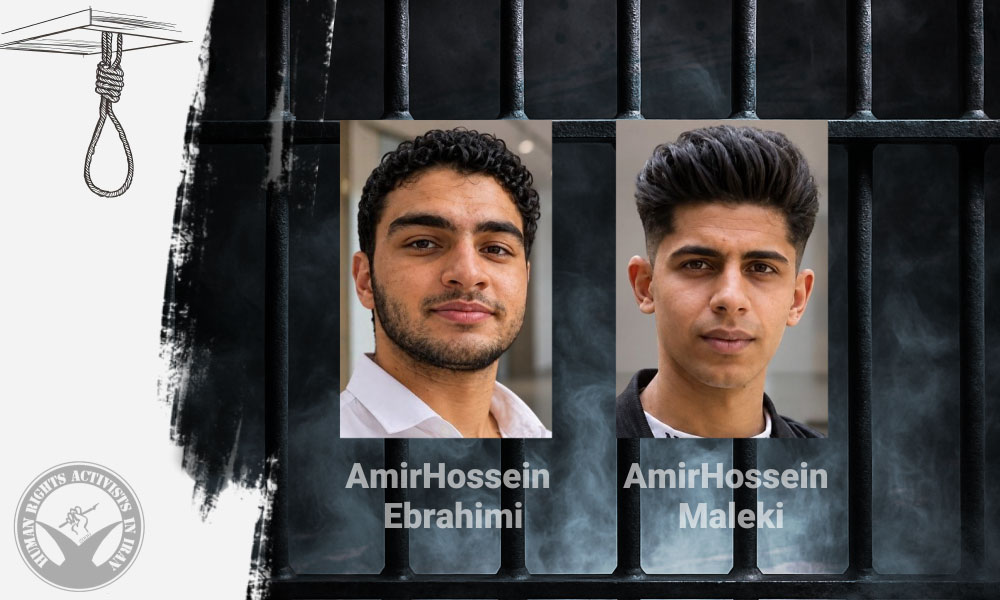
January Protests: Amirhossein Maleki and Amirhossein Ebrahimi Executed

HRANA – The death sentences of Amirhossein Maleki and Amirhossein Ebrahimi, two individuals arrested during the January 2026 protests in Isfahan, have been carried out. The two prisoners were tried and sentenced to death in a case known as the “Ali Khani Square case” in Isfahan. With their executions, the number of people executed in connection with this case has risen to nine.

According to HRANA, citing Mizan News Agency, the death sentences of Amirhossein Maleki and Amirhossein Ebrahimi, two defendants in the case known as the “Ali Khani Square case” in Isfahan, were carried out this morning.

The Judiciary’s Media Center has claimed that four law enforcement officers were killed during the protests on January 8, 2026, in Ali Khani Square in Isfahan. The institution also alleged that a number of protesters attacked law enforcement officers and damaged public buildings and property.

In outlining the charges against Amirhossein Ebrahimi, Mizan claimed that he was present in Ali Khani Square on the day of the incident and, while carrying a bladed weapon, participated in the destruction of public property and the assault of law enforcement officers. According to the report, Mr. Ebrahimi went into hiding at a relative’s home following the incident and was subsequently arrested along with his brother.

The outlet also alleged that Amirhossein Maleki, known as “Daichi,” was present at the scene and played a role in the deaths of law enforcement officers. The judiciary cited mobile phone tracking, statements by defendants, and other evidence in the case as grounds for attributing the charges to him.

According to Mizan, the two prisoners were sentenced to death on charges of “moharebeh” (enmity against God) and “efsad fel-arz” (corruption on earth) through acts against national security, drawing weapons, and creating widespread insecurity. Their sentences were reviewed by the Supreme Court following appeals and were carried out after being upheld.

HRANA previously reported on several due process concerns in this case, including restrictions on effective access by defendants and their lawyers to case files, court hearings conducted via videoconference, failure to provide complete copies of the verdicts, and allegations of pressure and torture during interrogations.

It should be noted that the death sentences of Erfan Esfandiari and Golmohammad Mohammadi were previously carried out on July 19, 2026; Abolfazl Sepahi and Amirhossein Safari on July 28, 2026; and Ghaem Hosseini on August 20, 2026. In addition, Alireza Sepahi and Alireza Raisi, two other defendants in the case, were executed on October 5, 2026, at Dastgerd Prison in Isfahan.

At the initial trial stage, 15 defendants in this case were sentenced to death. According to information provided by a lawyer, the death sentence of one defendant was overturned by a higher judicial authority, while the death sentences of the remaining 14 defendants were upheld.

The identities of 12 of these individuals have been established as Alireza Sepahi, Abolfazl Sepahi, Erfan Esfandiari, Golmohammad Mohammadi, Amirhossein Safari, Ghaem Hosseini, Shervin Bagherian, Amirhossein Maleki, Ali Dashti, Abolfazl Ebrahimi, Alireza Raisi, and Amirhossein Ebrahimi Analouche.