





Human Rights Activists News Agency (HRANA) – Jamil Savari, resident of Ahvaz in Iran’s southwestern Khuzestan Province and member of the Ahwazi Arab ethnic minority, was released on a 200 million IRR (approximately $14,000 USD) bail Sunday, September 9th pending completion of the investigation into his case.
During the week of March 29th, 2018, members of Iran’s Ahwazi Arab minority staged rallies in protest of being treated as “invisible” by the state-run media, one example of what is believed to be a larger policy of oppression and discrimination endorsed by the Islamic Republic. Savari was first arrested in March of 2018 by security forces in the midst of these protests, and was subsequently transferred to Sheyban Prison in Ahvaz.
Security forces arrested hundreds of protestors in efforts to shut down the March rallies, which gained momentum in a number of cities, particularly in Khuzestan near the Iran-Iraq border. Reports have surfaced of authorities’ mistreatment and torture of these detainees, many of whom–including a number of minors whose conditions are unknown–remain behind bars despite authorities’ verbal engagements to release them.
Category: Ethnic Minorities
Appeals Court Upholds Convictions of Six Azerbaijani Activists

Human Rights Activists News Agency (HRANA) – Six Azerbaijani activists accused of national-security related crimes for protesting Azerbaijani cultural misrepresentation in 2015 had their appeal rejected.
On September 1, 2018, Judge Hossein Farshi Radvar of Branch 3 of the East Azerbaijan Province Appeals Court moved to uphold the original ruling, issued to a total of seven activists in October 2017 by Branch 1 of Ahar Revolutionary Court. Ahar is situated in northwest Iran, home to Iran’s Azerbaijani ethnic minority.
On a conviction of “Assembly and collusion against national security by propagandizing against the regime,” the activists all face prison time: ten months for both Akbar Aboulzadeh and Ebrahim Noori, and seven months apiece for Esrafil Fathollahzadeh, Hamed Allahverdipour, Morteza Shokri, and Soleiman Kazemi.
Though the appeals court had also summoned Saleh Molla Abbasi, his name did not figure in the final verdict. The initial ruling indicated he faces a 10-month prison sentence.
From the group of seven, the four who attended the initial court hearing were the same ones present at the appeals hearing: Aboulzadeh, Fathollahzadeh, Allahverdipour, and Shokri. Three others – Saleh Molla Abbasi, Kazemi, and Noori – did not attend the court session. Noori is currently serving a sentence for other charges in Evin Prison of Tehran.
The activists were arrested in November of 2015 for their involvement in public protests against the state-sponsored television series “Fitileh,” parts of which were believed to portray the Azerbaijani ethnic minority in a derogatory light. The “Fitileh” protests reportedly involved around 25 participants. All but these seven were eventually acquitted.
HRANA previously reported on the activists’ pending appeals hearing.
Violence against Executed Kurdish Political Prisoners Follows them to the Grave, Continue to Haunt their Families
Human Rights Activists News Agency (HRANA) – “Loghman’s mother has scratched at her own face so much that she has claw marks across her cheeks,” writes former political prisoner Bahman Ahmadi Amouee, documenting a family’s anguish over the sudden loss of their son Loghman Moradi, who was executed without trial, or any official warning, on Saturday, September 8th. “Her daughter is helping her to stand, and together they are wailing.”
Amouee, a journalist and former political prisoner, writes as a witness to the tightly-controlled visits to the grave sites of Zanyar and Loghman Moradi in Tehran’s Behesht-e Zahra cemetery, where their families were permitted to say final goodbyes on the condition that they refrain from screaming, wailing, or taking any pictures or video.
Pursuant to a dubious legal proceeding that drew outrage from human rights organizations across the world, both Moradi cousins, along with their co-defendant Ramin Hossein Panahi, were hanged to death in an undisclosed location in Tehran Province on Saturday.
Ramin’s brother Amjad reported to HRANA that the victims’ respective families have been threatened with detention by the Ministry of Intelligence. Ramin’s remains will not be handed over to his family for burial, Amjad said, but will instead meet the same fate as that of the Moradis, and of many political prisoners before them: interment by the government in secret location.
In an open letter, Atena Daemi and six other civil activists imprisoned at Evin have expressed condolences to the families of the victims.
Bahman Ahmadi Amouee wrote a report, excerpted above, from his observations of the victims’ grieving families during their final visitation to their graves. The text of Amouee’s letter, sourced from his website, is below, translated to English by HRANA:
“Loghman’s mother has scratched at her own face so much that she has claw marks across her cheeks. Her daughter is helping her to stand, and they are both wailing. She is engulfed in sorrow. I’m in disbelief that this broken girl is Loghman’s little sister. Across the way, her surviving brother hangs his head. They arrived only this morning from Marivan. The family, along with their attorneys, have been treading from room to room in the prosecutor’s office. As if they still cannot believe the news of Loghman and Zanyar’s execution, they say, ‘we won’t believe it until we see the bodies.’ If lore on such matters again proves true, there will be no viewing of the bodies, nor any information released about their burial site. And yet, hope lingers.
At 11 a.m., the family’s attorney Saleh Nikbakht announces that authorities have granted permission for the families to view the bodies in the preparation washroom of the mortuary. I hasten to make my way there. It appears I was faster than everyone else. It is noon, and a few other families are circulating, waiting for their own loved ones’ burials. Sounds of tears and lamentations fill the air. Every few minutes, an intercom pronounces the name of one of the bodies, requesting the family to come forward to identify it.
I asked myself if Zanyar and Loghman would be announced this way. Never would I have imagined coming to find them in a place like this. For two and a half years, we were together day and night. I remember Loghman’s laugh, his wide grin. He was a few years older than Zanyar, and more protective of him than a brother. Each time he would spread out the table cloth for meals, he would call out, ‘Dear Zanyar, come! Let us eat!’
I went to the census bureau of Behesht-e Zahra to see what I could find out. The person behind the computer told me their names weren’t in the system at all. They didn’t figure on the list of those buried in previous days, either. We’re being given the run-around once again, I thought. Distraught, Zanyar’s brother Diyar said, “we got a call from a blocked number–they said we need to go to Behesht-e Zahra.” Loghman and Zanyar’s cellmates are there, too. Everyone we ask says something different. Nikbakht goes into a room. After a few minutes, Diyar goes after him. Four security officers held a meeting with a handful of Behesht-e Zahra administrators; an hour passed. Finally they came out with the news: Zanyar and Loghman’s family members were granted permission to visit their bodies, on the condition that they do not take any pictures or recordings. Oh, and they weren’t going to be allowed to scream or wail when they got there, either.”
Hours go by; Behesht-e Zahra is now closed, all of its employees gone. The large mortuary washroom is so hollow that the slightest sound I’d make would reverberate across the room. I feel empty. I am sitting in a corner, waiting with Zanyar and Loghman’s former cellmates. For a moment, a thought crosses my mind; and if we’re being strung along again…? Loghman’s mother bursts outside, and playing herself on the ground beneath the burning sun. She is cold and racked with trembling, asking over and over to see her dead son.
They summon the immediate family members. We flood through a door. They stop us from advancing further. The windows are cloaked over with banners and cloth.
The families have been standing, choked, over the shrouded bodies of Loghman and Zanyar for half of an hour now. Loghman’s mother was finally able to see her son, covered in a burial cloth. But Zanyar’s mother is not here to do the same. His aunt, uncle, and brother go to see him instead.
A man dressed in a blue suit, his shirt buttoned up to the neck, is ordering people around the room; it seems he’s their boss. Saleh Nikbakht tells him, ‘since they have not been buried yet, won’t you allow us to take them to Loghman’s ancestral village, 25 miles from Marivan? The family has a hard time traveling to Tehran. We ask you to think of them as well.’
The man responds, ‘I have to take it up with the prosecutor. For now, they will stay in the morgue for a few days. If he approves your request, they will be transferred to the location you ask. If not, we will bury them here in Behesht-e Zahra and tell you the location of their grave.’ Wailing and crying burst forth again. The family exits. The summer sun sears into us, and the sounds of crying do not let up. The shrouded bodies are loaded into a pickup truck and taken away. Osman, Loghman’s father, looks defeated. His thin frame is even more haggard than before. He says through sobs, ‘What hurts is that I couldn’t do anything for them.’ Those who had so far been holding back tears are now bawling. Loghman’s sister is clawing at her own face now, howling out tears along with their mother. Their laments shift into Kurdish; all I can understand are the boys’ names.”
Outcry against Secret Executions of Zanyar & Loghman Moradi and Ramin Hossein Panahi

Human Rights Activists News Agency (HRANA) – Three Kurdish political prisoners now lay buried in an undisclosed location after being executed in secret on September 8th on murder charges never proven in Tehran criminal court, sparking outrage from their families, attorneys, and the human rights community at large.
Without notifying their lawyers or loved ones, prison authorities hanged to death Zanyar Moradi, Loghman Moradi, and Ramin Hossein Panahi, contravening [both Iranian and international law] by seizing and interring their bodies in a location yet unknown to their families, who were put on guard by the Ministry of Intelligence not to speak up about the incident. Hossein Panahi’s brother Amjad confirmed this to HRANA.
While initial reports by Iranian official sources indicated the executions took place in Rajai Shahr (Gohardasht) Prison in Karaj–the capital of Alborz province about 30 miles west of Tehran, where Hossein Panahi and the Moradis were last known to be held–the Tehran Prosecutor’s Office recently indicated in a statement that they were executed “in Tehran,” accusing the deceased men of violent crimes while withholding further details about their deaths or remains.
Hossein Panahi’s lawyer Hossein Ahmadiniaz stated that the execution of the three young men was not only abrupt– it was also unlawful on several counts.
“Based on an amendment to section 478 of Criminal Procedure Law, once a request for retrial has been submitted on behalf of defendants charged with offenses punishable by death, the execution of the sentence must be stayed. Moreover, once a request for clemency is registered with the Clemency & Forgiveness Commission, the execution must be immediately stayed.”
According to Ahmadiniaz, the transfer of the prisoners from Sanandaj [300 miles west of Tehran] to Karaj [on the western outskirts of Tehran], preventing Hossein Panahi’s legal team from conferencing with him, was enough in itself to establish authorities’ disregard of the law. Ahmadiniaz’s statements are backed by Saleh Nikbakht, the lawyer representing Zanyar and Loghman Moradi, who has published documents (pictured) demonstrating that the judiciary’s investigation into his client’s murder charges was far from complete.
Ahmadiniaz went on, “As Ramin’s Hossein Panahi’s legal team, we declare his innocence, and the unlawful and irreligious nature of the verdict and sentence against him […]. Panahi was subjected to an unfair procedure devoid of due process. He was the victim of a political trial. My heart goes out to Hossein Panahi’s family, and I offer them my condolences. I consider the execution of Ramin Hossein Panahi a firebrand of hatred and calamity, and condemn it in the strongest sense of the word.”
The families of Panahi and the Moradis had been abruptly called in for a visit with their imprisoned loved ones on September 7th, raising the specter of their imminent execution. That night, Nikbakht explains, he went to [Rajai Shahr Prison] where he stood guard from midnight to 6 a.m. alongside Loghman’s father, a number of other Moradi family members, and group of civil activists.
“The agents there first told us that [the prisoners] had been handed to Ministry of Intelligence authorities, and gave us no further information about their fate,” Ahmadiniaz related to HRANA. “We followed up on their indications by heading to the Alborz Intelligence Office, where we were told over an intercom that the Moradis were not there, and that we should go back to [Rajai Shahr]. Finally, a prison official emerged at around 4:30 a.m. to say that the prison isn’t the sentence executioner, and that they were unaware of the prisoners’ whereabouts as of their transfer to the Intelligence Ministry. With confidence, he told us that the execution had not taken place in that prison.”
Nikbakht also bemoaned misinformation being disseminated about his clients’ ordeal. “A news agency announced today [Saturday, September 8th] at 2:51 p.m. that these executions were carried out in the presence of the lawyers. This claim, at least in case of [the Moradis], is fundamentally false. I am their lawyer[…] and neither their families nor I had any knowledge of how or where the execution took place.”

An excerpt of Nikbakht’s defense statement, translated into English by HRANA, is below.
My clients had two cases–one on a charge of Moharebeh (enmity against God), for which a death sentence was handed down and confirmed [by the Supreme Court]. Their lawyer in this case was from Marivan [of Kurdistan Province in western Iran]. The second case involved the assassination of three Salafis in Marivan, which was being investigated in Branch 4 of Tehran Criminal Court. I took over the case in March 2013. In the first day of trial on July 23rd, 2014, I raised objections to the claim that my clients were responsible for the three murders in question. Some of my objections were as follows:
· Lack of a report detailing reconstruction of the crime scene
· Lack of evidence of their involvement in the murder
· Lack of a murder weapon
· Lack of efforts on the part of authorities to locate the murder weapon
In my clients’ case file, they were quoted as saying that they disposed of the murder weapon in Marivan lake. This section of the lake in question is 2 to 5 meters deep, a depth at which even a cursory search would have recovered the murder weapon. The only evidence against my clients was their confession. The defendants have protested the veracity of this confession. Specifically, after they were transferred from solitary confinement in Sanandaj and Evin prisons to Rajai Shahr’s [general ward], they wrote a detailed letter to the Head of the Judiciary explaining how their confessions had been extracted. There was no evidence to prove they had committed the murder. Branch 4 of Tehran Criminal Court (Previously Branch 74) sent the case to Branch 27 of Tehran Criminal Investigation, which, in turn, sent the case to Marivan Court, who were to complete the investigation. Following a few back and forths, I was told that neither new evidence nor the murder weapon had been found, and that they ultimately sent the case back to Tehran without addressing the flaws in the case.
There has been no new hearing since the discovery of flaws in the case during the first court session, and the charge of murdering three Salafis was never substantiated. On the day of the murder, Loghman, who was fingered as an accomplice, was working on a crane on a construction site in Sarvabad, 35 km [20 miles] from Marivan. He only returned to Marivan an hour and half after the murder occurred.
[…] What’s more, the right of the murder victims’ family supersedes that of God (and the state) in religious law. It was unlawful to execute them for “Moharebeh,” a crime against God [and state], before first addressing the death sentence for murder. The documents below are from the Judiciary’s electronic information center, and show the murder charges were still pending investigation and trial.”
International Reaction
Philip Luther, Amnesty International’s Research and Advocacy Director for the Middle East and North Africa, released a statement in response to the executions of Zanyar Moradi, Loghman Moradi, and Ramin Hossein Panahi. The full text of his statement is below.
“We are horrified by the news that the Iranian authorities have executed these men, despite widespread condemnation of their death sentences, and calls from UN human rights experts and other bodies to halt their executions.
The trials of all three men were grossly unfair. All were denied access to their lawyers and families after their arrest, and all said they were tortured into making “confessions”. In sentencing them to death despite these massive failings in due process, the Iranian authorities have once again demonstrated their brazen disregard for the right to life. We call on the international community to strongly condemn these executions and urge the Iranian authorities to respect their obligations under international law. The Iranian authorities must take steps to ensure that everyone has a fair trial, that torture and other ill-treatment are absolutely prohibited, and that the practice of forced ‘confessions’ is stopped once and for all. They must also immediately impose an official moratorium on executions with a view to abolishing the death penalty.”
Sentence Commuted for Activists Marking International Day against Torture

Human Rights Activists News Agency (HRANA)- Five of six activists detained and sentenced in 2016 for their observance of the UN International Day in Support of Victims of Torture have had their sentences commuted in the Appeals Court of Western Azerbaijan (located in northwestern Iran and home to Turkic, Azerbaijani, and Kurdish minorities).
What was an eight-month prison sentence looming over Meysam Azadi, Morteza Zarrin, Vahid Nasibi, Gholamali Hossein-Gholizadeh, and Vahid Faezpour has now been reduced to a fine of 2.4 million Tomans (approximately $165 USD). The sixth activist, Somayeh Alidoust, did not appeal.
In February 2016, HRANA reported on the sentencing of the above individuals in Branch 102 of the Criminal Court of Urmia, the capital of West Azerbaijan province. All six activists were among a group of 36 Azerbaijani and Turkic activists who were apprehended June 27, 2013 on Shahid Kalantari bridge in Urmia, on their way to the foothills of Sahand mountain [a mountain of symbolic importance in Azerbaijan] where they planned to commemorate the UN holiday.
Security and Police forces assaulted and inflicted wounds on several of the activists during their detention. Thirty were released within hours, while Azadi, Zarrin, Nasibi, Hossein-Gholizadeh, Faezpour and Alidoust were held for six days in the Urmia Intelligence Office before being released on a bail of 15 million Toman (approximately 5,000 USD).
The UN Convention against Torture was adopted by the UN General Assembly on December 10th, 1984 and came into effect in June 26, 1987. The convention is a treaty whose signatories acknowledge torture as a criminal offense and commit to both investigate torture allegations and send them to trial. In 1998, in observance of the convention, June 26th was declared the International Day in Support of Victims of Torture.
As of now, there are 163 parties to the Convention. Iran is neither a signatory nor a party to the Convention.

Political Executions: Zanyar & Loghman Moradi and Ramin Hossein-Panahi Hanged to Death

Human Rights Activists News Agency (HRANA) Zanyar Moradi, Loghman Moradi and Ramin Hossein-Panahi, three Iranian political prisoners, were reportedly executed on the morning of Saturday, September 8th in Karaj’s Rajai Shahr Prison.
Iran’s Fars news agency published a report on September 8th claiming these three men were “thugs who took military and terrorist measures in western Iran and brought insecurity and killed the loved ones of a number of families.”
On September 7th, families of Zanyar and Loghman Moradi had met them in solitary confinement cells, as requested by prison authorities.
Families of Zanyar and Loghman were contacted by authorities of Rajai Shahr on September 5th and asked to go to the prison, Zanyar’s brother told Hrana. “Loghman’s father and I were able to meet with them. Zanyar told us that they were sent to solitary confinement three days ago for unknown reasons…but they had guessed that it was for execution which is why they started a hunger strike that morning.”
Zanyar and Loghman Moradi were sentenced to death after being convicted of murdering the son of Marivan’s Friday prayer leader; a charge they have always denied.
On December 22, 2010, the two Kurdish family friends were sentenced to death by Branch 15 of the Tehran Revolutionary Court, presided by Judge Salavati. They were charged with membership in the banned leftist party Komele and murder of the son of Marivan’s Friday prayer leader on July 5, 2009. Both Zanyar and Loghman have repeatedly said their confessions to the crimes were extracted from them under duress.
Zanyar and Loghman had previously written an open letter, published in May 2017, detailing their case and the torture they had experienced.
Ramin Hossein-Panahi, too, was executed today in Rajai Shahr Prison, according to his lawyer, Hossein Ahmadiniaz.
Ramin’s family had not been contacted for a final visit, Ahmadiniaz told HRANA.
The legal team defending Hossein-Panahi had previously written a letter to the head of the Judiciary, asking for the execution order to stop on national security grounds.
Hossein-Panahi published a video on social media about ten days ago, insisting on his innocence and refuting the charges against him.
Families of Kurdish Death Row Political Prisoners Fear Their Imminent Execution

Human Rights Activists News Agency (HRANA)- Family friends Zanyar and Loghman Moradi, two prisoners on death row in Rajai Shahr (Gohardasht) Prison of Karaj, were separately summoned from their respective wards on Wednesday, September 5th on the pretext of a meeting with the prison’s director. Instead, it is suspected that they have been transferred to a ward controlled by the Islamic Revolutionary Guard Corps (IRGC). Hours after the transfer, the prison telephone system inexplicably went dead.
The circumstances of their transfer felt all the more dubious the next day when, according to one of the prisoners’ family members, their families received a strange phone call: “Thursday, September 7th, an individual identifying himself as a ‘prison official’ called [us] asking [that we] come to the prison for visit. We are en route to Rajai Shahr [30 miles west of Tehran] in hopes of obtaining an update on these two members of our family.”
While this “prison official” gave no indication that the prisoners were scheduled to be executed, [a history of community experience with such circumstances gives the family reason to suspect] that the invitation to visit may very well be their last. Nonetheless, the family stores hope in their continued efforts to commute the family friends’ sentences and stay their execution.
Zanyar and Loghman Moradi were sentenced to death on December 22, 2010, on charges of “Moharebeh” (“enmity against God”), both accused of membership in Komeleh, a Kurdish opposition group, and for involvement in the July 5, 2009 murder of a Friday prayer Imam. [While their charges of membership in a Kurdish opposition party were tried in a revolutionary court, the Supreme Court ruled to direct their case to criminal court because their convictions and sentences were ultimately based on murder charges.] Both defendants previously announced that their confessions to murder were extracted under duress, intimidation, and torture at the hands of their interrogators.
Their most recent trial took place more than four years ago in the criminal court of Tehran, which, citing insufficient evidence and incomplete investigation of the case, forwarded their dossier multiple times to the authorities of Marivan (in the Kurdistan province) requesting they address its flaws.
Without accounting for all of the said deficiencies, Marivan court sent back the case, which has yet to be retried. Given the lack of concrete evidence against them, both prisoners would presumably be acquitted in a retrial; yet despite repeated requests from the defendants’ families for follow-up, and notwithstanding the courts’ legal responsibility to prevent unreasonable delays in criminal procedure, judicial authorities remain mum on the prospect of when–or even if–the Moradis might anticipate a more complete review of their case. The prisoners thus wait in a state of suspense over their fate, a wait which has grown more fraught with mounting concerns for their health.
Human rights organizations have been vocal in their opposition to the lack of due process and appropriate legal procedure that judicial authorities have thus far displayed in the Moradi case.
In May 2017, the Moradis wrote an open letter (1) to draw public attention to their case, their ordeal, and what they allege are false accusations constructed against them by security organizations.
On July 18, 2018, Zanyar Moradi’s father was assassinated by three gunshots in Panjovin, an Iraqi Kurdistan town near the Iranian border. His history of political activity, coupled with previous attempts on his life, raised suspicions that Iranian security forces were involved in his death.
Ramin Hossein Panahi

Ramin Hossein Panahi is on death row for similar political charges, i.e. ties to an opposition group similar to that of the Moradis. Parallels between the two cases and a lack of phone contacts from Rajai Shahr where he is currently being held in solitary confinement have heightened fears that Hossein Panahi, too, faces imminent execution.
Earlier this week, the Islamic Republic Judiciary executed three political prisoners in Zahedan (in southeastern Iran, home to the Baloch minority) in vindictive response to armed clashes that broke out between Iranian security forces and an armed opposition group.
Prisoners in Iranian Baluchestan Brutally Tortured by IRGC Intelligence Unit

Human Rights Activists News Agency (HRANA) – At the hands of the Islamic Revolutionary Guards Corp’s Saravan Intelligence Unit, at least seven detainees have recently been subjected to torture.
HRANA has identified two of these victims as Najib Dehvari, 21, and Abdolshokur Sotoudeh, 22, both from Saravan. Saravan is a city in Iran’s southeastern Sistan & Baluchestan Province, home to the Baloch ethnic minority group.
Dehvari, Sotoudeh, and their comrades were initially arrested in connection to a sound bomb that went off in front of the Ministry of Intelligence Bureau in Saravan. There were no casualties. They were held in the IRGC Intelligence Detention Center before being transferred to Ward 1 of Zahedan Prison in the province’s capital city.
A source familiar with the case told HRANA that the seven were religious seminary students who confessed after enduring prolonged beatings and torture. The source added, “they were interrogated during the night, lashed with electrical cables shocked with electricity. The wounds are still visible on the soles of their feet, and they are unable to walk.”
The torture of prisoners by IRGC Intelligence Units and the Ministry of Intelligence is more widespread in Baluchestan than in other regions of Iran. In a technique commonly exerted by these centers, called the “miracle bed,” the prisoner is tied to a bed frame and repeatedly flogged with the goal of extracting a confession. Historically, prisoners often utter confessions to put an end to the torture, rather than authentically confess to a crime.
Massoud Ghanbarzehi, another prisoner was detained on charges of “Acting against national security through cooperation with opposition groups” back in June, was interrogated and tortured while being held for three weeks in a Zahedan Ministry of Intelligence detention center before being transferred to Zahedan Central Prison.
Three additional Intelligence Center detainees who previously reported on their torture–Mohammad Saber Malik-Raeisi, Abdulkarim Shah Bakhsh, and Noor Ahmad–shared accounts of the various torture methods they endured, among them the “miracle bed” technique.
Three Azerbaijani Activists Taken into Custody

Update: On September 6th, Ulduz Ghasemi was released on a bail of 500 million rials (approximately $4,000 USD).
Human Rights Activists News Agency (HRANA) Ulduz Ghasemi, Rahman Ghasemi, and Sahand Ma’ali, Azerbaijani Turkic minority rights activists from the cities of Urmia and Sarab, were apprehended today by local security forces.
Ulduz Ghasemi and Rahman Ghasemi had previously been summoned by security agents of Urmia’s Noh Pele Quarter and interrogated there by security forces. While both Ulduz and Rahman were summoned and interrogated, only Ulduz was taken into custody.
A credible source told HRANA that plainclothes forces went to Ulduz’s mother’s house, seizing a number of books, a laptop, and a mobile phone. According to the source, Ulduz and Rahman were interrogated for visiting relatives of one of those killed in protests that took place in Azerbaijan in 2006.
Ulduz was also among a number of activists arrested on May 26th of this year in the West Azerbaijan province, in connection to their participation in a commemoration gathering at Naqade County’s Golzaar cemetery. The gathering was in honor of those who had died in the 2006 protests.
Both Ulduz and Rahman were later arrested again after taking part in the Babak Fort celebrations on July 7th of this year. They were released five days later.
Meanwhile, Sahand Ma’ali faces a 10-month suspended prison sentence from the Revolutionary Court of Sarab County. Presided by Mehdi Shams, the court convicted Ma’ali of “Propaganda against the regime.” Ma’ali was among a group of regional activists who were arrested at Fort Babak gatherings on July 6.
Fort Babak, a monument built during the pre-Islamic Sassanian period, is named after Babak Khorramdin, known for leading an uprising against the Abbasid caliphate in 893. In recent years, it has become a place of symbolic gathering for Azerbaijani activists, especially during the annual commemorations in the first week of July.
Two Saravan Residents Transferred to Zahedan Prison after a Month of Interrogation
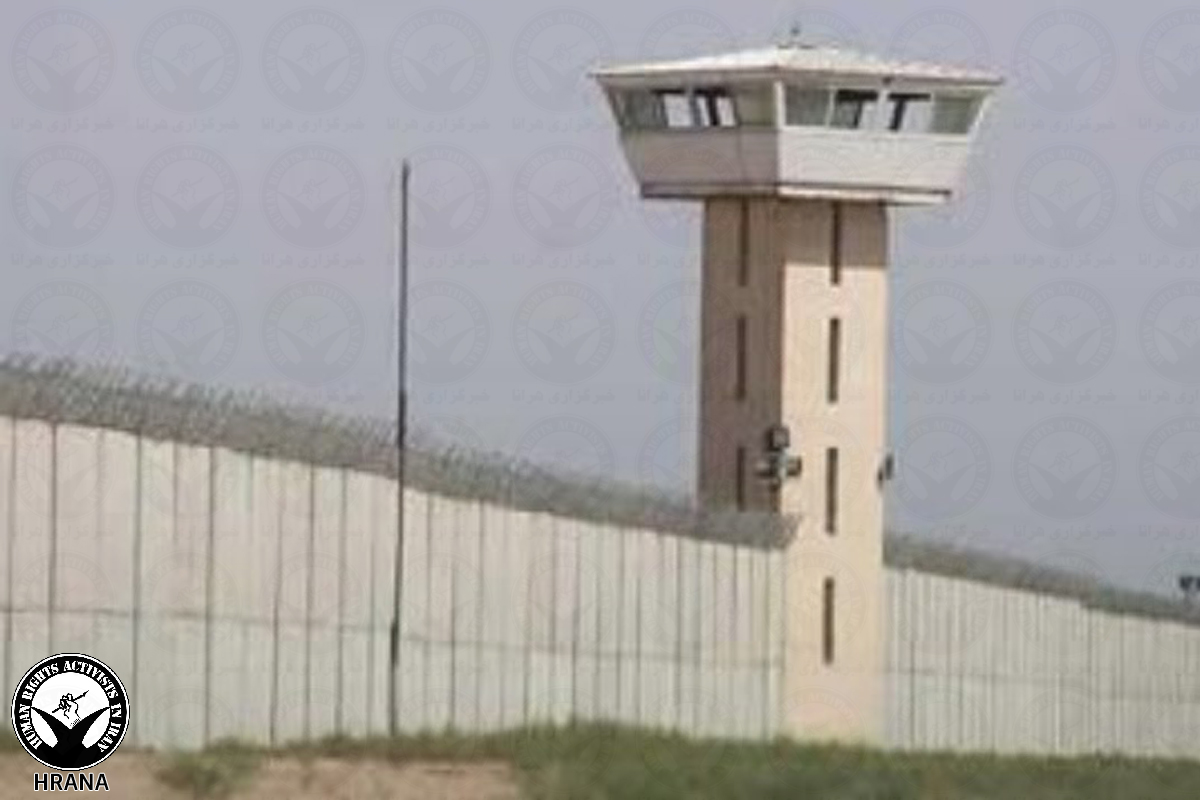
Human Rights Activists News Agency (HRANA) – After being read their charges, two residents of Saravan (Sistan and Baluchestan Province) who were previously arrested by security forces and transferred to the Islamic Revolutionary Guard Corps (IRGC) Intelligence Detention Center, were transferred to Ward 1 of Zahedan Central Prison.
HRANA has confirmed the identities of the detainees as Najib Dehvari, 21, and Abdolshakur Sotoudeh, 22.
An informant confirmed the news to HRANA, adding, “Both were arrested and interrogated on charges of ‘Acting Against National Security’ in connection with a sound bomb that went off in front of Saravan’s Intelligence Ministry last month, which incurred no casualties.”
Although several others are likely to be arrested and transferred to prison in connection with this case, no further information is currently available.
On August 31, 2018, HRANA published a report on the transfer of Abubakr Rostami, another political prisoner on death row, from an IRGC detention center–where he was sequestered for two days–to the General Ward of Zahedan Prison. No information is available on the reasons for his transfer. *