Ramin Zaleh and Karim Maroufpour Executed

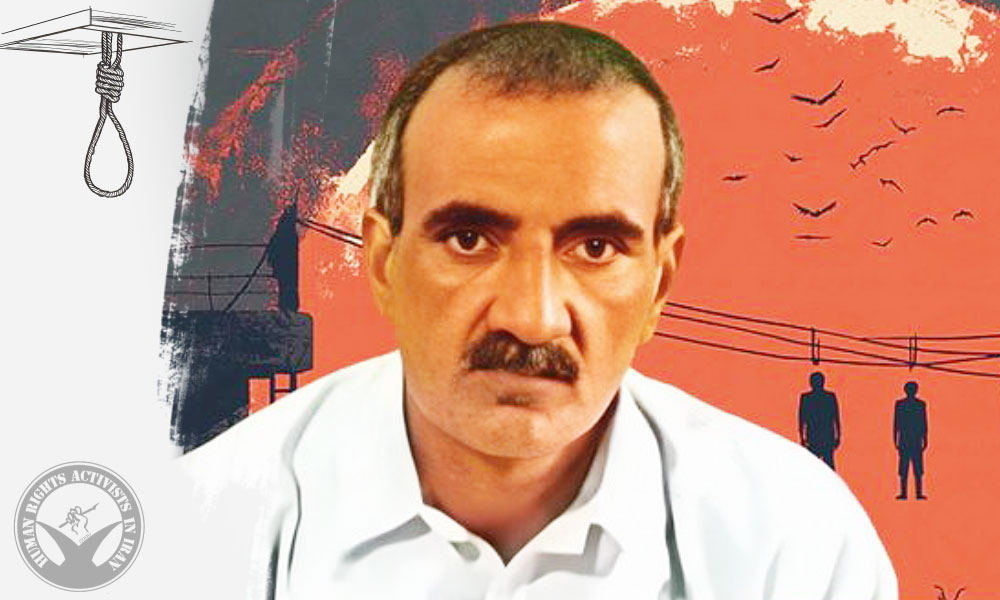
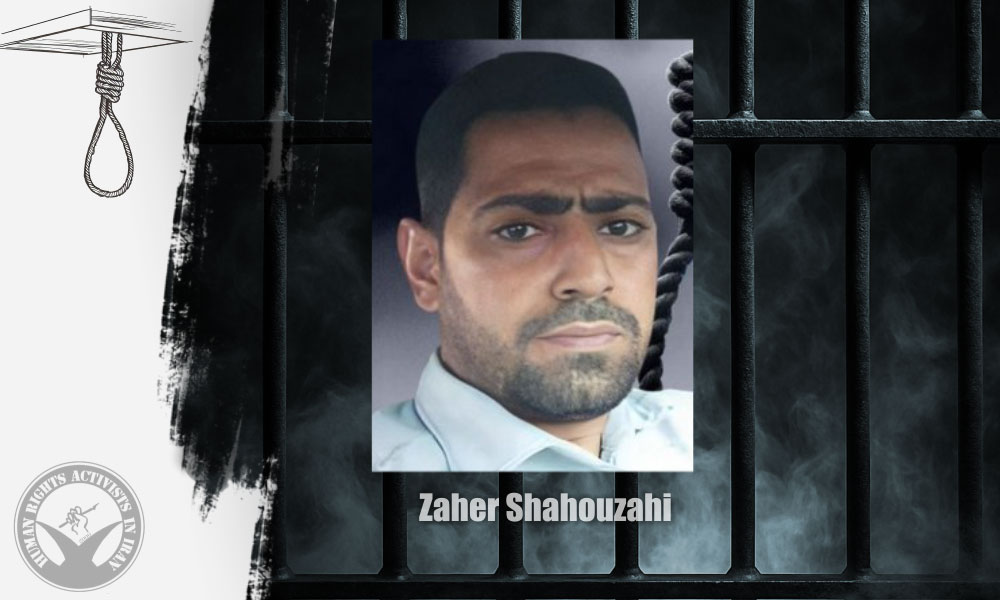
HRANA – The Judiciary announced that at dawn today, May 21, Ramin Zaleh and Karim Maroufpour were executed on charges including membership in anti-government groups and armed action.

According to Mizan, at dawn today, Thursday, May 21, Ramin Zaleh and Karim Maroufpour were executed. The Judiciary’s media center claimed that the individuals were accused of “membership in separatist groups, forming a group with the aim of disrupting national security, armed rebellion through the formation of criminal groups, armed actions intended to confront the Islamic Republic system, shootings, and attempted assassination in line with the objectives of the group.”

According to the report, following the defendants’ arrests and the issuance of indictments, their trial was held in the presence of attorneys and in accordance with legal procedures. Ultimately, “in light of the existing evidence, the defendants’ confessions, their armed actions against the country, and the carrying out of the group’s missions with full knowledge and awareness of the nature of the group,” Ramin Zaleh and Karim Maroufpour were sentenced to death.

Their appeals were also rejected by judges of the Supreme Court, and their death sentences were upheld.

The report did not provide further details, including the city or location where the executions were carried out.

Ramin Zaleh was arrested by security forces without a judicial warrant at his family home on July 22, 2024, and transferred to Naqadeh Prison. In December of last year, he was sentenced to death by Branch One of the Mahabad Revolutionary Court. Karim Maroufpour had also previously been arrested and transferred to Naqadeh Prison.

Simultaneously with the onset of military conflict, the issuance and implementation of death sentences in political and security-related cases have intensified. Including these prisoners, a total of 34 prisoners facing such charges have been executed since the beginning of the conflict between the US-Israel alliance and Iran.

Prisoner Executed in Torbat-e Heydarieh Prison on Drug-Related Crimes

HRANA – At dawn on Saturday, May 16, the death sentence of a prisoner previously convicted on charges related to drug-related crimes was carried out in Torbat-e Heydarieh Prison.

HRANA has identified the prisoner as 48-year-old Ebrahim Farhadi Toupkanlou, a father of three from Sabzevar, who was hanged at dawn on Saturday, May 16, 2026.

According to information obtained by HRANA, Mr. Farhadi Toupkanlou had previously been arrested on charges related to drug-related crimes and was sentenced to death by Branch One of the Sabzevar Revolutionary Court, presided over by Judge Mohammad Gholami.

As of the time of this report, prison authorities and relevant institutions have not officially announced the execution of this prisoner.

According to HRA’s Annual Report, in 2025 at least 2,063 citizens, including 61 women and 2 juvenile offenders, were executed. Of these, the sentences of 11 individuals were carried out in public. During the same period, 172 other individuals were sentenced to death.

Execution of Five Prisoners in Various Prisons Across Iran

HRANA – In recent days, the death sentences of five prisoners, who had previously been sentenced to death in separate cases on charges related to drug offenses and murder, were carried out in the prisons of Kerman, Tabriz, Birjand, and Gorgan.

According to a report by Haal Vsh, two prisoners were executed at dawn on Wednesday, May 13, 2026, in Kerman Prison.

The identities of these prisoners have been reported as Heydar Bamari (Moradkhani), 27, and Mehdi Bamari (Moradkhani), 27, both residents of Dalgan County.

According to the report, the two prisoners had been arrested in 2023 in a joint case on charges related to drug offenses in Kahnooj. After being transferred to Kerman Prison, they were sentenced to death by the Revolutionary Court of the city.

In another report, Haal Vsh announced the execution of a prisoner held in Birjand Prison at dawn on Tuesday, May 12, 2026. The prisoner was identified as Younes Barahoui, 29, married, and a resident of Zahedan.

Mr. Barahoui had also been arrested in 2023 on charges related to drug offenses in the Sahlabad area of Birjand County and was later sentenced to death by the Revolutionary Court of the county.

Additionally, the Iran Human Rights Organization reported the executions of two prisoners in the prisons of Tabriz and Gorgan in recent days.

The prisoner executed in Gorgan Prison was identified as Naser Langarani, 42, and the father of one child. His execution was carried out at dawn yesterday. According to the report, Mr. Langarani had been arrested approximately three years ago on murder charges and was later sentenced to death by a criminal court.

The other prisoner, who was hanged in Tabriz Prison on Sunday, May 10, 2026, was identified as Omid Sadeghi Souri, 26.

Omid Sadeghi Souri had been arrested around four years ago on murder charges following a street fight and was later sentenced to death by a criminal court.

The report quoted an informed source as saying: “Since 20 days ago, when the sentence enforcement unit informed him that he would soon be executed, he had been in extremely poor psychological condition. Omid constantly cried and said that he was very young and afraid of death; he insisted that the killing had been completely accidental and considered himself innocent. He was so devastated that he did not even want to see his family for a final visit and only settled for a brief phone call.”

As of the time of publication of this report, the executions of these prisoners had not been officially announced by prison authorities or the relevant institutions.

According to HRA’s Annual Report, in 2025 at least 2,063 citizens, including 61 women and 2 juvenile offenders, were executed. Of these, the sentences of 11 individuals were carried out in public. During the same period, 172 other individuals were sentenced to death.

January 2026 Protests; Mohammad Abbasi Executed in Ghezel Hesar Prison in Karaj

HRANA – Mohammad Abbasi, one of those arrested during the nationwide protests of January 2026 and held in Ghezel Hesar Prison in Karaj, was executed at dawn today. Mr. Abbasi had been arrested during the January 2026 nationwide protests, and his death sentence had recently been upheld by the Supreme Court.

According to HRANA, another protester detained during the 2026 nationwide protests was executed at dawn today, May 13, 2026.

A source informed on condition of anonymity and close to the family of this political prisoner told HRANA: “Officials at Ghezel Hesar Prison in Karaj asked Mohammad Abbasi’s family to come to the prison for a visit. However, after the family arrived, they were denied the opportunity to see him. After the Abbasi family left the prison, they were informed by phone that Mohammad Abbasi’s execution had been carried out.”

HRANA had previously reported on April 27, 2026, that Branch 39 of the Supreme Court had upheld Mohammad Abbasi’s death sentence after rejecting his appeal. In the same case, the 25-year prison sentence of his daughter, Fatemeh Abbasi, who is currently imprisoned in the women’s ward of Evin Prison, was also fully upheld by the Supreme Court.

Mohammad Abbasi had been arrested during the January 2026 nationwide protests in connection with the case involving the killing of Lieutenant Colonel Shahin Dehghani Kakavandi in Malard. Following judicial proceedings, he was sentenced to death by Branch 15 of the Tehran Revolutionary Court, presided over by Judge Abolghasem Salavati, on the charge of “enmity against God” (moharebeh).

After the initial verdict was issued, Ali Sharifzadeh Ardakani, an attorney-at-law, stated in an interview with Emtedad that the cases of Mohammad Abbasi and his daughter Fatemeh Abbasi had been referred to Branch 39 of the Supreme Court following an appeal by a court-appointed lawyer. He also said that Branch 39 of the Supreme Court, citing Note to Article 48 of the Criminal Procedure Code, had prevented him and another independent lawyer from representing the defendants in the case.

The Emtedad report further stated that there were numerous ambiguities and concerns regarding both the judicial process and the contents of the case against the two defendants. However, independent lawyers had been unable to effectively review or pursue the matter due to being denied access to the case file.

According to data collected by HRANA, simultaneous with the outbreak of military clashes, the issuance and implementation of death sentences in political and security-related cases have intensified. Including Mohammad Abbasi, at least 32 prisoners facing such charges have been executed during this period.

Ehsan Afrashteh Executed on Charges of “Espionage”

HRANA – The Judiciary’s Media Center announced the execution of Ehsan Afrashteh, a graduate with a master’s degree in civil engineering and a network and information technology specialist. Mr. Afrashteh had previously been sentenced to death on charges of “spying for Israel,” and the sentence was carried out at dawn today, May 13, 2026.

According to Mizan News Agency, Ehsan Afrashteh was hanged this morning, Wednesday. The Judiciary’s Media Center claimed that Mr. Afrashteh had cooperated with the Mossad intelligence service and, in exchange for money, provided information to the agency. It was also alleged that after establishing initial contact with Mossad agents in Turkey, he received security and intelligence training and continued his cooperation.

The judiciary further claimed that after being employed by a company affiliated with military institutions, Mr. Afrashteh transferred information regarding employees, organizational structures, and projects at his workplace to Mossad. The report also stated that during a trip to Nepal, he received training in secure communications, encryption, intelligence gathering, and documentation.

The Judiciary’s Media Center did not specify the prison where the execution was carried out.

HRANA had previously reported that in November 2025, following tensions in Ward 7 of Evin Prison, this prisoner was transferred to Security Ward 241 under the supervision of the Ministry of Intelligence. At the time, an informed source told HRANA that forced confessions had been recorded from Ehsan Afrashteh and that he had denied the accusations against him. The source also reported the confiscation of part of his and his family’s assets, as well as pressure and threats against his family members.

In June of 2025, Afrashteh was sentenced to death by Branch 15 of the Tehran Revolutionary Court, presided over by Judge Abolghasem Salavati, on charges of “espionage.” HRANA had also previously reported that after months of being held in solitary confinement, he had been transferred to the general ward of Evin Prison.

Mr. Afrashteh was arrested in 2024 after returning to Iran from Turkey.

Ehsan Afrashteh, aged 32, was originally from Isfahan and lived in Tehran. He held a master’s degree in civil engineering and worked as a network and information technology specialist.

Subscribe to Our Newsletter

Now is definitely not the time to stop reading!

Abdoljalil Shahbakhsh Executed

HRANA – The judiciary’s media outlet announced the execution of Abdoljalil Shahbakhsh, a prisoner facing security-related charges including “armed rebellion” (baghi) and membership in an armed group opposed to the state.

Mizan News Agency, the judiciary’s media outlet, described Mr. Shahbakhsh’s charges as “armed rebellion through armed attacks on law enforcement bases and membership in the rebel group Ansar al-Furqan.”

His death sentence had initially been issued by the Revolutionary Court. After being confirmed by the Supreme Court, the sentence was carried out today, May 12, 2026.

In its statement, the judiciary claimed that “Abdoljalil Shahbakhsh confessed that he became acquainted with the Ansar al-Furqan group about six years ago. He had illegally crossed the border to travel to a neighboring country in order to receive military training.”

The statement did not specify the exact location where the execution was carried out, nor did it provide details regarding the judicial proceedings in this prisoner’s case.

At the same time, a video containing the prisoner’s forced confessions was also published, although the circumstances under which the video was recorded remain unclear.

In recent weeks, amid an intensified security atmosphere stemming from military conflicts, the issuance and implementation of death sentences in political and security-related cases have accelerated significantly. In a recent comprehensive report, HRANA examined the situation of political and security prisoners, particularly those arrested during the January 2026 protests, and documented this trend along with details of related cases.

Erfan Shakourzadeh, Aerospace Engineering Student, Executed on Charges of “Espionage”

HRANA – The Judiciary’s media center announced the execution of Erfan Shakourzadeh, a master’s student in aerospace engineering. Mr. Shakourzadeh had previously been sentenced to death on charges of “intelligence cooperation with Mossad and the CIA.”

Mizan announced this morning that Erfan Shakourzadeh, who had been active in a scientific organization working in the satellite field, was accused of establishing contact with individuals affiliated with Mossad and CIA through platforms such as email, LinkedIn, and WhatsApp.

The report claims that he provided these entities with information regarding the location of his workplace, ongoing projects, and certain details related to the organization where he worked, and in return received payments in cryptocurrency. The Judiciary’s media outlet also alleged that he had sought to establish contact with the CIA in order to obtain a visa and continue his studies abroad.

The judiciary also released a video of what it described as forced confessions attributed to Erfan Shakourzadeh. In the video, which was reportedly recorded under unclear circumstances, he says that CIA and Mossad agents attempted to recruit individuals by promoting the idea that there was “no future or progress in Iran” and by raising topics such as the “futility of studying and working in the country.”

The report did not specify the prison where Mr. Shakourzadeh’s execution was carried out. However, it had previously been reported that he was transferred from Evin Prison to Ghezel Hesar Prison for the implementation of the death sentence.

Erfan Shakourzadeh, approximately 29 years old, was a master’s student in aerospace engineering and satellite technology at Iran University of Science and Technology.

Two Prisoners Executed in Qazvin Prison

HRANA– The death sentences of two prisoners who had previously been sentenced to execution on charges related to drug offenses and murder were carried out in Choobindar Prison in Qazvin.

The Iran Human Rights Organization identified the executed prisoners as Sajjad Hosseini, 28, from Chahardangeh, Tehran, and Behnam Abdi, 49, from Qazvin and the father of two children.

Based on the report, Mr. Abdi, who had been sentenced to death around three years ago on charges related to drug offenses, was hanged at dawn on Wednesday, May 6, 2026. Sajjad Hosseini was also executed at dawn on Monday, April 27, 2026. He had been arrested six years ago following a street fight on a murder charge and was sentenced to death by the criminal court.

The report states that Sajjad Hosseini had previously been taken to the gallows twice, once in 2023 and once in June of last year, but both times he was returned to his ward after receiving temporary reprieves from the victim’s family. The victim’s family had requested 9 billion tomans in exchange for granting forgiveness. Sajjad’s family managed to raise 5.4 billion tomans through extensive efforts, but the complainant’s family refused to accept the amount.

According to HRA’s Annual Report, in 2025 at least 2,063 citizens, including 61 women and 2 juvenile offenders, were executed. Of these, the sentences of 11 individuals were carried out in public. During the same period, 172 other individuals were sentenced to death.

Two Prisoners Executed in Kermanshah and Isfahan

HRANA- During the current week, two prisoners were executed in Isfahan and Kermanshah prisons on charges related to drug offenses and murder, respectively.

In the early hours of Monday, May 4, the execution sentence of a prisoner previously convicted on drug-related charges was carried out in Dastgerd Prison in Isfahan.

According to Iran Human Rights Organization, the prisoner was identified as 30-year-old Masoud Shirzad, a resident of Kashan.

Based on the report, Mr. Shirzad had been arrested approximately three years ago on drug-related charges and was later sentenced to death by the Revolutionary Court.

His execution took place simultaneously with the execution of Ghasem Nouri Roudini in Dastgerd Prison in Isfahan.

Yesterday, Wednesday, May 6, Kurdpa reported the execution of a prisoner identified as Mohammad-Taghi Shahveisi, a married father of four, in Kermanshah Prison. According to the report, Mr. Shahveisi had been arrested last year on a murder charge and was later sentenced to death by judicial authorities.

As of the time of this report, prison officials and relevant authorities have not publicly announced the executions of these prisoners.

According to HRA’s Annual Report, in 2025 at least 2,063 citizens, including 61 women and 2 juvenile offenders, were executed. Of these, the sentences of 11 individuals were carried out in public. During the same period, 172 other individuals were sentenced to death.

January Protests: Ebrahim Dowlatabadi-Nejad Executed

HRANA – Ebrahim Dowlatabadi-Nejad, one of those arrested in connection with the January 2026 protests in Mashhad, was executed at dawn yesterday alongside two other protesters in Vakilabad Prison in the city. Earlier today, HRANA had reported the executions of Mehdi Rasouli and Mohammadreza Miri.

According to Mizan News Agency, the Judiciary’s media center, the death sentence of Ebrahim Dowlatabadi-Nejad was carried out at dawn yesterday after being upheld by the Supreme Court. He had been arrested in connection with protest events on January 8 and 9, 2026 in the Tabarsi area of Mashhad.

This prisoner had been sentenced to death and confiscation of property on charges including “acting against national security,” “leading and organizing protest gatherings,” “inciting and encouraging individuals to participate in protests,” and “destruction of public property.”

In outlining the charges, the Judiciary cited his presence during protests in the Tabarsi area on January 8 and 9, his alleged role in directing crowds, blocking roads, setting fires, damaging public and private property, and online activities calling for protests. However, no independent information has been published regarding the judicial process or details of his case.

Early this morning, HRANA reported for the first time that Mehdi Rasouli, 25, and Mohammadreza Miri, 21, were also executed at dawn yesterday in Vakilabad Prison in Mashhad. Their death sentences had previously been issued in connection with the killing of a Basij member. Their bodies were ultimately buried under security measures in a village near Kashmar.

HRANA had previously published a detailed report examining the process of issuing and carrying out death sentences in political and security-related cases amid the onset of military tensions and an intensified security atmosphere. The report, focusing on political and security prisoners, particularly those detained during the January 2026 protests, highlighted that in some cases, the handling of these cases had proceeded at a pace exceeding usual procedures, with a shortened time span between arrest, sentencing, and execution. It also provided a list of names and descriptions of these cases.

It should be noted that protests and strikes by shopkeepers and bazaar merchants began in Tehran on Sunday, December 28, 2025, and within two days spread beyond markets and commercial centers. With the participation of students, citizens, and various social groups, these protests became one of the largest protest movements of recent years. Following the crackdown by security and law enforcement forces, thousands were killed or injured, and tens of thousands were arrested or summoned by security agencies. For more information, readers may refer to HRANA’s comprehensive report titled “Crimson Winter,” documenting the first fifty days following the outbreak of Iran’s nationwide protests.