
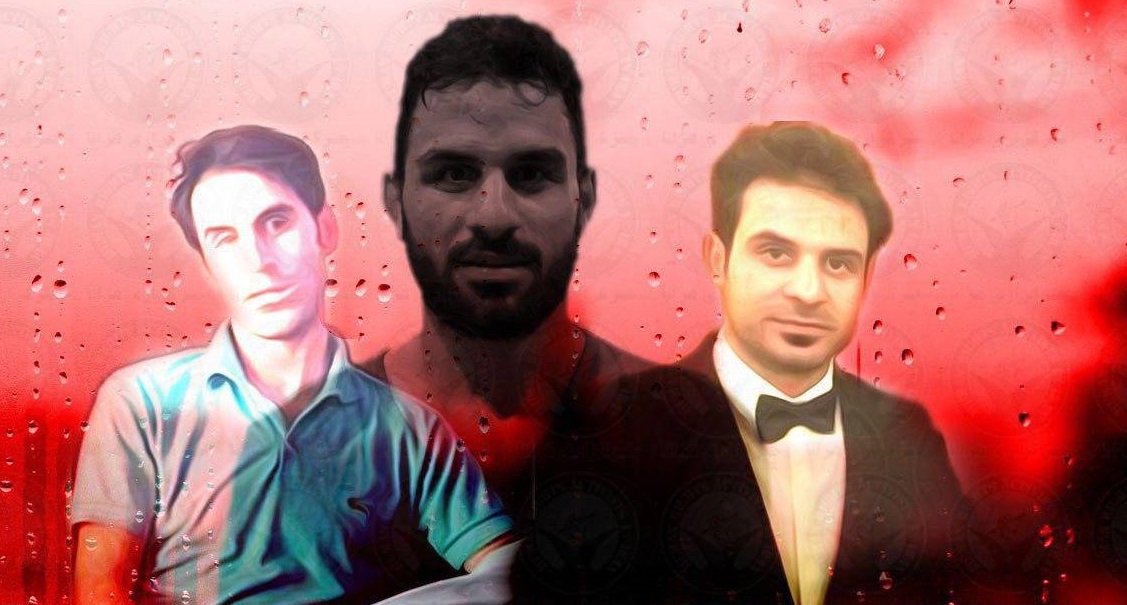
Afkari Brothers Denied Medical Care Amidst Ongoing Torture in Adelabad Prison

Political prisoners Vahid and Habib Afkari have been denied medical care during their 9 month detention in Adelabad Prison in Shiraz. During this time, they have been repeatedly beaten and tortured by prison officials attempting to force confessions related to their role in the 2018 nationwide protests.

According to HRANA, the news agency of Human Rights Activists, the brothers are being held in the Ebrat ward, also known as the “closed ward” of the prison.

The inmates and their family repeatedly requested to be transferred to a political prison, but despite the prosecutor’s promise, authorities have thwarted all efforts to make the move happen. Saeed Afkari has commented on the condition of his imprisoned brothers.

“According to medical jurisprudence, my brother Habib suffered a broken toe, a non-welded wrist fracture, and a torn shoulder during his detention,” Saeed said. “My other brother Vahid suffered neck and arm injuries as a result of a suicide attempt in protest of physical and mental torture. They have been in solitary confinement for 279 days and have not been allowed treatment.”

In mid-September 2020, the two political prisoners were transferred to the Ebrat ward (closed ward), a detention center for prisoners deprived of phone contact. After nearly nine months, they are still being held in this ward of Adelabad prison in Shiraz.

Based on prison regulations and laws, definitive convicts should only be held in public wards under the supervision of the Prisoners’ Organization. According to the same by-laws, keeping the accused in detention should be permitted only with a written order from the judicial authorities. Thus, keeping Habib and Vahid Afkari outside the public ward of the prison without a written order is against the law.

Navid Afkari, Vahid Afkari, and Habib Afkari were arrested in connection with the nationwide protests in 2018.

Navid Afkari, an Iranian wrestler, was executed at Adelabad Prison in Shiraz in September 2020 despite serious ambiguities in the case and a worldwide wave of support for him. Vahid Afkari was sentenced to 54 years and 6 months in prison and 74 lashes, Habib Afkari to 27 years and 3 months in prison and 74 lashes.


Parliament Approves General Plan to Reward Individuals Sanctioned by “Hostile” Countries and Increase Punishment for Espionage

The general plan to increase the punishment of espionage was approved by Parliament. The plan will also extend  benefits to individuals sanctioned by countries deemed “hostile” by a designated committee.

According to HRANA, the news agency of Human Rights Activists, quoting the Islamic Consultative Assembly News Agency (ICANA), under the proposed plan, those who spy for “hostile” countries will be considered “corruptors on earth” and sentenced to execution.

The determination of whether the spying country is hostile or not will fall under the responsibility of a committee consisting of representatives of the IRGC Intelligence Organization, the NAJA Intelligence Organization, and the Ministry of Intelligence, headed by the representative of the General Staff of the Armed Forces.

A member of the Parliamentary Judiciary Commission has stated that those who are on the list of sanctions of countries deemed hostile will be considered “self sacrificers” (a citizen classification most commonly reserved for veterans) and enjoy the attached rights and privileges.

Citizen Sentenced to Public Execution in Zahedan

A prisoner in Zahedan was recently sentenced to execution in public.

According to HRANA, the news agency of Human Rights Activists, quoting Rokna News, the prisoner was arrested for the murder of his wife and two of his wife’s relatives in Zahedan.

The Public Prosecutor of Sistan and Baluchestan Province said, “A death sentence has been issued for an angry groom who killed a number of his wife’s family members, and if approved by the Supreme Court, he will be executed soon.”

Shahin Mirkhani Executed in Shirvan Prison

On May 30, Shahin Mirkhani was executed in Shirvan Prison in North Khorasan Province.

According to HRANA, the news agency of Human Rights Activists, quoting Iran Human Rights (IHR), 40-year-old Mirkhani, son of Rasoul, was previously sentenced to death on drug-related charges.

Per the report, an informed source said, “Shahin Mirkhani was sentenced to death for carrying 420 kilograms of crystal meth stimulant, and on Sunday was executed in the backyard of Shirvan Prison.”

Iran ranks first in the world in citizen executions per-capita, according to international organizations. The Statistics and Publication Center of the Human Rights Activists in Iran (HRA) reported that between January 1st and  December 20th of 2020, at least 236 citizens were executed. One of these citizens was executed publicly, and two were juvenile offenders. An additional 95 citizens were sentenced to death.

According to the report, more than 72% of executions in Iran are not reported by the government or the judiciary. Human rights organizations call these “secret executions.”

At the time of writing, Mirkhani’s execution has not been reported by domestic media or officials in Iran.

Death Sentence Issued in Ilam

According to HRANA, the news agency of Human Rights Activists, quoting Rokna News, Ilam province police commander Delavar al-Qasi-mehr announced the issuance of a sentence for a defendant in Darreh Shahr in Ilam Province.

The commander said that this man, who is accused of killing several of his relatives, a conscripted soldier, and a law enforcement officer in 2020, was sentenced to death three times over by the First Branch of the Criminal Court of Ilam Province.

Subscribe to Our Newsletter

Now is definitely not the time to stop reading!

Married Couple Executed in Qazvin Prison on Drug-Related Charges

On May 30, two prisoners were executed in Qazvin prison on drug-related charges.

According to HRANA, the news agency of Human Rights Activists, quoting Iran Human Rights (IHR), Mr. Yousef Pirastvan and Ms. Pirastvan (first name unknown) were a married couple at the time of their arrest.

An informed source said that Mr. and Ms. Pirastvan were arrested 7-8 years ago on the Qazvin-Karaj highway on charges of carrying 380 kilograms of drugs and were sentenced to death in their first court session.

According to international organizations, Iran ranks first in the world in citizen executions per-capita. The Statistics and Publication Center of the Human Rights Activists in Iran (HRAI) reported that between January 1st and  December 20th of 2020, at least 236 citizens were executed. One of these citizens was executed publicly, and two were juvenile offenders. An additional 95 citizens were sentenced to death.

More than 72% of executions in Iran are not reported by the government or the judiciary. Human rights organizations call these “secret executions.”

At the time of writing, their execution has not been reported by domestic media or officials in Iran.

Three sentenced to Death in Tehran Under Qisas (Eye-for-an-Eye) Principle of Shariah Law

In two isolated incidents, three citizens were sentenced to death in Tehran, all on charges of murder.

According to the HRANA, the news agency of Human Rights Activists, quoting Rokna news,  death sentences were upheld by the Supreme Court for two defendants who were sentenced under the Qisas (loosely translated as eye-for-an-eye) principle of Shariah Law.

The sentence was issued after 37-year-old Meysam, a shopkeeper, was stabbed to death in Varamin in Tehran.

In a separate incident, according to the Javanonline News, a defendant was sentenced to death for murder under the Qisas principle by the criminal court in Tehran province.

The victim’s wife and two murder suspects, all suspected of orchestrating the killing, were also sentenced to prison time.


Two Defendants Sentenced to Death in Tehran, Two Others Sentenced to 10 Years

According to HRANA, the news agency of Human Rights Activists (HRA), quoting ROKNA news, 30-year-old Sohrab was sentenced to death for raping a teenage girl in Tehran.

Two other young men, Reza and Farhad, were sentenced to 10 years in prison each as they did not try to prevent the assault.

According to ROKNA news, in a separate story, a defendant in Tehran was sentenced to death for murder.

6 Prisoners Executed in Birjand Prison in the South Khorasan Province 

On May 25, six prisoners were executed in Birjand prison in South Khorasan.

According to HRANA, the news agency of Human Rights Activists, quoting RASANK news, all six had been previously arrested on drug-related charges. The report has identified the six as Javad Nakhaei, Mohammad Reza Harati, Reza Azarian, Ruhollah Rigi, and Alireza Farsi, all from Zabol, and Reza As’adi from Mashhad.

Iran ranks first in the world in citizen executions per-capita, according to international organizations. The Statistics and Publication Center of the Human Rights Activists in Iran (HRAI) reported that between January 1st and  December 20th of 2020, at least 236 citizens were executed. One of these citizens was executed publicly, and two were juvenile offenders. An additional 95 citizens were sentenced to death.

According to the report, more than 72% of executions in Iran are not reported by the government or the judiciary. Human rights organizations call these “secret executions.”

At the time of this writing, their execution has not been reported by domestic media or officials in Iran.

Female Prisoner Kobra Fatemi Executed in Yazd Prison Under Qisas (Eye-for-an-Eye) Principle of Shariah Law

On May 23, Kobra Fatemi was executed in Yazd Prison on a charge of murder under the Qisas (loosely translated as “eye for an eye”) principle of Shariah Law.

According to HRANA, the news agency of Human Rights Acvitists, quoting Iran Human Rights (IHR),  41-year-old Fatemi had been in prison since 2015 for the murder of her husband.

Based on the report, an informed source stated: “The victim’s family were going to grant forgiveness but the victim’s paternal uncle, who is a member of the Islamic Revolutionary Guards Corps, insisted that the sentence be carried out and refused diya (blood money) on behalf of the victim’s family.”

“Kobra Fatemi had been married for three years and did not have any children,”  the source added. “Family disputes led her to the murder of her husband,”

According to international organizations, Iran ranks first in the world in citizen executions per-capita. The Statistics and Publication Center of the Human Rights Activists in Iran (HRAI) reported that between January 1st and  December 20th of 2020, at least 236 citizens were executed. One of these citizens was executed publicly, and two were juvenile offenders. An additional 95 citizens were sentenced to death.

The report states that more than 72% of executions in Iran are not reported by the government or the judiciary. Human rights organizations call these “secret executions.”

At the time of writing, her execution has not been reported by domestic media or officials in Iran