Two Prisoners Executed in Bandar Abbas and Kerman Prisons

HRANA News Agency – At dawn today, Tuesday, April 15, the death sentences of two prisoners previously convicted on drug-related charges were carried out in the prisons of Bandar Abbas and Kerman.

According to the report by Haal Vsh, at dawn today, Tuesday, April 15, 2025, a prisoner identified as Abubakr Shahbakhsh, aged about 35,a resident of a village in Zahedan, was executed in Kerman Prison. Mr. Shahbakhsh was arrested in 2021 on drug-related charges in Kerman and later sentenced to death by the Revolutionary Court.

Also this morning, the execution of another prisoner identified as Ayoub Berniaei (Sarhadi), 37 years old, father of two children, and a resident of Rameshk in Kerman Province, was carried out in Bandar Abbas Prison. Mr. Berniaei was arrested in 2021 on drug-related charges in Bandar Khamir and later sentenced to death by the Revolutionary Court. He had also been transferred to solitary confinement on Saturday, April 12, in preparation for the execution. Prior to the execution, he had a final visit with his family.

As of the time of this report, the executions have not been officially announced by prison authorities or relevant institutions.

According to data compiled by HRANA, 52.69% of all executions in Iran in 2024 were related to drug-related charges. Notably, only 6% of the executions were officially announced, highlighting a significant lack of transparency. For a detailed analysis of these executions and the associated statistics, see HRANA’s full report.

Seven on Death Row Moved to Solitary in Ghezel Hesar Prison

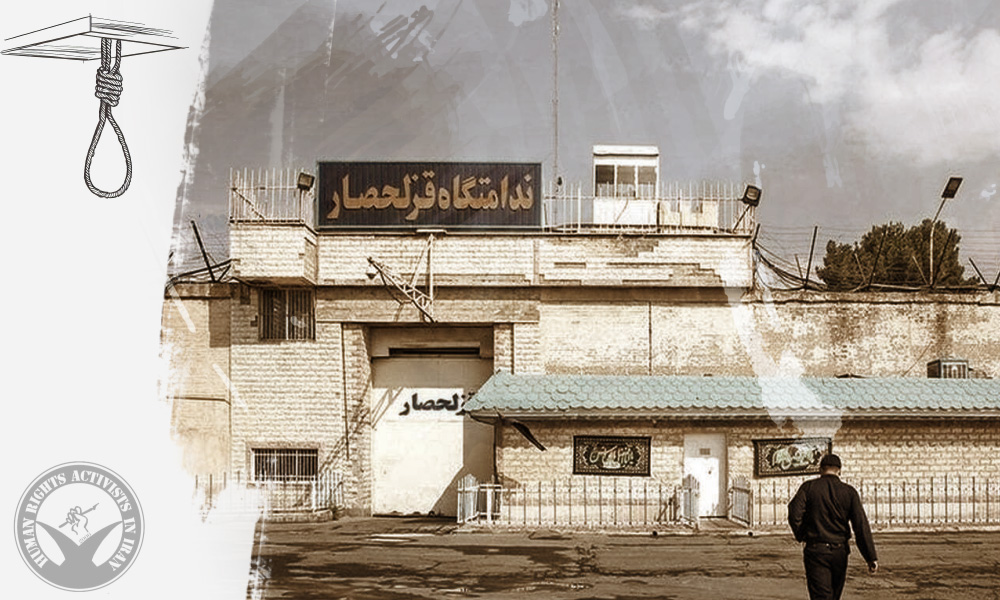
HRANA News Agency – Yesterday, April 14, seven prisoners in Ghezel Hesar Prison in Karaj who had previously been sentenced to death on charges related to drug offenses and other non-political crimes were transferred to solitary confinement in preparation for the implementation of their sentences.

The transfer, which took place today, Monday, April 14, 2025, was for the purpose of carrying out their death sentences. Four of these individuals had previously been arrested on drug-related charges and were subsequently sentenced to death by the Revolutionary Court. The remaining prisoners were sentenced to death for other non-political crimes.

HRANA is investigating further details, including the identities of the prisoners.

According to data gathered by the Department of Statistics and Publication of Human Rights Activists, Ghezel Hesar Prison in Karaj witnessed the highest number of executions in 2024. For a comprehensive examination of the details and statistics surrounding the executions in Iran, refer to HRANA’s report.

Seven Prisoners Executed Over Two Days in Zahedan Prison

HRANA News Agency – Over the course of Saturday and Sunday, seven prisoners were executed in Zahedan Prison on charges related to drug offenses and murder.

According to HRANA, quoting Haal Vsh, four of the executed prisoners were identified as Majid Lajaei (approx. 36 years old), Ramin Alizahi (approx. 38, father of four), Davood Bajizahi (Shahouzahi, father of six), and a man with the surname Rigi (first name unknown). All four were residents of Zahedan.

Ramin Alizahi was arrested around a year and a half ago, Majid Lajaei in 2023, and Davood Bajizahi in 2022—all on drug-related charges. They were later sentenced to death by the Zahedan Revolutionary Court.

Haal Vsh also reported that on Sunday, three more prisoners—Allahnazr Gorgij (about 40 years old, father of six), Abdolsalam Baloch Mashkandi (Ahurani, approx. 28), and Fereydoun Mohammadi—were executed in the same prison.

According to the report, Abdolsalam Baloch Mashkandi had been convicted of killing a Sepah Bank security guard in Chabahar on August 25, 2022. Allahnazr Gorgij was arrested seven years ago on a murder charge in Zahek County and later sentenced to death. Fereydoun Mohammadi had also been sentenced to death for murder.

As of the time of this report, the executions have not been officially confirmed by prison authorities or relevant state institutions.

Report on the Execution of Two Prisoners in Qom and Shahrud Prisons

HRANA News Agency – At dawn on Wednesday, April 9, 2025, the death sentence of a prisoner convicted of drug-related offenses was carried out in Qom Prison, according to Iran Human Rights. In a separate case, with the execution of another prisoner in Shahrud Prison, the total number of executions in that facility on Wednesday rose to two.

The individual, identified as Habib Aghaei, a 32-year-old from Karaj, was hanged at dawn on April 9, 2025. He had been arrested two years ago on drug-related charges and later sentenced to death by the judiciary.

Meanwhile, the number of executions in Shahrud Prison that day rose to two.

The second executed prisoner was identified as Moein Ashrafi, a 32-year-old resident of a village in Bastam. He was arrested five years ago on charges of murder during a group altercation and later sentenced to death. Despite his family’s offer to pay 3 billion tomans in blood money, the plaintiffs declined to grant their consent for a pardon.

HRANA had previously reported the execution of another prisoner, Gholamreza Pardakhteh (Gorgij), in Shahrud Prison on the same day.

As of the time of this report, these executions have not been officially confirmed by prison authorities or other responsible institutions.

Death Sentence of Shahriar Bayat Overturned by Supreme Court

HRANA News Agency – The death sentence of Shahriar Bayat, a 64-year-old political prisoner held in Evin Prison, has been overturned by Branch 39 of the Supreme Court. His case has been sent to a parallel branch of the Tehran Criminal Court for a retrial.

Amin Adel Ahmadian, Bayat’s attorney, announced on social media that the death sentence previously issued against Bayat for sabb al-nabi (insulting the Prophet) was overturned by Branch 39 of the Supreme Court. The case has now been referred to Branch 10 of Tehran Province’s Criminal Court One for reconsideration.

In January 2025, Bayat’s daughter, Elaheh Bayat, told HRANA that his request for appeal had been registered and the case was under review by the Supreme Court.

On February 14, 2024, Bayat was sentenced to death by Branch 13 of Tehran’s Criminal Court One, with judges Saeed Sharafati and Ali Toghian issuing the majority verdict. The charges included sabb al-nabi (insulting the Prophet of Islam), insulting holy figures, and blasphemy—allegedly through sharing images and posts on social media.

However, at the same time, a minority opinion was issued by Judge Abolghasem Morad-Talab, who ruled in favor of a reduced sentence of six months in prison, citing Bayat’s expression of remorse.

It’s worth noting that an earlier decision by the Public and Revolutionary Prosecutor’s Office in Shahriar had initially dismissed the sabb al-nabi charge against Bayat. However, following an appeal by the Shahriar Prosecutor, the case was referred to the city’s Revolutionary Court. That court ultimately declined jurisdiction over the charge, leading the case to be transferred to Tehran’s Criminal Court One.

The issuance of a death sentence and the overall judicial process have raised serious concerns about inconsistencies and irregularities in Bayat’s case. The sentence was handed down just weeks after Bayat had been granted furlough.

Bayat, a political prisoner, was arrested at 4 a.m. on September 25, 2022, at his home in Shahriar by security forces amid the nationwide protests. He was initially transferred to the Greater Tehran Penitentiary and later moved to Ward 6 of Evin Prison.

On March 1, 2023, in a separate case, Bayat was sentenced by Branch 1 of the Shahriar Revolutionary Court to a total of 18 years in prison: One year for propaganda against the regime, two years for insulting the founder of the Islamic Republic and the Supreme Leader, five years for assembly and collusion against national security, ten years for forming and running an unlawful (virtual) group aimed at disturbing national security.

Of these, the ten-year sentence was deemed enforceable as the most severe, but following a request for sentence reduction, it was lowered to eight years and six months.

Shahriar Bayat, aged about 64, is a retired government employee, married, and a resident of Shahriar.

Subscribe to Our Newsletter

Now is definitely not the time to stop reading!

A Prisoner Executed in Gonbad-e Kavus Prison

HRANA News Agency – On Wednesday, April 9, 2025, the death sentence of a prisoner previously convicted of murder was carried out in Gonbad-e Kavus Prison.

HRANA has identified the individual as Behrouz Shirmohammadli, a 27-year-old Sunni Turkmen resident of Gonbad-e Kavus, Golestan Province.

According to information received by HRANA, Mr. Shirmohammadli was involved in a street fight in 2021 during which he committed murder and was subsequently arrested. He was eventually sentenced to death by a criminal court.

As of the time of this report, the execution has not been officially announced by prison authorities or relevant institutions.

In 2024, the Department of Statistics and Publication of Human Rights Activists in Iran documented 812 cases related to the right to life, including the sentencing of 214 individuals to death and the execution of 930 individuals. Among these, 4 executions were carried out in public. Of those executed, 818 were male, 26 were female, and 5 were juvenile offenders—individuals under 18 years old at the time of their alleged crimes.

Report on Four Death Row Prisoners; One Sentenced for Alleged Crimes Committed as a Minor

HRANA News Agency – Four prisoners, identified as Abdolrahim Ghanbarzahi Gorgij, Eido Shah-Bakhsh, Abdolghani Shahbakhsh, and Soleiman Shahbakhsh, who have been sentenced to death in a joint case, are currently held in Ghezel Hesar Prison in Karaj.

The death sentences of Eido, Abdolghani, and Soleiman Shahbakhsh have already been upheld by the Supreme Court, and the request for a retrial by Abdolrahim Ghanbarzahi Gorgij was recently rejected by the same authority. Ghanbarzahi Gorgij has been held in solitary confinement for over 45 days. Among them, Soleiman Shahbakhsh was under 18 years old when the judicial case was initiated.

On April 9, 2025, Branch 9 of the Supreme Court, presided over by Judge Ghasem Mazinani, officially rejected the retrial request submitted by death row prisoner Abdolrahim Ghanbarzahi Gorgij. The request had been formally filed on February 7, 2025. Prior to this, the Supreme Court had upheld the death sentences of the other three defendants—Eido, Abdolghani, and Soleiman Shahbakhsh—and referred their cases to the Tehran Security Prosecutor’s Office for enforcement.

Reza Salehiyeh, an attorney and human rights activist, stated: “Mr. Ghanbarzahi Gorgij was pressured by prison officials last February to sign a repentance letter. After he refused, saying he would not accept it under coercion, he was sent to solitary confinement as punishment. Prison officials claimed the move was due to a dispute with inmates convicted of common crimes. He has been held in isolation since late February, raising concerns about the imminent execution of his sentence.”

Soleiman Shahbakhsh, one of the defendants, was born in October 1996 and was under 18 at the time of the alleged events. Nevertheless, his minor status was not taken into consideration during the trial or in the sentencing process, despite Iranian domestic laws and international commitments requiring special judicial procedures for minors.

According to attorney Salehiyeh, the retrial request for Mr. Ghanbarzahi Gorgij faced significant delays, with only one opportunity for in-person follow-up at the Supreme Court’s Branch 9 office over several weeks. Despite the end of the Nowruz holidays, neither he nor other lawyers received a copy of the ruling until its official issuance on April 9.

Ghanbarzahi Gorgij’s family asserts that his case was handled with violations of fair trial principles and that the confessions used against him were obtained under torture and coercive interrogations. They demand an immediate halt to the execution process and a fair review of the case.

The case of the four prisoners was referred to the Tehran Security Prosecutor’s Office for enforcement in late October 2024, and judicial procedures had already moved into the sentence enforcement phase long before. The death sentences, issued on February 4, 2024, by Branch 28 of the Tehran Revolutionary Court presided over by Mohammadreza Amouzad Khalili, were based on charges of “baghi (armed rebellion) through membership in anti-regime groups” and “armed uprising.” These sentences were later upheld by Branch 32 of the Supreme Court.

In the initial stages of the trial, the individuals were also accused of participating in armed operations that resulted in the deaths of IRGC and police forces between 2007 and 2009. However, the preliminary court found some of these charges unsubstantiated and issued acquittals.

Since the first arrests in this case in 2012, the legal process has been marred by disruptions and prolonged uncertainty. Some defendants, including Eido and Abdolghani Shahbakhsh, were rearrested in 2016 after initially being acquitted by the Zahedan Revolutionary Court—a move reportedly triggered by security agencies objecting to the acquittals.

Over 5 Executions Per Day on Average: 26 Prisoners Executed Across Iran Since Start of the Week

HRANA News Agency – Since the beginning of this week, Iranian prisons have witnessed a significant surge in executions. Over the past five days, at least 26 prisoners—mostly convicted of murder and drug-related offenses—have been executed across various prisons in Iran. Among them were five prisoners executed on political-security charges.

According to HRANA, the news agency of Human Rights Activists in Iran, executions in Iranian prisons have sharply increased in recent days.

Since the start of the week, at least 26 prisoners have been executed in Ghezel Hesar (Karaj), Shiraz, Kermanshah, Gonabad, Shahrud, Vakilabad (Mashhad), Aligudarz, Bukan, Dezful, Qom, Zanjan, and Sepidar (Ahvaz) prisons. This averages over five executions per day. Vakilabad Prison alone accounted for at least 10 executions in a single day, the highest recorded among these facilities.

On Wednesday, April 9, four prisoners—Bahram Hodavand-Khani, Salar Amir Jalali, Abolfazl Karimi, and another unidentified individual—were executed in Ghezel Hesar Prison for separate murder cases. Also on Wednesday, Esmail Dahmardeh, convicted on drug-related charges by the Revolutionary Court of Gonabad, was executed in Gonabad Prison. Gholamreza Pardakhteh faced a similar fate in Shahroud Prison. Another prisoner, Kambiz Fathi, was hanged in Kermanshah Prison for murder. Two more prisoners, Vahid Ashouri (30) and Afghan national Saud Mirzaei, were executed in Shiraz Prison, both convicted of murder.

On Tuesday, April 8, at least 10 prisoners—including three women—were executed in Vakilabad Prison, Mashhad. Five of them—Farhad Shakeri, Abdolhakim Azim Gorgij, Abdolrahman Gorgij, Taj Mohammad Khormali, and Malek Ali Fadaie Nasab—were executed on political-security charges. Four others, including two women, were executed on drug-related charges. HRANA identified two of them as Ahmad Sanaie and Mohammadreza Damideh. Additionally, one woman convicted of murder was also executed at the same facility.

On Monday, April 7, Shahram Goodarzi (36) and Taher Shabani (35) were executed in Aligudarz Prison in separate murder cases. That same day, Seyed Taha Hassani, a prisoner from Bukan, was executed in Bukan Prison, and Hamid Abdouli was hanged in Dezful Prison—both convicted of murder.

On Sunday, April 6, a prisoner named Samir Ghasemi was executed in Qom Prison. He had been sentenced to death by the criminal court for murder.

On Saturday, April 5, Hossein Molazadeh (29), convicted on drug charges, was executed in Zanjan Prison. Simultaneously, Zahir Shamsi (32), a father of a five-year-old girl from Dezful, was executed in Sepidar Prison, Ahvaz. Shamsi had been arrested four years ago for the alleged murder of his cousin.

This recent escalation in executions has sparked serious concerns over widespread violations of the right to life in Iran. Human rights organizations consider Iran’s extensive use of the death penalty to be in stark violation of its international obligations and have called for an immediate moratorium on capital punishment.

At Least Four Prisoners Executed in Ghezel Hesar Prison, Karaj

HRANA News Agency – At dawn yesterday, April 9, 2025, at least four prisoners previously sentenced to death on separate murder charges were executed by hanging in Ghezel Hesar Prison in Karaj.

The identities of three of them have been confirmed by HRANA as: Bahram Hodavand-Khani, a resident of Varamin; Salar Amir Jalali, a resident of Tehran; and Abolfazl Karimi, a resident of Karaj.

Based on information received by HRANA, the inmates had been arrested in separate cases on murder charges and later sentenced to death by the criminal court. Among them, Bahram had been on death row for 16 years.

On April 8, HRANA had reported the transfer of 10 inmates to solitary confinement in preparation for the execution of their death sentences. Three of them, who were sentenced to death for drug-related offenses, were returned to the ward after their executions were halted.

As of the time of this report, the execution of these prisoners has not been officially announced by prison authorities or relevant institutions.

According to data gathered by the Department of Statistics and Publication of Human Rights Activists, Ghezel Hesar Prison in Karaj witnessed the highest number of executions in 2024. For a comprehensive examination of the details and statistics surrounding the executions in Iran, refer to HRANA’s report.

Death Sentence Carried Out for Inmate in Qom Prison

HRANA News Agency – At dawn on Sunday, April 6, 2025, the death sentence of a prisoner previously convicted of murder was carried out in Qom Prison.

According to HRANA, the news agency of Human Rights Activists in Iran, the executed prisoner has been identified as Samir Ghasemi. Mr. Ghasemi was arrested on murder charges and later sentenced to death by a criminal court.

As of the time of this report, his execution has not been officially announced by prison authorities or relevant institutions.

In 2024, the Department of Statistics and Publication of Human Rights Activists in Iran documented 812 cases related to the right to life, including the sentencing of 214 individuals to death and the execution of 930 individuals. Among these, 4 executions were carried out in public. Of those executed, 818 were male, 26 were female, and 5 were juvenile offenders—individuals under 18 years old at the time of their alleged crimes.