Over 5 Executions Per Day on Average: 26 Prisoners Executed Across Iran Since Start of the Week

HRANA News Agency – Since the beginning of this week, Iranian prisons have witnessed a significant surge in executions. Over the past five days, at least 26 prisoners—mostly convicted of murder and drug-related offenses—have been executed across various prisons in Iran. Among them were five prisoners executed on political-security charges.

According to HRANA, the news agency of Human Rights Activists in Iran, executions in Iranian prisons have sharply increased in recent days.

Since the start of the week, at least 26 prisoners have been executed in Ghezel Hesar (Karaj), Shiraz, Kermanshah, Gonabad, Shahrud, Vakilabad (Mashhad), Aligudarz, Bukan, Dezful, Qom, Zanjan, and Sepidar (Ahvaz) prisons. This averages over five executions per day. Vakilabad Prison alone accounted for at least 10 executions in a single day, the highest recorded among these facilities.

On Wednesday, April 9, four prisoners—Bahram Hodavand-Khani, Salar Amir Jalali, Abolfazl Karimi, and another unidentified individual—were executed in Ghezel Hesar Prison for separate murder cases. Also on Wednesday, Esmail Dahmardeh, convicted on drug-related charges by the Revolutionary Court of Gonabad, was executed in Gonabad Prison. Gholamreza Pardakhteh faced a similar fate in Shahroud Prison. Another prisoner, Kambiz Fathi, was hanged in Kermanshah Prison for murder. Two more prisoners, Vahid Ashouri (30) and Afghan national Saud Mirzaei, were executed in Shiraz Prison, both convicted of murder.

On Tuesday, April 8, at least 10 prisoners—including three women—were executed in Vakilabad Prison, Mashhad. Five of them—Farhad Shakeri, Abdolhakim Azim Gorgij, Abdolrahman Gorgij, Taj Mohammad Khormali, and Malek Ali Fadaie Nasab—were executed on political-security charges. Four others, including two women, were executed on drug-related charges. HRANA identified two of them as Ahmad Sanaie and Mohammadreza Damideh. Additionally, one woman convicted of murder was also executed at the same facility.

On Monday, April 7, Shahram Goodarzi (36) and Taher Shabani (35) were executed in Aligudarz Prison in separate murder cases. That same day, Seyed Taha Hassani, a prisoner from Bukan, was executed in Bukan Prison, and Hamid Abdouli was hanged in Dezful Prison—both convicted of murder.

On Sunday, April 6, a prisoner named Samir Ghasemi was executed in Qom Prison. He had been sentenced to death by the criminal court for murder.

On Saturday, April 5, Hossein Molazadeh (29), convicted on drug charges, was executed in Zanjan Prison. Simultaneously, Zahir Shamsi (32), a father of a five-year-old girl from Dezful, was executed in Sepidar Prison, Ahvaz. Shamsi had been arrested four years ago for the alleged murder of his cousin.

This recent escalation in executions has sparked serious concerns over widespread violations of the right to life in Iran. Human rights organizations consider Iran’s extensive use of the death penalty to be in stark violation of its international obligations and have called for an immediate moratorium on capital punishment.
At Least Four Prisoners Executed in Ghezel Hesar Prison, Karaj

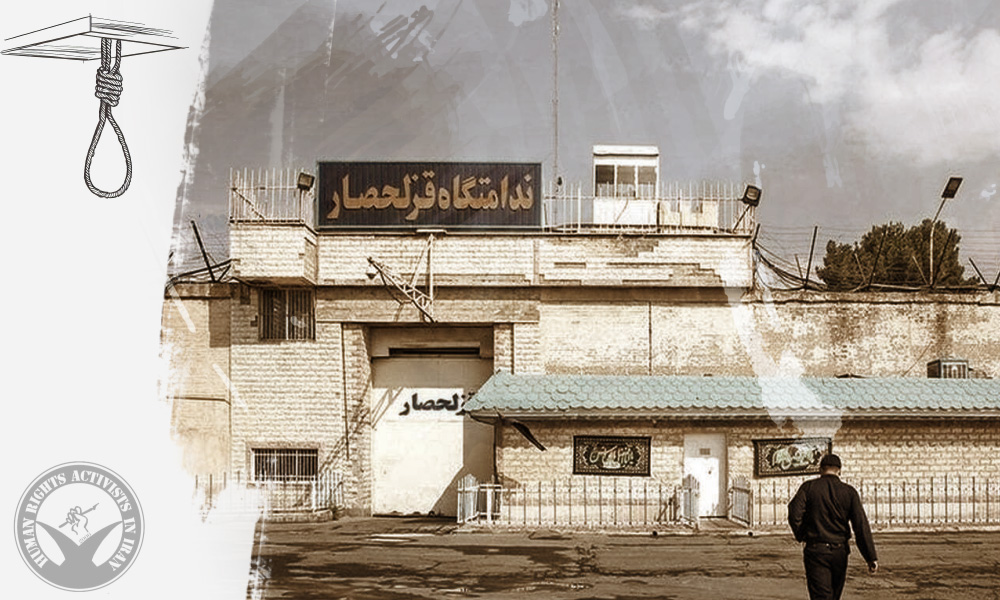
HRANA News Agency – At dawn yesterday, April 9, 2025, at least four prisoners previously sentenced to death on separate murder charges were executed by hanging in Ghezel Hesar Prison in Karaj.

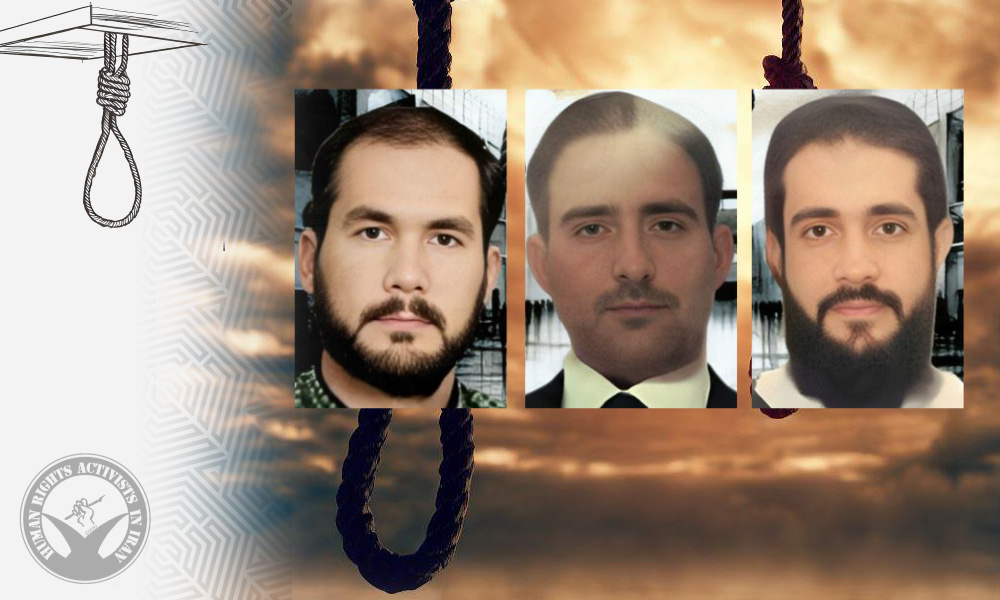
The identities of three of them have been confirmed by HRANA as: Bahram Hodavand-Khani, a resident of Varamin; Salar Amir Jalali, a resident of Tehran; and Abolfazl Karimi, a resident of Karaj.

Based on information received by HRANA, the inmates had been arrested in separate cases on murder charges and later sentenced to death by the criminal court. Among them, Bahram had been on death row for 16 years.

On April 8, HRANA had reported the transfer of 10 inmates to solitary confinement in preparation for the execution of their death sentences. Three of them, who were sentenced to death for drug-related offenses, were returned to the ward after their executions were halted.

As of the time of this report, the execution of these prisoners has not been officially announced by prison authorities or relevant institutions.

According to data gathered by the Department of Statistics and Publication of Human Rights Activists, Ghezel Hesar Prison in Karaj witnessed the highest number of executions in 2024. For a comprehensive examination of the details and statistics surrounding the executions in Iran, refer to HRANA’s report.

Death Sentence Carried Out for Inmate in Qom Prison

HRANA News Agency – At dawn on Sunday, April 6, 2025, the death sentence of a prisoner previously convicted of murder was carried out in Qom Prison.

According to HRANA, the news agency of Human Rights Activists in Iran, the executed prisoner has been identified as Samir Ghasemi. Mr. Ghasemi was arrested on murder charges and later sentenced to death by a criminal court.

As of the time of this report, his execution has not been officially announced by prison authorities or relevant institutions.

In 2024, the Department of Statistics and Publication of Human Rights Activists in Iran documented 812 cases related to the right to life, including the sentencing of 214 individuals to death and the execution of 930 individuals. Among these, 4 executions were carried out in public. Of those executed, 818 were male, 26 were female, and 5 were juvenile offenders—individuals under 18 years old at the time of their alleged crimes.

Inmate Executed in Shahrud Prison for Drug-Related Offenses

HRANA News Agency – In the early hours of today, April 9, the death sentence of a prisoner previously convicted of drug-related offenses was carried out in Shahrud Prison.

HRANA has identified the executed prisoner as Gholamreza Pardakhteh. He had been arrested on charges related to drug offenses and later sentenced to death by the Revolutionary Court.

As of the time of this report, the execution has not been officially announced by prison authorities or relevant institutions.

In 2024, the Department of Statistics and Publication of Human Rights Activists in Iran documented 812 cases related to the right to life, including the sentencing of 214 individuals to death and the execution of 930 individuals. Among these, 4 executions were carried out in public. Of those executed, 818 were male, 26 were female, and 5 were juvenile offenders—individuals under 18 years old at the time of their alleged crimes.

Five Political-Security Prisoners Executed in Vakilabad Prison in Mashhad

HRANA News Agency – At dawn on Tuesday, April 8, five political-security prisoners—Farhad Shakeri, Abdolhakim Azim Gorgij, Abdolrahman Gorgij, Taj Mohammad Khormali, and Malek-Ali Fadaie-Nasab—were executed in Vakilabad Prison in Mashhad.

Family members of two of the executed prisoners confirmed the news in conversations with HRANA, stating: “At dawn today, Tuesday, April 8, the death sentences of five individuals—including Farhad Shakeri, Abdolhakim Azim Gorgij, Abdolrahman Gorgij, Taj Mohammad Khormali, and Malek-Ali Fadaei-Nasab—were carried out in Mashhad Prison.”

Four of the executed individuals were Sunni Muslims, while Malek-Ali Fadaie-Nasab was the only Shia among them. All five had been sentenced to death in a joint case on charges of baghi (armed rebellion).

According to the families—who are still waiting outside Mashhad Prison to receive the bodies of their loved ones—the executions were carried out without prior notice and without allowing a final visit with family members. One family member told HRANA: “The families were only informed of the executions through phone calls.”

The case involved 12 defendants—11 of whom were Sunni and one (Malek-Ali Fadaie-Nasab) Shia. These individuals were arrested in 2015 by the Ministry of Intelligence and transferred to Vakilabad Prison about a year later.

In 2019, Branch 1 of the Revolutionary Court of Mashhad, presided over by Judge Mahmoud Davoodabadi, sentenced nine of the defendants—including Malek-Ali Fadaei-Nasab, Hamid Rastbala, Farhad Shakeri, Kabir Sa’adat Jahani, Mohammad-Ali Arayesh, Isa Eid-Mohammadi, Abdolhakim Azim Gorgij, Abdolrahman Gorgij, and Taj Mohammad Khormali—to death on charges of baghi through alleged membership in the Salafi groups “Hizb al-Furqan” and “National Solidarity Front of Iranian Sunnis.” (Jebhe Hambastegi Melli Ahlesunnat Iran)

Three other defendants—Mohammadreza Sheikh-Ahmadi, Abdolbaset Avarsan, and Morteza Fakoori—were each sentenced to 15 years in prison for baghi through alleged affiliation with the Salafi-Takfiri group ISIS.

In December 31, 2020, the death sentences of Hamid Rast-Bala, Kabir Sa’adat Jahani, and Mohammad-Ali Arayesh were carried out.

Following a partial reversal of the verdicts by the Supreme Court, the case was sent back for review. In August 2023, Branch 4 of the Revolutionary Court of Mashhad, presided over by Judge Ahmadian Salami, re-sentenced six of the defendants—including Farhad Shakeri, Abdolhakim Azim Gorgij, Abdolrahman Gorgij, Taj Mohammad Khormali, Malek-Ali Fadaie-Nasab, and Isa Eid-Mohammadi—to death. The sentences were upheld by the Supreme Court in August 2024.

A source close to the families of the executed prisoners had previously informed HRANA that “this case is riddled with fundamental flaws, and there is insufficient evidence to justify convicting these individuals of the charges brought against them. The use of pepper spray against one of the prisoners is just one example of the torture they were subjected to—torture that has left lasting marks on their bodies even after years.”

Subscribe to Our Newsletter

Now is definitely not the time to stop reading!

Prisoner Executed in Dezful Prison

HRANA News Agency – At dawn yesterday, April 7, the death sentence of a prisoner previously convicted of murder was carried out in Dezful Prison.

HRANA has identified the prisoner, who was hanged at dawn on Monday, April 7, as Hamid Abdouli.

According to information obtained by HRANA, Abdouli had been arrested on murder charges and later sentenced to death by a criminal court.

As of the time of this report, the execution has not been officially announced by prison authorities or relevant institutions.
In 2024, the Department of Statistics and Publication of Human Rights Activists in Iran documented 812 cases related to the right to life, including the sentencing of 214 individuals to death and the execution of 930 individuals. Among these, 4 executions were carried out in public. Of those executed, 818 were male, 26 were female, and 5 were juvenile offenders—individuals under 18 years old at the time of their alleged crimes.

Ten Prisoners Transferred to Solitary Confinement for Execution in Ghezel Hesar Prison

HRANA News Agency – On April 7, seven more prisoners sentenced to death on murder charges were transferred to solitary confinement in Ghezel Hesar Prison in Karaj in preparation for the implementation of their sentences. Including the three prisoners who had previously been moved, the total number of individuals transferred for execution in the prison has now reached ten.

These prisoners had been sentenced to death on charges related to drug offenses and murder, and their transfer was carried out for the purpose of enforcing the sentences.

Further details, including the identities of the prisoners, are currently under investigation by HRANA.

According to data gathered by the Department of Statistics and Publication of Human Rights Activists, Ghezel Hesar Prison in Karaj witnessed the highest number of executions in 2024. For a comprehensive examination of the details and statistics surrounding the executions in Iran, refer to HRANA’s report.

A Prisoner Executed in Zanjan Prison

HRANA News Agency – On Saturday, April 5, a prisoner convicted of drug-related charges was executed in Zanjan Prison.

Iran Human Rights has identified him as Hossein Molazadeh, 29 years old, and a resident of Zanjan.

According to the report, Mr. Molazadeh was arrested around three years ago on drug-related charges and was later sentenced to death by the Revolutionary Court. Before his arrest, he worked as a mechanic.

As of the time of this report, the execution has not been officially announced by prison authorities or relevant institutions.

According to data compiled by HRANA, 52.69% of all executions in Iran in 2024 were related to drug-related charges. Notably, only 6% of the executions were officially announced, highlighting a significant lack of transparency. For a detailed analysis of these executions and the associated statistics, see HRANA’s full report.

For the second time, Pakhshan Azizi’s Request for Retrial Rejected by the Supreme Court

HRANA News Agency – Maziar Tataei, attorney-at-law, has announced that the Supreme Court has rejected the second request for a retrial filed on behalf of Pakhshan Azizi, a political prisoner sentenced to death.

Maziar Tataei, Azizi’s defense attorney, stated in his announcement that the reviewing branch of the Supreme Court dismissed the second retrial request submitted by her legal team without reviewing the case file and declared the defense arguments unsubstantiated. He emphasized that such a decision logically necessitated an examination of the original case documents — a step that, regrettably, was not taken.

In February of last year, attorney Amir Raisian had also reported that Branch 9 of the Supreme Court had issued a ruling rejecting Azizi’s retrial request. Previously, Tataei had also announced that during an earlier follow-up with the Supreme Court, the reviewing branch had agreed to suspend the execution of the sentence under Note 478 of Iran’s Code of Criminal Procedure.

Background on Azizi’s Case

On August 4, 2023, Azizi, along with her 67-year-old father Aziz Azizi (a lymphoma patient), her sister Parshang (49), and her sister’s husband Hossein Abbasi (49), was arrested in Tehran. The arrests were carried out by approximately 20 armed agents who stopped their moving vehicle, searched them, and transferred them to The Ministry of Intelligence’s detention facility, known as Ward 209 of Evin Prison.

In protest against her family’s detention, Pakhshan began a hunger strike, which she ended after learning that her family members were released on bail after two weeks of solitary confinement. After being held in solitary confinement in Ward 209 for three months and three weeks, she was transferred to the women’s ward of Evin Prison on December 10, 2023.

Later, Aziz Azizi, Parshang Azizi, and Hossein Abbasi were sentenced to one year in prison each by Branch 26 of the Tehran Revolutionary Court, also under Judge Iman Afshari, for “assisting a criminal in escaping prosecution and conviction.” Their sentences were upheld by the Tehran Court of Appeals on September 27, and their appeal was forwarded to the Supreme Court.

On July 24, 2024, Azizi was sentenced to death and four years in prison by Branch 26 of the Tehran Revolutionary Court, presided over by Judge Iman Afshari, on charges of “armed rebellion (baghi)” through alleged membership in dissident groups.

A source close to Azizi’s family told HRANA:
“Pakhshan has no affiliations with any groups. She worked as a social worker for 10 years in refugee camps in Rojava. The groups she worked with were fighting against ISIS—an enemy of both the Islamic Republic and the Quds Force. There was no direct conflict between Pakhshan’s associates and Iranian forces, a fact clearly evident in her case.”

In mid-October 2024, during a protest by female prisoners in Evin following the execution of Reza Rasaei and a clash with prison guards, Azizi was accused of “assaulting an officer and disobedience” and was sentenced to six months in prison by the Criminal Court.

Also, in August, 2024, Azizi faced new accusations of “inciting unrest in prison” during the second round of the 2024 presidential election, brought before Branch 3 of the Evin Prosecutor’s Office.

A native of Mahabad, Azizi has a history of arrests and judicial encounters. In 2009, she was detained on charges of political activity and was released after four months on bail.

A Woman and a Man Executed in Dastgerd Prison in Isfahan

HRANA News Agency – On Saturday, March 29, the death sentences of two inmates — including a woman — who had previously been convicted in separate cases on charges related to drug offenses and murder, were carried out in Dastgerd Prison in Isfahan.

Iran Human Rights has identified them as 24-year-old Mahnaz Kakaei and approximately 40-year-old Ali Sufian, a resident of Shiraz.

According to the report, Mr. Sufian had been arrested three years ago on charges related to drug offenses and was sentenced to death by the judiciary. Ms. Kakaei had been arrested four years and seven months ago for allegedly killing her fiancé and was also sentenced to death.

As of the time of this report, the executions have not been officially announced by prison authorities or other responsible institutions.

In 2024, HRA reported 61 executions in Dastgerd Prison, Isfahan, making it the third-highest among prisons in terms of execution numbers.