Inmate Executed in Kermanshah for Murder

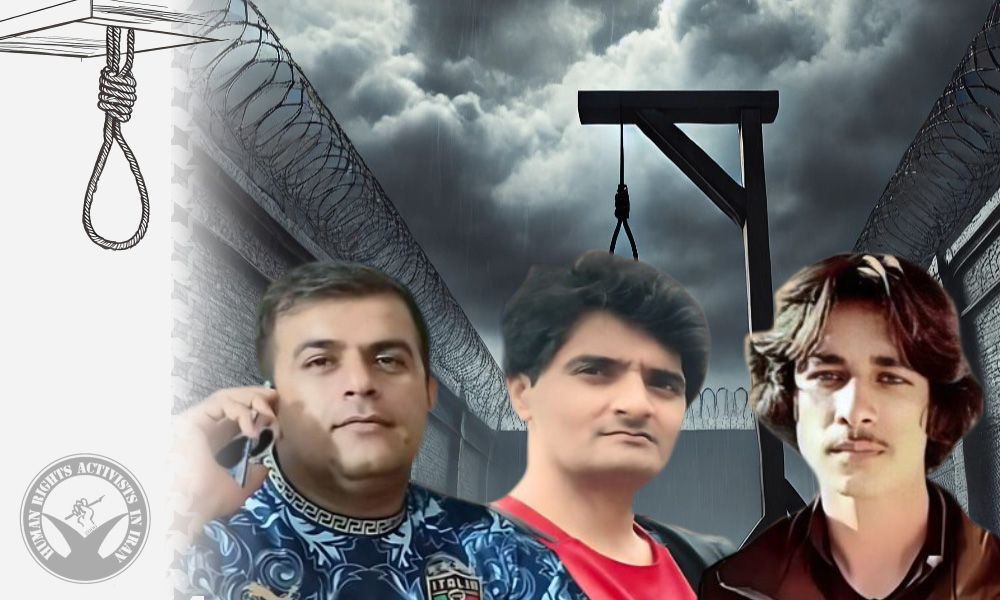
On May 2, 2024, an inmate convicted of murder was executed in Dizelabad Prison, Kermanshah.

HRANA reported that the executed individual was Ali Ashraf-Khani. A source close to his family confirmed the execution.

No official sources or domestic media outlets within the country have provided coverage of this execution at the time of writing. In 2023, 66% of HRANA’s reports on executions lacked official announcements by judicial authorities and went unreported by media inside Iran, highlighting a troubling lack of transparency in due process.

In 2023, the Department of Statistics and Publication of Human Rights Activists in Iran registered the execution of 767 individuals. Out of these, 7 were carried out in public. Among the executed individuals whose genders were identified, 21 were female. Additionally, 2 juvenile offenders, defined as individuals under the age of 18 at the time of their alleged crimes, were also executed.

Update on Execution of Five Inmates in Ghezel Hesar Prison

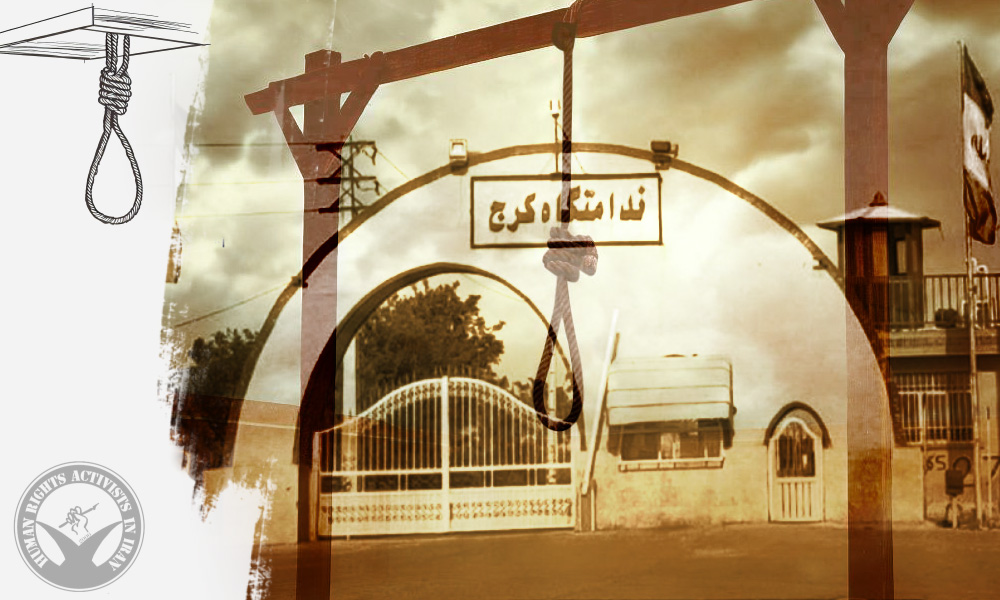
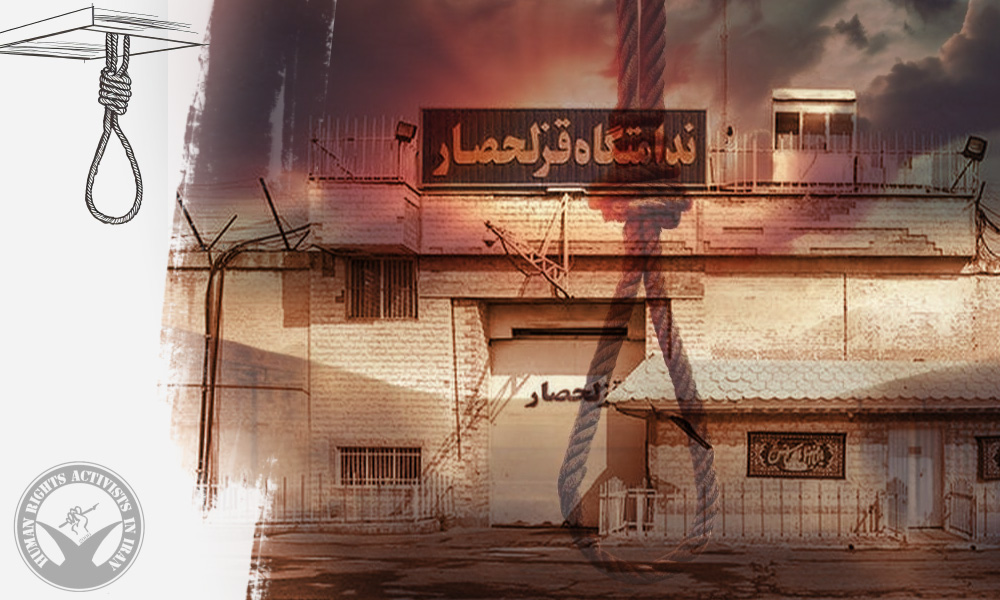
On May 1, 2024, Sunni prisoner Anvar Khezri and four other inmates were executed in Ghezel Hesar Prison, Karaj.

As previously reported by HRANA, Khezri had been in prison for over 14 years. The other inmates executed include Farzad Geravand and Majid Barati, both convicted of drug offenses, and Reza Shir-Zahi and Majid Hajbari, both convicted of murder.

No official sources or domestic media outlets have reported on these executions at the time of writing. The lack of official information raises concerns about transparency and accountability in the execution process.

According to data gathered by the Department of Statistics and Publication of Human Rights Activists, Ghezel Hesar Prison in Karaj witnessed the highest number of executions in 2023, with Zahedan Prison following closely behind. For a comprehensive examination of the details and statistics surrounding the executions in Iran, refer to HRANA’s report.

Sunni Death-Row Prisoner Moved to Solitary Confinement Ahead of Possible Execution

Khosrow Besharat, a Sunni prisoner on death row, was transferred to solitary confinement in Ghezel Hesar Prison on May 1, raising concerns about his possible imminent execution.

His family is gravely worried as five other prisoners from the same case, Ghasem AbastehAyoub KarimiDavoud Abdollahi, Farhad Salimi, and Anvar Khezri were executed in the same prison. The latter was executed today, May 1.

The case stems from the assassination of Abdolrahim Tina, the Imam of a mosque in Mahabad, in September 2008. In January and February 2010, Besharat and six other Sunni suspects were arrested in connection with the killing.

Initially sentenced to death by Branch 28 of the Tehran Revolutionary Court, presided over by Mohammad Moghiseh, Besharat’s sentence was initially overturned by the Supreme Court. The case was then reassigned to Branch 15 of the same court, presided over by Judge Salavati, who reinstated the death sentences for Besharat and six other defendants. The Supreme Court ultimately upheld the death sentences for Besharat and his co-defendants on February 3, 2020.

Execution of Sunni Prisoner Anvar Khezri in Ghezel Hesar Prison

On May 1, 2024, Anvar Khezri, a death-row Sunni prisoner, was executed in Ghezel Hesar Prison in Karaj after spending over fourteen years imprisonment.

A source close to his family confirmed the execution and noted that Khezri’s family is traveling to Mahabad for the funeral.

In the same legal case, four other Sunni prisoners—Ghasem Abasteh, Ayoub Karimi, Davoud Abdollahi, and Farhad Salimi—had been previously executed in the same prison.

The case dates back to September 2008 when Abdolrahim Tina, the Imam of a mosque in Mahabad, was assassinated by unidentified individuals. In January and February 2010, Khezri and six other Sunni suspects were arrested in connection to the assassination.

Khezri faced multiple charges during his detention, including enmity against God (Moharebeh), allegedly for sympathizing with Salafism—a charge he consistently denied. After spending fourteen months without resolution, Khezri was moved to Rajai Shahr Prison in Karaj, where he stayed until his transfer to Ghezel Hesar Prison in August of the same year.

Initially sentenced to death by Branch 28 of the Tehran Revolutionary Court, presided over by Mohammad Moghiseh, the verdict was overturned by the Supreme Court. The case was then assigned to Branch 15 of the same court, presided over by Judge Salavati, who reinstated the death sentences for Khezri and six other defendants. This time, the Supreme Court confirmed the death sentences for Khezri and his co-defendants.

Two Inmates Executed in Ghezel Hesar Prison for Drug Offenses

On May 1, 2024, Ghezel Hesar Prison in Karaj executed two inmates convicted of drug-related crimes.

The individuals were identified as Farzad Geravand and Majid Barati. HRANA reported on April 28 that the inmates had been moved to solitary confinement in preparation for their execution.

No official sources or domestic media outlets within the country have provided coverage of these executions at the time of writing.

According to data gathered by the Department of Statistics and Publication of Human Rights Activists, Ghezel Hesar Prison in Karaj witnessed the highest number of executions in 2023, with Zahedan Prison following closely behind. For a comprehensive examination of the details and statistics surrounding the executions in Iran, refer to HRANA’s report.


Subscribe to Our Newsletter

Now is definitely not the time to stop reading!

Inmate Executed in Ardabil Prison for Drug Offenses

Ardabil Prison officials executed an inmate convicted of drug-related crimes on April 30, 2024, as reported by Kurdpa.

Faramarz Moradi, a resident of a village in Salmas County, was arrested four years ago on drug charges and subsequently sentenced to death.

No official sources or domestic media outlets within the country have provided coverage of this execution at the time of writing. In 2023, 66% of HRANA’s reports on executions lacked official announcements by judicial authorities and went unreported by media inside Iran, highlighting a troubling lack of transparency in due process.

The reports from the Department of Statistics and Publication of Human Rights Activists for the year 2023 reveal a concerning prevalence of executions for drug offenses in Iran, constituting 56.4% of the total executions. For a comprehensive examination of the details and statistics surrounding the executions in Iran, refer to HRANA’s report.


Ten Inmates Executed in Shiraz, Isfahan, Qaen, Kahnuj

In recent days, ten inmates were executed in various prisons across Iran, including Dastgerd Prison in Isfahan, Qaen Prison, and Adelabad Prison in Shiraz, as well as Kahnuj Prison.

The Iran Human Rights Organization reported the execution of three inmates convicted of murder in Adelabad Prison, Shiraz, on April 21. The executed individuals were identified as Hossein Tavana Kodiani, 49; Taleb Akbari, 43; and Reza Masroor, 43, a father of two.

The first inmate had committed murder four years ago. The second individual was involved in a murder during a fight, while the third, a farmer, committed murder in a dispute over farm water.

According to Haal Vsh, on April 28, 2024, three inmates were executed for drug offenses in Qaen Prison, located in South Khorasan province. Two of the inmates were identified as Mohsen Karami (Rakhshani), 27, and Brahui (first name unknown). Karami was arrested for drug offenses four years ago. A source cited in the report mentioned that these inmates did not have a final visit with their families before their execution.

Haal Vsh also reported the execution of three inmates in Dastgerd Prison, Isfahan, on April 29. One of the individuals was identified as Din-Mohammad Mirakhani, a resident of Iranshahr. All three were convicted of drug offenses.

Lastly, the Baloch Activists Campaign reported the execution of Mehdi Bamari, aged 24, in Kahnuj Prison in Kerman Province. He had been convicted of murder two years ago and was executed on the same day as the other inmates.

No official sources or domestic media outlets within the country have provided coverage of these executions at the time of writing. In 2023, 66% of HRANA’s reports on executions lacked official announcements by judicial authorities and went unreported by media inside Iran, highlighting a troubling lack of transparency in due process.

In 2023, the Department of Statistics and Publication of Human Rights Activists in Iran registered the execution of 767 individuals. Out of these, 7 were carried out in public. Among the executed individuals whose genders were identified, 21 were female. Additionally, 2 juvenile offenders, defined as individuals under the age of 18 at the time of their alleged crimes, were also executed. For a comprehensive examination of the details and statistics surrounding the executions in Iran, refer to HRANA’s annual report.

Execution of Three Inmates in Tabriz Prison for Drug Offenses

On April 27, 2024, three inmates were executed in Tabriz Prison for drug-related crimes, according to the Iran Human Rights Organization.

The inmates were identified as Amir Moharrami, 36, Davoud Namyari, 33, and Sohrab Hokmabad. Moharrami was arrested and convicted two years ago, while Namyari and Hokmabad were convicted three years ago.

Two days before the executions, the report stated that along with the three executed inmates, two other death-row inmates—a man and a woman—were also moved to solitary confinement in anticipation of their executions. However, they were later returned to the public ward of the prison. The woman was convicted of murder, while the man faced charges related to drug offenses. The report did not disclose their identities.

No official sources or domestic media outlets within the country have provided coverage of these executions at the time of writing.

The reports from the Department of Statistics and Publication of Human Rights Activists for the year 2023 reveal a concerning prevalence of executions for drug offenses in Iran, constituting 56.4% of the total executions. For a comprehensive examination of the details and statistics surrounding the executions in Iran, refer to HRANA’s report.

Inmate Executed in Saveh Prison for Drug-Related Crimes

On April 24, 2024, an inmate convicted of drug-related crimes was executed in Saveh Prison, Markazi province, as reported by the Iran Human Rights Organization.

The inmate, identified as 37-year-old Yavar Amin-Khah and a father of one, was arrested and convicted roughly three years ago.

No official sources or domestic media outlets within the country have provided coverage of this execution at the time of writing.

The reports from the Department of Statistics and Publication of Human Rights Activists for the year 2023 reveal a concerning prevalence of executions for drug offenses in Iran, constituting 56.4% of the total executions. For a comprehensive examination of the details and statistics surrounding the executions in Iran, refer to HRANA’s report.


Execution of Three Inmates in Karaj

On April 25, 2024, three inmates, including a woman, were executed in Karaj for murder, according to Rokna.

The first inmate, a middle-aged man, allegedly killed his wife four years ago during a family dispute. The second inmate was executed in Ghezel Hesar Prison for fatally stabbing a young man during a street fight three years ago. Their identities were not disclosed in the report.

The third inmate, a woman identified only as Sahar, was convicted of killing her 70-year-old husband and stealing his gold in Tehran.

The Supreme Court confirmed the verdicts initially issued by the Tehran Criminal Court, leading to the executions.

In 2023, the Department of Statistics and Publication of Human Rights Activists in Iran registered the execution of 767 individuals. Out of these, 7 were carried out in public. Among the executed individuals whose genders were identified, 21 were female. Additionally, 2 juvenile offenders, defined as individuals under the age of 18 at the time of their alleged crimes, were also executed. For a comprehensive examination of the details and statistics surrounding the executions in Iran, refer to HRANA’s annual report.