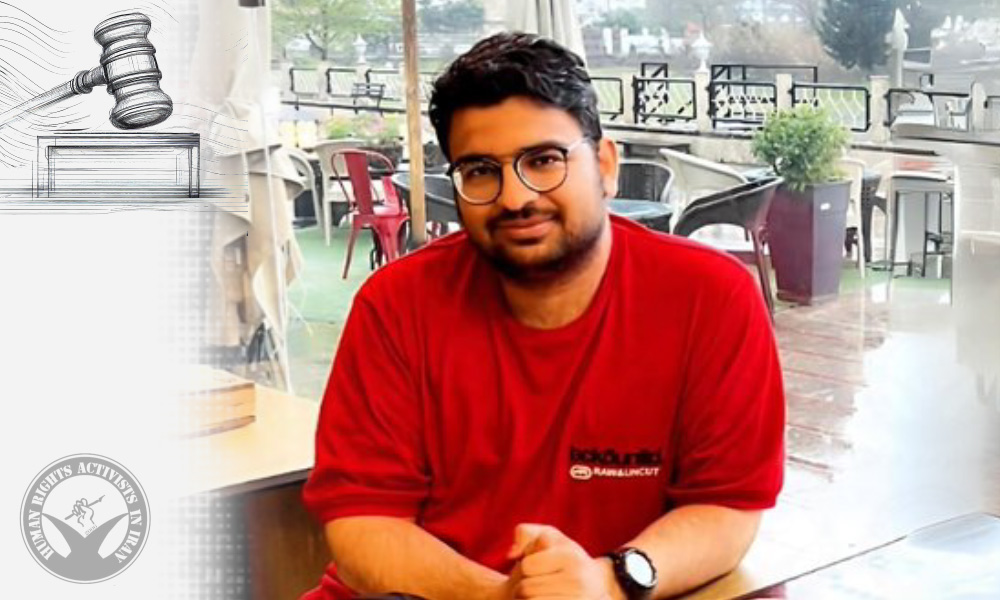
Hamid Haji Abdolpour Sentenced to Prison after Retrial

The six years, seven months, and sixteen days prison sentence of Hamid Haji Abdolpour, a graduate of Amirkabir University of Technology, has been fully upheld by Branch 20 of the Appeals Court of Razavi Khorasan Province.

After the acceptance of Mr. Haji Abdolpour’s request for a retrial by Branch 39 of the Supreme Court, his case was sent to a parallel branch. Recently, Branch 20 of the Appeals Court of Razavi Khorasan Province upheld his sentence of six years, seven months, and sixteen days in prison.

Haji Abdolpour was initially sentenced by Branch 1 of the Revolutionary Court of Mashhad to six years in prison for the charge of “forming a Telegram group with the intent of disrupting national security,” and eight months for the charge of “propaganda against the regime.”

In June-July 2023, Branch 4 of the Appeals Court of Razavi Khorasan Province reduced his sentence for propaganda against the regime by 14 days, resulting in a final sentence of six years, seven months, and sixteen days in prison. Finally, in late November of last year, after spending 46 days in solitary confinement at the IRGC’s detention facility in Razavi Khorasan Province, he was transferred to Vakilabad Prison in Mashhad to serve his sentence.

In separate letters to the Office of the Supreme Leader’s Representative in Universities, the Judiciary’s Intelligence Protection Unit, and the General Inspection Organization of the IRGC, Haji Abdolpour revealed the mistreatment he suffered during interrogations, aimed at extracting forced confessions.

He recently submitted a request for a retrial to the highest judicial authority in the country. After the Supreme Court accepted his request for a retrial and he was temporarily released on bail, the president of Amirkabir University expressed support for him in a letter to the head of the Judiciary in Razavi Khorasan Province. However, these efforts were unsuccessful, and after the case was reviewed again, Mr. Haji Abdolpour was sentenced to prison by the Appeals Court of Razavi Khorasan Province.

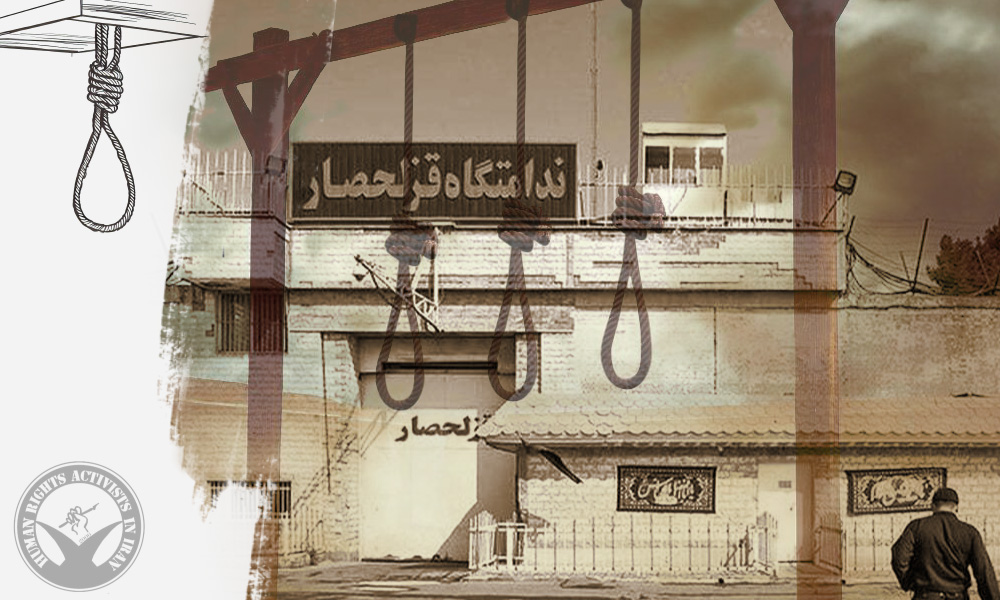
Protest Rapper Toomaj Salehi Acquitted of Charges

After a retrial of Toomaj Salehi’s case, Branch 5 of the Revolutionary Court in Isfahan acquitted him of the charges brought against him.

Amir Raisian, Mr. Salehi’s lawyer, stated: “Branch 5 of the Revolutionary Court in Isfahan, in the 2022 case against Toomaj Salehi, has issued an acquittal on the charge of ‘ spreading corruption on earth,’ which previously carried a death sentence. For the other charges, the court issued a temporary stay of prosecution. Additionally, the court referred the charges of ‘spreading falsehoods online’ and ‘disturbing public order’ to Criminal Court 2 due to lack of jurisdiction.”

In April of this year, Salehi had been sentenced to death by Branch 1 of the Revolutionary Court in Isfahan on the charge of ‘spreading corruption on earth,’ but this sentence was overturned in early July by Branch 39 of the Supreme Court, and the case was sent to Branch 5 of the Revolutionary Court in Isfahan.

He was arrested in late October 2022 in connection with the nationwide protests by security forces. Official news agencies claimed that he was attempting to illegally leave the country through the western borders, a claim denied by his associates. In July last year, he was sentenced by Branch 1 of the Revolutionary Court in Isfahan to six years and three months in prison, a travel ban, a ban on producing music and singing, and two years of mandatory behavior management and skills training. After this sentence was overturned by Branch 39 of the Supreme Court, he was released on bail on November 18, 2023.

Nevertheless, Salehi’s freedom was short-lived as he was re-arrested in Babol on November 30, just twelve days after being bailed out from Dastgerd Prison in Isfahan. The Judiciary spokesperson cited Salehi’s post-release statement as grounds for this subsequent arrest.

In January of 2024, in another part of his case, the Revolutionary Court of Isfahan sentenced him to one year in prison, two years of passport invalidation, and participation in behavior management courses on the charge of ‘propaganda against the regime.’ This sentence was upheld by the Isfahan Provincial Court of Appeals in late February. Late last year, Branch 117 of Criminal Court 2 in Isfahan acquitted him of the charges of ‘spreading falsehoods’ and ‘inciting violence.’

Toomaj Salehi, a protest rapper from Shahin Shahr, Isfahan, had previously been sentenced to six months in prison and a fine in 2021 for ‘insulting the Supreme Leader’ and ‘propaganda against the regime.’

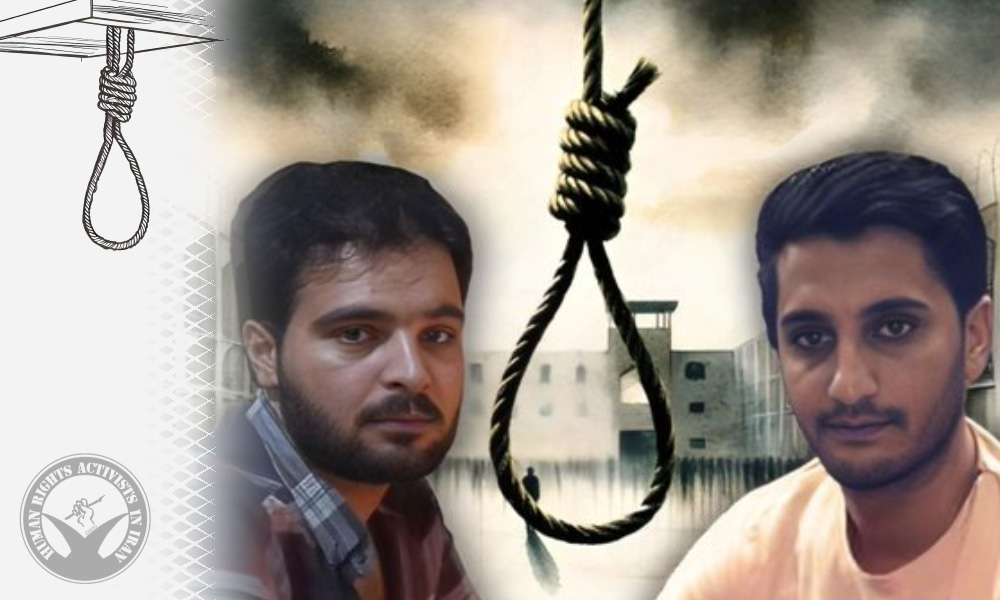
Three Prisoners Executed in Ghezel Hesar Prison, Karaj

On August 14, 2024, the death sentences of three prisoners, convicted of drug-related charges, were carried out in Ghezel Hesar Prison, Karaj.

HRANA has identified two of the executed prisoners as Behrouz Vafaie and Ali Niazi. The third prisoner, whose identity has not yet been confirmed, was a Afghan national.

These prisoners had been arrested on drug-related charges and were later sentenced to death by the judiciary. They were transferred to solitary confinement on Monday in preparation for their executions.

As of the time this report was compiled, the executions have not been officially announced by prison authorities or relevant institutions.

According to data gathered by the Department of Statistics and Publication of Human Rights Activists, Ghezel Hesar Prison in Karaj witnessed the highest number of executions in 2023, with Zahedan Prison following closely behind. For a comprehensive examination of the details and statistics surrounding the executions in Iran, refer to HRANA’s report.

Two Prisoners Executed in Sabzevar Prison

Today, August 14, 2024, the death sentences of two prisoners convicted on drug-related charges were carried out in Sabzevar Prison.

HRANA has identified the prisoners as “Musa-Reza Ebrahimi, 24, and Reza Zardkoohi, 31.”
These individuals had been arrested on drug-related charges and were later sentenced to death by the judiciary. Mr. Ebrahimi was arrested approximately three years ago in connection with these charges and was subsequently transferred to Sabzevar Prison.

The prisoners were moved to solitary confinement yesterday in preparation for their executions.

As of the time of this report, the executions have not been officially announced by prison authorities or relevant institutions.

The reports from the Department of Statistics and Publication of Human Rights Activists for the year 2023 reveal a concerning prevalence of executions for drug offenses in Iran, constituting 56.4% of the total executions. For a comprehensive examination of the details and statistics surrounding the executions in Iran, refer to HRANA’s report.

Isfahan: Indictment Issued for Ten Baha’i Women

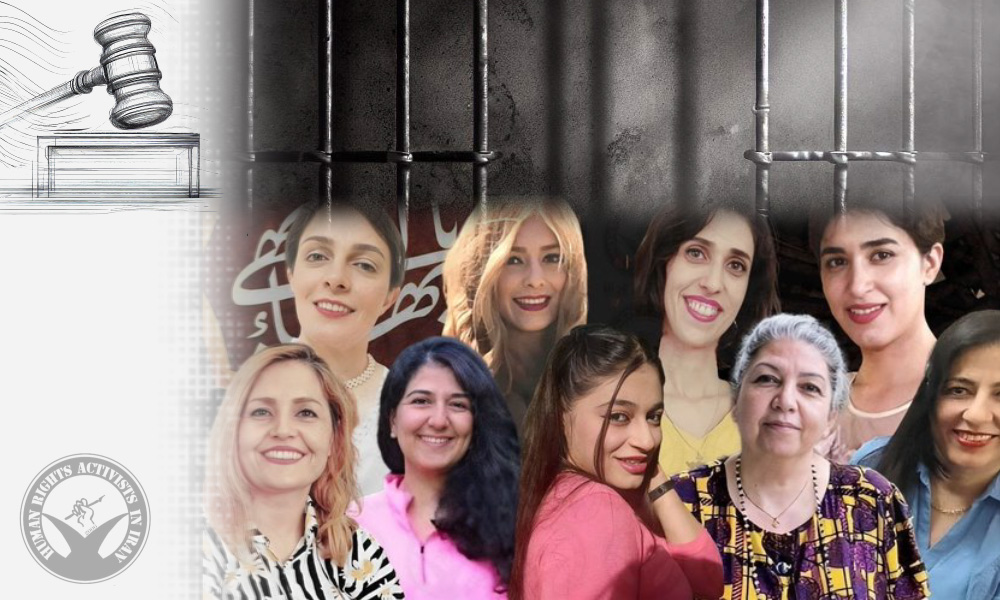
The indictment for ten Baha’i women residing in Isfahan, including Neda Badakhsh, Arezoo Sobhanian, Yeganeh Roohbakhsh, Mojgan Shahrezaie, Parastoo Hakim, Yeganeh Agahi, Bahareh Lotfi, Shana Shoughifar, Negin Khademi, and Neda Emadi, has been issued by the city’s Prosecutor’s Office.

The charges against Neda Badakhsh, 60, Arezou Sobhaniyan, 48, Yeganeh Roohbakhsh, 20, Mojgan Shahrezaei, 32, Parastoo Hakim, 47, Yeganeh Agahi, 31, Bahareh Lotfi, 27, Shana Shoughifar, 27, Negin Khademi, 34, and Neda (Shahla) Emadi, 42, include “propaganda against the regime” and “engaging in propaganda/educational activities against Sharia of Islam.”

These ten Baha’i women were arrested by security forces on October 23, 2023, and released on bail from Dolatabad Prison in Isfahan at different times over two months. Among there people, Yeganeh Agahi has a previous record of arrest.

Baha’is are subjected to violations of their religious rights, comprising 82% of reports on infringements against religious minorities, according to HRA’s 2023 annual report.

The Baha’i faith is not recognized as a legitimate religion by Iranian authorities, leading to systematic and longstanding violations of the rights of Baha’is in the country. This includes the denial of their fundamental right to practice their religion, which constitutes a clear breach of both Article 18 of the Universal Declaration of Human Rights and Article 18 of the International Covenant on Civil and Political Rights. The United Nations covenant holds that every person has the right to freedom of religion, freedom of converting religion, as well as freedom of expression, individually or collectively; openly or secretly.

Subscribe to Our Newsletter

Now is definitely not the time to stop reading!

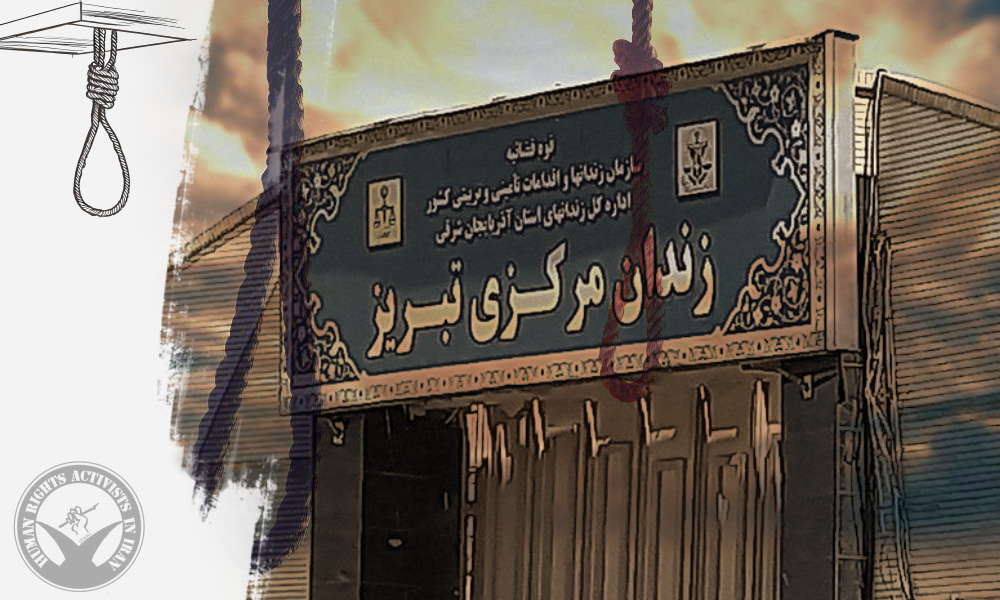
Four Prisoners Executed in Tabriz Prison

According to Iran Human Rights Organization, the death sentences of four prisoners, including two Afghan nationals who had previously been convicted of murder, were carried out in Tabriz Prison

Two of these prisoners were Afghan nationals. The identities of the other two prisoners have been reported as “Mohammad Ansari Qeshlaq, 44, from Qeshlaq village in Tabriz, and Ali Mahdian, 32, from Hashtrood.”

They had been arrested on charges of murder and subsequently sentenced to death by the judiciary.

The report states that Ali Mahdian had been arrested three years ago on charges of premeditated murder following a financial dispute. Mohammad Ansari Qeshlaq had spent the last four years in this prison and was recently transferred from Ward 4 to solitary confinement in preparation for his execution.

As of the time this report was compiled, the executions have not been officially announced by prison authorities or relevant institutions.

Two Prisoners Executed in Bandar Abbas Prison

On Tuesday, August 13, 2024, two death-row prisoners convictied of charges related to drug offenses and murder were executed in Bandar Abbas Prison.

HRANA has identified these prisoners as “Abdollah Lashtghooni from Bandar Khamir and Hamed Mozaffari from Bandar Lengeh.”

Based on information received by HRANA, Mr. Lashtghooni had been sentenced to death for drug-related charges, while Mr. Mozaffari was sentenced to death for murder.

These prisoners were transferred to solitary confinement yesterday, along with a third prisoner, in preparation for the execution. The third prisoner, who was also sentenced to death for murder, was returned to the ward.

As of the time this report was compiled, the execution of these prisoners has not been officially announced by prison authorities or relevant institutions.

According to the Department of Statistics and Publication of Human Rights Activists in Iran, in 2023, at least 767 citizens, including 21 women and 2 juvenile offenders, were executed. Of these, the executions of 7 individuals were carried out in public. Additionally, during this period, 172 others were sentenced to death, with 5 of them sentenced to public execution. It is worth noting that during the same period, the initial death sentences of 49 other individuals were also upheld by the Supreme Court.

Five Women Sentenced to Over Twenty Years in Prison Combined for Political Charges

According to Hyrcani, Nina Golestani, Rozita Rajayi, Anahita Hejazi, Negin Edalatkhah, and Anahita Doostdar have each been sentenced to four years, one month, and seventeen days in prison by the Rasht Revolutionary Court.

The charges against them include “assembly and collusion to commit a crime” and “propaganda against the regime.”

Anahita Hejazi, an animal rights activist from Rasht, Rozita Rajayi, Nina Golestani, a writer, Negin Edalatkhah, and Anahita Doostdar were arrested by security forces in Rasht on November 11 of 2023. They were released on bail from Lakan Prison in Rasht after a period of detention.

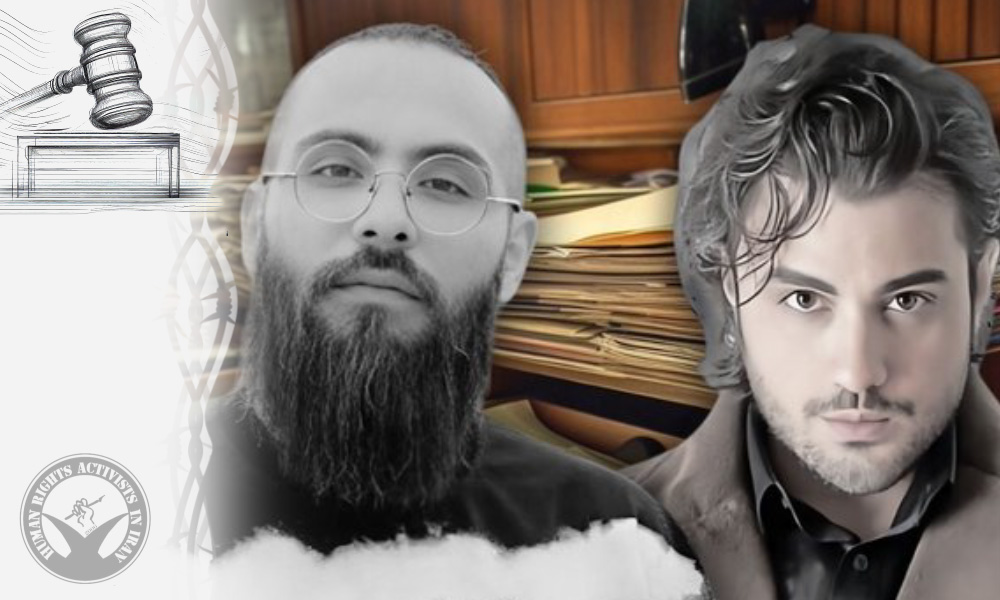
Singers Vafa Ahmadpour and Danial Moghaddam Sentenced to Prison and Additional Punishments

Vafa Ahmadpour, known as “Vafadar,” and Danial Moghaddam (Moghadam) were each sentenced to one year in prison, a two-year travel ban, and a two-year ban on online activities by the Shiraz Revolutionary Court. Their prison sentences will be served outside prison under electronic monitoring.

Based on the ruling issued by Branch 1 of the Shiraz Revolutionary Court, Ahmadpour and Moghaddam were found guilty of “propaganda against the regime.” Their prison sentences will be served outside of prison under electronic monitoring, and they will complete their sentences with restricted movement within a specific radius from their homes.

The court session to address the charges against Vafa Ahmadpour and Danial Moghaddam took place on August 6 at the Shiraz Revolutionary Court.

Moghaddam and Ahmadpour were arrested by security forces in Shiraz on May 9, 2024, and transferred to the Ministry of Intelligence’s detention facility in Shiraz, known as the House No. 100. They were later moved to the central detention facility of Adelabad Prison in Shiraz.

On July 6, Danial Moghaddam was released on bail from this prison.

Vafa Ahmadpour is currently serving a one-year prison sentence in Adelabad Prison in Shiraz for a previous case. He was sentenced to one year in prison by the Revolutionary Court for “propaganda against the regime.”

Appeals Court: Eight Teachers’ Union Activists Sentenced to Fines

The Coordinating Council of Iranian Teachers’ Trade Associations reported that the prison sentences of Anoush Adeli, Aziz Ghasemzadeh, Teymour Bagheri Koodakani, Tahmasb Sohrabi, Gholamreza Akbarzadeh Baghban, Ali Nahali, Mohammad Javad Saeedi, and Jahanbakhsh Lajevardi, teachers’ union activists from Gilan Province, were converted to fines by Branch 29 of the Gilan Appeals Court. Additionally, Yadollah Baharestani and Mahmoud Sedighipour, two other defendants in the case, were acquitted of the charges against them.

Based on the recent ruling issued by Branch 29 of the Gilan Appeals Court and delivered to the activists, the two-year and one-day prison sentences for each of these teacher union activists have been converted to a fine of 3,300,000 tomans each. Meanwhile, Mahmoud Sedighipour and Yadollah Baharestani were acquitted of all charges.

Previously, Branch 3 of the Rasht Revolutionary Court had sentenced each of these individuals to two years and one day in prison, along with a two-year ban on membership in political and social parties, groups, and organizations for charges of “disrupting public order by participating in and organizing union gatherings and defying police orders.”

These activists, except for Mohammad Javad Saeedi, have previously faced legal actions due to their union activities.