Prisoner Executed in Kerman Prison for Drug Offenses

On Tuesday, August 13, the execution of a prisoner previously sentenced to death on drug-related charges was carried out in Kerman Prison, according to Haal Vsh.

The prisoner has been identified as “Farajollah Khashi (Jamalzahi), 47 years old, from and residing in Khash, married and father of six children.”

According to a source, Mr. Khashi was arrested in 2022 on drug-related charges in Kerman. He was later sentenced to death. However, while his case was still under review by the Pardon and Clemency Commission of Kerman Province, the execution was carried out.

Khashi had been transferred to solitary confinement on Sunday, August 11, to await his execution. Yesterday, he had his final meeting with his family through a glass partition.

As of the time of this report, the execution has not been officially announced by prison authorities or relevant organizations.

The reports from the Department of Statistics and Publication of Human Rights Activists for the year 2023 reveal a concerning prevalence of executions for drug offenses in Iran, constituting 56.4% of the total executions. For a comprehensive examination of the details and statistics surrounding the executions in Iran, refer to HRANA’s report.

Continued Hunger Strike: Latest Update on Manouchehr Fallah in Lakan Prison, Rasht

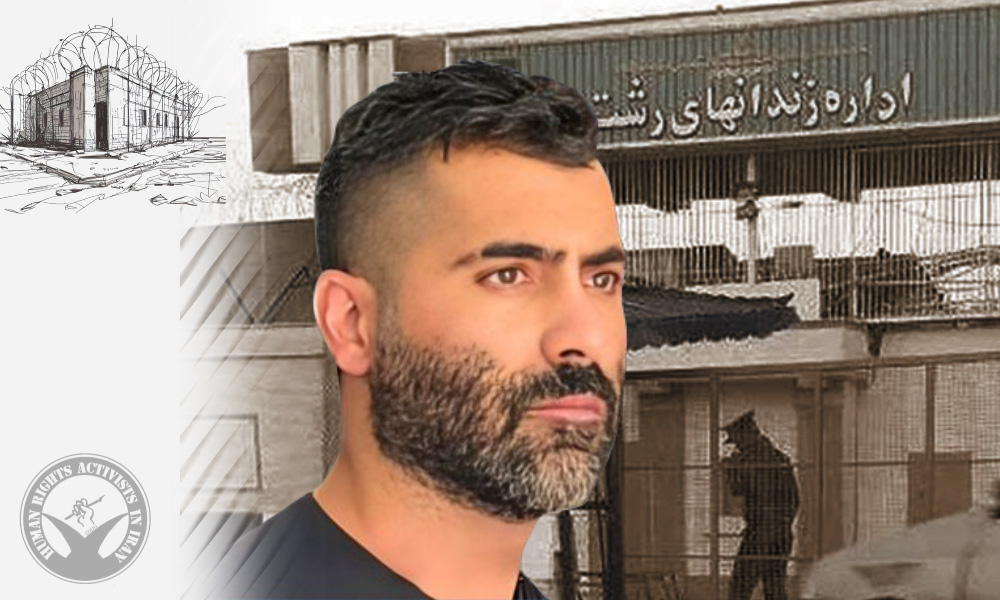
Despite his deteriorating physical condition, political prisoner Manouchehr Fallah continues his hunger strike in Lakan Prison, Rasht.

A source close to Fallah’s family confirmed this news to HRANA, stating, “Manouchehr Fallah, who is on hunger strike, is suffering from low blood pressure of 7 over 5, fatigue, and cold hands and feet. The prison authorities have not only ignored his demands, but the case judge announced yesterday that his case, under controlt of the criminal court, must be reviewed again by the prosecution office.”

The source added, “Fallah’s sentence related to the Revolutionary Court case was completed in May of this year, but another part of his case is still under review. On Tuesday, Javad Pour Sajedi, the investigator in charge of his case and the investigator of Branch 16 of the Revolutionary Court, asked him to end his hunger strike, but he refused. On the same day, Manouchehr received a notice stating that his temporary release could be granted if he posts a 5 billion toman bail. Manouchehr subsequently wrote a letter requesting the reconsideration of the bail amount, but he has not received a response due to obstruction by the case investigator.”
It is worth noting that five other political prisoners in this prison, identified as Issa Chulandim, Jamshid Azizi, Hooman Taheri, Sasan Khanzadeh, and Mohammad Miri, have announced in a letter that they joined Manouchehr Fallah’s hunger strike on Sunday, August 11.

Fallah was arrested by security forces at Rasht Airport in June 2022 and was eventually transferred to Lakan Prison in this city.

In December 2023, Branch 3 of the Revolutionary Court in Rasht sentenced him to one year, three months, and one day of imprisonment for “insulting the Supreme Leader” and seven months and sixteen days for “propaganda against the regime.”

Manouchehr Fallah, a tattoo artist, resided in Kish before his arrest.


Three Prisoners Transferred to Solitary Confinement for Execution in Ghezel Hesar Prison, Karaj

On Monday, August 12, three prisoners in Ghezel Hesar Prison, Karaj, who had previously been sentenced to death on drug-related charges, were transferred to solitary confinement in preparation for their execution.

The transfer of these prisoners, who were sentenced to death on drug-related charges, was made in preparation for the execution of their sentences.

One of these prisoners is an Afghan national. HRANA is currently investigating further details, including the identities of these prisoners.

The reports from the Department of Statistics and Publication of Human Rights Activists for the year 2023 reveal a concerning prevalence of executions for drug offenses in Iran, constituting 56.4% of the total executions. For a comprehensive examination of the details and statistics surrounding the executions in Iran, refer to HRANA’s report.

Hamraz Sadeghi Sent to Evin Prison to Serve Her Sentence

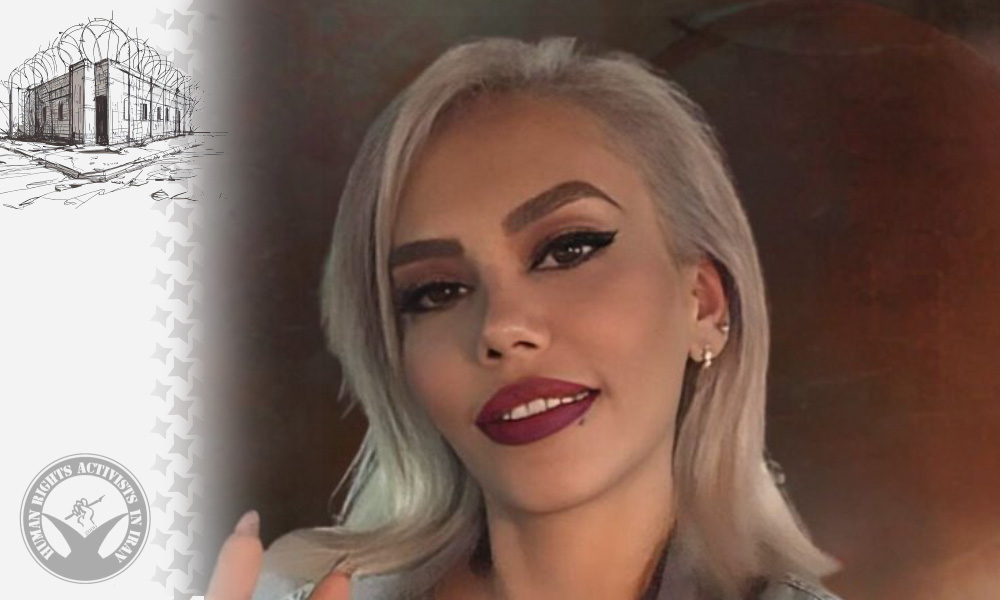
Hamraz Sadeghi, a Tehran resident, was sent to Evin Prison on Saturday, August 10, to begin serving her one-year prison sentence.

Based on information received by HRANA, Ms. Sadeghi, aged 40, was sent to Evin Prison on Saturday, August 10, to serve her one-year sentence. A source close to her family confirmed this to HRANA, stating, “Hamraz Sadeghi, who had been residing in Turkey for a period, was sentenced to one year in prison by the Revolutionary Court for her activities on social media on charges of ‘propaganda against the regime.'”

Ms. Sadeghi, one of the women opposing mandatory hijab and associated with the “Girls of Enghelab Street” movement, was arrested on February 24, 2018, by security forces who used violence during the arrest. She was eventually released after posting bail.

Two Prisoners Executed in Parsilon Prison, Khorramabad

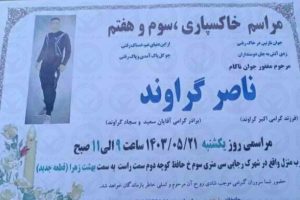
At dawn on Saturday, August 10, two death-row prisoners previously convicted on drug-related were exectued in Parsilon Prison, Khorramabad.

HRANA has confirmed the identity of one of the executed prisoners as “Naser Garavand.” Both prisoners had been arrested on drug-related charges and subsequently sentenced to death by the judiciary.

As of the time of this report, the executions have not been officially announced by prison authorities or relevant institutions.

Naser Garavand

According to the Department of Statistics and Publication of Human Rights Activists in Iran, in 2023, at least 767 citizens, including 21 women and 2 juvenile offenders, were executed. Of these, the executions of 7 individuals were carried out in public. Additionally, during this period, 172 others were sentenced to death, with 5 of them sentenced to public execution. It is worth noting that during the same period, the initial death sentences of 49 other individuals were also upheld by the Supreme Court.

Subscribe to Our Newsletter

Now is definitely not the time to stop reading!

Journalist Omid Faraghat Sentenced to Six Months in Prison

Branch 1 of the Karaj Revolutionary Court has sentenced journalist Omid Faraghat to six months in prison.

The ruling, issued by Judge Seyed Musa Asif Al-Hosseini of Branch 1 of the Karaj Revolutionary Court, was communicated to Mr. Faraghat on Saturday, August 10. He has been sentenced to six months of imprisonment on charges of “propaganda against the regime.”

According to information received by HRANA, the ruling was communicated by requiring the defendant to transcribe the verdict. Judicial authorities have not provided specific details of the charges against Mr. Faraghat and have not recorded the ruling in the relevant electronic system.

The hearings for Mr. Faraghat’s charges were held on two occasions, May 13 and August 6, 2024.

Omid Faraghat is a journalist and media activist focused on political issues. In April 2024, he was also sentenced by Branch 7 of the Karaj Public and Revolutionary Prosecutor’s Office to a two-year ban from online activities.

Journalists Elaheh Mohammadi and Niloofar Hamedi Sentenced to a Total of Twelve Years in Prison on Appeal

The Court of Appeal in Tehran Province has sentenced journalists Elaheh Mohammadi and Niloofar Hamedi to six years in prison each, according to a report by Shargh Newspaper. Initially, they had been sentenced to a total of 25 years in prison during their first trial.

Parto Borhanpour and Hojjat Kermani, representing Niloofar Hamedi, and Shahabeddin Mirlohi, representing Elaheh Mohammadi, announced that their clients were acquitted by the Court of Appeal of Tehran Province on the charge of “collaborating with the adversarial government of the United States.” However, the other charges were upheld: five years in prison for “assembly and collusion against national security” and one year in prison for “propaganda activity against the regime” for each of them.

Mirlohi stated, “According to the appeal court’s ruling, only the most severe sentence (i.e., five years in prison) is enforceable.” He added, “Given that the remaining two charges fall under the full conditions of the 2022 pardon directive, we hope that Elaheh Mohammadi will be granted a pardon and that this case will be closed.”

The defense lawyers for Niloofar Hamedi also commented on her case: “Hamedi has fortunately been acquitted of the charge of ‘collaboration with an adversarial government,’ and therefore, nothing should prevent her from receiving the 2022 pardon directive. Her case should be closed similarly to thousands of other cases in 2022.”

Niloofar Hamedi, a journalist with Shargh Newspaper, was the first to publish a photo of Mahsa Amini in a coma. Elaheh Mohammadi, a journalist with Ham-Mihan Newspaper, traveled to the city of Saqqez to report on Mahsa Amini’s death. Both were arrested in the early days of the nationwide protests in 2022. Shortly after their arrests, they were transferred from Qarchak Prison in Varamin to Evin Prison.

In late October of last year, these journalists were sentenced by Branch 15 of the Tehran Revolutionary Court, presided over by Judge Salavati. Niloofar Hamedi was sentenced to seven years in prison for “collaborating with the adversarial government of the United States,” five years for “assembly and collusion to commit a crime against national security,” and one year for “propaganda activity against the regime.” Similarly, Mohammadi was sentenced to six years in prison for “collaborating with the adversarial government of the United States,” five years for “assembly and collusion to commit a crime against national security,” and one year for “propaganda activity against the regime.”

On January 14, 2023, Hamedi and Mohammadi were released from Evin Prison on bail. Shortly after their release, Mizan, the judiciary’s news agency, announced that another criminal case had been opened against them in the Tehran Public and Revolutionary Prosecutor’s Office, citing their removal of the hijab as the reason for this new case.

Political Detainee Alireza Merdasi Denied Medical Care in Sheiban Prison, Ahvaz

Alireza Merdasi, a teacher and political detainee, remains in legal limbo in Sheiban Prison, Ahvaz, more than a year after his arrest. He suffers from health issues and has been denied proper medical care and transfer to outside medical facilities.

A source close to the family of this political detainee confirmed the news to HRANA, stating, “Mr. Mardasi suffers from a lung condition and has been deprived of specialized medical care and transfer to medical facilities. Furthermore, he has been held in legal uncertainty for over a year in Sheiban Prison, Ahvaz, and has yet to face a court trial.”

Merdasi was arrested by security forces in Ahvaz on August 1, 2023.

He was later charged with “spreading corruption on Earth” and “membership in a rebellious group.”

Alireza Merdasi, approximately 45 years old, a father of one, a resident of Ahvaz, has over twenty years of experience teaching at the elementary level.

Somayeh Rostami Arrested by Security Forces in Ilam

Somayeh Rostami, a resident of Ilam, was arrested by security forces in the city and transferred to an undisclosed location, according to Kurdpa.

The identity of the individual has been reported as 21-year-old Somayeh Rostami, a resident of Ilam.

According to the report, this citizen was arrested by security forces on Monday, August 5th.

As of the time of this report, the reasons for Ms. Rostami’s arrest and her place of detention remain unknown.

Death Sentences for Six Prisoners Upheld by the Supreme Court

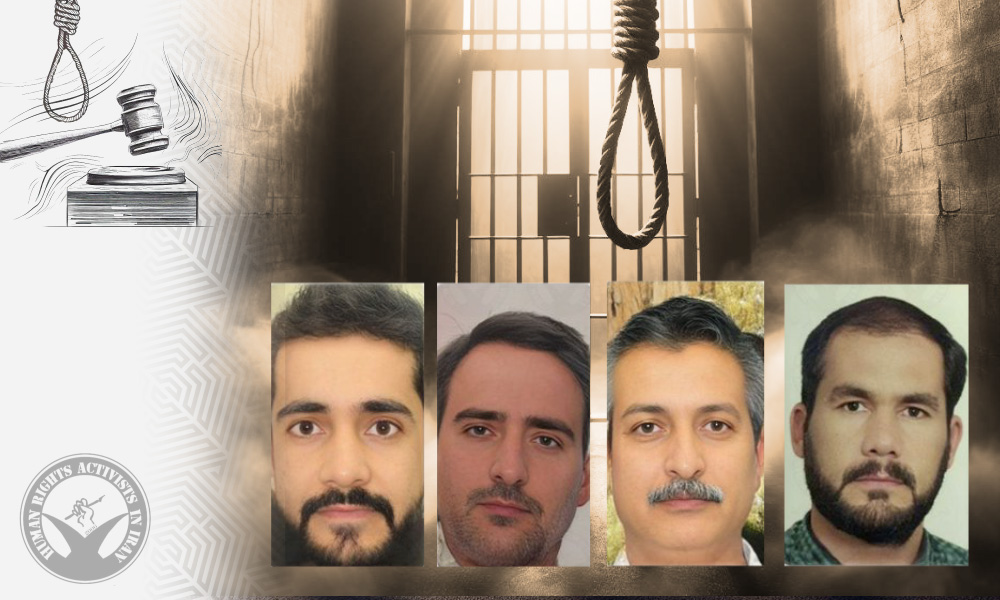
Branch 39 of  the Supreme Court has upheld the death sentences of Malek Ali Fadaie-Nasab, Farhad Shakeri, Isa Eidmohammadi, Abdolhakim Azim Gorgij, Abdolrahman Gorgij, and Taj Mohammad Khormali, political prisoners held in Vakilabad Prison in Mashhad.

In early July 2023, Branch 4 of the Mashhad Revolutionary Court sentenced each of these prisoners to death on the charge of “armed rebellion (Baghi)” after a retrial in a joint case.

A source close to the family of one of these political prisoners confirmed the news to HRANA, stating that the Supreme Court’s 39th Branch had upheld their death sentences.

In 2019, Branch 1 of the Mashhad Revolutionary Court, presided over by Judge Mahmoud Davoodabadi, sentenced these prisoners to death on charges of “armed rebellion through membership in the Salafi group Hizb al-Furqan and membership in the National Solidarity Front of Sunni Muslims of Iran.”

Subsequently, Branch 4 of the Supreme Court, presided over by Judge Ali Razini, overturned their death sentences and referred the case to a another court branch for retrial. In July 2023, Branch 4 of the Mashhad Revolutionary Court, presided over by Judge Ahmadian Salami, re-issued death sentences for these prisoners after a retrial.

After the death sentences were issued, the case was referred back to Branch 39 of the Supreme Court for further review.

A source close to the families of these prisoners previously informed HRANA that “this case is fraught with fundamental flaws, and there is insufficient evidence to convict these individuals of the charges against them. The use of pepper spray against one of the prisoners is an example of the torture inflicted upon them. The effects of such torture remain on their bodies even after several years.”