Seven Labor Activists of Haft Tappeh’s Case Sentenced to 110 Years in Prison and 74 Lashes, Combined

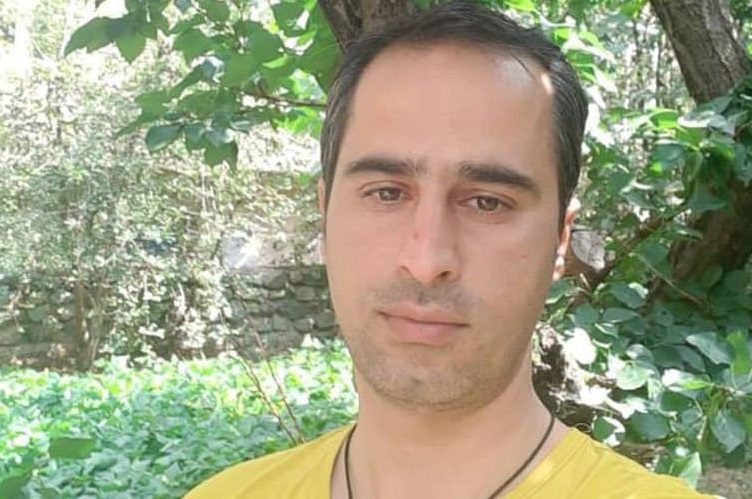
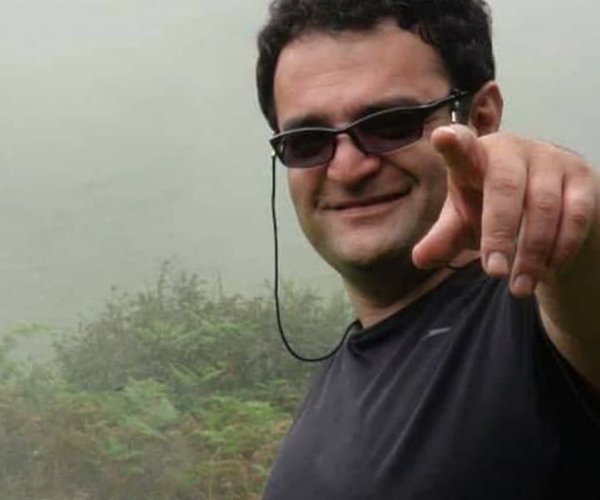
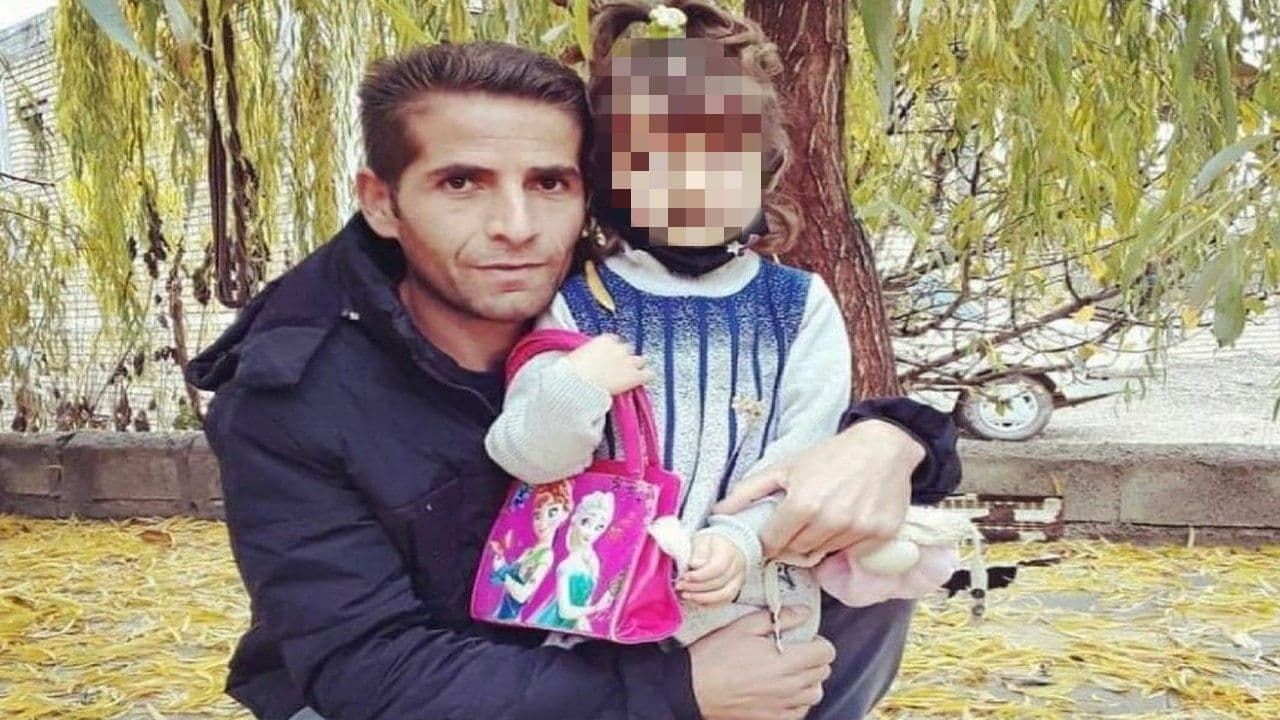
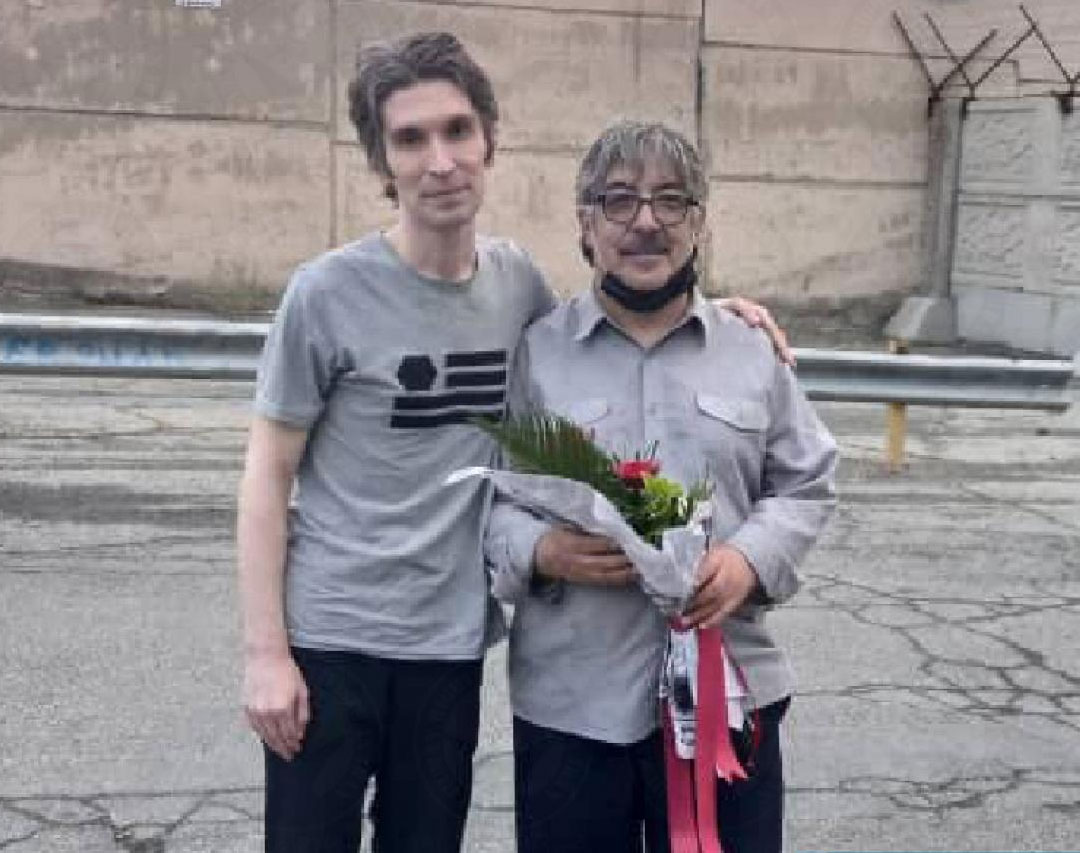
On September 7, 2019, the Revolutionary Court of Tehran sentenced Esmail Bakhshi to a 14-year prison term and 74 lashes and Mohammad Khanifar to six years imprisonment. In addition, Sepideh Gholian, Amir Amirgholi, Amir Hossein Mohammadifard, Sanaz Allahyari, and Asal Mohammadi were sentenced to 18 years in prison, each. Their trial was held in the Branch 28 of the Revolutionary Court, in August. Ali Nejati’s case is still open.

The collective court session for the detained labor activists of Haft Tappeh’s case was initially scheduled for August 3, 2019 at the Branch 28 of the Revolutionary Court of Tehran led by judge Moghiseh. However, the session was postponed to a later date and was held one-by-one.

According to the verdict issued by the Branch 28 of Tehran’s Revolutionary Court led by judge Moghiseh, Esmail Bakhshi was sentenced to seven years imprisonment for the charge of “assembly and collusion aimed to act against national security”, two years imprisonment for “insulting the Supreme Leader”, two years imprisonment for the charge of “spreading falsehood”, one years and half in prison for the charge of “propaganda against the state”, and 1.5 years in prison and 74 lashes for the charge of “disrupting the public order”.

Sepideh Gholian, Amir (Ali) Amirgholi, Amir Hossein Mohammadfard, Sanaz Allahyari, and Asal Mohammadi, each were sentenced to seven years in prison for the charge of “assembly and collusion aimed to act against national security”,  another seven years in prison for the charge of “membership in Gam group”, one year and a half in prison for the charge of “propaganda against the state”, and two years and a half for “spreading falsehood”. According to the article 134 of Iran’s Islamic Penal Code, each should serve the sentence for the charge with the highest penalty which is seven years imprisonment on the charge of “assembly and collusion aimed to act against national security”.

Mohammad Khanifar was sentenced to five years in prison for the charge of “assembly and collusion aimed to act against national security” and a one-year prison term for the charge of “propaganda against the state”. According to the article 134 of Iran’s Islamic Penal Code, Mohammad Khanifar should serve the sentence for the charge with the highest penalty which is five years imprisonment on the charge of “assembly and collusion aimed to act against national security”.

The protests of the workers of Haft Tappeh Sugarcane industrial complex started on March 28, 2018 in front of the Shush governor compound. Subsequently, the prosecutor’s office of Shush summoned several workers. The workers went to the prosecutor’s office three days later but were informed that their session was rescheduled.  On the same day, 10 protester workers were arrested. The Haft Tappeh Sugarcane industrial complex union reported the strike of more than five hundred workers of this company from July 29, 2018 and these protests periodical continued till August 2018. The protesters demanded an end to the privatization of the company and alleged houses to the Islamic Revolutionary Guard Corps, firing the executive board members of the company, and sustain the current director of the company. In November 2018 these protests were accompanied by protests of the workers of Iran National Steel Industrial Group (INSIG) and continued till late December.  Esmail Bakhshi and Ali Nejati are two prominent labor activists of Haft Tappeh Complex who have been arrested during the protests.

Esmail Bakhshi was arrested in November and was released on bail in December 2018. He was charged with “disruption of public order”, “assembly and collusion against national security”, and “participation in forming a group”, “intended to disrupt public security”. On December 2, 2018 he reported his return to his workplace. On January 4, 2019, Esmail Bakhshi wrote an open letter and spoke out about abuse and torture he suffered in detention from the Intelligence Department authorities during his detention. After that, Sepideh Gholian, a civil rights activist who was arrested during workers protests supported him. Bakhshi and Gholian have been rearrested after the broadcast of their under-torture confessions on the national television. They have been transferred from Sheiban and Sepidar prison in Ahvaz to Evin prison in Tehran on April 28, 2018 for their court hearing.

On August 10, 2019, the trial of Sepideh Gholian was held at the Branch 28 of Tehran’s Revolutionary Court. In this session Sepideh Gholian claimed that she was subjected to abuse during her interrogation and was forced to confess therefore she does not approve her accusation. Sepideh Gholians attorney, Jamal Heydari Manesh, stated that his client was under pressure during her arrest and interrogation and she was falsely accused. He emphasized that defending the workers’ right is not a crime but one the rights of his client.

Ali Nejati, who is a labor activist and a member of the managing board of the labor union representing employees of Haft Tappeh Sugarcane Company, was arrested by the security forces on November 29, 2018 on the charges of “disrupting public order”, “collusion and assembly against national security” and “cooperation in establishing a group intended to disrupt peace and security”. He was transferred to the Shush prison on December 24, 2018. He was taken to the Revolutionary Guard Corps (IRGC) Baghaei Hospital due to the deteriorating health for his heart. He is suffering from heart disease and a prolonged detention had a dire health consequence and even endangered his life. In January, his family reported about his inappropriate detention condition. Nevertheless, his verdict was changed to release on bail, and he was temporary released on January 28, 2019.

The members of “Gam”, a labor right defendant magazine was arrested by the security forces. On January 16, 2019, Amir Amirgholi was arrested in city of Babolsar and was transferred to the ward 209 of Evin Prison. He was transferred to Ahvaz’s Intelligence department on February 18, 2019 and then transferred to quarantine ward of Sheiban Prison in Ahvaz. Currently, he is in ward four of Evin Prison. Sanaz Allahyari and her husband Amir Hossein Mohammadifar, were arrested on January 9, 2019. Mohammadifar was transferred from the ward 209 in Evin Prison to the ward 4 and Allahyari was transferred to the woman ward of Evin Prison.

Asal Mohammadi, labor activist, was arrested at her home by security forces on the charge of supporting workers’ protests on November 22. On January 5, 2019, she was released on 400 million Tomans [4000 dollars] bail. She was rearrested on August 4, 2019 by judge Moghiseh order. Reportedly, she could not afford the updated set bail of two billion Tomans [200 thousand dollars].

Mohammad Khanifar was arrested during the mass arrest on November 19, 2019 during the protest of workers of Haft Tappeh Sugarcane and he was released on January 26, 2019. On January 29, he was summoned to Shush’s Intelligence department and was rearrested there. He was released on bail on January 29, 2019. His trial session for another part of this case was held on February 12, 2019 in the Shush Court. In this session his incitement was about the charge of” unauthorized demonstration demanding the change of management of the Haft Tappeh Sugarcan Agro-Industry and the release of Esmail Bakhshi”.

Haft Tappeh was founded in the 1960s in the city of Shush, in Khuzestan Province. It is the oldest sugar factory in Iran. Since 2015 due to the privatization deal based on article 44 of the constitution was transferred to the present owners. It has four thousand workers and employees and is located 15 kilometers south of the Shush city.

The Updated Identities of 38 Prisoners with National-Security Charges in Ward 7 of Evin Prison

The following list contains the name of the prisoners with national-security charges who are currently imprisoned in ward 7 of Evin Prison and have charges such as “relationship with enemy states” and “espionage”. Most of these prisoners are in the ward 7 but some of them are locted in wards 4 and 8 of Evin Prison. Many of these prisoners have denied their charges and believe their charges are based on political intentions. In this list, there are many dual-citizens or prisoners with permanent residence permit of a foreign country.

Most of the prisoners with national-security charges are tried based on the Article 501 (espionage) or the Article 508 (collaboration with an enemy state) of the Islamic Penal Law. Due to lack of transparency in the trial process by the judicial system and uncertainty in having a fair trial, this list is created according to charges pressed by the judicial system against these prisoners. Human Rights Activists News Agency in Iran (HRANA) is unable to confirm or reject such charges. HRANA updates the list of the prisoners based on different categories, charges, and geographical location periodically in order to inform its audience and support victims of human rights violations.

The following is the updated identities of 38 prisoners with national-security charges in the ward 7 of Evin Prison:


  1. Amir Hossein (Iman) Seyrafi, was sentenced to a seven-year prison term on the charge of “collaboration with a hostile government”. He is a computer engineer and his expertise are in cyber security.
  2. Amir Salimi Aghdam was sentenced to a five-year prison term on the charge of “espionage”. He is a professor with a jurisdiction doctorate degree.
  3. Babak Al-Ebrahim was sentenced to a three-year prison term on the charge of “collaboration with the hostile government of Israel”. He has a master’s degree in economy from Germany.
  4. Javid Javidnia was sentenced to a 10-year prison term on the charge of “collaboration with the hostile government of Israel”. He has a doctoral degree in geophysics from the Netherlands.
  5. Ahmad Reza Jalali (Djalali) was sentenced to death on the charge of “collaboration with the hostile government of Israel”. He is a Swedish-Iranian dual citizen and a university professor.
  6. Anoush Ashouri is sentenced to 10 years in prison on the charge of “collaboration with a hostile government of the United Kingdom”.
  7. Hamidinia was sentenced to five years in prison on the charge of “collaboration with a hostile government”. He is a foreign affairs specialist and a former employee of Iran’s Ministry of Foreign Affairs.
  8. Reza Jokari was sentenced to 10 years in prison on the charge of “collaboration with the hostile government of Israel”. He is a physics engineer and an employee of Bushehr Nuclear Power Plant.
  9. Shahab Manzouri was sentenced to six years imprisonment on the charge of “collaboration with the hostile government of the United Kingdom”.
  10. Xiyue Wang was sentenced to 10 years imprisonment on the charge of espionage for the United States. He is a Chinese American dual citizen.
  11. Mokhtar Salehi was sentenced to 10 years imprisonment on the charge of “collaboration with the hostile government of Israel”. He is an Iranian Kurd and has a high school diploma.
  12. Sattar Sheykh was sentenced to 10 years in prison on the charge of “collaboration with the hostile government of Israel”. He has a doctoral degree in art from Tehran University of Art.
  13. Ali Kebritsaz Tavakoli was sentenced to five years in prison on the charge of “collaboration with the hostile government of Israel”.
  14. Mohammad Ali Babapour was charged with “collaboration with the hostile government of the United States of America”. His does not have a sentence yet.
  15. Seyed Javad Noorjamali was sentenced to 10 years in prison on the charge of “collaboration with the hostile government of Israel”. He is a computer engineer and a network administrator.
  16. Shahab Damiri was sentenced to a 10-year prison term on the charge of “collaboration with the hostile government of Israel”. He was a wrestling captain.
  17. Ali Asgari was sentenced to a seven-year prison term on the charge of “collaboration with a hostile government”.
  18. Ali Kashefi was sentenced to a 10-year prison term on the charge of “collaboration with the hostile government of Israel”. He is a professor of Sharif University.
  19. Kamran Ghaderi was sentenced to a 10-year prison term on the charge of “collaboration with the hostile government of Israel”. He has a doctoral degree in electrical engineering from the University of Vienna in Austria.
  20. Mohammad Asnaashari was sentenced to a three-year prison term on the charge of “collaboration with the hostile government of Israel”. He has a master’s degree in computer programming.
  21. Mohammad Javad Zarei was sentenced to a 7-year prison term on the charge of “collaboration with the hostile government of the United States of America”.
  22. Mehdi Zarei was sentenced to a 10-year prison term on the charge of “collaboration with the hostile government of the United States of America”.
  23. Ali Johari was sentenced to a 10-year prison term on the charge of “collaboration with the hostile government of Israel”.
  24. Kiumars Marzbain was sentenced to 25-year prison term on the charge of “collaboration with the hostile government of the United States of America”.
  25. Farid Faridnia, a Kurdish citizen, was sentenced to a seven-year prison term on the charge of “collaboration with the hostile government of Israel”.
  26. Manouchehr Mohammad Ali was sentenced to 10 years imprisonment on the charge of “collaboration with a hostile government”. He has a doctoral degree in French literature.
  27. Masoud Kiani was sentenced to five years imprisonment on the charge of “collaboration with the hostile government of Israel”. He has doctorate in dentistry from Ukraine.
  28. Mehdi Ahmadi was sentenced to 10 years imprisonment on the charge of “collaboration with the hostile government of the United States of America”. He has a master’s degree in cyber security from the University of Virginia.
  29. Najaf Hesari, a Kurdish citizen, was sentenced to three years imprisonment on the charge of “collaboration with the hostile government of Israel”.
  30. Ali Azarifar was sentenced to 10 years imprisonment on the charge of “collaboration with the hostile government of Israel”. He has a doctoral degree in programming from Australia.
  31. Seyed Mahmoud Mousavi was charged with “collaboration with the hostile government of Israel”. He does not have a sentence yet.
  32. Amir Rahimpour was charged with “collaboration with the hostile government of the United States of America” and his sentence is still unknown. He has a master’s degree in electrical engineering.
  33. Afshin Salehi was sentenced to 24 months imprisonment on the charge of “collaboration with the hostile government of Israel”. He has a bachelor’s degree in computer.
  34. Mohammad Amini was sentenced to 28 months imprisonment on the charge of “collaboration with the hostile government of the United States of America”. He has a master’s degree in computer.
  35. Jalil Baroghi was sentenced to 10 years imprisonment on the charge of “collaboration with the hostile government of Israel”. He has a bachelor’s degree in electrical engineering.
  36. Mohammad Omidi was sentenced to 10 years imprisonment on the charge of “collaboration with the hostile government of Israel”. He was a former employee of Iran’s Ministry of Foreign Affairs.
  37. Masoud Mosaheb was charged with “collaboration with the hostile government of Israel”. He does not have a sentence yet.
  38. Mohammad Amin Nasab was sentenced to 10 years in prison on the charge of “collaboration with the hostile government of the United Kingdom”. He is an Iranian-British dual citizen.
  39. Majid Nikafraz was sentenced to 10 years in prison on the charge of “collaboration with the hostile government of Israel”.

This list only contains the national-security related prisoners in this ward.  Other political prisoners with charges such as “assembly and collision”, “propaganda against the state”, and “missionary” are also held in this ward.

Eight Prisoners Executed in Rajai Shahr Prison in Karaj

In the morning of August 28, at least eight prisoners who were sentenced to death earlier, were executed in Rajai Shahr prison in Karaj. On August 27, 2019, these prisoners alongside few others were transferred to solidarity confinement cells in Rajai Shahr prison to get prepared for execution for drug-related felony or murder felonies. They were identified as the following:

Alireza Behrad, Manouchehr Dehghani, Ebrahim Yarmout Oghli, Ahmad Ghare Balaei, Siavash Inanlou, and Reza Mousavi Baraghani who were prisoners of Rajai Shahr prison and were sentenced to death on the charge of murder. In addition, prisoners of Ghezel Hesar prison in Karaj, Mahmoud Mirzai and his cousin, who were charged with “armed battery and drug trafficking” for possessing 22 kilograms of Morphine were executed.

Several other prisoners on the death row such as Mohsen Rezaeian and Alireza Aryai, who were sentenced to death earlier on the charge of murder, were returned to their wards by getting consent from the victim’s next of kin or been given more time. The status of Ali Gharaghaloui, the prisoner of ward 10 of Rajai Shahr prison, who was also transferred to the solidarity confinement cell is still unknown. The news of these executions has not been published by the Iranian media yet.

According to the international organizations, Iran ranks first in the world in executions per capita. Based on 256 reports that have been registered by the Department of Statistics and Publication of Human Rights Activists Association in Iran, 195 death sentences and 236 people with death sentences were executed (including 13 executions in public) in Iran between January 1, 2018 and December 20, 2018. Six of them were juvenile offenders who were under the age of 18 at the time of committing the crime. Secret executions of prisoners reported by the independent sources and the human rights association indicate that 72% of executions are carried out in secret or without any public notice.

Saba Kord Afshari was sentenced to 24-year prison term

Saba Kord Afshari, a detained women rights activist in Evin prison, was sentenced to 24-year prison term at the Branch 26 of Tehran’s Revolutionary Court led by judge Iman Afshari. Based on the Article 134 of Iran’s Islamic Penal Code, the charge with the highest penalty will be considered; this means that Saba Kord Afshari should serve 15 years in prison.

Saba Kord Afshari was arrested for her involvement in women’s rights advocacy, including protesting against the compulsory Hijab. On 1 June 2019, she was arrested by security forces at her home in Tehran and transferred to Vozara detention Center. The police confiscated some of her belongings, such as her cell phone and her laptop. On 2 June 2019, she appeared before Branch 21 Revolutionary Court in Tehran where she received her formal chargers. She was charged with “gathering and collusion against national security” through supporting political prisoners, “’propaganda against the state’ through collaborating with opposition and subversive groups”, “promoting corruption and prostitution through appearing without a headscarf in public”. She was then transferred to Qarchak prison in Varamin and was detained for a month of which she served 11 days in solitary confinement. She did not have access to an attorney from the time she was arrested until the day of trial. On 2 July 2019, she was transferred to a detention center of the Intelligence Organization of the Islamic Revolutionary Guards Corps(IRGC) for further interrogations.

Saba Kord Afshari was informed about her indictment on 7 August 2019 in Branch 26 of the Revolutionary Court in Tehran. She was tried on August 19 at the Tehran Revolutionary Court as scheduled. She did not have access to a lawyer until the day of her trial on August 19th, 2019, when she met her lawyer in front of the Judge. She was transferred to the court blindfolded and in handcuffs by the officers of IRGC. On August 26, 2019, she was sentenced to 24-year prison term by Branch 26 Tehran Revolutionary Court led by judge Iman Afshari. She was sentenced to 15 years imprisonment for the charge of “promoting corruption and prostitution through appearing without a headscarf in public”, one and a half year in prison for the charge of “propaganda against the state”, and seven years and six months in prison for the charge of “gathering and collusion against national security”. It should be noted that she has had stomach disorders for a few years. Her anxiety attacks cause muscle contractions, which require urgent injections and oxygen therapy.

Saba Kord Afshari was arrested for the first time on 2 August 2018, alongside 50 others, during a series of protests that occurred July-August 2018 against the deterioration of Iran’s economy as well as the corruption within the government. She was first transferred to Qarchak prison in Varamin and later, in October 2018, to Evin prison’s women’s ward. In August 2018, she was sentenced to one year in prison on the charge of “disrupting the public order” at the Branch 28 of Tehran’s Revolutionary Court led by Judge Moghiseh. She was released on 14 February 2019 when Iran’s Supreme Leader Ayatollah Ali Khamenei pardoned a large number of prisoners in honor of the 40th anniversary of the Islamic Revolution.

On 1 June 2019, Saba Kord Afshari’s mother, Raheleh Ahmadi, was summoned to the prosecutor’s office where she was threatened that they had an arrest warrant for her if she did not cease her activities, and that it could be used at any time. Raheleh Ahmadi was arrested on 10 July 2019 on the charges of “propaganda against the state”, “collaborating with opposition and subversive groups”, “promoting corruption and prostitution”. These charges were related to her publishing of information on social media about the arrest of her daughter. On 13 July 2019 she was released on bail of 700 million Toman [approx. 58 thousand dollars]. Ms. Raheleh Ahmadi appeared for her trial on 4 August 2019 in Branch 21 Revolutionary Court in Tehran which was led by Judge Haji Moradi. She defended her action by stating that she published information on her daughter’s case because Iranian Media and the Judiciary refused to take any action to help her daughter. She has yet to receive a verdict on her case and was told to register on the Justice Department online portal for her summons, where she will be given the date to appear in court for her verdict.

Kiumars Marzban Was Sentenced to 23-year and Nine Months Prison Term

On August 24, 2019, Kiumars Marzban, a detained 26-year-old writer and satirist, was sentenced to 23 years and nine months in prison by the Revolutionary Court in Tehran. Based on the Article 134 of Iran’s Islamic Penal Code, the charge with the highest penalty will be considered; this means that Kiumars Marzban should serve 11 years in prison.

Kiumars Marzban began his career making short films. He directed eight short film between 2005-2009. He left Iran in 2010 and while living in Malaysia, he hosted a comedy podcast called “Sangtab Radio”. He published few books such as short stories titled “kham bodam, pokhteh shodam, balk eh pasandideh shodam” (I was Raw, I Became Ripe and Pleasant) and “aziz jan” (My Dear).

Kioomars Marzban returned to Iran in 2017. On August 26, 2018, Islamic Revolutionary Guards Corps officers raided Marzban’s residence, arrested him, and confiscated his several personal items included laptop and cellphone. He is a prisoner at Evin Prison for a year now. His trial was scheduled for March 3, 2020 but it was held in late July 2019 at the Branch 15 of the Revolutionary Court. He was sentenced to 11 years imprisonment for “cooperating with a hostile state”, seven years and six months in prison for blasphemy, a year and half imprisonment for “propaganda against the state”, three years in prison for “insulting the Supreme Leader and the Founder of the Revolution”, and nine months imprisonment for “insulting authorities”.

HRANA reached out to his lawyer, Mohammad Hossein Aghasi, and he confirmed the news and that the sentence for 11 years imprisonment for “cooperating with a hostile state” will be implemented. He said “I requested appeal on behalf of my client, and due to the reform of the provisions in Article 450 of the criminal procedure law, according to which the appeals courts are canceled, it was delegated to the court. The charge of “cooperation with the hostile government of the United States of America” is not true for my client and the other charge “propaganda against the state” is based on this charge”.


Subscribe to Our Newsletter

Now is definitely not the time to stop reading!

Marzieh Amiri was sentenced to 10-year and six months prison term and 148 lashes

Marzieh Amiri, a journalist at Shargh newspaper, was sentenced to 10 years and 6 months in prison and 148 lashes by the Branch 28 of the Revolutionary Court on August 24, 2019. She was arrested alongside several labor activists who had been arrested during a protest demonstration in Tehran on the International Labor Day.

On May 1, police arrested Marzieh Amiri while covering a Labor Day demonstration in front of the Iranian parliament building in Tehran. Police arrested several labor activists during the rally. She was detained and interrogated in ward 2-Alef of Evin Prison, which is under the supervision of the Islamic Revolutionary Guard Corps Intelligence Organization. A week after, she was transferred to the solidarity confinement in ward 209 of the Evin Prison which is under administration of Ministry of Intelligence. Eventually, on June 8, 2019, she was transferred to women’s ward of the Evin Prison.

She received her indictment on July 3, 2019 when she was transferred to the Branch 28 of Revolutionary Court in Tehran. She was charged with “assembly and collusion”, “propaganda against the state”, and “disrupting public order”.

She was tried on August 13, 2019, at the Branch 28 of the Revolutionary Court, led by judge Mohammad Moghiseh. Her sister, Samira Amiri, wrote on her personal page on social media that Marzieh was sentenced to 148 lashes and 10 and a half years in prison. Based on the Article 134 of Iran’s Islamic Penal Code, the charge with the highest penalty will be considered; this means that Marzieh Amiri should serve six years in prison. Judge Moghiseh has denied her requests to set a bail and her temporary release for medical treatment although she suffered once from epileptic seizure in prison.

Ahmad Reza Jalali is under pressure for forced confession

Ahmad Reza Jalali, a dual citizen who was sentenced to death, was transferred to an unknown place on July 29, 2019 returned to Evin prison on August 7. He is under pressure for a forced confession for a new case and was threatened to be executed earlier if he chose to not cooperate.  His wife, Vide Mehrnia, told HRANA that “we do not know how and to where he was transferred. He contacted his family and said that he was threatened to have a forced confession otherwise he will be executed”. She added that his physical condition was deteriorating, so he was supposed to be transfer to the hospital this week to receive required medical treatment but instead, he is under severe physical and mental pressure. He contacted his family earlier and informed them that he was transferred to a monitored solitary confinement cell and his execution is probable.

He was transferred to the hospital on November 16, 2018 for sever stomach pain. He underwent surgery on November 18 and was returned to the prison a day after the surgery. He was deprived from medical care although he was suspected to have cancer.

Ahmadreza Jalali (borne on January 14, 1971) professor and researcher at the Research Center for Crisis Management of Europe, a researcher at Karolinska University, author of numerous books and reference articles in crisis management and visiting scholar at University of Pie Monto in Italy, was living in Sweden until he was arrested. After finishing a medical degree in Iran, he moved to Sweden in 2009 to study natural crisis management where he obtained a Ph.D. in this field and later a postdoctoral position in medical crisis from Piemonto University in Italy. He was residing in Sweden with his wife and two children. Jalali, which recently became a Swedish citizen, was sentence to death with charge of espionage and his sentence was also confirmed by the Iranian Supreme Court in December 2017.

Ahmad Reza Jalali who traveled to Iran on an invitation by Tehran University and Shiraz University to participate in crisis management workshops, was arrested in April 2016 by the Ministry of Intelligence agents and was held in solitary confinement for seven months. He has been charged with “Moharebeh through espionage for Israel”. Tehran’s prosecutor accused Jalali of “transferring sensitive projects documents related to research, military, defense, and nuclear for money and Swedish citizenship for himself and his family”. 

The Book “Human Rights and Pure Reason” Was Published

Human Rights and Pure Reason was published by Human Rights Activists in Iran. This book analyzes fundamental concepts in human rights and proposes a theory on human rights. The book is available for download at the end of this text.

Base on what reasons a government should give its citizens the freedom of speech, freedom of political parties and organizations? This is the question which the author of the book, Amin Ghazaei, asks in the beginning of the book. He then presents the common answers to this question and explains that none of the answers provide a rational reasoning for the governments to abide by the human rights.

The author presents rational and theoretical reasoning against sentimental and emotional reasonings for human rights issues. He also believes that the Universal Declaration of Human Rights, although convincing, provides no rational reasoning to prove human rights claims.

Thus, there is only one way to disarm violators of human rights and that is using theoretical and philosophical reasoning. The method that uses definitions and fundamentals of pure rational, proves the human rights as an unconditional, universal, and a priori discourse and disarms human rights violators. The author introduces theory of “Priori Rights” and presents a precise criterion to define its limitations: “a person is allowed to do anything unless his actions obstruct others’ actions”. However, since the author believes that human rights are not merely a claim but an absolute resultant of undeniable rational principles, he feels the necessity to present a system where not only the deducted rights are stemmed from rational principles, but there is  possibility to infer any of these rights from the other rights.

This way, any of the basic rights like the right to life, right to expression, and the right to own are inferred from the simplest rational and humane principles as well as “positive law” , other rights can be inferred and proven considering the relations between these rights with other basic principles. In general, reading this book is a guide for human rights activists to proceed from “Human Rights Convention” to “Comprehensive Principles of Human Rights”.

The book can be downloaded here.

The Directive of Executive Plan in the Complimentary Act of Supreme Council of the Cultural Revolution with Respect to Veil

The committee of the Supreme Council of the Cultural Revolution prepared an directive to promote veil, prevent and enforced activities-necessary to combat clothing which opposes the norms of the Islamic Republic and was submitted to every judicial, security, cultural, and educational organizations as a form of a plan and solution in July 2018. HRANA gained access to the updated draft of this 26-page directive. A brief summary of it is presented in this report and the full text of the directive is accessible at the end of this report.

According to Human Rights Activist News Agency (HRANA), the directive issued by the committee of Supreme Council of the Cultural Revolution which includes executive strategies and planning was updated in July 2019. The aim of this directive is to impose a government-approved lifestyle to citizens and to prevent and reject all other unfavorable lifestyles.

The topics of “enforced dress code” in fashion production, cultural products, volunteer and law-enforcement organizations for “enjoining good and forbidding wrong”, education, wellbeing, employment, promoting actors, actresses, and athletes for advertisement, traffic, cyber space, nutrition, and many other personal issues are some of the topics in this 26-pages directive.

Publishing educational programs and textbooks to promote veil as the only valuable role model, supervision over girl schools, supervision on the production and importing toys are among the responsibilities of the Ministry of Education. The Ministry of Sciences must focus on segregating and separating women and men educational institutes, establishing women’s colleges, and must empower the security department of the universities to interfere and control the students.

According to this document, Ministry of Intelligence should use its research and executive teams to analyze and control inside Iran and monitor and confront foreign activities. Moreover, it should utilize its power to dominate recruitment for sensitive positions and monitor “unethical” activities of the embassies.

Ministry of Culture and Islamic Guidance and Islamic Republic of Iran Broadcasting are obliged to morally and financially support artists, writers, media products, fashion designers, clothes industry, publishers, and toys which promote veil and Islamic dress code. In the other part of this directive, the responsibilities of the armed forces such as police and Basij to enforce the Islamic dress code are explained. Another part of this directive is about conspicuous and inconspicuous supervision over citizens’ clothing in athletic environments, working spaces, and by Iranian Traffic Police.

The 26 pages document can be downloaded here.

A strict dress code has been enforced since Iran’s Islamic revolution in 1979. Women are forbidden from exposing their hair, they must be covered in public from ankle to neck. In addition, wearing tight-fitting clothes that does not conceal the shape of body is forbidden and should be noted that men are not allowed to wear shorts or sleeveless shirts.

Three women rights activists were sentenced to 55 years imprisonment

Yasaman Aryani, Monireh Arabshahi, and Mojgan Keshavarz, detained civil rights activists of Qarchak prison in Varamin, were sentenced to 55 years and six months imprisonment, combined, on July 31, 2019.

At the branch 28 of Revolutionary Court, judge Moghiseh, sentenced them for “encourage and promote corruption by de-veiling” to 10 years in prison , for “propaganda against the state” to one year imprisonment and for “collusion and assembly to act against national security” to five years in prison. Moreover, Mojgan Keshavarz was sentenced to additional seven years and six months in prison for the charge of “blasphemy”. Lawyer of Aryani and Arabshahi, Amir Reissian, said to HRANA that their lawyers were not allowed to attend their interrogation and trials. Their trials were scheduled without any prior notice.

During the trial, judge Moghiseh insulted them and threatened them to more prison years in Qarchak prison. He added that their lawyers can not have access to their cases until the appeal’s court.

Yasaman Aryani and Monireh Arabshahi are a mother and daughter who were arrested in early April 2019 because of their civil activities including commemorating the international women’s day and have been detained in Qarchak prison ever since. Before being transferred to prison, Yasaman Aryani was detained for nine days in a solitary confinement cell in Vozara detention center where she was under interrogation and pressure to do a forced confession on her civil activities. She was also threatened that her friends and family members will be detained if she is not cooperating. Her mother, Monireh Arabshahi, was also arrested and was transferred to Qarchak prison. They have been resided in Ward five of this prison where the majority of the detainees are foreign citizens.

It has been claimed that her interrogation was on basis of the charges such as “to encourage and promote corruption by de-veiling”, “propaganda against the state” through civil activities and her activities regarding her opposition to the mandatory hijab and appearing in public without wearing a hijab during the international women’s day celebrations in the Tehran’s underground railway. Arabshahi’s charges, as they were announced by the Branch 21 of the General and Revolutionary Court of Tehran, are “to encourage and promote corruption by de-veiling”, “propaganda against the state” and “collusion and assembly to act against national security”. There has been no proof offered to verify such charges. Although a 500 million Tomans bail was set for the release of Monir Arabshahi, she is still being kept in the Qarchak prison.

Mojgan Keshavarz was arrested in her house on April 25, 2019 and was transferred to Qarchak prison on May 1.

They received their sentences on July 31, 2019 without the attendance of their lawyers. based on Article 134 of Iran’s Penal Code, the charge with the highest penalty will be considered which means that they should serve 10 years in prison, each.