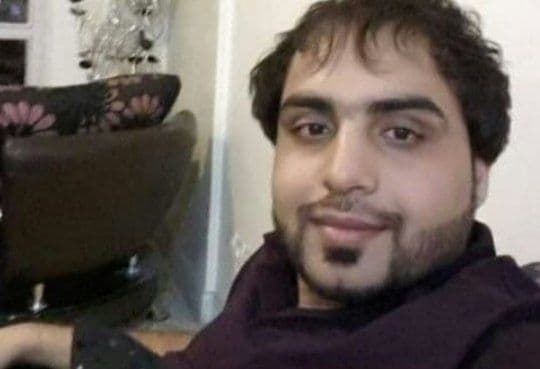
Prisoner Jamal Mohammadi Executed in Ilam Prison

On May 16th, Jamal Mohammadi was executed in Ilam Prison on a charge of murder under the Qisas (“eye for an eye”) principle of Shariah Law. The execution has not been announced by any Iranian media or official sources at the time of this writing.

According to HRANA, the news agency of Human Rights Activists, on May 16th, Jamal Mohammadi  was executed after being sentenced to death by a court on a charge of murder.

About two years ago, during his military service in one of the barracks in Ilam, Mohammadi killed one of his superiors after a verbal conflict. The death sentence falls under the Qisas (loosely translated as “eye for an eye”) principle of Shariah Law.

According to international organizations, considering its population, Iran ranks first in the world in the execution of its citizens. The Statistics and Publication Center of the Human Rights Activists in Iran (HRAI) reported that between January 1st and  December 20th of 2020, at least 236 citizens were executed. One of these citizens was executed publicly, and two were juvenile offenders. An additional 95 citizens were sentenced to death.

According to the report, more than 72% of executions in Iran are not reported by the government or the judiciary. Human rights organizations call these “secret executions.”

Mohammadi was executed in the presence of his relatives. At the time of this writing, the execution has not been announced by any Iranian media or official sources.

Mehran Naruyi Executed in Isfahan After IRGC Refuses to Provide Letter of Suspension to Prison Officials

On May 16th, Mehran Naruyi was executed on drug-related charges in Dastgerd Prison in Isfahan, despite widespread calls to suspend the process until a fair trial could take place.

According to HRANA, the news agency of Human Rights Activists, quoting The Baloch Activists Campaign, on May 15th, Naruyi was transferred to solitary confinement in Dastgerd Central Prison before the execution.

Per the report, an informed source said “during the prisoner’s last meeting with his family, prison officials pointed out that they would suspend the sentence if they received a letter from the imam of Isfahan and Revolutionary Guards. However, the IRGC’s Intelligence Organization refused to provide the letter.”

On May 16, 2021, Amnesty International called for an stop to the execution of Naruyi, writing: “The Iranian authorities should grant this prisoner the right to a fair trial without resorting to the death penalty, as well as forcing confessions under torture.”

According to international organizations, considering its population, Iran ranks first in the world in the execution of its citizens. The Statistics and Publication Center of the Human Rights Activists in Iran (HRAI) reported that between January 1 and December 20 of 2020, at least 236 citizens were executed. One of these citizens was executed publicly, and two were juvenile offenders. An additional 95 citizens were sentenced to death.

According to the report, more than 72% of executions in Iran are not reported by the government or the judiciary. Human rights organizations call these “secret executions.”

Mehran Naruyi, son of Khodadad, is from Nosratabad city of Zahedan in Sistan and Baluchestan province. As of this writing, this execution has not been announced by any Iranian media or official sources.

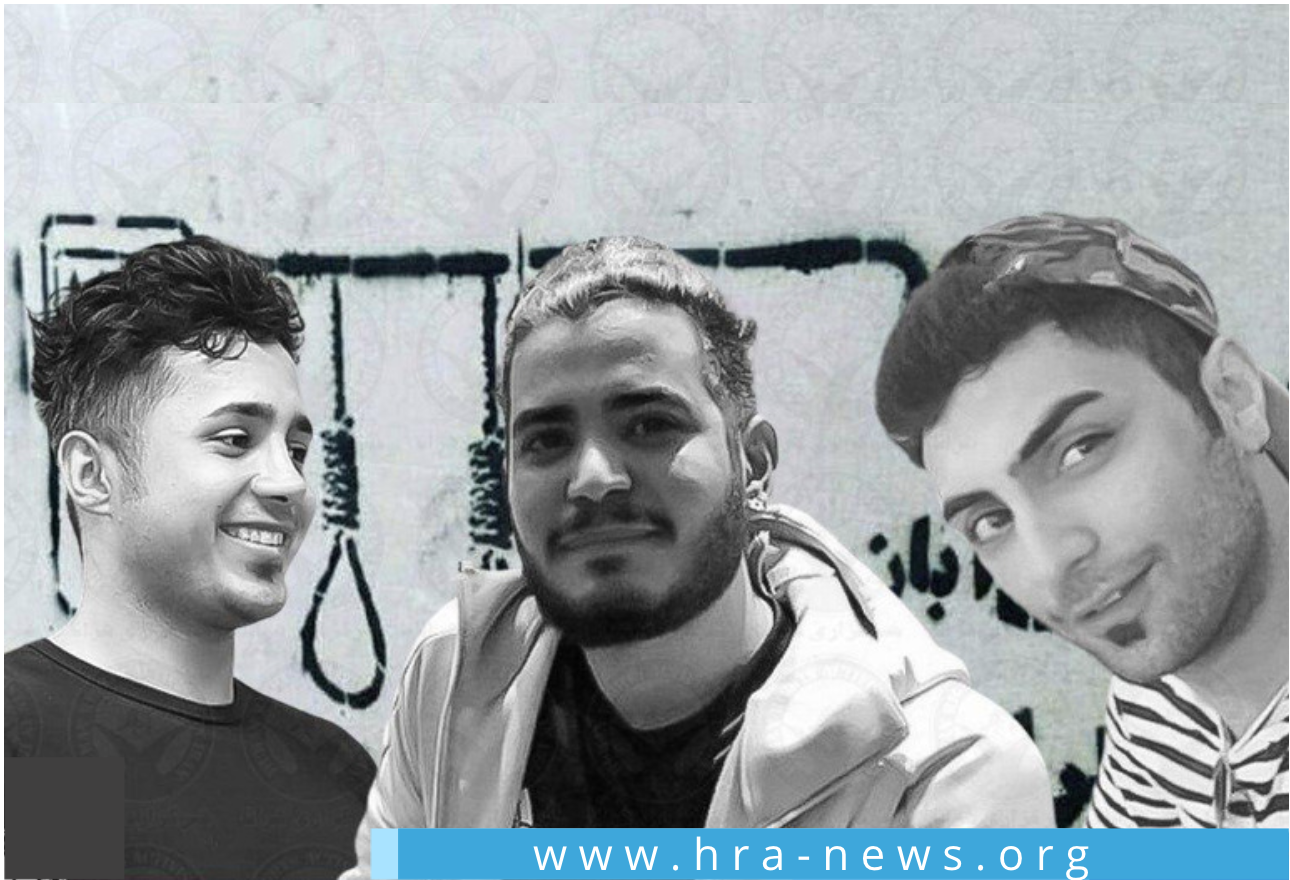
Court Hearing Postponed Again for Amirhossein Moradi, Mohammad Rajabi, and Saeed Tamjidi

On May 12th, the court hearing for political prisoners Amir Hossein Moradi, Saeed Tamjidi, and Mohammad Rajabi, detained since the national protests of November 2019, was postponed for a second time.

According to HRANA, the news agency of Human Rights Activists, the prosecutor’s representative, defendants, and lawyers were all present, but the hearing was unable to proceed in the absence of a second judge. The hearing has not yet been rescheduled.

Amir Hossein Moradi, Saeed Tamjidi, and Mohammad Rajabi were previously sentenced to death by the Tehran Revolutionary Court. They were also sentenced to a total of 38 years in prison and 222 lashes.

On Jun 24, 2020, the Human Rights Activists News Agency (HRANA)  announced that the death sentence of the three political prisoners had been upheld by the Supreme Court. On July 14, 2020, the spokesman of the Judiciary officially announced the confirmation of their  death sentence and said that the sentences had been sent to the prosecutor’s office for execution.

However, according to the lawyers, permission to enter the trial and study the case was given to them on July 15, 2020–weeks after HRANA news agency reported that the death sentence was confirmed in the Supreme Court.

Less than an hour after the official confirmation of the death sentences for Amir Hossein Moradi, Saeed Tamjidi, and Mohammad Rajabi, “#Don’t_execute” became the world’s top trend with hundreds of thousands of tweets. Human Rights Watch, US President Donald Trump, the Writers’ Association of Iran, and others all reacted to this news. The hashtag has now been used more than ten million times.

The following day, UN human rights experts issued a statement and condemned the death sentences. The statement expressed that Amir Hossein Moradi, Saeed Tamjidi, and Mohammad Rajabi were tortured and forced to confess and that these forced confessions were later used against them in their trials. HRANA has previously conducted numerous conversations with informed sources and extensive research to determine what happened to the prisoners in the various processes of activity up to the conviction.

On July 19, 2020, the three defendants’ lawyers issued a joint statement announcing that the case had been referred to a different branch for retrial after the Supreme Court’s acceptance of Article 477.

In mid December of 2020, in the aftermath of the global outcry, the young activists’ request for a retrial was finally accepted by Branch 1 of the Supreme Court and their death sentences were overturned.

The case was then referred to Branch 23 of the Revolutionary Court of Tehran, but, due to a change of chief judge of the branch, the first hearing was postponed from March to May 12th.

Now, it has been postponed from May 12th to a date that has yet to be determined.

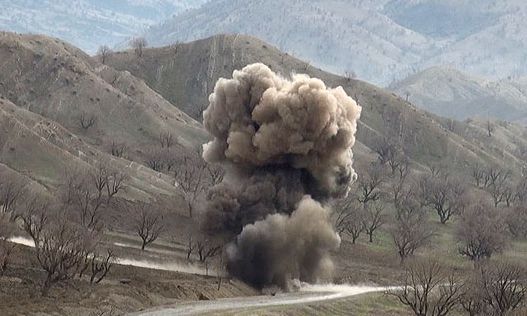
Kolbar Injured from Landmine Explosion in Nowsud Border Area

On Thursday, May 6th, a kolbar was injured in the leg after a landmine left over from the Iran-Iraq war exploded in the border area of Nowsud.

According to HRANA, the news agency of Human Rights Activists, quoting Kurdpa, the citizen has been identified as Nader Saberi, son of Mr. Barakhas, from Tilkuh village in Kamyaran.

Every year, landmines cause the death and injury of several compatriots in border areas. About 42,000 square kilometers of land in Iran is contaminated with leftover landmines and unexploded ordnance from the Iran-Iraq war.

The Iranian regime continues to produce and plant anti-personnel mines, and, contrary to international conventions, the regime believes that using these mines is the only effective way to secure the country’s long borders.

Accordingly, they have planted mines on border areas with Afghanistan, Pakistan, and Iraq. During the conflicts of the 1980s in Kurdistan, mines were planted in this region, as well.

The Continued Detention of Baha’i Citizens Vahid Dana and Saeed Abedi in Shiraz 

After three weeks, Bahai citizens Saeed Abedi and Vahid Dana are still detained in Shiraz in the Intelligence Ministry’s detention center known as No. 100. Following mass arrests and home searches of Bahai citizens in Shiraz, Abedi and Dana were arrested by intelligence agents on April 28th.

According to HRANA, the news agency of Human Rights Activists, Vahid Dana has an acute type of chronic hypertension, and was under supervision of a specialist doctor prior to the arrest due to symptoms of angina pectoris. According to a source close to his family, Dana’s heart problems started in 2014, during a previous detention. The continued detention of the two citizens during the COVID-19 outbreak, coupled with the failure of officials to provide any update on their condition, has raised concern among their families.

Abedi and Dana were arrested in their homes by intelligence agents and then transferred to the detention center. Officers searched their homes and confiscated some of their personal belongings, including cell phones, personal computers, books, and images related to the Baha’i faith.

With the beginning of the wave of pressure on Baha’i citizens, 7 additional Baha’i citizens from Shiraz, (Saeed Ittihad, Qasem Masoumi, Siamak Honarvar, Soroush Abadi, Sedigheh Aghdasi, Alieh Foroutan, and Behrooz Farzandi Ardakani) were also arrested by agents in March. Their houses were searched, and some personal belongings seized by security forces. They were gradually released on bail after about a month.

Vahid Dana and Saeed Abedi had been previously arrested and charged in August of 2018. Each were sentenced to one year in prison and one year in exile, in absentia and without their or their lawyers’ information, by Branch 1 of the Revolutionary Court of Shiraz. These sentences were then reduced to 6 months imprisonment each by Branch 17 of the FarsProvince Court of Appeals. Later that year, they were both pardoned on the anniversary of the Iranian Revolution.

According to unofficial sources, more than 300,000 Baha’is live in Iran, but the Iranian constitution recognizes only Islam, Christianity, Judaism, and Zoroastrianism. Because their faith is not considered legitimate by authorities, the rights of Baha’is in Iran have been systematically violated during recent  years. This deprivation of the freedom to practice their religion is a violation of Article 18 of the Universal Declaration of Human Rights, and Article 18 of the International Covenant on Civil and Political Rights. The United Nations covenant holds that every person has the right to freedom of religion, freedom of converting religion, as well as freedom of expression, individually or collectively; openly or secretly.

It is unclear when Dana and Abedi will be released.


Subscribe to Our Newsletter

Now is definitely not the time to stop reading!

16 Rallies in 2 Days: Students and Workers Across the Country Protest Unsafe Conditions

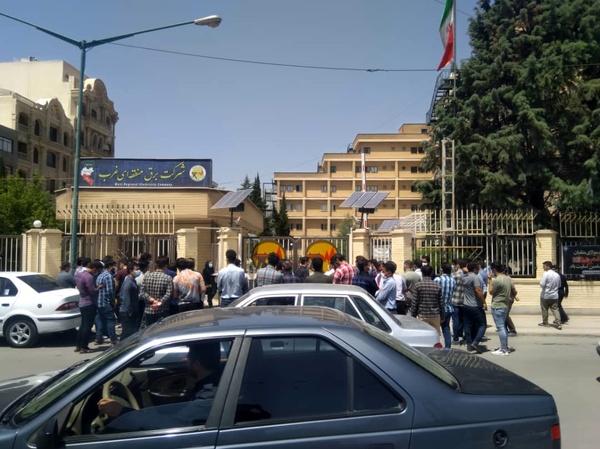
On May 5th and May 6th, several protests broke out that were related, in various ways, to political and economic institutions’ disregard for the safety and wellbeing of their members. High school students in at least 14 cities gathered to protest mandatory physical attendance for their final exams. In Tehran, a group of Tehran Metro workers gathered to demand that their medical and economic demands be met. A group of operators of the West Regional Electricity Company in Kermanshah protested the lack of wage regulation in the new year.


Police beat the protest students


On May 6, 2021, high school students in at least 14 cities including Boroujerd, Tehran, Qazvin, Semnan, Karaj, Shahr-e Kord, Shiraz, Zanjan, Khorramabad, Yazd, Tabriz, Birjand, Ardabil, and Fooladshahr, protested mandatory physical attendance for final exams.  To prevent further spread of COVID-19 and to ensure their own and their families’ safety, these students are calling for “final exams to be held virtually /online”.

Below is footage of students protesting in-person exams


The protesting students gathered in front of their respective education department buildings and chanted slogans such as “Do not be afraid, we are all in this together”, and “We do not want to physically attend”.

At some of these demonstrations, police physically assaulted peaceful student protestors. Several student protesters in Yazd and Fooladshahr were reportedly beaten by officers.

Since the Coronavirus outbreak in Iran, conducting exams that require physical attendance has raised concern among students and their families. On the Monday before the protests, the Corona Management Committee in Iran claimed that final exams were to be held in person in large and ventilated places.

Jafar Pashaei, Director General of Education in Tabriz Province responded to the protests. “Holding exams in person for the ninth and twelfth-grade is a national decision,” Pashaei said, “And it will definitely be held under protocols and distancing.”

Despite ongoing demands to be given a remote option, and despite the May 6th protests, education officials have maintained the in-person exam schedule.


Protests from Tehran Metro Employees


According to the official channel of railway workers and technical maintenance staff, a group of Tehran Metro personnel gathered in the company courtyard to protest the lack of attention to their demands for fair treatment,

The protesting workers’ main demands are “Expertise allowance, hardship allowance, prioritized COV-19 vaccination, Job title modification, full implementation of labor wage increase based on the decree of Supreme Labor Council, stop the plan of removing the trains’ co-driver, modify the formula for calculating the personnel salary tax, elimination of discrimination between operational and administrative staff as well as the revival and implementation of mandates to provide personal equipment for drivers.”


Protests from West Regional Electricity Company Operators


According to ILNA, on May 5, a group of operators of the West Regional Electricity Company in Kermanshah protested in front of the regional electricity office building in Kermanshah.

The operators said in a statement, “The wage decree of the Ministry of Labor is not being implemented well for us. Our wages and benefits are much lower than those of officials and contractors, and the wage increase has not been properly applied to us in the new year. Our wages are very low considering the inflation and what we do.”

The spokespeople added that what the Regional Ministry of Energy and Regional Electricity Office pay to companies as personnel salaries often do not end up going to the workers. These operators, who carry out dangerous work handling high-voltage electricity, want to sign a contract with the regional electricity itself, rather than the contractors.

Border Regiment Shoots and Wounds Kolbar (Cross-Border Laborer) in Outskirts of Baneh

According to HRANA, the news agency of Human Rights Activists, quoting Kordpa, on May 5, 2021, a border regiment’s direct shot wounded cross-border laborer Masoud Mohammadi, a resident of Nanour village in Baneh.

According to the report, Mohammadi was shot directly and without any prior notice by the border regiment, and then taken to a medical center for treatment in Baneh.

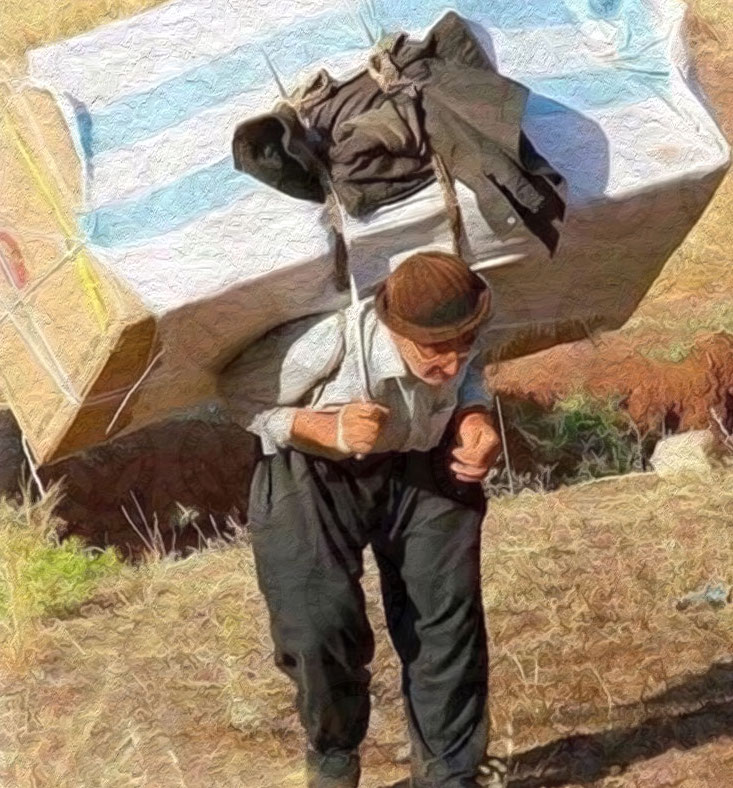
Kolbars’ work is difficult, largely-unregulated manual labor that people do in border areas with high levels of unemployment. Dozens of kolbars are injured and killed yearly from accidents, dangerous conditions, and border guard shootings.

A section of 2020 The Annual Report of Iran Human Rights addresses the citizens who have been killed or injured by military forces.

According to the report, border guards and law enforcement murdered 36 and wounded 109 kolbars in 2020 alone. An additional 5 workers were killed and 4 injured due to climactic and geographical working conditions such as frostbite-inducing temperatures, avalanches, and falling from great heights.


Kermanshah province: Civilian Shot and Killed by Law Enforcement in Dalahu

A civilian was shot dead by law enforcement forces in Dalahu. According HRANA, the news agency of Human Rights Activists, quoting Kordpa, Sohbat Samadi Nasab died in Taleghani hospital on May 4, 2021 from injuries sustained from the firing.

According to the report,  the military forces shot Mr. Samadi Nasab directly on suspicion of “carrying contraband “, without any prior notice, on April 26, 2021. He was transferred to Taleghani hospital in Kermanshah for treatment and died the following week.

Military and security forces have a long history of shooting citizens without evidence, often fatally. Article 7 of the Law on the Use of Firearms by Officials at necessary cases states: “officers subject to this law, when using a firearm, should target the leg, as much as possible and be vigilant their actions will not cause death and assure to not harm third parties who are not involved in the incident.”

The note to this article also states that “the care for the injured is the responsibility of law enforcement officers and injured must be taken to medical centers as fast as possible”.

Sistan and Baluchestan Province : Two Citizens Detained by Security Forces in the Cities of Konarak and Chabahar

On April 30, 2021, two citizens were arrested by security forces in the cities of Konarak and Chabahar and taken to an unknown location.

According to HRANA, the news agency of Human Rights Activists, quoting the campaign of Baluch activists, Molavi Yousef Abasteh, son of Yar Mohammad, was arrested by IRGC intelligence forces in his home, in the city of Konarak.

Another citizen, 19-year-old Ismail Parwan, son of Sediq and a resident of Bahu Kalat village, was also detained by Chabahar Ministry of Intelligence officials in Chabahar.

As of this writing, no information is available on the whereabouts of the detainees or the charges against them.

Iranian Women Want to Use Motorcycles: Nearly 6000 People Sign Campaign Calling on Parliament to Remove Barriers to Issuance of Licenses

Over the past few days nearly 6,000 people have signed a campaign calling on the speaker and members of Parliament to remove barriers surrounding the issuance of motorcycle licenses to Iranian women.

According to HRANA, the news agency of Human Rights Activists, quoting the Asr-e-Iran, citizens wrote in the statement, “We, the women of this land, demand one of our most basic citizenship rights: the use of vehicles such as motorcycles.”

In light of the staggering increase in car prices in recent years and the inability of many women to afford them,  the petition calls on lawmakers to take appropriate action as soon as possible to oversee the proper implementation of anti-discriminatory laws and regulations.

Years ago, Branch 31 of the Administrative Court of Justice passed a ruling that obligated the NAJA traffic police to “issue motorcycle licenses for qualified women”,  but police appealed the vote on the grounds that, according to Article 20 of the Traffic Violations Law, driver’s license issuance falls under their jurisdiction. In this law, the qualifications for obtaining a license are explained in detail, but there is no mention of gender. So while there is no explicit legal discrimination on the basis of sex,  the very police forces tasked with enforcing the process have a pattern of making it very difficult for women to receive their certification.

The day after a photo of the women riding a motorcycle in Tabriz was published, Masoumeh Ebtekar, Vice President for Women and Family Affairs, put it plainly on her Instagram: “[The motorcycle] is a good vehicle for women as long as safety instructions are followed.”

Unlike driving, motorcycle riding is considered by some conservative Muslims to violate principles of female modesty. The campaign attempts to debunk the notion that Islamic practices are necessarily at odds with women utilizing this convenient and affordable mode of transportation.  The signatories wrote in a statement addressed to the speaker of the Parliament, “In the history of Islam, many chaste women were involved in equestrianism and there was no jurisprudential denial based on this practice.”

It is worth mentioning that this campaign is currently collecting signatures at the site linked below: (https://www.karzar.net/motorcycle-license).