Prisoner of Conscience Atena Daemi Rebukes Authorities, Eulogizes Executed Kurds

Human Rights Activists News Agency (HRANA) – From the walls of Evin Prison, detained civil rights activist Atena Daemi has written a letter in response to the executions of Ramin Hossein Panahi, Loghman Moradi, and Zanyar Moradi, three Iranian Kurdish political prisoners who were hanged to death in secret on Saturday, September 8th.
The executions of the Moradis and Panahi drew outrcry from human rights institutions internationally. The attorneys representing them called their convictions and executions — the latter which took place without the mandatory notice to, or presence of, their lawyers — legally ambiguous under both Iranian and international law. Caught unawares, none of the families were present during their sons’ final moments, as the executions were carried out at an undisclosed location in Tehran. The Ministry of Intelligence has since issued detention threats to the family members of the deceased men.
Condemning Iranian authorities for their treatment of the three men, and extending her condolences to their families, Atena Daemi’s letter joins the many voices of outrage over the course of the young mens’ fate. Daemi, imprisoned since 2014, is serving a seven-year sentence for “propaganda against the regime,” “assembly and collusion to act against national security,” and “insulting the supreme leader [Ayatollah Khamenei] as well as the founder of the Islamic Republic, Ayatollah Khomeini.”

The text of Atena Daemi’s eulogy, translated into English by HRANA, is below:
They killed our loved ones, and claim with pride that in doing so they have administered justice.
The “justice” they refer to is not the one represented by Lady Justice holding a fair and balanced scale. It is instead a man — a man with a turban on his head [a cleric], whose forehead bears the mark of the clay which grazes his head during prayers. He is blindfolded, not as a sign of impartiality, but of blindness to the truth. In one hand is a rosary. In the other, a scale suspended by a noose.
These scales are so unbalanced that one tray is a speck in the heavens, while the other is laden with dead bodies dragging it deep into the ground. This “justice” they invoke has been neither seen nor heard in *40 years.
In this troubled time – a time of economic turbulence, poverty, and unemployment – what problem was solved by murdering these three beloved men? Has their killing soothed any of the ailments suffered by the Iranian people?
Your majesties– where is this mania taking you? By deceit and without warning, you led our loved ones to the killing fields. Even in the short lives granted them, you wouldn’t offer them peace. While they were still **hungry and thirsty, you cut their lives short. How it must have incensed you to your core to never see them falter. As you, dry-eyed, pitied them in their walk to the gallows to die for the ideals, their heads were held high, their steps steady…
How insolently you watch our loved ones draw their last breaths! It must burn you to hold them hostage from their families and brand them as terrorists, only to see them rise as steadfast symbols of democracy for the rest of us. For nine years, they showed friendship to inmates of different creeds and beliefs; they were endeared to their fellow prisoners, loved by us, and cherished by the Iranian people.
Before the start of religious months of Moharram and Safar(1) each year, you prepare yourself for mourning with a savage display. Drunk and armed with handguns, you launch into a monologue about Imam Hussein, who, lips dry from thirst, was beheaded by Yazid. What a repugnant contradiction–what abhorrent hypocrisy! You mirror Yazid’s troops, and for the past 40 years, you have tightened ropes around resolute throats, pulled the stool from beneath the feet of persistent and patient youth. You instigate sectarian war between Sunni and Shiites. Then, your pockets brimming with billions, you pretend to be mourning Hussain.
I am sure that you know your savage acts only dig you deeper into public contempt. Your path is one of self-annihilation. Today, you only dug your graves deeper. You did not kill Zanyar, Loghman, and Ramin. You have only endeared them in our hearts, inspiring the world into mourning the true martyrs of our time.
You have tarnished Iran’s standing and dignity in the world. They see us as a terrorist country for the cutthroat, blood-thirsty, and rapacious actions of a select and powerful few. How long and how far will you continue on this road? Dream on about imposing war on your people: they will rise to the challenge again and again. Stop your killing machine. Lift your lead boots from the throats of Iran and Kurdistan.
How tightly you cling to your towering throne, oblivious to the fact that you could tumble from your high horses at any moment to the miry earth below. Throughout history, many who rode high thought of themselves as invincible, only to take refuge in sewage tunnels, where they were tracked down and punished for their crimes.
Iran is a pile of live embers cloaked in a thin layer of ash. Lest your actions arouse the flames that lie beneath.
We congratulate the steadfast families of these martyrs.
Atena Daemi – Evin Prison Women Ward
September 8th, 2018
(1) Months in the Islamic lunar calendar commemorated by Shiite Muslims in mourning of Imam Hussein, the 3rd Shiite Imam, who was killed in battle against Yazid (Imam Hussain has come to symbolize the force of Good while Yazid stands for Evil).
* The Islamic Republic of Iran was founded after the Iranian Revolution approximately 40 years ago
** Zanyar and Loghman Moradi and Ramin Hossein Panahi were all reportedly on hunger strike before they were executed.

Urban Exposé: the lost voices of Iran’s foragers

Human Rights Activists News Agency (HRANA) – For years, piles of giant parcels could be seen on the street corners of almost every Iranian metropolis, each representing the bounty of a few hours of foraging. A morning stroll in the city reveals “dumpster divers” hunched over almost every visible waste bin, toiling in the day at what used to be a moonlight gig. Now, this mainstay of urban culture is coming under fire for its poor regulation, safety hazards, incorporation of child labor, and–in the current economic crisis– its rapid expansion into smaller cities.

Many of Iran’s municipalities have on payroll designated foragers of recyclable goods, who often work in deplorable conditions and have been known to outsource this work to young children. In cities like Abadan and Khorramshahr, dumpster divers have become enmeshed in the fabric of the city, all while a creeping trend of privatization has heightened both its precarity for workers and its appeal for would-be entrepreneurs that are hiring them.

Labor activist *Mehrdad spoke to HRANA about the society’s low bar on working conditions for child foragers who aren’t even of age. “All of them suffer from a host of skin, digestive, and respiratory conditions,” Mehrdad said, identifying basic gear like gloves, masks, or protective uniforms as virtually-unheard-of commodities. “What’s worse, instead of telling our municipalities that these children should not be employed– that we need to abolish child labor and think about their welfare–we’re fighting for improved sanitary conditions, and to protect them from sexual harassment.”

Off-the-rolls workers–especially children–are not entitled to complain about their conditions, let alone expect better. Mehrdad said that many of these foragers make do, and even spend the night, in factories and storage spaces used for waste separation. “Obviously, these children work in a contaminated environment.”

Journalists, along with children’s’ rights and civil rights activists, have drawn attention to a burgeoning “garbage mafia” that exploits those willing to accept paltry wages, such as freelance dumpster divers and children.

While waste management officials in some cities have maintained management of the foraging sector and verbally committed to refining the rights and status of these workers–like the waste management office supervisor of the city of Zanjan, who has promised them ID cards and more organized labor administration–such supports have a low chance of survival in an environment of economic downturn and unregulated outsourcing.

Indeed, Mehrdad attributes the recent spike in dumpster diving to Iran’s new wave of economic crisis. “Within the last year, the hard-working class of society has become poorer […] the unemployed have have taken to dumpster diving, while the employed recruit their own kids to do it. Dumpster diving is the last resort of a working class struggling to stay afloat.”

Two months ago, a Hamedan city councilman announced that 550 dumpster divers were active in that city. Disheveled and dressed in dirty clothes, they roam encumbered by large bags of paper, plastic, and metal cans. According to one children’s rights activist studying the child foragers of Tehran, child dumpster divers are expected to collect an average of 170 pounds of recyclables daily, a quota they must trek miles across the city to meet.

These children may be outsourced by contractors, who themselves are managed–and paid–by the city. “What’s awful about it,” said Mehrdad, “is that the municipality and its contractors are capitalizing on their vulnerability.”

Foragers in larger cities won’t necessarily fare better. “The conditions for such children outside the capital, if not harder than in Tehran, aren’t any better. At least in Tehran there’s some media coverage on dumpster divers. In smaller cities, hardly anyone talks about them.”

While article 7 of Iran’s Declaration of Citizenship Rights mandates that “all citizens enjoy equal access to human dignity and the benefits prescribed in laws and regulations,” city councils and municipal authorities in affected cities have yet to make concrete strides toward the protection of the human dignity of foragers. On the contrary, several municipalities have reportedly evaded accountability for underage citizens working in the workshops and waste separation centers of their cities, repeatedly deferring to the very contractors they hire and supervise. “The root of the issue is that these contractors win the municipality’s bidding process by offering the lowest price, and compensate for this low fare by mining the cheap labor pool of children and poor individuals,” said Mehrdad, who anticipates that dumpster diving will remain on the rise until a labor law makes these issues explicit, and is pushed to implementation with considerable pressure from the Iranian people.

Privatization, according to Mehrdad, is the scourge of the freelance forager. “Conditions for dumpster divers was bad enough in the past, but privatization, and the issuing of permits by contractors, have turned the situation downright deplorable. Where some foragers were able to work independently before, now contractors have monopoly on the market and are free to enforce their own restrictions.” Contractors hired by the municipality currently have no legal responsibility to address these issues.

As this HRANA reporter has observed, as long as municipalities skirt their responsibilities of contractor oversight, the number of dumpster divers–along with their quotas, pressures, and hazards–will steadily climb. The voices of these working citizens, for now, are drowned out by financial crisis and political turmoil.

* Mehrdad’s last name was not published due to safety reasons.

Forty Days Later, Whereabouts of Imprisoned Dervish Amin Alizadeh Still Unknown

Human Rights Activists News Agency (HRANA) – The family of Amin Alizadeh–a member of Iran’s Gonabadi Dervish religious minority who was arrested in Tehran on June 29th with fellow Dervish Jalal Mousavi–has now been in the dark about his whereabouts for 40 days.

Alizadeh and Mousavi were arrested amid the “Golestan Haftom” incident in February 2018. The incident, named after the street in Tehran on which it took place, broke out when a gathering of several hundred *Gonabadi Dervishes were violently confronted by Iranian police and plainclothes members of the Revolutionary Guard’s Basij faction outside the residence of their spiritual leader, Noor Ali Tabandeh.

The Dervish community had rallied outside Tabandeh’s residence to prevent his possible detainment, as he has reportedly been placed under extended house arrest by Iranian authorities.

Hundreds of Dervishes were beaten, wounded, and arrested during the Golestan Haftom incident. A similar attack occurred on January 24th after an intervention from security forces on the same street, heightening the sense of fear within the Dervish community.

After their arrests in June, Alizadeh and Mousavi were transferred to Ilam Prison in Iran’s Kurdish region, located over 400 miles west of Tehran. According to Ilam Prison authorities, Alizadeh was later transferred to Damavand Prison, closer to Tehran. Damavand judicial authorities, however, have not allowed any visits or contact between Alizadeh and his family.

Though Iranian judicial authorities estimate that around 300 people have been arrested in connection with Golestan Haftom, HRANA has thus far published the names of 324 arrestees and estimates that the actual number is considerably higher.

* There are various divisions among Dervishes in Iran. In this report, the term “Dervish” refers to Nematollahi Gonabadis, who declare themselves as followers of Twelver Shi’ism, Iran’s official state religion.

Prisoner Hanged to Death Without Warning

Human Rights Activists News Agency (HRANA) – Kamal Ahmadnejad, a prisoner held on death row in Miandoab Prison in northwestern Iran, was precipitously executed in the early morning of Monday, September 10th, 2018.

Prison authorities carried out the execution without informing his family or granting them a final visit. Ahmadnejad, originally from Gamishgoli village near Miandoab, was abruptly transferred to Ward 2 of Miandoab Prison two weeks ago.

The Center for Democracy and Human Rights in Kurdistan reported that Ahmadnejad was executed in face of lingering questions about the coherence of his case. Arrested along with five others in December of 2015, he was the only defendant in the case to be sentenced to death. His co-defendants Halmat Abdullahi, Milad Abdi, Saeid Siahi, Soleyman Kori, and Mostafa Tahazadeh were each sentenced to fifteen years in prison, according to Maf News, an affiliate of the Center for Democracy and Human Rights in Kurdistan.

The six were charged with killing Hashem Zeinali, former member of the Islamic Revolutionary Guard Corps (IRGC), as well as “membership in a Kurdish opposition party.” Ahmadnejad’s family has alleged that he was forced to confess under the duress of torture.

According to their families, some of the defendants were not at the scene of the crime when the murder allegedly occurred, a discrepancy they said was raised during court proceedings.

The six were originally convicted on September 18, 2016.

Ahwazi Arab Protestor Posts Bail, Awaits Trial

Human Rights Activists News Agency (HRANA) – Jamil Savari, resident of Ahvaz in Iran’s southwestern Khuzestan Province and member of the Ahwazi Arab ethnic minority, was released on a 200 million IRR (approximately $14,000 USD) bail Sunday, September 9th pending completion of the investigation into his case.
During the week of March 29th, 2018, members of Iran’s Ahwazi Arab minority staged rallies in protest of being treated as “invisible” by the state-run media, one example of what is believed to be a larger policy of oppression and discrimination endorsed by the Islamic Republic. Savari was first arrested in March of 2018 by security forces in the midst of these protests, and was subsequently transferred to Sheyban Prison in Ahvaz.
Security forces arrested hundreds of protestors in efforts to shut down the March rallies, which gained momentum in a number of cities, particularly in Khuzestan near the Iran-Iraq border. Reports have surfaced of authorities’ mistreatment and torture of these detainees, many of whom–including a number of minors whose conditions are unknown–remain behind bars despite authorities’ verbal engagements to release them.

Subscribe to Our Newsletter

Now is definitely not the time to stop reading!

Women Prisoners of Conscience Respond to Executions of Ramin Hossein Panahi, Loghman & Zanyar Moradi

Human Rights Activists News Agency (HRANA) – Political and civil rights activists detained in the Women’s Ward of Evin Prison in Tehran have released a statement in response to the execution of political prisoners Ramin Hossein Panahi, Loghman Moradi, and Zanyar Moradi.

In a letter, Narges Mohammadi, Nasrin Sotoudeh, Golrokh Ibrahim Iraee, Maryam Akbari Monfared, Atena Daemi, Azita Rafizadeh, and Negin Ghademian expressed condolences to the families of the three Iranian Kurdish prisoners, who were hung to death September 8th amid dubious legal proceedings and international protest.

Barring the families from interring their sons’ bodies themselves, authorities commandeered the remains to be buried in an undisclosed location. According to Ramin’s brother Amjad Hossein Panahi, the Ministry of Intelligence has threatened the Moradis and Panahi families with detention. To the surprise of all families involved, the executions were carried out in an undisclosed location in Tehran province.

Amnesty International, one of the human rights organizations who were aghast at the course of the young men’s case, called the executions an “outrage.” Voices of the Evin Prison Women’s Ward now join the wave of dissent against the outcome of their case.

During a visitation on Sunday, the authors of the statement, many of whom are being held as political prisoners themselves, joined the families in singing “Ode to the Bleeding Tulip” and “O Iran” to commemorate and honor the memories of Ramin Hossein-Panahi, Loghman Moradi, and Zanyar Moradi.

The full text of their message, translated into English by HRANA, is below:

No words could contain the crushing weight of our sorrow.

These brave children of our country leave us a legacy of patience, freedom, and perseverance.

Their names are affixed to the helms of those fighting for freedom, and for those that seek it, the path has been laid by their resistance.

We wish solace for the families and cellmates of Zanyar Moradi, Loghman Moradi, and Ramin Hossein-Panahi. We wish solace for all the afflicted citizens of our land.

We bear your pain in our chests and we stand with you.

Narges Mohammadi, Nasrin Sotudeh, Golrokh Ibrahimi, Maryam Akbari Monfared, Atena Daemi, Azita Rafizadeh, and Negin Ghadamian

Women’s Ward of Evin Prison

Activist in Iranshahr Girls Case Released on Bail

Human Rights Activists News Agency (HRANA)- Abdollah Bozorgzadeh, a civil rights activist who was arrested June 17, 2018 for joining a peaceful gathering in support of the Iranshahr Girls, has been released on a bail of 1,200,000,000 Rials (approximately $12,000 USD).

Upon his arrest, Bozorgzadeh was transferred to a Zahedan detention center run by the intelligence department of the Islamic Revolutionary Guard Corps (IRGC).

The Iranshahr Girls are a group of 41 girls who were reportedly raped in the southeastern city of Iranshahr. Their case attracted public attention when Sunni Imam Molavi Tayeb Molazehi spoke about them during a sermon at the end of Ramadan, stating the girls had been raped by a group of men “of wealth and power.” The sermon ignited street rallies and social media campaigns against authorities’ failure to prosecute the men accused of the rape.

In July of this year, the IRGC reported the arrest of a number of foreign media heads, releasing video-recorded confessions from Abdollah Bozorgzadeh and six other protester-arrestees.

More than 100 well-known civil and human rights activists have spoken out against the Iranian security apparatus, issued a statement calling for Bozorgzadeh’s immediate release, and demanded an investigation to identify and punish those responsible for the rape. Amnesty International called for Bozorgzadeh’s release in a statement released July 4th.

* Iranshahr is located in Sistan and Baluchistan Province, southeastern Iran. Most of the residents of this city are members of the Sunni religious minority.

Appeals Court Upholds Convictions of Six Azerbaijani Activists

Human Rights Activists News Agency (HRANA) – Six Azerbaijani activists accused of national-security related crimes for protesting Azerbaijani cultural misrepresentation in 2015 had their appeal rejected.

On September 1, 2018, Judge Hossein Farshi Radvar of Branch 3 of the East Azerbaijan Province Appeals Court moved to uphold the original ruling, issued to a total of seven activists in October 2017 by Branch 1 of Ahar Revolutionary Court. Ahar is situated in northwest Iran, home to Iran’s Azerbaijani ethnic minority.

On a conviction of “Assembly and collusion against national security by propagandizing against the regime,” the activists all face prison time: ten months for both Akbar Aboulzadeh and Ebrahim Noori, and seven months apiece for Esrafil Fathollahzadeh, Hamed Allahverdipour, Morteza Shokri, and Soleiman Kazemi.

Though the appeals court had also summoned Saleh Molla Abbasi, his name did not figure in the final verdict. The initial ruling indicated he faces a 10-month prison sentence.

From the group of seven, the four who attended the initial court hearing were the same ones present at the appeals hearing: Aboulzadeh, Fathollahzadeh, Allahverdipour, and Shokri. Three others – Saleh Molla Abbasi, Kazemi, and Noori – did not attend the court session. Noori is currently serving a sentence for other charges in Evin Prison of Tehran.

The activists were arrested in November of 2015 for their involvement in public protests against the state-sponsored television series “Fitileh,” parts of which were believed to portray the Azerbaijani ethnic minority in a derogatory light. The “Fitileh” protests reportedly involved around 25 participants. All but these seven were eventually acquitted.

HRANA previously reported on the activists’ pending appeals hearing.

Naqadeh Farmer Arrested by Revolutionary Guards

Human Rights Activists News Agency (HRANA) – A farmer from the village of Kooyik in Naqadeh county, West Azerbaijan Province was arrested on September 2nd.

Saadi Maroof Khalkhaaneh, 23, was arrested by authorities from the Intelligence Unit of the Iranian Revolutionary Guard Corps (IRGC) and transported to an unidentified location.

A source close to the family confirmed the news to HRANA, stating Saadi was accused of “backing opposition parties” and detained without an arrest order.

In repeated inquiries about him to security authorities, the source said, Khalkhaaneh’s family has been met with the stock response that he is “in IRGC custody.” His whereabouts remain unknown.

Urmia Prisoner Enters 11th Day of Hunger Strike

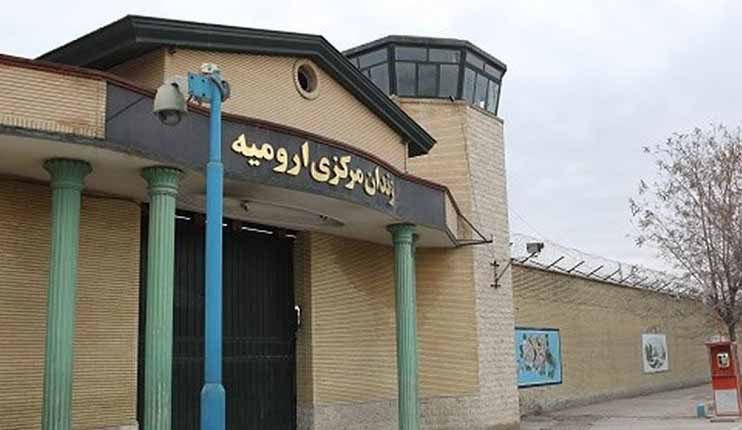
Human Rights Activists News Agency (HRANA) – Mehdi Taha of Urmia Central Prison’s Ward 14 is entering the 11th day of a hunger strike he declared August 30th in protest of being denied furlough.

Taha is currently in year six of a 15-year sentence for drug-related offenses. He has been repeatedly denied furlough over the course of his detention. According to a close source, Taha believes prison authorities are refusing his furlough requests out of spite.