





Human Rights Activist News Agency (HRANA) – On August 7th, Iranian state-sponsored television broadcast footage of what appeared to be a confession: two prisoners can be heard owning up to their part in an armed attack on the military base of Saqqez. One of these two men, Houshmand Alipour, is the subject of an open letter written by his brother Hejar, who sees this footage as a sham excuse to end his brother’s life.
Hejar has written in his brother’s defense before, asking human rights organizations in a recent open letter to address Iranian authorities’ restrictions on Alipour and his co-defendant’s visitations, extra-prison communications, and access to legal defense. Alipour, a Sardasht native, was detained August 3rd of this year alongside the prisoner seen beside him in the video, Mohammad Ostadghader. On charges of membership in Kurdish opposition parties, he has been confined to the Sanandaj Intelligence Office in circumstances increasingly dire.
A close source stated earlier this month that Alipour was being bounced between interrogation, intelligence detention, and Saqqez prosecution court, without the presence of a defense attorney and to the great confusion of his family. HRANA previously reported on authorities’ hindrance of Alipour’s defense proceedings as his October 4th investigation date drew near, only to be postponed.
In a prior statement, Amnesty International expressed concerns about Alipour and Ostadghader’s detention, particularly over their purported confession tapes. “The pair were held in an unknown location without access to their families or lawyers […],” the statement read. “The nature of the accusations against them and their forced televised ‘confessions’ may be a precursor to charges that incur the death penalty.”
Amnesty also detailed the plight of Ostadghader, who — as of the date of their statement — was denied medical since sustaining a gunshot wound at the time of his arrest.
The full text of Hejar’s second plea for his brother is below, translated into English by HRANA:
“Houshmand Alipour and Mohammad Ostadghader have thus far spent around three months in custody of the Islamic Republic. They are subjected to a variety of physical and psychological tortures. Their lives are at stake. Houshmand is a man 25 years young whose life is being squandered by the oppression of the Islamic Republic and its abuses of our family.
I want to narrate a part of Houshmand’s life here, for everyone to read. Houshmand was born in November of 1993 in Sardasht. He has a twin sister. He was born to a big family. Although there were ten of us children, our parents worked hard to make sure we wanted for nothing. Our father worked day and night, in the heat of the summer and the cold of the winter, all to provide for us.
The family Houshmand was born into is no stranger to oppression and injustice. Our father, Mostafa Allipour, is one of the better-known activists of the Sardasht region. Advocating to free the people and to better their lives bought him persecution from the Islamic Republic, which trailed him through the years with prison time and fines. My father always said, “Because we wanted fortune for all, much misfortune befell us [….]. The regime gave our family no respite.” Our mother, Ameneh Mowludian, bears the sufferings of the continued threats and pressures imposed on our family by the Islamic Republic. Our paternal uncle, Hossein Alipour, was executed in 1983 by the Islamic Republic. Our father’s paternal uncle Molla Ali Bijavi was executed in 1985 by Islamic Republic operatives, and the mercenaries of the Baʿthist regime in Iraqi Kurdistan.
Bearing witness to the insults and disdain that the government has always borne towards his family, Houshmand was haunted by anger and hatred. No matter how how hard he tried, he could never find peace.
In 2009, when he was only sixteen, he was arrested during a celebratory feast in Sardasht. Of his arrest, he said:
“Officers of the Islamic Republic attacked us with tear gas, batons, and pepper spray. I fell to the ground where they beat me and placed me under arrest. In their car, they tied my hands behind my back, blindfolded me, and transported me to the Intelligence Office. There they beat me savagely, insulted me, and spit obscenities at me. During the beatings and while I was blindfolded, they took my fingerprint as a ‘signature’ on documents, the contents of which I was wholly unaware. They forcibly extracted confessions in there.”
Houshmand is sentenced to four years’ imprisonment and 75 lashes. As a minor he spent time in the Juvenile detention center of Urmia before being transferred to the Juvenile Ward (1A). This is where he passed the days of his sentence and endured floggings.
After his release from prison, Houshmand Alipour was repeatedly summoned by the Ministry of Intelligence in connection to his family members’ politics. He eventually decided to flee to Iraq. He spent about four years in Iraqi Kurdistan, and even participated in the Kurdish war against ISIS, and incurred a few injuries in the process. A while later, following in the footsteps of his family members, he travelled to Turkey to seek asylum. His case file was registered at the UN Refugee office in Turkey. Upon his return to Iraq, where he went about working […] in the city of Baneh, Iranian Kurdistan, he was arrested alongside Mohammad Ostadghader.
The Islamic Republic pummeled and stifled the dreams of a young man, and we cannot stand by as they try to take his life. For this reason, I entreat all freedom-lovers and human rights organizations to do all in their power to rise up and save Houshmand’s life, to bring him back into the loving arms of his parents, sisters, and brothers.
Hejar Alipour,
20 October 2018”
Category: News
Fed-up Teachers Confront Rouhani by Post

Human Rights Activists News Agency (HRANA)- The Iranian Teachers’ Organization has written a letter to Iranian President Hassan Rouhani to underline a number of the contentions that pushed teachers to strike in recent weeks.
The full text of their letter is below, translated into English by HRANA:
Dear Mr. Rouhani, President of Iran,
Teachers and school staff have been among the most vocal advocates of your administration, which has adopted a rhetoric of moderation and prudence. In your promise they have invested their hopes and labor, entrusting the helm of this country to you. Yet the educational system and its institutions have tumbled low on your list of priorities. Should this trend carry on, hope alone will not be viable.
How long?
How long will we be able to argue with peaceful, dignified means — through democratic and civic activism — that education is critical to the balanced and comprehensive advancement of our country?
How long must we emphasize that education is not second to a safe and healthy Iran, but rather its prerequisite?
How long must we belabor the fact written into the Educational Outlook, that the replacement of low-quality products with top-of-the-line imports is impossible in the realm of our country’s human resources?
How long are we doomed to argue patiently, host conferences, and author articles about teachers who, feeling that their very livelihoods are at stake, will no longer be able to educate our country’s children with ingenuity and sound minds?
How long must we remind you of the impact that the honorable work of teachers has on our workforce and families? How long will we have to shout about the systems in advanced countries, that have wisely grounded their progress and development in education, and ensured that their teachers are held in the same esteem as government ministers, security, and diplomats?
Don’t you know?
Don’t you know that many of our colleagues live under the poverty line?
Don’t you know that uncurbed inflation and price hikes have afflicted teachers’ lives and significantly diminished their purchasing power?
Have you any idea of the insurmountable challenge facing principals directing schools with this dwindling per capita funding?
What we know
We know that the government’s revenue has increased from the rise in oil sales and currency exchange rates.
We know that the government’s income has grown from taxes like the Value-added tax (VAT) that have been tacked onto the high cost of living.
We know that the law allows for salary and other benefit increases under extenuating circumstances.
If you are unaware of the problems and the solutions, woe are we; if you are aware but cannot, or will not do anything about them, woe to you.
It appears you believe everything is as it should be: teachers articulating their predicament with patience and humility, the exemplars of civic demonstration.
Yet we are certain that recent events, widespread protests, and teachers’ lowered thresholds of tolerance could spell ongoing protests and turmoil for our education system.
We pray that you take this warning seriously, and in coordination with parliament and the Ministry of Education will pass the necessary orders to find radical structural solutions to the host of issues flooding our education system, in order to prevent further damage to our beloved country.
Iranian Teachers’ Organization
October 19, 2018
*
The general teachers’ strikes that took place on October 14th and 15th across many provinces in Iran were the follow-up to a call to action from teachers’ associations protesting low wages, and for the release of imprisoned teachers like Mohammad Habibi, Esmaeil Abdi, and Mahmoud Beheshti Langeroudi.
Ardabil Prisoner Hanged to Death

Human Rights Activist News Agency (HRANA) – Twenty-seven-year-old Meysam Saber, a prisoner in the Health Ward of Ardabil Prison, was executed in the early morning hours of Sunday, October 21, 2018.
Saber had been detained on murder charges since 2013. He was reportedly transferred to solitary confinement on the eve of his execution.
Saber was the subject of a HRANA report on prisoner abuse last year when he was chained to the bars of the Quarantine Ward for 24 straight hours for complaining about mistreatment by prison guards.
By carrying out Saber’s hanging in silence, authorities — particularly the Judiciary — demonstrate a continued pattern of obfuscation on the topic of prisoner sentencing and executions, in spite of their responsibilities of informing the public.
According to Amnesty International’s annual report, Iran ranks first in the world in executions per capita. On the World Day against the Death Penalty (October 10th), the Center of Statistics at Human Rights Activists in Iran (HRAI) published its annual report, indicating that at least 256 citizens were executed in Iran between October 10, 2017, and October 9, 2018, 15 of which were public hangings. Sixty-eight percent of executions, referred to as “secret executions,” are not announced by the state or Judiciary.
Urmia Prisoners of Conscience End Weeklong Hunger Strike
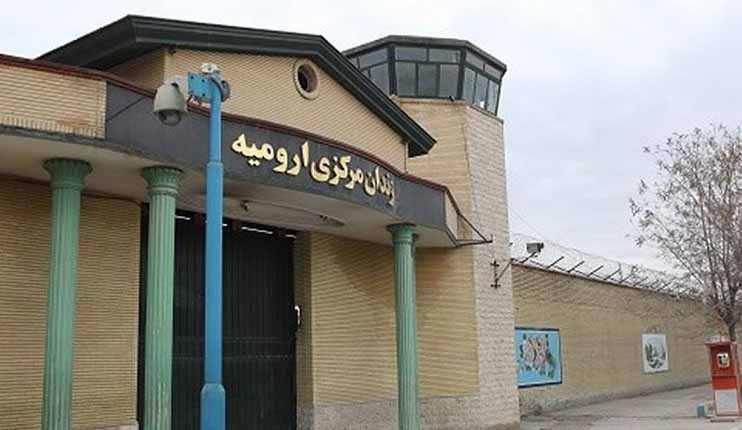
Human Rights Activist News Agency (HRANA) – A mass hunger strike of Urmia Central prisoners of conscience ended on its fifth day after prison authorities engaged to addressing prisoner complaints of rampant abuse.
Strikes were underway as of October 16th, when prisoners launched a protest against a violent raid of the Political Ward (Ward 12) by special forces that left a number of prisoners wounded.
Divided between Ward 12 and the Youth Ward’s prisoners of conscience, protesters declared that the restoration of their legal rights would put an end to the strike.
In a recently-issued statement, strikers asked inmates’ families to appear at the front gate of Urmia Central on October 21st to demand justice for those inside. The statement impelled the head of the prison to invite groups of strikers for a sit-down in the prosecutor’s’ office– an invitation they declined, a close source said.
During the hunger strike, at least one prisoner, Habib Amini, was sent to the prison clinic for treatment following a decline in his health.
Below is a translation of the aforementioned statement. Its signatories asked to remain anonymous. :
“Pursuant to the hunger strike of political prisoners and prisoners of conscience at Urmia Central Prison that began October 16, 2018, the families of these and other prisoners are asked to appear before the Central Prison of Urmia on Sunday, October 21st to demand restoration of the legal and Shari’a-granted rights of their children, in a show of support for their legal and judicial demands.
This protest is a declaration of dissent with the extraordinary oppression and discrimination faced by prisoners and their families in this city. In a state of material and psychological insecurity, prisoners here live under surmounting pressures. We hope that officials have the compassion to reduce this targeted oppression.
Finally, we ask that all sensible minds be moved by this news, and react with the same power they displayed over the three recently executed Kurdish political prisoners and the missile offensive on Kurdistan.”
*
The Ward-12 raid occurred on the evening of October 15th, when political prisoners came to the defense of one of their comrades who had been physically assaulted for arguing with prison personnel. In response to their objections, authorities and special forces, numbering more than 50 and armed with with batons, tasers, and tear gas, stormed the political ward and laid into the inmates there. That same night, authorities assaulted and injured a number of prisoners of conscience in the Youth Ward.
Kamal Hassan Ramazan, Ahmad Tamooie, Osman Mostafapour, and Touraj Esmaili were among the first prisoners beaten in response to their objections of a group assault on their wardmate Hamid Rahimi. Personnel identified only as “Eskandar” and “Rezaie” reportedly commandeered additional Urmia prisoners to deal blows to the four men, breaking bones and teeth, and cutting one of them with a sharp object.
Ramezan, Tamoo’i, Mostafapoor, and two more Ward-12 bystanders, Hassan Rastegari and Kamran Darvishi, were among those injured in the onslaught that followed. The latter two were transferred to solitary confinement; Rastegari has since been returned to Ward 12. “Hassan Rastegari was badly bruised all over,” the source said, adding that prison authorities then sicced fellow prisoners on political detainees for a second time.
Urmia Central Prison authorities have a history of ruling my corporal punishment. On October 8, 2018, prisoner Morteza Zohrali’s right arm was broken in a beating by prison officials; On September 23rd, Youth Ward inmate Javad “Arash” Shirzad was sent to an outside hospital for treatment of a concussion sustained at the hands of “Bayramzadeh,” the prison’s internal director; in July, Saeed Seyed Abbasi was beaten and sent to solitary confinement without treatment of his injuries, all for arriving late to the prison yard for recreation time; and in May, according to HRANA reports, prisoner Saeed Nouri, a former IRGC lieutenant, was beaten by two personnel in the internal director’s office.
Reports indicate that political prisoners and other prisoners of conscience are more vulnerable than others to the gamut of inmate abuses. HRANA previously reported on a September 18th raid on Ward 12 by special forces, where guards pilfered and destroyed the prisoners’ personal belongings, including food they had purchased themselves.
Zahedan Prisoner Attempts Pill Overdose
Human Rights Activists News Agency (HRANA)- On the morning of October 20, 2018, Zahedan prisoner Saeed Baravi, 26, attempted a pill overdose after authorities refused to address alleged mistreatment of his family by Zahedan personnel.
An unconscious Baravi was transferred to the prison clinic after ingesting the pills.
An informed source told HRANA that Baravi’s family had been met with verbal aggression when they pressed the supervising judge for an update on his request for furlough.
“The judge’s secretary Mr. Nouri insulted the family and had them removed from the office,” the source said. “Mr. Baravi then met with Mr. Khosravi, the Zahedan prison director, to deliver a letter objecting to the secretary’s conduct.”
Baravi has been serving a 15-year sentence on drug-related charges since 2016.
Multiple inmate suicides have been attributed to Zahedan prison’s oppressive and unhygienic living conditions, not least of which include patterns of abuse and neglect by prison authorities. Anguished by authorities’ continued neglect of his case, death-row prisoner Saeed Saberi completed suicide by pill overdose in mid-August of this year when he saw his name removed from a list of prisoners scheduled for a sit-down with the prison prosecutor. On August 5th, 42-year-old Mansour Mohammad Zehi, also on death row, took his own life by swallowing razor blades, having claimed that prison personnel had confiscated his dieh, or “blood money” [a price set by families of murder victims by which some defendants can buy their way out of a death sentence]. In May, HRANA reported on the suicide of Mehdi Kouhkan, who had reportedly been distressed by a transfer order to the quarantine section.
Zahedan Prison is located on the southeastern border city of Zahedan.

In Solidarity with Fellow Gonabadi Dervish Prisoners, Reza Sigarchi Forgoes Food, Medicine
Human Rights Activists News Agency (HRANA) – In an act of protest, Reza Sigarchi, a Great Tehran Penitentiary prisoner of conscience and member of the * Gonabadi Dervish religious minority, announced Saturday, October 20th that he will be abstaining from both food and medicine.
Sigarchi’s strike is a demonstration of support for his fellow downtrodden Dervishes, according to Majzooban Noor, a website covering Dervish community news. He will reportedly not eat or ingest medicine until the following demands are met: lift the house arrest order on Dervish leader Noor Ali Tabandeh; release female Dervish prisoners; reunite separated Dervish prisoners into the same Ward; return Abbas Dehghan to Great Tehran Penitentiary.
Sigarchi, who suffers from heart disease, was hospitalized last week in Imam Khomeini Hospital where he underwent an angiography.
Five other Dervish prisoners in Great Tehran Penitentiary — Salehodin Moradi, Mojtaba Biranvand, Mohammad Reza Darvishi, Saeed Soltanpour, and Ali Mohammad Shahi — have been on hunger strike since a violent raid on their sit-in by prison guards on August 29th.
Hunger-striking Dervish Abbas Dehghan still hasn’t eaten since September 2nd. Dehghan reportedly spent one hour in Great Tehran Penitentiary post-trial before being transferred to Ward 2A of Evin Prison, under IRGC jurisdiction, where he has remained since.
All of the aforementioned prisoners were arrested amid the “Golestan Haftom” incident in February 2018, where Iranian police and plainclothes members of the IRGC’s Basij faction confronted hundreds of Gonabadi Dervishes who had rallied outside the home of their spiritual leader Noor Ali Tabandeh. The Dervish demonstrators sought to prevent the possible detainment of Tabandeh, who has reportedly been placed under extended house arrest by Iranian authorities.
Hundreds of Dervishes were beaten, wounded, and arrested during the Golestan Haftom incident. A similar attack occurred on January 24th after an intervention from security forces on the same street, heightening the sense of fear within the Dervish community.
Though Iranian judicial authorities estimate that around 300 people have been arrested in connection with Golestan Haftom, HRANA has thus far published the names of 324 arrestees and estimates that the actual number is considerably higher.
* There are various divisions among Dervishes in Iran. In this report, the term “Dervish” refers to Nematollahi Gonabadis, who declare themselves as followers of Twelver Shi’ism, Iran’s official state religion.
Bandar Abbas Authorities Break Fingers of Prisoner Pleading for Furlough
Human Rights Activists News Agency (HRANA)- A Bandar Abbas prisoner has been held in a solitary cell incommunicado since authorities assaulted him October 11, 2018, breaking two fingers on his right hand.
Prison authorities reportedly struck the victim Mohammad Hajizadeh after his visit to the prison social assistance office, where he was protesting the prison’s continued denial of his furlough requests.
A close source told HRANA that Hajizadeh was still yowling in pain long after the assault, adding that his transfer to solitary confinement was likely the prison’s way of blocking attempts to obtain any evidence of the injury that could substantiate a formal complaint.
Hajizadeh, 41, is a married father of one. He has been serving a prison sentence on drug-related charges since 2016.
Iranian President Hassan Rouhani has sloganeered against civil rights repressions, publishing a Civil Rights Charter and verbally pushing for the comprehensive implementation of its provisions. Article 64 of the charter reads, “anyone arrested, convicted, or imprisoned is entitled to their civil rights, including proper nutrition, clothing, health and medical care, educational and cultural services, religious worship and practices.” Thus far, though, Rouhani’s rhetoric has yet to materialize into concrete initiatives.
Bandar Abbas Prison is located in Bandar Abbas on Iran’s southern coast.
Appeals Court Finalizes Sentences for 11 January Protest co-Defendants
Human Rights Activist News Agency (HRANA) – In connection to the January protests, Branch 1 of Markazi Province Appeals Court confirmed the imprisonment-and-lashings sentence of four citizens, suspending similar sentences for seven co-defendants on the same case. The defendants were identified as Mohammad Najafi, Ali Bagheri, Abbas Safari, Behzad Ali Bakhshi, Mohammad Yaghoubi, Yousef Shirilard, Neda Yousefi, Davoud Rahimi, Massoud Ajlou, Mohammad Torabi, and Kian Sadeghi.
The Prosecutor’s Office settled on a charge of “disrupting the public peace through participation in an illegal gathering,” which according to HRANA reports incurred one year of imprisonment and 74 lashings per defendant in Arak Criminal Court No. 2, Branch 102, presided by Judge Mohammad Reza Abdollahi.
Their sentence allows for detention time already served to be counted towards their pending prison terms, a particular boon to Najafi, Bagheri, Safari, and Sadeghi who received two additional years of prison time for “publishing lies with intent to disrupt the public mind.” Bagheri’s prison term was further compounded by another six months for “insulting a police chief in cyberspace.”
Among the accused is attorney and human rights activist Mohammad Najafi, who said in a note, “Branch 1 of Markazi Province has upheld the initial verdict. The maximum punishment of three years in prison and 74 lashings […] remains unchanged for me and Messrs. Bagheri and Safari, while the sentences for the rest of those convicted, including my six clients, were suspended over five years.”
Discovery into these protestors’ case files began March 13, 2018, in Branch One of Arak Investigation Court, by which point all 11 had already been interrogated by the Intelligence Office. Ten of the eleven were present during discovery, where an investigator deliberated on charges from disrupting the peace to gathering and conspiring. Though all of the accused were detained amid the protest site in Shazand city where all of them are residents, authorities inexplicably forwarded their case to the judicial office of Arak. All denied the charges brought against them.
Independent of the January protests case file, Najafi, Bagheri, Safari, Ajilou, and Bakhshi all have individual cases pending in the Revolutionary Court of Arak.
After several delays due to the absence of a judge, Arak Criminal Court No. 2, Branch 102 tried Najafi June 9, 2018, in for his inquiries into the death of civilian Vahid Heydari, who passed away while in custody of Arak authorities amid the January protests. While Iranian judicial authorities had claimed Heydari was a drug dealer who committed suicide in Police Detention Center No. 12, Najafi’s field research concluded that Heydari was a peddler with no criminal record, whose autopsy report was suspicious for blunt-force trauma. When Najafi was arrested for his investigations, Tehran MP Mahmoud Sadeghi spoke out in his defense.
A large number of participants in recent protests, referred to as the January protests, were detained and interrogated across the country. The protests resulted in the death of 25 individuals and the detention of around five thousand. Ministry of the Interior Abdolreza Rahmani Fazli previously stated that public demonstrations “turned violent” in 40 of the 100 cities where the January protests broke out.
Zahedan Prisoner Hanged to Death
Human Rights Activists News Agency (HRANA) – Thirty-one-year-old Mehdi Mirshekar from Zabol, eastern Iran was executed on the morning of Saturday, October 20, 2018.
A prisoner of Zahedan’s Ward 7, Mirshekar had been in prison for six years on a rape charge. Per protocol for prisoners whose execution is imminent, he was reportedly transferred to solitary confinement on the evening of Monday, October 15th.
By carrying out this hanging in silence, authorities — particularly the Judiciary — demonstrate a continued pattern of obfuscation on the topic of prisoner sentencing and executions, in spite of their responsibilities of informing the public.
According to Amnesty International’s annual report, Iran ranks first in the world in executions per capita. On the World Day against the Death Penalty (October 10th), the Center of Statistics at Human Rights Activists in Iran (HRAI) published its annual report, indicating that at least 256 citizens were executed in Iran between October 10, 2017, and October 9, 2018, 15 of which were public hangings. Sixty-eight percent of executions, referred to as “secret executions,” are not announced by the state or Judiciary.
Another Ahwazi Arab Citizen Arrested

Human Rights Activists News Agency (HRANA) –On Friday, October 19th, local Intelligence agents arrested Ahwazi Arab citizen Qais Ghazi, 33, transferring him to an undisclosed location.
Describing Ghazi as an advocate for peaceful methods of protest, an informed source speculated to HRANA that he was being arrested under a flimsy guise of counterterrorism that authorities have used liberally since the September 22nd attack on an Ahvaz military parade.
“It seems that after arresting hundreds of Ahwazi Arab activists, the security apparatus is now targeting independent civil rights activists,” the source said. “This is despite the government’s announcement that Daesh [ISIS] claimed responsibility for the [parade attack]. They are using it as an excuse to crack down on Ahwazi Arab civil and cultural activists and intellectuals.”
At the time of this report, no further information was available on Ghazi’s whereabouts or the reasons behind his arrest.
On October 17, 2018, for reasons unknown, Ahwazi Arab citizens Sajjad Silavi and Seyed Sadegh Nazari were also arrested by intelligence agents before being transferred to an undisclosed location.
Since the Ahvaz parade tragedy, dozens of Ahwazi Arab citizens across Khuzestan province have been arrested and transferred to unknown locations. In recent reports, HRANA has covered the steady stream of arrests being reported by locals in the region.
Despite the urgency to hold the assailants accountable for wounding and killing civilians, including women and children, Iran’s security establishment is marred by a history of questionable investigative methods, raising public concern that innocent scapegoats may be subject to torturous interrogations and impugned for the attacks.
Ahvaz is the capital of Khuzestan province, located in Iran’s southwest.