Two Ahwazi Arab Citizens Arrested, Transferred to Undisclosed Location

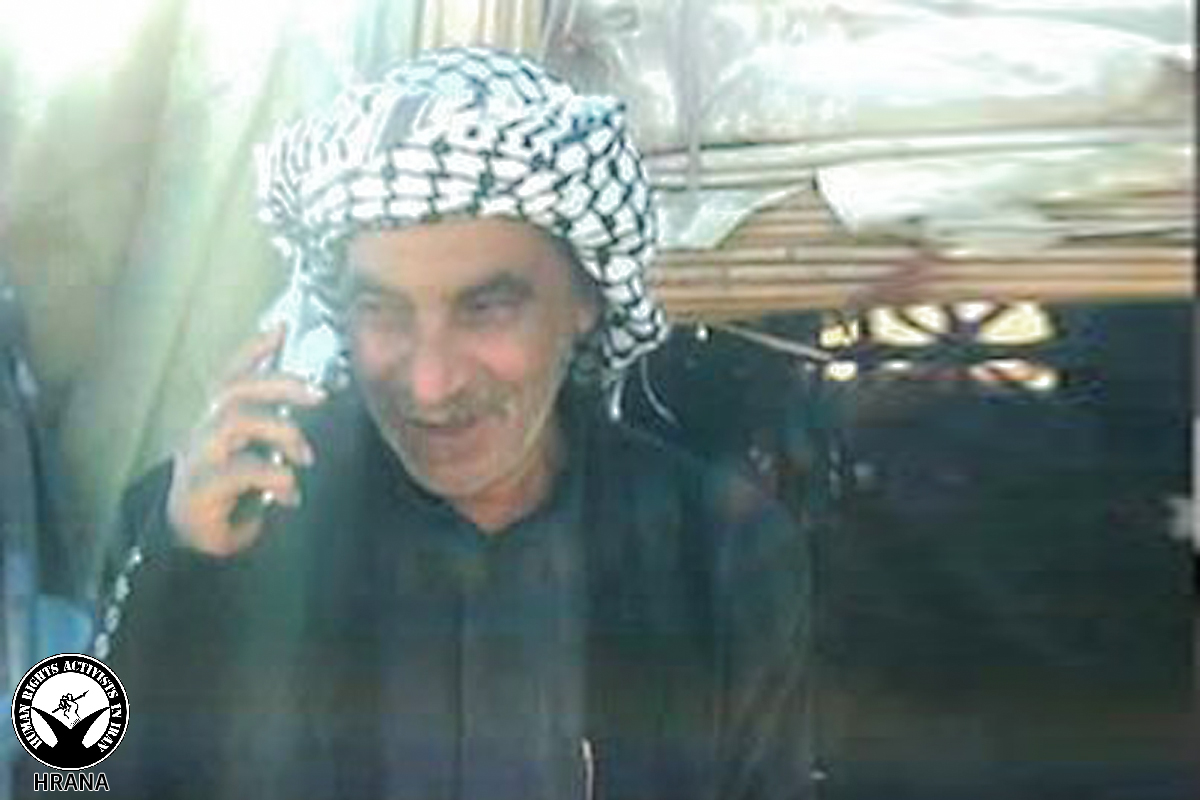
Human Rights Activists News Agency (HRANA) – On October 17, 2018, two residents of Ahvaz were arrested by local intelligence agents and transferred to an undisclosed location.

HRANA was able to confirm the identity of both arrestees as Sajjad Silavi, 25, and 63-year-old father of five Seyed Sadegh Nazari, who has a previous track record with police.

As of the date of this report, no further information was available on their location or the reasons behind their arrest.

Ahvaz is the capital of Khuzestan Province.

Ahwazi Arab Arrests Continue in Environs of Ahvaz Parade Attack

Human Rights Activist News Agency (HRANA) – Eight more Ahwazi Arab citizens, including two women, join the ranks of 55 locals already scooped up by authorities in a haphazard arrest campaign, purportedly an element of investigation into an armed attack on an Ahvaz military parade that claimed the lives of several civilians on September 22nd.
On October 15th, in the villages surrounding Susangerd, forces from the IRGC Intelligence Department arrested eight Ahwazi Arab Sunni citizens identified by HRANA as follows: Fayez Afravi, 30, married with one child; Afravi’s 45-year-old mother; Mohammad Amin Afravi, married, together with his 37-year-old mother; Abbas Moghinami, 26, married; Morteza Beyt Sheikh Ahmad, 24; Aref Moghinami, 27; and Morteza Moghinami, 22.
Fayez and Mohammad Amin Afravi are residents of Albu Afri village in Susangerd, a source told HRANA. Abbas Moghinami owns a tailor shop in the nearby village of Hojjie that specializes in Arabic garments known as thawbs or dishdashas, and where Morteza Beyt Sheikh Ahmad and Morteza Moghinami are currently employed. All three were arrested while leaving the shop with Aref Moghinami.
Susangerd is located in Dasht-e Azadegan County, Khuzestan Province.
HRANA identified 55 prior arrestees in its recent reports.
Twenty-four civilians, including a four-year-old child, were killed in the September 22nd gun attack on Ahvaz; fifty-seven more sustained injuries. The four assailants were apprehended and killed.
Following the attack, Iran’s Ministry of Intelligence announced that it had 22 suspects in custody, backing their announcement with a video recording of blindfolded, unidentified detainees facing a wall. Local sources estimate that detainees number closer to 300, and hail mostly from the cities of Ahvaz, Khorramshahr, Susangerd, and Abadan. Most of the arrestees have a previous track record with police.
As authorities work to confirm which body or group may have masterminded the attack, public urgency to find closure is tinged with the concern that innocent arrestees will be subject to inhumane interrogation methods.

Civil Activists Petition for Political Prisoner Payam Shakiba

Human Rights Activists News Agency (HRANA)- Dozens of civil activists issued a statement October 18th advocating for due process in the case of political prisoner Payam Shakiba.

Held in Rajai Shahr Prison of Karaj since his arrest in February 2018, Shakiba was sentenced to 11 years in prison by Judge Ahmadzadeh. The sentence was later upheld in an appeals court.

Shakiba is a former member of the University of Zanjan’s Islamic Student Association, and prior to his persecution by authorities was a graduate student of political science at Allameh Tabatabai University.

The full text of the activists’ statement, translated into English by HRANA, is below:

Payam Shakiba, a former member of the Islamic Student Association at the University of Zanjan, was first arrested in July 2008 along with several other students protesting against the [sexual] assault of a female student by a university vice-president. All of the protesters were convicted. Payam was released on bail after 40 days and sentenced one year later to a year in prison.

Upon completion of his compulsory military service, he was hired as a teacher in September 2010 at a semi-private school in Tehran. In November of that year, he went to prison to serve his sentence. After his release, the Ministry of Education halted his employment proceedings.

Mr. Shakiba passed the entrance exam for master’s programs in applied science at both a public institution and Azad University. However, the public university barred him from enrolling in the program, given his status as a “starred” student [i.e. a student whose file is marked with an asterisk to indicate previous disciplinary action for political activity]. He had no choice but to enroll in the Sciences and Research Branch at Azad University. In the final days of his first semester, however, he was expelled and banned from returning to his studies.

Payam, however, didn’t stop there: he took the entrance exam again in 2013 and was accepted to the political science program at Allameh Tabatabai University. He had spent years in the meantime earning his living in industrial workshops.

Payam Shakiba was arrested for a second time on February 19, 2017, on charges of “acting against national security by assembling and colluding against the regime.” After a search of his workplace in the industrial park of Golgoun, in Shahriar, he was transferred to solitary confinement in Ward 209 of Evin Prison, under the jurisdiction of the Ministry of Intelligence. During this time he was denied access to a lawyer or visitation from family members. When his interrogation period had finished, he was illegally exiled to Rajai Shahr prison where he spent 17 months in legal limbo. It was then that he was faced with a judicial conundrum: first the appeals court informed one of his lawyers that Shakiba’s 11-year sentence had been reduced to six; a week later, another one of his lawyers was summoned to court, where he learned that the 11-year sentence had been upheld, and that the five-year reduction was no longer valid.

A glance at the processing of Mr. Shakiba’s cases, and at his sentence as it stands, reveals a flagrant injustice and lack of due process. What kind of judicial system takes employment opportunity away from a student and future teacher because they protested a sexual assault? In what kind of fair process can an interrogator rule in lieu of a judge to reverse an already-appealed sentence? Why are the basic minimums of amenities and living space withheld from Payam Shakiba and from other political prisoners? Why don’t they have access to adequate hygiene and nutrition, or even to a cooling system in the summer?

It is common knowledge nowadays that these deprivations serve to break a prisoner’s spirit and resolve. Yet as we also know, our grand and unflappable Payam cannot be broken. Anyone close to him knows him as an altogether reasonable, kind, humble, generous person, courageous and defiant in the face of injustice.

We the undersigned protest the illegal arrest and incarceration of this student activist. We consider the trial unfair and believe that his human and civil rights have been disregarded at all stages of the legal process, through the interrogation and investigation to the preliminary and appeals court proceedings.

Blindfolding, solitary confinement, and denial of access to a lawyer are violations of a defendant’s rights. Furthermore, the objectivity of the preliminary trial was compromised by the interference of a Ministry of Intelligence representative. By a flagrant act of interference [by non-judiciary authorities], his sentence was increased on appeal.

As friends, civil activists, and fellow students of Payam Shakiba, we object to his sentence and the unfair process to which he was subjected.

We ask for the immediate, unconditional release of Payam Shakiba so that he may defend himself in a fair trial before a jury. This self-evident legal and human right cannot be denied and ignored for perpetuity.

We ask human rights organizations and activists to carry out their duty, regardless of their political allegiances. The writing off of certain political prisoners is tantamount to abetting the suppression of their voices, and those guilty of it should be held accountable before history.

Ahmad Barani, Ahmad Biglari, Ahmad Jabbari, Ahmad Zahedi Langroudi, Ahmad Mohammadi, Ahmad Madadi, Ahmad Mirzaei, Ahmad Yazdi, Arsalan Beigi, Esmaeil Sarahandi, Asghar Dehghan, Asghar, Bahram Mahmoudi, Abolfazl Samadi, Aboozar Beheshti, Ehsan Rezaei, Ahmad Ebrahimi, Ahmad Barani, Ahmad Biglari, Ahmad Jabbari, Aazam Yari, Afshin Pourjam, Afshin Hyrtyan, Akbar Amini Armaki, Akbar Naseri, Akbar Hashemi, Mohammad Ebrahimi, A. Nasirian, Elham Motalebi, Omid Madani, Amir Bagheri, Anwar Farajzadeh, Ulduz Hashemi, Ivaz Hashemi, Adindeh Beigi, Azar Gilani , Amanj Amini, Avat Razavi, Bahera Alamdari, Bahram Aghdasi, Behzad Delshad, Feshdeh Fereydouni, Bahman Golali, Bahman Nouri, Behnam Farzaneh, Bijan Najafi, Parsa Krmanjyan, Parvaneh Ghasemian, Parvun Tavakoli, Parvin Mohammadi, Parvin Nokhostin, Parisa Sarai, Soraya Ghobadi, Jafar Ebrahimi, Jafar Hosseinzadeh, Javad Lal Mohammad, Jahangir Kas Nzany, Habib Beigi, Hassan Elmi, Hassan Noorzad, Hossein Ramezani Sarajari, Hossein Shah Pari, Hossein Sadeghi, Hossein Mousavi, Hamid Reza Kamayebarf, Hamid Zanganeh, Hamid Shabani, Hamid Shabani, Hamid Azimi, Hamid Noori, Hooria Farajzadeh, Dariush Rezaei, Dariush Faraji, Rahele Farajzadeh Tarani , Raheleh Ghodsi, Rahman Beigi, Rahim Hosniyatabar, Rahim Zakeri, Rahim Shams, Rasoul Heshmati, Reza Ahmadi, Reza Hosseini, Reza Abbasi, Rouhollah Hedayati, Ruzbeh Ekradi, Roshan Hashemi, Romina Mohseni Rajai, Zahra Rahimi, Ziba Omidi, Zainab Sepehri, Zhaleh Rouhzad, Sarah Beheshti, Sarah Siahpour, Sarah Barakat, Saeed Rezaei, Saeed Naimi, Saeedeh Maasoumi, Samaneh Abedini, Sorna Hashemi, Soheil Siri, Soheila Dalwand, Siamak Farid, Siavash Montazeri, Sima Salmani, Simin Javandideh, Sharareh Aram, Shahrzad Ghadiri, Shahnaz Akmali, Shadi Mohammadi Shiva, Ameli Rad, Saber Molaei, Sadegh Rezaie, Sedighe Zeitouni, Soghari Noor, Salah Sorkhi, Taher Hamedi, Tahere Ghobadi, Abed Tavancheh, Aliyeh Aghdoost, Abbas Shahbazi, Abbas Safari, Abdul Rahman Azim, Aziz Qasemzadeh, Esmat Taa Ali Ebrahimi, Ali Ahmadi, Ali Asghar Zolghodar, Ali Bagheri, Ali Rangipour, Ali Zarei, Ali Samad, Ali Azimi, Ali Masoumi, Ali Mirfatah, Alireza Behdarvand, Alireza Firoozi, Alireza Ghadiri, Enayat Vosoughi, Gholamreza Maleki, Gholamreza Hezaveh, Fatehmeh Ahmadi, Faezeh Almasi, Farzin Rezaei Roshan, Forough Sami Nia, Forough Fereydouni, Farhad Salamatkhah, Farideh Moradkhani, Fahimeh Badkoobehi, Kaveh Mozaffari, Kiandokht Nikbakht, Keyvan Rezaei, Laleh Abbasi, Madeh Alavi, Mojtaba Asadi, Majid Hassani, Majid Rahmati, Majid Masoumi, Mahboobeh Farahzadi, Mohsen Omrani, Mohammad Azami, Mohammad Hossein Rafiei, Mohammad Saeed Ahmadi, Mohammad Karim Beigi, M Hamad Karimi, Mohammad Ali Rostami, Mahmoud Didani, Mahmoud Mojdehi, Morteza Asadi, Morteza Nazari, Marzieh Dorood, Marzieh Mahmoudi, Maryam Haghighi, Maryam Mohammadi, Masoud Hosseini, Masoud Heydariyan, Masoud Saki, Masoud Kouhi, Masoud Hashemi, Masoumeh Dehghan, Mansour Soleimani , Mansoureh Farahzadi, Manijeh Foruzandeh, Mehdi Rahmati, Mehdi Arabshahi, Mehrnoush Heidarzadeh, Mahshid Rouhani, Milad Janat, Minoo Keykhosrowi, Naser Rashidi, Nahid Ebrahimi, Narges Ahmadi, Narges Zafari, Nasrin Ahmadi, Nasrin Amiri, Nasrin Saifodini, Niloofar Kadokhodayi, Vahid Zandi, Vahsa Safi, Hagar Karami, Homayoun Panahi, Salah Azadi, Ali Jafari, Roozbeh Rezaei, Amir Hossein Sa’ad , Ali Abu Torabi, Maryam Qalychyha, Humayun Madani, Mir Hamid Salek, Azita Rezvan, Amir Hossein Saadat, Naveed Kamran, Jelveh Javaheri, Sepideh Saghafian, Forough Azizi, Sarah Hemmati, Laleh Mohammadi, Fatemeh Mohammadi, Nastaran Eshghi, Ali Reza Tarkashvand, Zohreh Asadpour, Abbas Shahbazi, Reza Ansari, Masoumeh Abbasian, Abbas Shahrabi, Alireza Kaviani, Morteza Zarrin, Mahsa Yazdani, Zahra Ghaeninejad, Ahmad Rezaei, Afshan Davari.

****

Rajai Shahr Prison is located in Karaj, approximately 30 miles west of Tehran.

The University of Zanjan is located in Zanjan, approximately 180 miles northwest of Tehran.

Once-Buried Case Pulls Abdolreza Ghanbari Back to Evin Prison

Human Rights Activists News Agency (HRANA) – Teacher and former political prisoner Abdolreza Ghanbari was arrested Saturday, October 13th, and transferred to Ward 8 of Evin Prison to serve the remainder of a recently-resurrected prison term.

Amid re-reviews and permutations of his case under a changing penal code, Ghanbari has been pulled through the judicial wringer since his initial arrest in 2009, when he was detained in his workplace amid widespread “Ashura” demonstrations following the contentious Iranian election cycle of that year.

In February 2010, after two months of interrogation, Judge Salavati of Revolutionary Court Branch 15 sentenced him to death for “Moharebeh” [enmity against God],” through his alleged ties to the opposition group People’s Mujahedin of Iran (MEK).

Four years later, in June 2013, Ghanbari’s death sentence was reversed in Supreme Court and commuted to 15 years’ imprisonment by Revolutionary Court Branch 1.

When Article 186 of the Islamic Penal Code was eliminated, Ghanbari requested and obtained a retrial, which resulted in the suspension of his sentence. He was released March 16, 2016 after having served more than six years in prison.

The return to normal life was relatively short-lived, as a close source explained to HRANA: “In September 2017, his prison sentence was reviewed again by Branch 28 of [Tehran’s] Revolutionary Court, presided by Judge Moghiseh, and increased from 10 years to 15 years in prison.”

Ghanbari’s new scheduled release date has yet to be confirmed by HRANA.

Prisoner in Shirvan Sentenced to Death

Human Rights Activists News Agency (HRANA)– Branch 2 of the Shirvan Prosecutor’s Office announced on Tuesday, October 16th that Taleb Govahi, a defendant on a murder case who has been detained in Shirvan Prison since the crime, has been sentenced to death.

An informed source told to HRANA that Gohavi, a 40-year old married resident of Shirvan county, North Khorasan province, was convicted of killing a car dealer in a 2016 skirmish. “He has denied at all stages of his trial that the murder was premeditated, and claimed he was defending himself against the victim, who also had a cold weapon.”

According to Amnesty International’s annual report, Iran ranks first in the world in executions per capita. According to registered data from the Statistics, Publications, and Achievements Division of Human Rights Activists in Iran (HRAI), at least 256 citizens were executed in Iran between October 10, 2017, and October 9, 2018, 15 of which were public hangings. Sixty-eight percent of executions, referred to as “secret executions,” are not announced by the state or Judiciary.

Subscribe to Our Newsletter

Now is definitely not the time to stop reading!

Open Letter: Reza Khandan Echoes Public Support of an Ailing Farhad Meysami

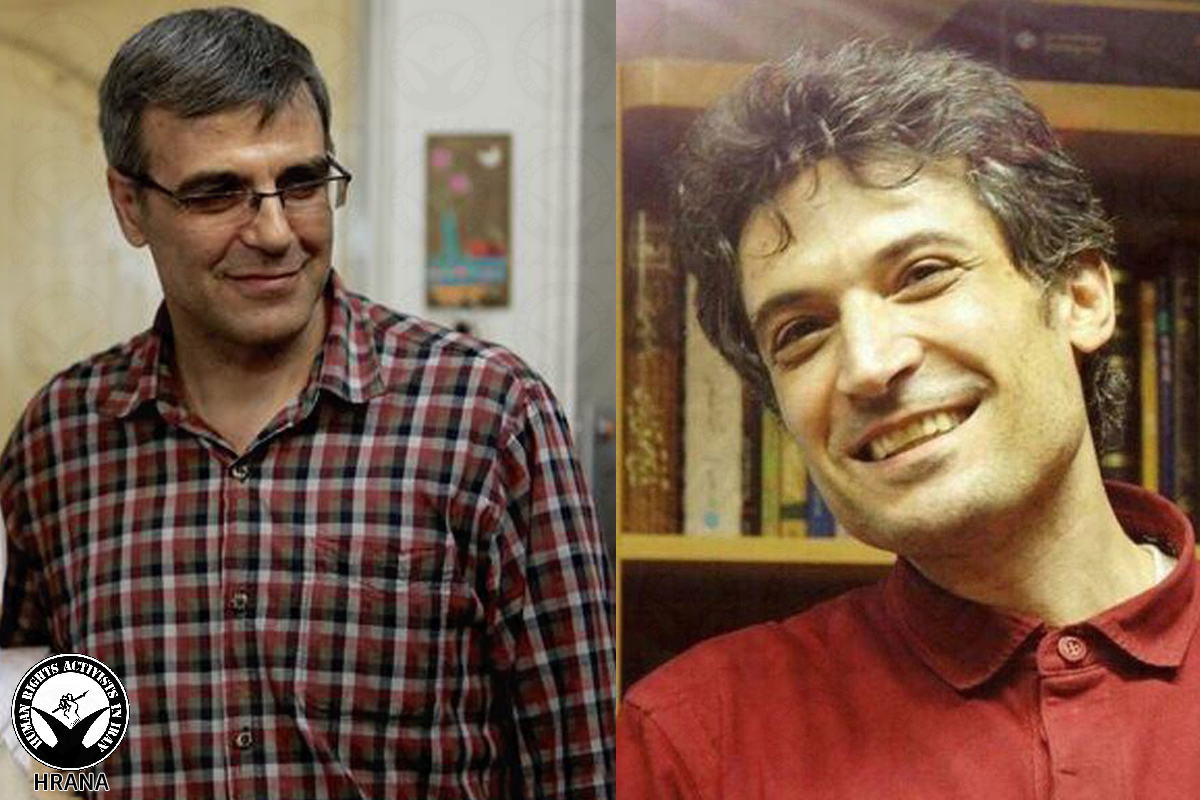
Human Rights Activists News Agency (HRANA)- Imprisoned civil rights activist Reza Khandan has published a letter calling attention to fellow activist Farhad Meysami’s mistreatment by prison authorities, who are reportedly unmoved by the steep decline of Meysami’s health since he declared hunger strike on August 1st.

Since forcibly taking Meysami to the prison clinic on September 26th, prison authorities have kept him in quarantine-like conditions, restricting all of his contacts with the outside. In protest of his arrest, as well as authorities’ refusal to appoint the lawyer of his choice, Meysami has already been on hunger strike for more than 75 days.

Medical doctors, publishers, bookshop owners, and university graduates numbering 1400 in all have published an open letter raising their own concerns over Meysami’s condition and pleading for his immediate release. The voices of two teachers incarcerated at Evin also got behind what has become a burgeoning public campaign for, at the very least, Meysami’s transfer to an outside medical facility.

The full text of Khandan’s letter, translated into English by HRANA, is below:

Dear Compatriots,

Fellow human rights activists,

It has been 75 days since Dr. Farhad Mesyami started his difficult and worrisome hunger strike. Three weeks ago, he was forcibly transferred to the prison clinic from the general ward. Reportedly on orders from the prosecutor’s office, and with the cooperation of the clinic’s director, prison officials have repurposed the clinic into a security detention unit where patient spaces can be used as solitary confinement cells.

Currently, Farhad Meysami is being held in one of those rooms under tight security controls. In his frail state he has reportedly been subjected to inhumane treatment whereby, against his will and without the presence of family or a lawyer, he was strapped to a bed and given injections.

In these instances, we must hold accountable not only judiciary authorities but also the Ministry of Health and the President himself, who has sworn to protect the rights of the people.

Moreover, we must advocate that medical professionals be held accountable, those who have in an unprofessional and unprincipled manner taken action against the will of the patient, heeding any and all orders [from authorities], however unethical they may be.

Farhad Meysami’s health and life is at risk now more than ever, and it is urgent he is transferred to a hospital outside the prison for medical care.

Reza Khandan, October 14, 2018, Ward 4 of Evin Prison

****

Reza Khandan Khandan was arrested in his home by security forces on September 4, 2018, before being charged in Branch 7 of the Evin Prosecutor’s Interrogation office. He was summoned to Branch 15 of the Revolutionary Court on October 5th but refused to attend as an act of protest against the unlawfully late subpoena.

Five Sentenced in Connection to 2017 Armed Attack in Tehran

Human Rights Activists News Agency (HRANA)- Five Sunni prisoners detained in connection to a 2017 attack on both Iranian Parliament and the late Ayatollah Khomeini’s mausoleum have been sentenced to prison terms in Branch 2 of Urmia Revolutionary Court.

HRANA has confirmed the identity of the prisoners as Ebrahim Moradi, Mohammad Nikzad, Ahmad Ghanbardoust, Mohammad Ghanbardoust, and Ghader Salimi. They have been held in Urmia Prison’s Ward 13 since their arrests one week after the attack.

An informed source detailed their sentences to HRANA: Moradi was sentenced to three years; Nikzad to nine months, Ahmad Ghanbardoust to three years; Mohammad Ghanbardoust to four years; and Salimi to five years. All were charged with “collaboration with ‘Takfiri’ groups [a term commonly used by Iranian authorities to denote Daesh (ISIS) sympathizers].”

The attack in question, which took place on June 7, 2017, injured 52 and took the lives of 17 civilians and parliamentary security agents. ISIS claimed responsibility for the attack.

Two days later, the Iranian Ministry of Intelligence announced that 41 people had been arrested on suspicion of ISIS collaboration in Tehran, Kermanshah, Kurdistan, and West Azerbaijan provinces. Local sources counter that the total number of arrestees was closer to 70. As of now, HRANA has no further information on the arrestee’s interrogations, wellbeing, or access to due process.

Eight people accused of ISIS affiliation were executed July 7, 2018, on charges of “Baqi” [rebellion] and “abetting corruption on earth.” All had been sentenced to death in May 2018 by Judge Salavati of Revolutionary Court Branch 15, a sentence later upheld in Branch 39 of the Supreme Court on June 10, 2018.

Doctors, Coroner Plead Furlough for Sadeghi’s Chemo

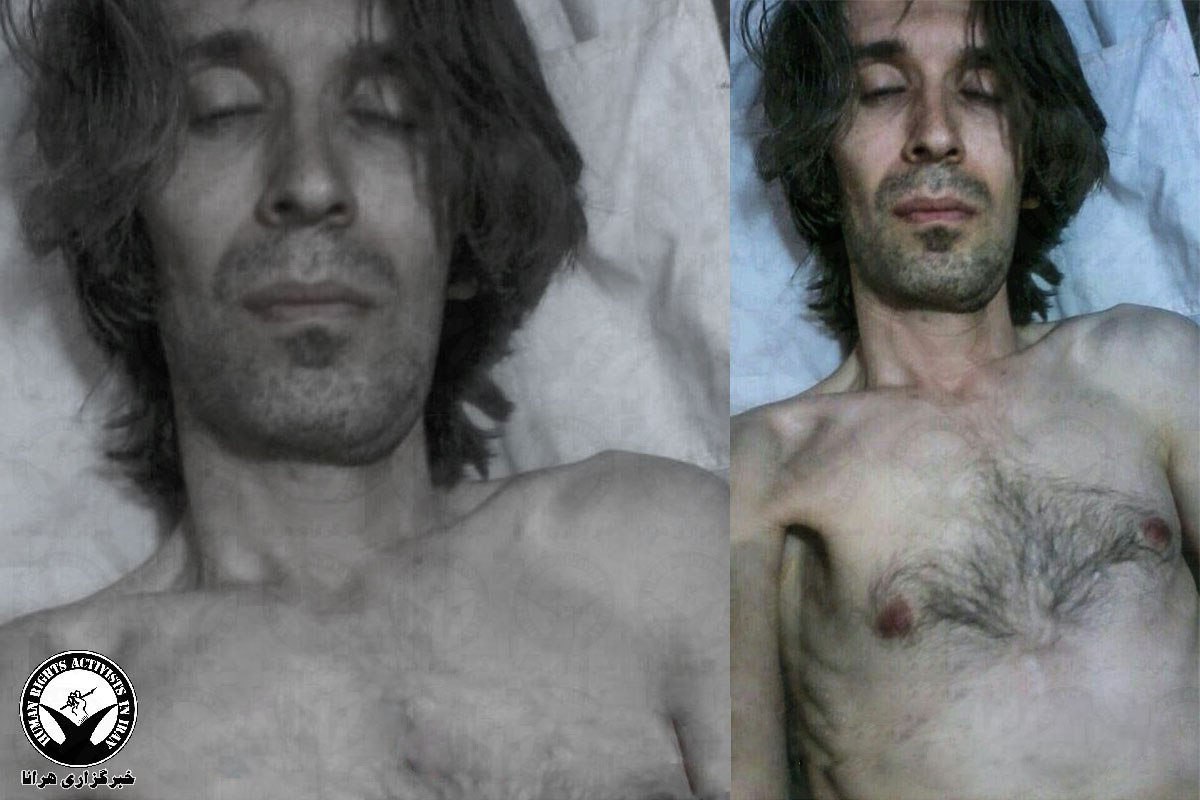
Human Rights Activists News Agency (HRANA) – Prison authorities continue to jeopardize the post-operative course of imprisoned civil rights activist Arash Sadeghi, who was finally transferred to the hospital October 13th. Now his best hope of recovery, doctors say, is the slim chance that those same authorities will consent to a medical furlough.

So far, according to HRANA reports, Sadeghi’s urgent need for specialized care has done little to inspire sympathy from the prison powers that be. When doctors urged that he remain under hospital supervision after his September 12th bone cancer surgery, he was hastily whisked back to Evin Prison only three days later.

Back at the prison, a prosecutor’s assistant, identified only as “Rostami,” delayed Sadeghi’s follow-up for two weeks, during which time an infection took hold in the surgery site on Sadeghi’s right arm. Indeed, Sadeghi’s October 13th transfer was the sole successful among several hospital visits that authorities deliberately thwarted, i.e. postponed until afternoon hours when a qualified team of specialists was no longer available.

Immediately prior to his latest hospital visit, Maghsoud Zolfali, the head of the prison’s security unit, told Sadeghi that prosecutors had ordered all political prisoners on medical transfer to remain in prison garb. Sadeghi’s refusal to do so led to a verbal altercation, after which authorities placed him in a cold room as a punitive measure from 7:00 to 10:30 pm.

The chill followed Sadeghi to the hospital, where guards insulted him, twisted his arm, tightened his handcuffs, and punched him in the arm that had undergone surgery, reportedly because he had returned the greeting of medical personnel. When hospital staff protested the manhandling, agents responded that they were following the orders of the prison director to treat Sadeghi according to his status of a “security prisoner.”

When after his medical exam Sadeghi’s doctor advised he begin chemotherapy, Sadeghi expressed doubt that the treatment would work, citing the physically and mentally abusive dynamics of the prison. To ensure optimal results from this strenuous therapy, medical sources say, chemo patients must undergo treatment in the utmost comfort and calm. Citing this reason, doctors strongly advised against Sadeghi undergoing chemo outside of the hospital.

Upon Sadeghi’s return to Evin, the head of the prison medical clinic noted signs of injury to the surgical wound where he was punched at the hospital, including increased inflammation and discoloration due to bleeding. In the face of documentary evidence of this injury, prison authorities have done nothing to address it in the past five days.

Pursuant to the doctor’s chemotherapy recommendation, prosecutors ordered Sadeghi’s transfer to the coroner’s office. The coroner had no access to Sadeghi’s medical files; from a visual examination alone, they concluded that furlough from prison would be a necessary requisite for his chemo.

Baha’i Crackdown Continues with Two More Arrests in Karaj

Human Rights Activists News Agency (HRANA) – Two Baha’i residents of Karaj, a northwestern suburb of Tehran, became the latest victims of the Iranian authorities’ crackdown on the Baha’i community when they were arrested October 16, 2018.

Parvan Manavi and Elham Salmanzadeh became the seventh and eighth Baha’is to be arrested in their city after authorities confiscated some of their books and personal belongings during a raid of their homes.

A close source told HRANA that security forces first searched the workplace of Manavi, a greenhouse operator, before escorting him to his home where they carried out a search and seizure. “They raided Elham Salmanzadeh’s home at the same time, and then arrested her afterward too,” the source added.

On September 16th, HRANA reported on the arrest and transfer to Evin Prison of four Baha’i Karaj residents: Peyman Manavi, Maryam Ghaffaramanesh, Jamileh Pakrou, and Kianoush Salmanzadeh. HRANA also reported on the arrest of two more Baha’i Karaj residents, Hooman Khoshnam and Payam Shabani, on September 24 and 25, 2018. In recent weeks, HRANA also reported on the arrest of a number of Baha’i citizens in Shiraz and Isfahan.

Over the past month, members of Iran’s Baha’i religious minority have faced increased pressure across the country from Iran’s security and judiciary establishment.

Iranian Baha’i citizens are systematically deprived of religious freedoms, while according to Article 18 of the Universal Declaration of Human Rights and Article 18 of the International Covenant on Civil and Political Rights, everyone is entitled to freedom of religion and belief, and the right to adopt and manifest the religion of their choice, be it individually, in groups, in public, or in private.

Based on unofficial sources, more than 300,000 Baha’is live in Iran. Iran’s constitution, however, recognizes only Islam, Christianity, Judaism, and Zoroastrianism, and does not acknowledge the Baha’i faith as an official religion. Consequently, the rights of Baha’is are systematically violated in Iran.

Former Death Row Juvenile Offender Saman Naseem Released on Bail

Human Rights Activists News Agency (HRANA) – Saman Naseem, a Kurdish juvenile offender who was arrested seven years ago and was once on death row, was freed on a five billion IRR (approximately $35,000 USD) bail on October 16, 2018.
Naseem’s death sentence was commuted to five years in prison by the Appeals Court of West Azerbaijan Province, located on Iran’s northwestern border with Turkey and Iraq.
Originally scheduled in February, Naseem’s release was delayed by a new lawsuit brought against him in August 2018 by the family of a late agent of Iran’s Revolutionary Guard Corps (IRGC). The agent’s surviving family members — along with the family members of three others who were injured in armed clashes in 2011 — demanded “Qesas,” or “eye-for-an-eye” retribution permissible under Iran’s Islamic Penal Code.
Naseem was 17 years old when he participated in the clashes on the side of the Kurdish opposition. His role incurred charges of “Moharebeh [Enmity against God]” and “corruption on earth” in Mahabad Revolutionary Court, which sentenced him to death in 2013. Iran’s Supreme Court upheld the sentence in December of that year.
Naseem’s lawyers appealed the verdict, obtaining a retrial in a parallel appeals court. This court acquitted Naseem, commuting the capital punishment sentence to five years in prison, upholding the charge of “membership in an armed opposition group, namely the Kurdistan Free Life Party [commonly known by its Kurdish-language acronym PJAK].” The Supreme Court upheld his commutation.
Naseem — who had no access to legal representation during the preliminary investigation of his case — alleges that authorities tortured him while he was in custody, pulling nails from his fingers and toes and suspending him upside down from the ceiling.