Accused of Posing “Security Risk,” Iranian Actress Barred from Limelight

Human Rights Activists News Agency (HRANA) – After being interrogated twice for her social media publications, Iranian actress Parastoo Salehi says that Iranian security forces are barring her from making public appearances.

Salehi said that she was first interrogated on August 19 of this year, when she was summoned by the Iranian judiciary surveillance unit to explain her public commentary on Iran’s social and economic setbacks.

In a video she recently published online, Salehi said she was called again on October 2nd to the Ministry of Intelligence facility on Khajeh Abdollah Ansari street. “The public wasn’t to have knowledge of this meeting. But now I am being told again and again that I can’t appear in public for ‘security reasons.'”

Salehi questioned the intent behind Iranian authorities’ citation of “security reasons,” asking at the conclusion of her video, “How do I pose a security risk? Should I not act? Should I not speak? How can I get paid? How can I make a living?”

Salehi reported that she was being censured for using her public Instagram profile to decry issues such as embezzlement, the drop in value of the Iranian currency, political detainees, rape, child abuse, and the Caspian Sea agreement, a highly-contentious diplomatic agreement that was recently finalized.

Iran: Parade Attack Continues to Drive Ahwazi Arab Arrests

Human Rights Activists News Agency (HRANA) – Authorities continue to arrest Ahwazi Arab citizens in connection to the attack on an Ahvaz military parade that shook the country on September 22nd.
Two more Ahwazi Arab arrestees — identified by HRANA as Mohammad Mohammadi (Abyat), 22, and Ghassem Kabavi (Kabi), 24 — join the 53 who had already been detained as of October 15th.
Ministry of Intelligence agents in Hamidiyeh County transferred Mohammadi and Kabavi to an undisclosed location after arresting them on October 16th.
The day of the attack, a military parade in Ahvaz commemorating the Iran-Iraq war was interrupted by a sudden spray of gunfire on soldiers and spectators. That day, more than 20 civilians were killed, including a four-year-old child, and 57 more were wounded. All four of the gunmen have reportedly been killed.
While Iranian news media is abuzz with speculation over which group might have ordered the attack, authorities’ investigations have thus far been inconclusive. Four days after the attack, the Ministry of Intelligence announced that it had 22 suspects in custody, backing its announcement with a video recording of blindfolded, unidentified detainees facing a wall. Unofficial sources have countered this report, estimating the tally of those detaineth far to be closer to 300. The majority of the arrests have taken place in the cities of Ahvaz, Khorramshahr, Hamidiyeh, Susangerd, and Abadan, all located in the Khuzestan province.
Many of the recent arrestees have a previous track record with police, and the continued arrest campaign — led by a security establishment known for its questionable investigative methods — has done little to assuage public concern that authorities will force confessions from innocent prior offenders.
Hamidiyeh is a city and capital of Hamidiyeh District, in Ahvaz, Khuzestan Province.

Prisoner Executed in Eastern Iran

Human Rights Activists News Agency (HRANA) – Ayoub Jahandar, 28, was executed at Ferdows Prison in the early morning hours of October 14, 2018.

A close source related to HRANA that Jahandar was sentenced to death for homicide and armed robbery after killing someone while holding up a Ferdows jewelry store in 2012. “Jahandar’s brother was sentenced to 15 years in prison for colluding with him on the robbery,” the source added.

Ferdows Prison is in the city of Ferdows in South Khorasan Province. Fewer than 300 people are held in this small prison. Reports of executions here have been rare in recent years.

According to Amnesty International’s annual report, Iran ranks first in the world in executions per capita. According to registered data from the Statistics, Publications, and Achievements Division of Human Rights Activists in Iran (HRAI), at least 256 citizens were executed in Iran between October 10, 2017, and October 9, 2018, 15 of which were public hangings. Sixty-eight percent of executions, referred to as “secret executions,” are not announced by the state or Judiciary.

Maltreatment Results in Hunger Strike of 56 Urmia Prisoners

Human Rights Activists News Agency (HRANA)- Fifty-six youth and political prisoners declared the launch of a hunger strike on October 17th in defense of their ward mates, many of whom were recently victims of vicious assaults by authorities.

The strikers hail from Ward 12, designated for political prisoners, and the youth ward.

On October 15th, more than 50 special agents attacked Ward 12, breaking prisoners’ bones and teeth. Later the same day, Urmia guards enlisted common-criminal prisoners to wage an assault on 8 prisoners of conscience from the youth ward.

HRANA is in the process of confirming the names of the striking prisoners.

Arak January Protestors Sentenced to Imprisonment and Lashings

Human Rights Activists News Agency (HRANA) – Six Arak residents arrested amid the January protests were sentenced to one year in prison and 74 lashes each for “disrupting the public peace through participation in an illegal gathering” in Arak’s Criminal Court No.2, Branch 102. The defendants’ sentences allow for detention already served to be counted towards their pending prison terms.

Lawyer and civil rights activist Mohammad Najafi told HRANA that, barring any new infractions, only one of the defendants will actually be serving his time. “One of [the defendants], grocer Hossein Agha Alidadi, did not appeal his initial sentence of one year in prison and 74 lashes, and that sentence was finalized. He had also been accused of espionage but was acquitted of that charge. Five others who requested an appeal had their sentences suspended by the Appeals Court of Markazi Province.”

As of the date of this report, the identities of those five others have yet to be confirmed.

In July of this year, 11 residents detained in Shazand city in connection to the January protests, including Mohammad Najafi, were tried and sentenced to imprisonment and lashings in Arak Criminal Court No.2, Branch 102, presided by Judge Mohammad Reza Abdollahi.

The International Covenant on Civil and Political Rights (ICCPR) explicitly prohibits inhumane and degrading punishments like lashings.

Five thousand people were detained and interrogated across the country in connection to nationwide demonstrations in January 2018 that came to be referred to as the “January protests.” These economic protests led to skirmishes with police forces and the deaths of 25 individuals. Of the January protests, Ministry of the Interior Rahmani Fazli said, “A number of protests took place in 100 Iranian cities; in forty of those cities, the protests turned violent.”

Subscribe to Our Newsletter

Now is definitely not the time to stop reading!

Under Pressure from Security Forces, Samsung Company Fires Baha’i Employee

Human Rights Activists News Agency (HRANA) – In continued efforts to marginalize the Iranian Baha’i community, Yazd security officials put pressure on the administrator of a Samsung subsidiary to fire marketing representative Sahar Rouhani on the grounds of her faith.

An informed source told HRANA that Rouhani was already being commended by Samsung executives as one of the best employees in the company after working there for little more than a year.

Rouhani’s university photography studies were cut short for the same reason in 2009, the source added. “She was expelled from the university in the middle of the fourth semester, after paying full tuition fees, because of being Baha’i.”

In August of this year, HRANA reported on the sudden and permanent dismissal of Baha’i Shiraz residents Sabah Haghbin, Samira Behinayeen, and Payam Goshtasbi from their private companies. Their company’s executives, like those at Samsung, had been harried by security agents to fire them.

Ever since the Iranian Revolution of 1979, when Baha’is were fired from public-sector positions en masse in a process known as Paksazi (cleansing), state authorities have consistently quashed the efforts of Baha’i citizens to improve their social status, shuttering their bodegas, confiscating their property, blackballing them from schools, and pulling strings to terminate their employment.

UN Human Rights Rapporteurs have repeatedly objected to Iran’s history of repressing Baha’is, citing it as a token example of the regime’s neglect of human rights treaties.

Baha’i citizens of Iran are systematically deprived of religious freedoms, while according to Article 18 of the Universal Declaration of Human Rights and Article 18 of the International Covenant on Civil and Political Rights, all people are entitled to freedom of religion, belief, and changes thereof, as well as the right to express and practice those beliefs as individuals or collectives, in public or in private.

Though unofficial sources estimate the Baha’i population of Iran at more than 300,000, Iran’s Constitution officially recognizes only Islam, Christianity, Judaism, and Zoroastrianism, and does not acknowledge the Baha’i faith as an official religion. As a result, the rights of Baha’is in Iran are systematically violated.

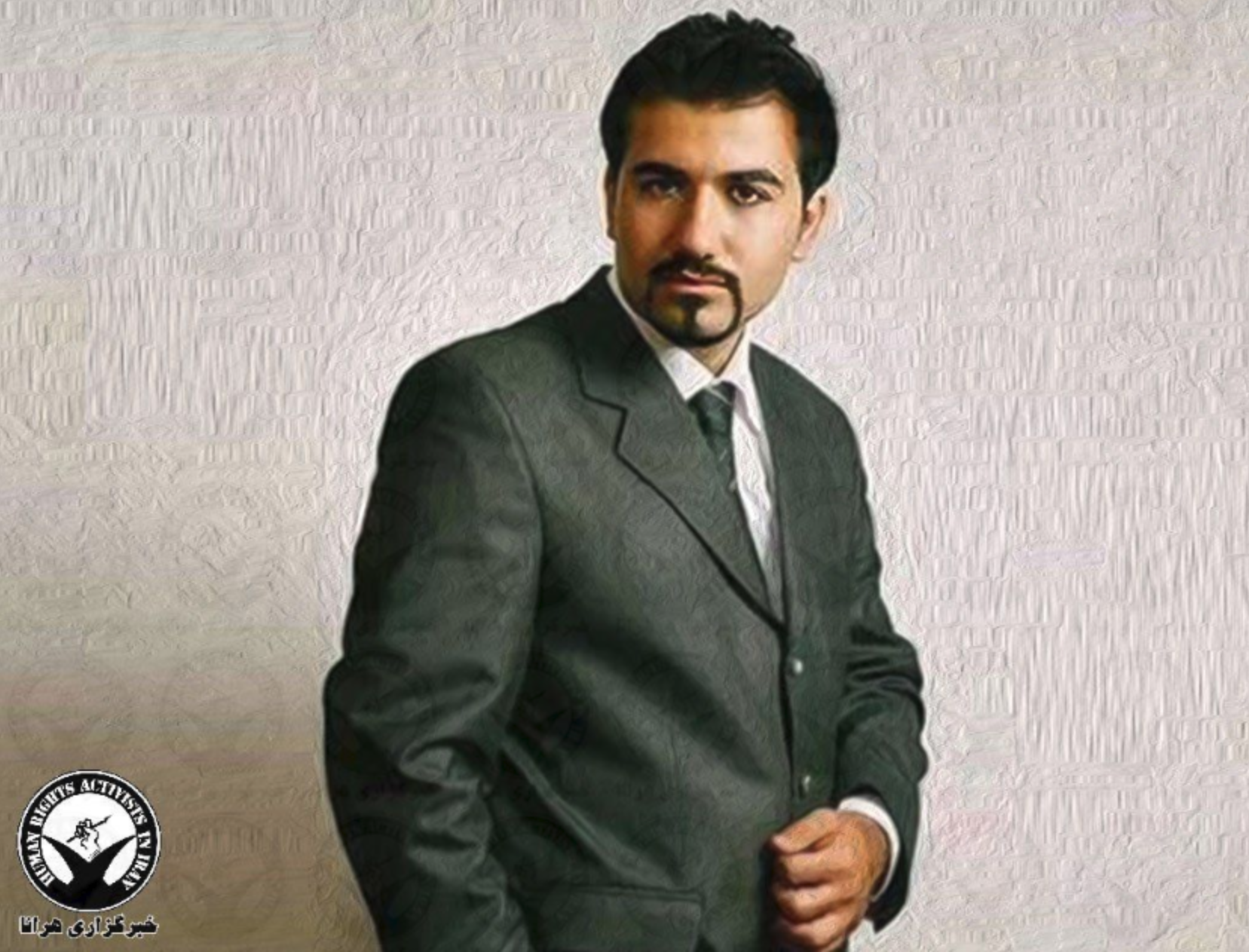
Golrokh Iraee Calls Citizens to the Defense of Persecuted Activist Soheil Arabi

Human Rights Activist News Agency (HRANA) – Golrokh Ebrahimi Iraee, a civil rights activist imprisoned at Evin, has written an open letter in response to the recent re-sentencing of Soheil Arabi, a prisoner of conscience in Great Tehran Penitentiary who has been held without furlough since November 7, 2013.

On new charges of “propaganda against the regime” and “disturbing the public mind,” Tehran Revolutionary Court Branch 26 sentenced Arabi to three more years of imprisonment and three years of exile on September 22, 2018. Cited as evidence against him were voice files he allegedly sent from inside the prison, in which he can be heard comparing Evin to a torture chamber.

In her letter, Iraee accuses authorities of using the exile sentence to banish dissidents like Arabi from public memory.

Golrokh Iraee pictured here with husband and fellow prisoner of conscience Arash Sadeghi

While behind bars on separate charges in June of this year, Arabi was issued a six-month prison sentence by Judge Moghiseh on charges of “blasphemy” and “propaganda against the regime.” The charges stemmed from a case file opened up against Arabi and his ex-spouse Nastaran Naimi, who was sentenced to 18 months’ imprisonment for “blasphemy” and “aiding and abetting.”

Iraee’s letter warns the Iranian public that apathy towards the extension of Arabi’s detainment would be ignoring symptoms of a malaise for which all Iranian citizens are responsible.

The full text of her letter, translated into English by HRANA, is below:

“He has been behind bars for years without having committed a crime. He is held captive by a vengeful system that has no tolerance for dissenting views, that stifles them instead in bondage, with physical and mental tortures.

Soheil Arabi was first detained on a misunderstanding that devolved into a blasphemy charge. After spending years behind bars and nearing the end of a sentence that tore his family apart (after the immoral and inhumane pressures they submitted him to, to break his spirit), yet another case file emerges, yet another prison sentence is leveled against him. After compounding his suffering with a ban on visits from his daughter, they now want to do with him what they did with Arjang Davoudi and Gholamreza Kalbi: exile him to the middle of nowhere, remove him from public memory, and let his existence perish into the abyss.

After the hunger strikes and beatings he endured in prison, Soheil’s condition is worrisome indeed. It is fitting that we be reminded, after commemorating the World Day against the Death Penalty, of Soheil’s initial execution sentence. He was made to suffer for a long time under the threat of execution, and the [long-term] imprisonment to which his death penalty was commuted, yet we are still witnessing concerted efforts to annihilate him with continued torture and new case files extending his imprisonment.

This method of eliminating activists, protesters, and dissenters may be the current status quo of the judicial system, but it is critical we consider these actions as the red flags that they are, and that we increase public sensitivity and attract the attention of international organizations so that we can put a stop to the annihilation of political and ideological activists. Abandoning them in this state renders us guilty of spreading the disease of our judicial system, and condoning the repetition of such crimes.

Golrokh Ebrahimi Iraee, Women’s Ward of Evin Prison, October 2018.

***

Golrokh Iraee was arrested along with her husband on September 6, 2014. She was first held at an IRGC safe house for two days and then spent 20 days in the solitary cells of Evin’s Section 2A, which is under IRGC jurisdiction, before being released on a bail of 800 million rials. On October 24, 2016, the IRGC arrested Iraee again, without a warrant. Her husband Arash Sadeghi, who was sentenced to 19 years in prison, is currently in Karaj’s Rajai Shahr Prison and has undergone operations for cancer. Iraee was sentenced to six years in prison, which was reduced to 2.5 years based on amnesty and Article 134 of the Islamic Penal Code. She was convicted of “insulting the sacred” and “gathering and collusion against the regime.”

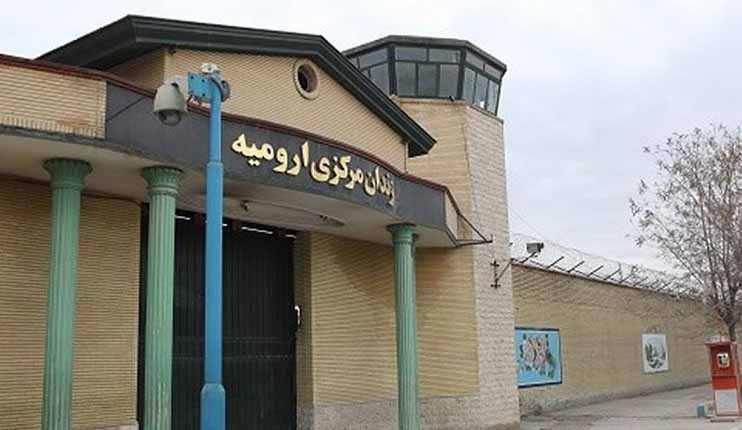
More than 50 Special Forces Attack Ward 12 of Urmia Central Prison

Human Rights Activists News Agency (HRANA) – In the latest of a long string of power abuses at Urmia Central Prison, more than 50 special forces responded to prisoner objections with severe beatings, breaking prisoners’ bones, and sending a number of them to solitary confinement on the night of October 15th.

A close source told HRANA that a large-scale reprisal was set into motion when three prisoners went to the guard’s office to check in on their wardmate Hamid Rahimi, who had been beaten there by four personnel and transferred to solitary confinement after a verbal altercation with staff. Rahimi is from Ward 12, designated for political prisoners.

Once arrived, the wardmates — identified as Kamal Hassan Ramazan, Ahmad Tamooie, and Osman Mostafapour — were met with their own violent beatings. Authorities started in on Tamooie, while additional prisoners, on orders from personnel members “Eskandar” and “Rezaie,” assaulted all three with a sharp object. Prisoner Touraj Esmaili was also beaten in the attack.

Authorities reportedly looked on as the attackers cut Esmaili, broke Ramezan’s nose, and busted the teeth of Tamooie, who has since gone on hunger strike to protest the assault.

When authorities were met with outcry over the assaults, they moved to disperse the victims and their comrades among different wards; when that measure, too, was met with resistance, prison authorities sent for reinforcements.

Prison guards and dozens of special forces stormed Ward 12 armed with batons, tasers, and tear gas, laying into Ramezan, Tamoo’i, Mostafapoor, and two more Ward-12 bystanders, Hassan Rastegari and Kamran Darvishi. The latter two were then transferred to solitary confinement; Rastegari has since been returned to Ward 12. “Hassan Rastegari was badly bruised all over,” the source said, adding that additional prisoners had attacked the men on orders from prison authorities.

Shortly thereafter, authorities established a perimeter around Ward 12. Crowded around the ward’s door were all those in charge of the prison, its investigations and protection unit, and Intelligence Security of West Azerbaijan Province. Inside the ward, dozens of special forces took up watch, while still more stood armed guard roof.

The special forces dispersed a few hours later, with the exception of a few that remained in the main prison hall.

Kamal Hassan Ramezan is on death row for political charges. Ahmad Tamooie is serving a 15-year sentence, and Osman Mostafapour is serving a 35-year sentence. As of the date of this report, the health statuses of the assaulted prisoners have yet to be confirmed.

Iran’s Prison Bureau stipulates that prisoner and prison-cell inspections must be carried out with respect to prisoners’ safety, i.e. to uncover and confiscate contraband items such as weapons and narcotics. Increasingly common, however, are inspections that lead to insults or destruction of prisoner property, and political detainees have proven to be popular targets. HRANA previously reported on the September 18th storming of Ward 12 by special forces, where guards pilfered and destroyed the prisoners’ personal belongings, including food they had purchased themselves.

Compounding harassment and pilfering at Urmia Central Prison is its authorities’ liberal use of corporal punishment. On October 8, 2018, prisoner Morteza Zohrali’s right arm was broken in a beating by prison officials; On September 23rd, Youth Ward inmate Javad “Arash” Shirzad was sent to an outside hospital for treatment of a concussion sustained at the hands of “Bayramzadeh,” the prison’s internal director; in July, Saeed Seyed Abbasi was beaten and sent to solitary confinement without treatment of his injuries, all for arriving late to the prison yard for recreation time; and in May, according to HRANA reports, prisoner Saeed Nouri, a former IRGC lieutenant, was beaten by two personnel in the internal director’s office.

Authorities Intimidate National Front of Iran into Cancelling Meeting

Human Rights Activists News Agency (HRANA) – Before it could assemble for the first time in 12 months, the National Front of Iran again had to cancel a meeting due to threats of detainment from security forces, who have been impeding the group’s gatherings for the past three years.

The political group had intended to hold leadership elections on Monday, October 15th in the home of one of its members. A close source told HRANA that the elections were scheduled to fill the position of late central council chairman Adib Boroumand.

The National Front of Iran is a nationalist political organization that has faced restrictions to its activities since it was founded in 1949.

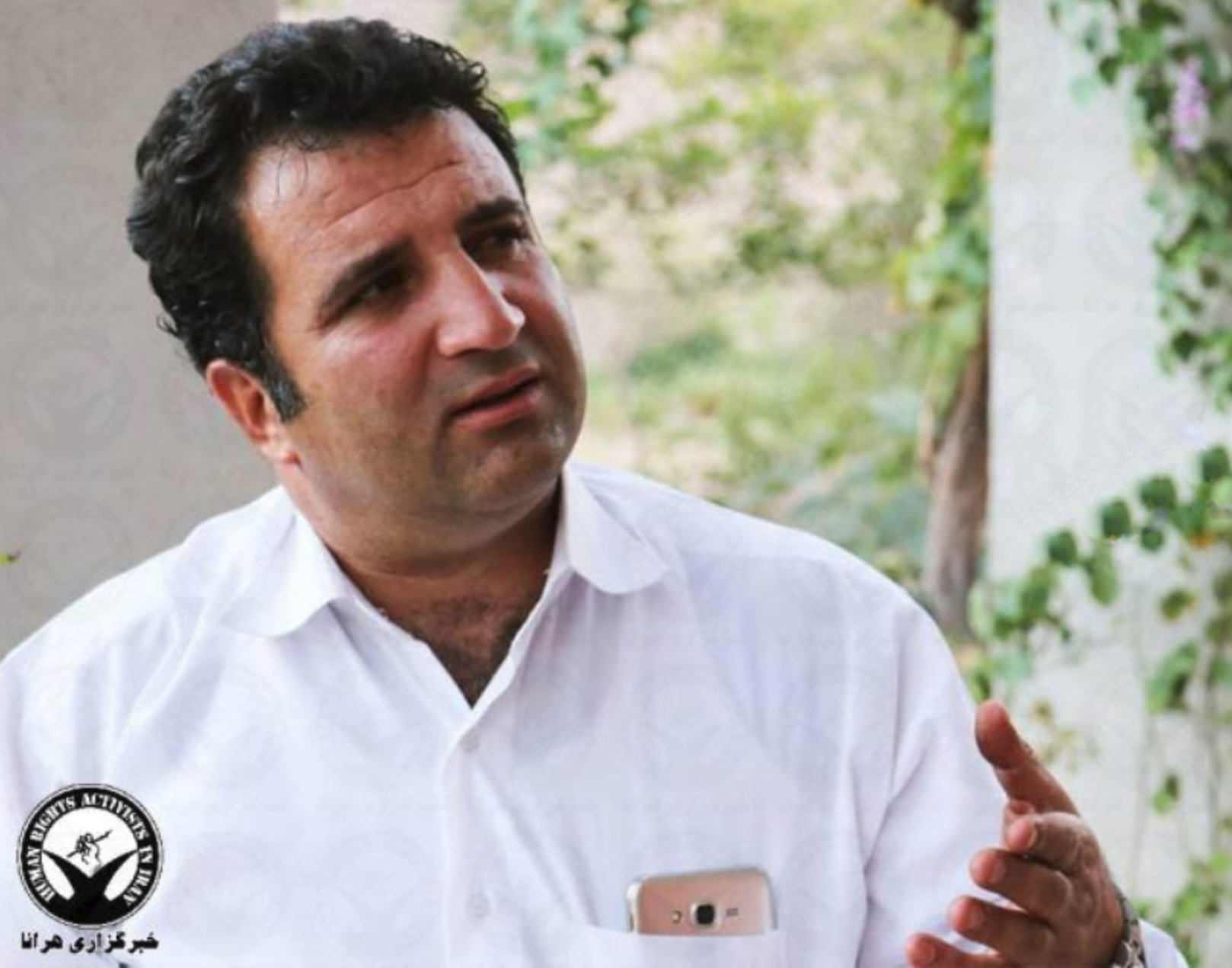
Activist Mohammad Najafi Charged with Visiting the Family of Ramin Hossein Panahi

Human Rights Activists News Agency (HRANA) – Attorney and human rights activist Mohammad Najafi was charged with “spreading lies with intent to disrupt the public mind” after travelling to Iran’s Kurdish region to meet with the family of Ramin Hossein Panahi, a political prisoner who was recently executed.

Najafi confirmed to HRANA that he was read his charges in Branch 1 of Shazand’s General and Revolutionary Investigation Court on October 14th, pursuant to a summons he received the day before.

Though Shazand Criminal Court No. 2 recently opted not to suspend Najafi’s internet activity, he said more charges would be forthcoming against him for content he posted online.

Najafi was previously detained for inquiring into the death of civilian Vahid Heydari, who died in Police Detention Center No. 12 amid the January protests. Najafi challenged Iranian judicial authorities who had claimed Heydari was a drug dealer that committed suicide while in custody. Najafi’s interviews with Heydari’s loved ones suggest that Heydari was a street peddler with no criminal record, whose autopsy report showed none of the typical markers of suicide, but did indicate head injuries consistent with blunt-force trauma.

When news of Najafi’s situation reached Tehran MP Mahmoud Sadeghi, he accused security forces of fabricating the grounds for his case, and defended Najafi by saying he had only gone as far as clearing Heydari’s name of a drug-dealing charge.

Najafi was detained in July 2018 along with 10 others who participated with him in the January protests in Shazand. The group was charged with “disturbing the public peace and spreading lies with intent to disrupt the public mind.” Judge Mohammad Reza Abdollahi of Criminal Court No. 2 Branch 102 of Arak, the provincial capital of Markazi Province, convicted and sentenced the group to three years of imprisonment and 74 lashes each.

The sentence is currently being appealed in hearings that began October 3rd in Markazi Province Appellate Court Branch 1.

Shazand is located in Markazi Province, central Iran.