January Protestors: Appellate Court Reduces Sentence of Teacher Activist

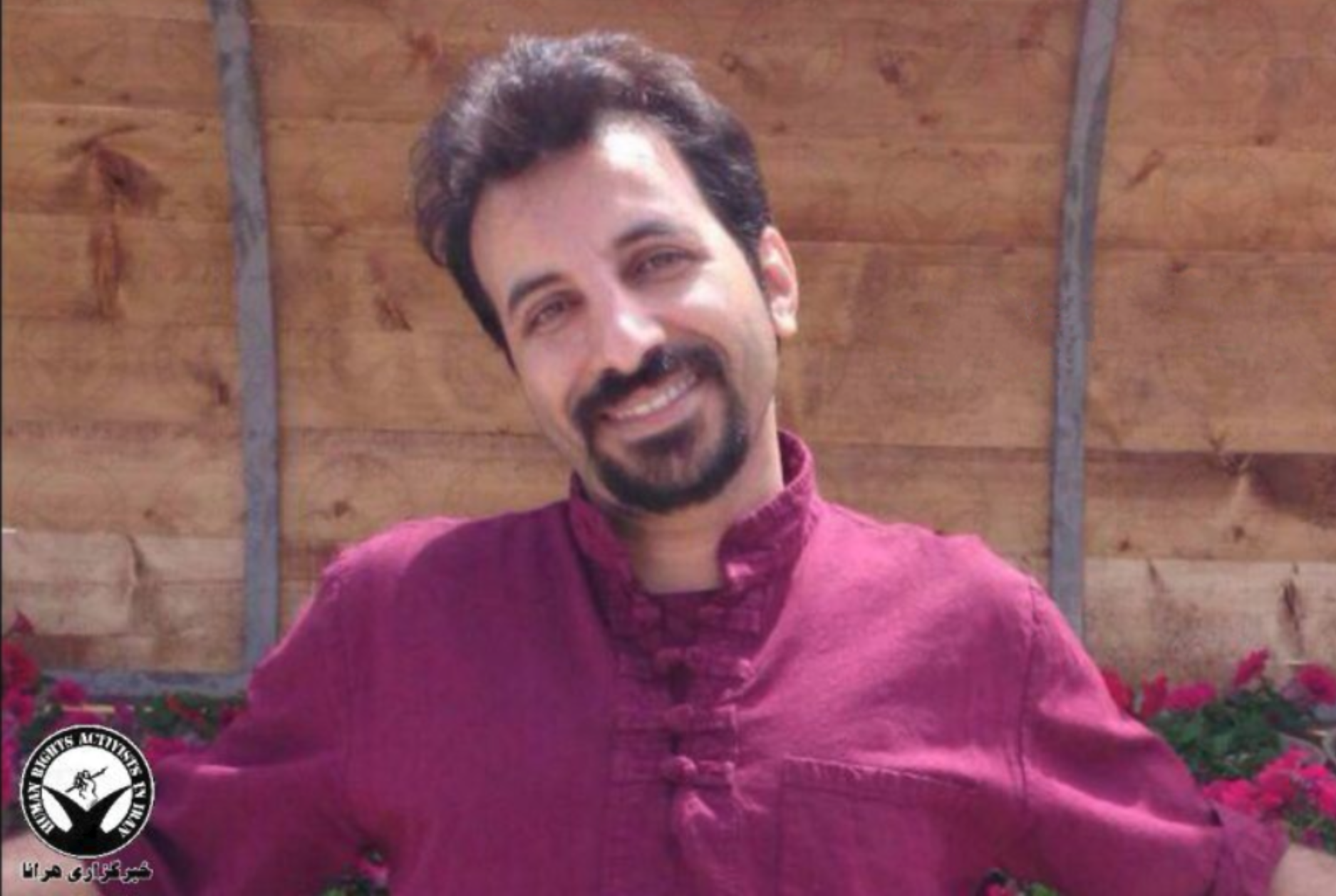
Human Rights Activist News Agency (HRANA) – Schoolteacher and University of Tehran student Ruhollah Mardani, who was arrested earlier this year in connection to nationwide protests and sentenced to six years in prison and a 2-year ban on travel and civic activities, has had his sentenced reduced to two years in an appeals court.

For his participation in the 2018 January protests, Mardani was arrested on February 17th, detained in Tehran’s Evin Prison, and convicted of propaganda against the regime and gathering and colluding to commit crimes against domestic security.

A source previously told HRANA that Mardani taught in Karaj schools, and was among a group of college classmates demonstrating solidarity with the January protestors by gathering together and blocking security forces from entering Tehran University.

Mardani started a hunger strike on April 24th to protest his arrest and chronically cliff-hanging case status. On May 21, he ended his strike after 27 days when judicial authorities promised to expedite his trial.

According to the source, an intervention from the Ministry of Education has effectively frozen Mardani’s payroll.

Azerbaijani Activist Summoned in Khoy

Human Rights Activist News Agency (HRANA) – Javad Ahmadi Yekanli, an Azerbaijani activist from the city of Khoy, was summoned by county security police on October 8th for reasons that have yet to be confirmed.
Yekanli was arrested along with a number of Azerbaijani activists for taking part in a July 6th annual gathering at Babak Fort. He was released on a bail of 200 million rials (approximately $4750 USD).
Authorities also apprehended Yekanli at a 12th-anniversary commemoration gathering at Golzaar cemetery in Naqade county for protesters who died in 2006. He was detained and beaten before being released on a billion rials (approximately $23,750 USD) bail.
He was also arrested in December of 2016 in his father’s house; on that occasion, authorities rifled through the house, confiscating his books and computer.
Agents of the Khoy Security Department regularly contact Yekanli and his family to warn them against resuming political activities.

Four Sentenced to Prison for Political Activism

Human Rights Activist News Agency (HRANA) – Morteza Nazari Sedhi, a political prisoner in Ward 4 of Evin Prison, has been sentenced to prison together along with his wife Zahra Zare Seraji.

The Revolutionary Court of Baharestan County in Tehran Province sentenced both Sedhi and Seraji with forming an illegal group, disseminating lies in cyberspace, and propaganda against the regime. Among the evidence cited against them was their forming of online political groups, recruitment of participants in the January protests, membership in monarchist groups via a social messaging app called Telegram, a close source told HRANA.

Sedhi was sentenced to a total of 13 years in prison, two years of exile to Azna County in central Lorestan province, and a fine. Seraji got an eight-year sentence and a fine on the same convictions, while their co-defendants Ali Kabirmehr and Ali Bazazadeh were both sentenced to 13-year prison terms.

All of the defendants will be required to learn sections of the Quran as part of their sentence.

Nazari Sedhi and Seraji were in a bad physical and psychological condition as of their sentencing, the source added.

Seraji had been previously released on a bail of 2 billion rials (approximately $48,000 USD).

January Protestors: 8 Months in Prison for Alireza Moeinian

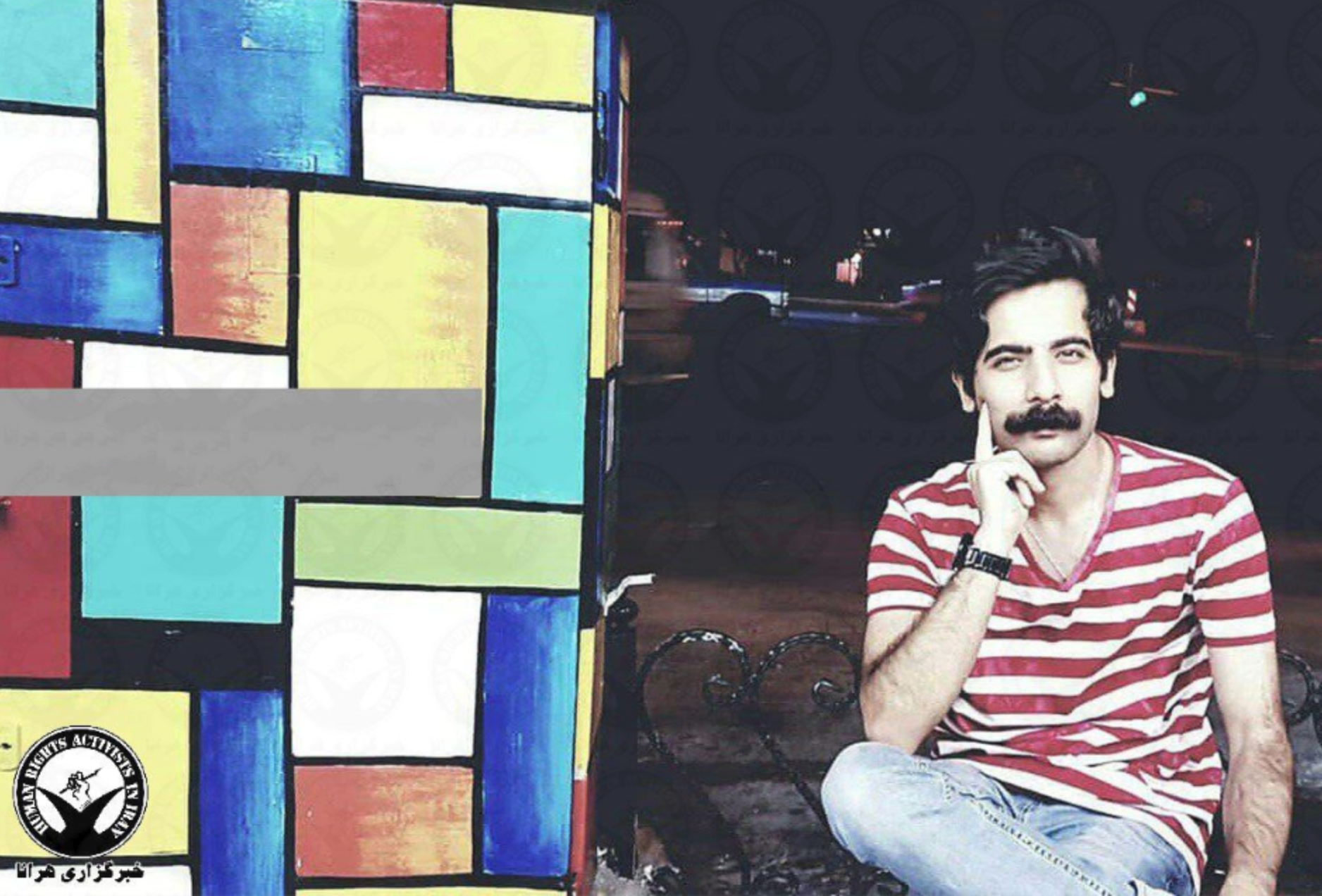
Human Rights Activists News Agency (HRANA) – Civil rights activist and Tabriz resident Alireza Moeinian, who was among those detained amid the January protests, has been sentenced to 8 months in prison by Judge Ahrari of Tabriz Revolutionary Court Branch 2.

Initially arrested January 1st and detained in Evin Prison’s Ward 209, Moeinian was able to go free at end of his initial interrogation sessions by providing a salary slip as a surety bond in place of cash bail, an informed source told HRANA.

Later, on April 23rd, 2018, Branch 19 of the Tabriz Prosecutors’ office summoned him to read him his charges: propaganda against the regime and participation in an illegal gathering. His bail was set at 1 billion rials (approximately $10,000 USD).

A large number of participants in recent protests referred to as the “January protests”, were detained and interrogated across the country. The protests resulted in the death of 25 individuals and the detention of around five thousand.

Of the January protests, Ministry of the Interior Rahmani Fazli said, “A number of protests took place in 100 Iranian cities; in forty of those cities, the protests turned violent.”

Tabriz is located in northwestern Iran.

Supreme Court Upholds “Qassameh” Death Sentence for Juvenile Offender

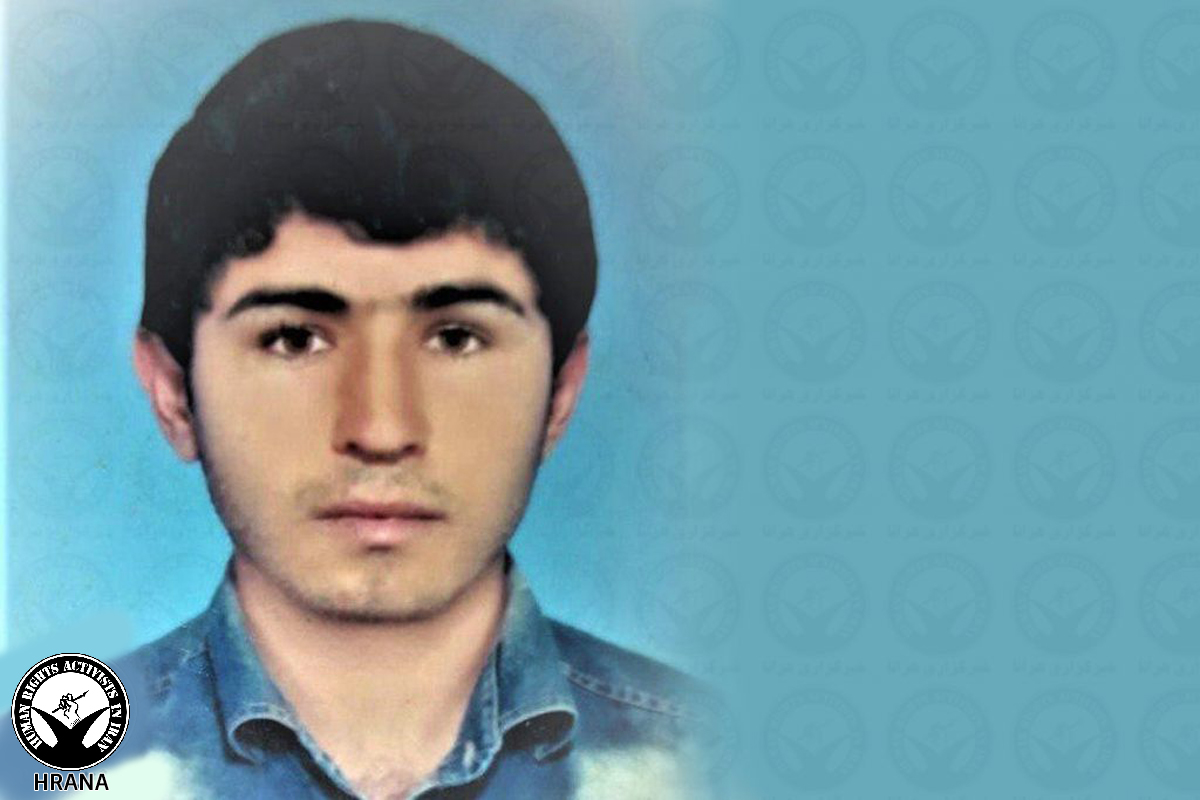
Human Rights Activists News Agency (HRANA) – The Iranian Supreme Court has upheld the death sentence for Saleh Shariati, a prisoner in Adel Abad of Shiraz who was convicted of murder as a minor via “Qassameh,” one of Islamic Penal Code’s most tenuous methods of establishing guilt.

In the absence of sufficient evidence, a judge strongly persuaded of the defendant’s guilt can rule for conviction by Qassameh if enough of the victim’s male family members indict the defendant under oath. In Shariati’s case, 57 of the victim’s male family members — none of whom are legally required to have witnessed the crime — sealed his fate with their sworn testimonies.

Authorities reportedly extracted a confession from Shariati under the duress of torture. The Abdorrahman Boroumand Center, a US-based nonprofit dedicated to promoting human rights in Iran, recently published audio of a man identified as Shariati speaking on tape. The man’s voice can be heard recalling five years’ worth of forcibly extracted confessions.

“Had I committed a crime, I wouldn’t have stayed at the same address […],” Shariati’s recording continued. “I would have fled… I’ve been in limbo for five years now. Every day they have a different reason. It’s become unbearable. I’m thinking of harming myself [while I still have the chance].”

Initially barred from seeing his detained son, Shariati’s father believed he had been tortured when, visiting him in prison for the first time, he caught sight of suspect wounds on his son’s body.

The alleged murder took place in 2012 when the body of Rasoul Bahramnian was found at the bottom of a well whose entrance was left unsecured. Shariati, then 16, was the last known person to see Bahramian alive and alleged that he had fallen into the well. Authorities zeroed in on him as a murder suspect sixteen months later.

Subscribe to Our Newsletter

Now is definitely not the time to stop reading!

Open Letter from Prisoners to UN Envoy: Death Penalty is a “Weapon of Terror”

Human Rights Activists News Agency (HRANA)- On Wednesday, October 3, 2018, a letter was published to the attention of Javaid Rehman, the United Nations Special Rapporteur on the Situation of Human Rights in Iran. Its authors were reaching out from the walls of Rajai Shahr Prison of Karaj, on the western outskirts of Tehran, to raise the specter of rising execution numbers and public hangings that still mar the face of the country.

The full text of their letter, translated into English by HRANA, is below:

Javaid Rehman
Special Rapporteur on the Situation of Human Rights in the Islamic Republic of Iran

Dear Mr. Rehman,

The death penalty is not simply a social predicament for us Iranians; it is a living nightmare. We live it and re-live it in the faces of children who witness public hangings, and in the faces of prisoners on death row. In the past few weeks alone, our fellow prisoners Mohammad Salas, Zanyar Moradi, Loghman Moradi, and Ramin Hossein Panahi were executed. Our families used to see each other during weekly visits. This time around, the visit was transformed to a day of mourning – further proof that the death penalty, a medieval legacy of human societies, is a collective punishment. With all of the shock and mental anguish that their executions put our families through, one can only imagine how the families of the victims are feeling.

[The aftereffects of] the death penalty are not the lot of political prisoners alone; every death-row prisoner feels them. The whole of society bears their cruelty.  The efforts of Special Human Rights Rapporteurs, particularly the late Asma Jilani Jahangir [Rapporteur between 2016 and 2018], who helped abolish the death penalty for drug-related offenses, are admirable. However, the widespread nature of executions calls for more drastic and concrete measures. Especially in today’s Iran, capital punishment is not simply a legal apparatus, but also a political weapon of terror used to suppress citizens expressing discontent with Iran’s economic, political, and social conditions.

We political prisoners believe that Iranian people will not be freed from this inhumane punishment without a serious international intervention. In our view, the economic and diplomatic needs of the Iranian regime are the ideal starting place for negotiations with authorities to put an end to capital punishment. We beseech you, as the Special Rapporteur, to ask the international community to make their dealings and diplomatic ties with the Iranian regime contingent on abolishing the death penalty and respecting human rights principles in Ian.

We thank you, in advance, for your efforts.

Sincerely,

1- Mohammad Amirkhizi
2- Majid Asadi
3. Payam Shakiba
4- Hassan Sadeghi
5- Arash Sadeghi
6. Abul Qassim Pulat
7- Abraham Firoozi
8- Mohammad Ali Mansouri
9- Saeed Masoori

CC: World Coalition against the Death Penalty (www.worldcoalition.org)

Court Convenes on Recent Charges Against Leila Mir-Ghaffari

Human Rights Activist News Agency (HRANA) – Branch 26 of Tehran’s Revolutionary Court convened today, October 6th to read civil activist Leila Mir-Ghaffari her most recent charges: insulting the supreme leader and rebelling against authorities. Her attorney Mohammad Hossein Aghasi was present at the session, which was presided by Judge Ahmadzadeh.

Aghasi told HRANA that Mir-Ghaffari’s new charges are in connection to an altercation she had with security guards in front of the Revolutionary Court. “Ms. Mir-Ghaffari explained herself in court [today]. I was asked to have her defense submitted to the court within a week.”

Mir-Ghaffari was detained just three days earlier for defending a group known as the Girls of Enghelab Street who famously demonstrated against mandatory veiling for women. Morality Court ordered her to pay a fine of 3,200,000 tomans [approximately $800 USD], and she was released on bail the next day.

On June 13, 2018, Mir-Ghaffari was among a group of civil rights activists summoned to appeals court to review their charges of 91 days’ imprisonment and 74 lashes apiece. Judge Farshid Dehghani presided over their preliminary trial on February 9, 2016 in Tehran Criminal Court No. 2, Branch 1060.

Mir-Ghaffari and 17 other civil activists were arrested November 2016 for staging a peaceful gathering across from Evin Prison. Authorities sent the women protestors to Gharchak Prison and the men to Evin. Charged with disrupting the public peace, they were eventually released on bail of 50,000,000 tomans [approximately $12,000 USD]. Her co-arrestees were Reza Mak’iyan (Malak), Hashem Zaynali, Simin Ayvazzadeh, Ehsan Khaybar, Abdulazim Aruji, Mohsen Haseli, Mohsen Shojaie, Azam Najafi, Parvin Soleymani, Sharmin Yamani, Sala Saie, Arshiya Rahmati, Mas’ud Hamidi, Ali Babaie, Ismaeil Husayni, Farideh Tusi, and Zahra Mudarreszadeh.

High Arrest Risk for Shirazi Baha’is

Human Rights Activists News Agency (HRANA) – Baha’i Shiraz resident Niloofar Hakimi was arrested by Shiraz Intelligence agents October 6th and transferred to a local detention center, continuing a recent wave of arrests of Baha’i locals, according to an informed source.

HRANA reported on the arrest of five other Baha’i Shirazis on September 15th and 16th: Noora Pourmoradian, Elaheh Samizadeh, Ehsan Mahbub-Rahvafa, and married couple Navid Bazmandegan and Bahareh Ghaderi.

Bazmandegan was arrested 6 p.m. on September 15th while teaching a psychology class, a source told HRANA. Authorities reportedly confiscated the identification cards, flash drives, email addresses, mobile devices, and mobile device passwords of all those present. Bazmandegan was subsequently escorted to his home, where authorities conducted a search and seized his personal belongings. His wife Bahareh Ghaderi was also arrested and transferred to an undisclosed location. Samizadeh was arrested the same day in Shiraz, and Mahbub-Rahvafa was arrested September 16th in his home. After searching Mahbub-Rahvafa’s house, authorities transferred him to Shiraz Intelligence Office Detention Center No. 100.

Baha’is in Iran do not have freedom of religion. This systematic repression is in violation of Article 18 of the International Declaration of Human Rights as well as Article 18 of the International Covenant for Civil and Political Rights. These documents assert the rights of every individual to freedom of religion, religious conversion, and expression of their religious belief as individuals or groups, publicly or privately.

Unofficial reports indicate that there are over three hundred thousand Baha’is living in Iran. Meanwhile, the Iranian constitution only recognizes Islam, Christianity, Judaism, and Zoroastrianism as permissible religions, effectively rendering the Baha’i faith illegal. This loophole allows the Iranian government to systematically violate the rights of Baha’is with impunity.

Activist Eghbal Ahmadpour Sentenced to Five Years in Prison

Human Rights Activists News Agency (HRANA)- Urmia Revolutionary Court Branch 3 sentenced Anbi village resident Eghbal Ahmadpour to five years in prison on a charge of “acting against national security through membership in Kurdish opposition parties” on Thursday, October 4, 2018. He was denied access to a trial lawyer.

Security forces arrested Ahmadpour on September 11, 2018. According to an informed source, he was interrogated and held in solitary confinement for 12 days before being sent to Urmia Prison Ward 13, known as the youth ward.

According to registered data from 2,945 reports by the Statistics, Publications, and Achievements Division of HRAI, in the past year (from March 21, 2017, to March 18, 2018), 6883 citizens were arrested in Iran on ideological or political grounds.

Anbi village is in Urmia county.

Rajai Shahr Authorities Botch Arash Sadeghi’s Recovery from Cancer Surgery

Human Rights Activists News Agency (HRANA)- Authorities are botching the post-op course of imprisoned civil rights activist Arash Sadeghi, who underwent surgery for bone cancer on September 12th.

While attempting to recover in Rajai Shahr prison of Karaj, Sadeghi contracted an infection on his surgical site. On September 22nd, authorities were adamant about escorting him to the hospital at noon, despite his specialist’s explicit indications that he could only give consultations in the morning.

According to a close source, authorities told Sadeghi that his specialist’s schedule had changed, which upon their arrival at the hospital proved untrue. Sadeghi’s only recourse was a general practitioner, who added 12 antibiotics to his medication regimen.

Sadeghi is currently taking only prescribed antibiotics, and will possibly be transferred to a hospital next week. En route back to Rajai Shahr from his September 22nd consultation, Security Unit Commander Maghsoud Zolfali and Prison Director Gholamreza Ziyai threatened to block his transfer.

HRANA previously reported on Sadeghi’s ongoing medical ordeal.