Tyranny in Rajai Shahr Prison

Human Rights Activists News Agency (HRANA) – Rajai Shahr prisoner Majid Khoshdasht received a beating today, October 3rd from Warden Hassan Kord, punishment for having complained about two prison personnel who assaulted him earlier this morning.

An informed source told HRANA that Khoshdasht was returning to Ward 1 from the prison shop when he was accosted by prison personnel Khanjani and Borzouie, who dealt injuries to his head, eyes, and ears.

Khoshdasht reached out to his warden Hassan Kord, who rather than addressing the violent episode “beat him and returned him to the ward,” a close source said, adding “although he is in bad shape, with injuries to his head and face, and severe injuries to his eye and ear, he has yet to receive medical attention.”

Unprovoked attacks by Rajai Shahr personnel — and Hassan Kord in particular — are not without precedent, and one prisoner told HRANA that seven had occurred in the past month. The physical and psychological pressures of Ward 1’s mobster-and-crony social order have driven prisoners there to hunger strike or suicide, according to HRANA reports: on September 12th of this year, Ali Ahmadi, held in Ward 1, committed suicide to escape incessant harassment from prisoners doing Kord’s bidding; on July 9th, an assault by Rajai Shahr personnel left broke prisoner Behrouz Hosseini’s left wrist and right tibia. Along with fellow prisoner Abbas Yousodi, Hossein had already been beaten in May of last year by Rajai Shahr’s internal manager. Goaded by prisoners, the manager reportedly doubled down on his attack, severely injuring Hosseini and Yousodi.

Rajai Shahr authorities roughed up Sunni prisoner Hamza Darvish this past May, aggressively intimidating him from speaking critically of those in charge. At the time of being accosted, Darvish was in handcuffs and shackles, mid-transfer to a medical examiner who was to treat him for health issues incurred during an extended hunger strike.

Iranian President Hassan Rouhani has sloganeered against civil rights repressions, publishing a Civil Rights Charter and verbally pushing for the comprehensive implementation of its provisions. Article 64 of the charter reads, “anyone arrested, convicted, or imprisoned is entitled to their civil rights, including proper nutrition, clothing, health and medical care, educational and cultural services, religious worship and practices.” Thus far, though, Rouhani’s rhetoric has yet to materialize into concrete initiatives.
Lawyer Mostafa Daneshjoo Remanded to Evin Prison

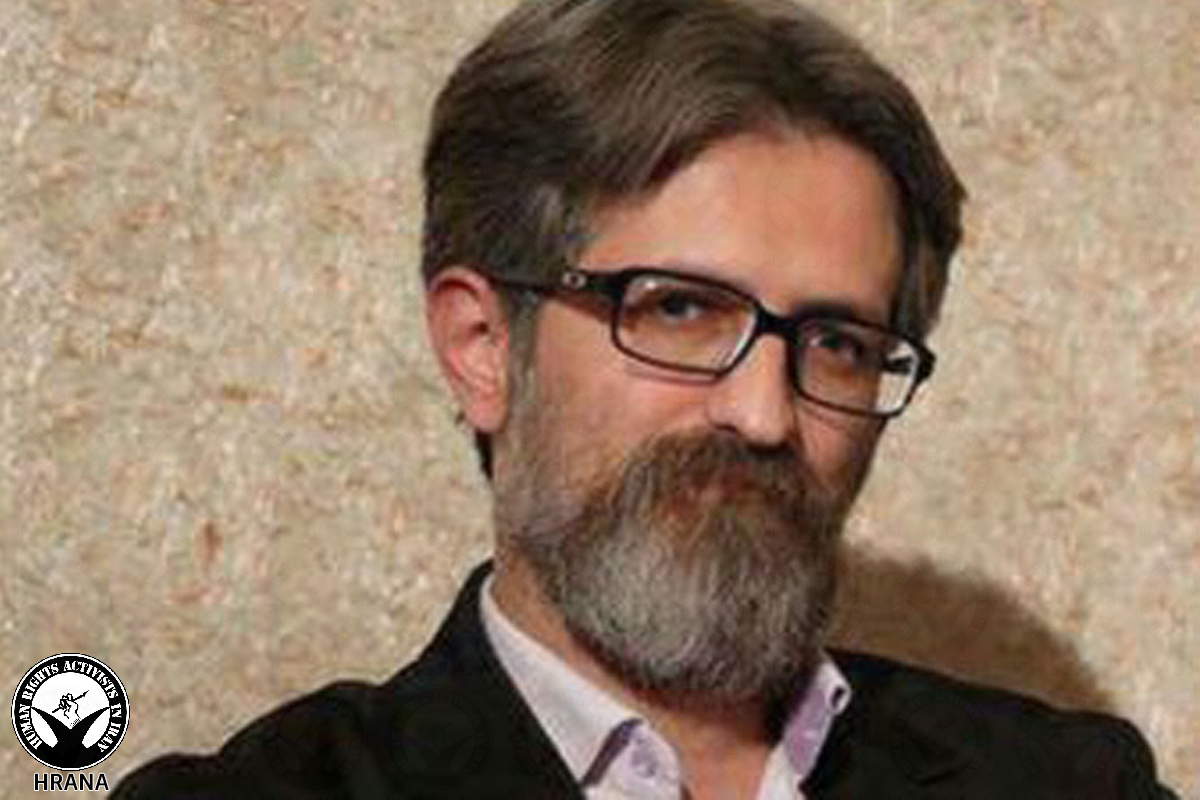
Human Rights Activists News Agency (HRANA)- Judge Moghiseh has extended the temporary detention period of lawyer and imprisoned Dervish activist Mostafa Daneshjoo, denying his request for bail despite the severe progression of his cardiac and lung disease.

Symptoms of Daneshjoo’s asthma were exacerbated by his stay in Evin Prison’s Ward 250 between 2011 and 2015, on charges of “membership in the Dervish cult,” “acting against national security,” “propaganda against the regime,” and “disturbing the public mind.” Despite orders from the assistant prosecutor that Daneshjoo is sent to a healthcare facility, Evin Prison authorities have barred his transfer.

Seven armed agents arrested Daneshjoo in his mother’s home on July 7th, taking him to solitary confinement in Evin Prison’s Ward 209 — which is under Intelligence Ministry management — where he stayed for 45 days. He was then sent to Ward 4, typically designated for convicts of financial crimes.

Daneshjoo was arrested pursuant to a case file against him in 2017 in Tehran’s Security Investigation Court, in connection to a violent clash that took place February 2018 near the Dervish spiritual leader’s residence on Golestan Avenue in the capital city.

Per a letter from the security office at Azad University, Daneshjoo’s alma mater, he has been barred from continuing his studies. Citing his defense of the Gonabadi Dervish religious minority, security authorities have revoked his permit to practice law.

In a note dated October 2nd, attorney Ali Sharifzadeh announced that he had been retained as Daneshjoo’s lawyer in Branch 28 of Revolutionary Court.

Zahedan Appeals Court Ups Prison Sentence into Capital Punishment

Human Rights Activists News Agency (HRANA) – Zahedan Appeals Court has increased the 15-year prison sentence of Ward-4 Zahedan prisoner Abdolhamid Mirbaluchzehi to the death penalty. The final appeals verdict also upheld the capital punishment sentence of his co-defendant Javid Dehghan.

Both were initially tried in Branch 1 of Zahedan Revolutionary Court on charges of acting against national security and Moharebeh [enmity against God] in connection to an armed attack on police.

According to a close source, the fifteen-year prison sentences of co-defendants Mahmoud Kalkali, Omid Imani, and Alireza Bampouri — who did not request an appeal — were finalized “long ago.”

The charges of all defendants were reportedly prepared after their torture in a Ministry of Intelligence detention center in Zahedan, where according to a source they were “stripped naked, flogged,[…] disparaged and humiliated.”

Birjand Prison Executes Four Afghan Nationals

Human Rights Activist News Agency (HRANA) – Six years ago, four Afghan nationals planned to use underground channels to migrate to Iran, where they had invested hopes of a better life. In the early morning hours of October 2, 2018, they were executed on charges of “armed drug trafficking,” a charge to which they reportedly confessed under the duress of torture.

Shah Mohammad Miran Zehi, Ahmad Shah Issa Zehi, Mohammad Miran Zehi, and Eid Mohammad Miran Zehi were married with children and had been in Birjand Central Prison for over six years.

In an open letter, the prisoners explained the circumstances in which they were detained and coerced to utter false confessions. Mohammad Miran Zehi wrote that they had filed into a Toyota set to take them to Birjand from Zabul when they got into a dispute with their driver near the village of Bandan [a tributary of Nahbandan on the Afghanistan-Southern Khorasan border]. Claiming he needed gas, he reportedly dropped the group off at a private residence and said he would be back.

“When [the driver] returned, he was flanked by authorities. They struck me in the head and took us to the Bandan police station. They subjected us to the cruelest forms of torture in there,” Mohammad Miran Zehi said.

Accusing them of transporting more than 300 pounds of opium and two Kalashnikov rifles, Bandar authorities used violence to press them to confess, going as far as pulling a toenail from Mohammad’s right foot.

The case file against the four was set into motion when they finally acceded to the torturers’ demands, “under the pressure, the fear for our lives, the inability to take it any longer, and hoping that maybe it would make them stop,” their letter explained.

The case file was then forwarded to judicial authorities and spent five years in suspense before Judges Nabavi and Seyfzadeh of Birjand Revolutionary Court Branch 2 issued the execution sentence on January 31, 2017. The Supreme Court upheld the death sentence for Shah Mohammad Miran Zehi, Ahmad Shah Issa Zehi, Mohammad Miran Zehi, and Eid Mohammad Miran Zehi; the death sentence of Saraj Gavkhur, a fifth defendant on the same case file, was commuted to 25 years’ imprisonment.

According to a close source, the group was made scapegoats for an armed conflict that had taken the life of a security agent days before their entry into Iran.

Birjand Central Prison is in the city of Birjand, capital of Southern Khorasan Province.

According to Amnesty International’s annual report, Iran ranks first in the world in executions per capita. An annual report published by the Center of Statistics at Human Rights Activists in Iran (HRAI) states that more than 60% of executions in Iran are not reported by the state or the Judiciary. These executions are referred to as “secret executions.”

According to registered data from 2,945 reports by the Statistics, Publications, and Achievements Division of HRAI, in the past year (from March 21, 2017, to March 18, 2018) at least 322 citizens were executed and 236 others were sentenced to death in Iran. Among these were the executions of four juvenile offenders and 23 public hangings.

Three Hundred Gachsaran Prisoners Break into Protest

Human Rights Activists News Agency (HRANA) – Around 300 prisoners in Gachsaran, in the southwestern province of Kohgiluyeh and Boyer Ahmad, have launched protests and gone on hunger strike in opposition to patterns of injustice plaguing the quality of life in their region.

In phone calls to loved ones, several prisoners expressed discontent with the Gachsaran prosecutor’s unseemly behavior towards their families, the living conditions with which their families were faced, and authorities’ discriminatory treatment of prisoners, including their refusal to grant furlough to those who are eligible.

A source with two family members in the prison told HRANA that protestors were expressing their frustration and despair in very different ways. “During the protests, one prisoner, Hamed Pirayesh, cut his own ear and was subsequently transferred to solitary confinement. Today, another prisoner attempted suicide. Mir Mohammad Miri, an imprisoned political activist from Deyl village in Gachsaran county, is on his third day of hunger strike to protest the rejection of his furlough request.”

Miri was arrested July 21, 2018, to serve his sentence of lashings and two years in prison on charges of “insulting the supreme leader” and “propaganda against the regime.” The Gachsaran Revolutionary Court issued his verdict, which Branch 3 of the Appeals Court later upheld the sentence.

Subscribe to Our Newsletter

Now is definitely not the time to stop reading!

Iranian Authorities Execute Three Prisoners, Slate Four More for Gallows

Human Rights Activist News Agency (HRANA) – State-run news agencies in Iran have yet to confirm the executions of three prisoners this morning, October 2nd, in Urmia: Salman Khan Alilou, Hassan Hajilou, and Zeinab Sekaanvand. Sekaanvand was executed for a crime she had allegedly committed as a minor.

Yesterday, Amnesty International released a statement expressing concern about Sekaanvand’s transfer to a solitary confinement cell, the protocol for prisoners whose death sentence is imminent. “The authorities must immediately quash Zeinab Sekaanvand’s conviction and grant her a fair retrial without recourse to the death penalty, and in accordance with principles of juvenile justice,” the statement read.

Sekaanvand, born June 22, 1994, was 17 when she was detained March 1, 2012, on accusations of killing her husband. Branch 2 of Urmia Criminal Court issued her a death sentence, which was confirmed in Branch 8 of the Supreme Court. Married in March of 2009 at the age of 15, Sekaanvand reportedly endured physical violence at the hands of her husband.

Having spent two years in Khoy Prison since her initial arrest, Sekaanvand was transferred to the Women’s Ward of Urmia prison after being issued the death sentence. Prison authorities would later approve her marriage to a fellow Urmia prisoner. She delivered a stillborn baby on Friday, October 1, [2016].

Yesterday, HRANA reported on the transfer of at least four prisoners — all of whom were reportedly charged with first-degree murder — to solitary cells in various detention centers across Urmia in preparation for their executions.

The same day, two more prisoners — Mousa Nomani from Ward 3-4 and Changiz Irani from the Psychotherapy Ward — were granted execution stays of one month and fifteen days, respectively, to attempt to obtain pardon from the families of their victims, which would exempt them from capital punishment.

According to Amnesty International’s annual report, Iran ranks first in the world in executions per capita. An annual report published by the Center of Statistics at Human Rights Activists in Iran (HRAI) states that more than 60% of executions in Iran are not reported by the state or the Judiciary. These executions are referred to as “secret executions.”

According to registered data from 2,945 reports by the Statistics, Publications, and Achievements Division of HRAI, in the past year (from March 21, 2017, to March 18, 2018) at least 322 citizens were executed and 236 others were sentenced to death in Iran. Among these were the executions of four juvenile offenders and 23 public hangings.

Soheil Arabi Sentenced to More Prison Time

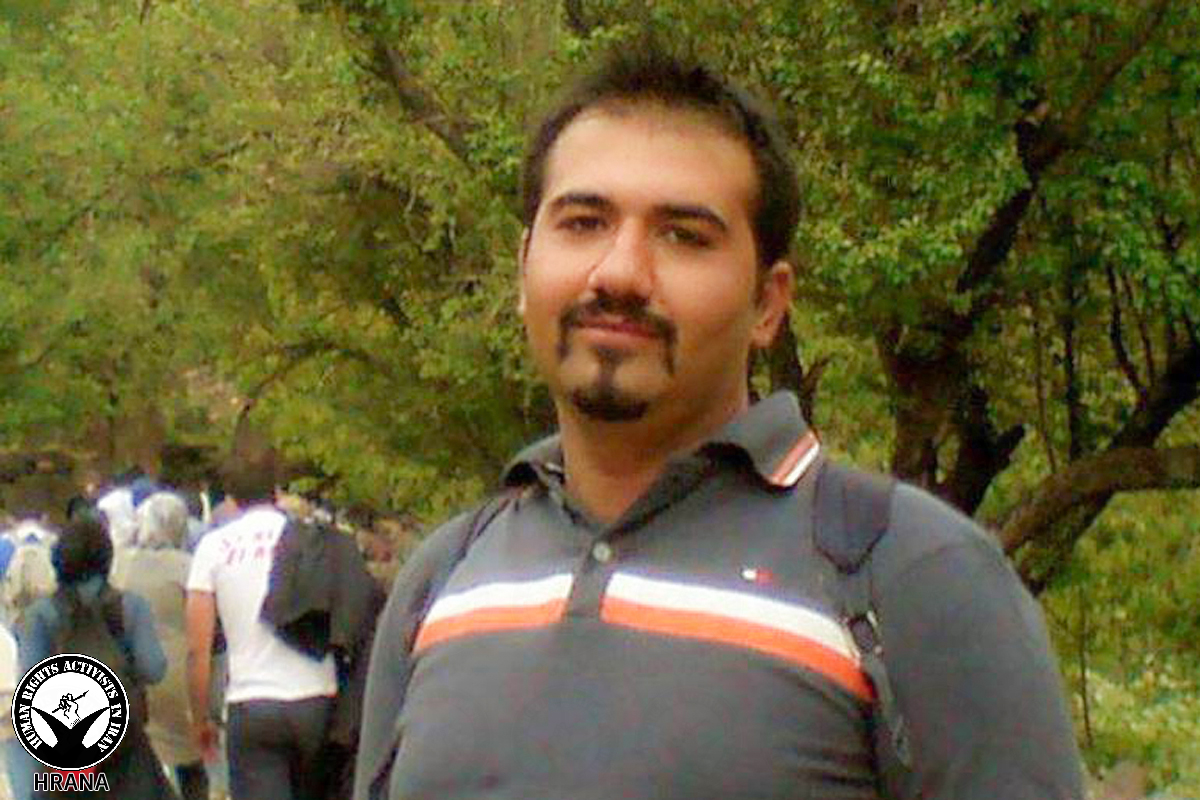
Human Rights Activist News Agency (HRANA) – Pursuant to a new case brought against him by Judge Ahmadzadeh of Tehran Revolutionary Court Branch 26, Soheil Arabi, a prisoner of conscience in Great Tehran Penitentiary, was sentenced September 22nd to three years in prison, three years in exile, and a fine of approximately 40 million IRR [approximately $400 USD] on charges of “propaganda against the regime” and “disturbing the public mind.” His lawyer did not learn of the verdict until eight days later.

A source close to Arabi told HRANA that the courts pursued new charges against him because of voicemail messages he left from prison; in one of these, he reportedly compared the Great Tehran Penitentiary to a torture chamber.

Arabi’s mother Farangis Mazloum told HRANA, “When I went to Great Tehran Penitentiary to see Soheil this morning, prison authorities told me that they had taken my son to court and that he is banned from having visitors,” she said.

Judge Moghiseh previously sentenced Arabi, along with his ex-wife Nastaran Naeimi, to prison time: six years for Arabi on charges of “blasphemy” and “propaganda against the regime,” and a year and a half for Naeimi, for “propaganda against the regime” and “aiding and abetting.”

Soheil Arabi, a 33-year-old photographer, was arrested by Sarallah-based agents of the Islamic Revolutionary Guards Corps (IRGC) on November 7, 2013, for comments he had posted on his Facebook page. Judge Siamak Modir Khorasani cited the Facebook posts as evidence of “insulting the prophet” — a charge that can incur capital punishment — in Branch 76 of Tehran’s Criminal Court.

Arabi’s lawyers subsequently appealed to Branch 36 of Supreme Court, pleading Article 263 of the Islamic Penal Code. While Article 262 recommends the death sentence for those who insult the prophet, Article 263 reduces the death sentence to 74 lashes for defendants whose statements “have been under coercion or mistake, or in a state of drunkenness, or anger or slip of the tongue, or without paying attention to the meaning of the words, or quoting someone else…”.

Unmoved by the Article-263 argument, the Supreme Court upheld the death sentence, unlawfully adding to his case file the charge of “corruption on earth.”

A retrial request was later accepted in Supreme Court Branch 34, which acquitted him of “insulting the prophet” and commuted his death sentence to seven and a half years’ imprisonment, plus a two-year travel ban and two years of religious probation to evaluate his repentance upon his release.

Arabi had not seen the end of his legal troubles, however — in 2014, Branch 10 of Iran’s Court for Government Employees would sentence him to a 5 million IRR fine [approximately $50 USD] and 30 lashings for insulting the following three people with his Facebook posts: Ayatollah Ahmad Jannati, Gholamali Haddad Adel, and the Director of Allameh Tabatabai University. That same year, Judge Abolghassem Salavati of Revolutionary Court Branch 15 would sentence him to three years in prison for “insulting Ali Khamenei, Supreme Leader of the Islamic Republic” and “propaganda against the regime.” Branch 54 of Appeals Court upheld the latter sentence a short time later.

Arabi has been in prison without furlough since November 7, 2013.

Civil Rights Activist Mehrnaz Haghighi Conditionally Released

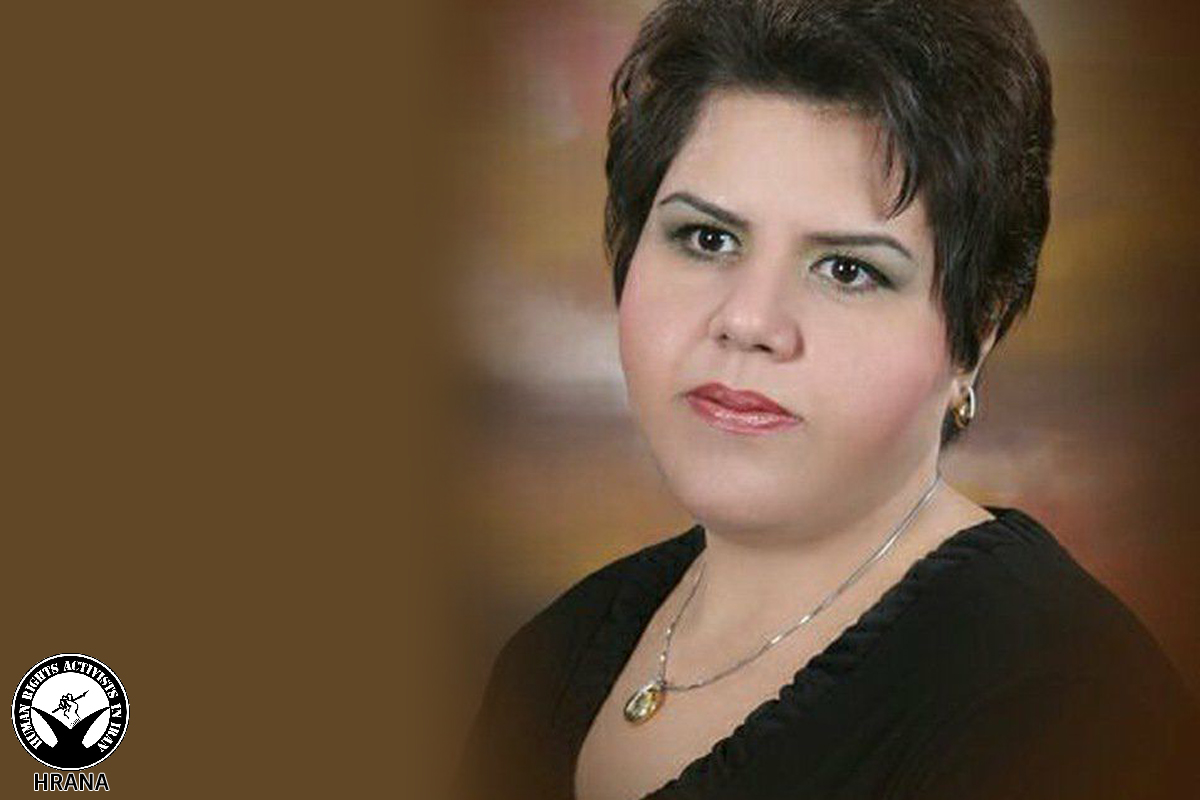
Human Rights Activists News Agency (HRANA) – Mehrnaz Haghighi, a civil rights activist and doctor from Bandar Abbas on the Persian Gulf coast, was conditionally released on Monday, October 1st after meeting a minimum detention requirement for previous time spent in custody.

HRANA reported September 22nd on Haghighi’s transfer to Bandar Abbas Prison to serve her six-month sentence for “propaganda against the regime.”

Haghighi was first arrested by intelligence agents in her home on February 19, 2017. For a week after her arrest, she was held in solitary confinement in the city’s intelligence office before being transferred to the Women’s Ward of Bandar Abbas Prison. She was sent to Ward 209 of Evin Prison on April 12, 2017, where she stayed until being released on bail May 28th, 2017.

Open Letter: Baha’i Prisoner Hopeful Amid Fraught Traditions of New Academic Year

Human Rights Activist News Agency (HRANA)- As a new academic year unfolds in Iran, Baha’i prisoner Azita Rafizadeh speaks out in an open letter about the systemic barriers between post-secondary education opportunities and the country’s Baha’i citizens.

HRANA has reported on several cases over the past few weeks of students whose hopes of attending college have been eliminated by nothing more than the insidious alert of “deficiency on file.” Since 2006, this message has been a common method for disqualifying Baha’i students from university enrollment.

In direct violation of the law, Baha’is are prevented from pursuing degrees or employment in government offices, per under-the-table directives from the Supreme Council of the Cultural Revolution. Every year, a new cohort of Baha’is is either barred from higher education altogether or thwarted before culminating their degrees.

Since the 1979 revolution, the office of the United Nations Special Rapporteur on Iran has repeatedly protested the Iranian government’s animosity towards its Baha’i population, particularly in preventing these citizens from furthering their studies. According to the UN, such directives demonstrate a blatant disregard of multiple international treaties.

Rafizadeh reacts to these prohibitions in the letter below, translated into English by HRANA:

It is the third year that I’ve languished in the corner of a jail cell as schools and universities reopen their doors. I’m kept far from the thrills of a new academic term, from seeing the bright-eyed university students excited to pursue their higher education, and from seeing upperclassmen resume their course.

Over the past few years, I have tried to preserve in my heart the warm glow of that atmosphere, and pray sincerely that all those who are striving, serving, and studying will succeed. Even still, these days, when news reaches me of those students who love learning yet get ‘deficiency on file’ for their 2018 results from Konkur [a nationally-competitive college entrance exam], the bitterness of discrimination and prejudice comes flooding back, and my hopes for doing away with these measures is diminished. To be sure, [this pattern] at least confirms the perseverance of hope and love for learning in young people who, despite a life of deprivation, still do their best to enter universities by participating in Konkur in hopes of gaining knowledge, the greatest virtue of the human world.

It is the existence of these hopeful and eager-to-learn youth that has, over the years, helped the Free Baha’i Institute of Higher Education (BIHE) to thrive in spite of the pressures and systematic attempts to dissolve it. This institute continues to steadfastly serve young Baha’is who are deprived of continuing their education.

When I heard the happy (albeit delayed) news of Holaku Rahmanian’s graduation from Santa Cruz University, my heart brimmed with happiness and resolve. I was certain that although I have been forbidden from serving the youth of my country, better and more qualified individuals will graduate from this institute every year, who are well-versed in the sciences of the day and whose hearts beat to serve the institute and their countrymen.

Hoping for the day when the cloak of discrimination is lifted from the country’s youth, so that they may serve each other and build our country’s future side by side.

Azita Rafizadeh
Evin Prison
October 2018

***

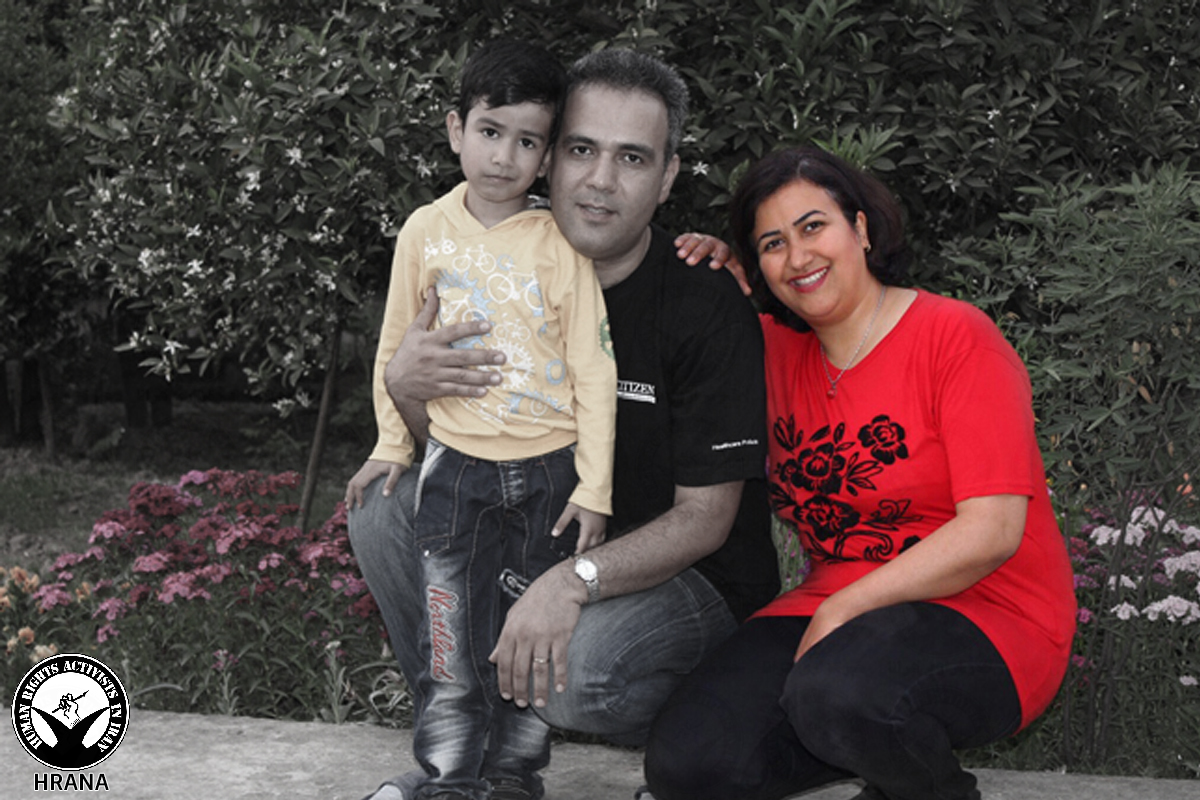
Azita Rafizadeh is an Iranian Baha’i whose spouse Peyman Kushak Baghi is also imprisoned at Evin. Prisoners of conscience, both were sentenced to 4 and 5 years in prison, respectively, on charges of “membership in the illegal and misguided Baha’i group with the aim of acting against national security through illegal activities at the BIHE educational institute.”

Iranian Baha’i citizens are systematically deprived of religious freedoms, while according to Article 18 of the Universal Declaration of Human Rights and Article 18 of the International Covenant on Civil and Political Rights, everyone is entitled to freedom of religion and belief, and the right to adopt and manifest the religion of their choice, be it individually, in groups, in public, or in private.

Based on unofficial sources, more than 300,000 Baha’is live in Iran. However, Iran’s Constitution only recognizes Islam, Christianity, Judaism, and Zoroastrianism, and does not acknowledge the Baha’i faith as an official religion. Consequently, the rights of Baha’is are systematically violated in Iran.

Stakes and Arrests Climb Higher as Truckers’ Strike Enters 11th Day

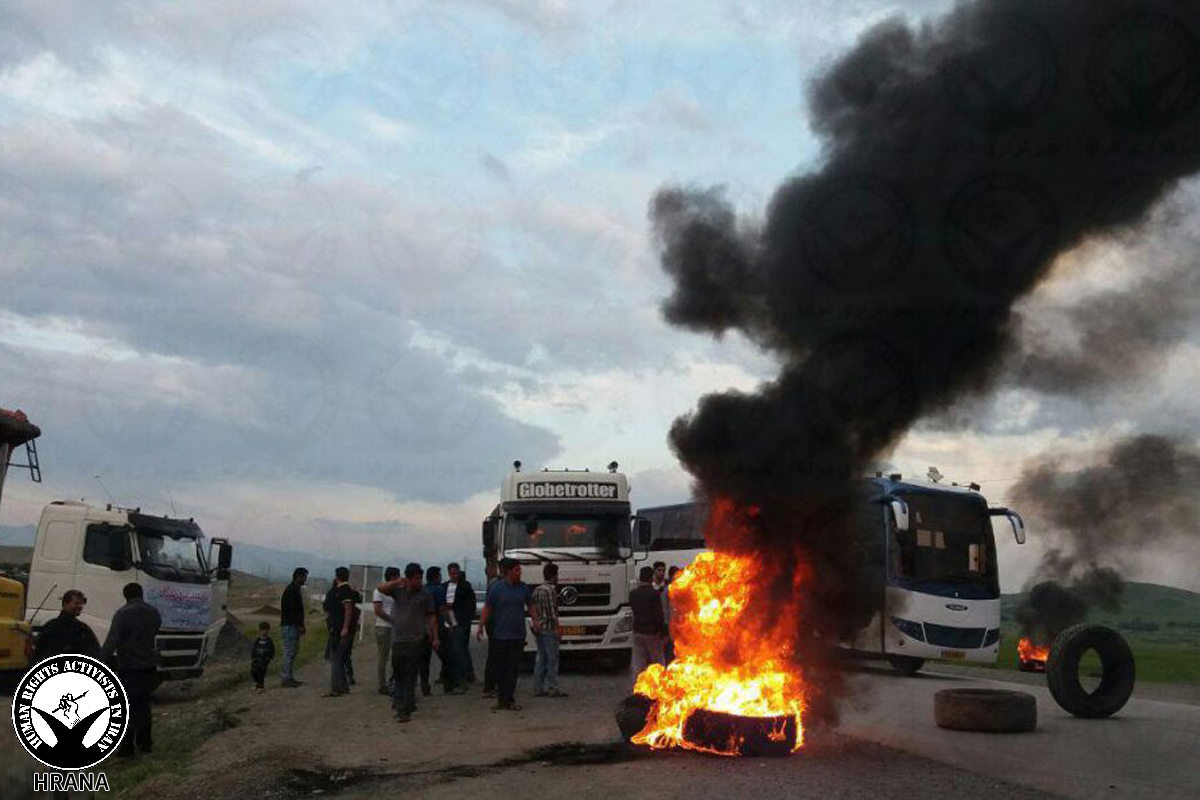
Human Rights Activist News Agency (HRANA) – The Iranian truckers’ strike entered its eleventh day on Tuesday, October 2nd, catching fire in additional cities where 15 more were arrested and public prosecutors have begun threatening participants with the death penalty. The total number of arrestees is now at 171.

Cities currently host to strike activity and its corollary transport stoppages include Tehran, Isfahan, Arak, Qom, Bandar Abbas, Sirjan, Mashhad, Yazd, Tabriz, Sari, Kashan, Bukan, Khosroshah, Dezful, Rezvanshahr, Karaj, Dorood, Marvdasht, Garmsar, Khorramabad, Meshkat, Naqadeh, Malayer, Bandar Imam Khomeini, Ardakan, Sirjan, Shahr Babak, Shirvan, Sanandaj, Gorgan, Shahroud, and Zarinshahr.

Police Commander of Kangan county Colonel Rezaei confirmed that two people in his jurisdiction had been arrested and had their vehicles seized. Heydar Asiyayi, Semnan Province’s General and Revolutionary Prosecutor, confirmed 11 arrests in his locality, as did Alireza Mazaheri, police commander of North Khorasan province. According to the Prosecutor of Razan County, Hamedan Province, said seven more drivers have been arrested and charged with “acting against national security.”

Hadi Mostafavi (General and Revolutionary Prosecutor in Nahavand, Hamedan Province) and Ali Pakdel (police chief of Bojnord, Northern Khorasan Province) recently confirmed that four people had been arrested in each of their respective cities. Eighty-one citizens had already been arrested this past week in the provinces of Qazvin, Alborz, Ardebil, Isfahan, and Fars, as well as in Pakdasht Country, Tehran province.

Arrestees in the latter-named regions stand charged with both “disrupting order and security” and a second charge that has been known to carry the death penalty: Qata al-Tariq, i.e. “banditry” or highway robbery.

Iran’s National Prosecutor Mohammad Jafar Montazeri evoked Qata al-Tariq as a charge that could potentially be leveraged against the strikers. He was echoed by Fars Province Judiciary Head Ali Alghasimehr, who added that strikers were exposing themselves to charges of “corruption on earth,” also punishable by death.

Kerman Province’s Revolutionary and General Prosecutor Dadkhoda Salari also reminded truckers of how high the stakes of their strike might go, saying “anything that disrupts public order could be considered enmity against god or corruption on earth, based on the article 286 of the Islamic Penal code.”

Death threats from on high continued into Monday when Judiciary head Sadeq Larijani ominously put truckers on guard that they “disrupt[ing] roadway security.”

Strikes have been active since September 23rd when the Iran National Truck Driver’s Trade Union called on truckers to cease their operations until authorities fulfilled a list of 15 conditions, including an increase in pensions, a decrease in part prices, a 70-percent increase in wages, a decrease in insurance premiums, and a crackdown on bribery in the industry.

HRANA has been able to confirm the strike’s disruption of usual commercial activity, per interviews with industry professionals: Head of Tehran Poultry Farm Union Mohammad Yousefi recently stated that food prices have risen as a result of the strike, due to stalled cross-country transports of chicken meat, while a group of Afghan merchants complained that the strike has stalled the transport of their goods to Afghanistan.

According to Minister of Industry, Mine, and Trade Mohammad Shariatmadari, the truckers’ long-awaited supply of tires is already available thanks to improved distribution via the Iran Road Maintenance and Transportation Organization (IRMTO), a subsidiary of the Roads and Urban Planning Ministry. Soon, he predicted, 80 million dollars will be allocated to the import of tires every month.

According to previous comments from Deputy Head of IRMTO Daryoosh Amani, the Industry Ministry refused to fulfill truckers’ past demands for tires. Yet Seyyed Hassan Hosseini Shahroudi, vice-chair of parliament’s Economic Committee, imputed both the IRMTO and the Ministry of Roads and Urban Development for falling short of truckers’ needs. More than 153 MPs backed the truckers’ demands in a letter addressed to President Hassan Rouhani, which was recently read to parliament by Akbar Ranjzade, a member of the Islamic Consultative Assembly Presidium.

In another recent speech, Ranjzade delivered a double-edged message to a gathering of truck drivers in Asadbad, Hamedan province. In one breath he promised their demands would be addressed; in another, he made it known that they were flirting with capital punishment.