Families of Kurdish Death Row Political Prisoners Fear Their Imminent Execution

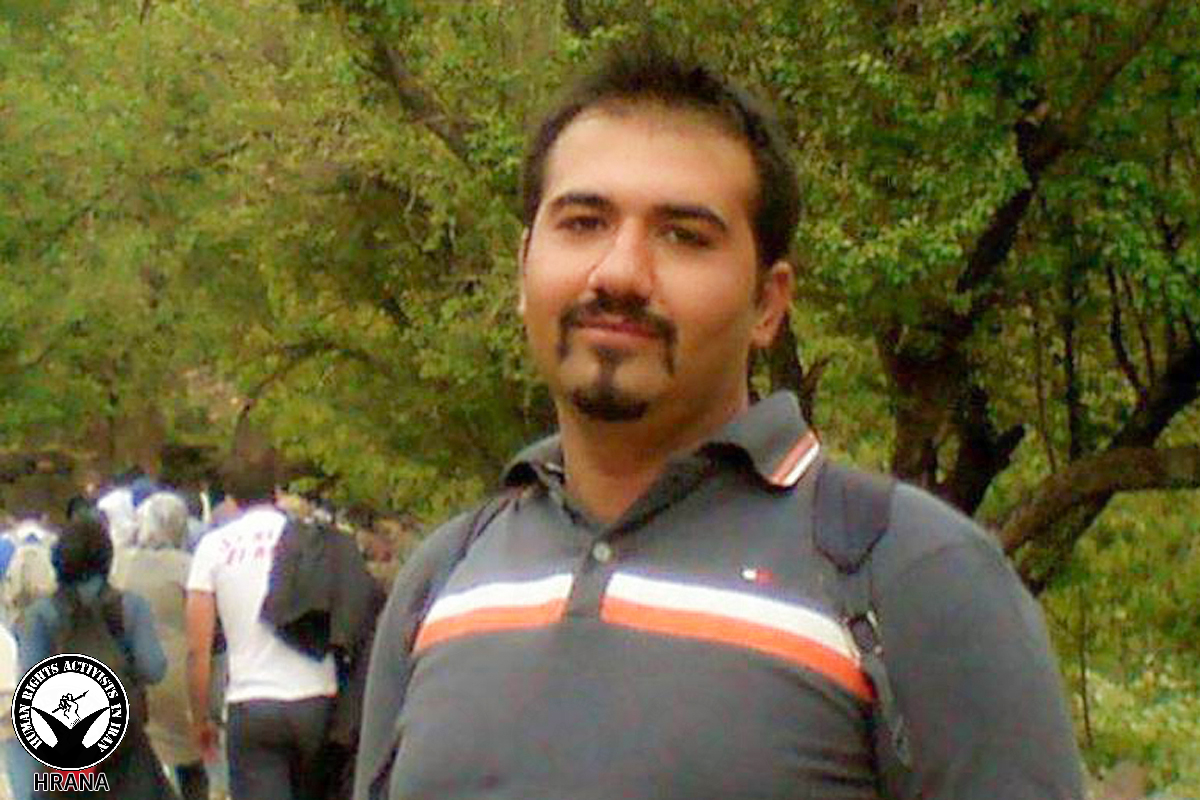
Human Rights Activists News Agency (HRANA)- Family friends Zanyar and Loghman Moradi, two prisoners on death row in Rajai Shahr (Gohardasht) Prison of Karaj, were separately summoned from their respective wards on Wednesday, September 5th on the pretext of a meeting with the prison’s director. Instead, it is suspected that they have been transferred to a ward controlled by the Islamic Revolutionary Guard Corps (IRGC). Hours after the transfer, the prison telephone system inexplicably went dead.
The circumstances of their transfer felt all the more dubious the next day when, according to one of the prisoners’ family members, their families received a strange phone call: “Thursday, September 7th, an individual identifying himself as a ‘prison official’ called [us] asking [that we] come to the prison for visit. We are en route to Rajai Shahr [30 miles west of Tehran] in hopes of obtaining an update on these two members of our family.”
While this “prison official” gave no indication that the prisoners were scheduled to be executed, [a history of community experience with such circumstances gives the family reason to suspect] that the invitation to visit may very well be their last. Nonetheless, the family stores hope in their continued efforts to commute the family friends’ sentences and stay their execution.
Zanyar and Loghman Moradi were sentenced to death on December 22, 2010, on charges of “Moharebeh” (“enmity against God”), both accused of membership in Komeleh, a Kurdish opposition group, and for involvement in the July 5, 2009 murder of a Friday prayer Imam. [While their charges of membership in a Kurdish opposition party were tried in a revolutionary court, the Supreme Court ruled to direct their case to criminal court because their convictions and sentences were ultimately based on murder charges.] Both defendants previously announced that their confessions to murder were extracted under duress, intimidation, and torture at the hands of their interrogators.
Their most recent trial took place more than four years ago in the criminal court of Tehran, which, citing insufficient evidence and incomplete investigation of the case, forwarded their dossier multiple times to the authorities of Marivan (in the Kurdistan province) requesting they address its flaws.
Without accounting for all of the said deficiencies, Marivan court sent back the case, which has yet to be retried. Given the lack of concrete evidence against them, both prisoners would presumably be acquitted in a retrial; yet despite repeated requests from the defendants’ families for follow-up, and notwithstanding the courts’ legal responsibility to prevent unreasonable delays in criminal procedure, judicial authorities remain mum on the prospect of when–or even if–the Moradis might anticipate a more complete review of their case. The prisoners thus wait in a state of suspense over their fate, a wait which has grown more fraught with mounting concerns for their health.
Human rights organizations have been vocal in their opposition to the lack of due process and appropriate legal procedure that judicial authorities have thus far displayed in the Moradi case.
In May 2017, the Moradis wrote an open letter (1) to draw public attention to their case, their ordeal, and what they allege are false accusations constructed against them by security organizations.
On July 18, 2018, Zanyar Moradi’s father was assassinated by three gunshots in Panjovin, an Iraqi Kurdistan town near the Iranian border. His history of political activity, coupled with previous attempts on his life, raised suspicions that Iranian security forces were involved in his death.
Ramin Hossein Panahi

Ramin Hossein Panahi is on death row for similar political charges, i.e. ties to an opposition group similar to that of the Moradis. Parallels between the two cases and a lack of phone contacts from Rajai Shahr where he is currently being held in solitary confinement have heightened fears that Hossein Panahi, too, faces imminent execution.
Earlier this week, the Islamic Republic Judiciary executed three political prisoners in Zahedan (in southeastern Iran, home to the Baloch minority) in vindictive response to armed clashes that broke out between Iranian security forces and an armed opposition group.

Nasrin Sotoudeh’s charges: A closer look

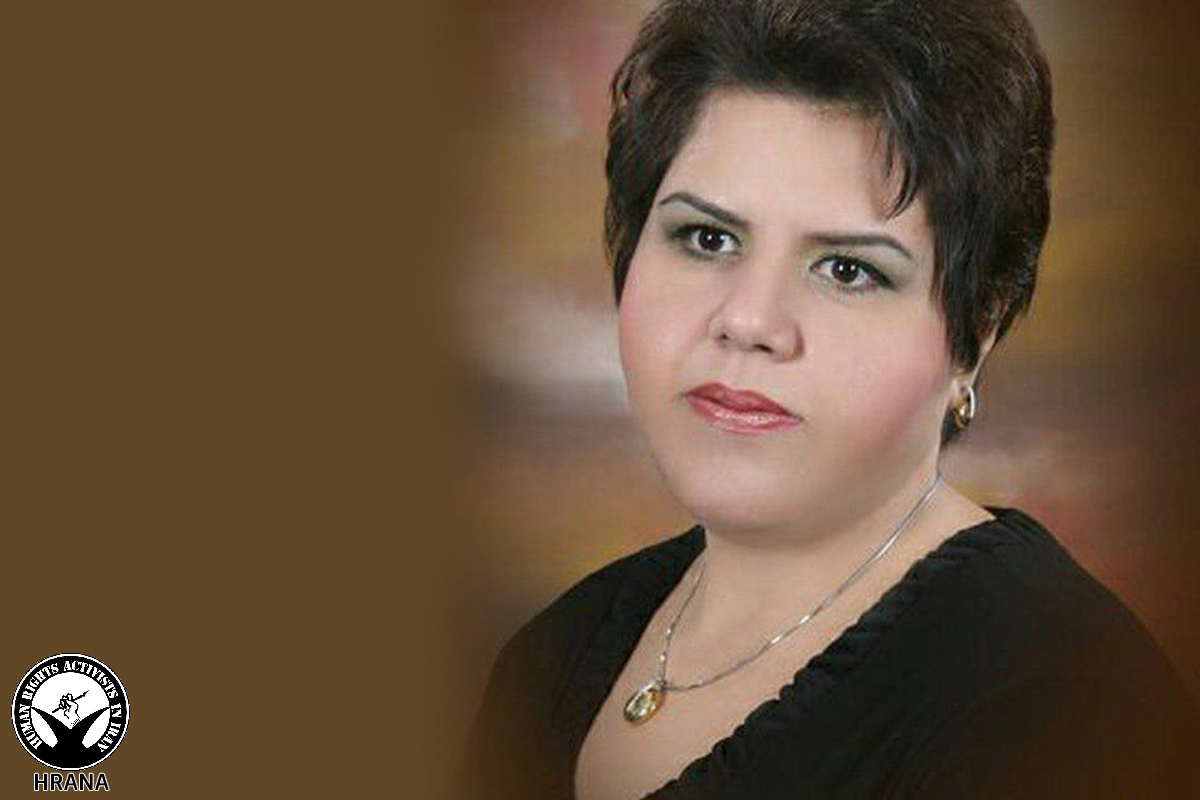
Human Rights Activists News Agency (HRANA) – Human rights lawyer and activist Nasrin Sotoudeh, who is entering the second week of her hunger strike, has been imprisoned since June 14th, 2018 in Tehran’s Evin Prison.

Sotoudeh’s temporary detention warrant has been renewed twice in this 86-day stretch. She did not post the bail granted to her and remains in custody in the Evin Prison women’s ward. Her husband Reza Khandan, who had been publicly supporting her on social media, was arrested himself on September 4th.

Summary of Current Proceedings

According to lawyer Payam Dorafshan, who himself was imprisoned from August 31st until his release on September 6th, Sotoudeh is being held on three counts:

· A five-year sentence on an espionage charge that didn’t figure in her indictment
· An unspecified charge from a court investigator in Kashan (a city located in central Iran)
· An arrest warrant by Branch 2 of the Interrogations Unit

Sources close to Sotoudeh believe she has been arrested for carrying out her responsibilities as an attorney by defending the rights of those charged for protesting mandatory veiling.

Sotoudeh’s husband Khandan revealed in July that his wife was deprived the right to appoint her own legal counsel. Her attorney of choice was rejected by judicial authorities on the basis of a new law which, in cases of those accused of national security crimes, restricts defendants to choose a lawyer from a pre-approved list.

In late July, Sotoudeh was served a charge for which she has already been doled a five-year prison sentence: membership in LEGAM, a Persian abbreviation for the Step-by-Step Campaign to Abolish the Death Penalty in Iran.

In a letter from prison, Sotoudeh then announced that she refused to go to court, an action which, according to Khandan, provoked judicial authorities to bring new charges against her.

An investigator– together with the Assistant Prosecutor and the Evin Prison Director of the Execution of Sentences — visited Sotoudeh’s prison ward on August 25th to “complete the case.” Over the course of their visit, the investigator leveled three new accusations against Sotoudeh: assisting in the foundation of Christian house churches, incitement to hold referendums, and attempts to hold gatherings and sit-ins.

Following the visit, Sotoudeh wrote an open letter to announce her hunger strike, decrying both her own arrest and the pressures that judiciary authorities are reportedly placing on her family, relatives, and friends, e.g. the arrest of civil rights activist Farhad Meysami and the search of her own home as well as those of activists Mohammad Reza Farhadpour, Zhila Karamzadeh Makvandi, and her sister-in-law.

Her temporary detention warrant was renewed the second time on September 1st. Three days later, her husband Reza Khandan was arrested in his home by security forces after refusing to respond to a telephone court summons, allegedly from the Intelligence Bureau, that he had exposed as unlawful on his social media account.

Khandan was later charged in Branch 7 of Evin Prison Court with “Collusion against National Security,” “Propaganda against the regime,” and “Propagation of unveiling in public”. With a bail set at 700 million IRR (approximately $50,000 USD), he joined his wife in Evin Prison, albeit in a different ward. The couples’ children are now without a guardian.

International Reaction

Sotoudeh’s arrest in June incited lawyer and Nobel Peace Prize laureate Shirin Ebadi to write a protest letter to Javaid Rehman, UN Special Rapporteur on the situation of human rights in Iran, asking him to use all the legal means at his disposal to fight for Sotoudeh’s release.

Amnesty International issued a statement July 5th declaring that Sotoudeh was being persecuted “in connection with her work as a lawyer defending women who have peacefully protested against compulsory veiling (hijab). She is a prisoner of conscience.”

On September 4th, 2018, after the arrest of her husband and the announcement of her hunger strike, Amnesty International issued another statement:
“The Iranian authorities must immediately and unconditionally release both Nasrin Sotoudeh and Reza Khandan…The international community, including the EU, must do everything in their power to expedite the release of these two human rights defenders.”

Philip Luther, Amnesty International’s Research and Advocacy Director for the Middle East and North Africa, was emphatic in his defense of Sotoudeh, stating, “first the authorities jail Nasrin Sotoudeh on bogus charges, then harass, intimidate, and threaten her family and friends, and now arrest her husband. These callous actions illustrate the lengths to which Iranian authorities will go to silence human rights lawyers, even targeting their families” (2).

Nasrin Sotoudeh’s Background

Nasrin Sotoudeh Langroudi was born on June 9th, 1963 in Tehran, Iran. She is a legal expert, licensed lawyer, and social activist with a master’s degree in International Law. She has actively participated in several civic campaigns and associations, such as the Defenders of Human Rights Center, One Million Signatures Campaign to Change Discriminatory Laws Against Women, the Step-by-Step Campaign to Abolish the Death Penalty, and the Child Rights’ Protection Association. She has represented many victims of child abuse, as well as human and women’s rights activists and juvenile offenders facing the death penalty. Sotoudeh has frequently been lauded as a human rights champion and is a recipient of the EU’s Sakharov Prize for Freedom of Thought.

With her husband Reza Khandan, she has a daughter, Mehraveh, and one son, Nima.

Sotoudeh was previously arrested in August 2010, when she was issued an 11-year prison sentence, 20-year travel ban, and 20-year ban from practicing law. She appealed the sentence to six years in prison with a 10-year ban on practicing law. She spent September 4th, 2010 to September 18th, 2013 in Evin Prison on charges of “Acting against national security.” Immediately upon her release, her licence to practice law was revoked for three years. In response, she staged a sit-in before the Iranian Bar Association building. Joined in support by several other lawyers, the sit-in resulted in the restoration of her licence.

Prisoners in Iranian Baluchestan Brutally Tortured by IRGC Intelligence Unit

Human Rights Activists News Agency (HRANA) – At the hands of the Islamic Revolutionary Guards Corp’s Saravan Intelligence Unit, at least seven detainees have recently been subjected to torture.
HRANA has identified two of these victims as Najib Dehvari, 21, and Abdolshokur Sotoudeh, 22, both from Saravan. Saravan is a city in Iran’s southeastern Sistan & Baluchestan Province, home to the Baloch ethnic minority group.
Dehvari, Sotoudeh, and their comrades were initially arrested in connection to a sound bomb that went off in front of the Ministry of Intelligence Bureau in Saravan. There were no casualties. They were held in the IRGC Intelligence Detention Center before being transferred to Ward 1 of Zahedan Prison in the province’s capital city.
A source familiar with the case told HRANA that the seven were religious seminary students who confessed after enduring prolonged beatings and torture. The source added, “they were interrogated during the night, lashed with electrical cables shocked with electricity. The wounds are still visible on the soles of their feet, and they are unable to walk.”
The torture of prisoners by IRGC Intelligence Units and the Ministry of Intelligence is more widespread in Baluchestan than in other regions of Iran. In a technique commonly exerted by these centers, called the “miracle bed,” the prisoner is tied to a bed frame and repeatedly flogged with the goal of extracting a confession. Historically, prisoners often utter confessions to put an end to the torture, rather than authentically confess to a crime.
Massoud Ghanbarzehi, another prisoner was detained on charges of “Acting against national security through cooperation with opposition groups” back in June, was interrogated and tortured while being held for three weeks in a Zahedan Ministry of Intelligence detention center before being transferred to Zahedan Central Prison.
Three additional Intelligence Center detainees who previously reported on their torture–Mohammad Saber Malik-Raeisi, Abdulkarim Shah Bakhsh, and Noor Ahmad–shared accounts of the various torture methods they endured, among them the “miracle bed” technique.

Charges Evolve against Hunger Striking Civil Rights Activist

Human Rights Activists News Agency (HRANA) – Farhad Meysami, a civil rights activist who has been held in Evin Prison since July 31st and declared a hunger strike the next day, now faces a new charge: “Assembly and collusion to disturb national security.”

Meysami, who has lost a significant amount of weight and suffers from low blood pressure, announced that he will resort to a liquid-only hunger strike. He explained his strike was a protest of the arrest of Reza Khandan, husband of imprisoned human rights lawyer Nasrin Sotoudeh, earlier this week, as well as the authorities’ interrogation and home searches of civil rights activists Mohammed Reza Farhadpour and Zhila Karamzadeh Makvandi.

A source close to Meysami told HRANA that “despite visits from officials who attempted to persuade him to end the strike, such as the Assistant Prosecutor, the prison ward director, the prosecutor’s representative, and Director General of the detention centre Mr. Chahrmahali, Meysami is determined to continue. He will only be ingesting his colitis medication, as he has been doing for past 18 years.”

The source added that Meysami “would only end his hunger strike if Reza Khandan is unconditionally released.”

The same source indicated that Meysami, who is being held in Ward 209 of Evin Prison, was taken to Branch 7 of Evin Court on September 3, 2018, where he learned the charges and evidence against him had evolved. Court officials announced that day that he was being charged with “Assembly and collusion to disturb national security,” for– according to the investigator–a campaign Meysami was organizing with Nasrin Sotoudeh and Iranians living abroad. Other charges included “Propaganda against the regime,” brought in relation to a speech Meysami gave at Isfahan University and articles he had published. Meysami also faces the charge of “Propagation of corruption and decadence,” a charge thought to stem from his possession of a pin-back button that reads “I protest mandatory veiling.”

HRANA previously reported on Meysami’s arrest and interrogation ordeal. His interrogators have referred to him as a “Teacher of Civil Disobedience.”

Authorities Unforthcoming on Status of Sunni Prisoner

Human Rights Activists News Agency (HRANA) Since Sunni prisoner Hafiz Tawhid Quraishi was taken in ambiguous circumstances last month to the Detention Center of the Ministry of Intelligence, his family has remained in suspense over his wellbeing.

An informed source told HRANA that Quraishi’s wife and father were insulted and thrown out of Evin Prison’s Prosecution Office when they attempted on September 1st to arrange a visit with him there. “Prison officials told Quraishi’s family that he didn’t have the right to visits,” the source added.

Quraishi had five months left of his sentence at Rajai Shahr Prison in Karaj when around 80 of the prison’s Special Forces, accompanied by intelligence officers, launched an attack on the Sunni quarters of the prison (Hall 21 of Detention Center 7), injuring a number of prisoners and destroying or confiscating their personal property.

An informed source confirmed that Quraishi was then transferred to Evin Prison’s Ward 209, where the Ministry of Intelligence Detention Center is housed.

The radio silence from authorities thus far on Quraishi’s case has his family concerned about his fate, and the possibility that authorities are working to prevent his release by developing another case against him.

Mawlavi Hafiz Tawhid Quraishi, a resident of Talesh, was arrested in September of 2014 and tried one year later. He was initially sentenced to ten years’ imprisonment, which was reduced to seven years in an appeals court.

Subscribe to Our Newsletter

Now is definitely not the time to stop reading!

Ex-IRGC Member Sentenced to Death in Urmia

Human Rights Activists News Agency (HRANA) – HRANA reports that ex-member of the Islamic Revolutionary Guards Corps (IRGC) Arsalan Khodkam received news last week that he is to be sentenced to death on charges of spying for a Kurdish opposition party. Khodkam, who served the IRGC of the West Azerbaijan Province, has appealed the sentence.

Khodkam was arrested in late March by IRGC’s intelligence unit and is currently in Section 3-4 of Urmia Prison. He claims to have been tortured during his interrogation.

A source close to Khodkam revealed that the married 50-year-old resides in the city of Mahabad. He is among a group of former Kurdistan Democratic Party (KDP) members who changed loyalties during the 1990’s by joining the IRGC. After 16 years with the IRGC, he has been issued the death penalty for his alleged connections with the KDP; specifically, he stands convicted of “Cooperation with anti-regime political parties by espionage.”

Three Azerbaijani Activists Taken into Custody

Update: On September 6th, Ulduz Ghasemi was released on a bail of 500 million rials (approximately $4,000 USD).
Human Rights Activists News Agency (HRANA) Ulduz Ghasemi, Rahman Ghasemi, and Sahand Ma’ali, Azerbaijani Turkic minority rights activists from the cities of Urmia and Sarab, were apprehended today by local security forces.
Ulduz Ghasemi and Rahman Ghasemi had previously been summoned by security agents of Urmia’s Noh Pele Quarter and interrogated there by security forces. While both Ulduz and Rahman were summoned and interrogated, only Ulduz was taken into custody.
A credible source told HRANA that plainclothes forces went to Ulduz’s mother’s house, seizing a number of books, a laptop, and a mobile phone. According to the source, Ulduz and Rahman were interrogated for visiting relatives of one of those killed in protests that took place in Azerbaijan in 2006.
Ulduz was also among a number of activists arrested on May 26th of this year in the West Azerbaijan province, in connection to their participation in a commemoration gathering at Naqade County’s Golzaar cemetery. The gathering was in honor of those who had died in the 2006 protests.
Both Ulduz and Rahman were later arrested again after taking part in the Babak Fort celebrations on July 7th of this year. They were released five days later.
Meanwhile, Sahand Ma’ali faces a 10-month suspended prison sentence from the Revolutionary Court of Sarab County. Presided by Mehdi Shams, the court convicted Ma’ali of “Propaganda against the regime.” Ma’ali was among a group of regional activists who were arrested at Fort Babak gatherings on July 6.
Fort Babak, a monument built during the pre-Islamic Sassanian period, is named after Babak Khorramdin, known for leading an uprising against the Abbasid caliphate in 893. In recent years, it has become a place of symbolic gathering for Azerbaijani activists, especially during the annual commemorations in the first week of July.

Two Saravan Residents Transferred to Zahedan Prison after a Month of Interrogation

Human Rights Activists News Agency (HRANA) – After being read their charges, two residents of Saravan (Sistan and Baluchestan Province) who were previously arrested by security forces and transferred to the Islamic Revolutionary Guard Corps (IRGC) Intelligence Detention Center, were transferred to Ward 1 of Zahedan Central Prison.
HRANA has confirmed the identities of the detainees as Najib Dehvari, 21, and Abdolshakur Sotoudeh, 22.
An informant confirmed the news to HRANA, adding, “Both were arrested and interrogated on charges of ‘Acting Against National Security’ in connection with a sound bomb that went off in front of Saravan’s Intelligence Ministry last month, which incurred no casualties.”
Although several others are likely to be arrested and transferred to prison in connection with this case, no further information is currently available.
On August 31, 2018, HRANA published a report on the transfer of Abubakr Rostami, another political prisoner on death row, from an IRGC detention center–where he was sequestered for two days–to the General Ward of Zahedan Prison. No information is available on the reasons for his transfer. *

End Draws Near for Zahedan Death Row Prisoner

Human Rights Activists News Agency (HRANA) – After 11 years of confinement, a Zahedan prisoner on death row for murder charges has been transferred today, September 5, 2018, to solitary confinement per protocol for detainees whose execution is imminent.

HRANA has confirmed the prisoner’s identity: Mehdi Sarani, 37, of Zabol. He is now in Ward 4 of the Central Prison of Zahedan (capital of the southeastern province of Sistan & Baluchestan and home to Baluchi minority).

According to Amnesty International’s annual report, Iran ranks first in the world in executions per capita.

An annual report published by the Center of Statistics at Human Rights Activists in Iran (HRAI) states that more than 60% of executions in Iran are not reported by the state or the Judiciary. These executions are referred to as “secret executions.”

According to registered data from 2,945 reports by the Statistics, Publications, and Achievements Division of HRAI, in the past year (from March 21, 2017, to March 18, 2018) at least 322 citizens were executed and 236 others were sentenced to death in Iran. Among these were the executions of four juvenile offenders and 23 public hangings.

Update on Mostafa Daneshjoo: Evin Prison Authorities Won’t Budge on Medical Blockade

Human Rights Activists News Agency (HRANA) – Mostafa Daneshjoo, an attorney, is currently serving prison time for his legal advocacy and defense of the Gonabadi Dervishes, a religious minority. These days, Daneshjoo is sacrificing more than his freedom: he is now being forced to sacrifice his health.

Daneshjoo, despite suffering from acute lung and heart disease, has been barred access to medical attention of any kind since he was arrested on July 7, 2018.

According to Majzooban Noor, the Gonabadi Dervish Community News Website, when Daneshjoo was first detained, his family was cut off from contact with him for months. When they were finally permitted to see him in Ward 4 of Evin Prison, their relief was mingled with shock at the sight of his severely declining health.

Mostafa Daneshjoo is the former managing director of the Majzooban Noor website. While the clinic at Evin Prison has Daneshjoo’s medical file on hand, authorities–citing Daneshjoo’s prior arrest–are preventing him from seeking help, even from the generalists at the Evin Prison Clinic.

Daneshjoo was arrested in his mother’s home by seven armed officers in the early morning of July 7th. After spending 45 days in solitary confinement in Ward 209 of the Ministry of Intelligence detention center, he was transferred to Evin’s Quarantine Ward before being taken to Ward 4, typically reserved for prisoners with financial charges. Daneshjoo, who is asthmatic, experienced a sharp increase in symptoms after spending 45 days in a solitary cell without ventilation. While he was taken to Taleqani Hospital on July 21st, he was turned away without receiving care within a few hours.

Daneshjoo’s case file indicates that his current arrest warrant was issued by Branch 3 of the Shahid Moghaddas Prosecutor’s Office in Evin Prison. In a phone conversation at the time, he explained he was being pursued by authorities for his affiliation with the Dervishes who were involved in the Golestan Haftom incident. Authorities have reportedly wielded further punitive measures against him, according to a letter published in May 2017 by the Azad University Security Office, which announced that Daneshjoo was being prevented from pursuing his graduate studies in Penal Law and Criminology.

During prior defense proceedings of a number of Gonabadi Dervishes, following punitive reports from Iranian security agencies, Daneshjoo’s licence to practice law was revoked. He was sentenced — along with other attorneys, Dervish advocates, and his Majzooban Noor co-managers– to imprisonment on charges of “Membership in the Dervish anti-security sect,” “Acting against national security,” “Propaganda against the regime,” and “Disrupting public opinion.” Between 2011 and 2015, he served his sentence in Ward 350 of Evin Prison and was released in May 2015.