Crackdown on Women’s Rights Activists Continues: Najmeh Vahedi held on ghost charges for 11 days running

Human Rights Activists News Agency (HRANA) – Since women’s rights activist Najmeh Vahedi was arrested 11 days ago, her family has been struggling to learn more about the reasons behind her arrest on September 1st.

In a brief interview with HRANA, Najmeh’s brother Reza said, “In a one-minute phone conversation with my sister on Tuesday September 4th, she was only able to tell us that she didn’t know her charges or why she had been arrested. We keep inquiring [with authorities], and are getting anxious because it’s been 11 days and we still don’t know what’s going on.”

Najmeh Vahedi earned a BS in sociology from Tehran Allameh University and an MS in sociology from Tehran Alzahra University. She is now in her third semester of Women’s Studies at Tehran Allameh Tabatabai University.

On September 3, 2018, HRANA published a report on the detention of this women’s rights activist by security forces at her home.

Over the past few weeks, civil rights activists–especially women’s rights activists–have been pursued by authorities with a renewed fervor. Women’s rights activist Rezvaneh Mohammadi and women’s rights activist and attorney Hoda Amid were among those detained recently.

Vahedi and Amid had reportedly held educational training workshops for women inquiring about their rights in marriage contracts. At the time of this report, no further information was available on their respective charges, nor on the conditions facing them in custody.

Human Rights Watch issued a statement on September 5th of this year asking Iranian authorities to stop the repression of human rights defenders like Amid and Vahedi and to immediately release those who are in custody for peaceful expressions of dissent.

Amnesty International also voiced their opposition to this civil crackdown last week, demanding that affected prisoners be immediately released and that defendants not be limited to a list of regime-designated attorneys.

Death Row Juvenile Offender Stages Hunger Strike from Solitary Confinement

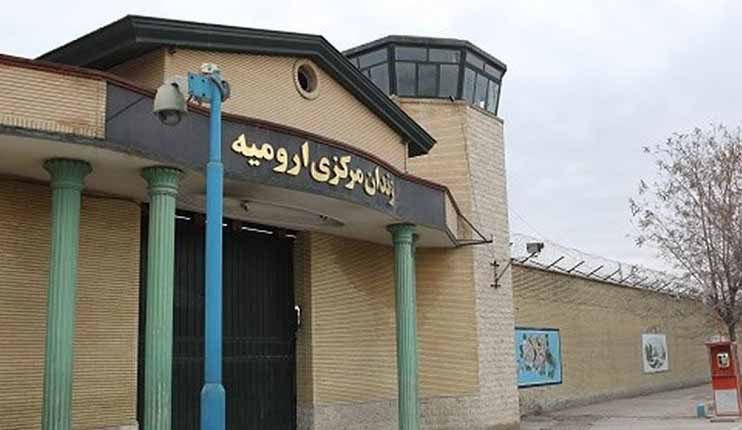
Human Rights Activists News Agency (HRANA) – Bahauldin Ghasemzadeh, a juvenile offender sentenced to be executed in Urmia Prison who was physically assaulted and transferred to a solitary cell on September 11th, has started a hunger strike in protest.

An informed source confirmed that Ghasemzadeh was transferred and beaten for complaining about authorities’ neglect of his and his brothers’ medical needs. First Ghasemzadeh was barred from hospital visits for his ulcers and spinal cord damage. Then, when he wanted to provide care to his paralyzed brother Davoud, who is also on death row, authorities told him “no.”

“Ghasemzadeh was regularly visiting and tending to his disabled brother at the prison clinic,” the source added. “Yesterday, the head of the prison informed him that he is not allowed to do so any more.”

On June 12, 2018, HRANA reported on the deplorable conditions of Bahauldin and Davoud Ghasemzadeh, two imprisoned brothers on death row who both suffer from spinal cord damage. The report stated that the brothers had developed infections in their feet secondary to these injuries, exacerbating their physical ailments. When prison authorities refused to send the two for outside medical care, the brothers requested their executions be carried out as soon as possible.

As previously reported by HRANA, the two were supposed to be transferred to another prison on April 1, 2018. However, as of the date of this report, high ranking prison officials have prevented the transfer.

Prisoners at the Central Prison of Urmia continue to suffer from a lack of medical attention due to a shortage of medical personnel on site. As of March 20, 2018, the beginning of the Iranian calendar, the deaths of at least five prisoners have been attributed to inadequate medical help.

Background on Death Row Prisoners Bahauldin and Davoud Ghasemzadeh

A source close to the Ghasemzadeh family told HRANA of the brothers’ backgrounds and history with authorities.

According to the source, Bahauldin was 17 when him and Davoud were arrested on charges of murdering two individuals in a tribal conflict. When the charges were formalized one year later, Bahauldin absconded from court and fled to Iraqi Kurdistan.

Bahauldin’s spine was injured in a severe beating by authorities upon his coerced return to Urmia.

“Security officers arrested his sister, mother, and other brother, transferring them to the Urmia Prison,” the source said. “They told him his family members wouldn’t be released until he came back. When he did one month later, he was physically assaulted and sustained the damage to his backbone and spinal cord.”

Both Davoud and Bahauldin are currently on death row. Davoud, the elder Ghasemzadeh, is now completely paralyzed and is held at the prison clinic full-time. Their other brother Javad was executed in Urmia in 2013 on a separate murder charge.

Prisoners at the Central Prison of Urmia continue to suffer from a lack of medical attention due to a shortage of medical personnel on site. As of March 20, 2018, the beginning of the Iranian calendar, the deaths of at least five prisoners have been attributed to inadequate medical help.

January Protests: Third Day of Hunger Strike for Prisoner Mahin-Taj Ahmadpour

Human Rights Activists News Agency (HRANA) – Mahin-Taj Ahmadpour, a political prisoner being held at Nashtaroud Prison of Tunekabon, has been on hunger strike for three days.

For her participation in the January protests in Tunekabon, Ahmadpour was sentenced in the city’s Revolutionary Court, and Branch 101 of its Penal Court, to 10 months in prison. She has been serving her sentence since August 14, 2018.

Ahmadpour declared hunger strike on Monday September 10, 2018 in protest to a lack of medical attention, authorities’ refusal to allow her access to the prison phone, and of prison authorities, who have reportedly threatened to develop a new case file against her.

An informed source elaborated to HRANA, “When they didn’t let Ahmadpour use the phone, it led to an argument. Instead of escalating the matter for handling by authorities, Mrs. Sha’bani the guard got involved, insulting the prisoner and threatening to get prison and security authorities to pursue further charges against her.”

One day after the incident, the guard told Ahmadpour that a new case file had been opened against her, charging her with blasphemy, even while the content of Ahmadpour’s altercation with Sha’bani was reportedly limited to their disagreement over use of the phone.

The source added, “Ahmadpour is anemic, and is supposed to receive seven units of blood every month. Due to her anemia, she has a high chance of developing leukemia and has to receive regular monthly injections as a preventative measure. Despite these conditions and supporting medical documentation, the prison authorities have not permitted her to be transferred to the hospital for her treatments.”

Mahin-Taj Ahmadpour is a 46-year-old resident of Tunekabon. A peddler by trade, she was arrested along with 14 other residents during the January 2018 countrywide rallies known as the January Protests. The Revolutionary Court of Tunekabon sentenced eight of these arrestees to 28 months’ imprisonment, divided among the defendants. Branch 101 of Criminal Court No. 2 of Tunekabon, presided by Judge Ebrahimi, also sentenced six of the arrestees to 24 collective months of prison time.

Ahmadpour was sentenced May 2, 2018 in Branch 101 of Tunekabon Criminal Court No. 2 to serve six-months prison sentence on a charge of “disrupting the public peace through participation in an illegal gathering.” On August 11, 2018, Tunekabon’s Revolutionary Court compounded the sentence with four months’ imprisonment for “propaganda against the regime.” As evidence against her, the court cited a combination of law enforcement reports and images and video taken during the January protests in Tunekabon.

Tensions Mount over Unlawful Execution of Three Kurdish Political Prisoners

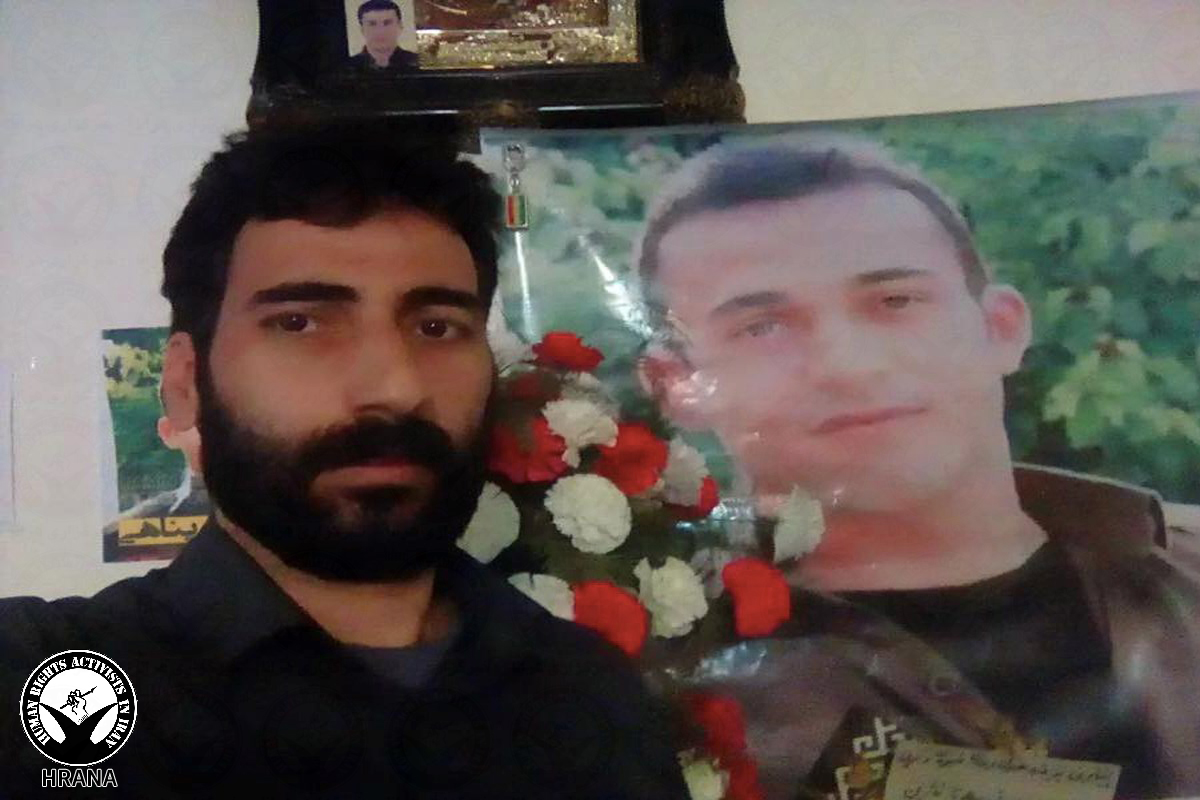
Human Rights Activists News Agency (HRANA)- Shock, sorrow, and censure over the executions of Zanyar Moradi, Loghman Moradi, and Ramin Hossein Panahi continue to pour in from both international institutions and Iranian citizens in-country, further straining relations between Iranian authorities and the human rights activist community at large.
A number of Kurdish opposition groups have sounded the call to strike to Kurdish regions of Iran, inviting fellow Kurds to protest their comrades’ executions.
Michelle Bachelet, United Nations High Commissioner for Human Rights, has stated, “I deeply deplore the executions last week of three Iranian Kurdish prisoners despite the serious concerns raised by Special Procedures mandate holders that they were not afforded fair trials, and were subjected to torture.” Philip Luther, Amnesty International’s Research and Advocacy Director for the Middle East and North Africa, has also condemned these executions.
Imprisoned civil rights activist Atena Daemi was among a number of imprisoned civil rights activists publishing separate letters expressing sorrow and outrage over the men’s deaths. Golrokh Iraee and Human Rights Lawyer Nasrin Sotoudeh, two more imprisoned activists, wrote and published their own messages of protest and sympathy, with Sotoudeh likening their executions to the *political massacres of 1988.
Some of these letters have reportedly incited blowback from prison authorities, who have subjected Daemi and Iraee to repeated non-routine body searches after their letters were published. When these women inquired about the reason for the searches, they learned the order for frisking had been issued by the Prison’s Director. A Prosecutor Assistant has since promised to investigate.
Excerpts from the letters of Sotoudeh and Iraee, translated into English by HRANA, are below.
Nasrin Sotoudeh:
“The judicial system has executed three Kurdish compatriots. Our Kurdish compatriots have been plagued by oppression for decades. The verdict and sentences of the Revolutionary Court, condemning these three compatriots to die, was the product of an unlawful process that runs counter to Human Rights principles and the laws of the Islamic Republic. In at least one of these trials, had due process been respected, the defendant may very well have been acquitted.
Zanyar and Loghman Moradi were on hunger strike when they were hanged, another testament to the inherent brutality of the judicial system, who itself is supposed to protect us from violence.
I extend my condolences to our Kurdish compatriots, who have had a steadfast, crucial presence in the cultural promotion of Iran; to all Iranians; and, in particular, to the families of Moradi, Moradi, and Panahi. I hope that in heeding the diverse manifestations of Iran’s judicial violence, the urgent need to renounce all forms of it will become clear.”
Golrokh Iraee
“[Their death] invites the wrath of Kurdistan’s Children […] Zanyar Moradi, Loghman Moradi, and Ramin Hossein Panahi, freedom fighters, Kurdistan’s immortal resistance, teachers of patience and persistence, have left behind a lesson in determination. They were hanged while on hunger strike, in protest of their mistreatment at the hands of authorities; they stood up to the monsters of despotism and reactionarism.
They unmasked those traitors who call themselves statesmen and rulers. Let it be known that the time for lip service has passed. To hold them accountable, we must act.”
****
After being hanged to death in an undisclosed location in Tehran on September 8th without notice to their lawyers, the bodies of the Moradis and Hossein Panahi were *confiscated by the Iranian authorities. The Ministry of Intelligence has since threatened the men’s surviving family members.
Ahmad Amouee, journalist and former prisoner of conscience, published an account of the Moradi and Moradi families’ visit to Tehran’s main cemetery, Behesht-e Zahra, where officials had summoned them to bid farewell to their sons’ bodies. Their final resting place remains unknown.
* In the summer of 1988, on the orders of Ayatollah Khomeini, the Supreme Leader of Iran at the time, thousands of prisoners of conscience and political prisoners were executed after inquisition-style interrogation sessions. Almost all of these prisoners had already been tried and were either serving their sentence or, having completed their sentence, were awaiting release. All were buried in unmarked, often secret, mass graves.

Mother of Narges Mohammadi Pleads with Prison Officials: “Give her one hour at her father’s side”

Human Rights Activists News Agency (HRANA) – Currently imprisoned at Evin, civil rights activist and Vice President of Defenders of Human Rights Centre (DHRC) Narges Mohammadi is being championed by her mother, Ozra Bazargan. Worried that her daughter might never see her ailing father again, Bazargan pleads Mohammadi’s case for temporary release in a letter addressed to Tehran’s Prosecutor General.

The text of Bazargan’s letter, sourced from DHRC and translated into English by HRANA, is below:

Dear Mr. Jafari Dolatabadi, Tehran Prosecutor General,

Why won’t you agree to Narges’s furlough? How far will you take this injustice against my daughter?

We are in the fourth autumn of our family’s separation. Narges’s father, who is 85 years old, suffers from a cardiac disease and high blood pressure. We have seen Narges four times in as many as years, as our poor health prevents us from traveling to Tehran where our beloved daughter is held. The Evin Prison officials can attest to this.

Last year, Narges’s father suffered from three horrific heart attacks. Fearing she would never again see her father alive, Narges was ready to make the trip to see her him in the ICU–with guards present–for only an hour. And officials wouldn’t even grant her that.

Narges is being kept from her two children, her husband, and her father, all while looters, embezzlers, and society’s high crooks walk free, sit comfortably at home, or– if they’re in prison– enjoy perks from the Judiciary and security forces. An intolerable discrimination underlies this.

We have witnessed the temporary release of prisoners whose lives were affected by tragic events. The last of these was Abdolfatta Soltani [who was only granted furlough in the wake of his daughter’s sudden death]. I fear that my daughter will have to wait for a tragedy, too.

My daughter did not deserve a ruthless 22-year prison sentence at the age of 44. I cannot bear to think of it, let alone of the conditions she’s in: bereft of seeing her loved ones, deprived of medical care, cut off from the cures to her many ailments. I hear that my daughter struggles with aches and pains that she is keeping from us, to spare us the worry. You and your assistants, on the other hand–you know about her pain firsthand. I am told that she suffers through days without getting care. In tears–in cries–I lift my grief to heaven and I ask God for justice.

As a mother and a member of a family of activists, I am weary of the fight against oppression. I condemn this injustice and cruelty oppressing my daughter. I request that authorities consider the length of my daughter’s long sentence, and grant her this furlough. And if you still are resolute on restricting my daughter, send guards along. Give her one hour at her father’s side, so that he might find peace at the sight of his beloved daughter.
Ozra Bazargan
Narges Mohammadi’s mother

* According to her lawyer Mohamoud Behzadirad, Narges Mohammadi has served 6 years and 4 months of her prison sentence, and has 3 years, 8 months left ahead. “She is eligible for conditional release, but the request for that release has yet to be approved,” Behzadirad said.

HRANA reported August 13th, 2018 on Mohammadi’s transfer to Imam Khomeini hospital following a deterioration in her health condition, one week after prison officials had barred her from seeing a neurologist. Earlier, on June 30th, she spent almost a week away from prison while undergoing eye surgery.

Mohammadi was issued a 16-year prison sentence in 2016, 10 years of which were for her role in LAGAM (the Step-by-Step Campaign to Abolish Death Penalty in Iran). The court equated her LAGAM affiliations with “association with the aim to threaten national security.”  Mohammadi later stated that her trial judge had displayed an openly hostile attitude towards her, and seemed adamant about backing the charges against her from the Ministry of Intelligence. She also stated that the judge likened her campaigns against the death penalty as attempts to warp divine law.

The other 6 years of Mohammadi’s sentence were on charges of “assembly and collusion against national security” and “disseminating propaganda against the regime,” both in connection to her peaceful civic activities, including: interviews with the media about human rights violations, participating in peaceful assemblies before prisons, supporting the families of death row detainees, contacting fellow human rights activist and Nobel Peace Laureate Shirin Ebadi, participation in peaceful assemblies in protest of acid attacks, and meeting with Catherine Ashton (at the time the EU’s High Representative of the Union for Foreign Affairs and Security policy) in 2014.

Branch 26 of Appeals Court upheld Mohammadi sentence in October 2016. In May 2017, her request for a retrial in the Supreme Court was denied.

Subscribe to Our Newsletter

Now is definitely not the time to stop reading!

Prisoner of Conscience Atena Daemi Rebukes Authorities, Eulogizes Executed Kurds

Human Rights Activists News Agency (HRANA) – From the walls of Evin Prison, detained civil rights activist Atena Daemi has written a letter in response to the executions of Ramin Hossein Panahi, Loghman Moradi, and Zanyar Moradi, three Iranian Kurdish political prisoners who were hanged to death in secret on Saturday, September 8th.
The executions of the Moradis and Panahi drew outrcry from human rights institutions internationally. The attorneys representing them called their convictions and executions — the latter which took place without the mandatory notice to, or presence of, their lawyers — legally ambiguous under both Iranian and international law. Caught unawares, none of the families were present during their sons’ final moments, as the executions were carried out at an undisclosed location in Tehran. The Ministry of Intelligence has since issued detention threats to the family members of the deceased men.
Condemning Iranian authorities for their treatment of the three men, and extending her condolences to their families, Atena Daemi’s letter joins the many voices of outrage over the course of the young mens’ fate. Daemi, imprisoned since 2014, is serving a seven-year sentence for “propaganda against the regime,” “assembly and collusion to act against national security,” and “insulting the supreme leader [Ayatollah Khamenei] as well as the founder of the Islamic Republic, Ayatollah Khomeini.”

The text of Atena Daemi’s eulogy, translated into English by HRANA, is below:
They killed our loved ones, and claim with pride that in doing so they have administered justice.
The “justice” they refer to is not the one represented by Lady Justice holding a fair and balanced scale. It is instead a man — a man with a turban on his head [a cleric], whose forehead bears the mark of the clay which grazes his head during prayers. He is blindfolded, not as a sign of impartiality, but of blindness to the truth. In one hand is a rosary. In the other, a scale suspended by a noose.
These scales are so unbalanced that one tray is a speck in the heavens, while the other is laden with dead bodies dragging it deep into the ground. This “justice” they invoke has been neither seen nor heard in *40 years.
In this troubled time – a time of economic turbulence, poverty, and unemployment – what problem was solved by murdering these three beloved men? Has their killing soothed any of the ailments suffered by the Iranian people?
Your majesties– where is this mania taking you? By deceit and without warning, you led our loved ones to the killing fields. Even in the short lives granted them, you wouldn’t offer them peace. While they were still **hungry and thirsty, you cut their lives short. How it must have incensed you to your core to never see them falter. As you, dry-eyed, pitied them in their walk to the gallows to die for the ideals, their heads were held high, their steps steady…
How insolently you watch our loved ones draw their last breaths! It must burn you to hold them hostage from their families and brand them as terrorists, only to see them rise as steadfast symbols of democracy for the rest of us. For nine years, they showed friendship to inmates of different creeds and beliefs; they were endeared to their fellow prisoners, loved by us, and cherished by the Iranian people.
Before the start of religious months of Moharram and Safar(1) each year, you prepare yourself for mourning with a savage display. Drunk and armed with handguns, you launch into a monologue about Imam Hussein, who, lips dry from thirst, was beheaded by Yazid. What a repugnant contradiction–what abhorrent hypocrisy! You mirror Yazid’s troops, and for the past 40 years, you have tightened ropes around resolute throats, pulled the stool from beneath the feet of persistent and patient youth. You instigate sectarian war between Sunni and Shiites. Then, your pockets brimming with billions, you pretend to be mourning Hussain.
I am sure that you know your savage acts only dig you deeper into public contempt. Your path is one of self-annihilation. Today, you only dug your graves deeper. You did not kill Zanyar, Loghman, and Ramin. You have only endeared them in our hearts, inspiring the world into mourning the true martyrs of our time.
You have tarnished Iran’s standing and dignity in the world. They see us as a terrorist country for the cutthroat, blood-thirsty, and rapacious actions of a select and powerful few. How long and how far will you continue on this road? Dream on about imposing war on your people: they will rise to the challenge again and again. Stop your killing machine. Lift your lead boots from the throats of Iran and Kurdistan.
How tightly you cling to your towering throne, oblivious to the fact that you could tumble from your high horses at any moment to the miry earth below. Throughout history, many who rode high thought of themselves as invincible, only to take refuge in sewage tunnels, where they were tracked down and punished for their crimes.
Iran is a pile of live embers cloaked in a thin layer of ash. Lest your actions arouse the flames that lie beneath.
We congratulate the steadfast families of these martyrs.
Atena Daemi – Evin Prison Women Ward
September 8th, 2018
(1) Months in the Islamic lunar calendar commemorated by Shiite Muslims in mourning of Imam Hussein, the 3rd Shiite Imam, who was killed in battle against Yazid (Imam Hussain has come to symbolize the force of Good while Yazid stands for Evil).
* The Islamic Republic of Iran was founded after the Iranian Revolution approximately 40 years ago
** Zanyar and Loghman Moradi and Ramin Hossein Panahi were all reportedly on hunger strike before they were executed.

Forty Days Later, Whereabouts of Imprisoned Dervish Amin Alizadeh Still Unknown

Human Rights Activists News Agency (HRANA) – The family of Amin Alizadeh–a member of Iran’s Gonabadi Dervish religious minority who was arrested in Tehran on June 29th with fellow Dervish Jalal Mousavi–has now been in the dark about his whereabouts for 40 days.

Alizadeh and Mousavi were arrested amid the “Golestan Haftom” incident in February 2018. The incident, named after the street in Tehran on which it took place, broke out when a gathering of several hundred *Gonabadi Dervishes were violently confronted by Iranian police and plainclothes members of the Revolutionary Guard’s Basij faction outside the residence of their spiritual leader, Noor Ali Tabandeh.

The Dervish community had rallied outside Tabandeh’s residence to prevent his possible detainment, as he has reportedly been placed under extended house arrest by Iranian authorities.

Hundreds of Dervishes were beaten, wounded, and arrested during the Golestan Haftom incident. A similar attack occurred on January 24th after an intervention from security forces on the same street, heightening the sense of fear within the Dervish community.

After their arrests in June, Alizadeh and Mousavi were transferred to Ilam Prison in Iran’s Kurdish region, located over 400 miles west of Tehran. According to Ilam Prison authorities, Alizadeh was later transferred to Damavand Prison, closer to Tehran. Damavand judicial authorities, however, have not allowed any visits or contact between Alizadeh and his family.

Though Iranian judicial authorities estimate that around 300 people have been arrested in connection with Golestan Haftom, HRANA has thus far published the names of 324 arrestees and estimates that the actual number is considerably higher.

* There are various divisions among Dervishes in Iran. In this report, the term “Dervish” refers to Nematollahi Gonabadis, who declare themselves as followers of Twelver Shi’ism, Iran’s official state religion.

Prisoner Hanged to Death Without Warning

Human Rights Activists News Agency (HRANA) – Kamal Ahmadnejad, a prisoner held on death row in Miandoab Prison in northwestern Iran, was precipitously executed in the early morning of Monday, September 10th, 2018.

Prison authorities carried out the execution without informing his family or granting them a final visit. Ahmadnejad, originally from Gamishgoli village near Miandoab, was abruptly transferred to Ward 2 of Miandoab Prison two weeks ago.

The Center for Democracy and Human Rights in Kurdistan reported that Ahmadnejad was executed in face of lingering questions about the coherence of his case. Arrested along with five others in December of 2015, he was the only defendant in the case to be sentenced to death. His co-defendants Halmat Abdullahi, Milad Abdi, Saeid Siahi, Soleyman Kori, and Mostafa Tahazadeh were each sentenced to fifteen years in prison, according to Maf News, an affiliate of the Center for Democracy and Human Rights in Kurdistan.

The six were charged with killing Hashem Zeinali, former member of the Islamic Revolutionary Guard Corps (IRGC), as well as “membership in a Kurdish opposition party.” Ahmadnejad’s family has alleged that he was forced to confess under the duress of torture.

According to their families, some of the defendants were not at the scene of the crime when the murder allegedly occurred, a discrepancy they said was raised during court proceedings.

The six were originally convicted on September 18, 2016.

Ahwazi Arab Protestor Posts Bail, Awaits Trial

Human Rights Activists News Agency (HRANA) – Jamil Savari, resident of Ahvaz in Iran’s southwestern Khuzestan Province and member of the Ahwazi Arab ethnic minority, was released on a 200 million IRR (approximately $14,000 USD) bail Sunday, September 9th pending completion of the investigation into his case.
During the week of March 29th, 2018, members of Iran’s Ahwazi Arab minority staged rallies in protest of being treated as “invisible” by the state-run media, one example of what is believed to be a larger policy of oppression and discrimination endorsed by the Islamic Republic. Savari was first arrested in March of 2018 by security forces in the midst of these protests, and was subsequently transferred to Sheyban Prison in Ahvaz.
Security forces arrested hundreds of protestors in efforts to shut down the March rallies, which gained momentum in a number of cities, particularly in Khuzestan near the Iran-Iraq border. Reports have surfaced of authorities’ mistreatment and torture of these detainees, many of whom–including a number of minors whose conditions are unknown–remain behind bars despite authorities’ verbal engagements to release them.

Women Prisoners of Conscience Respond to Executions of Ramin Hossein Panahi, Loghman & Zanyar Moradi

Human Rights Activists News Agency (HRANA) – Political and civil rights activists detained in the Women’s Ward of Evin Prison in Tehran have released a statement in response to the execution of political prisoners Ramin Hossein Panahi, Loghman Moradi, and Zanyar Moradi.

In a letter, Narges Mohammadi, Nasrin Sotoudeh, Golrokh Ibrahim Iraee, Maryam Akbari Monfared, Atena Daemi, Azita Rafizadeh, and Negin Ghademian expressed condolences to the families of the three Iranian Kurdish prisoners, who were hung to death September 8th amid dubious legal proceedings and international protest.

Barring the families from interring their sons’ bodies themselves, authorities commandeered the remains to be buried in an undisclosed location. According to Ramin’s brother Amjad Hossein Panahi, the Ministry of Intelligence has threatened the Moradis and Panahi families with detention. To the surprise of all families involved, the executions were carried out in an undisclosed location in Tehran province.

Amnesty International, one of the human rights organizations who were aghast at the course of the young men’s case, called the executions an “outrage.” Voices of the Evin Prison Women’s Ward now join the wave of dissent against the outcome of their case.

During a visitation on Sunday, the authors of the statement, many of whom are being held as political prisoners themselves, joined the families in singing “Ode to the Bleeding Tulip” and “O Iran” to commemorate and honor the memories of Ramin Hossein-Panahi, Loghman Moradi, and Zanyar Moradi.

The full text of their message, translated into English by HRANA, is below:

No words could contain the crushing weight of our sorrow.

These brave children of our country leave us a legacy of patience, freedom, and perseverance.

Their names are affixed to the helms of those fighting for freedom, and for those that seek it, the path has been laid by their resistance.

We wish solace for the families and cellmates of Zanyar Moradi, Loghman Moradi, and Ramin Hossein-Panahi. We wish solace for all the afflicted citizens of our land.

We bear your pain in our chests and we stand with you.

Narges Mohammadi, Nasrin Sotudeh, Golrokh Ibrahimi, Maryam Akbari Monfared, Atena Daemi, Azita Rafizadeh, and Negin Ghadamian

Women’s Ward of Evin Prison