Immoral treatment of Women Prisoners of Conscience by Iranian Authorities

Human Rights Activists News Agency (HRANA) – Fatemeh Mohammadi, 19, is a new Christian convert who was arrested in November 2017 and subsequently sentenced to six months in prison by the Revolutionary Court in Tehran. Ms. Mohammadi was recently released after serving her sentence in the women’s ward of Evin Prison. In an open letter, she talks about the pains and suffering she had to endure during the interrogation period. Ms. Mohammadi explains in her letter the ways she was insulted, mistreated, and felt unsafe due to her gender.

HRANA has received the full text of Fatemeh Mohammadi’s letter:

In all the interrogation sessions the interrogators asked me [whether I have had] sexual relations. In the second interrogation session, one of them said: “We have asked Haj Agha(1) to come and speak to you.” [I was blindfolded, but] from the speaking manner of Haj Agha, I believe he was a cleric. The first question he asked me was: “Have you ever had any relations with anyone?” “What kind of relations?” I replied. “Bad, immoral relations,” He said. I got very frustrated and said: “I have never been involved in any relationship; you are slandering me. What you are doing is not right or moral.” The man replied: “There is evidence that you have done so.” He was speaking in a calm and emotionless manner.  I told him while crying: “How could there be evidence when I haven’t done anything? I don’t know what type of evidence you have forged against me.”

In other questioning sessions, they asked me: “What were you and the other person doing exactly in your sexual relations?” No matter how much I insisted that I have never had a sexual relationship, they would not accept it. While asking these questions they instructed me: “Remove your blindfold, turn to us and answer our questions in detail.” I told them: “It is difficult for me to speak about such topics.” They responded: “Then write it down.” Without waiting for my reply, they placed interrogation papers in front of me. “Writing is even harder than speaking,” I said. They stood up next to me and kicked my chair so that I would get scared and give in. I was under duress until the last moment of interrogation to write down what they asked me to.

Another interrogator, whose voice was different than the previous interrogators and who was the only one who did not instruct me to remove my blindfold, asked his colleague to hand me the paper in order for me to write down an explanation. I could not take it anymore and started to scream. They kicked me out of the questioning room and returned me to solitary confinement. I have to point out that in all the interrogation sessions, an interrogator would always sit very close to me.

A few days before my arrest, one of my close friends asked me to read her favourite prayer poem to her. I sent her the poem as a voice file. This was one of my last chats. As a result, when the interrogators were inspecting my Telegram account, they found this chat very quickly, and played the audio file in the small room filled with interrogators. One of them laughed and imitated my reading of the poem. They all laughed at me. They called me by my first name in a very improper and offensive manner, laughing loudly each time. The sound of the laughter of one of them made me think he was choking. I was feeling very sick during that session, and felt an excruciating pain in my chest; I could barely breathe and started to cough incessantly.

They attempted to force me to [falsely] confess to illicit sexual relations with men. At times, they pursued a line of questioning that would lead them to that conclusion. Their entire objective was to make this accusation stick and force me to make up a story about sexual relations for them to read and enjoy. I could not imagine any other motivation for their actions, because sexual relations had nothing to do with my case.  

They had told Mr. Davood Souzanchi, who was also arrested as a new Christian convert: “Did you know that Fatemeh had illicit sexual relations?” And then they would tell me: “Did you know Davood has had illicit relations with women?”

These harassments were not limited to us. They stopped at nothing, even accusing my mother of sexual affairs. They mentioned [my mother] to Mr. Souzanchi as well. When my mother discovered this, she was extremely upset.

On the first night of my arrest, I was taken to Ward 209 of Evin Prison where the women prison guards forced me to undress completely while they watched me. I successfully resisted. They even took my elastic hair band, and as a result, my hair was unruly. When they were taking me for interrogation, I was forced to wear loose pants, an overcoat, a large headcover (2), a chador, slippers, and blindfolds. The headcover they had given me was too large for my head, and my hair kept sticking out in an unruly manner. When I exited the car, an interrogator yelled at me: “Tuck your hair back in. You are making me mad. You don’t want to see me angry.” However, the headcover was too large, and my hair kept falling out. The [interrogators] screamed at me repeatedly. It was frustrating to see them so sensitive about my hair sticking out of my headcover when they had asked me to remove my blindfold and stare at them while they asked me about illicit sexual relations. I was bewildered.

When the sleeves of my overcoat would pull up and my hands & arms were exposed, the interrogator would ask me to pull my sleeves down. Since I had delicate hands, he kept staring at them.

In another session, they asked me about Christianity’s view on relationships between men and women: “Did you know such and such person [from the Christian community] had relations with other members of the community?” They were constantly resorting to character assassination against the Christian community.  

When I was in prison, I launched a dry hunger strike, despite my weak physical condition, in order to object to the insults against me and my written request for a copy of the [Bible] being rejected. On the second day of my hunger strike, my heart was in poor condition. Upon my and my inmates’ insistence, the prison officials agreed to take me to the prison’s clinic. They decided to perform ECG (electrocardiography).  When I entered the room, a man came toward me, but I did not cooperate, because it was difficult for me to accept that a man was going to perform the test on me. The shift doctor, Mr. Mortazavi, argued with me and kicked me out of the clinic. He then wrote a false report depicting me as immoral and responsible for this ordeal. A woman agent signed the report despite witnessing the entire incident.

Another noteworthy point is that in Ward 209 the shower time is 30 minutes. If an inmate takes even one minute longer than that, a woman prison warden would open the shower door without warning and start arguing and staring at the prisoners. No matter how much I asked them to stop staring, they would continue. When I protested against this practice, they told me: “Since [the prison guards] are women, there is no problem.” They were oblivious to the fact that personal space should be respected regardless if a person is a man, woman, child, or blind.

Fatemeh Mohammadi

————————————————————

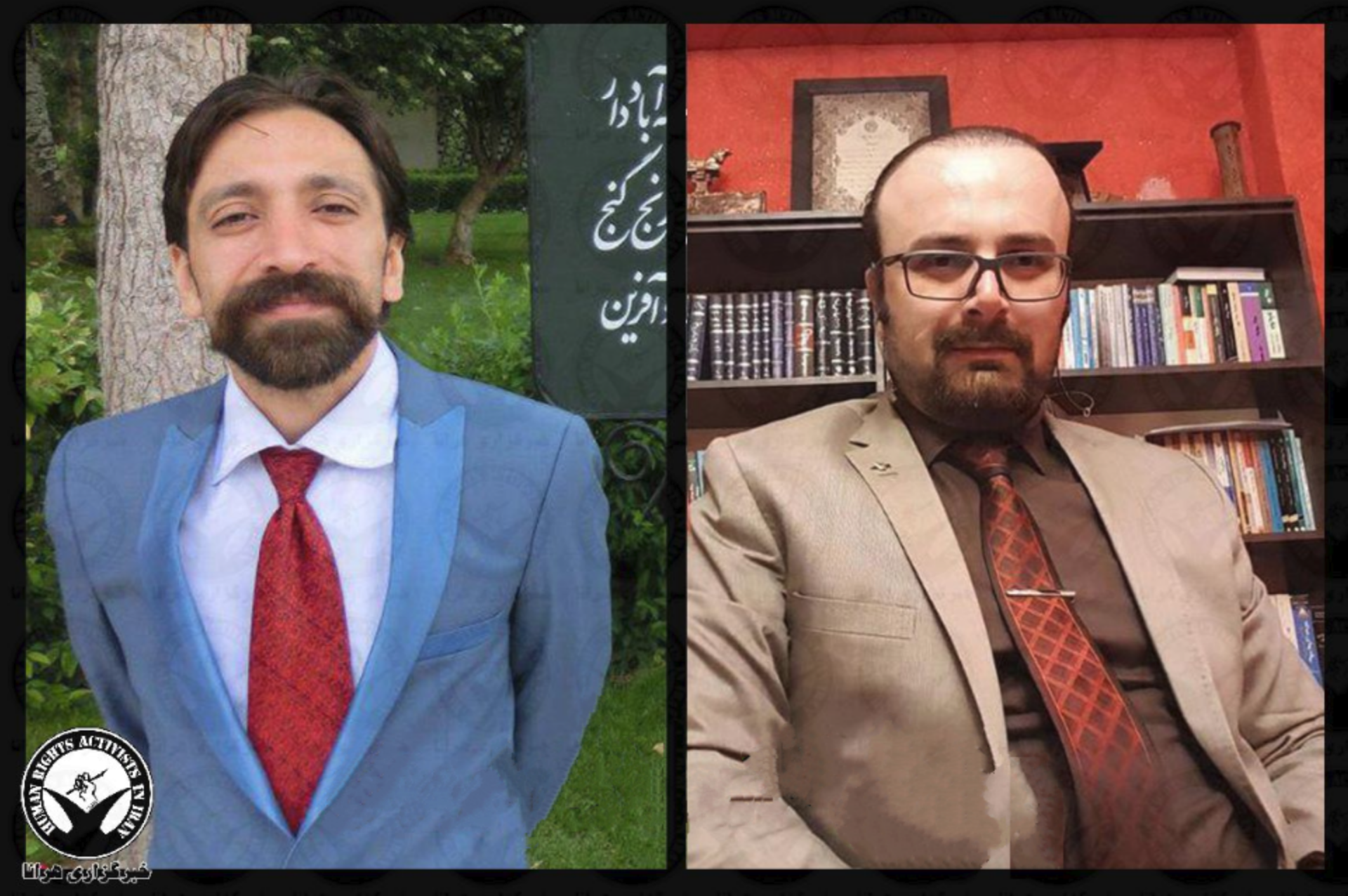
HRANA has previously reported that Fatemeh Mohammadi and Majid Reza (Davood) Souzanchi, two new Christian converts, were arrested in Tehran in November 2017 and taken to Evin Prison.

They were first tried in April 2018 by Branch 26 of the Revolutionary Court in Tehran presided by Judge Ahmadzadeh. In this court session, Fatemeh Mohammadi was sentenced to six months in prison on the charges of “Membership in evangelical groups”, “Engaging in Christian activities” and “Acting against national security through propagating against the regime”. Majid Reza Souzanchi, 34, was sentenced to five years in prison on the charges of “Membership in evangelical groups” and “Engaging in evangelical activities”.

A source close to these two individuals told HRANA: “Ms. Mohammadi was only accused of membership in evangelical groups and evangelicalism at the time of arraignment. However, during legal questioning, the investigator, Mr. Samad Hadipour, insulted Ms. Mohammadi’s beliefs, and she defended them in response. That is when Hadipour called her an insurgent against the regime and added the charge of ‘Acting against national security through propagating against the regime’ to her case.”

In April 2018, the second day of their trial was held in the presence of Hossein Taj, Mr. Souzanchi’s lawyer, and Ms. Shadi Halimi and Mr. Behzadi, Ms. Mohammadi’s lawyers. Mr. Souzanchi’s and Ms. Mohammadi’s sentences were issued to their families in May.

Since Ms. Mohammadi did not appeal her sentence, one fourth of her sentence was commuted according to the law. Considering the reduction in her sentence, Ms. Mohammadi spent a month and a half longer than her sentence in prison. Ms. Mohammadi was released from prison on May 13, 2018, the same day her sentence was issued.


1) Haj Agha is a term used to address a religious man especially one who has made the pilgrimage to Mecca.
2) The headcover referred to here, Maghna’a, is a triangular piece covering the hair, the neck and part of the chest.
3) There is a legal questioning/interrogation phase in the Islamic Republic’s legal process which is distinct from the interrogation of prisoners while they are in prison. The former is part of the legal system while the latter is led by self proclaimed “experts” of the Iranian regime’s security apparatus. To differentiate, we used “investigator” as the legal party and “interrogator” as the security agents who engage in interrogation during the detention period.

Ali Zahed’s Sentence Reduced to 15 Years

HRANA News Agency – The sentence of Ali Zahed, political prisoner detained in Rajai Shahr prison, in Karaj, who had been previously sentenced to life imprisonment, was reduced by the Supreme Court to 20 years imprisonment, and eventually with Article 134, it was reduced to 15 years in prison. Mr. Zahed was arrested in May 2008, on charge of Moharebeh, and sentenced to life imprisonment in Tehran’s Revolutionary Court.
According to the report of Human Rights Activists News Agency in Iran (HRANA), the life time imprisonment sentence of Ali Zahed, political prisoner that had been violated by Judge Razini about two years ago, has been reduced by the Supreme Court to 20 years, and ultimately with the application of Article 134, was reduced to 15 years imprisonment. Continue reading “Ali Zahed’s Sentence Reduced to 15 Years”

Reza Malek Sentenced to 10 Years in Prison

HRANA News Agency – Reza Malek is a political prisoner in Evin prison who has been held in jail since June last year. Since the arrest of Mr. Malek, the judicial authorities have not accepted Ms. Sotoudeh as the lawyer in the case, and for that reason he had repeatedly refused to go to court.
A source close to the family of Mr. Malek, in this regard, told HRANA’s reporter that “the prison officers transferred this political prisoner to the Revolutionary Court, with the use of force and violence. After a one-and-a-half-minute trial and a draft of four questions, a 10-year prison sentence was communicated to him by Judge Moghisheh, on allegations of disturbing public opinion, propaganda against the regime and insult Leadership, on Monday, April 9, 2018.” Continue reading “Reza Malek Sentenced to 10 Years in Prison”

Afshin Baymani; Serving Since 17 Years Ago

HRANA News Agency – Afshin Baymani, a prisoner in Rajai Shahr prison in Karaj, has been imprisoned since about 17 years ago. He was sentenced to death in 2000 on charge of Moharebeh which was confirmed in the appeal court but was reduced to life imprisonment after six years.
According to the report of Human Rights Activists News Agency in Iran (HRANA), Afshin Baymani, a political prisoner at Hall 10 of Rajai Shahr prison in Karaj, has been in jail for more than 17 years. Continue reading “Afshin Baymani; Serving Since 17 Years Ago”

A Report about the Quarantine of Amir Abad Prison of Gorgan

HRANA News Agency – Prisoners detained in the quarantine of Amir Abad prison in Gorgan are in distressed and poor health condition. Lack of healthy water and inappropriate nutrition of prisoners have caused many of them suffer from digestive and kidney diseases. In the quarantine of this prison, there is only one telephone booth for the prisoners which does not work often. The extra-judicial exposure of prison authorities which is sometimes accompanied by violence and beatings, has created difficult conditions for prisoners.
According to the report of Human Rights Activists News Agency in Iran (HRANA), Amir Abad Prison in Gorgan has had several political prisoners and prisoners of conscience in previous years, including political prisoners; Roozbeh Gilasian and Nima Saffar, who are currently serving their sentences in this prison. Continue reading “A Report about the Quarantine of Amir Abad Prison of Gorgan”

Subscribe to Our Newsletter

Now is definitely not the time to stop reading!

Reza Pishro Released on the Bail

HRANA News Agency – Mohammad Reza Naseri Azad, nicknamed Reza Pishro, rap singer in Iran, who had been arrested by security forces on February 21 was released on the bail.
According to the report of Human Rights Activists News Agency in Iran (HRANA), Reza Pishro is an Iranian singer and one of the first Persian rappers who had been arrested along with his program director, Hamid Nouri, by security forces on February 21. He was released on Thursday, March 8, 2018. Continue reading “Reza Pishro Released on the Bail”

A Prisoner Severely Beaten in Zahedan Prison

HRANA News Agency – Mehdi Narouee, prisoner in the central prison of Zahedan, has been severely beaten by the head of prison. The beating was so severe that it broke his fingers and injured his face.
According to the report of Human Rights Activists News Agency (HRANA), Mehdi Narouee, prisoner in the central prison of Zahedan, was severely beaten by Mohammd Ali Alizadeh, head of prison, after he protested against the disagreement with his furlough and his request for visits by prison judge on March 5, 2018. The beating was so severe that it broke his fingers and injured his face. Continue reading “A Prisoner Severely Beaten in Zahedan Prison”

A Prisoner Beaten and Left in the Yard for 3 Days

HRANA News Agency – Abdul Hakim Chakeri who has been imprisoned at Zahedan’s Central Prison from 19 months ago, after returning from a visit was insulted and beaten by prison staff due to his protest against the method of physical inspection. The prison authorities made him naked, handcuffed and shackled him, and beat him badly, and despite the bad physical condition, kept him in the ward’s yard for three days.
According to the report of Human Rights Activists News Agency in Iran (HRANA), Abdul Hakim Chakeri, a security prisoner in the Central Prison of Zahedan, who has been detained for more than 19 months since he was arrested on charge of “acting against the national security”, after returning from a visit and insistence of two prison guards for physical inspection, was insulted and beaten by them, and was kept in the yard for three days. Continue reading “A Prisoner Beaten and Left in the Yard for 3 Days”

Mahmoud Masoumi Released on the Bail

HRANA News Agency – Mahmoud Masoumi, civic activist who was arrested along with six other civic activists during a coordinated operation by security agencies on February 1, 2018, was released on the bail until the trial.
According to the report of Human Rights Activists News Agency (HRANA), Mahmoud Masoumi, civic activist who was arrested on February 1, 2018, was released on the bail until the trial on March 5, 2018. Continue reading “Mahmoud Masoumi Released on the Bail”

Ramin Hossein Panahi’s Incommunicado Lifted

HRANA News Agency – Hossein Ahmadi Nia’z, Ramin Hosein Panahi’s lawyer, announced the elimination of his client’s incommunicado.
According to the report of Human Rights Activists News Agency in Iran (HRANA), Hossein Ahmadi Nia’z announced the elimination of incommunicado of Ramin Hossein Panahi on Wednesday, February 28. He continued and told HRANA’s reporter: “After consulting with the judge, I asked them to remove the ban on Ramin Hossein Panahi’s visit, and after agreeing with this request, along with Ramin’s mother, I visited Ramin”. Continue reading “Ramin Hossein Panahi’s Incommunicado Lifted”