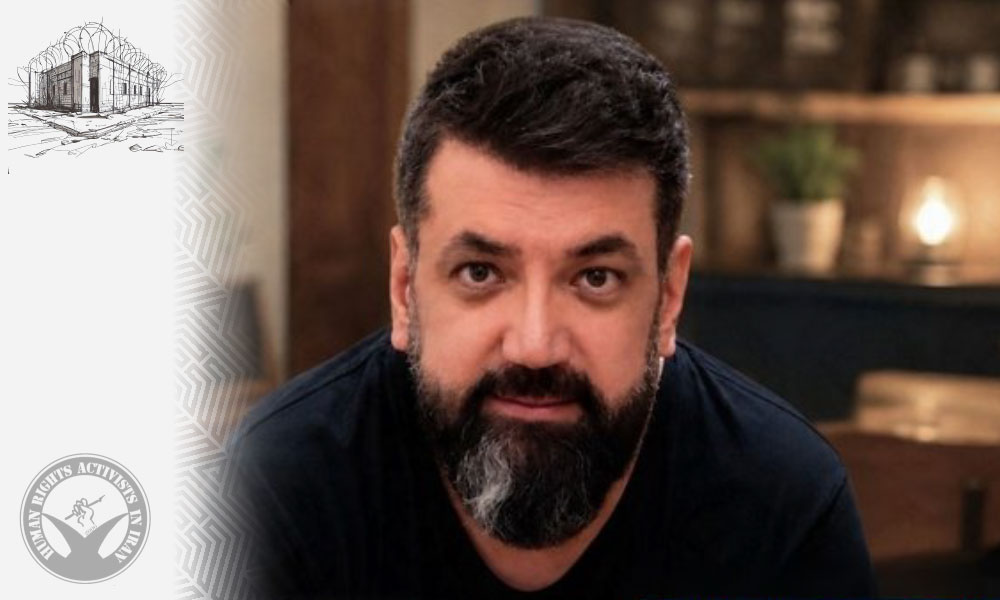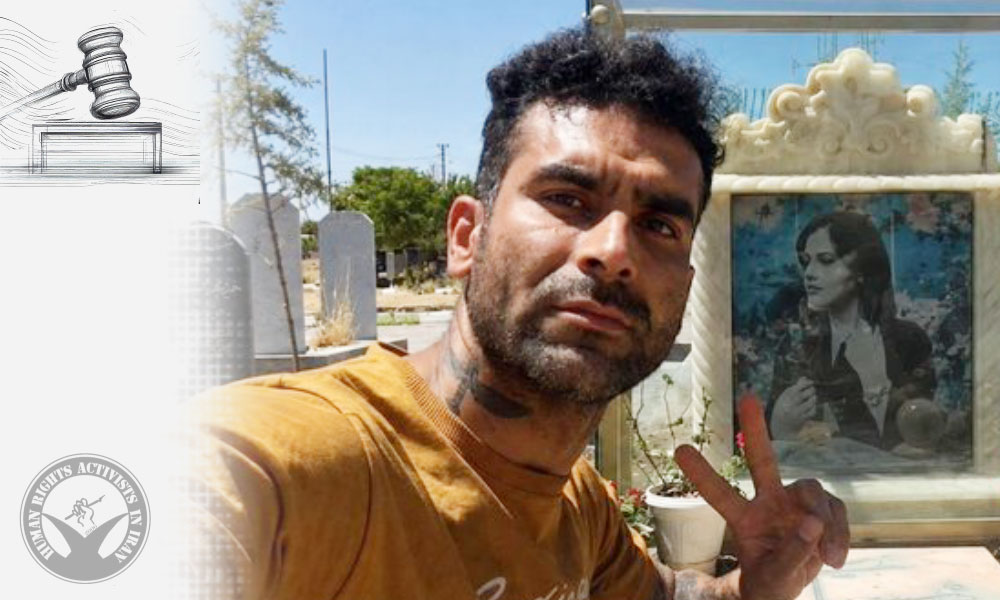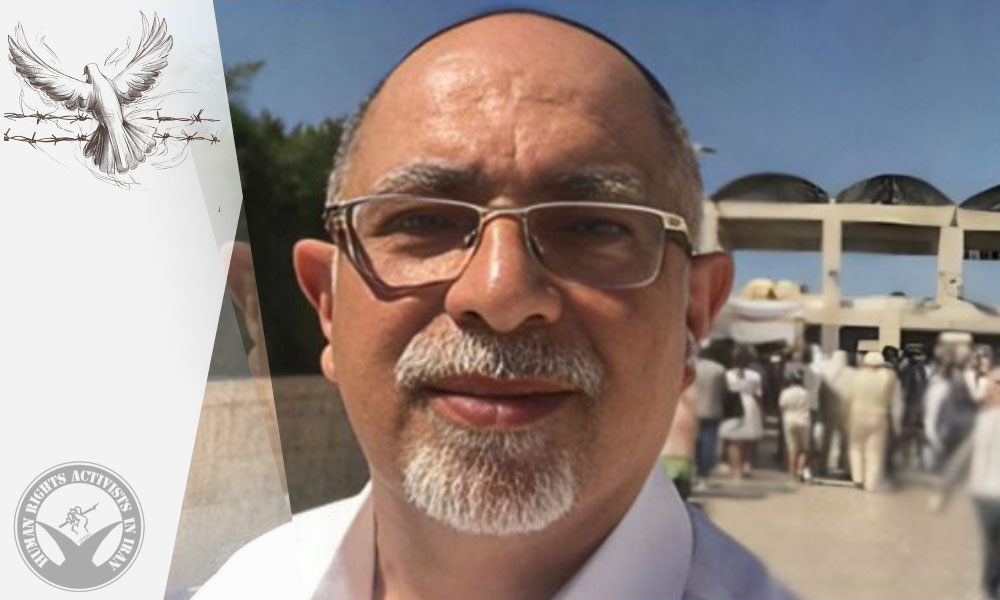
Concern Mounts as Mir Youssef Younesi Is Transferred from Evin to an Unknown Location

HRANA – Mir-Youssef Younesi, a political prisoner held in Evin Prison, was transferred today, Monday, April 13, 2026 (24 Farvardin, Europe time), from the prison to an unknown location. The move has heightened his family’s concerns regarding his fate.

Reza Younesi, the son of the 73-year-old political prisoner, announced his father’s sudden transfer in a written statement, saying: “This morning, Evin Prison officials summoned him to the prison office, but after he went there, he did not return to the ward. His cellmates were later told that he had been transferred. My father did not even have the chance to collect his personal belongings, and at present, there is no information about where he is being held.”

Mr. Younesi had been sentenced in January 2024 by Branch 26 of the Tehran Revolutionary Court to five years of discretionary imprisonment.

The court session addressing the charges against him was held on December 31, 2023. According to his daughter Aida, Mr. Younesi was not taken to court because he refused to wear prison clothes, and the judge also did not allow his lawyers to present a defense.

On December 28, 2022, Mr. Younesi was arrested in Shahroud. After 107 days in solitary confinement in Wards 240 and 209, followed by detention in closed multi-person cells in Ward 209 of Evin Prison, he was transferred to the prison’s general ward.

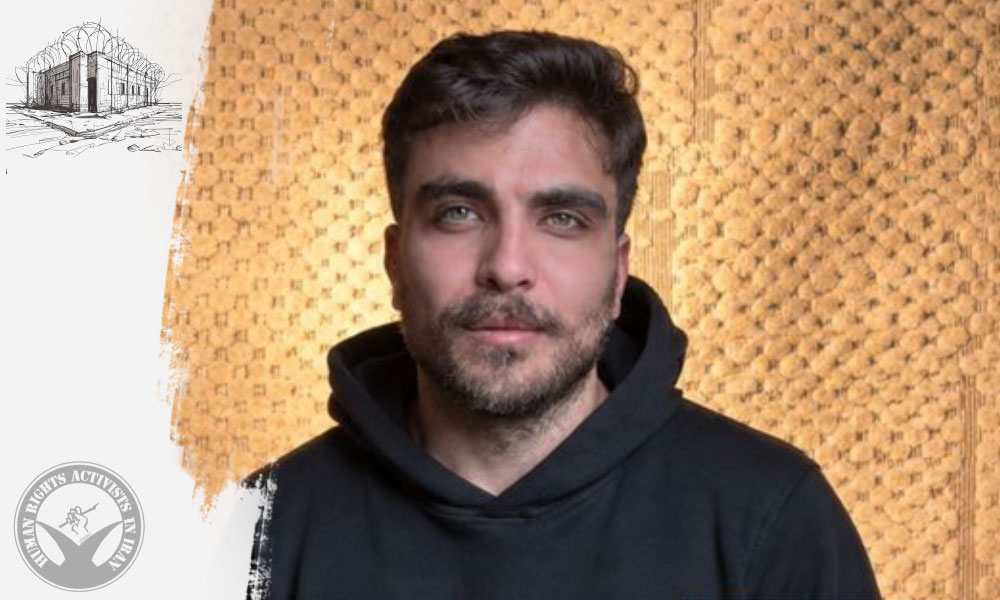
Mir Youssef Younesi is the father of Ali Younesi, the student currently imprisoned in Evin Prison. Ali Younesi won the silver medal in Iran’s National Astronomy Olympiad in 2016 and the gold medal in 2017. He also achieved first place with a gold medal in the 12th International Olympiad on Astronomy and Astrophysics held in China. He and another detained student from the same university, Amirhossein Moradi, are currently serving their sentences in Evin Prison.

New Case Filed Against Heshmatollah Tabarzadi During Imprisonment

HRANA – An interrogation session for Heshmatollah Tabarzadi, a political prisoner held in Dastgerd Prison in Isfahan, was held via video conference. The case was opened against him during his imprisonment.

Misa Tabarzadi, the daughter of this political prisoner, announced in a video statement that on Friday, April 10, 2026, she learned that her father’s interrogation session had been conducted via video conference from Dastgerd Prison in Isfahan.

A source close to the prisoner’s family told HRANA: “During this session, Mr. Tabarzadi was formally charged with offenses including propaganda against the regime, insulting the Supreme Leader, and inciting people to war and killing.”

According to Misa Tabarzadi, after the start of the military attacks against Iran, her father had been transferred from Dastgerd Prison to an undisclosed location. After several days of pressure and interrogation, he ultimately appeared in the online interrogation session.

Heshmatollah Tabarzadi was arrested in September 2022 by security and law enforcement forces in Golpayegan and was later transferred to Dastgerd Prison in Isfahan. His case was reviewed on charges including cooperation with hostile governments, propaganda against the regime, assembly and collusion, and insulting the Supreme Leader, ultimately resulting in a sentence of 11 years and six months in prison.

Heshmatollah Tabarzadi has previously also faced arrest and conviction due to his activism.

The Continued Detention of Three Family Members of Executed Political Prisoner Babak Alipour

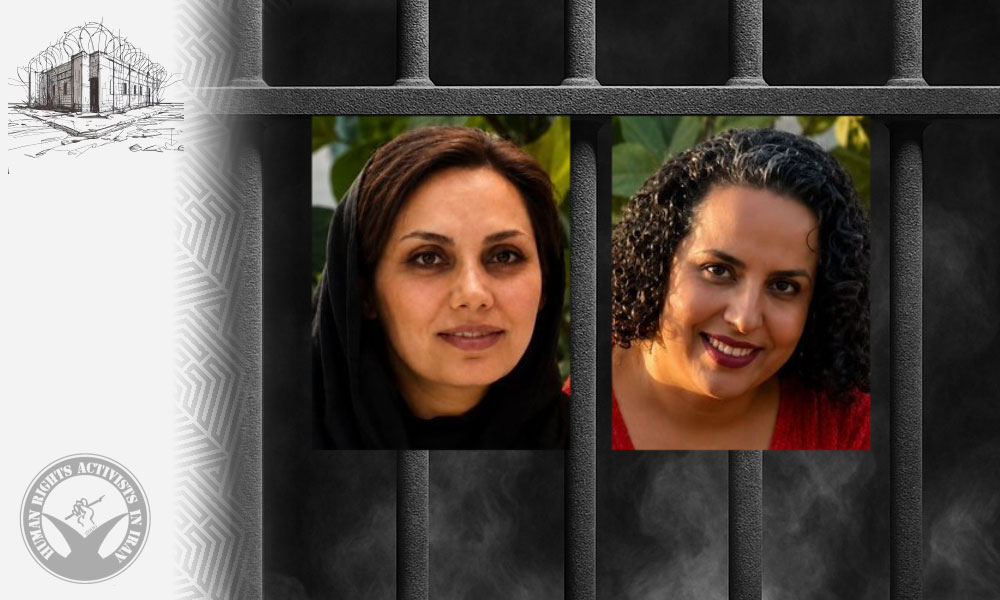
HRANA – Roozbeh Alipour, Maryam Alipour, and Ommolbanin Dehghan, members of the family of Babak Alipour, the executed political prisoner, have now been detained for 76 days and are being held in limbo in Qarchak Varamin Prison and Evin Prison.

Based on information received by HRANA, more than 75 days have passed since the arrests of Roozbeh Alipour, Maryam Alipour, and Ommolbanin Dehghan. At present, Maryam Alipour and Ommolbanin Dehghan are being held in Qarchak Varamin Prison, while Roozbeh Alipour is being held in The Ministry of Intelligence’s detention facility, known as Ward 209 of Evin Prison.

During this period, only Mr. Alipour has had two very brief phone calls with his family, and in those calls he made no mention of the reasons for his arrest. These individuals remain in an uncertain legal status, and their release has not yet been made possible.

As of the time of this report, no information has been obtained regarding the reasons for their arrests or the charges brought against them.

Babak Alipour, a political prisoner, was executed on March 31, and his family was not allowed a final visit before the sentence was carried out.

Roozbeh and Maryam Alipour, Babak Alipour’s brother and sister, along with his mother, Ommolbanin Dehghan, were arrested on January 26, 2026.

Babak Alipour, along with five other political prisoners, was again sentenced to death in November 2025 by Branch 26 of the Tehran Revolutionary Court, presided over by Judge Iman Afshari. Their death sentences had previously been overturned by the Supreme Court in June 2025, and their cases were referred to a parallel branch for retrial. However, the death sentences of these political prisoners were carried out in recent days.

Continuation of Mock Executions Against Baha’is; Global Baha’i Community Raises Concern Over Borna Naimi’s Fate

HRANA – Borna Naimi, a Baha’i citizen residing in Kerman, remains in a state of uncertainty after 39 days in detention and is still being held in solitary confinement in Kerman Prison.

In a statement, the global Baha’i community expressed concern over his situation, announcing that he has been subjected to mock executions twice in order to extract forced confessions. Previously, the organization had also reported mock execution practices against Peyvand Naimi, another detained Baha’i citizen in the same case. The statement notes that the treatment of these two young Baha’is has heightened concerns over the intensification of persecution against Baha’is in Iran.

The global Baha’i community, expressing concern over Borna Naimi’s fate, stated in a declaration, shared with HRANA, that: he has “endured at least two mock executions, electric shocks causing severe burns to his feet, and other forms of torture, since his arrest in Kerman on 1 March.”

The statement emphasizes that following Peyvand Naimi, Borna Naimi is the second Baha’i detainee in Kerman to be subjected to mock execution, “raising concerns regarding the intensification of the persecution against the Baha’is in Iran, the country’s largest non-Muslim religious minority.”

According to the statement, this is the second case involving detained Baha’i citizens in Kerman accused of involvement in the killing of Basij agents during the protests of January 7, 2026. However, “Borna’s torture was so extensive that he was forced to sign a false confession in which he implicated himself and his cousin, Peyvand Naimi, in killing Basij guards during 8 January protests. No evidence exists for this charge, and neither Borna nor Peyvand could have committed these crimes, as they occurred after Peyvand had been detained and while Borna was surrounded by family at home. The text of his forced confession had been prepared beforehand and handed to him to read. No trial has been held for either prisoner.”

The statement continues: “During the first days of detention, Borna was repeatedly beaten, receiving multiple blows to his sides, ribs, beneath the chest, and his back. He was transferred several times to places near his residence, where he was pressured with threats concerning his wife and young daughter, including threats that his child would be sent to a state orphanage if he did not cooperate. ”

In this context, a representative of the global Baha’i community at the United Nations in Geneva stated: “During the initial days of detention, Borna was held in a special section of the prison known as the ‘death suite,’ where prisoners sentenced to execution are kept 48 hours before their sentence is carried out. Reports indicate that during this period, he was held in a small solitary cell of approximately two by two meters and was unable to distinguish day from night.”

Simin Fahandej added: “During his first days in prison, Borna was held in a special section of the prison called the “suite”—the “the death suite”—in which death row prisoners are held 48 hours before execution. Reports indicate that, during this time, he was held under solitary confinement in a small room about two-by-two metres in size, in such a way that he could not distinguish between night and day.”

She further stated: “The treatment of Borna and Peyvand is a stark indication of the Islamic Republic’s relentless efforts to fabricate accusations against the Baha’is and falsely present them as responsible for crimes they did not commit. It raises grave concerns about the plans and intentions of the Iranian government for the Baha’is in Iran, who have, time and again, been scapegoated at moments of national crisis as a means of deflecting attention from its own deepening repression. Such actions not only endanger innocent lives but further entrench a pattern of systematic persecution that seeks to isolate, dehumanize, and ultimately silence an entire minority community.”

Previously, HRANA had reported on the use of mock execution and abuse against Peyvand Naimi in an effort to extract forced confessions.

Borna Naimi, a 29-year-old Baha’i citizen, father of a three-year-old child and resident of Kerman, was arrested on March 1, 2026, by security forces.

Over the past decade, the Baha’i community in Iran has faced more security and judicial pressure than any other religious minority. A review of HRA’s annual reports shows that in the past year, an average of 62.41% of reports concerning religious minorities involved violations of the rights of Baha’is.

Cécile Kohler and Jacques Paris Leave Iran for France

HRANA – The President of France announced that Cécile Kohler and Jacques Paris, two French citizens, have left Iran and are on their way back to France.

The couple had been released from Evin Prison in November last year after enduring three years of imprisonment, and since then had been staying at the French Embassy in Tehran. At the same time, Iranian domestic media reported that this move was part of an understanding that led to the release of Mahdieh Esfandiari, an Iranian prisoner in France, and the withdrawal of France’s complaint against Iran at the International Court of Justice.

Emmanuel Macron, President of France, announced that “Cécile Kohler and Jacques Paris, after three and a half years of detention in Iran, have been freed and are on their way back to French soil.”
At the same time, IRNA reported that this step was taken as part of an understanding that resulted in Esfandiari’s release in France and France’s withdrawal of its complaint against Iran before the ICJ.

In November last year, Macron had also written in a post that “Cécile Kohler and Jacques Paris, after enduring three years of detention, were released from Evin Prison and are on their way to the French Embassy in Tehran.” Simultaneously, Fars News Agency, a media outlet close to Iran’s security institutions, released a video showing the release of Mahdieh Esfandiari, an Iranian citizen who had been detained in France on charges of supporting a militant group. After their prison release, the two French citizens were not permitted to leave Iran and had remained at the French Embassy in Tehran until now.

In October 2025, Mizan News Agency, the judiciary’s media outlet, reported that heavy prison sentences had been issued for two French citizens on charges of “espionage” and “intelligence cooperation with Israel.” The judiciary statement did not name the defendants. However, independent media reports and official statements by French authorities strongly indicated that these sentences concerned Kohler and Paris. At that time, the judiciary said the rulings could be appealed before the Supreme Court within 20 days of notification.

Ms. Kohler and Mr. Paris were arrested after traveling to Iran in 2022. In late May 2022, Iranian state television aired a report linking the detention of the two French nationals to teachers’ protest gatherings in the country. The report accused Kohler, a member of France’s education and culture labor federation, and her husband Jacques Paris of organizing “chaos and disorder,” and also linked teachers’ union activists Eskandar Lotfi, Masoud Nikkhah, Shaban Mohammadi, and Rasoul Bodaghi to the two.

Throughout their detention, the families of the two French nationals and French officials repeatedly rejected the charges against them and called for their immediate release.

Subscribe to Our Newsletter

Now is definitely not the time to stop reading!

Japanese Government Announces Release of Detained Citizen in Iran

HRANA – Japan’s Chief Cabinet Secretary announced that a Japanese citizen who had been detained in Iran last year was released on bail yesterday.

According to Shargh News, Japan’s Chief Cabinet Secretary stated: on Monday, April 6, 2026, a Japanese citizen who had been arrested on January 20, 2026, was released on bail. Minoru Kihara declined to provide further details regarding the identity of the citizen or the charges against him.

Previously, Masanao Ozaki, Deputy Chief Cabinet Secretary of Japan, had announced that a Japanese citizen had been detained in Iran and, without providing further details, had asked Iranian authorities to release him promptly.

Also, on March 22, 2026, Toshimitsu Motegi, Japan’s Foreign Minister, had announced the release of one of two Japanese citizens detained in Iran. However, he also did not disclose the identity of the released citizen or the other detained citizen.

Fars News Agency, citing some media outlets, had also reported that the detained individual was possibly Shinnosuke Kawashima, head of the Tehran bureau of Japan’s public broadcaster. This claim, however, has not yet been confirmed by official authorities.

The Ambiguous Death of a Detained Citizen in the IRGC Intelligence Detention Facility in Ahvaz

HRANA – Hossein Ghavi, a disabled resident of Ahvaz who had recently been arrested in connection with the ongoing conflict, died under unclear circumstances in an IRGC Intelligence detention facility.

Local sources told HRANA that Hossein Ghavi had been arrested in March by security forces at the tea stall where he worked, allegedly for filming bombed areas and sending the footage to foreign media outlets.

According to these sources, on Thursday, April 2, forces affiliated with the IRGC Intelligence Organization informed his family by telephone that their son had died. The security forces who made the call provided no explanation regarding the conditions of his detention or how he died in custody. His body has also not yet been returned to his family.

Hossein Ghavi (Silavi), 28, was a resident of the Zargan area in northern Ahvaz. He had a disability affecting his left leg and was the sole breadwinner of his family.

Mounting Pressure on Prisoners: Shortages of Water, Food, and Medical Care

HRANA – Following developments arising from wartime conditions in Iran, prisoners in a number of the country’s prisons have faced disruptions in the provision of some of their basic needs. Reports indicate shortages of suitable drinking water, reductions in the quantity and quality of food, limitations on the operation of prison stores, shortages of medication, and a decline in medical services. The present report reviews details of conditions in prisons including Greater Tehran, Evin, Vakilabad in Mashhad, Urmia, Khorin, Ghezel Hesar, Khorramabad, and Kermanshah.

Based on information received by HRANA, in recent weeks prisoners in several prisons across the country have encountered similar problems in obtaining essential items. Among these problems are shortages of drinking water, a decline in the quality and quantity of food, restrictions on the operation of prison stores, and shortages of medication. In many of these prisons, water is supplied from wells and, according to former and current prisoners, it is not suitable for drinking. As a result, prisoners are forced to purchase bottled water from prison stores.

However, under the recent conditions, the supply of bottled water to some prisons has decreased, and the price of each bottle has reached around 25,000 tomans, an amount that, according to reports, many prisoners cannot afford.

In addition, reports indicate that prisoners in most of these prisons receive two meals per day, but the quantity and quality of the food have significantly declined compared to the period before the wartime conditions in Iran. At the same time, many prison stores are facing shortages of goods; in some cases, the stores have been closed for several days or have operated with nearly empty shelves. The high level of overcrowding in prisons has further increased pressure on prisoners and raised concerns regarding their hygienic and living conditions. There have also been reports of restrictions on prisoners’ phone calls and family visits.

A former staff member of Khorramabad Prison told HRANA regarding the prison’s population: “Approximately 4,750 prisoners are held in Khorramabad Prison, with the majority of convictions related to assault, theft, financial crimes, and murder. The prison has nine wards, one of which is allocated to service operations. The wards are assessed as having moderate access to natural light. On average, around 500 prisoners are held in each ward, while the bed capacity per ward is about 360. As a result, some prisoners are forced to sleep on the floor or stay in the prayer hall spaces of the wards.”

He added: “Even under normal conditions, the prison infirmary did not have sufficient medication, and a doctor was present in the prison only one day per week. Additionally, no counseling or psychological services were provided in the prison. With the start of the war, these conditions have worsened and resources have become even more limited.”

Another informed source told HRANA about the quality of food in the prison: “Currently, prisoners receive two meals per day, but the amount of food has been reduced to nearly half compared to before the wartime conditions in Iran began, and its quality has also dropped to roughly half.”

According to information obtained by HRANA, Greater Tehran Prison, despite being considered one of the largest prisons in the country, has faced a shortage of space following the transfer of a large number of prisoners from Evin Prison, including detainees from the nationwide protests of December. As a result, sleeping on the floor in rooms, corridors, and even prayer halls has become a common situation.

A lawyer representing one of the prisoners held in Greater Tehran Prison told HRANA that the conditions of prisoners in this facility are no different from those in other prisons. This attorney, who requested anonymity for security reasons, added that many detainees from the December protests are being held in this prison, and that the principle of separation of prisoners based on their alleged offenses is not being observed. According to him, the quality of food has declined compared to the period before the attacks on Iran, and the portion size of each meal has been reduced to about half. He also described the hygienic conditions of the prison as poor due to overcrowding, adding that these circumstances have raised serious concerns among the families of many detainees and prisoners about the physical well-being of their loved ones. The prison store has been closed, and prisoners are also facing a shortage of drinking water.

A prisoner who was recently released from Kermanshah Prison told an HRANA reporter: “Around 4,000 prisoners are held in this prison, but the accommodation conditions are not the same for everyone.”

He added:“Prisoners receive two meals per day, but the amount of food has decreased compared to the past, and its quality is about 40 percent of what it used to be. In some meals, for a stew prepared for around 20 people, only five small pieces of meat, each weighing about 10 grams, are included.”

At the same time, a relative of a prisoner held in Khorin Prison told HRANA that even before the war the prison had faced problems such as overcrowding and poor food quality, but that these issues have intensified since the outbreak of the war. As in other prisons, food portions have been reduced by half due to wartime conditions. Many prisoners are forced to purchase their food from the prison store, where prices are around 40 percent higher than outside, placing additional financial pressure on families. The prison’s drinking water, which is supplied from a well, is also of poor quality and has reportedly caused health problems such as kidney stones among prisoners. Under the current wartime conditions, the prison store is often closed or its shelves are largely empty. The prison infirmary’s doctor is present only during the early morning hours, and prisoners in need of urgent medical care are often left without treatment. In addition, the infirmary is facing shortages of medication.

In Urmia Prison, prisoners are facing similar conditions. The mother of one of the prisoners held there told HRANA: “Given the widespread attacks in Iran, I am worried about my child’s life. Earlier, in a letter, he had requested the prison authorities to grant him temporary leave during this period, but he has not yet received a response. In Urmia Prison, the quality of food has significantly declined compared to before the war, and meal portions have also been cut in half. Due to the current conditions, the prison store sells many goods to prisoners at prices higher than usual. Our family does not have the financial means to support my child so that he can buy water, food, and hygiene items from the store.”

This elderly mother added: “Visits in this prison have become very limited and are no longer like before. In a phone call my son had with me a few days ago, he said that the prison population is very high. Many people are being held in the quarantine ward. These are the same individuals who were arrested in December. The toilets and bathing facilities are not sufficient for all of us. I am worried about the health of my child and the other prisoners held in this prison.”

The child of a prisoner held in Vakilabad Prison in Mashhad also told HRANA about conditions in the prison and the physical state of ill prisoners, including his father: “Even before the war, the quality of food in this prison was poor, but now under the current conditions both the quantity and quality of food have dropped significantly. My father has heart disease and is currently in the prison infirmary, but due to the absence of a doctor and a shortage of medication, the care he receives has been very limited. In addition, many of the recent detainees are being held in this prison. The overcrowding is severe, and many people sleep in the prison corridors. As far as I know, many individuals are still being held in the prison’s quarantine section.”

He added: “The water in this prison is not drinkable. During this period, the prison store has also run out of goods, and water is being sold there at extremely high prices. Many prisoners cannot afford to buy it. In addition, we have been denied the ability to visit my father. All the families of prisoners are worried about their loved ones under these conditions.”

Prisoners in Evin Prison are also facing shortages of food and water. A prisoner who was recently granted temporary leave from the prison told HRANA: “Water has been cut off in some sections of the prison, the prison stores are closed, and telephone calls have been reduced to a minimum or blocked entirely.”

According to him, prisoners’ food rations have been reduced to one meal per day, and in some cases they are given only “dry bread and something resembling soup.” There are also reports that in some wards prisoners have faced severe shortages of water and food for several days at a time. The prison infirmary is also experiencing shortages of medication.

According to information obtained by HRANA, Ghezel Hesar Prison in Karaj is also facing significant overcrowding in terms of capacity and detention conditions.

An informed source told HRANA: “Overcrowding in this prison is severe, and as a result some prisoners are forced to sleep on the floor. At present, large groups are sleeping on the floors of the prayer halls, and in some of the larger rooms of the prison around five prisoners are also sleeping on the floor.”

The family of one of the prisoners held in this facility told HRANA: “The food given to prisoners is poor in quality, and under the current conditions its quantity has also decreased. Prisoners are forced to purchase the items they need from the prison store. The price of bottled water has increased by about 65 percent, and the price of beef has risen by about 113 percent.”

The spouse of another prisoner held in this prison also told HRANA about the state of medical services: “At present, a doctor is not effectively present, and only a nurse’s aide is available on a limited basis. Medical attention is very minimal, and there are no counseling or psychological support services.”

She added: “Under wartime conditions, prisoners’ concerns about the safety of their families have increased, which has affected their mental well-being. In addition, movement restrictions inside the prison have intensified, and prisoners’ movements are being conducted with greater caution.”

According to information received by HRANA, problems such as food shortages, declining quality of health and medical services, limited access to drinking water, and severe overcrowding are not limited to these prisons. Similar conditions have been reported in many prisons across Iran, particularly following the recent wartime conditions.

It should be noted that military attacks by the United States and Israel on Iran began on February 27, 2026. Since the start of these attacks, HRANA has been documenting and recording related developments across various parts of the country on a daily basis. For more information, readers may refer to HRANA’s detailed report on the eleventh day of the conflict, which was published last night.

Japanese Government Confirms Arrest of Its Citizen in Iran

HRANA – Japan’s Deputy Chief Cabinet Secretary announced that one of the country’s citizens was arrested in Iran on January 20, 2026. He called on Iranian authorities to release the individual immediately.

Masanao Ozaki, Japan’s Deputy Chief Cabinet Secretary, stated today, Wednesday, that the Japanese citizen was arrested on January 20, 2026 (30 Dey 1404). Without providing further details, he urged Iranian authorities to promptly release the individual.

Mr. Ozaki added that the government is in contact with the detained person and their family and is providing the necessary support. However, Japanese officials have not been granted permission for an in-person visit.

Fars News Agency, citing certain media outlets, also reported that the detained individual may be Shinnosuke Kawashima, head of the Tehran bureau of Japan’s public broadcaster. This claim has not yet been confirmed by official authorities.

Nationwide Protests: Report on the Arrest of 13 Citizens in Various Cities

HRANA – In connection with the recent nationwide protests, security forces have arrested 13 individuals. Some of those detained have since been released, while information regarding the charges against these individuals remains unclear.

Based on information received by HRANA, Mousa al-Reza Meshkani was arrested on January 10 in Meshkan, a district of Sabzevar, and is currently being held in Vakilabad Prison in Mashhad. Ali Sharifzadeh (Eizi), Saeed Gharagholi, and Mohammad Kalmishi were arrested in Sabzevar on January 8 (18 Dey), February 11, and January 9, respectively. Ali Sharifzadeh was transferred to Mashhad Prison, while Saeed Gharagholi and Mohammad Kalmishi are still being held in Sabzevar Prison. Reza Gerami was arrested on February 14 in Joghatai and is currently detained in the city’s prison.

Raham Rahimi, Elias Jahannoush, Ali Ansari, and Farshad and Farhad Salari, other residents of Sabzevar, were released on Tuesday, February 24, from Vakilabad Prison in Mashhad after posting bail.

Leila Bakhshandehfar, who had been arrested on January 3 by the Mashhad Intelligence Office, was also released yesterday from Vakilabad Prison in Mashhad. She had previously been sentenced by a judicial authority to four years and six months of discretionary imprisonment. The sentence was initially converted to a fine of 140 million tomans in lieu of imprisonment. Ultimately, taking into account her detention period and submission to the verdict, the amount was reduced to 70 million tomans.

Additionally, the Kurdpa news outlet reported that in the early hours of Monday, February 23, Ahmad Tamouei, a former political prisoner from Salmas County, was arrested by security forces in Tehran and taken to an undisclosed location. Mr. Tamouei has previously served prison sentences due to his activities.

Hyrcani media also reported that Sohrab Kolthoumi, 32, a resident of Rasht, was arrested by security forces at his home in the city on January 25.

According to the report, following his arrest, he was held for 26 days at an IRGC Intelligence detention facility, where he was interrogated and beaten. He was then transferred for a short time to the triage ward of Lakan Prison in Rasht. He was subsequently removed from the prison and transferred back to the IRGC Intelligence detention facility. Concerns have increased regarding continued pressure to extract a forced confession and about his physical condition.

As of the time of this report, no information has been obtained regarding the charges brought against these individuals.

It should be noted that gatherings and strikes by shopkeepers and bazaar merchants began in Tehran on Sunday, December 28, 2025. After two days, the protests expanded beyond markets and commercial centers. With the participation of students, citizens, and various social groups, these demonstrations became one of the most widespread protests in recent years. Following the suppression of the protests by law enforcement and security forces, thousands were killed or injured, and tens of thousands were arrested or summoned by security institutions. For further information, refer to HRANA’s comprehensive report titled “The Crimson Winter: A 50 Day Record of Iran’s 2025–2026 Nationwide Protests.”