Bahai Citizen Payam Vali Sentenced to Nine Years and Nine Months in Prison

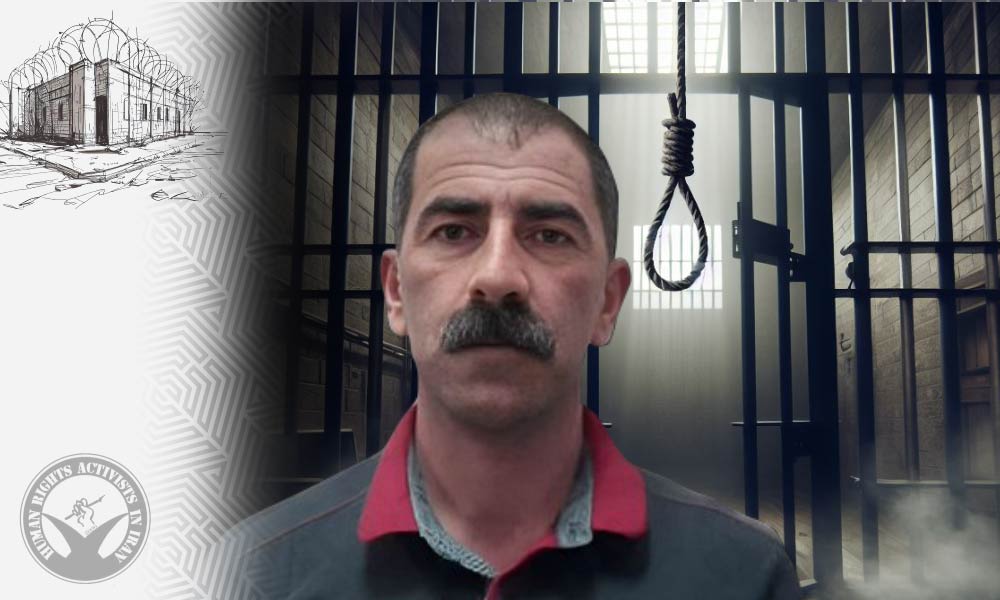
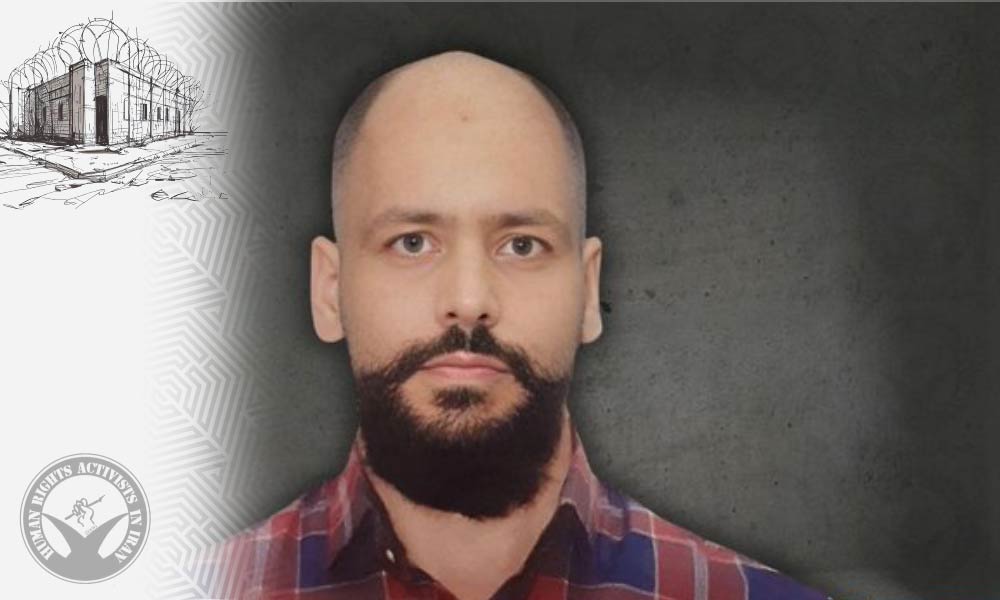
Bahai citizen Payam Vali has been sentenced to nine years and nine months in prison by the Alborz Court of Appeals, with six years to be served. Previously, he had received a 16-year prison sentence.

The verdict, issued on May 10, 2023, states that Vali was given six years for “collaboration with adversary countries,” three years and one month for “inciting people to commit violence,” and eight months for “propaganda against the regime.” The first count carries an enforceable six-year prison term under Article 134 of the Islamic Penal Code.
Initially, in February 2023, Vali had been sentenced to ten, five, and one-year terms for the aforementioned charges, respectively.

On September 24, 2022, security forces arrested Vali at his house in Karaj, searched the house, and detained him in Rajai Shahr Prison.

According to HRANA annual report, from the full human rights reports regarding the violation of religious minorities’ rights, 64.63% belonged to the violation of the rights of Baha’is.

According to unofficial sources, it is estimated that more than 300,000 Baha’is live in Iran, but the Iranian Constitution recognizes only Islam as the official religion, in addition to Christianity, Judaism, and Zoroastrianism. Bahai faith is not considered legitimate by the authorities, and the rights of Baha’is in Iran have been systematically violated for years.

Freedom of religion is a breach of Article 18 of the Universal Declaration of Human Rights and Article 18 of the International Covenant on Civil and Political Rights. The United Nations Covenant holds that every person has the right to practice religion freely, freedom of converting to a religion, as well as freedom of expression, individually or collectively; openly or secretly.


Update on Health Condition of Political Prisoner Hamzeh Savari in Rajai Shahr Prison

HRANA, Human Rights Activists News Agency- Hamzeh Savari Laftah, a political prisoner serving a life sentence in Karaj’s Rajai Shahr Prison, continues to face health challenges as he battles lung disease while being denied adequate medical care.

According to a reliable source interviewed by HRANA, SSavari has not received the necessary medical attention for his lung disease during his imprisonment.

The source added, “Last year, prison officials denied his request for temporary release to attend his mother’s funeral.”

Arrested at the age of 16 on September 2, 2005, Savari was initially sentenced to death by the Ahvaz Revolutionary Court on charges of “spreading corruption on earth, enmity against God (Moharebeh), and acting against national security.” However, the sentence was later commuted to life imprisonment.

Throughout his time in prison, Savari has been coping with various health issues, including knee lumps, lumbar disc problems, spinal issues, and varicocele.

French Citizen Benjamin Briere Released from Iranian Prison

French citizen Benjamin Briere has been released from prison in Iran. Catherine Colonna, the French foreign minister, attributed the freedom of Briere to diplomatic negotiations between Iran and France.

According to HRANA, the news agency of Human Rights Activists, quoting ISNA News Agency, French citizen Benjamin Briere was released from prison.

Today, Irish-French citizen Bernard Phelan was also released from prison. In a separate statement, Colonna revealed that she spoke with Iranian Minister of Foreign Affairs Hossein Amir-Abdollahian about their release, and Brier and Phelan are on their way back to France.

In May 2020, Briere was arrested by security forces. According to Figaro, he was arrested for flying a small drone in a deserted area in Iran.

On January 25, 2022, after being detained for over 600 days in detention at Vakilabad Prison in Mashhad City, Briere was sentenced to eight years and eight months in prison for “espionage and propaganda against the regime” by Branch 4 of the Revolutionary Court of Mashhad. Two other charges of “spreading corruption on earth” and “alcohol drinking” was dismissed by the court. In July of the last year, this verdict was upheld on appeal.

Three Members of Family Still Detained for over Six Months

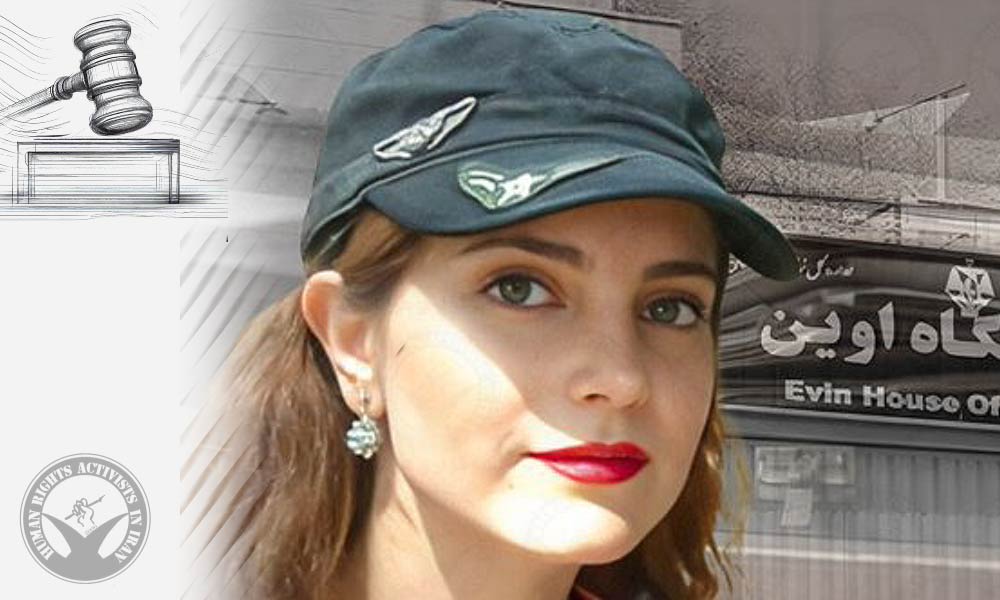
HRANA, Human Rights Activists news agency- Nasrollah Fallahi, along with his son Ardavan and daughter Arghavan, has been detained in Evin Prison for over six months, with no clear indication of the charges they are facing or when legal proceedings may take place.

Attorney Erfan Karam-Veisi stated that his clients, Nasrollah Fallahi and his son Ardavan, are being held in Ward 4 of Evin Prison, while Arghavan is detained in the Women’s Ward. They were arrested amid the 2022 nationwide protests.

According to Karam-Veisi, the charges are still unknown. However, earlier, he had mentioned his clients’ charges as “enmity against God (Moharebeh),” “spreading corruption on earth through widespread actions against the country” and “assembly and collusion to commit a crime.”

The Investigation Office has held two sessions thus far, but the family has not been formally indicted.

Ardavan Fallahi, who is 24 years old, was arrested in Isfahan on November 3, 2022, followed by the arrest of his father, who is 66 years old, and his 22-year-old sister in Shiraz the next day. On February 12, 2023, they were transferred to Evin Prison in Tehran.

About the 2022 Nationwide Protests

The arrest of Mahsa Amini by Tehran Morality Police for her improper hejab and her suspicious death on September 16 sparked protests sweeping across Iran. During the nationwide protests, about 19600 people, including journalists, artists, lawyers, teachers, students and civil rights activists, were arrested.


Mohammad-Reza Morad Behroozi Goes on Hunger Strike in Protest against New Charges

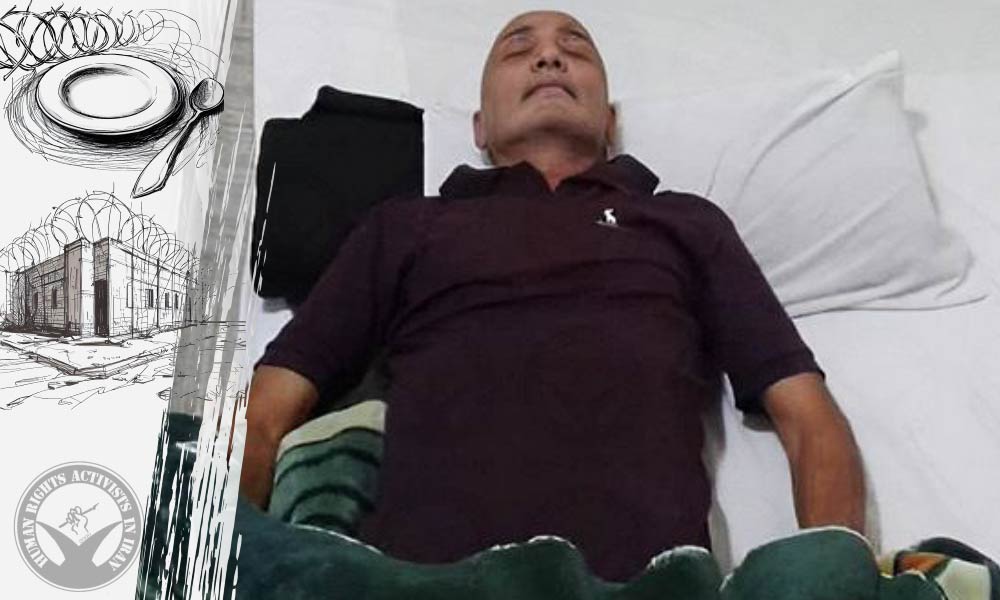
Mohammad-Reza Morad Behroozi, who is currently serving his sentence in Qazvin Prison, has recently started a hunger strike to protest against new charges brought against him while in prison. He is also being denied phone calls and family visitation.

In this new legal case, Branch 102 of the Criminal Court of Mohammadiyeh has sentenced Morad Behroozi to ten months for “disturbing public opinions” and eight months and ten days for “inciting people to act against public modesty.” He has also been banned from leaving the country for two years, and his cell phone has been confiscated.

His wife, Soori Babai Chegini, has also been sentenced to one month for “demonstrating a Haram act” and six months for “inciting people to act against public modesty,” and her cell phone has been confiscated as well.

The charges against them stem from publishing pictures without wearing Hijab on their personal pages on social media.

If these verdicts are upheld on appeal, Morad Behroozi will serve ten months in prison, while Babai Chegini will serve six months, in accordance with Article 134 of the Islamic Penal Code.

According to an informed source, Behroozi is facing a charge of “propaganda against the regime” in the second part of his legal case. He has also been charged with spreading falsehoods due to the dissemination of his voice recording from prison. This same source stated that Behroozi had been beaten by prison officials.

In protest against these new charges, Behroozi started a hunger strike.

Behroozi was arrested on August 21, 2021, at his house after posting a video on social media in which he criticized the Supreme Leader for banning Covid-19 vaccines from other countries.
In a trial held in absentia, Branch 2 of the Revolutionary Court of Qazvin, headed by Judge Esmail Amini, sentenced Behroozi to one year in prison on the charge of “offensive statements against the Supreme Leader of Iran.”


Subscribe to Our Newsletter

Now is definitely not the time to stop reading!

Inmate Dies in Urmia Prison Due to Lack of Medical Care

On April 15, 2023, an inmate lost his life due to being denied medical treatment in Urmia Prison.

According to HRANA, the news agency of Human Rights Activists, on April 15, 2023, an inmate, identified by HRANA as Abdollah Badavi, died in Urmia prison due to inadequate medical care.

An informed source told HRANA that, suffering from heart and blood sugar diseases, Badavi asked many times for parole or medical furlough, refused every time by prison officials. Ultimately, he died from a stroke in prison.

“In two separate cases, Badavi was sentenced to death for drug-related crimes and two years for collaboration with anti-regime groups. After a while, his death sentence was commuted to life imprisonment,” the source added.

Badavi was imprisoned for eight years.

The Department of Statistics of Human Rights Activists in Iran in 2022 registered 4322 reports on deprivation of medical care and 20 deaths in prison due to illness.

Political Prisoner Nayeb Askari Sentenced to Death for Enmity Against God

The Branch 2 of the Urmia Revolutionary Court sentenced Nayeb Askari to death for “enmity against God (Moharebeh).”

According to HRANA, the news agency of Human Rights Activists, on April 15, 2023, Urmia judicial officials informed Nayeb Askari’s lawyer that his client had received a death sentence for the charge of “enmity against God (Moharebeh).”

Membership in a Kurdish opposition party was cited as an example of this charge.

On March 27, 2021, IRGC intelligence agents arrested Askari in Urmia and transferred him to a detention facility. On June 17, 2021, he was transferred to Urmia Prison, where he has been detained since.

According to sources close to his family, Askari has reportedly been in poor health during his detention. In February or January 2022, he suffered from a convulsion but was denied proper medical care. The prison infirmary was reportedly ill-equipped and in such cases suffices to the arbitrary prescription of a non-specific pill.

On July 12, 2021, a new case was opened against him following the complaint of the head of Urmia Prison. For this case, he was sentenced to three months more imprisonment and 50 lashes for the charge of “disrupting prison order”.

Masoud Eslaminasab Jailed in Evin Prison

Masoud Eslaminasab, arrested at the 2022 nationwide protests, was transferred to Evin prison to start serving his seven-year sentence. He was arrested in October 2022 and detained in Great Tehran Penitentiary.

According to HRANA, the news agency of Human Rights Activists, Masoud Eslaminasab (Bakhtiari) was jailed in Evin prison for sentencing.

Earlier, the Tehran Court of Appeals sentenced Eslaminasab to seven years in prison and four years of exile for multiple charges, including “arson and destruction of public property,” “assembly and collusion against national security,” and “membership in anti-regime groups.” On trial, he was acquitted of the charge of “carrying a cold weapon.”

Initially, Eslaminasab had received 21 years and six months for these charges.

On October 15, 2022, security forces arrested Eslaminasab at his house. The agents also searched his house and confiscated some of his belonging.

Eslaminasab was held for about one month in solitary confinement at Great Tehran Penitentiary. During detention, he reportedly was forced to make confessions to accept allegations such as ” enmity against God (Moharebeh) through assaulting a police officer.” However, the court dismissed the charge after the injured officer testified that Eslami-Nasab did not have any role in this incident.

It is noteworthy that along with Eslaminasab, dozens of other political prisoners and prisoners of conscience were relocated from Great Tehran Penitentiary to Evin Prison.

About the 2022 Nationwide Protests

The arrest of Mahsa Amini by Tehran Morality Police for her improper hejab and her suspicious death on September 16 sparked protests sweeping across Iran. During the nationwide protests, about 19600 people, including journalists, artists, lawyers, teachers, students and civil rights activists, were arrested.


 Imprisoned British-Iranian National Mehran Raoof: Double Nationals Denied Their Citizen Rights in Iranian Prisons

In an open letter, political prisoner Mehran Raoof sheds light on how he and other political and double national prisoners are denied their fundamental rights in Iranian prisons.

He highlights that governments often use double national prisoners as leverage in negotiations with other countries, so the recent pardon and commutation directive does not include them.

Raoof further speaks out against the violations of his rights during detention, stating that the IRGC intelligence unit held him in detention for eight months without any furlough or access to a lawyer, which is a clear violation of Iranian law. Moreover, for several months, his family was kept in the dark about his condition and whereabouts, and he was not even allowed to contact them.

He ends his letter with these statements:
“This clear discrimination and oppression are not unfamiliar to us, who have lived under the rule of the Islamic Republic for over 40 years. Many of us, including political prisoners, women’s rights activists, environmental activists, and workers’ rights activists are imprisoned on charges of having different beliefs and opinions and protesting against wrong and dictatorial policies and laws. We stand in solidarity with the nationwide protests, demanding the unconditional release of all political prisoners.”

In October 2020, IRGC intelligence agents arrested this 65-year-old British-Iranian national and held him for eight months in a detention facility known as Ward 2A in Evin Prison. Later, he was relocated to Ward 1. In August 2021, Branch 26 of the Tehran Revolutionary Court, presided over by Iman Afshari, sentenced him to ten years and eight months in prison, which was later reduced to seven years and six months.

Prisoners in the Great Tehran Penitentiary Facing Delay and Difficulties in Receiving Medical Care

The Great Tehran Penitentiary officials regularly delay the issuance of permits for medical treatment, putting prisoners’ health at risk. This report sheds light on the violation of prisoners’ health-related rights in this prison and the negative impacts on inmates’ health conditions.

An inmate, recently freed from this prison, explained to HRANA the lengthy process of requesting a permit for medical care: “to receive a permit for medical care, the prison infirmary physician has to deliver a request letter to the Judgement Enforcement Unit. If approved, this unit sends a request letter to Judicial Deputy and the latter to the assistant prosecutor. This process takes a long time resulting in the exacerbation of inmates’ health condition and subsequent denial of medical treatment.”

“In addition to the long process, sometimes the request letters were missing, which frequently happens during the correspondence among prison officials,” another inmate stated.

Asadollah Hadi, Davood Razavi, Shahriar Bayat and Zartosht Ahmadi Ragheb are among the inmates who suffered medical issues due to the prison officials’ delays and impediments.

According to reports obtained by HRANA, in recent days, political prisoner Asadollah Hadi was taken to the prison infirmary. Despite that, only after many twists and turns did the prison officials agree to dispatch him to a hospital outside the prison. Hadi has 60% physical disability and underwent heart surgeries during the last few years. Nonetheless, prison officials still delay medical treatments.

Another inmate, 20-year-old Amir-Hossein Ghena’atgar, who was arrested during the nationwide protests, is in poor health condition and has been denied medical care. In this regard, an informed source told HRANA, “he has been injured in eyes, neck, arm and chest by pellet guns. Despite having an infection from the pellets still in his body, he has been denied adequate medical care.”

In 2022, the Department of Statistics of Human Rights Activists in Iran registered 4,322 deprivation of medical care and 20 deaths due to illness.

According to Articles 102 and 113 of the Executive Regulations of the Iranian Prisons Organization, the prison infirmary is obliged to perform the medical examination of prisoners at least once a month, which in practice happens rarely. Also, in a case where medical treatment is not possible inside prison, with permission from the head of the prison and supervising judge, the inmate can be dispatched to a hospital as soon as possible. The rules unfortunately do not exempt emergency cases from the judge’s permission, causing unnecessary delays and jeopardizing the inmate’s lives.