Political Prisoner Injured After Protest by Self-Immolation in Evin Prison

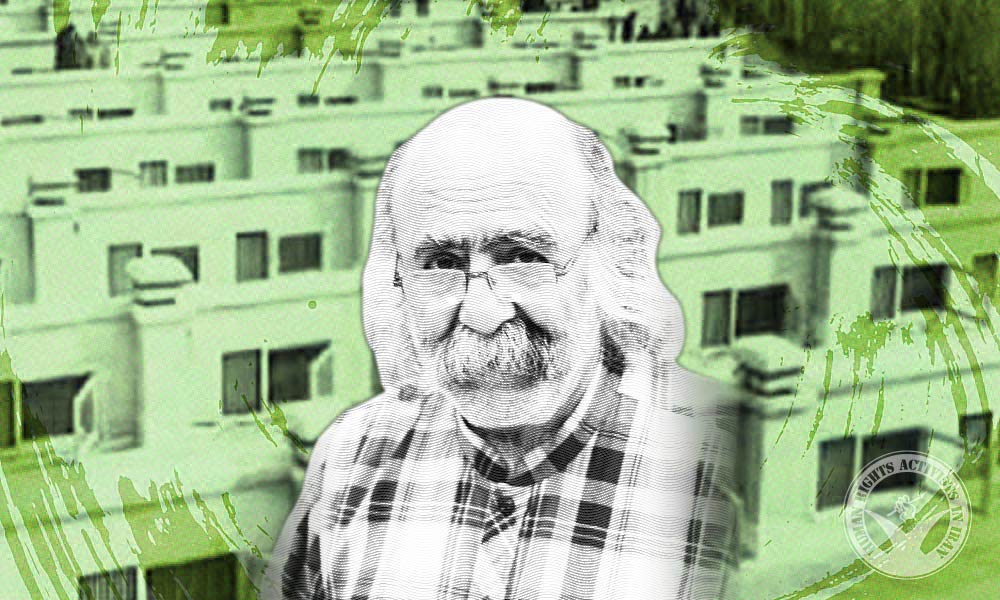
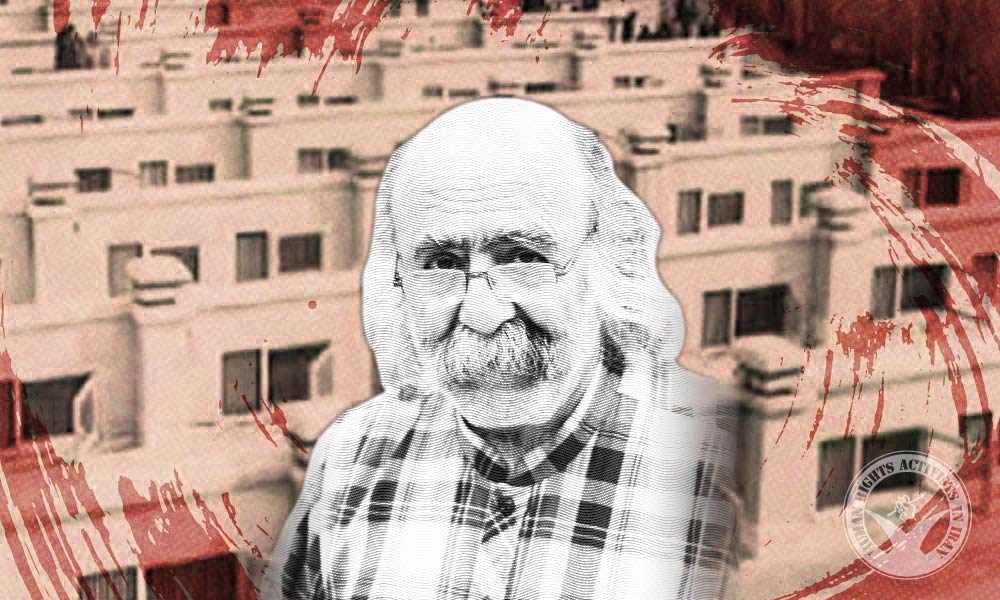
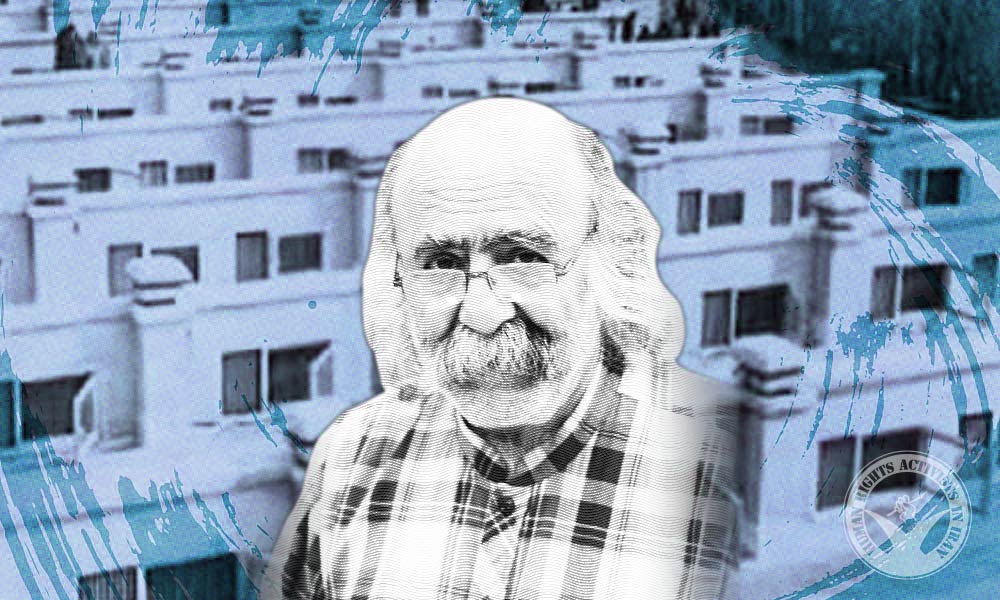
On Wednesday, October 27, political prisoner Mehdi Darini was injured by self-immolation and hospitalized in the healthcare center of Evin Prison.

According to HRANA, the news agency of Human Rights Activists, Darini’s demonstration was in protest of prison authorities’ refusal to release him on probation. He is currently enduring the second year of a five year term in Evin Prison in Tehran.

An informed source told HRANA that Darini had previously warned prison officials about his intentions if the interrogator refused to consider his demand to be released.

During the last interrogation, in response to his stating his intention to go on a hunger strike, the interrogator reportedly said, “All the better; the regime has already too many hungry mouths to feed.”

35-year-old Mehdi Darini, a production engineer, was sentenced to five years in prison by the Revolutionary Court of Tehran on a charge of ” blasphemy” and one year on a charge of “propaganda against the regime”. According to Article 134 of the Islamic Penal Code, a severest punishment of five years is enforceable.

Editor of News Outlet ‘Miandoab Press’ Summoned to Endure Eight Month Prison Sentence

On Wednesday, October 5,  Manoochehr Aghai, Editor of the news outlet Miandoab Press, was sent to Miandoab Prison to begin his sentence.

According to HRANA, the news agency of Human Rights Activists, Aghai had previously been sentenced to eight months in prison on a charge of “propaganda against the regime”.

Aghai was sentenced in absentia. During the trial, published online news reports and viewers’ comments under his posts on social media were invoked as evidence against him.

Three Political Prisoners Transferred from Urmia Prison to an Unknown Location

Sunni political prisoners Mohyedin Ebrahimi, Mohyedin Tazehvared and Davood Jabbari were recently transferred from Urmia Prison to an unidentified location. Given that two of these prisoners have been sentenced to death, this relocation raises concerns about them.

According to HRANA, the news agency of Human Rights Activists, the whereabouts and conditions of these prisoners are unknown as of this writing. This relocation took place following the confirmation of the death sentences for Mohyeldin Ebrahimi and Mohyeldin Tazehvared. They have asked for a retrial.

On October 23, 2017, Mohyedin Ebrahimi was wounded by direct fire from an Iranian officer at Iraq’s border and arrested on a charge of smuggling alcoholic beverages. Branch 2 of the Revolutionary Court of Urmia subsequently sentenced him to death. Following an overturn of the verdict by the supreme court of Iran, the case was sent back to Branch 2 of the Revolutionary Court for re-examination. The supreme court confirmed the verdict, and the death sentence was upheld.

On October 29, 2018, Mohyedin Tazehvared was arrested by security forces and transferred to Urmia Prison until the end of legal proceedings. He was also sentenced to death by Branch 2 of the Revolutionary Court of Urmia. Until now, his request for a retrial has not been answered.

On June 4, 2017, Davood Jabbari was arrested and then sentenced to 18 years imprisonment on the charge of “membership in ISIS (Daesh)”.

Amir Hossein Moradi Offered Release on Bail

Earlier this Tuesday, October 26, the court granted bail to Amir Hossein Moradi, who was arrested in relation to the nationwide protests of November 2019.

According to HRANA, the news agency of Human Rights Activists, Moradi is currently hospitalized for a skin disease. Based on this court order, if he pays the required 4 billion tomans bail, he will be set free upon being discharged from the hospital. This has been confirmed on the personal social media page of Babak Pak-Nia, Moradi’s lawyer.

Amir Hossein Moradi, Saeed Tamjidi, and Mohammad Rajabi were sentenced to death by the Tehran Revolutionary Court, before a global outcry led to the re-examination of their case.

On Jun 24, 2020, the Human Rights Activists News Agency (HRANA)  announced that the death sentence of the three political prisoners had been upheld by the Supreme Court. On July 14, 2020, the spokesman of the Judiciary officially announced the confirmation of their death sentences and said that the sentences had been sent to the prosecutor’s office for execution.

However, according to the lawyers, permission to enter the trial and study the case was given to them on July 15, 2020–weeks after HRANA reported that the death sentence had been confirmed in the Supreme Court.

Less than an hour after the official confirmation of the death sentences for Amir Hossein Moradi, Saeed Tamjidi, and Mohammad Rajabi, “#Don’t_execute” became the world’s top trend with hundreds of thousands of tweets. Human Rights Watch, US President Donald Trump, the Writers’ Association of Iran, and others all reacted to this news. The hashtag has now been used more than ten million times.

The following day, UN human rights experts issued a statement and condemned the death sentences. The statement expressed that Amir Hossein Moradi, Saeed Tamjidi, and Mohammad Rajabi were tortured and forced to confess and that these forced confessions were later used against them in their trials. HRANA has previously conducted numerous conversations with informed sources and extensive research to determine what happened to the prisoners in the various processes of activity up to the conviction.

On July 19, 2020, the three defendants’ lawyers issued a joint statement announcing that the case had been referred to a different branch for retrial after the Supreme Court’s acceptance of Article 477.

In mid-December of 2020, in the aftermath of the global outcry, the young activists’ request for a retrial was finally accepted by Branch 1 of the Supreme Court and their death sentences were finally overturned.

The retrial process since has been comparably unstructured. The cases were submitted to Branch 23 of the Revolutionary Court of Tehran for retrial following overturn of their death sentnece, but, due to turnover in the head of the branch, the court session was postponed to May 12. Once again, the court session was cancelled due to the absence of the second judge. In July, their court session was postponed for a fourth time.

Moradi’s release would mark a rare victory in the ongoing legal battle facing so many of those who were involved in the nationwide protests of November 2019.

Golaleh Moradi Still in Detention After Six Months

After six months, Piranshahr resident Golaleh Moradi is still in detention in Urmia Prison.

According to HRANA, the news agency of Human Rights Activists, quoting Kurdpa, no court session has been held as of yet. Moradi has has been denied conditional bail as well as access to a lawyer throughout her detention.

On April 17 of this year, Golaleh Moradi was arrested along with her two children and transferred to a detention center in Urmia City. Her children were released after completing the interrogation process, but Moradi was then relocated from the IRGC detention facility to Urmia Prison in June.

“She has been under pressure for confession,” an informed source stated.


Subscribe to Our Newsletter

Now is definitely not the time to stop reading!

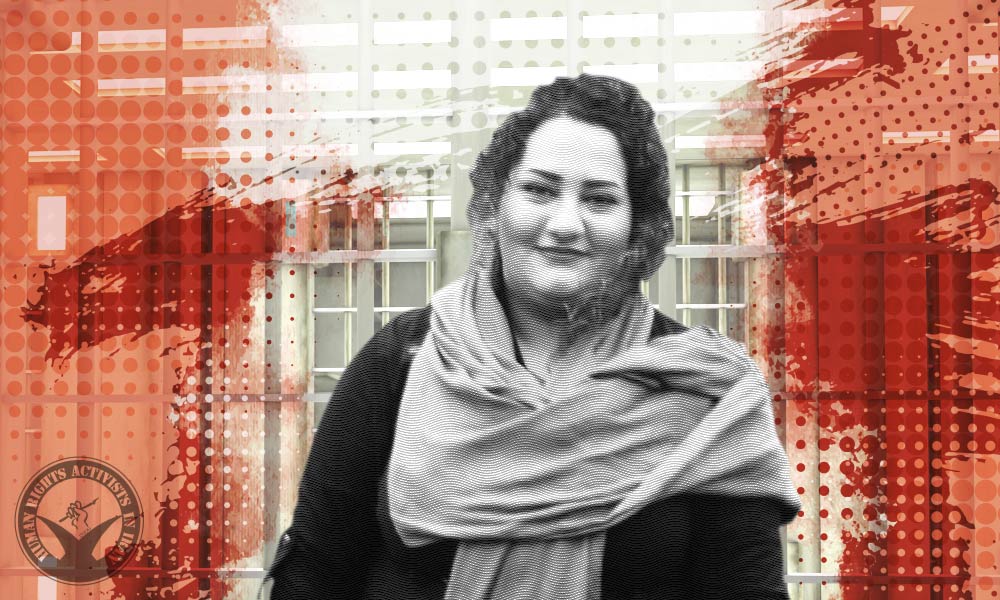
Concerns Increase about Atena Daemi’s Condition in Rasht Prison After Two Months Incommunicado

After two months in detention, civil activist Atena Daemi is still incommunicado in Rasht’s Lakan Prison.

According to HRANA, the news agency of Human Rights Activists, her family has not heard from her or received updates about her condition in two weeks, and it seems she is being denied access to phone calls, mounting concern about her situation.

On August 12, in protest against the intentional and frequent interruption of prison phone lines and the poor conditions within the prison, Atena Daemi went on a hunger strike. She broke her hunger strike after five days, after authorities restored her access to a telephone. However, according to an informed source, even at the time, she had been allowed to have only five minutes of phone time with the presence of a prison guard or at the office of the head of the prison.

Atena (Fatemeh) Daemi was sentenced to 14 years in prison on May 15, 2015, by Branch 28 of the Revolutionary Court of Tehran, headed by Judge Mohammad Moghiseh, on charges of “assembly and collusion against national security, propaganda against the regime, and offensive statements against the supreme leader”. The verdict was reduced to seven years in the court of appeal, from which five years is enforceable grounded on Article 134 of the Islamic penal code.

She began serving her prison term in December 2016. In 2018, while enduring her sentence in the women’s ward of Evin Prison, she and Golrokh Ebrahimi, another civil activist, faced a new case, for which they were sentenced to an additional three years and seven months in prison by Branch 26 of the Revolutionary Court of Tehran.

The verdict was upheld by the court of appeal. By applying Article 134, two years and one month of this term are enforceable. Additionally, they were condemned to a two-year prohibition from membership in political groups and parties.

Once again, in July 2020, the Revolutionary Court of Tehran opened a new case and sentenced her to two years imprisonment and flogging of 74 lashes. Her request for a retrial was dismissed by the Supreme Court of Iran in March 2021. She and her family have been frequently under pressure by security forces and judiciary officials.

On March 16 of this year, she was transferred from Evin Prison to Lakan Prison in Rasht.


Roya Jalali Sentenced to Two Years of Suspended Imprisonment

The Sanandaj Revolutionary Court recently sentenced Sanandaj resident Roya Jalali to two years suspended imprisonment.

According to HRANA, the news agency of Human Rights Activists, quoting Kurdpa, Branch 1 of the Sanandaj Revolutionary Court, headed by Judge Saeedi, convicted Jalali on a charge of “membership in an opposition political party”.

On February 2, Roya Jalali was arrested violently at her home and released on bail after spending one month in detention.

She suffers from multiple sclerosis (MS) and was denied access to lawyers, phone call and family visitation throughout her detention.

Earlier, her husband, Khabat Mafakheri, was also sentenced to four years suspended imprisonment on the charge of “collaboration with one of opposition political parties” by the Sanandaj Revolutionary Court.

Azerbaijani Turk Activist Nader Sadeghian Sentenced to Four Months Imprisonment

On October 20, Azerbaijani Turk activist Nader Sadeghian was sentenced to four months in prison by Branch 1 of the Revolutionary Court of Tabriz city.

According to HRANA, the news agency of Human Rights Activists, 100 days of this term has been suspended for four years.

The court, headed by judge Hamlbar, issued the verdict to his lawyer. Mr Sadeghian has been convicted of the charges of “online provoking people to act the violent crimes.”

On Saturday, July 24, a number of Tabriz’s citizens protested in support of Khuzestan protests against water shortages and general mismanagement of the crisis. During this protest, a number of people were arrested.

Nader Sadeghian was arrested on July 25, by intelligence agents and transferred to a security detention center in Tabriz. After 17 days, he informed his family about his relocation to Tabriz Prison. He was released on bail on October 15.


Workers’ Rights Activist Othman Esmaeili Arrested by Security Forces

On Wednesday, October 20, workers’ rights activist Othman Esmaeili was detained by security forces.

According to HRANA, the news agency of Human Rights Activists, Esmaeili was transferred to an unidentified location following the arrest.

As an informed source told HRANA, ten security agents arrested the activist at 6 pm in front of his home in Saqqez City. According to the source, the security forces had been monitoring the house all day.

As of this writing, the reason for the arrest and charges against him are unknown.

Imprisoned Azerbaijani Turk Activist Abbas Lessani Dispatched to Medical Clinic

Yesterday, October 21, due to acute pain in his knees and backbone, Azerbaijani Turk activist Abbas Lessani was dispatched to a medical clinic outside Ardabil Prison.

According to HRANA, the news agency of Human Rights Activists, Lessani was dispatched to a clinic for an MRI test due to acute pain in knees and backbone. This is the third time that he has been dispatched outside of the prison for treatment.

Lessani has been held in Ardabil Prison since January 2019. In two separate cases, he has been sentenced to ten years and ten months combined.

On May 25, 2021, he was sent off to the hospital for the treatment of painful backbone and knees.

On June 24, 2021, due to a number of medical problems including high blood pressure, he was sent off shortly to a medical clinic in Ardabil for a medical test. After echocardiography, he was diagnosed with stenosis (a widening of the opening of a heart valve). Therefore he requires further treatment outside of the prison.

On January 15, 2019, Abbas Lessani was summoned by Branch 2 of the Revolutionary Court in Tabriz and, following his appearance at the court, he was arrested and transferred to Ardabil Prison.

Thereafter, the Ardabil Revolutionary Court sentenced him to eight years imprisonment and 2 years exile in Yazd City on a charge of “forming a group with the purpose to disrupt national security”.

This verdict was increased to 15 years imprisonment and two years exile on appeal. In July 2020, his appeal against the conviction to the supreme court of Iran was dismissed. Under Article 134, a maximum sentence of 10 years is enforceable. In addition, earlier Branch 1 of the court of appeal in Ardabil had dismissed the request of applying ” Punishment Reduction Law”.

In May 2019, in another case, Branch 26 of the Court of appeal in Eastern Azerbaijan sentenced Lessani to ten months in prison on a charge of “propaganda against the regime and in favour of opposition political groups”.

Abbas Lessani has faced other arrests and convictions due to his civil activities. In the last instance, on July 2, 2018, together with three residents of Ardabil, he was arrested by the county intelligence agents, several days before holding an annual gathering in Babak Fort (a gathering to celebrate the Babak Khorramdin’s birthday).

He was reportedly arrested for publishing a video in which he had encouraged people to attend the gathering. After spending nine days in detention, Lessani was released on bail.