Annual Report on Execution in Iran; Marking the World Day Against the Death Penalty

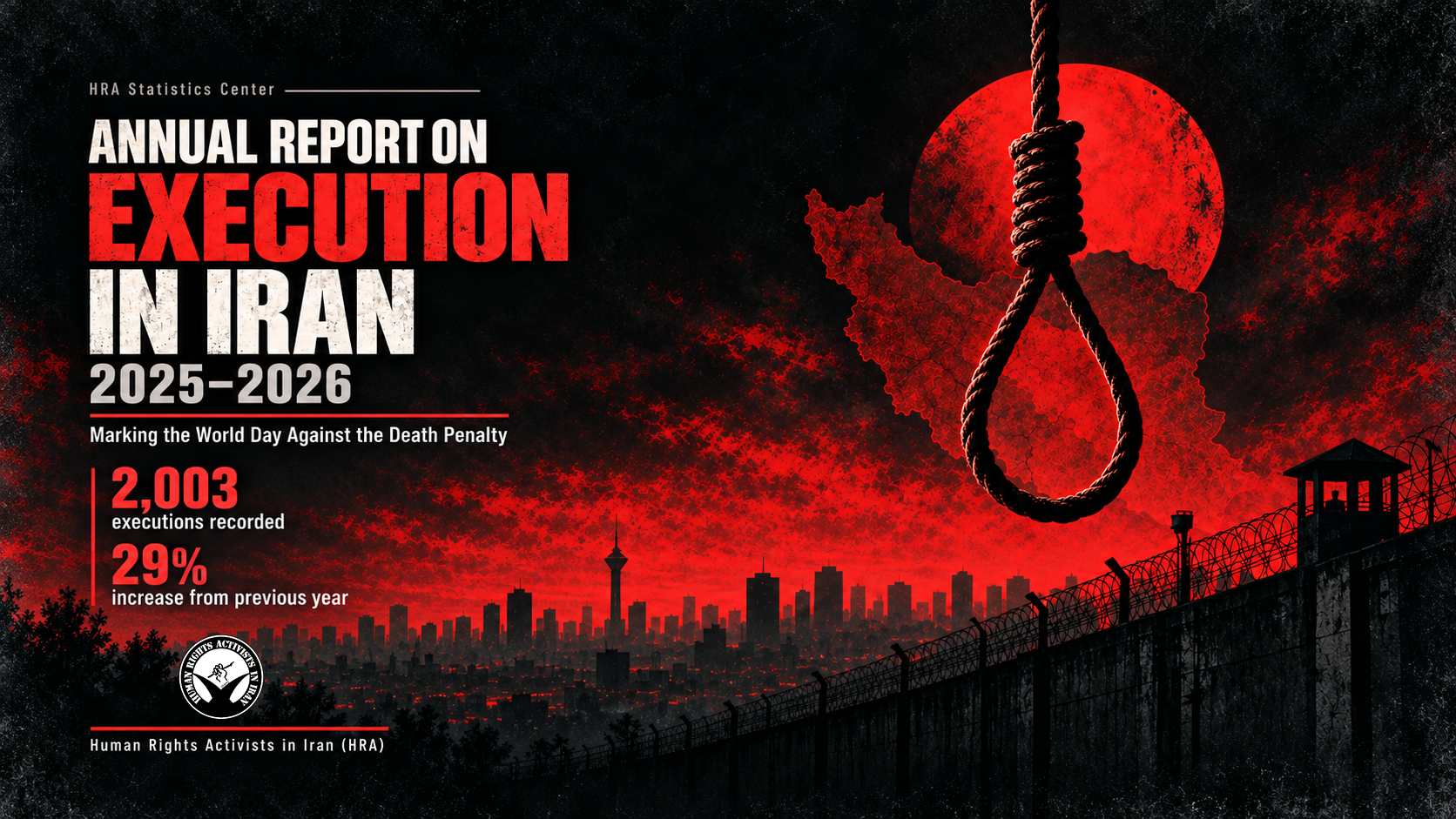
HRANA – Marking the World Day Against the Death Penalty, the Statistics Center of Human Rights Activists in Iran (HRA) has released its annual report on the use of capital punishment in Iran. The findings point to a sharp intensification in executions, continued secrecy surrounding implementation of death sentences, and an increase in political and security-related executions.

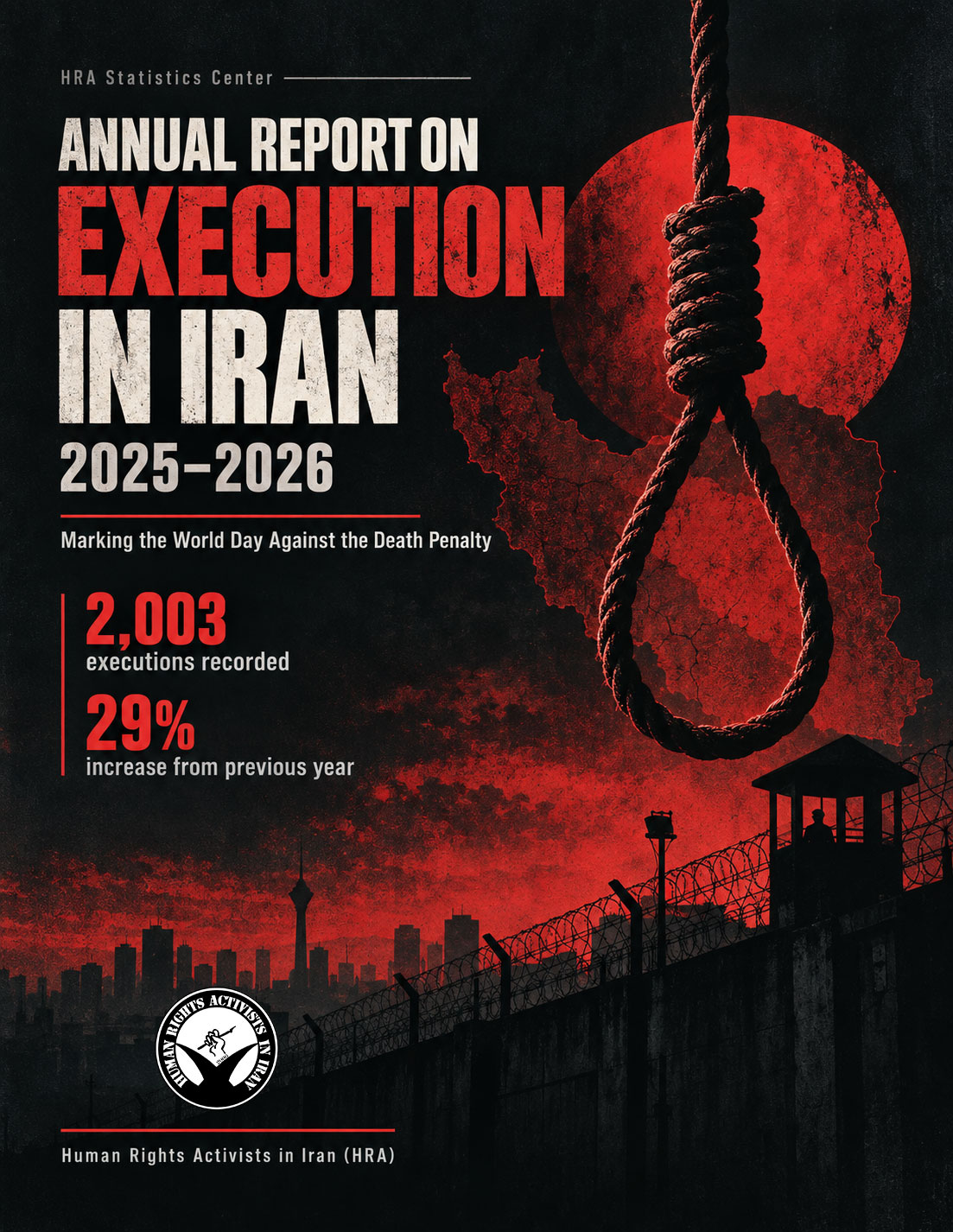
Between October 10, 2025 and October 8, 2026, HRANA documented at least 2,003 executions across Iran on the basis of 1,857 reports, an increase of approximately 29% compared with the previous reporting period. During the same period, 230 people were documented as having been sentenced to death. The full report also includes detailed statistical analysis, profiles of political and security-related executions, and documentation concerning judicial officials involved in issuing or upholding death sentences.

Executions in Iran: Key Figures

IndicatorData
Total executions documented2,003
Change from previous periodApproximately 29% increase
Average frequency of executionApproximately one person every 4.35 hours
Death sentences issued230
Women executed47
Juvenile offenders executed4
Public executions9
Political and security-related executions69
Executions unannounced by official sourcesApproximately 95%

Rising Executions and the Monthly Pattern

The 2,003 executions documented during the current reporting period represent the highest total recorded across the ten reporting periods examined in the report. Compared with 1,553 executions in 2024–2025, the total increased by approximately 29%. The current figure is also more than 182% above the ten-period average of 710 executions.

Monthly data show that executions peaked in December 2025. By contrast, March 2026 recorded the lowest total among complete months. The October 2026 figure covers only the first seven days of the month and therefore should not be compared directly with full-month totals.
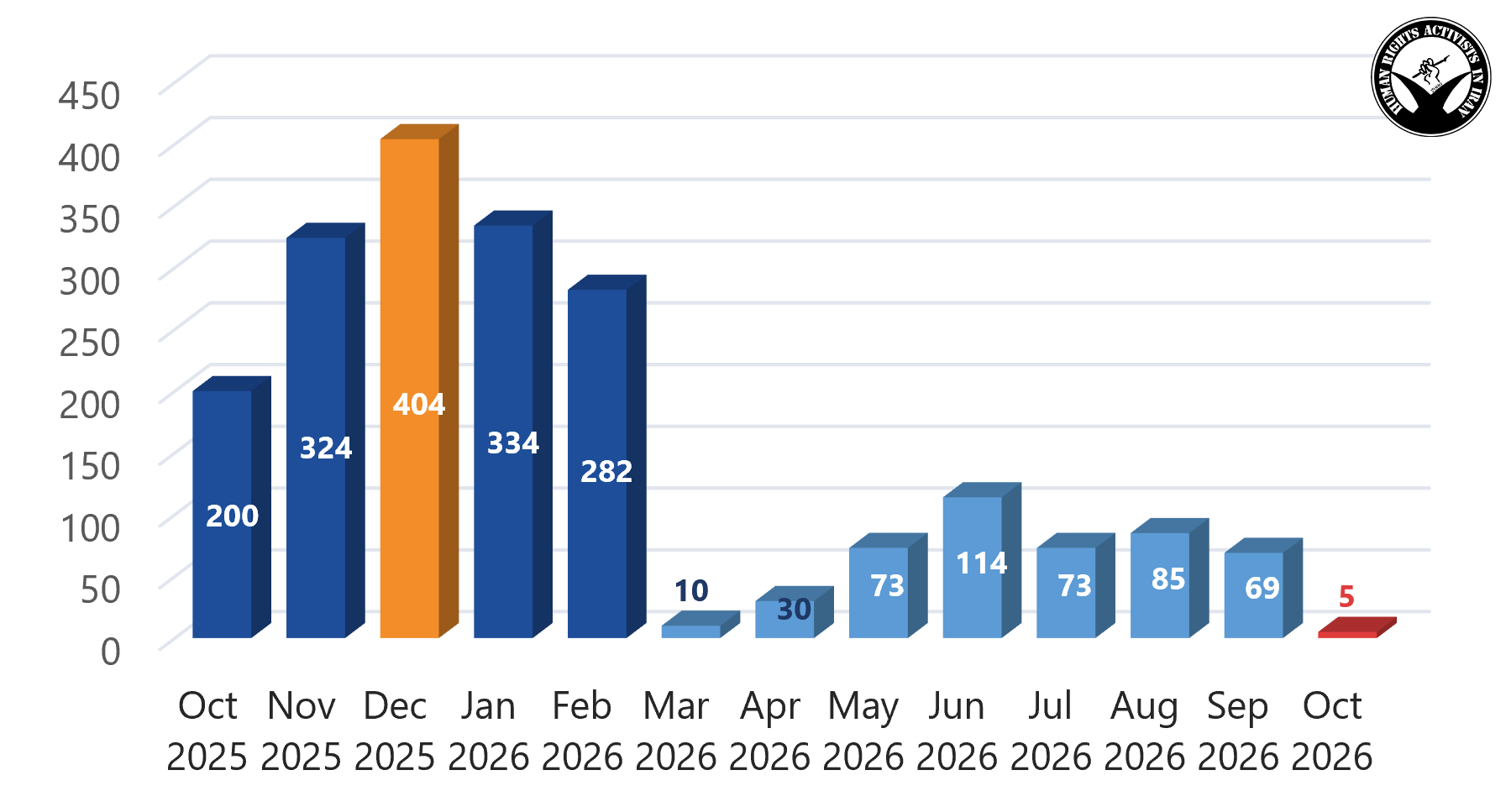
CHART 1 — Monthly Executions

Charges: Murder and Drug Offenses Dominate

The distribution of charges resulting in execution shows a notable shift from the previous period. According to HRANA documentation, 57.56% of those executed were convicted of murder and 36.25% of drug-related offenses. Political and security-related moharebeh or baghi charges accounted for 2.40%; other or unknown charges for 1.10%; security charges including espionage, assassination or bombing for 0.90%; rape for 0.80%; non-political moharebeh for 0.80%; efsad-e fel-arz (corruption on earth) for 0.15%; and economic crimes for 0.05%.

Taken together, murder and drug-related offenses account for more than 93% of all documented executions. At the same time, the increase in political and security-related executions, and the connection of a significant number of those cases to protests, stands out as a defining feature of the current reporting period.
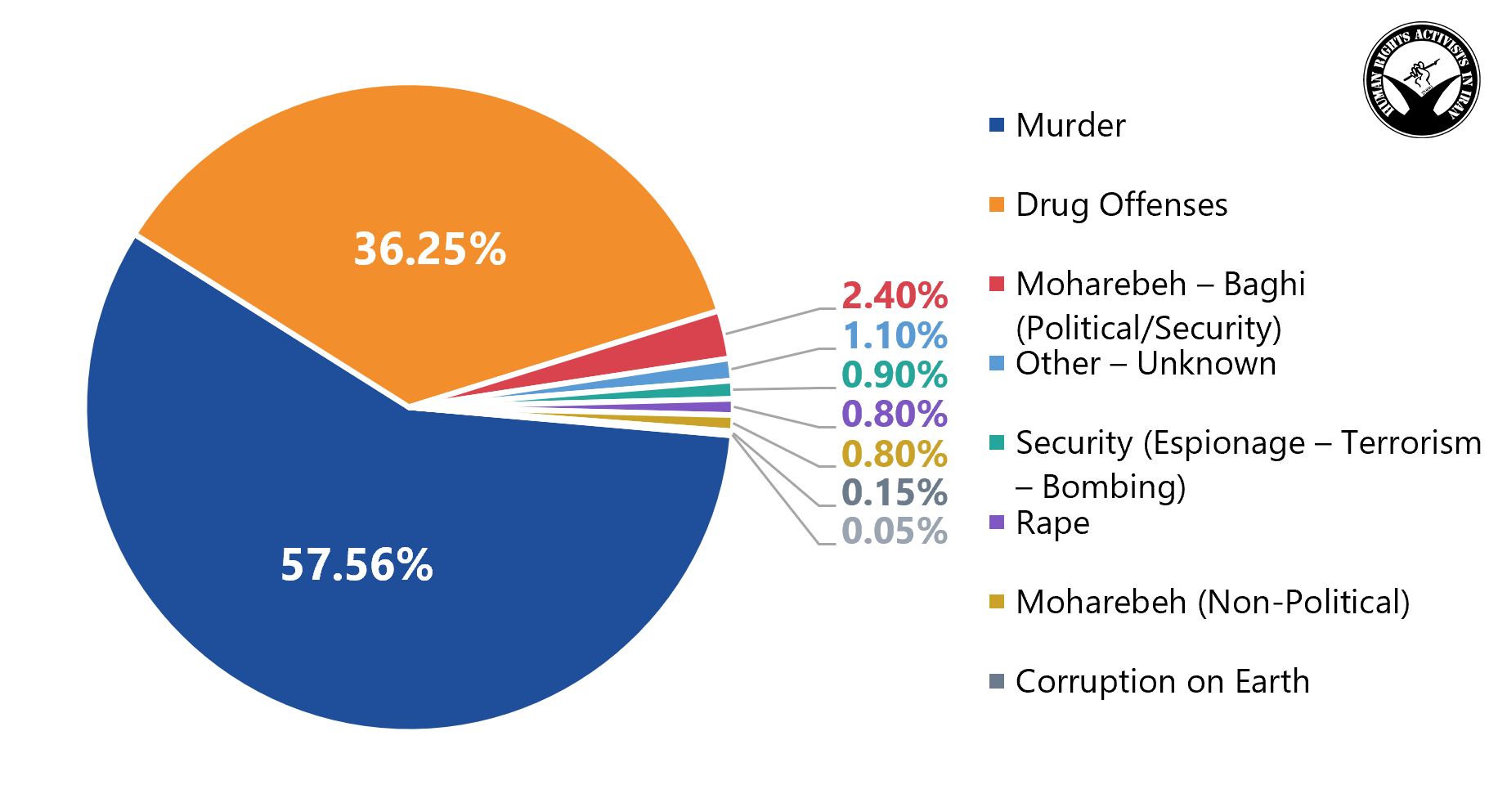
CHART 2 — Executions by Charge

Geography of Executions: Concentration in Several Provinces and Prisons

By location of execution, Razavi Khorasan recorded the highest number with 200 executions, followed by Isfahan with 164 and Alborz with 123. Fars recorded 119, Khuzestan 112 and Lorestan 102. These figures are calculated on the basis of prison location and do not necessarily reflect the place of residence or alleged offense of the person executed.

Per-capita figures provide a different picture, particularly in smaller provinces. The report cautions that prisoner transfers and executions carried out outside a prisoner’s province of origin can inflate provincial rates. Tehran is not included in the per-capita table because no executions were recorded there, and 30 executions with an unknown province were excluded from that calculation.

At the prison level, Dastgerd Prison in Isfahan and Adelabad Prison in Shiraz recorded the highest numbers of executions. The spread of executions across dozens of prisons, alongside clear concentration in several facilities, illustrates both the nationwide scope and localized intensity of the death penalty.
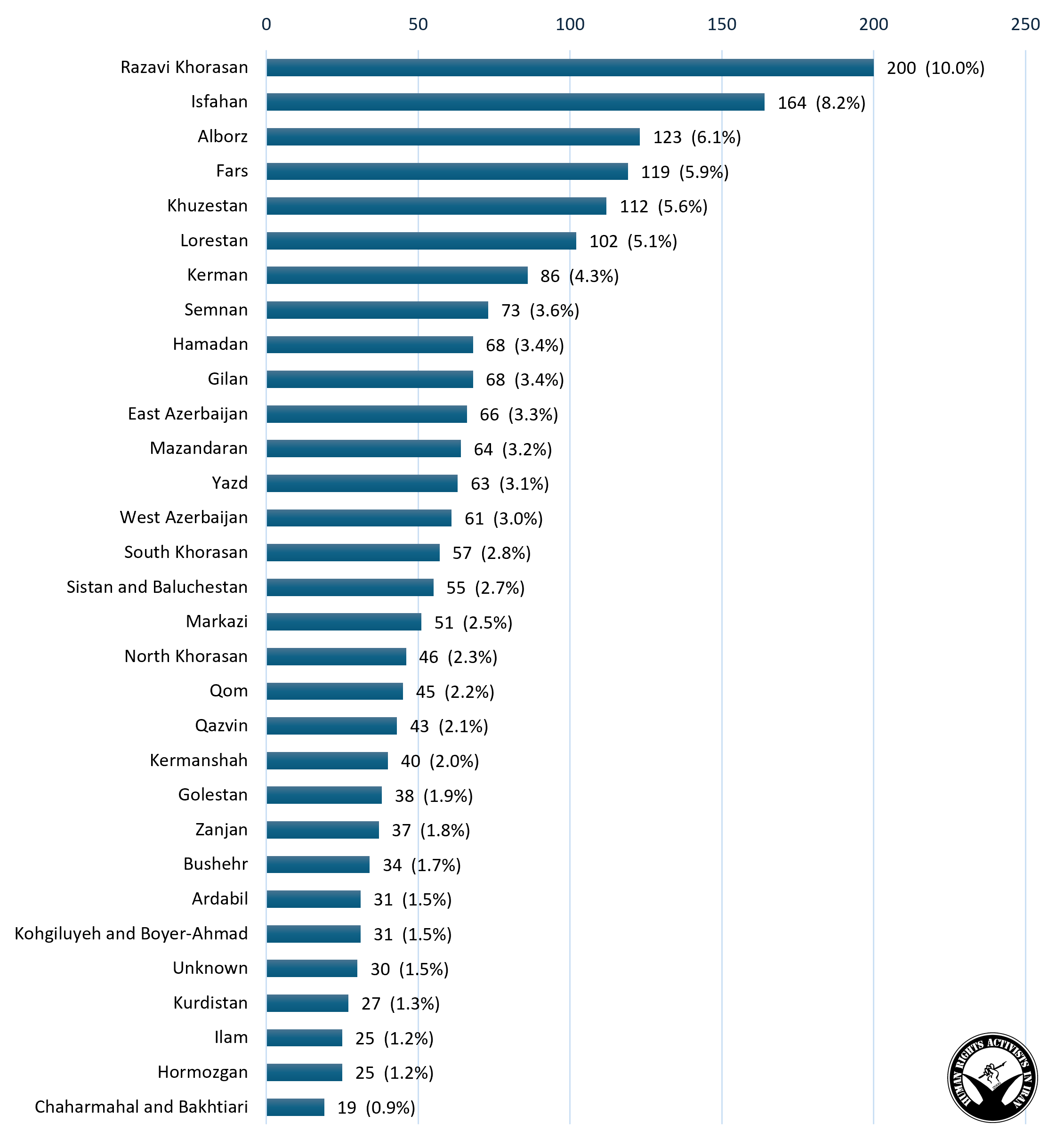
CHART 3 — Executions by Province

Secrecy, Public Executions and Gender

One of the report’s most significant findings is the continued lack of official transparency. Approximately 95% of documented executions were carried out secretly or without announcement in official or domestic media, while only about 5% were reported through official or domestic sources. This pattern sharply limits public oversight and independent assessment of execution practices.

Of the 2,003 executions documented, 9 were carried out in public, representing about 0.4% of the total. Forty-seven women were executed during the reporting period. Four people whose identities and case histories were verified were under the age of 18 at the time of the alleged offense. Overall, 2.3% of those executed were women, 88.8% were men, and the gender of 8.9% remained unknown in the available data.

In relation to sentencing, HRA documented 230 people sentenced to death. At least 16 of those sentenced were women, 6 were sentenced to public execution, and 74 death sentences were upheld by the Supreme Court.

Ten-Year Trend: The Highest Recorded Level

A review of ten reporting periods shows that, after executions declined from 505 in 2016–2017 to 238 in 2018–2019, the trend turned upward from 2019–2020 onward. The totals then rose through 249, 272, 528, 664, 823 and 1,553 before reaching 2,003 in 2025–2026.

This trajectory places the current one-year increase within a longer pattern of escalation. Continued restrictions on access to official information, together with the very high share of unannounced executions, mean that the documented figures should be understood as the minimum that could be independently verified rather than necessarily the complete number of executions carried out.
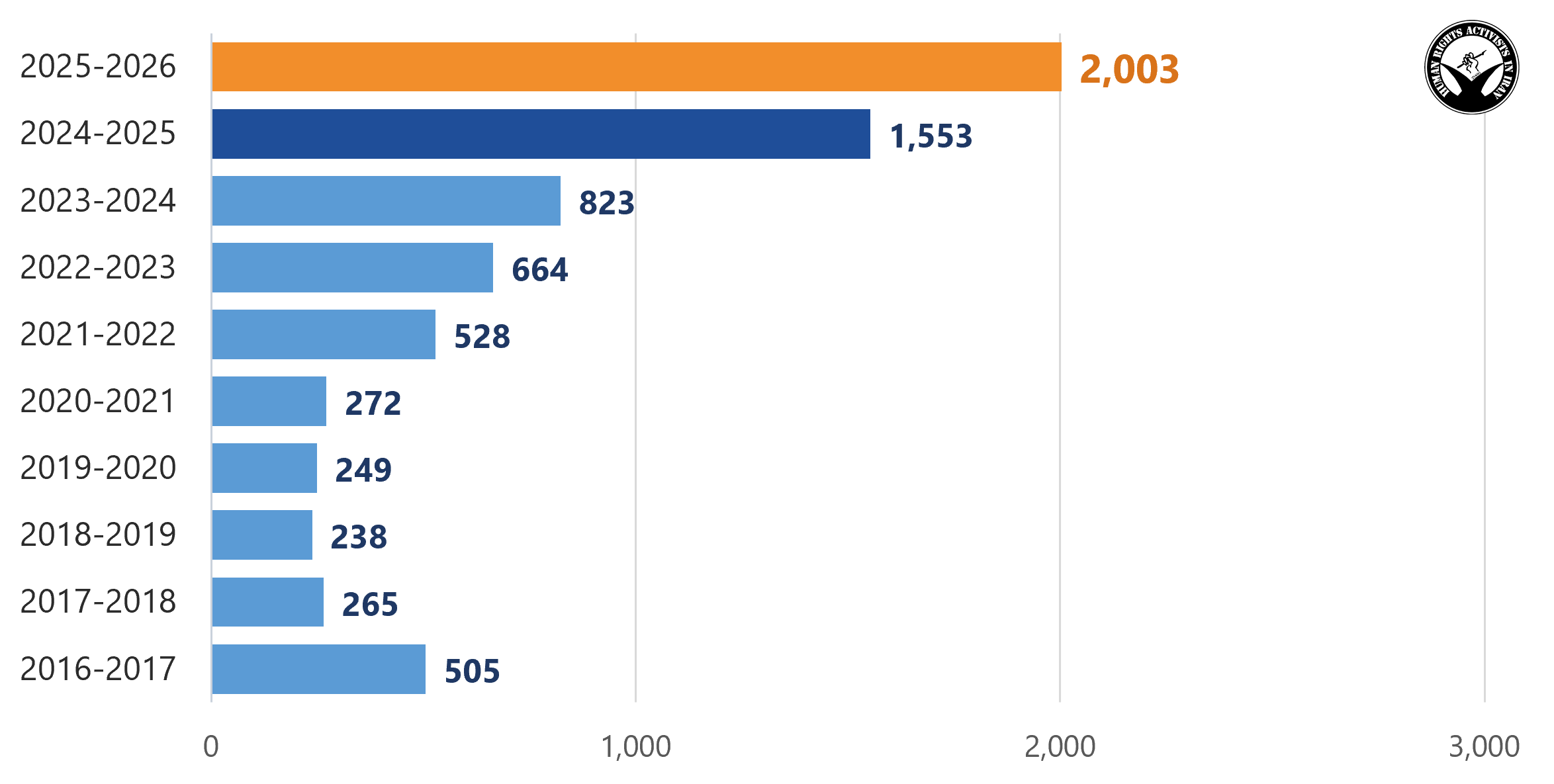
CHART 4 — Ten-Year Execution Trend

69 Political and Security-Related Executions

During the reporting period, HRANA documented 69 people executed on political and security-related charges. Of these, 35 people — approximately 51% — were executed in connection with the January 2026 (Dey 1404) protests. Twenty-nine people were executed in April and May 2026 alone, with 14 in April and 15 in May, marking the peak of executions in this category.

Among these 69 cases, 29 people were executed on charges of moharebeh, either alone or alongside other charges. Where the province was known, Alborz accounted for the largest share with 19 cases, followed by Isfahan with 10. The province was unknown in 20 cases.

The full report provides an individual case card for each of the 69 people, setting out the charge, date of execution, case background, province or city, and prison where available. This case-level documentation allows the aggregate figures to be examined in greater detail and shows the diversity of charges and case backgrounds included within the political and security-related category.

Judicial Actors Involved in Issuing or Upholding Death Sentences

For the first time in this format of the annual report, a dedicated section documents judges and courts identified in death-penalty cases. This research covers October 10, 2025 through September 26, 2026, meaning that its documentation window ends twelve days before the October 8, 2026 cutoff used for the report’s main statistical sections.

HRA’s review found that several judges identified during the current period had also appeared in earlier political, security-related or protest cases involving death sentences. Among the examples examined are Abolghasem Salavati of Branch 15 of the Tehran Revolutionary Court, Iman Afshari of Branch 26 of the Tehran Revolutionary Court, Vahid Hemmatnejad of Branch 5 of the Isfahan Revolutionary Court, Ahmad Darvish-Goftar of Branch 1 of the Rasht Revolutionary Court, Reza Najafzadeh of Branch 3 of the Urmia Revolutionary Court, and Seyed Mahmoud Sadati of Branch 1 of the Shiraz Revolutionary Court.

The report emphasizes that this list is not exhaustive. Iranian authorities routinely withhold information about capital proceedings, and public reporting often fails to identify the presiding judge or even the relevant branch. Accordingly, the absence of a judge’s name from the report should not be read as evidence that the judge was not involved; rather, it reflects the limits of independently verifiable information.

A separate section also addresses Supreme Court review and distinguishes between issuing a death sentence at trial and later upholding or reviewing that sentence. The available documentation identifies judges from Branches 9, 20, 39 and 41 of the Supreme Court in connection with specific death-penalty cases.

Methodology and Data Limitations

HRA’s Statistics Center relies on HRANA reporting, a nationwide volunteer network, verified open-source material, and official judicial announcements. Because independent human rights groups cannot operate freely in Iran, access to prisons and courts is restricted, and many executions are deliberately concealed, a margin of error is unavoidable.

The figures in this report therefore reflect the capacity of civil society to document and independently verify executions rather than a claim to a flawless count of every execution carried out. The fact that approximately 95% of executions were not announced by official sources underscores the importance of independent monitoring and verification in assessing the true scale of capital punishment in Iran.

Access the Full Report

The full report contains detailed statistical tables, charts, provincial and prison-level data, profiles of all 69 people executed on political and security-related charges, and the section documenting judicial officials. For case details, sources and supporting data, download and read the complete report.
Download the full PDF report here

Annual Report on Executions in Iran: Marking the World Day Against the Death Penalty

Human Rights Activists News Agency (HRANA)– Ahead of the World Day against the Death Penalty, the Center of Statistics of Human Rights Activists in Iran (HRA) has published its annual report in an effort to inform the public about situation of the death penalty in Iran, particularly thousands of individuals facing the death penalty and awaiting looming executions.

HRA’s Statistics Center relies on the work of HRANA reporters, as well as a network of independent and verifiable sources. It also incorporates the judicial authorities’ announcements or confirmations of prisoner executions on media, and as such, is exposed to a margin of error representing efforts by the Iranian authorities to omit, conceal, or restrict the collection of such data.

Between October 10, 2023, and October 8, 2024, at least 811 individuals were executed by hanging in Iran, rising to 23.06% compared to the same period last year. Of these executions, four were carried out in public. Many of the defendants were denied a fair trial.

HRANA obtained 721 reports regarding executions and death penalty in Iran during this period. The identified executed individuals, include 23 women and 4 juvenile offenders under the age of 18 at the time of alleged crime. Compared to the last period, the execution of female offenders has increased 35.29%.

According to the reports obtained by HRANA, over this period, Iranian authorities sentenced at least 186 defendants to death penalty, including at least 12 women, and 3 individuals to public execution. Death sentences issued increased by 13.41% compared to the last year. In the reporting period, the Supreme Court additionally upheld 59 previously imposed death sentences.

The chart below shows a breakdown of executions by capital offense: 55.49% were charged with drug trafficking, 35.51% with murder, 2.34% with rape, 2.34% with unknown offenses, 1.23% with spying, terror, and bombing, 1.11% with Corruption on Earth (Non-political), 0.86% with Political or Security-related offenses, 0.62% with armed robbery and 0.49% with Corruption on Earth.

execution in Iran

The pie chart below displays execution numbers by the province in which they took place. According to this chart, the Alborz (where three overcrowded prisons are located)  had the highest number of executions at 21.70%. Fars and Isfahan Provinces come second and third, with 9.86% and 6.78%, respectively.

The chart below depicts the distribution of executions’ information sources. The chart indicates that 71.64% of HRANA-confirmed executions were not announced by the official Iranian sources. Undisclosed executions are referred to as “secret” executions.


The chart down shows the execution numbers by gender.

The chart below displays execution numbers by the prison where the executions were carried out. The Qezel Hesar Prison of Karaj And Adel Abad of Shiraz officials have carried out the highest number.

The chart below displays percentage of executions carried out in public vs the number of executions that were carried out in prison. According to statistics, 0.49% of the executions in Iran were carried out in public.


For further inquiries please contact Skylar Thompson, Deputy Director Human Rights Activists in Iran (HRA) at [email protected]

Two Inmates Executed in Mashhad for Drug-Related Crimes

Two prisoners, found guilty of drug-related offenses, were executed at Vakilabad Prison in Mashhad, as reported by Haal Vsh.

The individuals have been identified as Mostafa Khosh Shaneh, 30 years old, and Saeed Brahui Makaki, 27 years old. Both were married and fathers of one and two children, respectively.

Brahui Makaki’s execution took place on Sunday, September 24, while Khosh Shaneh was executed on Monday, September 25.

According to a source, both Khosh Shaneh and Brahui Makaki were sentenced to death by the Mashhad Revolutionary Court approximately four and two years ago.

At the time of writing, no official sources or domestic media outlets within the country have reported on these executions.

In 2022, the Department of Statistics and Publication of Human Rights Activists in Iran recorded 457 reports concerning the death penalty. Approximately 43% of these executions were linked to drug-related charges.


Execution of Three Inmates in Shiraz

On September 17, 2023, Adelabad Prison in Shiraz carried out the execution of two inmates, who had been convicted in the same legal case, both on charges related to drug offenses.

The individuals executed have been identified by the Iran Human Rights Organization as Ramezan Yavari and Mozaffar Sanjarani. Their convictions date back to approximately three years ago.

Furthermore, Adelabad Prison had witnessed another execution on September 13, involving an inmate who was sentenced for a murder-related offense. The identity of this inmate remains undisclosed at this time.

It is noteworthy that as of now, there have been no reports or coverage of these executions from official sources or domestic media outlets within the country.

In 2022, the Department of Statistics and Publication of Human Rights Activists in Iran recorded 457 reports concerning the death penalty. Approximately 43% of these executions were linked to drug-related charges.


Two Inmates Executed in Hamedan Prison

Hamedan Prison, August 29, 2023 – Two inmates convicted of drug-related crimes were executed today.

The individuals, identified as Hamed Sargazi and Esmaeil Hajizadeh by HRANA, were put to death after being found guilty of drug offenses that led to their death sentences three years ago.

The prevalence of capital punishment in cases involving drug offenses continues to be a concern. According to the Department of Statistics and Publication of Human Rights Activists in Iran, 457 cases warranting the death penalty were reported in 2022. Notably, nearly 43% of these cases stemmed from drug-related charges, shedding light on an ongoing issue.

Subscribe to Our Newsletter

Now is definitely not the time to stop reading!

Three Inmates Executed in Central Prison of Karaj; Three Others Face Imminent Execution

On August 9, 2023, the Central Prison of Karaj carried out the execution of three inmates who had been convicted of drug-related offenses. Simultaneously, three other death-row inmates were transferred to solitary confinement, heightening concerns about their imminent execution.

The executed prisoners have been identified by HRANA as Amir Jahangiri, Mohsen, and Sajad (last names unknown). They had been moved to solitary confinement six days prior to their execution.

HRANA is actively engaged in gathering further information regarding this incident.

These executions bring renewed attention to the ongoing discussions surrounding the criminal justice system’s approach to drug-related crimes. In 2022, the Department of Statistics and Publication of Human Rights Activists in Iran recorded 457 reports concerning the death penalty. Approximately 43% of these executions were linked to drug-related charges.


Three Inmates Executed in Karaj

On February 14, 2023, the Central Prison of Karaj officials executed three inmates convicted of drug-related crimes and murder.

According to HRANA, the news agency of Human Rights Activists, on February 14, 2023, three inmates were executed in the Central Prison of Karaj.

HRANA has identified one of these individuals as Mehdi Doostari, previously convicted of drug offenses. HRANA is working on identifying two other executed prisoners convicted of murder.

None of the official sources and media outlets inside the country has reported these executions at the time of writing.

In 2022, the Department of Statistics and Publication of Human Rights Activists in Iran registered 457 reports related to the death penalty. This included 92 death sentences, including the conviction of 6 people to public execution and 565 execution sentences were carried out, 2 of which have been carried out in public. Based on the announced identifications of some of the executed individuals, 501 were male and 11 were female. In addition, 5 juvenile offenders were executed in 2022, meaning they were under the age of 18 at the time they committed the crime.

Five Inmates Executed in Different Prisons 

In recent days, five inmates were executed in Minab, Dastgerd, Adel-Abad, Zanjan and Central Karaj Prisons.

According to HRANA, the news agency of Human Rights Activists, quoting Iran Human Rights Organization, on Thursday, May 19, 2022, an inmate identified as Ahmad Gashul, 21, was executed in Dastgerd Prison in Isfahan.

In November of 2019, Gashul’s assistance in escaping two prisoners led to the death of a prison guard. 

On Wednesday, May 18, in Central Prison of Karaj, an inmate identified as Ayat Ghasemi Delfani was also executed for murder and drug-related crimes. 

According to an informed source, the murder case was about killing a fellow inmate in prison and drug-related crimes.

Additionally, Haal Vsh News reported the execution of an inmate identified as Abdolbari Rigi, 32, in Adel-Abad prison in Shiraz on May 22, 2022.

In 2019, Rigi was arrested for smuggling drugs and subsequently was sentenced to death by the Revolutionary Court of Shiraz. Reportedly, the prison officials did not inform his family about his execution in advance.

 Also, on May 23, 2022, Baloch Activists Campaign reported the execution of an inmate in Minab prison. The inmate, identified as Mosaddeq Malahi, was arrested in 2018 for drug-related crimes. This inmate was also executed without informing his family in advance and was denied the last family visitation.

These executions have not been reported by official sources and media outlets inside Iran so far.

Lastly, according to Rokna News, an inmate who was convicted of killing two park rangers last year was executed in Zanjan prison today.

The most recent report from the Statistics and Publication Center of the Human Rights Activists in Iran (HRA) states that between January 1 of 2021 and December 20 of 2021, at least 299 citizens, including four juvenile offenders, were executed. In addition, 85 citizens were sentenced to death in this period.

As the report points out, Iran’s judicial authorities do not publicly announce over 88% of executions. These unreported executions are known as “secret executions” by human rights organizations.

Prisoner Executed in Taybad Prison in Razavi Khorasan Province

At dawn on Monday, September 20th, a prisoner who had previously been sentenced to death on drug-related charges was executed in Taybad Prison.

According to the HRANA, the news agency of Human Rights Activists, the prisoner was a native of Herat in Afghanistan.

He was married, and had been kept in prison for the past three years. HRANA is investigating to find the exact name and more details about the identity of this man.

Iran ranks first in the world in citizen executions per capita according to international organizations. The Statistics and Publication Center of the Human Rights Activists in Iran (HRA) reported that between January 1 and December 20 of 2020, at least 236 citizens were executed. One of these citizens was executed publicly, and two were juvenile offenders.

An additional 95 citizens were sentenced to death. According to the same report, more than 72% of executions in Iran are not reported by the government or the judiciary, which human rights organizations call “secret” executions.

As of this writing, the execution of this man has not been announced by Iranian media or official sources.