Ten Death-Row Inmates Face Imminent Execution at Qezel Hesar Prison

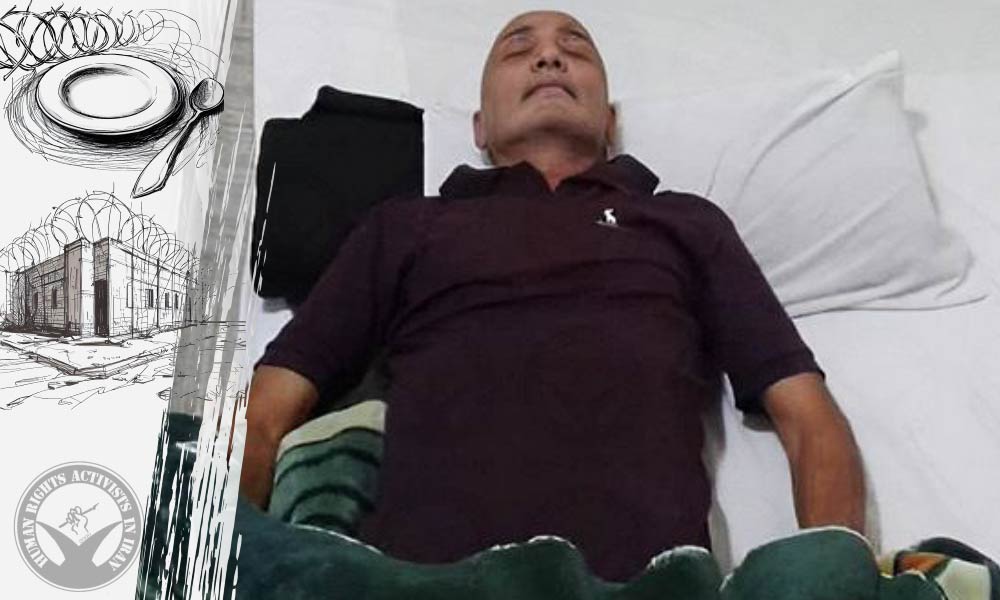
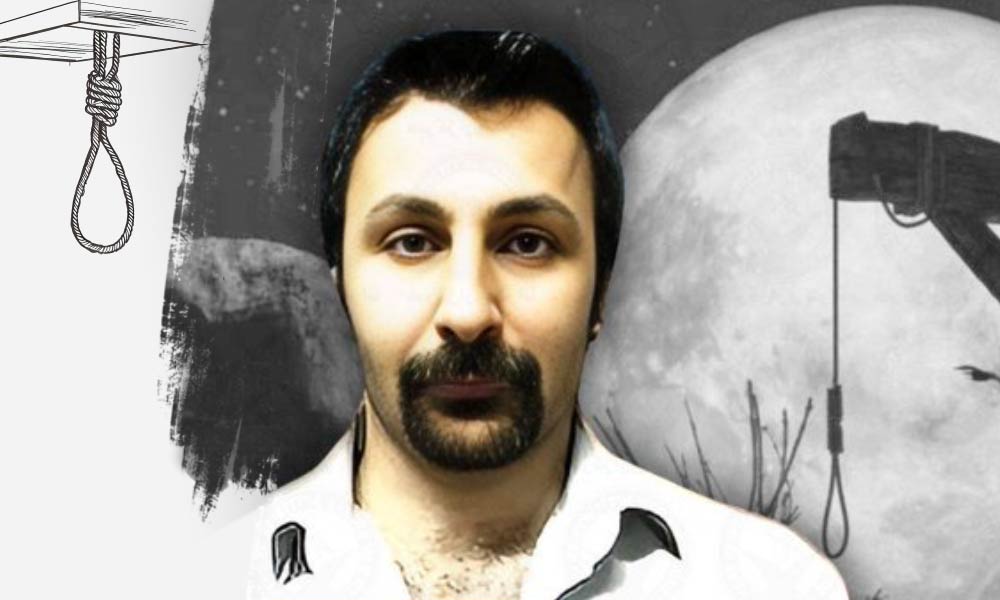
On November 7, ten death-row inmates at Qezel (Ghezel) Hesar Prison were moved to solitary confinement, signaling their impending execution.

Among these individuals, four have been convicted of drug-related offenses, five for murder, and one for Moharebeh through armed robbery. HRANA is diligently working on identifying these individuals and monitoring the situation as it unfolds.

Two Inmates Executed at Qezel Hesar Prison for Murder Convictions

On October 25, 2023, officials at Qezel (Ghezel) Hesar Prison carried out the execution of two inmates who had been convicted of murder, as disclosed by Hamshahri Newspaper.

One of the inmates had been found guilty of the tragic killing of two women five years ago, while the other inmate had been convicted of the murder of a woman he was engaged to two years ago. The other inmate had been convicted of a woman he was engaged two years ago.
The report, however, did not disclose the identities of these individuals who were subjected to capital punishment.

According to data compiled by the Center of Statistics of Human Rights Activists in Iran (HRA), between October 10, 2022, and October 8, 2023, a total of 659 individuals were executed by hanging in Iran, representing a 24% increase compared to the corresponding period in the previous year. Seven of these executions were conducted publicly. Concerningly, many of the defendants were denied access to a fair trial and due process. For details and statistics, read HRANA’s report.


Two Inmates Executed in Qezel Hesar Prison, Karaj

On October 24, 2023, two inmates convicted of rape were executed in Qezel (Ghezel) Hesar Prison, located in Karaj.

The identity of these inmates, who are Afghan nationals, remains undisclosed at this time. HRANA is actively engaged in efforts to ascertain the identities of those subjected to the execution.

It’s worth noting that, as of the time of this report, no official sources or domestic media outlets within the country have provided coverage of these executions.

According to data compiled by the Center of Statistics of Human Rights Activists in Iran (HRA), between October 10, 2022, and October 8, 2023, a total of 659 individuals were executed by hanging in Iran, representing a 24% increase compared to the corresponding period in the previous year. Seven of these executions were conducted publicly. Concerningly, many of the defendants were denied access to a fair trial and due process. For details and statistics, read HRANA’s report.

Tragic Execution of Ten Inmates at Qezel Hesar Prison

In a somber development on October 18, 2023, Qezel (Ghezel) Hesar Prison bore witness to the execution of ten inmates who had been convicted of drug-related offenses and murder.

HRANA has identified two of these individuals as Shahab Shahbazi and Mohammad Behzadi, both convicted of drug-related crimes. The organization is actively working to confirm the identities of the remaining inmates who met a similar fate.

It’s worth noting that HRANA had previously reported on the relocation of two inmates to solitary confinement within this prison, signaling the imminent implementation of the death penalty.

At the time of composing this report, official sources and domestic media outlets within the country have not yet provided any information regarding these executions.

According to data compiled by the Center of Statistics of Human Rights Activists in Iran (HRA), between October 10, 2022, and October 8, 2023, a total of 659 individuals were executed by hanging in Iran, representing a 24% increase compared to the corresponding period in the previous year. Seven of these executions were conducted publicly. Concerningly, many of the defendants were denied access to a fair trial and due process. For details and statistics, read HRANA’s report.


Execution of Inmate in Qezel Hesar Prison

On October 11, 2023, an inmate who had been convicted of murder faced execution at Qezel Hesar (Ghezel Hesar) Prison in Karaj, as revealed by Etemad News.

The prisoner who met his fate through hanging was found guilty of the murder of a friend in a coffee house seven years ago. Following the crime, he fled to Turkey, where Turkish authorities apprehended him. He was subsequently transferred to Interpol and later into the custody of Iranian authorities.

HRANA had reported just yesterday about the transfer of six death-row inmates to solitary confinement in Qezel Hesar, indicating their impending executions.

According to data compiled by the Center of Statistics of Human Rights Activists in Iran (HRA), between October 10, 2022, and October 8, 2023, a total of 659 individuals were executed by hanging in Iran, representing a 24% increase compared to the corresponding period in the previous year. Seven of these executions were conducted publicly. Concerningly, many of the defendants were denied access to a fair trial and due process. For details and statistics, read HRANA’s report.


Subscribe to Our Newsletter

Now is definitely not the time to stop reading!

Three Inmates Convicted of Drug Crimes Executed at Ghezel Hesar Prison

Ghezel Hesar Prison in Karaj carried out the execution of three inmates on August 23. The individuals had been sentenced for drug-related offenses.

Human Rights Activists News Agency (HRANA) has identified the inmates as Rahman Ebrahimi, Kiumars Rezaie, and Behrooz Rahmani. Ebrahimi and Rezaie had been serving ten-year sentences, while Rahmani had been imprisoned for three years.

At the time of writing, no official sources or domestic media outlets within the country have reported on these executions.

These executions bring renewed attention to the ongoing discussions surrounding the criminal justice system’s approach to drug-related crimes. In 2022, the Department of Statistics and Publication of Human Rights Activists in Iran recorded 457 reports concerning the death penalty. Approximately 43% of these executions were linked to drug-related charges.


Update on Bahai Citizen Payam Vali’s Condition in Ghezel Hesar Prison

Payam Vali, a Baha’i citizen, is currently serving a six-year sentence in Ghezel Hesar Prison, located in Karaj. He has been denied access to make a phone call to his family, as ordered by prison officials.

According to a reliable source who spoke to HRANA, Vali’s phone card has been blocked. He is also prohibitd from purchasing any item from the prison store. The source revealed that this prohibition was imposed after Vali gave a message via phone addressing the speakers of the Iranian Parliament.

In addition, another source close to Vali’s family informed HRANA that since late May, he has only had one visitation with his family. Furthermore, other prisoners have been threatened to refrain from providing Vali with their phone cards.

On September 24, 2022, security forces arrested Vali at his residence in Karaj, subsequently conducting a search of his house and detaining him in Rajai Shahr Prison. He was later relocated to Ghezel Hesar prison.

On May 10, 2023, the Alborz Court of Appeals sentenced Vali to six years for “collaboration with adversary countries,” three years and one month for “inciting people to commit violence,” and eight months for “propaganda against the regime.” According to Article 134 of the Islamic Penal Code, the first charge carries an enforceable prison term of six years. It is worth noting that Vali had initially been sentenced in February 2023 to ten, five, and one-year terms for the respective charges mentioned above.

According to HRANA annual report, from the full human rights reports regarding the violation of religious minorities’ rights, 64.63% belonged to the violation of the rights of Baha’is.

The deprivation of the freedom to practice their religion is a breach of Article 18 of the Universal Declaration of Human Rights and Article 18 of the International Covenant on Civil and Political Rights. The United Nations covenant holds that every person has the right to freedom of religion, freedom of converting religion, as well as freedom of expression, individually or collectively; openly or secretly.

Two Baha’i Citizens Arrested

HRANA, Human Rights Activists news agency– Two Baha’i citizens, Afif Naeimi (Naimi) and Valliollah Ghadamian, were arrested by security forces on April 29 and May 1, 2023, respectively.

According to a source close to Naimi’s family, on April 29, Naeimi and several of his relatives were gathered in a garden near Karaj when security forces raided the location and arrested Naeimi. He was then taken to Rajai Shahr Prison.

Naeimi is a former member of a now-disbanded Baha’i group known as the “Yaran e Iran” or “Friends of Iran” that addressed the spiritual and social needs of the Baha’i community.

n 2018, Naeimi was released from Ghezel Hesar prison after serving approximately 10 years in prison. However, on July 31, 2022, he was arrested again, and the Karaj Revolutionary Court sentenced him to seven years in prison in a legal case along with twelve other Baha’i co-defendants.

On May 1, 2023, Valliollah Ghadamin was also arrested by security forces and taken to an undisclosed location.

On May 1, 2023, security forces also arrested Valliollah Ghadamian at his residence in Tehran and took him to an undisclosed location. Ghadamian is a member of a Baha’i association that maintains a Baha’i cemetery in Tehran known as Golestan-e-Javid. In recent days, regime officials have refused to issue burial permits to Baha’is in this cemetery.
The reason for these arrests is currently unknown.

According to HRANA annual report, from the total human rights reports regarding the violation of religious minorities’ rights, 64.63% belonged to the violation of the rights of Baha’is. The Baha’i community in Iran has been subjected to various forms of discrimination and persecution for decades. The Iranian government has imposed severe restrictions on Baha’is’ religious practices, education, employment, and civil rights.


Baha’i Citizen Payam Vali Sentenced to 16 Years

The Alborz Revolutionary Court sentenced Baha’i citizen Payam Vali, imprisoned in Ghezel Hesar Prison, to 16 years imprisonment, pre-trial detention included. He was also banned from leaving the country for two years and sentenced to two years in exile in Yasuj.

According to HRANA, the news agency of Human Rights Activists, Baha’i citizen Payam Vali was sentenced to 16 years in prison.

According to this verdict, Vali received ten years for “collaboration with hostile countries,” five years for “inciting people to commit violence,” and one year for “propaganda against the regime.” As additional punishment, he was banned from leaving the country for two years and sentenced to a two-year compulsory residence in Yasuj County.

If the verdict is upheld on appeal, based on Article 134 of the Islamic Penal Code, ten years in prison for “collaboration with hostile countries”, will be enforceable.

On September 24, 2022, security forces arrested Vali at his house in Karaj, searched the house, and detained him in Rajai Shahr Prison. He was later relocated to Ghezel Hesar prison.


Two Inmates Executed in Ghezel-Hesar Prison

On January 5, 2023, two death-row inmates previously convicted of drug-related crimes were executed in Ghezel-Hesar Prison, Karaj.

According to HRANA, the news agency of Human Rights Activists, two inmates identified by HRANA as Mehdi Asgari and Rostam Abbaszadeh were executed in Ghezel-Hesar prison.

An informed source told HRANA that Abbaszadeh had been released after serving out his sentence for drug offences in 2006. However, when he was arrested for the second time, he received a life sentence after reviewing the first case and a death sentence for the second case.

None of the official sources and media outlets inside the country has reported these executions at the time of writing.

In 2022, the Department of Statistics and Publication of Human Rights Activists in Iran registered 457 reports related to the death penalty. This included 92 death sentences, including the conviction of 6 people to public execution and 565 execution sentences were carried out, 2 of which have been carried out in public. Based on the announced identifications of some of the executed individuals, 501 were male and 11 were female. In addition, 5 juvenile offenders were executed in 2022, meaning they were under the age of 18 at the time they committed the crime.