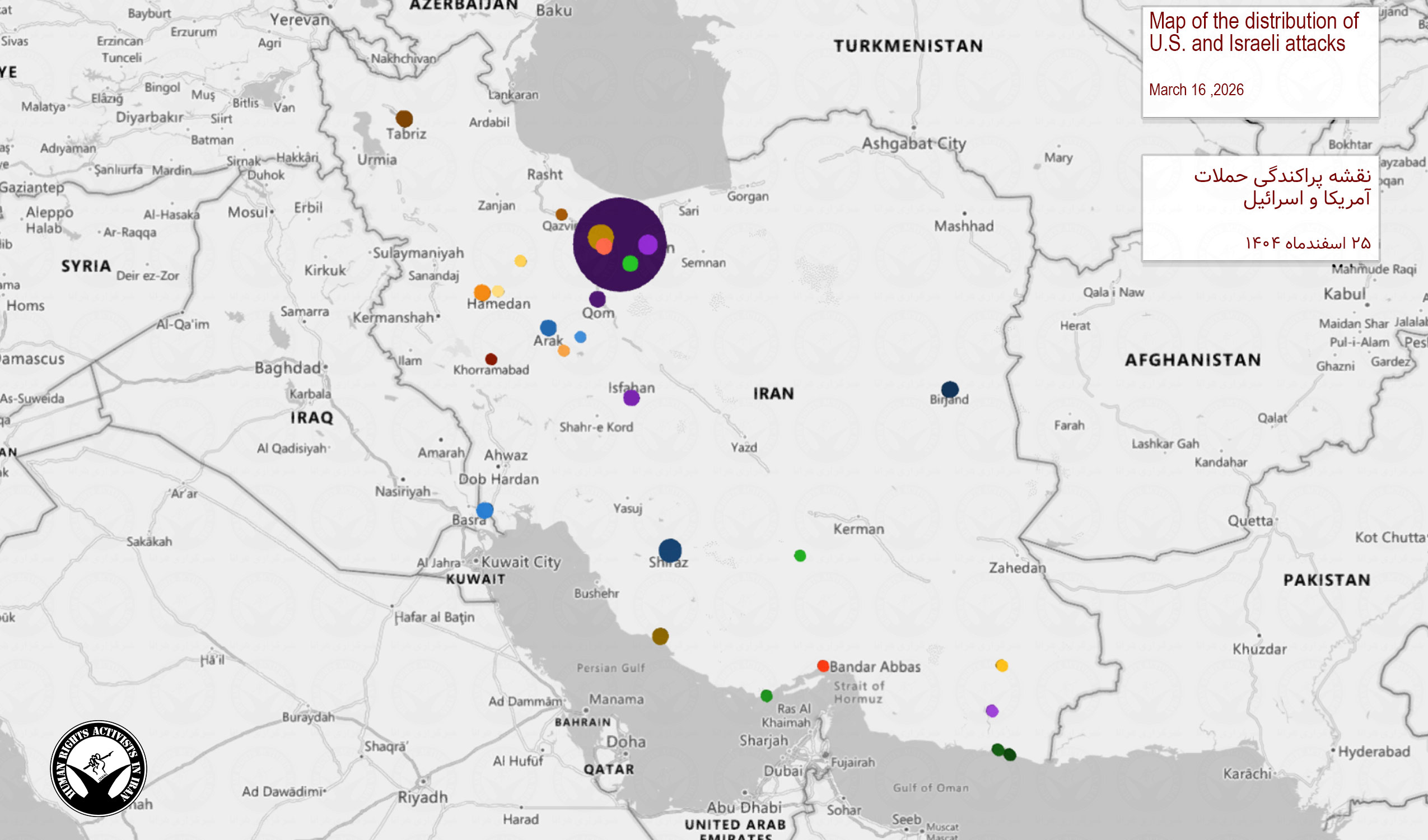
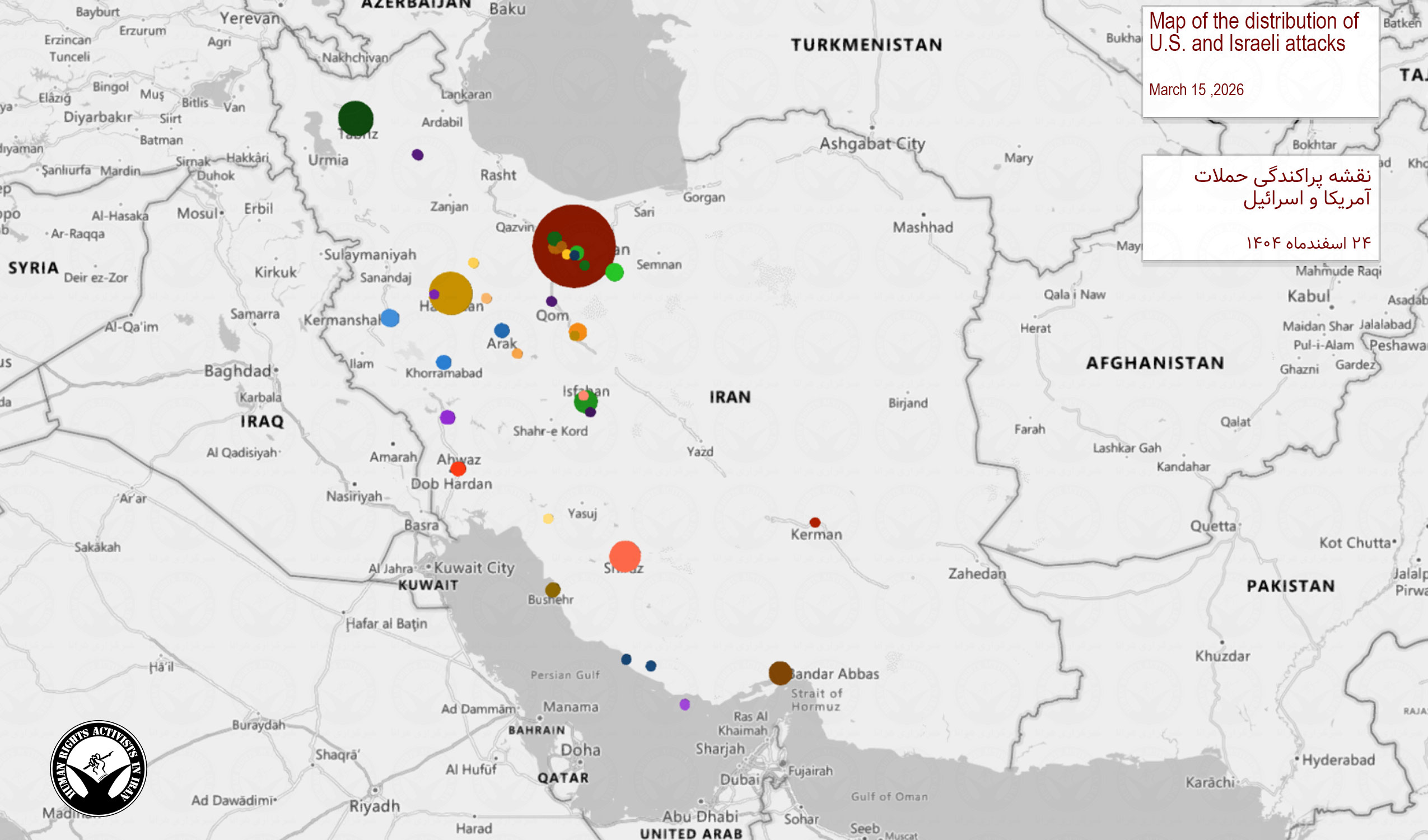
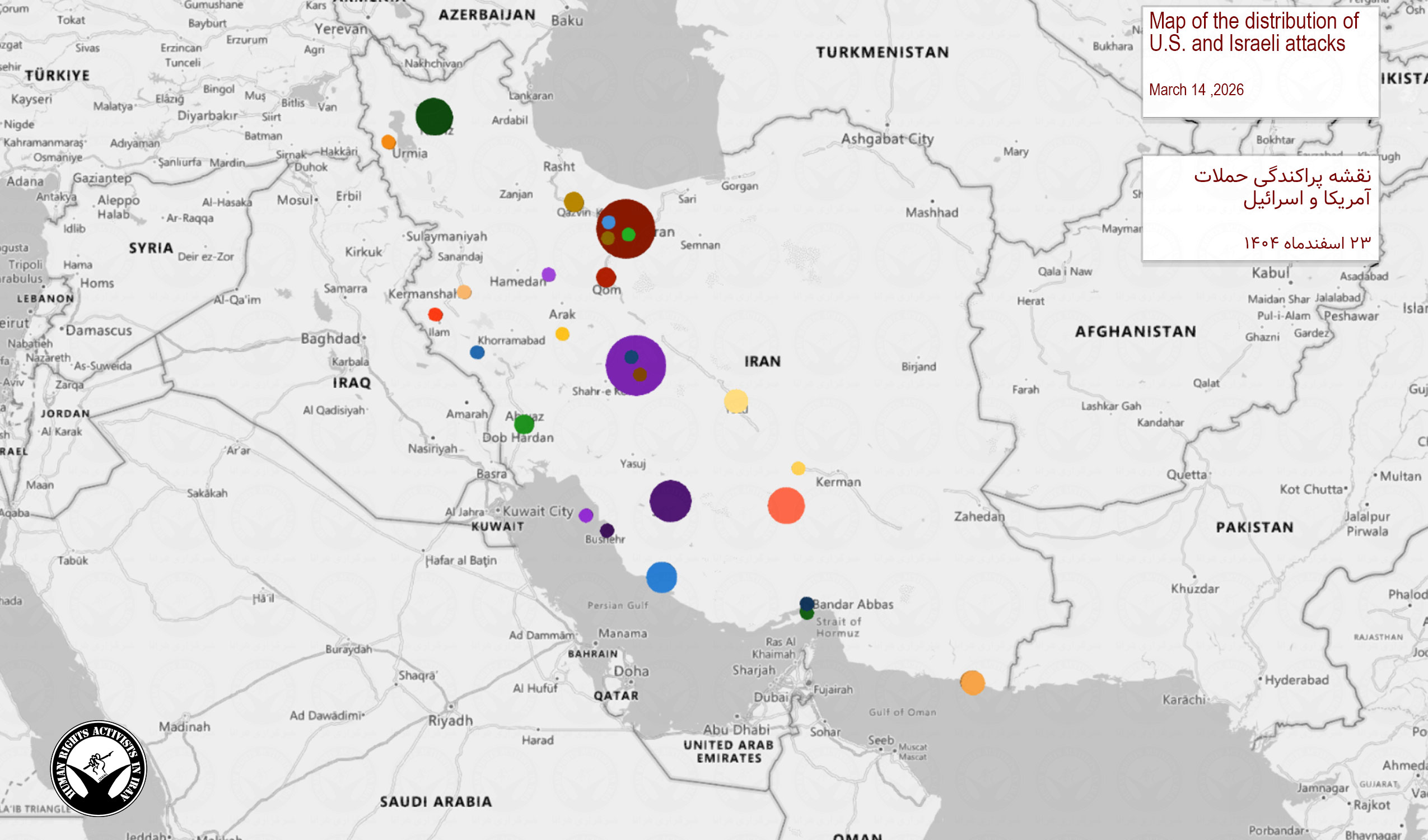
HRANA – As the second week since the outbreak of war and military clashes in Iran, beginning on February 28, 2026, comes to an end, aggregated data recorded by HRANA provides a broad picture of the geographic scope, intensity of the attacks, and the human consequences of these hostilities. The conflict has so far resulted in 4,765 human casualties, including 205 children, and has caused damage to 20 hospitals, 36 schools, and 98 residential buildings or neighborhoods. At least 3.2 million people have been internally displaced across Iran. During the same period, 203 individuals have been arrested by security forces in connection with the ongoing developments.
Over the past fourteen days, cities across Iran, particularly the country’s capital, have witnessed one of the most extensive waves of military attacks in recent decades. Verified data collected by HRANA indicates that the attacks have simultaneously targeted a wide range of military objectives, civilian infrastructure, and residential areas.
This report represents the first preliminary statistical overview of the first two weeks of the war. It has been compiled based on thousands of field reports, media data, local sources, and multi-stage verification processes. All figures presented in this report are based on the minimum numbers that could be confirmed and may be updated as further investigations continue and new information becomes available.
Status of Report Verification
Over the past two weeks, a very large volume of information and reports from various parts of Iran has been submitted to HRANA’s monitoring system. After an initial review and cross-checking with multiple sources, these data were classified into three levels of credibility.
According to the assessments conducted, approximately 57% of the reports have been fully verified, with their details matched against independent sources. Around 9% of the data are in the preliminary verification stage, meaning that initial evidence supports their credibility but additional information is still required for full confirmation. Meanwhile, 34% of the reports remain under review, and the verification process for them is ongoing.
This complexity in the verification process is largely driven by severe communication restrictions. Widespread internet shutdowns in Iran, security limitations, and the difficulty of accessing the locations where attacks occurred have posed significant challenges to the independent verification of information.
Overview of Attacks During the First Two Weeks of the War
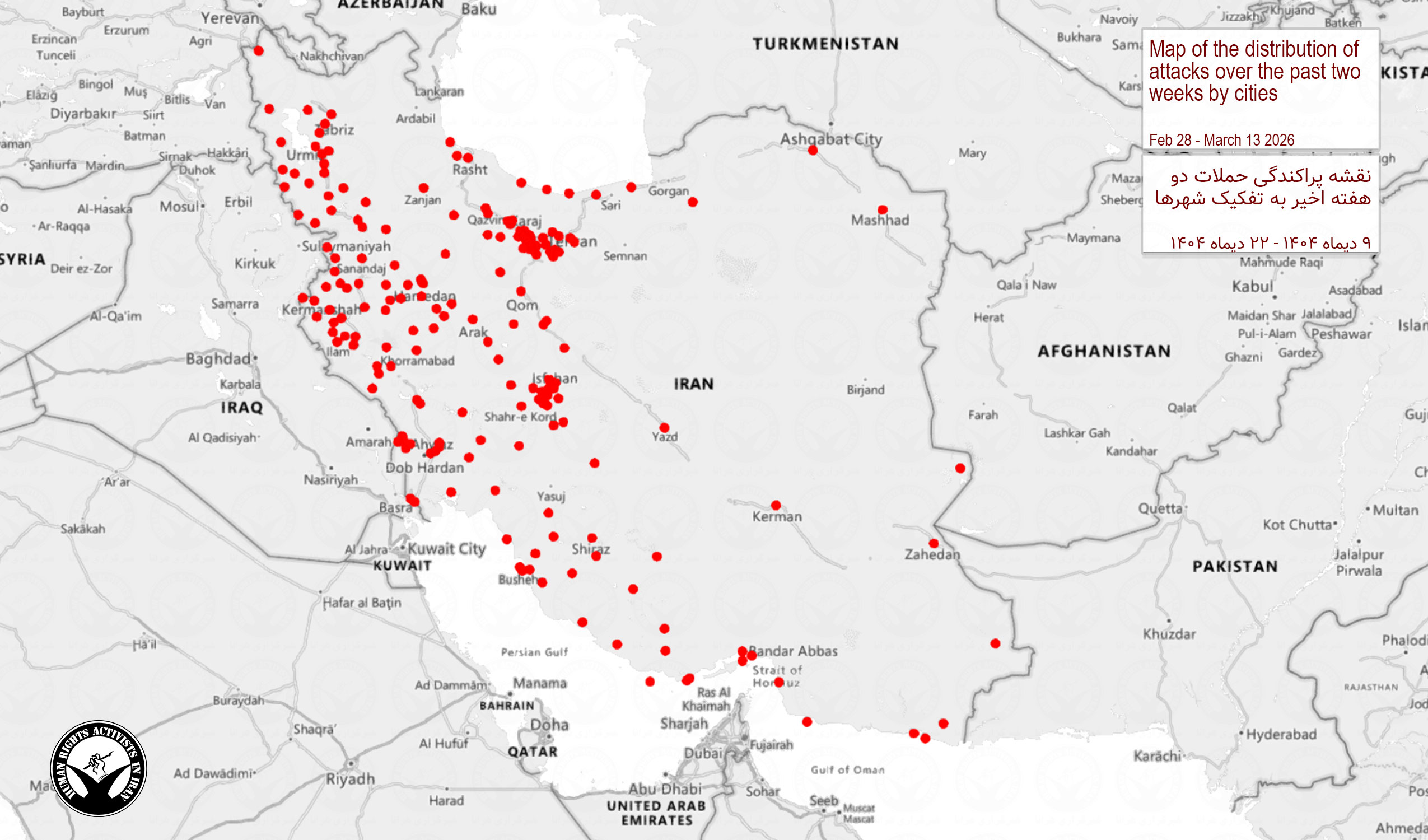
According to refined data compiled by HRANA, from the beginning of the conflict through the end of the fourteenth day of the war, a total of 5,480 attacks were recorded across 2,061 separate incidents in various parts of Iran. The gap between the number of incidents and attacks indicates that many incidents included multiple attacks within the same geographic area or a short time frame.
In total, these attacks resulted in 4,765 recorded human casualties, a figure that includes both military and civilian fatalities and injuries. The geographic scope of the attacks has also been significant. Recorded data show that all 31 provinces of Iran were targeted at least once. In total, 209 cities across the country experienced either direct attacks or damage resulting from them during this period.
Such a broad scope indicates that the military operations have not been limited to specific regions or border areas but have effectively affected large parts of the country’s territory.

Human Casualties
According to aggregated data compiled by HRANA, at least 4,765 human casualties were recorded during the first two weeks of the war. Among these victims, civilian casualties account for a significant portion of the overall figures. Based on available data, 1,298 civilians have lost their lives, including at least 205 children. In addition, 654 civilians were injured during the attacks.
Regarding military casualties, the recorded data indicate that 1,122 military personnel were killed, while 29 members of the armed forces were injured. However, it should be noted that access to information regarding military casualties is subject to serious limitations in many cases. As a result, the actual number of military casualties may be higher than the figures documented in this report.
Vulnerable groups also constitute a notable portion of the recorded victims. Available data show that at least 14 children were injured during the attacks. Additionally, 30 women are recorded among the injured, and 29 women among those killed.
In a considerable number of cases, the status of victims, whether civilian or military, has not yet been definitively determined. At present, 599 deaths are classified as “undetermined,” meaning that available sources have not yet made it possible to conclusively identify whether these individuals were civilians or members of the military. Similarly, 1,092 injured individuals are currently categorized under the same classification. This situation is largely due to limited information in the immediate aftermath of attacks, the lack of independent access to certain areas, and the difficulty of accurately identifying victims under crisis conditions.
Burials
Alongside the recorded casualty figures, data collected from local sources, field reports, and information published in the media indicate that at least 732 burials have so far been documented in various parts of Iran. This figure does not necessarily correspond to the number of deaths occurring on those same days, as in many cases victims are buried several days after their deaths. Therefore, some of the recorded burials may relate to individuals who were killed earlier during the course of the war.
Geographic Distribution of Attacks
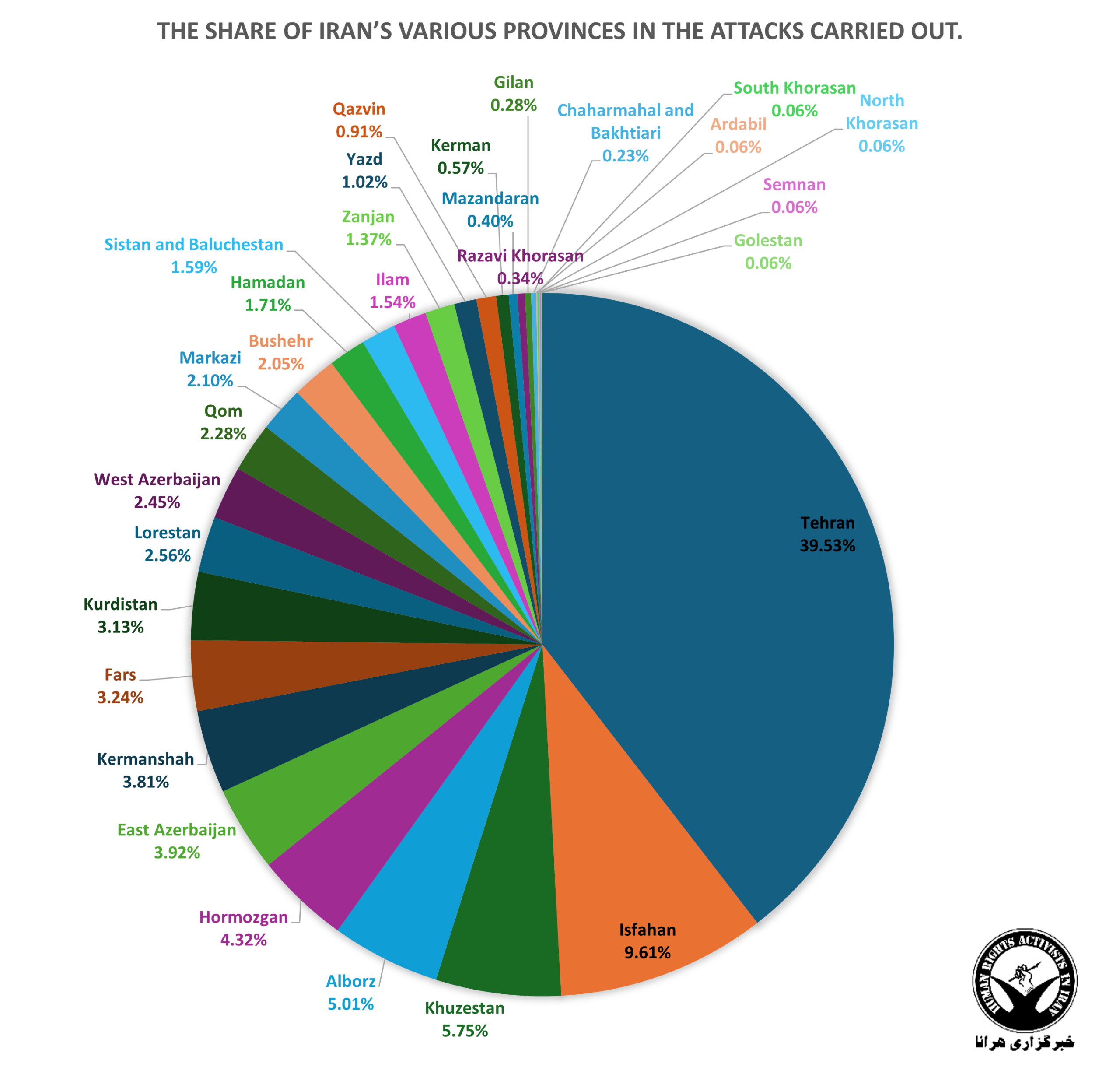
Analysis of the geographic distribution of attacks indicates that the primary concentration of strikes has occurred in several key provinces across the country.
The ten provinces with the highest share of recorded attacks are:
1. Tehran Province – 39.53%
2. Isfahan Province – 9.61%
3. Khuzestan Province – 5.75%
4. Alborz Province – 5.01%
5. Hormozgan Province – 4.32%
6. East Azerbaijan Province – 3.92%
7. Kermanshah Province – 3.81%
8. Fars Province – 3.24%
9. Kurdistan Province – 3.13%
10. Lorestan Province – 2.56%
Among these provinces, Tehran stands out with a significantly higher share of the recorded attacks. This trend has also been reflected in many daily reports, indicating a substantial concentration of military operations in the capital and its surrounding areas.
Following Tehran, central and industrial provinces, including Isfahan and Khuzestan, have also experienced a considerable share of the attacks.
Nature of Targeted Sites
Analysis of the available data indicates that in a significant number of cases there is still insufficient information to precisely determine the nature of the targeted sites. In approximately 59% of the attacks, the type of target could not be identified. This limitation is largely due to communication restrictions, the lack of sufficient visual evidence or field reports, and the difficulty of independently assessing the locations where the attacks occurred.
Among the cases where the target could be identified, around 17% of the attacks were directed at military targets. In approximately 3% of the cases, the attacks targeted dual-use facilities, meaning sites used for both military and civilian purposes. In contrast, about 21% of the recorded attacks caused damage to civilian targets or protected facilities.
These data indicate that, alongside military targets, a substantial portion of the recorded damage involved civilian infrastructure or urban areas. This issue will be examined in greater detail later in this report in the section analyzing damage to infrastructure and residential areas.
Damage to Civilian Infrastructure and Residential Areas
Data recorded over the past two weeks indicate that, alongside military targets, a significant number of attacks have also caused damage to civilian infrastructure and urban areas. A review of field reports and information published by various sources shows that healthcare facilities, schools, and residential areas have in multiple instances been affected.
At least 20 hospitals or medical centers were damaged during the attacks over the past two weeks. In some cases, the damage resulted from direct strikes, while in others it was caused by nearby explosions or blast waves affecting these facilities. Damage to medical centers can significantly affect the capacity of healthcare services during a crisis and may severely limit civilians’ access to medical care.
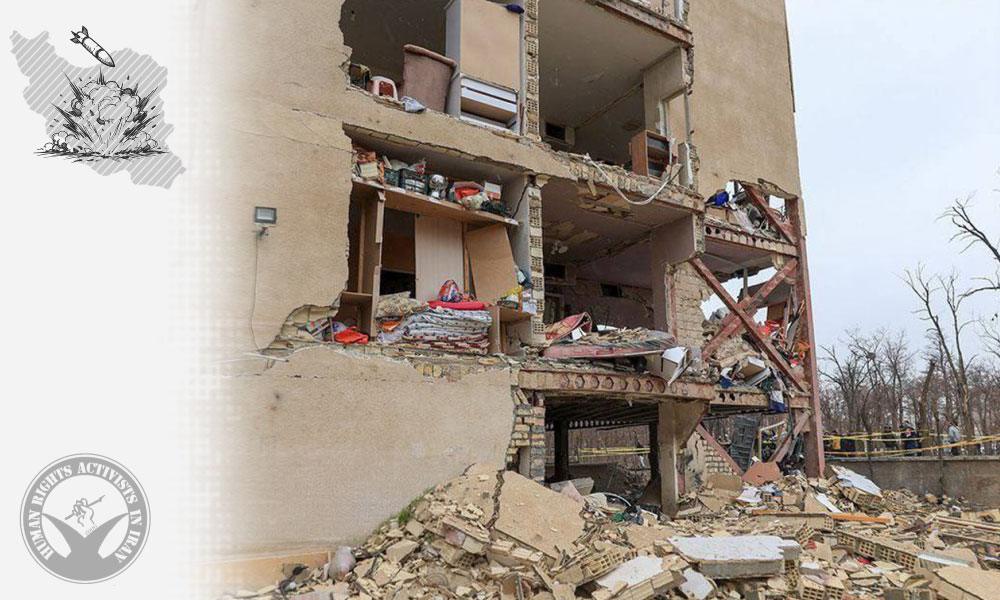
At least 98 residential buildings or residential areas were damaged in air or missile attacks. In many instances, strikes occurred near urban areas, with blast waves or debris causing extensive damage to nearby homes. Beyond the human casualties, these incidents have resulted in significant destruction of housing and the forced displacement of residents in affected communities.
Schools are also among the infrastructures that have been damaged during these attacks. At least 36 schools across different parts of the country have sustained damage. In seven of these incidents, the damage to schools was accompanied by the death or injury of several students. Given the role of schools in providing educational and social services to children, damage to these facilities may have long-term consequences for local communities.
Under the principles of international humanitarian law, medical centers, schools, and residential areas are considered civilian objects and benefit from a certain level of special protection. However, in many of the recorded cases it remains unclear whether the damage resulted from direct strikes or from nearby explosions and secondary effects. For this reason, the final classification of some of these incidents remains under review.
Communication Conditions and Widespread Internet Disruptions
Alongside the escalation of hostilities, Iran has experienced one of the longest and most extensive internet disruptions in recent years. Data published by the international internet monitoring organization NetBlocks indicate that the widespread internet outage in Iran has entered its fourteenth consecutive day.
According to the organization’s latest assessment, 312 hours after the onset of the large-scale disruption, internet connectivity in Iran remains at around one percent of its normal level. This situation has effectively restricted a large portion of the country’s population from accessing the open internet and has placed severe limitations on the flow of independent information.
NetBlocks emphasized in its report that under conditions where internet access is severely restricted, many citizens are unable to receive critical updates about local security conditions, safety warnings, and information related to ongoing attacks. In such an environment, the flow of public information becomes largely limited to official media and sources, while access to independent accounts or field reporting is significantly reduced.
The internet shutdown has also had a significant impact on the documentation of wartime events and the recording of potential human rights violations. Many images, videos, and field reports that would typically be shared through social media are reaching media outlets and independent organizations with delays or in a much more limited capacity under these conditions.
Large-Scale Population Displacement
Alongside the direct damage caused by the attacks, reports have also emerged of large-scale population displacement within Iran. According to assessments by the United Nations High Commissioner for Refugees (UNHCR), the ongoing conflict in Iran has temporarily displaced around 3.2 million people inside the country.
This figure is estimated to correspond to approximately 600,000 to one million households. According to the agency, a significant portion of these movements has occurred from major cities, particularly Tehran, toward northern and rural regions of the country, areas that have experienced less intense attacks compared to large urban centers.
Among the affected populations, refugees residing in Iran have faced additional challenges. In particular, Afghan nationals, who constitute a large share of the refugee population in Iran, are in a situation where their access to essential services, shelter, and social support is more limited than that of other population groups. The increase in internal displacement may place considerable pressure on the resources and infrastructure of host communities.
Arrests and the Domestic Security Climate
Alongside the continuation of foreign attacks, reports have also emerged of increased security measures within the country. Data collected by HRANA indicate that at least 239 individuals have been arrested by Iranian security and law enforcement forces over the past fourteen days.
A significant number of these individuals have been accused of filming or photographing explosions or the aftermath of attacks in various cities and sending the material to foreign-based media outlets. In some cases, the arrests have also been carried out as part of efforts to control the flow of information and prevent the publication of images related to the attacks.
In this context, IRGC Intelligence Organization also issued an official statement warning against any street protests during wartime conditions. The statement declared that if any public gatherings or protests were to occur, the response would be more severe than the measures taken during the Dey protests. In the statement, protesters from that period were described as “neo-ISIS,” and it was asserted that the street protests at that time had been viewed as a prelude to military attacks.
These positions reflect concerns among Iran’s security institutions about the possibility of internal unrest, at a time when the country is simultaneously facing external military conflict.
Official Statistics Released by Iranian Authorities
Alongside the independent data recorded by HRANA, several Iranian officials and state institutions have also released figures regarding the consequences of the war. These statistics are often presented in aggregated form and in many cases do not distinguish between military and civilian casualties.
The head of the Iranian Red Crescent Society stated that 21,720 civilian areas had been targeted during the attacks. According to this report, nine hospitals have been rendered non-operational, and 69 schools have been damaged. It was also reported that among healthcare personnel, 12 individuals have been killed and 78 injured.
Iran’s Ministry of Health has also announced that approximately 15,000 people have been injured during the conflict, although the report does not specify how many of these individuals were civilians or members of the military.
Meanwhile, the Foundation of Martyrs and Veterans Affairs reported that at least 1,230 people had been killed as of March 5 as a result of the attacks. This figure likewise does not provide a breakdown between military and civilian casualties.
Given the aggregated nature of these figures and the lack of a clear methodology to match them precisely with recorded incidents, these data have not been incorporated into HRANA’s event-based calculations and are instead included solely as official statements.
Concerns Raised by International Human Rights Bodies
As the conflict continues, several international organizations have expressed concern about the human rights consequences of the war in Iran. In a report submitted to the United Nations Human Rights Council, the UN Independent International Fact-Finding Mission on Iran warned that the country’s already serious human rights crisis may worsen as a result of military attacks and escalating regional tensions.
The report emphasized that patterns of state repression in Iran remain ongoing. Among the issues highlighted were the use of lethal force against protesters, widespread arrests, severe restrictions on freedom of expression, and internet shutdowns during times of crisis.
According to the mission, the continuation of military hostilities could increase pressure on civil society, human rights defenders, and independent media in Iran.
Note on HRANA’s Methodology
The information presented in this report has been collected through HRANA News Agency’s documentation network. Data are compiled from a combination of field reports, local sources, medical and emergency sources, civil society networks, and publicly available materials, including images, videos, and relevant official statements. Each reported incident undergoes an internal review process prior to publication.
Given the evolving nature of the conflict, information is continuously collected, and the data presented reflect the status of documentation at the time of publication.
The figures provided in this report may not represent the full scope of the damage. Ongoing hostilities, damage to infrastructure, communication disruptions, limited access to affected areas, and security risks for sources may restrict the ability to comprehensively document events.
Delays in medical reporting, difficulties in verifying identities, and limited access to certain provinces may lead to temporary underestimation of casualty figures. As access improves or additional evidence becomes available, casualty figures and event classifications may be revised accordingly.
HRANA remains committed to transparency, methodological rigor, and the continuous updating of its findings as new verified information becomes available.
It should also be noted that, in accordance with its reporting methodology, HRANA focuses exclusively on documenting events occurring within Iran’s borders, and its reports do not include information regarding casualties or incidents outside the country.
Humanitarian Commitments
On March 3, Human Rights Activists in Iran (HRA) issued a statement condemning the ongoing conflict between the United States–Israel and Iran. In its statement, HRA warned of the rising number of casualties and stressed that attacks on medical facilities and vital infrastructure constitute a serious violation of international humanitarian law.
HRA called for the immediate cessation of attacks, the protection of civilians, and the full restoration of internet access in Iran.