Day 38 of U.S. and Israeli Attacks on Iran: Highest Rate of Strikes in the Past Ten Days

HRANA– In the last 24 hours, and as of April 6, 2026, at 17:00 ET, HRANA has recorded at least 573 attacks across 215 incidents in 20 provinces, resulting in a total of at least 109 casualties (killed and injured, both civilian and military). The large scale of strikes over the past 24 hours marks the highest rate of attacks seen in the last ten days. In addition to their intensity and breadth, these attacks also show a strong focus on core industries, including Iran’s energy sector.

According to information recorded and verified by HRANA, from the first minutes of the day through the end of April 6, 2026 (Tehran time), at least 49 civilians were killed and 58 others were injured.

Aggregated data since the beginning of the conflict on February 28, 2026, based on incidents recorded in the incident tab and using minimum values for figures marked “more than”:

• Civilian fatalities: 1,665 people (including at least 248 children)

• Military fatalities: 1,221 people

• Unclassified fatalities (civilian/military): 711 people

Note on Official Statements: Alongside HRANA’s independent reporting, several official aggregate figures were also recorded today from state media, including:

The head of the Medical Council stated: “So far, we have had more than 24 martyrs from the health and medical sector, and more than 300 treatment centers, hospitals, and emergency units have been attacked.”

Miadfar, head of the Emergency Organization, said: “The youngest injured person was a one-month-old baby boy, and the oldest was a 100-year-old man. The number of injured medical staff has reached 117, of whom 77 were emergency personnel injured while on duty. Eighteen percent of the injured were women.”

Zakani, Mayor of Tehran, said: “In Tehran, we have had around 548 impact points; the number of damaged residential units has reached 33,500. More than 13,000 units have been completed and residents have returned to their homes. The homes of more than 4,500 households have sustained more extensive damage and will require more time.”

Alishvandi, Deputy for International Affairs of the Red Crescent, stated: “The number of women killed in the war has reached 251, including two who were pregnant. A total of 217 children and adolescents under the age of 18 have been killed.”

Since these figures are presented in aggregate form and cannot be precisely matched to specific incidents, they have not been included in the event-based calculations used in HRANA’s independent reporting section of this review. They are mentioned here solely as a record of official statements.

1. Overview of Incidents in the Last 24 Hours

In the last 24 hours, incidents were reported across multiple provinces, reflecting a geographically dispersed pattern of hostilities. In a large portion of the incidents, the method/type of attack has not yet been confirmed and has been recorded as “undetermined.” In cases where the attack type was identifiable, airstrikes and drone attacks were reported.

Preliminary analysis shows that Tehran Province ranks first, accounting for 54% of all provinces targeted in the attacks. Fars Province, with a 7% share, ranks second, while Khuzestan Province, accounting for 5%, comes in third. The list is followed, respectively, by Alborz, Isfahan, Hormozgan, Bushehr, and Sistan and Baluchestan provinces.
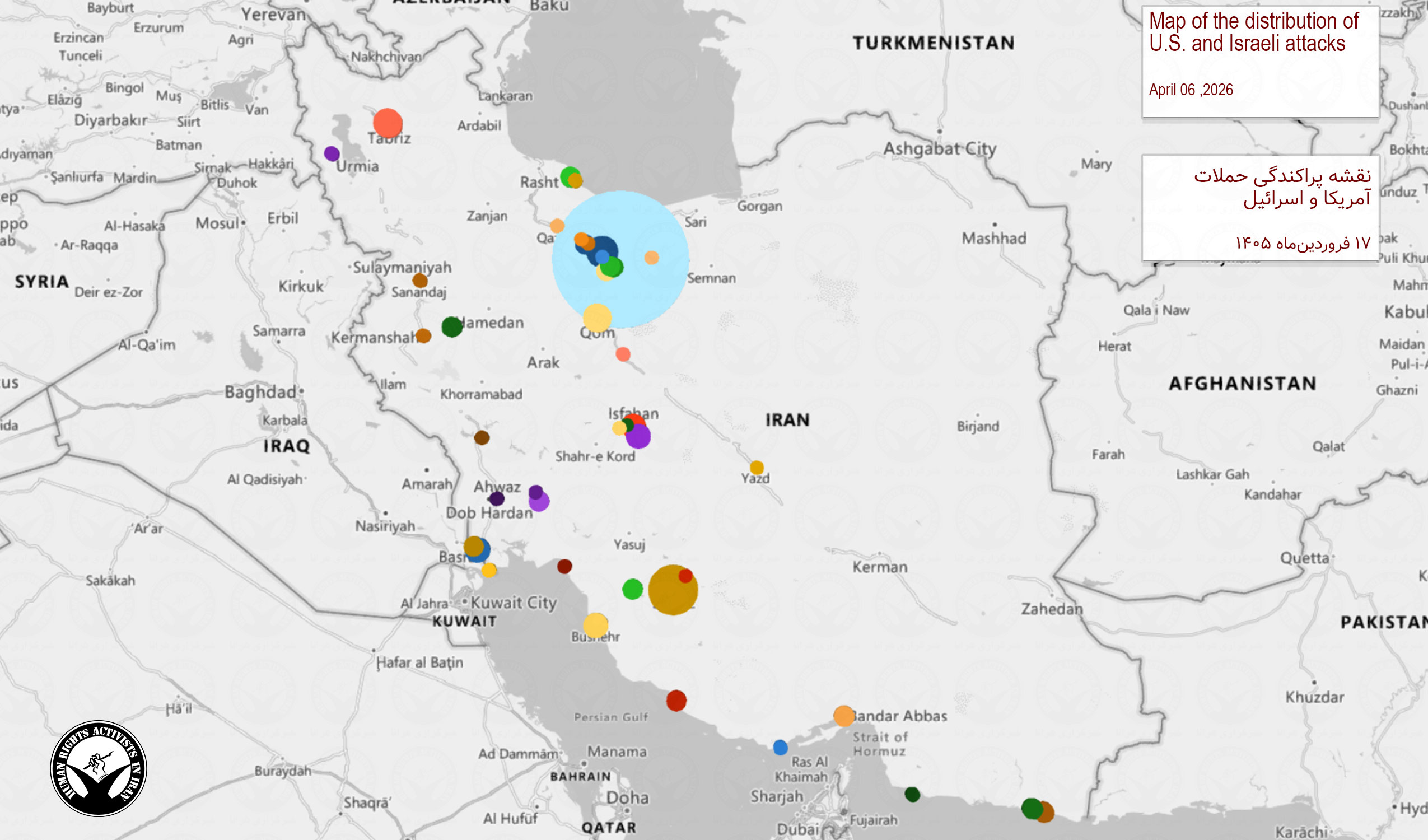
Map of Attacks Day 38

2. List of Objects Reported Hit

In the past 24 hours, the recorded attacks have damaged 61 distinct objects or facilities. These include a range of different types of targets. In some cases, damage caused by nearby strikes or secondary consequences of the attacks has also been reported.

Examples of targets recorded over the past 24 hours:

• Tactical Air Base (Tabriz)

• Misaq Base Headquarters (Abadan)

• Al-Ghadir Brigade Headquarters (Yazdan Shahr)

• Naval Forces Facilities (Konarak)

• Parchin Military Zone (Tehran)

For a number of the listed targets, the exact nature of the target (civilian/military/dual-use) is still under review, and classifications may be revised as additional information becomes available.

Facilities Protected Under International Humanitarian Law:

Under international humanitarian law, medical facilities, educational institutions, humanitarian facilities, religious sites, and emergency service centers are among the many objects that maintain special protected status and are afforded special protection. In the past 24 hours, HRANA has preliminarily recorded the following cases:

• Sharif University of Technology (Tehran)

• Damand Company, electricity supplier for oil facilities (Asaluyeh)

• Agricultural Silos (Mehran)

• A school (Kermanshah)

• 132 Power Substation (Mashhad)

3. Civilian Casualties

In the past 24 hours, at least 49 civilian citizens, including 4 children and 2 women, were killed, and 58 other civilians, including 1 child, were injured. All classifications are preliminary and may be updated if new information becomes available.

4. Military Casualties

During the reporting period covered here, 2 military personnel were killed. Military casualties are generally reported in the context of attacks on Army and Islamic Revolutionary Guard Corps (IRGC) bases. Where possible, organizational affiliation and operational context are being assessed; however, not all details have yet been independently verified.

In some incidents, individuals have been killed in the vicinity of military targets; however, their official status has not yet been definitively determined. These cases remain under review, and if reliable information indicating a different status becomes available, the classification may be revised accordingly.

It is believed that military casualties are significantly higher than the figures reported in these reports. However, due to the sensitive nature of military information and the limited access of human rights groups and media to locations where military forces are present, this section largely reflects reports of senior officers or military personnel who were present in urban areas.

A Note on HRANA Methodology

Note that, in line with HRANA policy, this report reflects only incidents that occurred within the territorial borders of Iran.

The information contained in this report is compiled through HRANA’s established documentation network. Data is collected from a combination of field reports, local contacts, medical and emergency sources, civil society networks, and open source materials, including publicly available images, videos, and official statements where relevant. Each reported incident is logged and assessed through an internal review process before publication.

Given the evolving nature of hostilities, information is gathered on a rolling basis and reflects the status of documentation at the time of publication.

The figures presented in this report may not reflect the full scope of harm. Ongoing hostilities, damage to infrastructure, communication disruptions, restricted access to affected areas, and security risks for sources may limit the ability to document incidents comprehensively.

Delays in medical reporting, difficulties in confirming identities, and restricted access to certain provinces may result in temporary undercounting. As access improves or additional evidence emerges, casualty figures and incident classifications may be revised accordingly.

HRANA remains committed to transparency, methodological rigor, and the continual updating of its findings as new verified information becomes available.

Day 36 of U.S. and Israeli Attacks on Iran: Fire Breaks Out at Iran’s Petrochemical Facilities

HRANA– In the last 24 hours, and as of April 4, 2026, at 17:00 ET, HRANA has recorded at least 272 attacks across 92 incidents in 14 provinces, resulting in a total of at least 184 casualties (killed and injured, both civilian and military). Widespread attacks on petrochemical complexes, particularly in the Mahshahr region in the south of the country, drew significant attention in the media.

According to information recorded and verified by HRANA, from the first minutes of the day until the end of April 4, 2026 (Tehran time), at least nine civilians were killed.

Aggregated data since the beginning of the conflict on February 28, 2026, based on incidents recorded in the incident tab and using minimum values for figures marked “more than”:

• Civilian fatalities: 1,616 people (including at least 244 children)

• Military fatalities: 1,213 people

• Unclassified fatalities (civilian/military): 711 people

Note on official statements: Alongside HRANA’s independent reports, several official aggregated statistics were also recorded today by state-affiliated media, including:

The deputy governor of Khuzestan Province for security and law enforcement affairs told media outlets: “Since the beginning of the Ramadan War, 1,000 projectiles have been fired toward the province. As a result of these attacks, 210 locations across 26 counties in Khuzestan have been targeted. He also stated that 1,430 people in the province have been injured since the start of the Ramadan War, adding that 27 civilian citizens have also been killed during this period.”
Jafar Miadfar, head of the country’s Emergency Medical Services Organization, stated: “Unfortunately, during efforts to provide services to those injured in the Ramadan War, 24 healthcare defenders lost their lives. Of this number, 3 were EMS 115 rescue workers, and the rest were from various sectors of the health field, including public health, treatment, food, and pharmaceuticals; among them were doctors, nurses, and technicians.”
Miadfar also said: “During the imposed war period, 360 cases of damage to health-sector infrastructure and 46 ambulances were recorded. The number of injured individuals under the age of 18 has reached approximately 1,900, of whom 121 were under 5 years old. Women account for around 4,695 of the injured, with the youngest being one month old and the oldest 100 years old. So far, 216 of those killed were under the age of 18, a significant portion of whom were students. Additionally, 17 of the recorded fatalities were under 5 years old. The number of female fatalities has also reached 261, the youngest of whom was a newborn only a few days old.”

Since these figures are presented in aggregate form and cannot be precisely matched to specific incidents, they have not been included in the event-based calculations used in HRANA’s independent reporting section of this review. They are mentioned here solely as a record of official statements.

1. Overview of Incidents in the Last 24 Hours

In the last 24 hours, incidents were reported across multiple provinces, reflecting a geographically dispersed pattern of hostilities. In a large portion of the incidents, the method/type of attack has not yet been confirmed and has been recorded as “undetermined.” In cases where the attack type was identifiable, airstrikes and drone attacks were reported.

Preliminary analysis shows that Tehran Province tops the list of attacked provinces with a 34% share. Khuzestan Province follows in second place with 22%, while Isfahan Province ranks third with 16%. The list is then followed by Alborz, Bushehr, Ilam, and Sistan and Baluchestan provinces, respectively.


Map of Attacks

2. List of Objects Reported Hit

In the past 24 hours, the recorded attacks have damaged 28 distinct objects or facilities. These include a range of different types of targets. In some cases, damage caused by nearby strikes or secondary consequences of the attacks has also been reported.

Examples of targets recorded over the past 24 hours:

• Army Aviation Base (Isfahan)

• 15 Khordad Garrison (Isfahan)

• Badr Military Airport (Isfahan)

• Air Base (Bushehr)

• Imam Ali Garrison (Mobarakeh)

For a number of the listed targets, the exact nature of the target (civilian/military/dual-use) is still under review, and classifications may be revised as additional information becomes available.

Facilities Protected Under International Humanitarian Law:

Under international humanitarian law, medical facilities, educational institutions, humanitarian facilities, religious sites, and emergency service centers are among the many objects that maintain special protected status and are afforded special protection. In the past 24 hours, HRANA has preliminarily recorded the following cases:

• Widespread attack on the Karun Petrochemical Complex (Mahshahr)

• Bandar Imam Petrochemical Complex (Bandar Imam Khomeini)

• Mineral water storage warehouses (Mehran)

• Nuclear power plant (Bushehr)

• Residential area (Tehran)

3. Civilian Casualties

Over the past 24 hours, at least nine civilian citizens were killed and 175 others injured. All classifications are preliminary and may be updated if new information becomes available.

4. Military Casualties

During the period covered by this report, no reports of military casualties were received. Military casualties are generally reported in the context of attacks on Army and Islamic Revolutionary Guard Corps (IRGC) bases. Where possible, organizational affiliation and operational context are being assessed; however, not all details have yet been independently verified.

In some incidents, individuals have been killed in the vicinity of military targets; however, their official status has not yet been definitively determined. These cases remain under review, and if reliable information indicating a different status becomes available, the classification may be revised accordingly.

It is believed that military casualties are significantly higher than the figures reported in these reports. However, due to the sensitive nature of military information and the limited access of human rights groups and media to locations where military forces are present, this section largely reflects reports of senior officers or military personnel who were present in urban areas.

5. Confirmed but Unspecified Casualties

Burials: Today, Five burial cases resulting from attacks in previous days were recorded.

A Note on HRANA Methodology

Note that, in line with HRANA policy, this report reflects only incidents that occurred within the territorial borders of Iran.

The information contained in this report is compiled through HRANA’s established documentation network. Data is collected from a combination of field reports, local contacts, medical and emergency sources, civil society networks, and open source materials, including publicly available images, videos, and official statements where relevant. Each reported incident is logged and assessed through an internal review process before publication.

Given the evolving nature of hostilities, information is gathered on a rolling basis and reflects the status of documentation at the time of publication.

The figures presented in this report may not reflect the full scope of harm. Ongoing hostilities, damage to infrastructure, communication disruptions, restricted access to affected areas, and security risks for sources may limit the ability to document incidents comprehensively.

Delays in medical reporting, difficulties in confirming identities, and restricted access to certain provinces may result in temporary undercounting. As access improves or additional evidence emerges, casualty figures and incident classifications may be revised accordingly.

HRANA remains committed to transparency, methodological rigor, and the continual updating of its findings as new verified information becomes available.


Day 29 of U.S. and Israeli Attacks on Iran: Strikes on Hundreds of Targets in Residential Areas

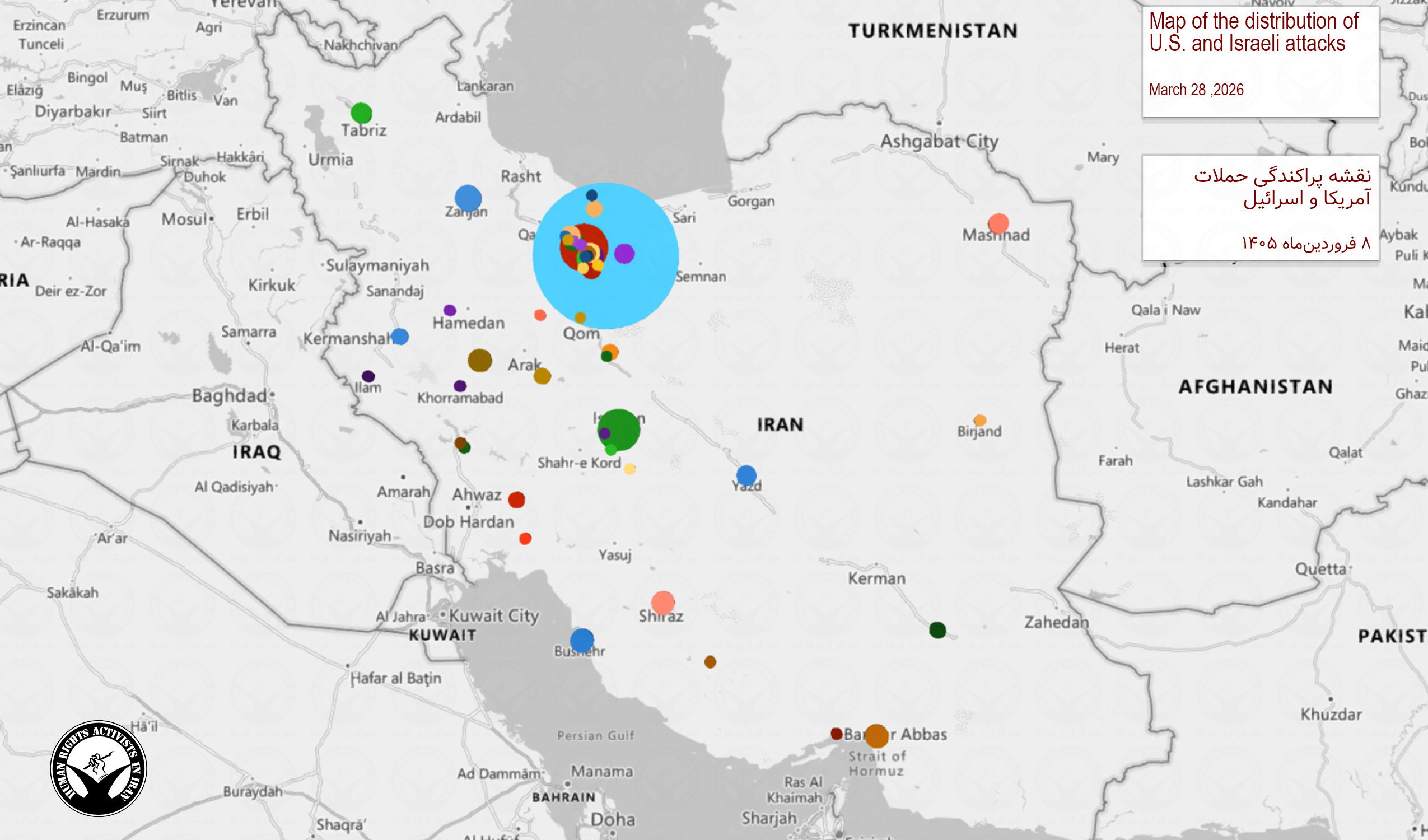
HRANA– In the last 24 hours, and as of March 28, 2026, at 17:00 ET, HRANA has recorded at least 701 attacks across 278 incidents in 21 provinces, resulting in a total of at least 173 casualties (killed and injured, both civilian and military). The attacks over the past day, in terms of number, rank among the highest recorded since the beginning of the war. Of these, 74% of the strikes occurred in Tehran. Various locations in urban and residential areas have borne the brunt of the attacks.

According to information recorded and verified by HRANA, from the first minutes of the day until the end of March 28, 2026 (Tehran time), at least 24 civilians were killed and 88 civilians were injured.

Aggregated data since the beginning of the conflict on February 28, 2026, based on incidents recorded in the incident tab and using minimum values for figures marked “more than”:

• Civilian fatalities: 1,551 people (including at least 236 children)

• Military fatalities: 1,208 people

• Unclassified fatalities (civilian/military): 702 people

Note on Official Statements: Alongside HRANA’s independent reports, several aggregated official statistics were also published today by state media, including:

The Ministry of Health announced: “So far, more than 230 children have been killed and around 1,800 children have been injured. According to this report, 244 women, 214 children under 18, and 17 children under 5 have been killed. Healthcare worker fatalities: 24.”
The head of the Center for Information and Public Relations of the Ministry of Education stated: “Since the beginning of the Zionist-American war against our country, 252 students and teachers have been killed, and 184 members of the education community have been injured.”
The Ministry of Health reported the latest casualty figures as of day 29 of the war: “Currently hospitalized: 831 individuals; treated and discharged: 24,175 individuals.”

As these figures have been presented in aggregate form and cannot be precisely matched to specific events, they have not been included in the event-based calculations reflected in HRANA’s independent reporting section of this overview, and are mentioned here solely as a record of official statements.

1. Overview of Incidents in the Last 24 Hours

In the last 24 hours, incidents were reported across multiple provinces, reflecting a geographically dispersed pattern of hostilities. In a large portion of the incidents, the method/type of attack has not yet been confirmed and has been recorded as “undetermined.” In cases where the attack type was identifiable, airstrikes and drone attacks were reported.

Preliminary analysis indicates that Tehran Province, with a 74% share, ranks at the top of the list of provinces that have been targeted. Alborz Province, with a significant gap from Tehran Province, comes in second with an 11% share, while Isfahan Province ranks third with a 5% share. Following these are Khuzestan Province, Yazd Province, Zanjan Province, and East Azerbaijan Province, respectively.

Map of Attacks Day 29

2. List of Objects Reported Hit

In the past 24 hours, the recorded attacks have damaged 29 distinct objects or facilities. These include a range of different types of targets. In some cases, damage caused by nearby strikes or secondary consequences of the attacks has also been reported.

Examples of targets recorded over the past 24 hours:

• Shahid Kobraei Army Base (Aran va Bidgol)

• Headquarters of the 44th Artillery Group (Isfahan)

• Headquarters of the Asef Brigade (Minab)

• Amir al-Momenin Headquarters (Isfahan)

• Technical Center affiliated with the Defense Industries (Tehran)

For a number of the listed targets, the exact nature of the target (civilian/military/dual-use) is still under review, and classifications may be revised as additional information becomes available.

Facilities Protected Under International Humanitarian Law:

Under international humanitarian law, medical facilities, educational institutions, humanitarian facilities, religious sites, and emergency service centers are among the many objects that maintain special protected status and are afforded special protection. In the past 24 hours, HRANA has preliminarily recorded the following cases:

• A building at Iran University of Science and Technology (Tehran)

• Shahid Aabsalan Clinic (Minab)

• A 10,000-cubic-meter water reservoir (Haftgel)

• A four-story residential building (Savojbolagh)

• A livestock farm in Shahabiyeh village (Khomein)

3. Civilian Casualties

In the past 24 hours, at least 24 civilian citizens, including 8 children and 6 women, have been killed, and 88 civilians, including 3 children and 3 women, have been injured. All classifications are preliminary and may be updated if new information becomes available.

4. Military Casualties

During the reporting period, 41 military personnel were killed. Military casualties are generally reported in the context of attacks on Army and Islamic Revolutionary Guard Corps (IRGC) bases. Where possible, organizational affiliation and operational context are being assessed; however, not all details have yet been independently verified.

In some incidents, individuals have been killed in the vicinity of military targets; however, their official status has not yet been definitively determined. These cases remain under review, and if reliable information indicating a different status becomes available, the classification may be revised accordingly.

It is believed that military casualties are significantly higher than the figures reported in these reports. However, due to the sensitive nature of military information and the limited access of human rights groups and media to locations where military forces are present, this section largely reflects reports of senior officers or military personnel who were present in urban areas.

5. Confirmed but Unspecified Casualties

In the past 24 hours, seven deaths and 13 injuries have been reported but remain classified as undetermined. This means that HRANA News Agency has not yet been able to establish with sufficient certainty whether these individuals were civilians or military personnel.

A Note on HRANA Methodology

Note that, in line with HRANA policy, this report reflects only incidents that occurred within the territorial borders of Iran.

The information contained in this report is compiled through HRANA’s established documentation network. Data is collected from a combination of field reports, local contacts, medical and emergency sources, civil society networks, and open source materials, including publicly available images, videos, and official statements where relevant. Each reported incident is logged and assessed through an internal review process before publication.

Given the evolving nature of hostilities, information is gathered on a rolling basis and reflects the status of documentation at the time of publication.

The figures presented in this report may not reflect the full scope of harm. Ongoing hostilities, damage to infrastructure, communication disruptions, restricted access to affected areas, and security risks for sources may limit the ability to document incidents comprehensively.

Delays in medical reporting, difficulties in confirming identities, and restricted access to certain provinces may result in temporary undercounting. As access improves or additional evidence emerges, casualty figures and incident classifications may be revised accordingly.

HRANA remains committed to transparency, methodological rigor, and the continual updating of its findings as new verified information becomes available.
Day 23 of U.S. and Israeli Attacks on Iran: More Than 15% of the Total Fatalities Are Children

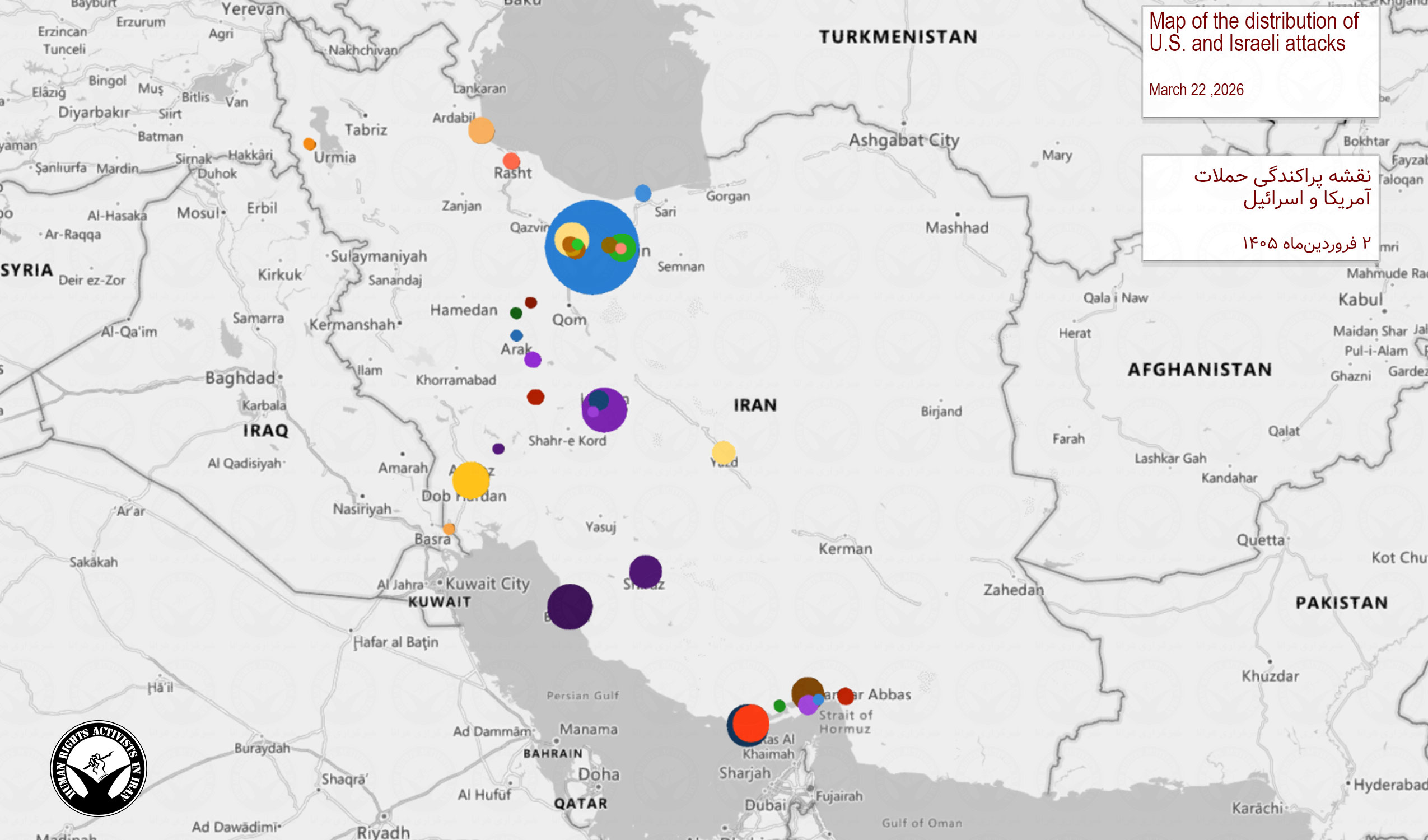
HRANA– In the last 24 hours, and as of March 22, 2026, at 16:00 ET, HRANA has recorded at least 206 attacks across 112 incidents in 15 provinces, resulting in a total of at least 4 casualties (killed and injured, both civilian and military). With the killing of a child today, it is estimated that at least 15% of the total human casualties in Iran so far have been under the age of 18.

According to information recorded and verified by HRANA, from the first minutes of the day until the end of March 22, 2026 (Tehran time), at least one civilian was killed and three civilians were injured.

Aggregated data since the beginning of the conflict on February 28, 2026, based on incidents recorded in the incident tab and using minimum values for figures marked “more than”:

• Civilian fatalities: 1,407 people (including at least 214 children)

• Military fatalities: 1,167 people

• Unclassified fatalities (civilian/military): 657 people

Note on official statements: Alongside HRANA’s independent reports, several official aggregated figures were also recorded today from state media, including:

The Minister of Health stated: “In the recent imposed war, around 210 children have been killed so far. The number of injured individuals under 18 has reached over 1,510. Since the beginning of the war, 300 health, medical, and emergency centers have been damaged.”

The Governor of Markazi Province stated: “More than 20 industrial units and 900 residential homes in this province have been damaged so far. With the follow-ups carried out, workers of the affected units will be covered by unemployment insurance, and the reconstruction of the units is beginning.”

1. Overview of Incidents in the Last 24 Hours

In the last 24 hours, incidents were reported across multiple provinces, reflecting a geographically dispersed pattern of hostilities. In a large portion of the incidents, the method/type of attack has not yet been confirmed and has been recorded as “undetermined.” In cases where the attack type was identifiable, airstrikes and drone attacks were reported.

Preliminary analysis indicates that Tehran Province, accounting for 39% of all recorded attacks, ranks first among the provinces targeted. Hormozgan Province, with 19%, and Isfahan Province, with 10%, follow in second and third place. Next on the list are Bushehr, Khuzestan, and Alborz provinces, respectively.

Map of Attacks Day 23

2. List of Objects Reported Hit

In the past 24 hours, the recorded attacks have damaged 21 distinct objects or facilities. These include a range of different types of targets. In some cases, damage caused by nearby strikes or secondary consequences of the attacks has also been reported.

Examples of targets recorded over the past 24 hours:

• Garmdareh Garrison (Garmdareh)

• Airbase (Bushehr)

• Naval Base of the Army (Bushehr)

• Airbase (Bandar Abbas)

• Army Aviation Base (Isfahan)

For a number of the listed targets, the exact nature of the target (civilian/military/dual-use) is still under review, and classifications may be revised as additional information becomes available.

Facilities Protected Under International Humanitarian Law:

Under international humanitarian law, medical facilities, educational institutions, humanitarian facilities, religious sites, and emergency service centers are among the many objects that maintain special protected status and are afforded special protection. In the past 24 hours, HRANA has preliminarily recorded the following cases:

• A residential building (Tabriz)

• Six residential units (Mohammadshahr)

• Shohada-ye Kargar Sports Complex (Masjed Soleyman)

• Combined-cycle power plant (Bandar Abbas)

• Geno Power Plant (Bandar Abbas)

3. Civilian Casualties

In the past 24 hours, at least one child has been killed and three civilians, including one woman, have been injured. All classifications are preliminary and may be updated as new information becomes available.

4. Military Casualties

During the period covered by this report, no reports of military casualties have been received. Military casualties are generally reported in the context of attacks on Army and Islamic Revolutionary Guard Corps (IRGC) bases. Where possible, organizational affiliation and operational context are being assessed; however, not all details have yet been independently verified.

In some incidents, individuals have been killed in the vicinity of military targets; however, their official status has not yet been definitively determined. These cases remain under review, and if reliable information indicating a different status becomes available, the classification may be revised accordingly.

It is believed that military casualties are significantly higher than the figures reported in these reports. However, due to the sensitive nature of military information and the limited access of human rights groups and media to locations where military forces are present, this section largely reflects reports of senior officers or military personnel who were present in urban areas.

5. Confirmed but Unspecified Casualties

Today, 19 burials resulting from attacks in previous days have been recorded.

A Note on HRANA Methodology

Note that, in line with HRANA policy, this report reflects only incidents that occurred within the territorial borders of Iran.

The information contained in this report is compiled through HRANA’s established documentation network. Data is collected from a combination of field reports, local contacts, medical and emergency sources, civil society networks, and open source materials, including publicly available images, videos, and official statements where relevant. Each reported incident is logged and assessed through an internal review process before publication.

Given the evolving nature of hostilities, information is gathered on a rolling basis and reflects the status of documentation at the time of publication.

The figures presented in this report may not reflect the full scope of harm. Ongoing hostilities, damage to infrastructure, communication disruptions, restricted access to affected areas, and security risks for sources may limit the ability to document incidents comprehensively.

Delays in medical reporting, difficulties in confirming identities, and restricted access to certain provinces may result in temporary undercounting. As access improves or additional evidence emerges, casualty figures and incident classifications may be revised accordingly.

HRANA remains committed to transparency, methodological rigor, and the continual updating of its findings as new verified information becomes available.

Day 21 of the U.S.-Israeli War on Iran: New Year begins with 640 strikes

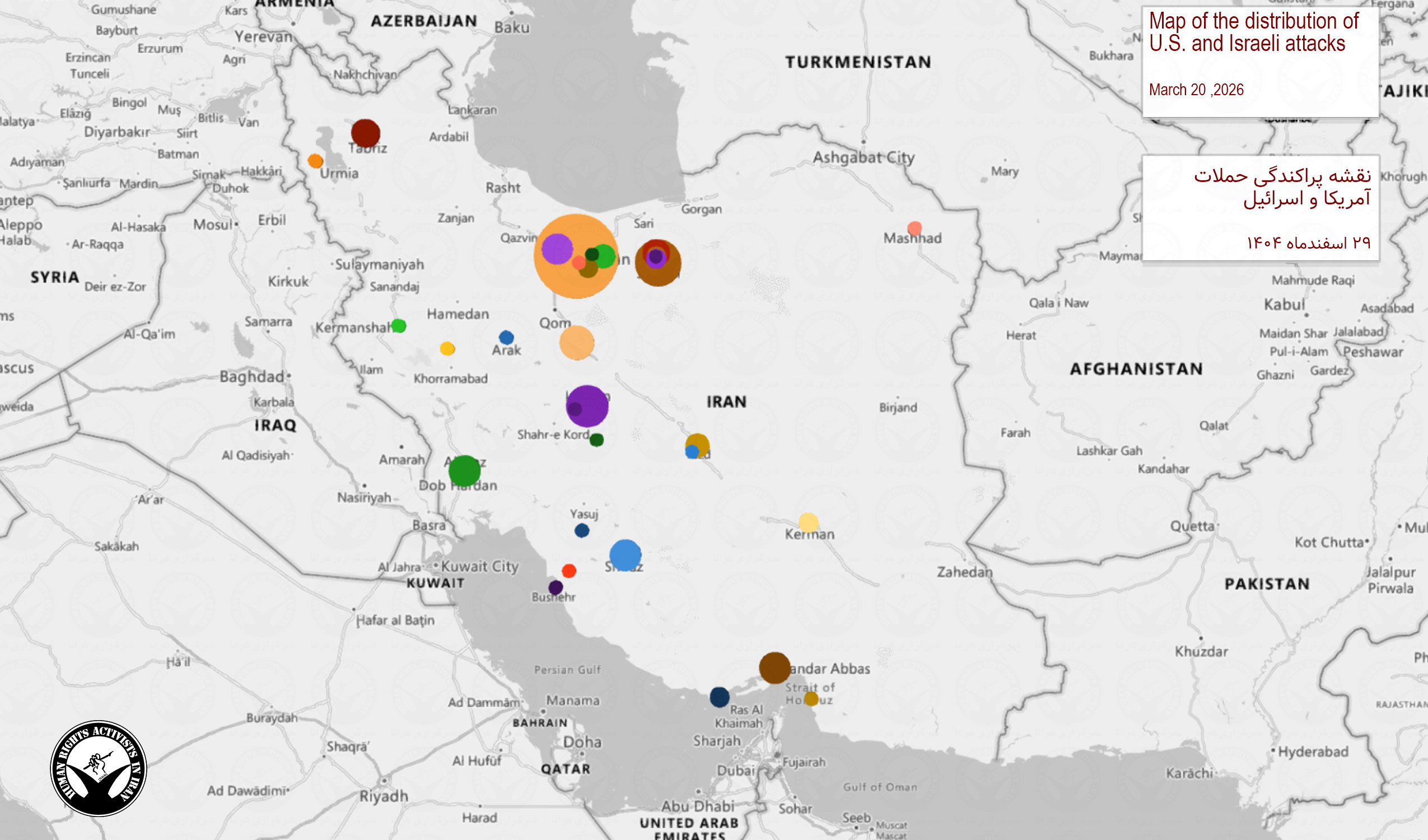
HRANA– In the last 24 hours, and as of March 20, 2026, at 17:00 ET, HRANA has recorded at least 640 attacks across 130 incidents in 17 provinces, resulting in a total of at least 68 casualties (killed and injured, both civilian and military). These numerous attacks took place simultaneously with the arrival of the New Year in Iran. Reports received indicate that many citizens viewed the Nowruz holidays as an opportunity to leave major cities, and heavy traffic formed on routes out of cities, particularly along routes toward the northern provinces of Gilan and Mazandaran.

According to information recorded and verified by HRANA, from the first minutes of the day until the end of March 20, 2026 (Tehran time), at least 4 civilians were killed and 8 civilians injured.

Aggregated data since the beginning of the conflict on February 28, 2026, based on incidents recorded in the incident tab and using minimum values for figures marked “more than”:

• Civilian fatalities: 1,398 people (including at least 210 children)

• Military fatalities: 1165 people

• Unclassified fatalities (civilian/military): 657 people

Note on official statements: Alongside HRANA News Agency’s independent reports, several aggregated official statistics were also recorded today by state-affiliated media, including:

The Deputy Security Governor of Lorestan stated: “Of the total recorded fatalities from the American–Zionist attacks in the province, 80 were military personnel and 64 were civilian citizens. During this period, 2,427 people were injured in Lorestan, of whom 266 were military personnel and 2,161 were civilians.”

The Ministry of Health announced: “At present, 1,016 individuals injured in the American–Zionist attacks are hospitalized in medical centers. From the beginning of the war until today, 208,073 people have been treated and discharged.”

1. Overview of Incidents in the Last 24 Hours

In the last 24 hours, incidents were reported across multiple provinces, reflecting a geographically dispersed pattern of hostilities.  In a large portion of the incidents, the method/type of attack has not yet been confirmed and has been recorded as “undetermined.” In cases where the attack type was identifiable, airstrikes and drone attacks were reported.

Preliminary analysis indicates that Tehran Province, having borne 36% of all recorded attacks, ranks first among the provinces targeted. Semnan Province, with 17%, and Isfahan Province, with 14%, follow in the next positions. Continuing down the list are Hormozgan, Alborz, and Khuzestan provinces, respectively.

Distribution of attacks-Day 21

2. List of Objects Reported Hit

In the past 24 hours, the recorded attacks have damaged 21 distinct objects or facilities. These include a range of different types of targets. In some cases, damage caused by nearby strikes or secondary consequences of the attacks has also been reported.

Examples of targets recorded over the past 24 hours:

• Al Mohammad Corps Headquarters (Semnan)

• 92nd Armored Division (Ahvaz)

• Army Air Base (Bandar Abbas)

• Al-Mahdi Corps Garrison (Urmia)

• Basij Resistance Base (Semnan)

For a number of the listed targets, the exact nature of the target (civilian/military/dual-use) is still under review, and classifications may be revised as additional information becomes available.

Facilities Protected Under International Humanitarian Law:

Under international humanitarian law, medical facilities, educational institutions, humanitarian facilities, religious sites, and emergency service centers are among the many objects that maintain special protected status and are afforded special protection. In the past 24 hours, HRANA has preliminarily recorded the following cases:

• Three residential and commercial buildings (Tehran)

• Falak-ol-Aflak Historic Site (Khorramabad)

• Accommodation complex of the Sepah Kolahdooz Complex (Shahmirzad)

• A residential building (Karaj)

• An administrative building on Palestine Street (Tehran)

3. Civilian Casualties

In the past 24 hours, at least 4 civilians have been killed and 8 civilians, including one child, have been injured. All classifications are preliminary and may be updated as new information becomes available.

4. Military Casualties

During the reporting period, 12 military personnel were killed. Military casualties are generally reported in the context of attacks on Army and Islamic Revolutionary Guard Corps (IRGC) bases. Where possible, organizational affiliation and operational context are being assessed; however, not all details have yet been independently verified.

In some incidents, individuals have been killed in the vicinity of military targets; however, their official status has not yet been definitively determined. These cases remain under review, and if reliable information indicating a different status becomes available, the classification may be revised accordingly.

It is believed that military casualties are significantly higher than the figures reported in these reports. However, due to the sensitive nature of military information and the limited access of human rights groups and media to locations where military forces are present, this section largely reflects reports of senior officers or military personnel who were present in urban areas.

5. Confirmed but Unspecified Casualties

Of the reported casualties in the past 24 hours, 18 deaths and 26 injuries remain classified as unverified, meaning that HRANA has not yet been able to determine with sufficient certainty whether these individuals were civilians or military personnel.

Burials: Today, 21 burials resulting from attacks in previous days have been recorded.

A Note on HRANA Methodology

Note that, in line with HRANA policy, this report reflects only incidents that occurred within the territorial borders of Iran.

The information contained in this report is compiled through HRANA’s established documentation network. Data is collected from a combination of field reports, local contacts, medical and emergency sources, civil society networks, and open source materials, including publicly available images, videos, and official statements where relevant. Each reported incident is logged and assessed through an internal review process before publication.

Given the evolving nature of hostilities, information is gathered on a rolling basis and reflects the status of documentation at the time of publication.

The figures presented in this report may not reflect the full scope of harm. Ongoing hostilities, damage to infrastructure, communication disruptions, restricted access to affected areas, and security risks for sources may limit the ability to document incidents comprehensively.

Delays in medical reporting, difficulties in confirming identities, and restricted access to certain provinces may result in temporary undercounting. As access improves or additional evidence emerges, casualty figures and incident classifications may be revised accordingly.

HRANA remains committed to transparency, methodological rigor, and the continual updating of its findings as new verified information becomes available.
Subscribe to Our Newsletter

Now is definitely not the time to stop reading!

Day 20 of the U.S.-Israeli War on Iran: The Fire of War Reaches the Caspian Sea

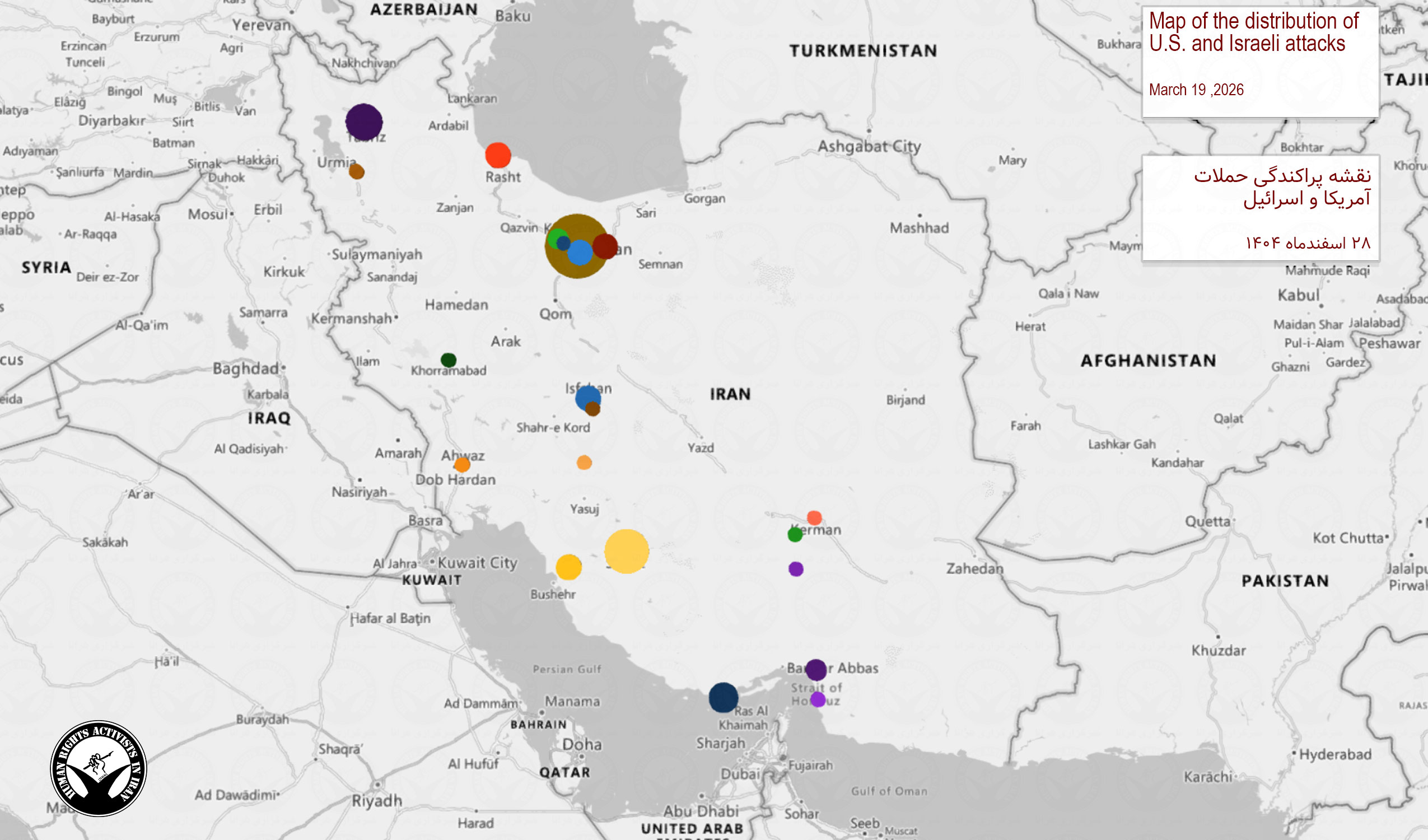
HRANA– In the last 24 hours, and as of March 19, 2026, at 17:00 ET, HRANA has recorded at least 70 attacks across 63 incidents in 12 provinces, resulting in a total of at least 75 casualties (killed and injured, both civilian and military). Today’s attacks, for the first time, targeted areas in the Caspian Sea region. At the same time, extensive strikes were carried out on Iran’s oil and gas facilities in Asaluyeh.

According to information recorded and verified by HRANA, from the first minutes of the day until the end of March 19, 2026 (Tehran time), at least 25 civilians were killed and 5 civilians injured.

Aggregated data since the beginning of the conflict on February 28, 2026, based on incidents recorded in the incident tab and using minimum values for figures marked “more than”:

• Civilian fatalities: 1,394 people (including at least 210 children)

• Military fatalities: 1153 people

• Unclassified fatalities (civilian/military): 639 people

1. Overview of Incidents in the Last 24 Hours

In the last 24 hours, incidents were reported across multiple provinces, reflecting a geographically dispersed pattern of hostilities.  In a large portion of the incidents, the method/type of attack has not yet been confirmed and has been recorded as “undetermined.” In cases where the attack type was identifiable, airstrikes and drone attacks were reported.

Preliminary analysis indicates that Tehran Province, accounting for 36% of all recorded attacks, ranks first among the provinces targeted. Fars Province follows with 13%, while the provinces of Azerbaijan and Hormozgan each account for 10%, placing them next. The list continues with Hormozgan, Isfahan, and Alborz provinces, respectively.

Distribution of attacks

In the past 24 hours, the recorded attacks have damaged 14 distinct objects or facilities. These include a range of different types of targets. In some cases, damage caused by nearby strikes or secondary consequences of the attacks has also been reported.

Examples of targets recorded over the past 24 hours:

• Haidar Karrar Base (Absard)

• Basij Qaramaq Base (Tabriz)

• Sarastan Launcher (Khorramshahr)

• Missile Site (Borazjan)

• Non-residential Area (Kerman vicinity)

For a number of the listed targets, the exact nature of the target (civilian/military/dual-use) is still under review, and classifications may be revised as additional information becomes available.

Facilities Protected Under International Humanitarian Law:

Under international humanitarian law, medical facilities, educational institutions, humanitarian facilities, religious sites, and emergency service centers are among the many objects that maintain special protected status and are afforded special protection. In the past 24 hours, HRANA has preliminarily recorded the following cases:

• Electronics Industries (Shiraz)

• Refinery (Shahr-e Rey)

• Majidiyeh Residential Area (Tehran)

• Customs Administration (Bandar Anzali)

• Bandarass Coastal Recreational Complex (Bandar Anzali)

3. Civilian Casualties

In the past 24 hours, at least 25 civilians, including 3 children, have been killed, and 5 civilians, including one woman, have been injured. All classifications are preliminary and may be updated as new information becomes available.

4. Military Casualties

During the reporting period, 15 military personnel were killed. Military casualties are generally reported in the context of attacks on Army and Islamic Revolutionary Guard Corps (IRGC) bases. Where possible, organizational affiliation and operational context are being assessed; however, not all details have yet been independently verified.

In some incidents, individuals have been killed in the vicinity of military targets; however, their official status has not yet been definitively determined. These cases remain under review, and if reliable information indicating a different status becomes available, the classification may be revised accordingly.

It is believed that military casualties are significantly higher than the figures reported in these reports. However, due to the sensitive nature of military information and the limited access of human rights groups and media to locations where military forces are present, this section largely reflects reports of senior officers or military personnel who were present in urban areas.

5. Confirmed but Unspecified Casualties

Of the reported casualties in the past 24 hours, 12 deaths and 18 injuries remain classified as unverified, meaning that HRANA has not yet been able to determine with sufficient certainty whether these individuals were civilians or military personnel.

Burials: Today, 18 burials resulting from attacks in previous days have been recorded.

A Note on HRANA Methodology

Note that, in line with HRANA policy, this report reflects only incidents that occurred within the territorial borders of Iran.

The information contained in this report is compiled through HRANA’s established documentation network. Data is collected from a combination of field reports, local contacts, medical and emergency sources, civil society networks, and open source materials, including publicly available images, videos, and official statements where relevant. Each reported incident is logged and assessed through an internal review process before publication.

Given the evolving nature of hostilities, information is gathered on a rolling basis and reflects the status of documentation at the time of publication.

The figures presented in this report may not reflect the full scope of harm. Ongoing hostilities, damage to infrastructure, communication disruptions, restricted access to affected areas, and security risks for sources may limit the ability to document incidents comprehensively.

Delays in medical reporting, difficulties in confirming identities, and restricted access to certain provinces may result in temporary undercounting. As access improves or additional evidence emerges, casualty figures and incident classifications may be revised accordingly.

HRANA remains committed to transparency, methodological rigor, and the continual updating of its findings as new verified information becomes available.

Day 19 of the U.S.-Israeli War on Iran: Widespread Strikes on Oil and Gas Facilities

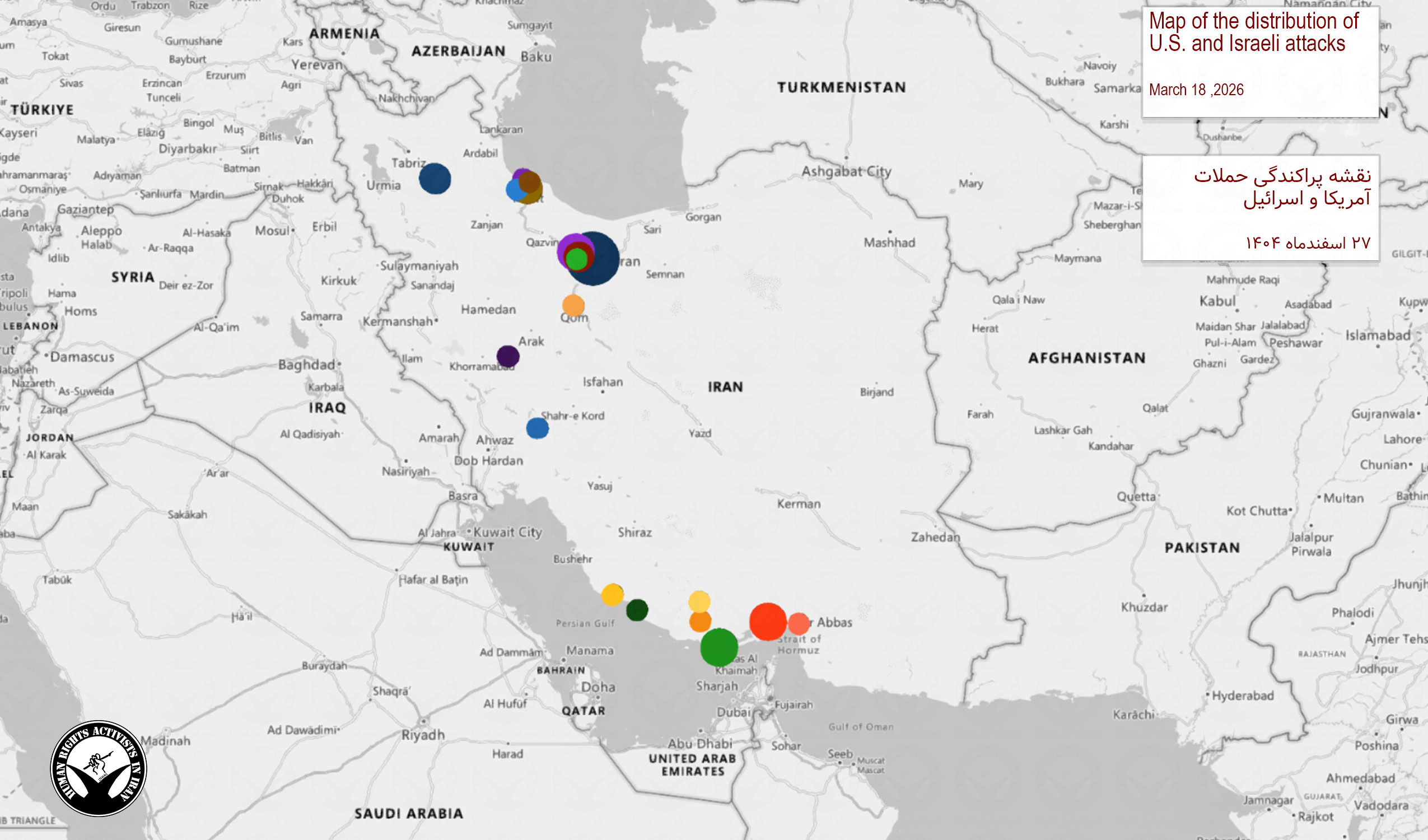
HRANA– In the last 24 hours, and as of March 18, 2026, at 17:00 ET, HRANA has recorded at least 79 attacks across 40 incidents in 11 provinces, resulting in a total of at least 125 casualties (killed and injured, both civilian and military). Today’s attacks targeted areas in the Caspian Sea region for the first time. At the same time, extensive strikes were carried out against Iran’s oil and gas facilities in Asaluyeh.

According to information recorded and verified by HRANA, from the first minutes of the day until the end of March 18, 2026 (Tehran time), at least 15 civilians were killed and 105 civilians injured.

Aggregated data since the beginning of the conflict on February 28, 2026, based on incidents recorded in the incident tab and using minimum values for figures marked “more than”:

• Civilian fatalities: 1,369 people (including at least 207 children)

• Military fatalities: 1138 people

• Unclassified fatalities (civilian/military): 627 people

1. Overview of Incidents in the Last 24 Hours

Day 18 of the U.S.-Israeli War on Iran: Report of 179 Strikes

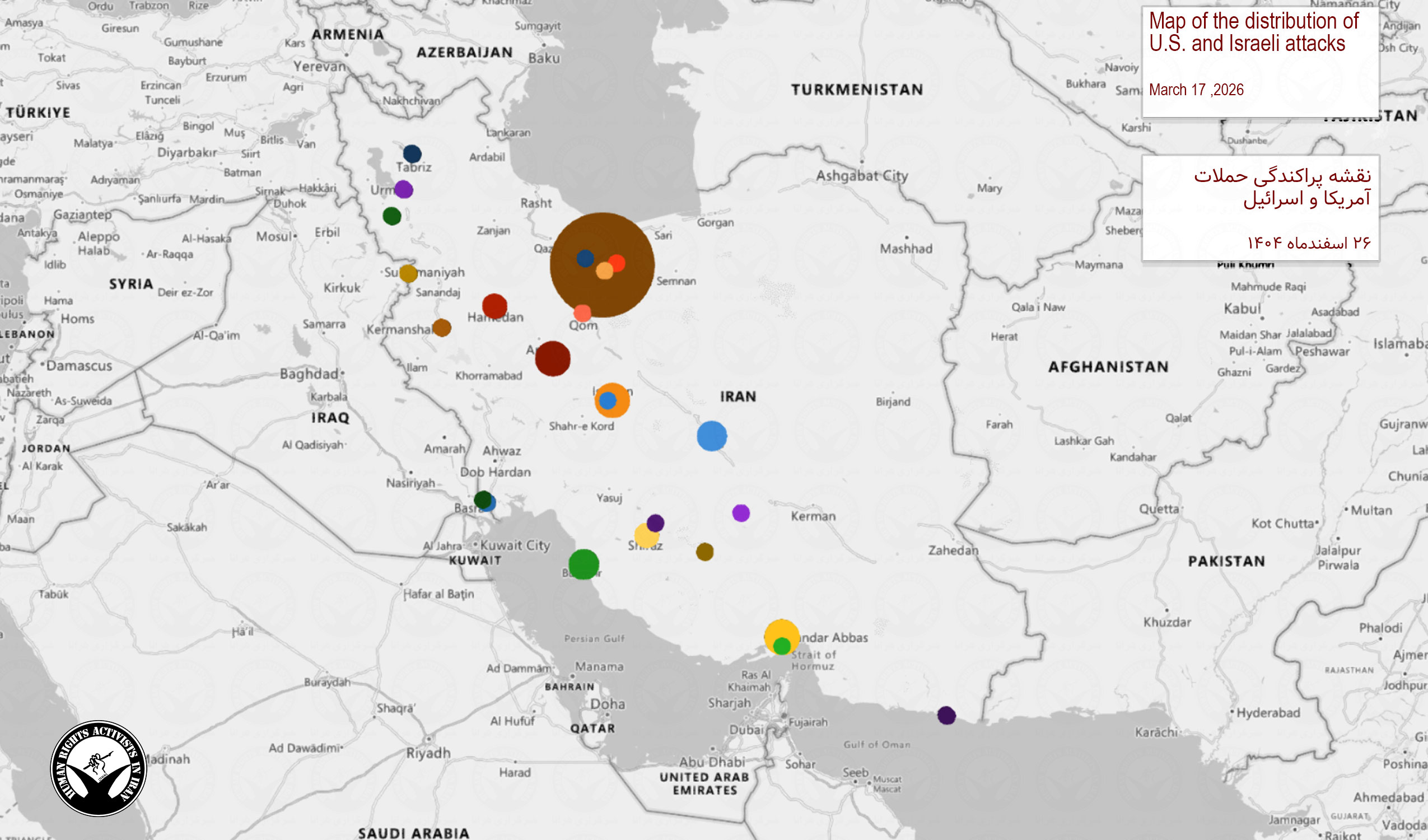
HRANA– In the last 24 hours, and as of March 17, 2026, at 17:00 ET, HRANA has recorded at least 179 attacks across 89 incidents in 17 provinces, resulting in a total of at least 19 casualties (killed and injured, both civilian and military). Reports today indicate that drone attacks targeting police forces and checkpoints, even in densely populated urban areas, have occurred more frequently than in previous days.

Day 16 of the U.S.-Israeli War on Iran: Over 450 Attacks Recorded

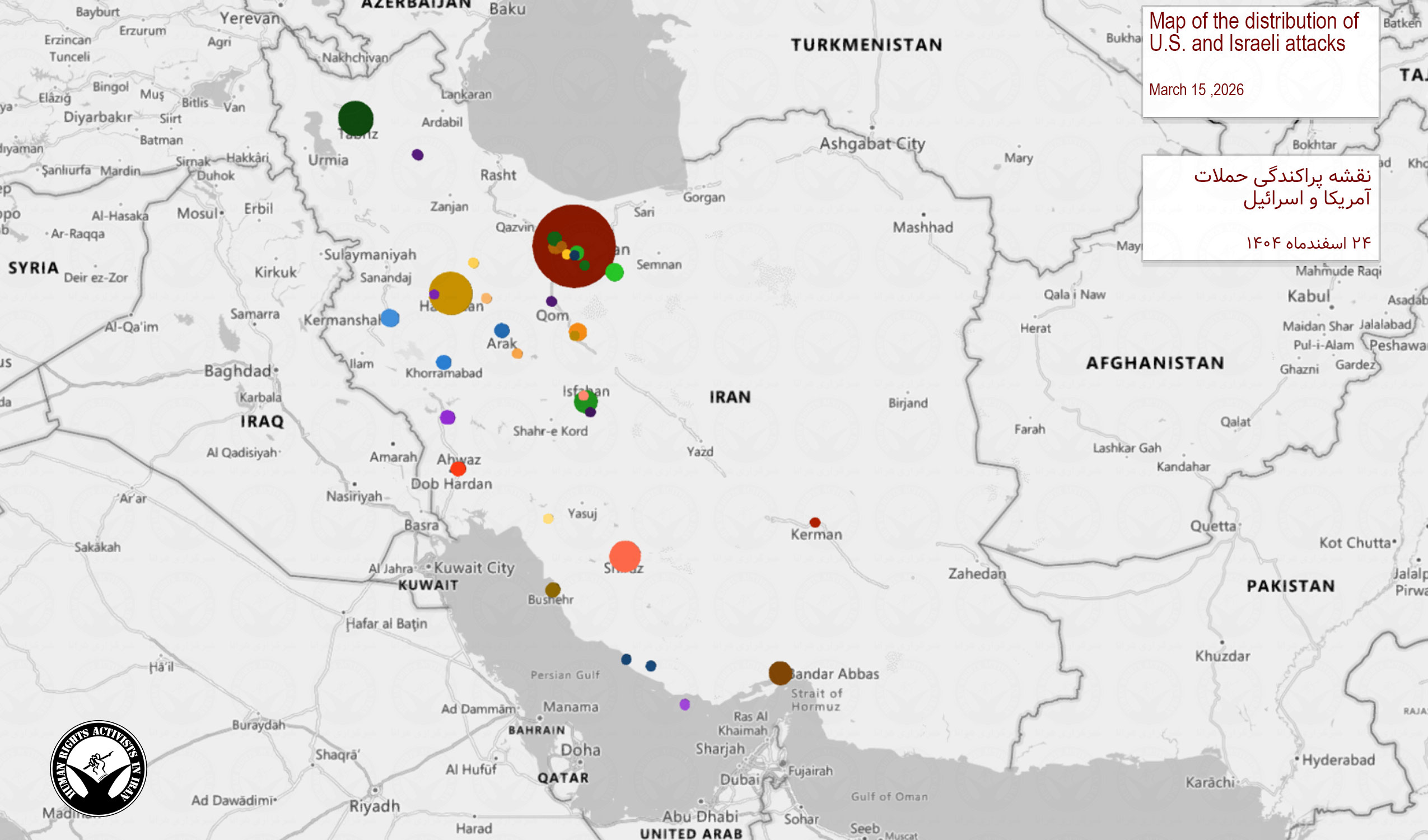
HRANA– In the last 24 hours, and as of March 15, 2026, at 17:00 ET, HRANA has recorded at least 454 attacks across 165 incidents in 16 provinces, resulting in a total of at least 49 casualties (killed and injured, both civilian and military). Today’s reports indicate that after a one-day pause, Tehran Province has once again returned to the top of the list of provinces exposed to attacks, accounting for 48% of the total.

According to information recorded and verified by HRANA, from the first minutes of the day until the end of March 15, 2026 (Tehran time), at least 11 civilians were killed and 22 civilians injured.

Aggregated data since the beginning of the conflict on February 28, 2026, based on incidents recorded in the incident tab and using minimum values for figures marked “more than”:

• Civilian fatalities: 1,330 people (including at least 206 children)

• Military fatalities: 1122 people

• Unclassified fatalities (civilian/military): 613 people

1. Overview of Incidents in the Last 24 Hours

Day 15 of the U.S.-Israeli War on Iran: Attacks on Isfahan

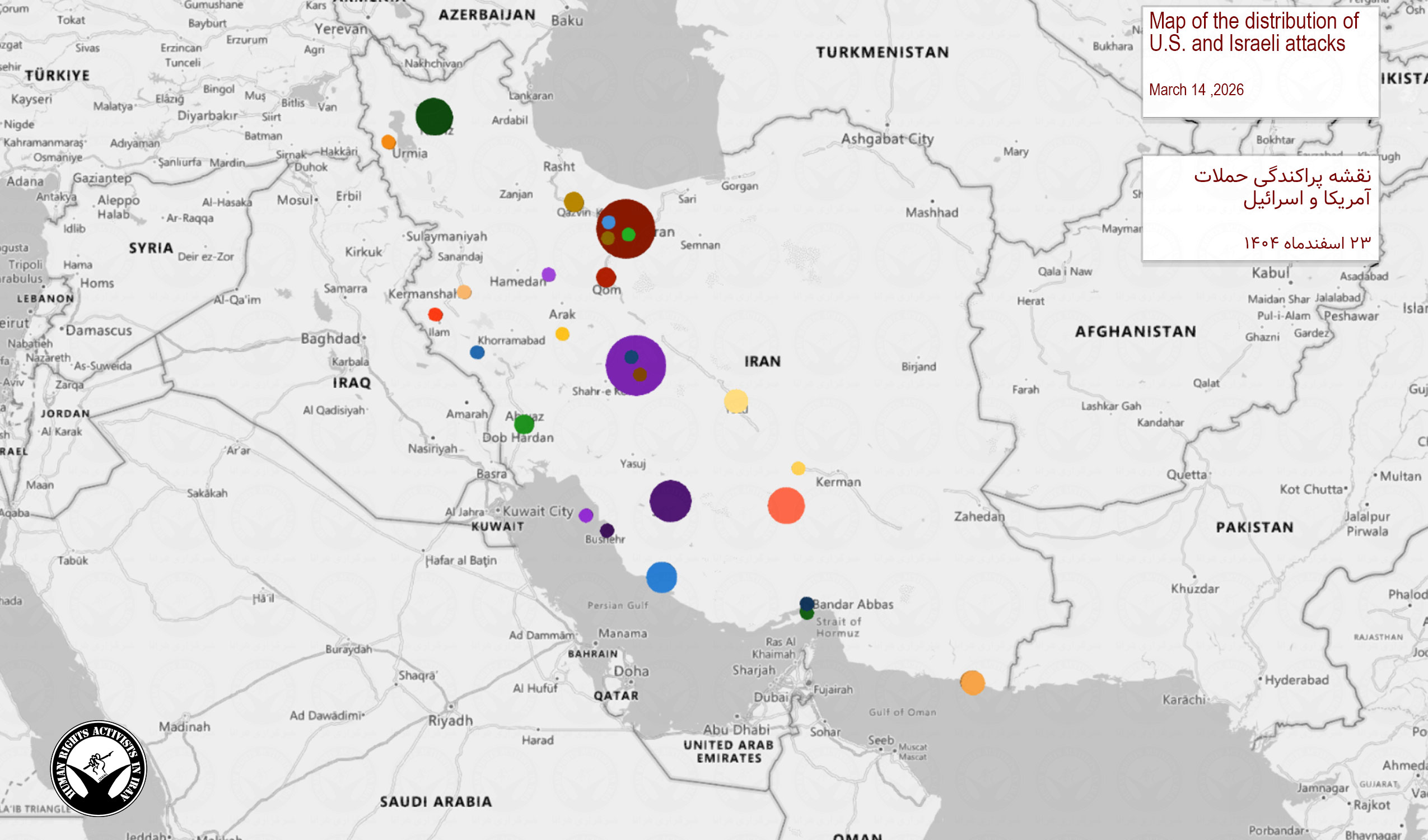
HRANA– In the last 24 hours, and as of March 14, 2026, at 17:00 ET, HRANA has recorded at least 285 attacks across 94 incidents in 18 provinces, resulting in a total of at least 30 casualties (killed and injured, both civilian and military). While Tehran had experienced the highest volume of attacks since the start of the war, the largest number of attacks today were carried out in Isfahan.

According to information recorded and verified by HRANA, from the first minutes of the day until the end of March 14, 2026 (Tehran time), at least 24 civilians were killed and four civilians injured.

Aggregated data since the beginning of the conflict on February 28, 2026, based on incidents recorded in the incident tab and using minimum values for figures marked “more than”:

• Civilian fatalities: 1,319 people (including at least 206 children)

• Military fatalities: 1122 people

• Unclassified fatalities (civilian/military): 599 people

Note on Official Statements: Alongside HRANA’s independent reporting, an aggregated official figure was also reported today in Iran’s state media:

The head of Kurdistan Province’s Emergency Medical Services stated: “In the American–Zionist attack on the province, 112 people were killed. Following these attacks, 969 Kurdish citizens were injured and received medical treatment. Currently, 27 individuals are hospitalized in general wards and 5 in intensive care units (ICU).”

Since these figures are presented in aggregate form and cannot be precisely matched with specific incidents, they have not been included in the event-based calculations used in HRANA’s independent reporting in this overview. They are mentioned here solely as a record of official statements.

1. Overview of Incidents in the Last 24 Hours