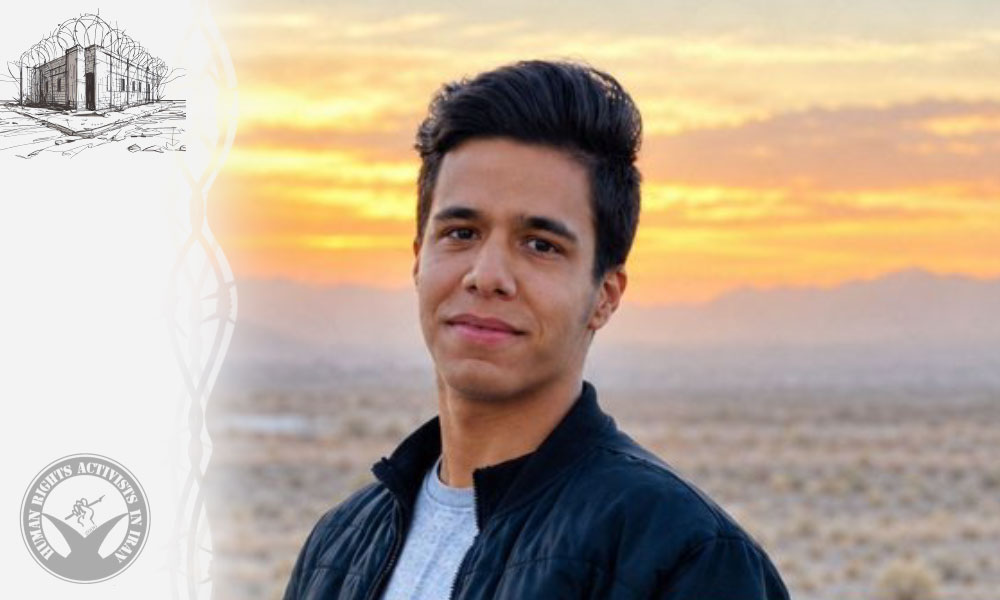
January 2026 Protests: 19-Year-Old Mehdi Khosravi Sentenced to Five Years in Prison

HRANA – Mehdi Khosravi, a resident of Sabzevar who was arrested during the January 2026 protests in Karaj, has been sentenced to five years in prison by the Iranian judiciary.

According to HRANA, Mehdi Khosravi has been sentenced to imprisonment.

Based on information received by HRANA, Mr. Khosravi was sentenced to a total of five years in prison on charges of “disrupting public order and peace and damaging public property.”

A source familiar with the case, confirming the report, told HRANA: “Mehdi was denied access to a lawyer, and the verdict was communicated to him orally.”

Mr. Khosravi was arrested by security forces in Karaj on January 2, 2026, during the nationwide protests. He was later released from prison on April 21, 2026, after posting bail.

Mehdi Khosravi is 19 years old, originally from Sabzevar, and currently resides in Karaj.

HRANA’s inquiries into the judicial authority that issued the sentence are ongoing.

Background on the January 2026 Protests

It should be noted that protests and strikes by shopkeepers and bazaar merchants began in Tehran on Sunday, December 28, 2025, and within two days spread beyond markets and commercial centers. With the participation of students, citizens, and various social groups, these protests became one of the largest protest movements of recent years. Following the crackdown by security and law enforcement forces, thousands were killed or injured, and tens of thousands were arrested or summoned by security agencies. For more information, readers may refer to HRANA’s comprehensive report titled “Crimson Winter,” documenting the first fifty days following the outbreak of Iran’s nationwide protests.
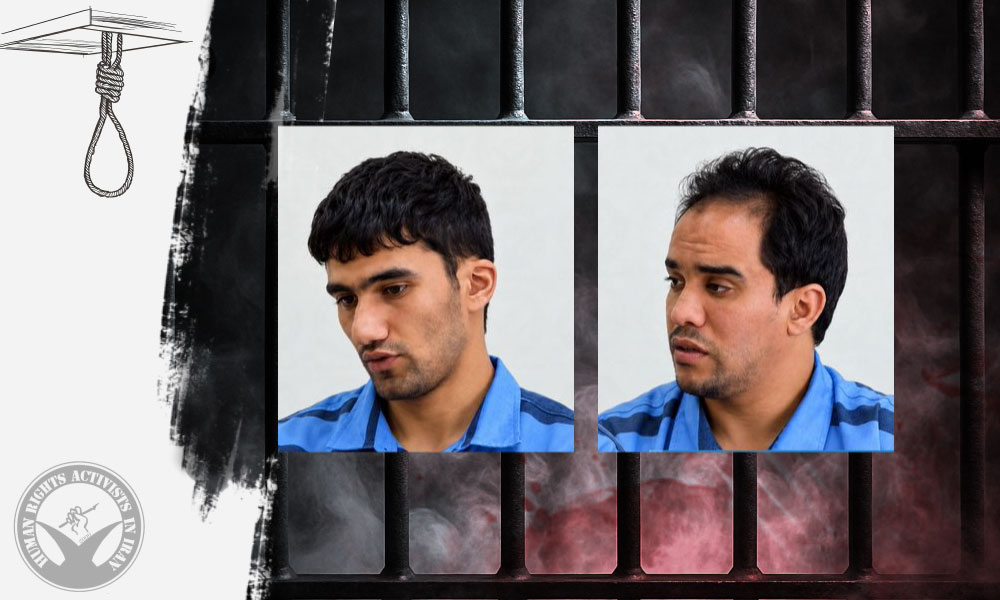
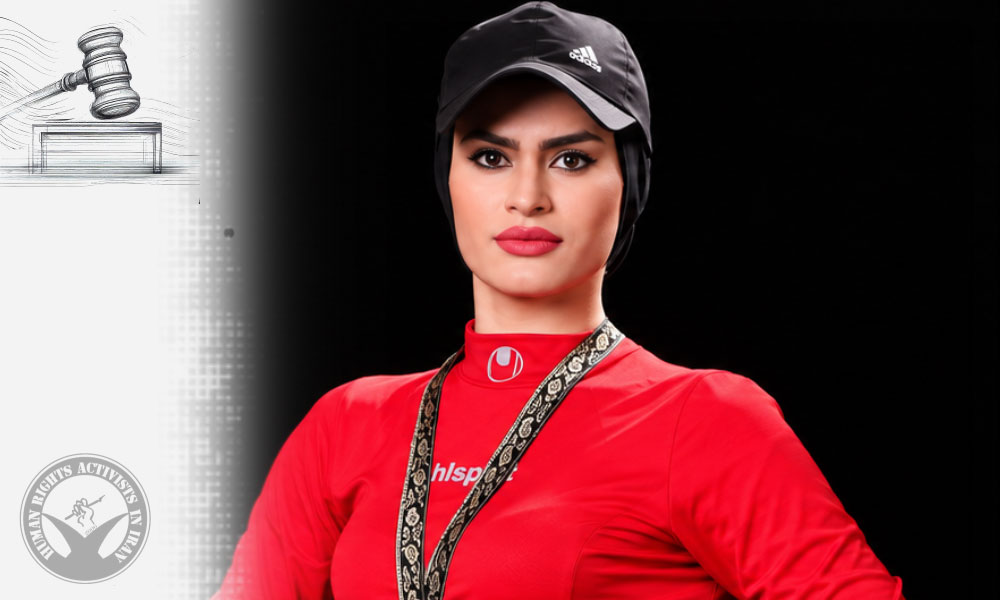
January 2026 Protests: Saeed Mohammadyari Sentenced to 8 Years in Prison and Exile

HRANA – Saeed Mohammadyari, a resident of Kuhdasht and one of those arrested during the nationwide protests in January 2026, has been sentenced by the Revolutionary Court of Khorramabad to eight years in prison and two years of internal exile.

According to HRANA, Saeed Mohammadyari has been sentenced to imprisonment and internal exile.

According to the ruling issued by the Revolutionary Court of Khorramabad, he was sentenced to a total of eight years in prison and two years of internal exile to the city of Khoy on charges of “assembly and collusion to commit crimes against national security,” “propaganda against the regime,” and “insulting the Supreme Leader.”

A source familiar with the case confirmed the news to HRANA, stating: “The verdict was formally served on Mr. Mohammadyari today.”

Saeed Mohammadyari, 36, was arrested during the 2026 nationwide protests and was later released on bail. He works as a farmer in Kuhdasht.

Background on the January 2026 Protests

It should be noted that protests and strikes by shopkeepers and bazaar merchants began in Tehran on Sunday, December 28, 2025, and within two days spread beyond markets and commercial centers. With the participation of students, citizens, and various social groups, these protests became one of the largest protest movements of recent years. Following the crackdown by security and law enforcement forces, thousands were killed or injured, and tens of thousands were arrested or summoned by security agencies. For more information, readers may refer to HRANA’s comprehensive report titled “Crimson Winter,” documenting the first fifty days following the outbreak of Iran’s nationwide protests.
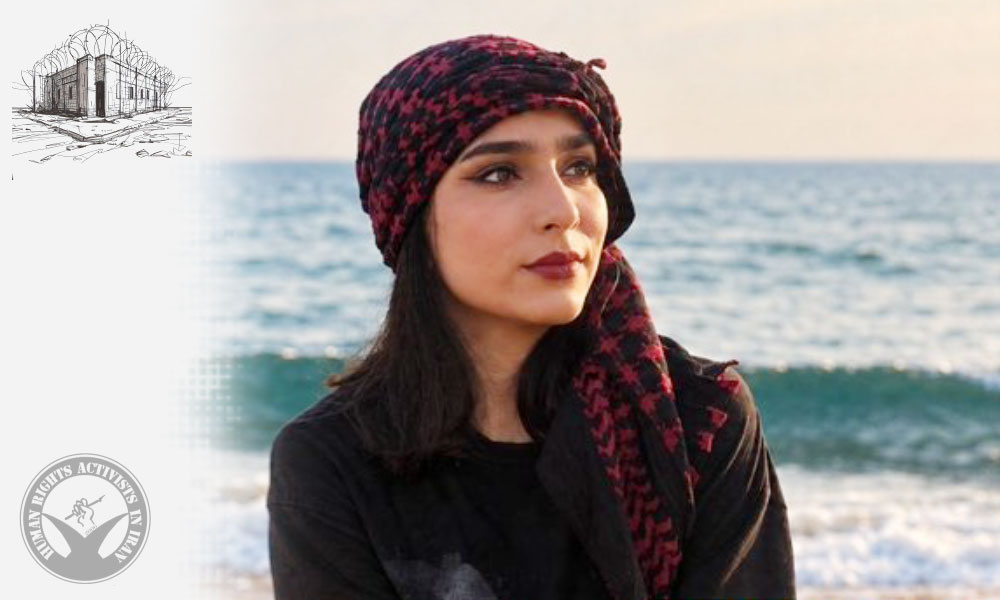
January 2026 Protests: Mahnam Navab Safavi Sentenced to Death

HRANA – Mehnam Navab Safavi, arrested during the nationwide protests of January 2026 who is currently imprisoned in Dastgerd Prison in Isfahan, was sentenced to death by Branch 5 of the Revolutionary Court of Isfahan on the charge of moharebeh (“enmity against God”).

According to HRANA, Mahnam Navab Safavi, one of the detainees from the nationwide protests of January 2026, has been sentenced to death.

Based on information obtained by HRANA, Branch 5 of the Revolutionary Court of Isfahan, presided over by Judge Hemati-Nejad, sentenced Mr. Navab Safavi to death on charges including moharebeh through alleged involvement in “the destruction of public property,” “propaganda against the regime,” “assembly and collusion against national security,” and “encouraging people to commit murder.”

A source informed and close to the family of this citizen confirmed the news in a conversation with HRANA, stating that one of the alleged acts cited against Mr. Navab Safavi was writing slogans.

Mahnam Navab Safavi, 22, is a Persian-language rapper and a resident of Isfahan. He was arrested on January 10, 2026, during the nationwide protests in the Sheikh Sadough area of Isfahan and was later transferred to Dastgerd Prison in this city.

It should be noted that protests and strikes by shopkeepers and bazaar merchants began in Tehran on Sunday, December 28, 2025, and within two days spread beyond markets and commercial centers. With the participation of students, citizens, and various social groups, these protests became one of the largest protest movements of recent years. Following the crackdown by security and law enforcement forces, thousands were killed or injured, and tens of thousands were arrested or summoned by security agencies. For more information, readers may refer to HRANA’s comprehensive report titled “Crimson Winter,” documenting the first fifty days following the outbreak of Iran’s nationwide protests.
January 2026 Protests: Mohammad Abed-Raftar Sentenced to 21 Years in Prison

HRANA – Branch 47 of the Isfahan Province Court of Appeals has sentenced Mohammad Abed-Raftar, arrested during the January 2026 protests, to 21 years in prison and a two-year ban on residing in Isfahan Province. He had previously received the same prison sentence and a permanent ban on residing in Isfahan Province at the trial court level.

According to HRANA, Mohammad Abed-Raftar has been sentenced to 21 years in prison.

According to a ruling issued and served on July 2, 2026, by Branch 47 of the Isfahan Province Court of Appeals, Abed-Raftar was sentenced to one year in prison for “propaganda against the regime”; five years for “incitement and encouragement to wage war and commit killings”; five years in prison for “assembly and collusion to commit crimes against national security” and Ten years for “attempting to manufacture unconventional devices (Molotov cocktails) with the intent of cooperating with hostile states.”

As an additional punishment, he was also sentenced to a two-year ban on residing in Isfahan Province.

According to information received by HRANA, his case has now been referred to the sentence enforcement office.

On April 26, 2026, Abed-Raftar was tried before Branch 102 of the Shahin Shahr and Meymeh Criminal Court Two. On the same day, the court sentenced him to 21 years in prison and a permanent ban on residing in Isfahan Province. The ruling was issued by Javad Kamali, the judge responsible for handling cases within the jurisdiction of the Revolutionary Court in Shahin Shahr.

Although the charges fell within the jurisdiction of the Revolutionary Court, the case was heard by the Shahin Shahr Criminal Court because the city does not have an independent Revolutionary Court.

Abed-Raftar was arrested by security forces on January 8, 2026, and was ultimately released in March after posting 50 billion rials (5 billion tomans) in bail.

Mohammad Abed-Raftar, aged approximately 29, is a resident of Shahin Shahr, Isfahan Province.

January 2026 Protests: Mehdi Khanki Executed

HRANA – The Judiciary’s Media Center announced today that the death sentence of Mehdi Khanki, one of those arrested in connection with the Janauary 2026 nationwide protests, has been carried out. According to the state-run outlet, Khanki had previously been sentenced to death on charges of “carrying out operational activities on behalf of Israel, the United States, and hostile groups.”

Mizan, Iran’s Judiciary’s Media Center, announced today that Mehdi Khanki, one of those arrested in connection with the January 2026 protests, has been executed. According to Mizan, a branch of the Karaj Revolutionary Court had sentenced him to death and the confiscation of all his property under the Law on Intensifying Punishments for Espionage and Cooperation with the Zionist Regime and Hostile States Against National Security and Interests.
The charges against him included “carrying out operational activities on behalf of Israel, the United States, and hostile groups” and “manufacturing, obtaining, and possessing firearms and military ammunition, and using them.” The Judiciary stated that his sentence was carried out after being upheld by the Supreme Court.

According to the Judiciary’s claims, Mehdi Khanki was arrested at his residence in Karaj on February 10, 2026, by officers of the Alborz Province Police Intelligence Organization. Authorities alleged that firearms, ammunition, and explosive materials were discovered during a search of his home. The Judiciary further claimed that, during the judicial proceedings, he admitted to membership in a group opposed to the Islamic Republic, possession of firearms and military ammunition, manufacturing explosives, and distributing weapons during the protests.

The report did not provide further details, including the date or location of Khanki’s execution.

According to HRA’s Annual Report, in 2025 at least 2,063 citizens, including 61 women and 2 juvenile offenders, were executed. Of these, the sentences of 11 individuals were carried out in public. During the same period, 172 other individuals were sentenced to death.

Subscribe to Our Newsletter

Now is definitely not the time to stop reading!

January 2026 Protests: Supreme Court Overturns Death Sentence of Ali Fattah

HRANA – The death sentence issued against Ali Fattah (Kamali), arrested during the January 2026 protests, has been overturned by the Supreme Court. He had previously been sentenced to death by Judge Iman Afshari.

According to HRANA, the Supreme Court has overturned the death sentence imposed on Ali Fattah (Kamali), one of the detainees arrested during the January 2026 protests.

Based on information received by HRANA, the Supreme Court overturned the political prisoner’s death sentence some time ago.

A source familiar with the case told HRANA: “Following the onset of serious mental health issues, Ali Fattah (Kamali) is currently hospitalized at Razi Psychiatric Teaching and Treatment Hospital (Aminabad). He had previously been transferred to the same facility once before to receive medical treatment.”

Ali Fattah (Kamali) was arrested in Tehran on January 12, 2026, during the nationwide protests. Holding a Malaysian student residence permit, he had returned to Iran only a few days before his arrest.

Following his arrest, he was held at Greater Tehran Penitentiary before being transferred to Ghezel Hesar Prison in Karaj in late June.

In May of this year, Branch 26 of the Tehran Revolutionary Court, presided over by Judge Iman Afshari, sentenced him to death on the charge of “enmity against God” (moharebeh).

It should be noted that protests and strikes by shopkeepers and bazaar merchants began in Tehran on Sunday, December 28, 2025, and within two days spread beyond markets and commercial centers. With the participation of students, citizens, and various social groups, these protests became one of the largest protest movements of recent years. Following the crackdown by security and law enforcement forces, thousands were killed or injured, and tens of thousands were arrested or summoned by security agencies. For more information, readers may refer to HRANA’s comprehensive report titled “Crimson Winter,” documenting the first fifty days following the outbreak of Iran’s nationwide protests.

January 2026 Protests:Execution of Erfan Esfandiari and Gol-Mohammad Mohammadi

HRANA – The Iranian Judiciary’s Media Center has announced the execution of Erfan Esfandiari and Gol-Mohammad Mohammadi, two individuals arrested during the January 2026 protests in Isfahan. The two had been tried in a case referred to as the “Alikhani Square case” and sentenced to death.

According to HRANA, citing Mizan, the executions of Erfan Esfandiari and Gol-Mohammad Mohammadi, both detained during the January 2026 protests in Isfahan, were carried out at dawn on Sunday, July 19, 2026.

The Judiciary’s Media Center claimed that during the protests on January 8, 2026, in Alikhani Square in Isfahan, four law enforcement officers were killed. It further alleged that a number of protesters attacked police forces using firearms, bladed weapons, and incendiary materials, while also damaging public property and facilities. The judiciary additionally claimed that, after attacking the officers, the defendants committed acts of violence, including setting the victims’ bodies on fire, mutilating them, and filming the scenes.

However, HRANA has not been able to independently verify these allegations. Moreover, no official or transparent information has been released regarding the judicial proceedings, including the defendants’ access to legal counsel of their own choosing, the conduct of the trial the evidence presented before the court, or their ability to mount an effective defense. Given the documented record of the Islamic Republic’s security and judicial authorities in relying on forced confessions, torture, and other forms of ill-treatment in security-related cases, there are serious concerns regarding compliance with fair trial standards and the defendants’ rights in this case.

The Judiciary’s Media Center stated that death sentences had been issued for several defendants in this case and that the sentences of two of them were carried out at dawn today.

Yesterday, Voice of America (VOA) claimed that Erfan Esfandiari and Gol-Mohammad Mohammadi, along with ten other death row prisoners, had been transferred from the general ward of Dastgerd Prison in Isfahan to solitary confinement. VOA also reported that 59 individuals were tried in connection with the case, 12 of whom were sentenced to death. According to VOA, the identities of the remaining ten death row prisoners are: Alireza Sepahi, Abolfazl Sepahi, Ghaem Hosseini, Shervin Bagherian, Amirhossein Safari, Amirhossein Maleki, Ali Dashti, Abolfazl Ebrahimi, Alireza Raisi, and Amirhossein Ebrahimi Analoucheh. The report further stated that Erfan Esfandiari and Gol-Mohammad Mohammadi were 18 and 23 years old, respectively.

HRANA has not yet been able to independently verify the information published by VOA regarding the identities of those sentenced to death, the total number of defendants, their ages, or other details of the case. HRANA is continuing to investigate and verify additional information. Further reports will be published if independent and reliable information becomes available.

It should be noted that protests and strikes by shopkeepers and bazaar merchants began in Tehran on Sunday, December 28, 2025, and within two days spread beyond markets and commercial centers. With the participation of students, citizens, and various social groups, these protests became one of the largest protest movements of recent years. Following the crackdown by security and law enforcement forces, thousands were killed or injured, and tens of thousands were arrested or summoned by security agencies. For more information, readers may refer to HRANA’s comprehensive report titled “Crimson Winter,” documenting the first fifty days following the outbreak of Iran’s nationwide protests.
January 2026 Protests: Death Sentences of Behrouz Zamaninejad and His Son, Kourosh Zamaninejad, Overturned

HRANA – The death sentences issued against Behrouz Zamaninejad and his son, Kourosh Zamaninejad, who were arrested during the January 2026 protests and are currently imprisoned in Greater Tehran Penitentiary, have been overturned by the Supreme Court. Their case has been referred to a parallel court branch for retrial. The two had previously been sentenced to death by Judge Iman Afshari.

According to HRANA, the Supreme Court has overturned the death sentences of two individuals arrested during the January 2026 protests.

Based on information received by HRANA, Branch 32 of the Supreme Court accepted the request for a retrial submitted by Behrouz Zamaninejad and his son, Kourosh Zamaninejad, overturned the death sentences issued against them, and referred the case to a parallel branch for renewed proceedings.

In April 2026, the two men, along with their co-defendants Mohammadreza Majidi-Asl and his wife, Bita Hemmati, were sentenced to death by Branch 26 of the Tehran Revolutionary Court, presided over by Judge Iman Afshari, on the charge of “conducting operational activities on behalf of the hostile government of the United States and hostile groups.” All four defendants were also sentenced to five years of discretionary imprisonment each on the charge of “assembly and collusion against national security.” The court additionally ordered the confiscation of all their assets as a supplementary punishment. In late May 2026, the Supreme Court overturned the death sentences of Mohammadreza Majidi-Asl and Bita Hemmati.

It should also be noted that another defendant in the same case, Amir Hemmati, was sentenced to five years of discretionary imprisonment on the charge of “assembly and collusion against national security,” as well as eight months in prison for “propaganda against the regime.”

According to the court’s ruling, the defendants were accused of participating in protest gatherings on January 8 and 9, 2026, chanting protest slogans, throwing objects including bottles, concrete blocks, and incendiary materials, and damaging public property. The ruling further alleged that these actions were intended to disrupt national security and were carried out in connection with hostile groups. Judge Afshari also referred to the alleged use of explosives and an unspecified weapon, injuries inflicted on deployed security forces, and the dissemination of content aimed at undermining national security. However, the ruling did not specify the details of these allegations or explain how each accusation was individually attributed to each defendant.

A source close to the families of the prisoners previously told HRANA: “Mohammadreza Majidi-Asl and Bita Hemmati are a married couple living in Tehran, and Amir Hemmati is a relative of theirs. Kourosh Zamaninejad and Behrouz Zamaninejad were also living in the same residential building, and they were arrested simultaneously.”

According to information obtained by HRANA, the defendants were subjected to pressure during interrogations, raising concerns that forced confessions may have been extracted during that period.

The death sentences issued by the trial court were based on a combination of legal provisions, including Articles 131 and 134 of the Islamic Penal Code, as well as Articles 500 and 610, which relate to “propaganda against the regime” and “assembly and collusion against national security.” The application of the death penalty in conjunction with these charges, particularly in cases stemming from public protests, has drawn increasing criticism from human rights organizations in recent years.

The defendants were arrested by security forces in Tehran on January 9, 2026. Behrouz Zamaninejad and his son, Kourosh Zamaninejad, are currently being held in Greater Tehran Penitentiary, while Bita Hemmati is detained in the women’s ward of Evin Prison. HRANA is still investigating the whereabouts of Mohammadreza Majidi-Asl.

January 2026 Protests: Mohammad Amini Dehaqani Executed in Isfahan

HRANA – The death sentence of Mohammad Amini Dehaqani, one of those arrested during the nationwide protests of January 2026, was carried out this morning, July 15, 2026, in Isfahan. The Judiciary’s Media Center claimed that he had been sentenced to death in connection with a case involving the arson of the Dehaqan Governor’s Office and the destruction of public property in Imam Hossein Square and the city’s police station.

According to HRANA, citing Mizan News Agency, Mohammad Amini Dehaqani, one of the detainees arrested during the nationwide protests of January 2026, was executed in Isfahan.

The Judiciary’s Media Center announced that the execution was carried out at dawn today after judicial proceedings had been completed and the final verdict had been upheld by the Supreme Court.

According to the Judiciary’s claims, the protester was arrested during the demonstrations on January 9, 2026, and was tried and sentenced to death on charges of “setting fire to the Dehaqan Governor’s Office and police station by throwing Molotov cocktails, and destroying public property in Imam Hossein Square in the city.”

The report does not specify the prison where the execution was carried out.

It should be noted that protests and strikes by shopkeepers and bazaar merchants began in Tehran on Sunday, December 28, 2025, and within two days spread beyond markets and commercial centers. With the participation of students, citizens, and various social groups, these protests became one of the largest protest movements of recent years. Following the crackdown by security and law enforcement forces, thousands were killed or injured, and tens of thousands were arrested or summoned by security agencies. For more information, readers may refer to HRANA’s comprehensive report titled “Crimson Winter,” documenting the first fifty days following the outbreak of Iran’s nationwide protests.
Parnian Hashempour Sentenced to Prison by the Court of Appeals

HRANA – The five-year prison sentence of Parnian (Fatemeh) Hashempour, arrested during the January 2026 protests, has been reduced to two years on appeal. She is currently serving her sentence in Evin Prison.

Based on information received by HRANA, Ms. Hashempour has been sentenced by the Court of Appeals to two years in prison on the charge of assembly and collusion. At the trial court stage, she had been sentenced to five years’ imprisonment on the same charge by the judiciary.

HRANA’s investigation into the details of the current case, including the judicial authorities that issued the ruling, is ongoing.

Hashempour was arrested in connection with the nationwide protests of late December 2025 and January 2026. After spending several days in solitary confinement, she was transferred to the women’s ward of Evin Prison on December 31, 2025.

Parnian (Fatemeh) Hashempour, who holds a master’s degree in archaeology, was also arrested in 2022 and was detained for a period in Qarchak Prison in Varamin. She was ultimately granted amnesty and released in that case.

It should be noted that protests and strikes by shopkeepers and bazaar merchants began in Tehran on Sunday, December 28, 2025, and within two days spread beyond markets and commercial centers. With the participation of students, citizens, and various social groups, these protests became one of the largest protest movements of recent years. Following the crackdown by security and law enforcement forces, thousands were killed or injured, and tens of thousands were arrested or summoned by security agencies. For more information, readers may refer to HRANA’s comprehensive report titled “Crimson Winter,” documenting the first fifty days following the outbreak of Iran’s nationwide protests.