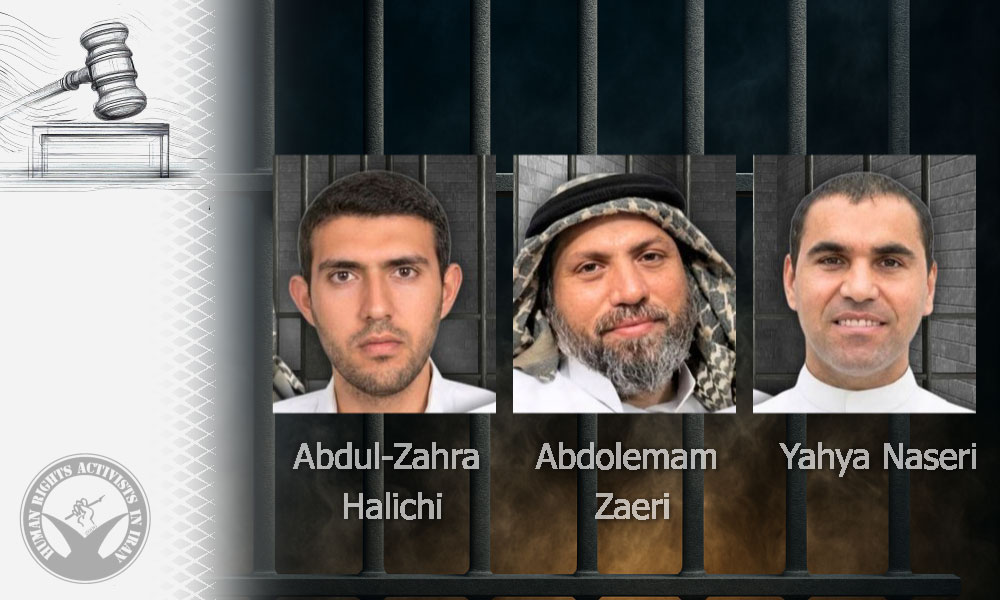
HRANA – Numerous political and religious prisoners in Iran have spent more than two decades in detention. To ensure their stories are not lost amid the constant churn of daily news, HRANA publishes a series of reports dedicated to them. Each report reviews the prisoner’s case history, prison conditions, access to basic rights, and urgent needs.
In this installment, HRANA, the news agency of Human Rights Activists in Iran, reviews the latest situation of Yahya Naseri after two decades in prison.
Prisoner Profile
• Name: Yahya Naseri
• Year of Arrest: 2005
• Charges: “Acting against national security, moharebeh (enmity against God), and efsad fel-arz (spreading corruption on earth)”
• Initial Sentence: Life imprisonment
• Current Sentence: Life imprisonment
• Detention Locations: After sentencing, Mr. Naseri was held in Karun Prison, Ahvaz, before being transferred to Ward 5 of Sheiban Prison, Ahvaz, where he remains detained without respect for the principle of separation of crimes.
• Leave/Access: In recent years, no furlough has been granted; his access to family and legal counsel has been reported as limited.
• Current Status: Still serving a long-term sentence, despite legal reforms that could provide opportunities for retrial or sentence reduction.
Case Background and Judicial Process
On October 2, 2005, Mr. Naseri was arrested by security forces in connection with the so-called “Salman Farsi Street bombing in Ahvaz.” Shortly afterward, Branch 1 of the Ahvaz Revolutionary Court sentenced him to life imprisonment on charges of “acting against national security, moharebeh, and efsad fel-arz.”
This life sentence placed him among prisoners with indefinite incarceration, a situation that effectively extends for many years and severely limits access to mechanisms for sentence review.
Key Aspects of the Case:
• Severe Security Charges: The charge of moharebeh is among the most serious in Iran’s political-security cases, usually carrying broad judicial and executive consequences.
• Continued Imprisonment Despite Legal Changes: Although legal reforms have introduced options for retrial, sentence reduction, or parole in some cases, Mr. Naseri remains imprisoned.
Detention Conditions and Transfers
Throughout his imprisonment, Mr. Naseri has been held in Karun and Sheiban prisons in Ahvaz. After receiving his sentence, he was kept in Karun Prison, later transferred to Ward 5 of Sheiban Prison, where he has remained to this day, again without separation of crimes.
Observations on Conditions:
• Frequent Transfers: Moves between wards and prisons can disrupt access to family, legal counsel, and healthcare.
• Exposure to Violence: Reports indicate verbal and physical abuse against him. In February 2019, Mr. Naseri went on hunger strike to protest the lack of separation of crimes and increased pressure from prison officials. Following this protest, he was denied family visits and phone calls. In April 2024, he was reportedly beaten by Sheiban Prison guards in Ward 5. Later that December, he was threatened with solitary confinement or exile to remote prisons after protesting poor conditions, denial of medical care, and the transfer of violent offenders into his ward.
• Denial of Medical Care: Over more than two decades, despite suffering from heart disease and hemorrhoids, prison authorities have repeatedly obstructed his transfer to hospitals and access to specialized treatment. Denial of medical care is a serious violation of the fundamental right to health and, in many cases, constitutes inhumane treatment used as a means of added pressure on prisoners.
Access to Family, Lawyer, and Furlough
In recent years, Mr. Naseri has not received furlough. Reports indicate his access to both family and legal counsel is restricted. These limitations not only have psychological and social impacts but also undermine his right to effective defense and to pursue retrial mechanisms.
Potential Legal Pathways (General Recommendations)
1. Retrial: Review of new evidence or substantial procedural/material errors in the verdict.
2. Sentence reduction or commutation, if legal grounds are available.
3. Conditional release or suspension of sentence: Assessment of criteria such as time served, good behavior, and health condition.
4. Addressing violations during imprisonment: denial of healthcare, exposure to violence, deprivation of visits, and lack of legal access.
5. Independent documentation and international advocacy, should domestic remedies remain blocked.
Timeline Summary
• 2005: Arrest; charges of “acting against national security, moharebeh, and efsad fel-arz.”
• Initial Sentence: Life imprisonment.
• Post-sentencing: Held in Karun Prison, Ahvaz.
• April 2024: Reported beating by Sheiban Prison guards (Ward 5).
• Recent years: No furlough, denial of proper medical care, restricted family and legal access.
• Current Status: Still imprisoned despite legal reforms that could allow for case review.
Conclusion and Importance of Review
Despite legislative changes enabling retrial, sentence reduction, or release for those convicted of moharebeh, Mr. Naseri remains in prison. His case exemplifies the plight of long-term political-security prisoners in Iran, underlining the urgent need for legal review and the application of both domestic and international mechanisms to reduce sentences or secure release.
Immediate Needs
• Regular, unrestricted access to lawyer and family.
• Independent medical evaluation in light of past beatings and long-term health conditions.
• Review of eligibility for retrial or other legal measures to reduce/terminate imprisonment.
• Enforcement of prison regulations regarding visitation, furlough, and communication.
• Access to adequate healthcare and treatment.
About This Series
This report is part of the “More than Two Decades Behind Bars” series, which aims to continuously document long-term imprisonment cases and remind the public of the collective responsibility to ensure they are seen and their conditions are pursued.