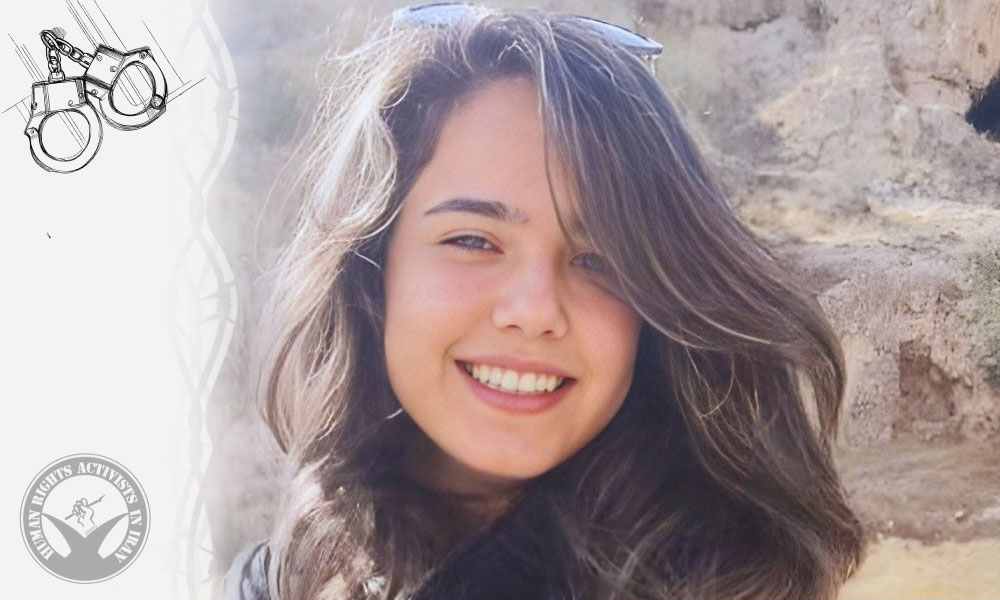
Mandana Sotoudeh and Behzad Basiri, a Baha’i Couple Living in Shiraz, Arrested

HRANA – Behzad Basiri and Mandana Sotoudeh, a Baha’i couple residing in Shiraz, were arrested by security forces on Wednesday, April 1. At the same time, their home was searched by agents, and a number of their electronic devices were confiscated.

Based on information received by HRANA, on Wednesday, April 1, security forces raided the home of Behzad Basiri and Mandana Sotoudeh. During the search, the agents confiscated these citizens’ electronic devices. The officers first arrested Mr. Basiri, who was at home, and then proceeded to arrest Ms. Sotoudeh at her mother’s house. During the search of the home and the arrest of these citizens, the agents did not present a judicial warrant.

So far, no information has been obtained regarding the reasons for their arrest or the location where these Baha’i citizens are being held.

It is worth noting that Mahsa Sotoudeh, Mandana Sotoudeh’s sister, was also arrested by security forces in the city on Sunday, March 29. Her arrest was likewise accompanied by a house search and the confiscation of electronic devices, and no information has yet emerged about her fate.

Notably, over the past decade, the Baha’i community in Iran has been targeted by security and judicial actions more than any other religious minority. A review of the annual reports by the Statistics, Publications, and Works Center of the Human Rights Activists in Iran indicates that over the past year, an average of 62.41% of reports concerning religious minorities were related to violations of the civil rights of Baha’is.

Mahsa Sotoudeh, a Baha’i Citizen Living in Shiraz, Arrested

HRANA – Mahsa Sotoudeh, a Baha’i citizen residing in Shiraz, was arrested yesterday by IRGC intelligence agents and transferred to an undisclosed location. The family home of this citizen was also searched by agents, and the electronic devices belonging to family members were confiscated.

Based on information received by HRANA, on Sunday, March 29, IRGC intelligence agents went to Mahsa Sotoudeh’s home. After searching the house and confiscating the electronic devices of family members, they arrested this Baha’i citizen.
As of the time of this report, no information has been obtained regarding her place of detention or the charges brought against her.

According to an informed source, Ms. Sotoudeh’s family home is located next to the residence of Behzad Yazdani and Romina Khazali, the Baha’i citizens who were also arrested by security agents on Saturday and Sunday.

Over the past decade, the Baha’i community in Iran has been targeted by security and judicial pressure more than any other religious minority. A review of HRA’s annual reports shows that over the past year, an average of 62.41% of reports concerning religious minorities were related to violations of the rights of Baha’i citizens.

Shiraz: Retired Teacher Ali Ahmadi Arrested by Security Forces

HRANA – Ali Ahmadi, a retired teacher, was arrested by security forces in Shiraz on March 7 and transferred to Adelabad Prison in the city.

Based on the report, the arrest took place on March 7 and was carried out by forces of the Islamic Revolutionary Guard Corps Intelligence Organization. Ahmadi had previously delivered a speech during the protests regarding those who were killed and had himself been injured after being shot by security forces. The teacher had traveled to Shiraz for medical treatment and was arrested again while returning to Nurabad Mamasani.

Following his arrest, Mr. Ahmadi was transferred to Adelabad Prison in Shiraz.

During this period, the teacher has been in contact with his family and reported that violence was used during interrogations in order to obtain forced confessions. He also stated that he is facing charges such as “spreading corruption on earth.”

The report adds that this citizen’s child was also arrested along with him and transferred to Kazerun Prison; however, no information has been provided regarding the child’s age or identity.

It is worth noting that protests and strikes by shopkeepers and merchants began in Tehran on Sunday, December 28, 2025. Within two days, the movement spread beyond markets and commercial centers. With the participation of students, citizens, and various social groups, these demonstrations became one of the most widespread protests in recent years. Following the suppression of the protests by law enforcement and security forces, thousands of people were killed or injured, and tens of thousands were arrested or summoned by security institutions. For further information, readers may refer to HRANA’s comprehensive report titled Crimson Winter,” which documents the first fifty days after the start of Iran’s nationwide protests.

Execution of At Least Twelve Prisoners on Murder and Drug-Related Charges

HRANA – At dawn today, the death sentences of at least 12 prisoners were carried out in the prisons of Mahabad, Shiraz, Malayer, Lahijan, Gonabad, Chabahar, Damghan, Bushehr, Shahrekord, Sabzevar, Kashmar, and Mashhad. These individuals had previously been sentenced to death on charges related to murder and drug offenses.

According to information received by HRANA, Kianoush Monavari was executed in Mahabad Prison; Ghader Mohammadi in Shiraz Prison; Nariman Zangeneh in Malayer Prison; Ali Asghar Oladi in Lahijan Prison; (first name unknown) Shateri in Gonabad Prison; Mostafa Kamali in Chabahar Prison; Aysan Rostami in Damghan Prison; Jahan Azadi in Bushehr Prison; and Farshid Ghasemi in Shahrekord Prison. These individuals had previously been arrested in separate cases on murder charges and sentenced to death by criminal courts.

Meanwhile, the death sentences of Taher Yousefi in Sabzevar Prison, Hamid Tajik in Kashmar Prison, and Adel Fereshteh in Mashhad Prison were carried out on drug-related charges.

As of the time of this report, the executions have not been officially announced by prison authorities or relevant institutions.

According to HRA’s annual report on the human rights situation in Iran, in 2025, at least 2,063 individuals were executed in Iran between January 1, 2025, and January 1, 2026. This represents a 119% increase in the implementation of death sentences compared to 2024. In many of these cases, due to secrecy, prisoners were even denied the right to a final visit with their families.

At Least 19 Prisoners Executed on Murder and Drug-Related Charges

HRANA – At dawn today, Tuesday, February 9, 2026, the death sentences of at least 19 prisoners were carried out in prisons across multiple cities. These individuals had previously been sentenced to death on charges related to drug offenses and murder.

Based on information received by HRANA, Gholam Hassani was executed in Birjand Prison; Fariborz Saljoughi in Bam Prison; Mohammadkaram Jafari in Ilam Prison; Sina Maleki in Borazjan Prison; Javad Najjar in Ahvaz Prison; Morad Jahromi in Jiroft Prison; Taghi Zalpour in Mahabad Prison; Amin Torkaman in Malayer Prison; Mehrshad Alinia in Damghan Prison; Ali Bazargan in Chabahar Prison; Mojtaba Barani in Rasht Prison; Yadollah Mokhtari in Sirjan Prison; and Mahmoud Niazi in Lahijan Prison. These prisoners had previously been arrested on murder charges and sentenced to death by criminal courts.

Separately, the executions of Ayoub Soufi in Khaf Prison, Afshin Ghanbari in Yazd Prison, Rajabali Arya in Sabzevar Prison, and Parviz Pirovani in Shiraz Prison were carried out on charges related to drug offenses. At the same time, two other prisoners were executed in Yazd Prison on similar charges; their identities are currently under review by HRANA.

As of the time of this report, these executions have not been officially announced by prison authorities or relevant institutions.

According to HRA’s annual report, at least 2,063 people were executed in Iran during 2025. Based on this report, executions increased by 119% compared to 2024. In many cases, due to secrecy, prisoners were even denied the right to a final visit with their families prior to execution.

Subscribe to Our Newsletter

Now is definitely not the time to stop reading!

Execution of 15 Prisoners on Murder and Drug-Related Charges

HRANA – At dawn today, February 3, the death sentences of 15 prisoners, previously convicted on charges related to drug offenses and murder, were carried out in the prisons of Sirjan, Rasht, Yazd, Ahvaz, Jiroft, Borazjan, Ilam, Khaf, Bam, Birjand, Lahijan, Mahabad, Sabzevar, Shiraz, and Malayer.

Based on information received by HRANA, Saeed Rouhani was executed in Sirjan Prison; Ayoub Lashkari in Rasht Prison; Bahram Bani Asad in Ahvaz Prison; Hedayat Mirzaei in Borazjan Prison; Afshin Maleki in Ilam Prison; Tahmasb Mehrjou in Khaf Prison; Ali Haghighatdoost in Lahijan Prison; Hirman Sadri in Mahabad Prison; and Majid Sohrabi in Malayer Prison. These individuals had been sentenced to death on charges of murder, and their sentences were carried out.

Additionally, Kourosh Niri in Yazd Prison, Eshaq Miri in Jiroft Prison, one prisoner in Bam Prison, Moradbeyg Haghighat in Birjand Prison, Pouya Lashani in Sabzevar Prison, and Khalil Hemmati in Shiraz Prison were executed on charges related to drug offenses.

Further details, including the identity of the prisoner executed in Bam Prison, are currently under investigation by HRANA.

As of the time of this report, the executions of these prisoners have not been officially announced by prison authorities or the relevant institutions.

According to HRA’s annual report, at least 2,063 people were executed in Iran during the one-year period from January 1, 2025 to January 1, 2026. Based on this report, the implementation of death sentences increased by 119% compared to 2024. In many of these executions, due to secrecy, prisoners were even deprived of the right to a final visit with their families.

At Least 11 Prisoners Executed on Murder and Drug-Related Charges

HRANA – At dawn yesterday, Wednesday, January 28, the death sentences of 11 prisoners, previously convicted on charges related to drug offenses and murder, were carried out in the prisons of Mahabad, Esfarayen, Sabzevar, Shiraz, Malayer, Damghan, Chabahar, Mashhad, Kashmar, Shahrekord, and Bushehr.

According to information received by HRANA, Fuad Amini was executed in Mahabad Prison; Sajjad Khani in Esfarayen Prison; Farhad Namazi in Sabzevar Prison; Nima Afshari in Malayer Prison; Khosrow Pezeshki in Damghan Prison; Darvish Abbas Yadegari in Kashmar Prison; Hossein Mousavi in Shahrekord Prison; and Mokhtar Hassani in Bushehr Prison. All had been sentenced to death on murder charges, and their sentences were carried out.

Additionally, Arshia Changi in Shiraz Prison, Armin Aghapour in Mashhad Prison, and one Afghan national in Chabahar Prison were executed on charges related to drug-related crimes.

Further details, including the identity of the prisoner executed in Chabahar Prison, are currently under investigation by HRANA.

As of the time of this report, the executions have not been officially announced by prison authorities or relevant institutions.

According to HRA’s annual report on the human rights situation in Iran, at least 2,063 people were executed in Iran during the one-year period from January 1, 2025, to January 1, 2026. Based on this data, executions increased by 119% compared to 2024. In many of these cases, due to secrecy, prisoners were deprived even of the right to a final visit with their families.

Nationwide Protests: At least 150 Women and Female Students Transferred to Shiraz Prison

HRANA – At least 150 women detained in connection with the nationwide protests, most of whom are female students, have been transferred to the political ward of Adelabad Prison in Shiraz, a ward that lacks the capacity and facilities to accommodate this number of prisoners.

Based on information received by HRANA, the majority of these 150 detained women are female students. They have been transferred to the political ward of Adelabad Prison in Shiraz, a room that does not even have sufficient space for 30 people. Additionally, a number of other detained women have been moved to wards designated for prisoners accused of murder, drug-related crimes, theft, as well as to the juvenile ward.

According to informed sources, over the past two weeks, the women’s ward in this prison has been without telephone access, and limited, booth-style visits were only allowed during the second week. Moreover, food shortages have resulted in a single standard meal, previously allocated to one prisoner, now being shared among four people. In addition, for the past two months, certain food items such as fresh produce have not been supplied to the prison; items available at the prison store are scarce and expensive, and even drinking water is not provided to prisoners. Female prisoners housed in the prayer hall must also queue after 11 a.m. and go to the quarantine ward in order to use restroom and bathing facilities.

At the same time, several female prisoners from wards for financial and political crimes, including Hakimeh Honarmandi, a political prisoner, and Roya Sabet, a Baha’i citizen, have been transferred to the prison’s prayer hall, a space that lacks even basic sanitary facilities.

The identities of those detained, as well as the number of individuals under the age of 18 among them, are still under investigation by HRANA.

It is worth noting that gatherings and strikes by shopkeepers and bazaar merchants began in Tehran on Sunday, December 28, and after two days extended beyond bazaars and commercial centers. With the participation of students, citizens, and various social groups, these protests became one of the most widespread demonstrations in recent years. For more information, readers may refer to HRANA’s detailed report on the twenty-ninth day of the protests, which was published last night.

Arrest of 169 People in Various Cities Across Iran

HRANA – Media outlets close to security institutions have reported the arrest of seven protesters, including one woman, in the cities of Qom, Talesh, Sabzevar, and Shahreza. At the same time, videos of the “confessions” of two of these citizens have been released, though it is unclear under what conditions these recordings were made. Meanwhile, 162 protesting citizens were arrested by security forces in the cities of Shiraz, Marvdasht, Kovar, Kazerun, Nourabad, Pasargad, Abadeh, Fasa, Darab, and Neyriz.

According to the state broadcaster (IRIB), a female protester was arrested during the protests in Qom. In this report, she is accused of setting fire to a mosque in the city.

Separately, Young Journalists Club, quoting the police commander of Talesh, claimed that a 30-year-old citizen who allegedly set fire to a bank in the city was arrested. At the same time, Fars News Agency reported the arrest of one individual in Sabzevar.

Tasnim News Agency also announced that four citizens were arrested by security forces in the city of Shahreza. According to this outlet, the detainees were accused of setting fire to a mosque and, after case files were formed, were referred to judicial authorities for legal proceedings.

In these reports, videos of the “confessions” of two of the detainees were published, although it remains unclear under what circumstances they were recorded.

In another report, the state broadcaster announced the arrest of 162 citizens by security forces in the cities of Shiraz, Marvdasht, Kovar, Kazerun, Nourabad, Pasargad, Abadeh, Fasa, Darab, and Neyriz.

This report has accused the detained individuals of damaging banks and government centers and property, including municipal buildings.

These reports do not mention the identities of the detainees or their place of detention.

It should be noted that gatherings and strikes by shopkeepers and bazaar merchants began in Tehran on Sunday, December 28, and after two days spread beyond markets and commercial centers. With the participation of students, citizens, and various social groups, these protests became one of the most widespread demonstrations in recent years. For more information, readers can refer to HRANA’s detailed report on the twenty-fourth day of protests, published last night.

Day Fourteen of Protests: Ongoing Demonstrations, Internet Blackouts, and Drone Surveillance

HRANA – Nationwide protests in Iran continued into their fourteenth day, Saturday, January 10, amid widespread internet shutdowns and severe communication disruptions, which have significantly limited the ability to disseminate information and independently verify events. Despite these restrictions on the flow of information, the number of confirmed fatalities has risen to 116 as of this date.

The fourteenth day of nationwide protests unfolded under continued extensive internet outages and severe communication restrictions, seriously disrupting news dissemination, information flow, and on-the-ground documentation. After the protests peaked on the twelfth day, when 96 cities across 27 provinces witnessed demonstrations, Iran’s connections to the outside world were largely cut off starting that same evening. While this situation sharply limited the spread of images and reports, it did not prevent the continuation of protests inside the country.

Under these circumstances, the decline in the number of cities reported in the days following the communication shutdowns is assessed as reflecting severe limitations on access to information rather than a subsiding of protests.

On the fourteenth day, limited reports and images emerged of continued gatherings in Tehran. The pattern of protests in the capital has largely taken the form of scattered, short-lived, and fluid gatherings, an approach shaped in response to the heavy presence of security forces and increased field pressure. At the same time, reports were received of surveillance drones flying overhead and movements by security forces around protest locations, indicating ongoing monitoring and security control.

In Shiraz, despite the heavy security presence, reports indicate that protesting citizens have continued to appear in the streets. Information received suggests the formation of small, sporadic gatherings accompanied by protest chants, although the prevailing security conditions have severely limited the ability of these protests to continue or expand.

Zahedan was the third city where continued unrest on the fourteenth day could be confirmed. Reports indicate a noticeable intensification of the security atmosphere and the widespread deployment of military and security forces throughout the city. Nevertheless, information indicating the continuation of protests suggests that public discontent in the city remains unresolved.

On the same day, judicial and security authorities of the Islamic Republic once again emphasized a decisive crackdown on protesters. State-affiliated media also continued the shift in tone seen in recent days, describing protesters with labels such as “terrorists” or “armed elements.” This media approach, alongside the widespread internet shutdown, is assessed as part of the authorities’ efforts to control the official narrative of the protests and justify intensified repression.

Despite the internet blackout in Iran, a handful of media outlets affiliated with security forces have resumed operations using internet access. These outlets have continuously published images and reports of the protests, accusing demonstrators of severe violence and damage to citizens’ property and lives.

At the international level, developments in Iran on the fourteenth day of protests were met with official reactions from several governments and international bodies. The President of the United States stated in a message that Iran is “closer to freedom than ever” and that his country is “ready to help,” a position expressed in continuation of his earlier warnings about the consequences of suppressing protesters. In Europe, the President of the European Commission and other senior EU officials condemned the violent crackdown on protests and called for the release of detainees and the full restoration of internet access. The UK government adopted a similar stance, emphasizing the need to respect the right to peaceful protest.

Based on aggregated data up to the end of the fourteenth day, 574 protest locations have been identified in 185 cities across all 31 provinces of the country.

By the fourteenth day, despite severe limitations on documenting and verifying information, the human and security dimensions of the protests have remained significant. As of this date, the deaths of 116 individuals in connection with the protests have been confirmed; among them, seven were under the age of 18. Additionally, four of the deceased, including medical personnel, were not among the protesters. Examination of the causes of death shows that most victims were killed by live ammunition or pellet gunfire, predominantly from close range. In contrast, 37 of those killed were members of military or security forces, and one was a prosecutor.

Regarding arrests, the total number of detainees by the end of the fourteenth day reached 2,638. Of these, the identities of 628 individuals have been confirmed, while 2,010 were recorded as part of mass arrests or cases lacking specific identification. On the fourteenth day alone, the identities of 327 detainees were confirmed, a figure that, alongside the continued protests, underscores the persistence of security and judicial crackdowns against protesters.