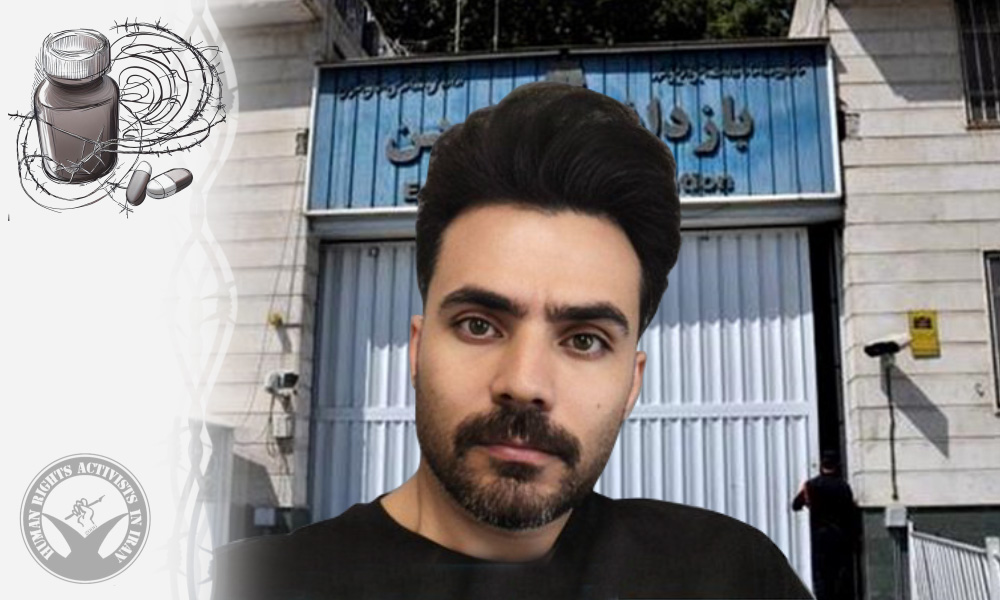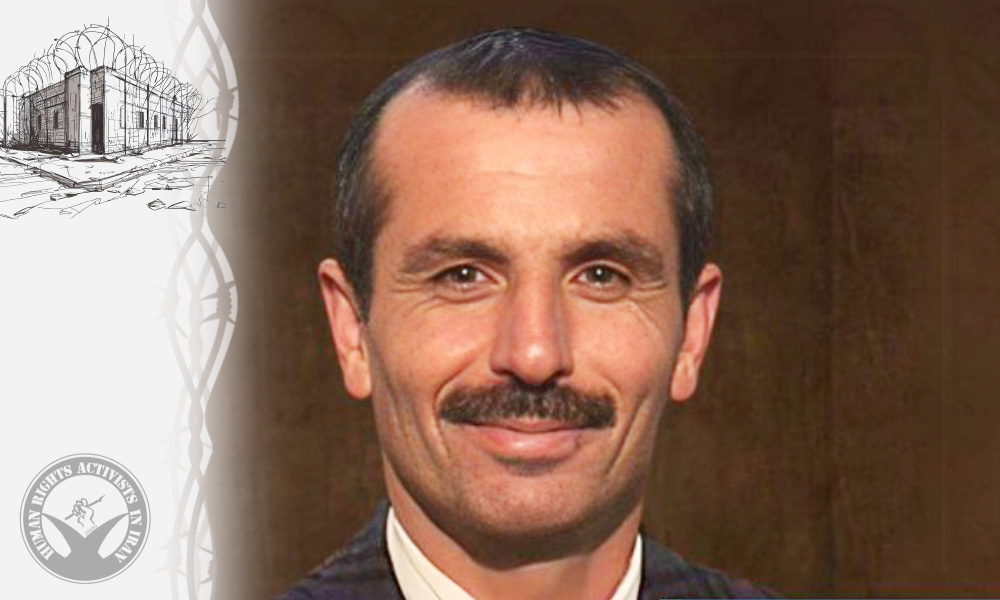
Political Prisoner Gholamhossein Kalbi Denied Medical Care in Sheiban Prison, Ahvaz

Gholamhossein (Gholam Hossein) Kalbi, a political prisoner, is currently serving the 24th year of his life sentence in Sheiban Prison, Ahvaz. Despite suffering from various health issues, he has been deprived of adequate medical treatment.

A source familiar with the situation confirmed this news to HRANA, stating, “Mr. Kalbi has spent nearly 24 years in this prison without any leave. He suffers from a hernia and ear infection and has recently developed a fungal infection, causing severe and blackened infections in his toenails. Despite this, he has only been sent to the prison infirmary several times, where the authorities, due to a lack of facilities and medication, have merely conducted examinations. This political prisoner requires specialized medical care and should be transferred to a hospital outside the prison.”

Kalbi was arrested on January 8, 2001, along with Saeed Masouri, in Dezful, on charges of membership in the People’s Mojahedin Organization of Iran. In 2002, he was sentenced to death by the Tehran Revolutionary Court on charges of “enmity against God” (Moharebeh). His death sentence was later commuted to life imprisonment.

After his arrest, he spent 14 months in solitary confinement at the Ministry of Intelligence’s detention facility in Ahvaz before being transferred to Ward 209, and later to Ward 350 of Evin Prison. Following his sentencing, he was moved to Mahshahr Prison and later to Karun Prison in Ahvaz. After the closure of Karun Prison in February 2016, he was transferred along with other prisoners to Sheiban Prison.

In October 2016, his brother, the last remaining member of his family, suffered a stroke and passed away while en route to the prison for a face-to-face visit with him—a visit he had managed to secure after five years of effort. The judicial authorities denied Mr. Kalbi leave to attend his brother’s funeral.
The troubling case of Kalbi underscores a broader pattern of neglect within Iranian prisons. In 2023, the Department of Statistics of Human Rights Activists in Iran documented 1,390 instances of denial or neglect of medical care for prisoners, highlighting a systemic issue that urgently demands attention.

Report on the Latest Status of Iman Salehi, a Christian Convert in Sheiban Prison, Ahvaz

Christian convert Iman Salehi is currently serving his sentence in Sheiban Prison, Ahvaz. He was previously sentenced by the Revolutionary Court to five years in prison and paying a fine.

Based on information received by HRANA, Mr. Salehi was arrested by security forces on December 24, 2024. Later, in late June of this year, he was sentenced by Branch 2 of the Ahvaz Revolutionary Court, presided over by Judge Fathinia, to five years in prison and a fine of 50 million tomans for “propaganda against the regime through promoting Zionist Christianity.” This Christian convert suffers from gum infection and has been denied specialized medical care in Sheiban Prison.

A source informed HRANA, “Iman Salehi, along with eight other Christian converts—Yasin Mousavi, Esmaeil Narimanpour, Hamid Afzali, Zohrab Shahbazi Nejad, Bijan Gholizadeh, Nasrollah Mousavi, Houshang Bagheri, and Farshad Arzan Barzin—are involved in a joint case. These individuals were separately arrested at the same time as Mr. Salehi and were later released on bail of 700 million tomans each, pending their appeal hearing. However, Iman Salehi remains in prison due to financial inability to post bail.”

The court session addressing their charges was held on May 27, 2024, in Branch 2 of the Ahvaz Revolutionary Court. Shortly after, the sentences for these Christian converts were issued. Following an appeal, their case has been referred to Branch 16 of the Appeals Court.

It is worth noting that Bijan Gholizadeh passed away in a car accident on August 24, 2024, on the Boroujen road in Chaharmahal and Bakhtiari Province.

Iman Salehi, 38, the father of one child, and resides in Ahvaz. Before his arrest, he worked as a farmer.

While Christians are legally recognized as a religious minority in Iran, the conversion of Muslims to Christianity is closely monitored by security agencies, often resulting in severe repercussions for those involved.

This persecution persists despite Article 18 of both the Universal Declaration of Human Rights and the International Covenant on Civil and Political Rights, which guarantee the right to freedom of religion, including the right to change one’s faith and to practice it individually or collectively, publicly or privately.

Prisoner Executed in Parsilon Prison, Khorramabad

On August 28, 2024, a prisoner previously sentenced to death on murder charges was executed in Parsilon Prison, Khorramabad.

HRANA has identified the prisoner as Meysam Hosseinkhani, a resident of Kuhdasht. He was previously arrested on murder charges and sentenced to death by the judiciary.

As of the time of this report, the execution of this prisoner has not been officially announced by prison authorities or relevant institutions.
According to the Department of Statistics and Publication of Human Rights Activists in Iran, in 2023, at least 767 citizens, including 21 women and 2 juvenile offenders, were executed. Of these, the executions of 7 individuals were carried out in public. Additionally, during this period, 172 others were sentenced to death, with 5 of them sentenced to public execution. It is worth noting that during the same period, the initial death sentences of 49 other individuals were also upheld by the Supreme Court.

Sunni Cleric Saber Khodamoradi Sentenced to 15 Months in Prison

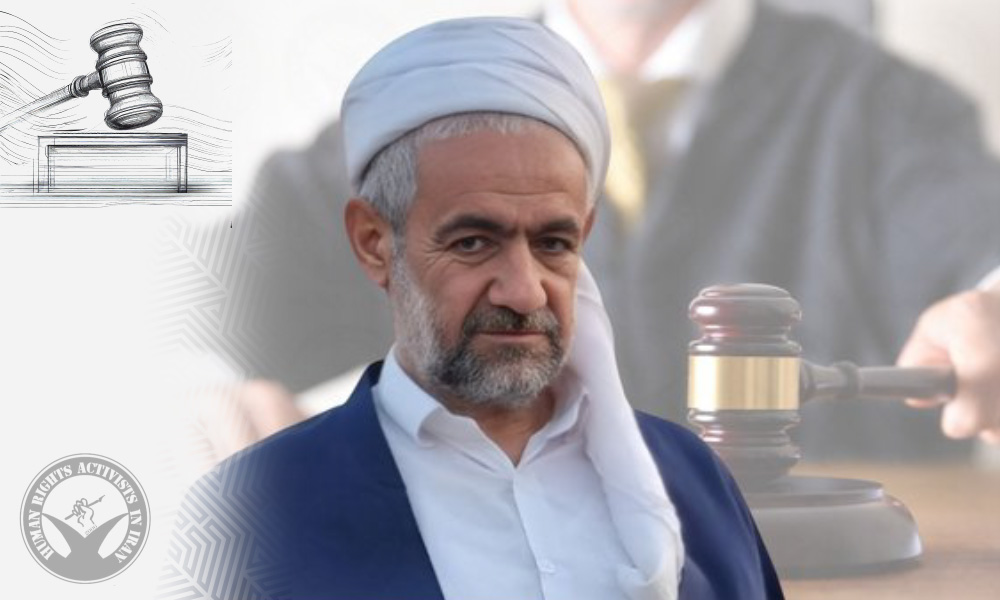
Saber Khodamoradi, a Sunni cleric and Imam of Friday prayers in a town in Saqqez County, has been sentenced to 15 months in prison by the Special Clerical Court in Hamedan.

Mr. Khodamoradi announced that he was sentenced to 15 months in prison following a phone call from the Special Clerical Court in Hamedan. He had previously been summoned to this court in July 2023.

This Sunni cleric had earlier been sentenced to seven months in prison and 74 lashes by the Special Clerical Court in Hamedan.

Additionally, on April 26, 2023, Saber Khodamoradi was summoned to the Special Clerical Court in Hamedan for the third consecutive time due to his support of the nationwide protests in 2022.

Mahmoud Sadeghi Attempts Suicide in Adelabad Prison, Shiraz

Mahmoud Sadeghi, a political prisoner held in Adelabad Prison in Shiraz, attempted suicide by cutting his wrist. After receiving medical treatment, he was punitively placed alongside inmates convicted of violent crimes, disregarding the principle of separating prisoners based on the nature of their offenses.

A source close to Sadeghi’s family told HRANA: “Mr. Sadeghi recently attempted suicide by cutting his wrist due to the harsh conditions in solitary confinement in the Education Ward. After receiving treatment, he was punitively transferred to one of the solitary cells in the Ershad Ward. Following his protest against the poor conditions there, he was moved, handcuffed and shackled by Mr. Shirvani, an Ershad Ward officer, to the area where prisoners convicted of violent crimes are held.”

The source added, “On the orders of the Ershad Ward officer in Adelabad Prison, this prisoner was beaten by inmates convicted of violent crimes.”

Mahmoud Sadeghi, a political prisoner, had previously been sentenced to imprisonment by the Revolutionary Court.

Subscribe to Our Newsletter

Now is definitely not the time to stop reading!

Political Prisoner Afshin Baymani Transferred from Ghezel Hesar Prison to Hospital

Afshin Baymani, a political prisoner held in Ghezel Hesar Prison in Karaj, was transferred to a hospital outside the prison yesterday, August 28, following a deterioration in his health and symptoms of a heart attack.

This political prisoner, serving a life sentence and suffering from coronary artery disease, has long been deprived of adequate medical services and access to specialized treatment centers due to obstruction by prison authorities. Ultimately, last evening, he was transferred to a hospital outside the prison after showing symptoms of a heart attack.

On July 28, 2024, Mr. Baymani fainted and fell in prison due to a severe drop in blood pressure. He suffered a head injury and bleeding after hitting a wall. After examining him, the prison nurse emphasized the necessity of transferring him to a hospital for an angiography procedure. Mr. Baymani requested medical leave to receive treatment under the care of his specialist doctor, but his request was denied by prison authorities as before.
Previously, on January 29, 2024, Baymani was transferred to Rajai Shahr Hospital in Karaj due to poor physical condition but was returned to prison the next day without receiving specialized medical care. At the hospital, only a few tests, including an echocardiogram and a stress test, were conducted, and heart and blood pressure medications were prescribed. He had previously been granted medical leave for open-heart surgery, but was arrested in Isfahan and returned to prison.

Also in November 2023, this political prisoner was granted medical leave from Ghezel Hesar Prison for treatment and medical care after posting bail. However, on December 21 of the same year, he was re-arrested for unknown reasons and transferred to Asadabad Prison in Isfahan. He was eventually transferred back to Ghezel Hesar Prison in January of 2024.

Baymani, father of two children, was arrested in September 2000 and was sentenced to death by the Tehran Revolutionary Court on charges of “enmity against God (moharebeh).” This sentence was later reduced to life imprisonment after six years. Since then, he has been serving his sentence in various prisons.

Afshin Baymani has been suffering from coronary artery disease since July 2017. In July 2021, he underwent heart angioplasty surgery at Amirabad Hospital in Tehran.

The denial of adequate medical treatment for political prisoners in Iran constitutes a form of torture and a grave violation of human rights. This systematic and deliberate deprivation is often employed as a tool for political repression, aiming to intimidate and silence dissent. In numerous instances, prison authorities not only withhold essential medical care but also obstruct the transfer of critically ill prisoners to specialized hospitals, further endangering their lives.

A Report on the Latest Status of Student Ehsan Faridi in Tabriz Prison

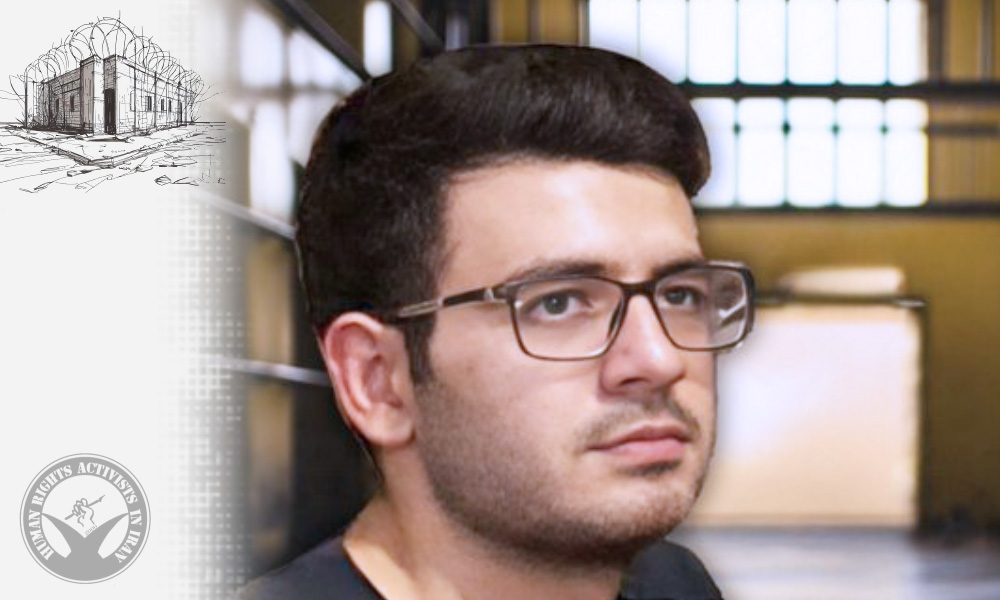
Ehsan Faridi, a student at Tabriz Technical College, remains in an uncertain situation in Tabriz Prison more than seventy days after his arrest. A court session addressing part of his case was held today, Wednesday, in the Criminal Court Two of Tabriz.

A source close to Faridi’s family confirmed to HRANA, saying:, “on Wednesday, August 28, a court session for another part of Mr. Faridi’s case was held in the Criminal Court Two of Tabriz. Additionally, a court session for another part of his case was held on August 3rd in the Tabriz Revolutionary Court via video conference. Faridi has been held in an uncertain state in Tabriz Prison for 72 days, and so far, temporary release on bail has not been granted.”

This citizen was arrested on June 18th after appearing at the Tabriz Prosecutor’s Office and was transferred to the city’s prison.

At the time of this report, the charges against Mr. Faridi have not been disclosed.

Faridi, 21, a student in Manufacturing Engineering, was previously arrested on March 8th and transferred to Tabriz Prison. He was eventually released on bail after ten days.

Four Prisoners Executed in Tabriz Prison

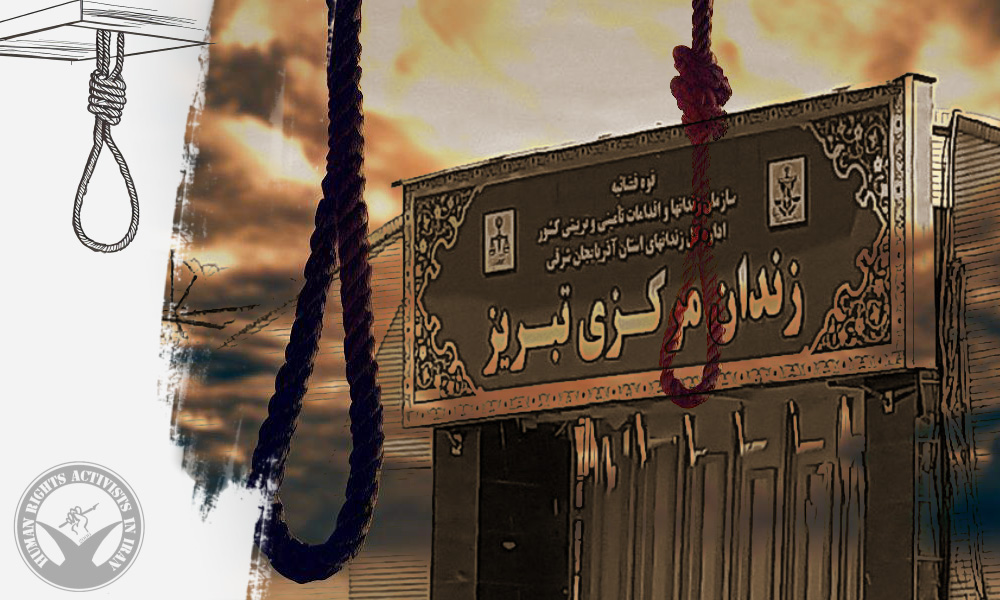
On Monday, August 26th, four prisoners, including two Afghan nationals and one Iraqi national, were executed in Tabriz Prison. They had previously been sentenced to death on charges related to drug offenses and murder.

According to Iran Human Rights Organization, the identities of these prisoners are Shapour Hosseini, a resident of Tabriz; Mohibullah (last name unknown), 32 years old, Afghan national; Moshref (last name unknown), 27 years old, Afghan national; and Erfan Abdulazizi, a resident of Kirkuk, Iraq.

A reliable source stated: “Shapour Hosseini was arrested two years ago on drug trafficking charges and sentenced to death. Mohibullah and Moshref were also arrested two years ago in a joint case for armed drug trafficking and sentenced to death. Additionally, Erfan Abdulazizi was arrested three years ago for the premeditated murder of a cement factory guard and was sentenced to death.”

As of the time of this report, the executions have not been officially announced by prison officials or relevant authorities.

According to the Department of Statistics and Publication of Human Rights Activists in Iran, in 2023, at least 767 citizens, including 21 women and 2 juvenile offenders, were executed. Of these, the executions of 7 individuals were carried out in public. Additionally, during this period, 172 others were sentenced to death, with 5 of them sentenced to public execution. It is worth noting that during the same period, the initial death sentences of 49 other individuals were also upheld by the Supreme Court.

Political Prisoner Hossein Kooshki Nejad Denied Medical Care in Evin Prison

Hossein Kooshki Nejad, a political prisoner currently serving his sentence in Evin Prison, has been suffering from physical ailments for some time. His repeated requests for transfer to medical centers outside the prison have been denied.

A source familiar with the situation confirmed this to HRANA, stating: “Mr. Kooshki Nejad is suffering from a meniscus tear in his knee, and doctors have emphasized that he needs surgery. He has submitted multiple written requests for transfer to a hospital. Despite his need for medical attention, his requests have consistently been denied.”

Kooshki Nejad was arrested on April 7th of this year to serve his sentence and was transferred to Ward 8 of Evin Prison.

Last year, he faced new legal charges in Khorramabad’s Prosecutor’s Office. The indictment for this case, accusing him of “propaganda activities against the regime,” was referred to the Tehran Revolutionary Court. Subsequently, a judge sentenced him to one year in prison.

Kooshki Nejad, born in 1988, is the brother of Reza Koushki Nejad, who was arrested during the nationwide protests in 2022.

Report on the Latest Status of Political Prisoner Ayoub Porkar in Sheiban Prison

Ayoub Porkar, a 69-year-old exiled political prisoner, is serving the sixteenth year of his sentence in Sheiban Prison, Ahvaz, without a single day of furlough.

Security forces arrested Mr. Porkar on January 3, 2009. He was later sentenced to death by Branch 26 of the Tehran Revolutionary Court, presided over by Judge Yahya Pir-Abbasi, on charges of “enmity against God” (Moharebeh) through collaboration with the Mojahedin-e Khalq Organization (MKO). This sentence was eventually reduced to 20 years in prison by Branch 36 of the Tehran Court of Appeals.

Nasrin Sotoudeh, the lawyer who represented Mr. Parkar at the time, had previously told the media that unexpectedly the “beliefs” of her client were the basis for the death sentence.

After his sentence was upheld, Ayoub Porkar was initially exiled from Ward 350 of Evin Prison to Behbahan Prison and then transferred to Karun Prison in Ahvaz. He is currently serving his sentence in Ward 5 of Sheiban Prison, Ahvaz. Throughout his imprisonment, this exiled political prisoner has been denied conditional release and even a single day of furlough.

A source familiar with Mr. Parkar’s condition had earlier informed HRANA: “Ayoub Porkar suffers from knee problems and has been deprived of specialized medical care.”

During the Iran-Iraq war, Porkar, aged around 69, served in the army for four years but was dismissed from his job due to his criticisms of the government.