Physician Mohammad Shoja Arrested for Publishing a Photo of Food

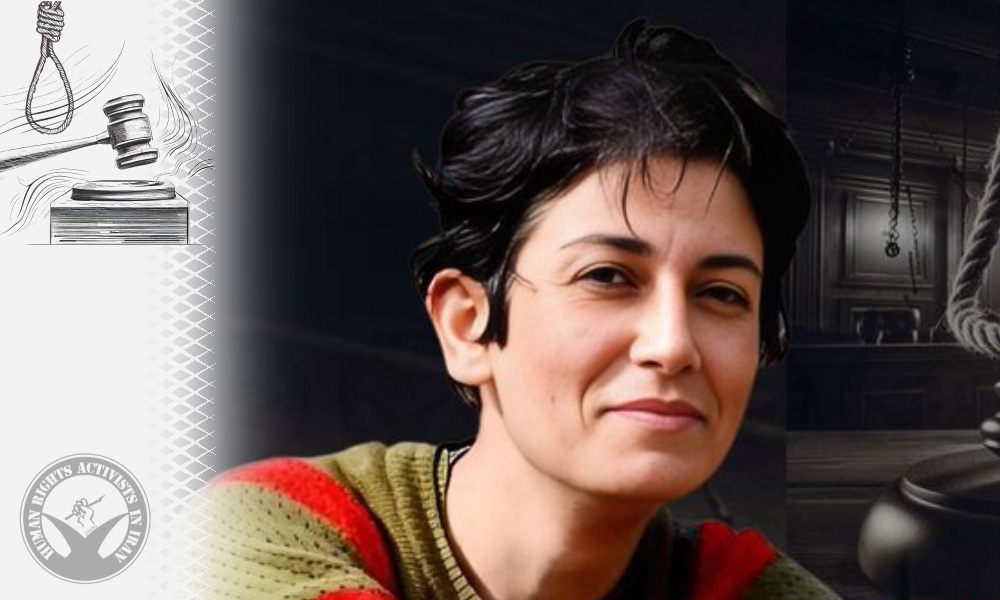
Mohammad Shoja, a physician and pediatric heart specialist, has been apprehended by security forces in Bojnurd for sharing a picture of Cutlet (côtelette) food, which the regime authorities deemed insulting and blasphemous.

The incident unfolded in the aftermath of the Israeli airstrike in Syria that claimed the life of IRGC top commander Sayyed Razi Mousavi. Shoja’s social media post featuring the Cutlet was considered by the Bojnurd Prosecutor as an offensive reaction to Mousavi’s death.

“If charges are proven, Shoja will face the severest punishment,” declared the prosecutor. As of now, the precise location of Shoja’s detention remains undisclosed.

This arrest reflects a broader trend in Iran, where judicial authorities routinely prosecute citizens for their social media content, imposing stringent restrictions on freedom of expression. It raises concerns about the limitations placed on individuals to express their views openly in the digital space.

Government Seizes Baha’i Lands in Sari County

On January 1, 2024, police agents and forest rangers carried out the confiscation of approximately 60 hectares of Baha’i-owned land in the Ahmadabad Village, adjacent to Sari in Mazandaran Province.

Acting on the orders of the Sari Prosecutor, the agents blocked access to the village and took possession of the lands. Ahmadabad Village is predominantly inhabited by Baha’is, and according to a resident who spoke to HRANA, the police have cordoned off the confiscated lands with barbed wire. Of these lands, 25 are already under wheat cultivation, a practice maintained by Baha’is for decades.

In an interview with IRNA, the Representative of the Mazandaran governor attempted to justify the seizure, citing unauthorized use and construction on the lands. However, HRANA’s sources dispute this claim, asserting that there has been no illegal construction, and the landowners have been cultivating these plots since 1947.

A villager shared with HRANA that a few years ago, a dam construction plan near the village was approved, and the landowners were supposed to receive alternative plots in exchange for the lands submerged by the dam construction. Following this recent confiscation, it appears they will receive no compensation.

This incident is part of a pattern of the government confiscating Baha’i lands and properties. In a similar occurrence in 2021 and 2022, the government seized cultivating lands belonging to Baha’is in Ivel, Roshan Kouh, Sari County.

Sunni Prisoner Davoud Abdollahi Executed in Ghezel Hesar

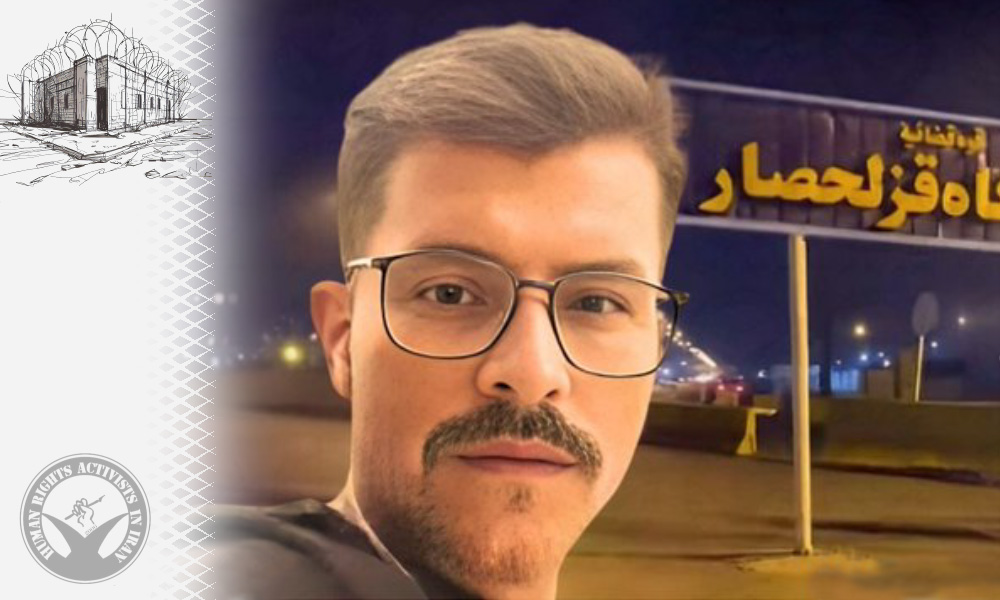
On January 2, 2024, Davoud Abdollahi, a Sunni prisoner, was executed in Ghezel (Qezel) Hesar Prison, Karaj, marking the end of his 13-year incarceration.

A source close to his family informed HRANA that the execution occurred without prior notice to his family. Abdollahi had been transferred to solitary confinement on December 26, following a hunger strike he initiated.

In a related legal case, two other Sunni defendants, Ghasem Abasteh and Ayoub Karimi, were executed on November 5 and November 29, 2023, respectively.

The origins of the case date back to September 2008 when Abdolrahim Tina, the Imam of a mosque in Mahabad, was assassinated by unidentified individuals. In January-February 2010, Abdollahi and six other Sunni suspects were arrested in connection to the assassination.

While in detention, Abdollahi faced multiple charges, including enmity against God (Moharebeh), allegedly through sympathizing with Salafism—a charge he consistently refuted. After spending fourteen months in legal limbo, Abdollahi was transferred to Rajai Shahr Prison, Karaj, where he remained until his relocation to Ghezel Hesar Prison in August of the current year.

Initially sentenced to death by Branch 28 of the Tehran Revolutionary Court, presided over by Mohammad Moghiseh, the verdict was later overturned by the Supreme Court. The case was then assigned to Branch 15 of the court, presided over by Judge Salavati, who reinstated the death sentences for Abdollahi and six others—Anvar Khezri, Kamran Sheikheh, Farhad Salimi, Khosro Besharat, Ghasem Abasteh, and Ayoub Karimi. This time, the Supreme Court confirmed the death sentences for him and his co-defendants.

Nine Individuals Executed for Drug Offenses in Ardabil

Ardabil Province judicial authorities have confirmed the execution of nine inmates in separate legal cases, all charged with drug offenses, within Ardabil Prison, as reported by Fars News Agency.

Following the Supreme Court’s confirmation of their verdicts, three inmates were executed. Additionally, six individuals were hanged in the preceding days, with their identities remaining undisclosed in the report.

The reports from the Department of Statistics and Publication of Human Rights Activists for the year 2023 reveal a concerning prevalence of executions for drug offenses in Iran, constituting 56.4% of the total executions. For a comprehensive examination of the details and statistics surrounding the executions in Iran, refer to HRANA’s report.


Mohammadi Brothers Detained in Sanandaj

On January 1, 2024, the Ministry of Intelligence apprehended Morteza and Ebrahim Mohammadi, residing in Sanandaj, and subsequently transported them to an undisclosed location.

Confirmation of their arrest came from a source closely connected to their family who disclosed to HRANA that on Monday, January 1, Ministry of Intelligence agents arrested Morteza Mohammadi at his residence in Hassan Abad village in Sanandaj County. Ebrahim Mohammadi faced arrest by security forces after presenting himself at the Investigation Office of Sanandaj Revolutionary Court to inquire about his brother.

“The agents forcibly entered the house, breaking doors and windows, and seized some family belongings.”

As of now, the reasons behind these arrests and the current whereabouts of the Mohammadi brothers remain unknown.

Morteza Mohammadi had previously been arrested during the 2022 nationwide protests and was later released on bail.

According to data collected by the Department of Statistics and Publication of HRA in 2023, Kurdistan Province accounted for a disproportionate 8.3% of reported human rights violations, including instances of arbitrary detentions.

Subscribe to Our Newsletter

Now is definitely not the time to stop reading!

Execution of Five Inmates for Armed Robbery in Karaj Central Prison

On January 1, 2024, the Central Prison of Karaj carried out the execution of five death-row inmates convicted of armed robbery, as reported by ISNA.

The Chief Justice of Alborz Province, Hossein Fazeli Harikandi, confirmed their identities were withheld due to their conviction of “gang armed robbery, making roads unsafe, instilling fear in the public, and causing significant damage to people’s property.”

According to Harikandi, the Karaj Revolutionary Court had sentenced them to death, although the exact date of the conviction was not disclosed. The executions took place after multiple confirmations of the death sentences by the Supreme Court.

In 2023, the Department of Statistics and Publication of Human Rights Activists in Iran documented a total of 746 executions, with 6 taking place in public. Among the executed individuals with identified genders, 597 were male, and 20 were female. Notably, 2 juvenile offenders, defined as individuals under the age of 18 at the time of their alleged crimes, were also executed. For a thorough analysis of the particulars and statistical breakdown of the executions in Iran, please consult HRANA’s annual report.

Protest Rapper Toomaj Salehi Receives One-Year Sentence and Additional Penalties

In the latest development, Toomaj Salehi, the renowned Iranian protest rapper, has been sentenced to one year by the Revolutionary Court. Additionally, he faces a two-year travel ban, the annulment of his passport, and is required to participate in behavior management and knowledge skills programs.

Revealing the verdict publicly, Amir Raisian, Salehi’s lawyer, expressed concern over the due process, labeling it as “unusual,” “illegal,” and “peculiar.” Raisian asserted that the court session concluded without prior notice to Salehi and in the absence of his attorney.

Salehi was re-arrested in Babol on November 30, twelve days after his release on bail from Dastgerd Prison in Isfahan. The Judiciary spokesperson cited Salehi’s statement after his release as the grounds for this subsequent arrest.

In late October 2022, Salehi was initially detained by security forces during nationwide protests. Subsequently, the Isfahan Revolutionary Court sentenced him to six years and three months in prison along with additional penalties. However, he was released on bail after the Supreme Court overturned the verdict.

It is worth noting that the protest singer already has a prior conviction in a separate legal case. On January 12, 2022, he was sentenced to a six-month prison term and fined, with the imprisonment suspended for one year.

Spanish National Santiago Sanchez Released, Reunites with Family in Madrid

On Sunday, December 31, 42-year-old Spanish national Santiago Sanchez was freed from prison in Iran, as reported by Shargh Newspaper.

Although specific details remain undisclosed, Mr. Sanchez has been released and returned to Madrid after being handed over to the Spanish Embassy in Tehran.

Sanchez was initially detained by security forces during the 2022 nationwide protests.
Known for his passion as a football fan, he embarked on a journey on foot across various countries, intending to reach Doha, the host city of the 2022 Football World Cup. His whereabouts became unknown, and social media updates ceased on October 1, 2022, when he entered Iran, the final country on his journey before reaching Doha.

Workers’ Rights Advocate Saeed Yoozi Taken Into Custody by Security Forces

On December 26, Saeed Yoozi, a dedicated workers’ rights advocate, was apprehended by security forces.

According to a source with close ties to Yoozi’s family, agents from the Ministry of Intelligence conducted the arrest at his residence.

As of now, the reasons behind Yoozi’s detention and his current location are undisclosed.

Yoozi, an active member of the Committee for the Establishment of Independent Labor Organizations, has previously encountered arrests and legal challenges due to his commitment to labor advocacy.

In 2023, the Department of Statistics and Publications of the Human Rights Activists in Iran (HRA) recorded 64 cases of arrest related to workers’ rights advocacy. Furthermore, 29 labor activists or workers’ rights defenders received sentences totaling 654 months, comprising 568 months of actual imprisonment and 86 months of suspended imprisonment. For a comprehensive examination of the details and statistics surrounding labor rights, refer to HRANA’s report.


Baha’i Women’s Three-Year, Eight-Month Prison Sentences Upheld on Appeal

In a recent ruling, the Court of Appeal in Razavi Khorasan Province upheld the three-year, eight-month sentences for Baha’i citizens Nasim Sabeti, Azita Foroughi, Rouya Ghane Ezabadi, and Soheila Ahmadi.

The lawyer has been informed that each of them received three years for “membership in groups to act against national security” and eight months for “propaganda against the regime,” with the initial verdict issued by the Mashhad Revolutionary Court.

Reports obtained by HRANA confirm that the court session took place without prior notice to the individuals involved and in the absence of their attorney.

Baha’is are subjected to violations of their religious rights, comprising 82% of reports on infringements against religious minorities,, according to HRA’s 2023 annual report.

The Baha’i faith is not recognized as a legitimate religion by Iranian authorities, leading to systematic and longstanding violations of the rights of Baha’is in the country. This includes denying their fundamental right to practice their religion, which constitutes a clear breach of both Article 18 of the Universal Declaration of Human Rights and Article 18 of the International Covenant on Civil and Political Rights. The United Nations covenant holds that every person has the right to freedom of religion, freedom of converting religion, as well as freedom of expression, individually or collectively; openly or secretly.