





Human Rights Activists News Agency (HRANA) – Authorities continue to arrest Ahwazi Arab citizens in connection to the attack on an Ahvaz military parade that shook the country on September 22nd.
Two more Ahwazi Arab arrestees — identified by HRANA as Mohammad Mohammadi (Abyat), 22, and Ghassem Kabavi (Kabi), 24 — join the 53 who had already been detained as of October 15th.
Ministry of Intelligence agents in Hamidiyeh County transferred Mohammadi and Kabavi to an undisclosed location after arresting them on October 16th.
The day of the attack, a military parade in Ahvaz commemorating the Iran-Iraq war was interrupted by a sudden spray of gunfire on soldiers and spectators. That day, more than 20 civilians were killed, including a four-year-old child, and 57 more were wounded. All four of the gunmen have reportedly been killed.
While Iranian news media is abuzz with speculation over which group might have ordered the attack, authorities’ investigations have thus far been inconclusive. Four days after the attack, the Ministry of Intelligence announced that it had 22 suspects in custody, backing its announcement with a video recording of blindfolded, unidentified detainees facing a wall. Unofficial sources have countered this report, estimating the tally of those detaineth far to be closer to 300. The majority of the arrests have taken place in the cities of Ahvaz, Khorramshahr, Hamidiyeh, Susangerd, and Abadan, all located in the Khuzestan province.
Many of the recent arrestees have a previous track record with police, and the continued arrest campaign — led by a security establishment known for its questionable investigative methods — has done little to assuage public concern that authorities will force confessions from innocent prior offenders.
Hamidiyeh is a city and capital of Hamidiyeh District, in Ahvaz, Khuzestan Province.
Category: Ethnic Minorities
Amid Parade Attack Investigations, Ahvaz Authorities Arrest More Citizens

Human Rights Activists News Agency (HRANA)- Dozens of citizens were rounded up October 13th and 15th in the Malashieh and Kouy-e Alavi neighborhoods of Ahvaz, the capital of southwestern border province of Khuzestan now known as the site of a violent shooting on a military parade on September 22nd of this year.
HRANA has identified nine more Ahwazi Arab arrestees, who join the 44 already arrested as of September 27th: Mohammad Omuri, 26, Naim Heydari, 24, Aref Ghazalavi, Kazem Ghazalavi, Ali al-Hay (Hayyai), Shakir Savari, Shakir Savari, and Fadhil Shemousi, arrested Saturday, and Jassim Croshat, 45, a mechanic from Kouye Alavi in Ahvaz, who was arrested Monday, October 15th.
Merchant Arrested Amid Rumors of Impending Market Strike

Human Rights Activists News Agency (HRANA)- Security forces in Tabriz arrested Azerbaijani activist Mohammad Abdolmohammad-Zadeh Namrour on Wednesday, October 10, 2018, and transferred him to an undisclosed location.
An informed source speculated to HRANA that Namrour, a manufacturer in the Tabriz shoe market, was arrested in anticipation of the shoe market’s upcoming strike. This connection has yet to be confirmed.
Urban bazaars across Iran are the site of increasingly frequent strikes among merchants fed up with the symptoms of the current recession, including an unstable currency exchange, rising prices, and inflation.
Tabriz is located in northwestern Iran.
Citing Constitutional Trespass, Abbas Lasani Rejects Court’s Second Summons

Human Rights Activists News Agency (HRANA) – Azerbaijani activist Abbas Lasani’s public dissent with the Iranian judicial system continued this week with his spurning, via open letter, of a second court subpoena that he decries as illegitimate. “I will not abide by the rule of tyranny, and thus I express my protest and rebellion against this illegal process, and against your oppressive conduct unbecoming of a court,” he wrote.
Via SMS on September 24th, Lasani learned he had been convicted in absentia in Branch 2 of Tabriz Revolutionary Court. On October 10th, a writ summoned him to hear the conviction in court within the next ten days.
“My verdict was delivered by a totally illegal and unlawful process that is neither reasonable nor acceptable,” Lasani wrote, explaining that constitutional article 168 stipulates that verdicts in political, press, or conscience cases must be tried in public and in the presence of the media.
HRANA reported September 16th on Lasani’s refusal to respond to an initial summons via text message from the same court. “It’s impossible to ignore that the summons is illegitimate, arriving by text message with no official hard copy,” Lasani said in a public statement.
Abbas Lasani was among a group of four Azerbaijani (Turk) activists residing in Ardebil arrested by Intelligence agents July 2, 2018, a few days before an annual gathering at Babak Fort, a site that has acquired symbolic importance for Azerbaijani rallies in recent years. Prior to his arrest, he had shared a video encouraging people to attend the gathering. He was released on 500 million rials [$3,500 USD] bail July 11, 2018. More than 80 Azerbaijani activists were arrested throughout Ardabil, West Azerbaijan, and East Azerbaijan provinces at the time of the Babak Fort gathering.
Amnesty International issued a statement on August 11th of this year, calling the arrests of Azerbaijani activists “arbitrary” and unlawful, and demanded the immediate release of all individuals detained for their participation in Azerbaijani Turkic cultural gatherings.
Forty-four Ahwazi Detainees Identified in Wake of Parade Attack

Human Rights Activists News Agency (HRANA) – Since last month’s attack on an Ahvaz military parade, dozens of Ahwazi Arab citizens of Iran have been rounded up, arrested, and transferred to unknown locations in the Khuzestan province.
Public urgency to find those responsible for the attack — which claimed the lives of several civilians, including women and children — is matched only by mounting concern that Iran’s security establishment, with its history of questionable investigation methods, might be searching too aggressively for a scapegoat.
HRANA has identified 44 of the arrestees detained near Ahvaz in recent weeks: 1. Jamil Heidari, 33, 2. Majed Heidari, 25, 3. Ahmad Hamari, 29, 4. Seyed Jasem Rahmani (Mousavi), 33, 5. Majed Chaldavi, 6. Seyed Hamood Rahmani (Mousavi), 7. Ali Savari, 23, 8. Hatam Savari, 9. Adnan Savari, 10. Hossein Heidari, 11. Ahmad Bavi, 12. Abdolrahman Khosraji, 32, 13. Mahdi Saedi, 27, 14. Javad Badvi, 26, 15. Riaz Zahiri, 16. Zamel Heidari, 17. Mahdi Kooti, 18. Ali Kooti, 19. Sattar Kooti, 20. Ali Mansouri, 21. Mohammad Momen Timas, 55, 22. Ahmad Timas, 28, 26. Osama Timas, 26, 24. Adel Afravi, 25. Mohammad Savari, 26. Mokhtar Masoudi, 27. Abdollah Silavi, 28. Khaled Silavi, 29. Ali Albaji, 30. Maher Masoudi, 31. Javad Hashemi, 32. Yousef Khosraji, 33. Abbas Badvi, 34. Mohsen Badvi, 35. Hassan Ben Ali, 36. Jador Afravi, 37. Milad Afravi, 38. Ali Albaji, 39. Mohammad Masoudi, 40. Alireza Deris, 41. Adel Zahiri, 42. Adel Afravi, 43. Ahmad Heidari, 44. Fahad Neisi
The attack in question was a violent interruption to a military parade in Ahvaz on September 22nd, commemorating the Iran-Iraq war. Mid-ceremony, gunmen suddenly opened fire on soldiers and spectators alike.
Mojtaba Zolnour, member of the Iranian parliamentary committee for national security and foreign affairs, announced 29 deaths and 57 wounded. Several civilians, including a 4-year-old child, figured on the list of victims released by state-run news agencies.
It has yet to be determined which group is responsible for the attack, and on Iranian airwaves, theories abound. Not long after the attack took place, Iran’s Ministry of Intelligence released a video recording of blindfolded, unidentified detainees facing a wall, accompanied with the announcement that the Ministry had 22 suspects in custody.
Local sources have countered the Ministry’s report, estimating the tally of those detained so far to be closer to 300. The majority of these arrests have taken place in the cities of Ahvaz, Khorramshahr, Susangerd, and Abadan, all located in Khuzestan province.
Security measures now loom large over the Arab-majority neighborhoods south of Khuzestan, local sources say, while the families of those detained have been unable to obtain any indication from authorities on the status or location of their loved ones.
Previously, Iranian Minister of Intelligence Mahmoud Alavi made the public claim that “the terrorists who opened fire on the crowd have been killed,” adding, “Every single person behind the attack […] will be identified, and the majority of them have already been apprehended.”
Many of the arrestees have a previous track record with police, reinforcing public speculation that security forces are applying the timeworn approach of haranguing past offenders into culpability, current or relevant evidence be damned.

Iran’s Supreme Court Upholds Death Sentence for Hedayat Abdollahpour

Human Rights Activists News Agency (HRANA) – Supreme Court Branch 47 has upheld the death sentence for Urmia prisoner Hedayat Abdollahpour, one of several defendants charged in connection to the Oshnavieh clashes, his lawyer Hossein Ahmadiniaz told HRANA. It also upheld the prison sentences of six of Abdollahpour’s co-defendants, who are currently free on bail.
Ahmadiniaz and Abdollapour’s family learned yesterday October 8th of the high court’s assent to his January 2017 capital punishment sentence in Urmia Revolutionary Court Branch 1, on a charge of “Baqi,” i.e. rebellion [often used against those accused of participating in armed uprisings]. Abdollapour maintains that he never took up arms and did not have a weapon at the time of his arrest.
Abdollahpour was arrested along with six others on June 15, 2016, in Qarah Soqol village near the city of Oshnavieh. His case was initially toggled from one court to another: charges were first ruled in initial court, reversed in supreme court, and then sent back to the parallel court branch that ultimately decided his fate.
Ahmadniaz told HRANA that his client was guilty simply of having been in the wrong place at the wrong time. “Hedayat Abdollahpour is being processed on something he knows nothing about, and towards which he would have no inclination,” Ahmadniaz said. “These honorable plaintiffs — the Islamic Revolutionary Guard Corps (IRGC) — want to put him to death for Baqi.”
Ahmadiniaz went on to iterate the upheld prison sentences of Abdollahpour’s co-defendants: Rasoul Azizi Alias Hassed, 25 years; Mohammad Zaher Faramarzi, 20 years; Jalal Masroori and Yaghob Ba Ekram, 15 years each; Kamal Masroori and Sedigh Baekram, 10 years each.
The Oshnavieh clashes were fights that broke out between the Kurdistan Democratic Party of Iran and the Iranian Revolutionary Guard Corps of Hamzeh in the summer of 2016. Many from both sides were wounded or lost their lives in the conflicts.
Many of those residing in the border region of Oshnavieh were arrested and convicted on suspicions of collaborating wwith the Kurdish opposition.
Abdollahpour’s brother Farhad was arrested by IRGC Intelligence forces June 30th of this year and taken to IRGC detention center in Urmia. He was transferred to Oshnavieh Prison September 13th and later released on a bail of 2 billion rials [approximately $20,000 USD].
Political Prisoner Denied Access to an Attorney

Human Rights Activists News Agency (HRANA)- On August 3rd of this year, Ministry of Intelligence forces arrested Houshmand Alipour and Mohammad Ostadghader, whose taped confessions were broadcast on national television. Since then, Alipour has been cut off from both the services of a lawyer and visits from his family. He stands accused of membership in Kurdish opposition groups.
A family-appointed attorney learned on a phone call with the Sanandaj Intelligence Office that Alipour’s October 4th investigation court date was postponed, an informed source told HRANA. The prosecutor investigator has already interrogated Alipour, who will spend two more weeks at the Intelligence Office. Alipour’s family and lawyer deny rumors that he has been executed, the source said.
Alipour’s brother Hejar added that while Alipour has had contact with his family over the phone, they remain anxious to see him in person, and are worried about his continued interrogation and detention in the absence of any legal defense.
HRANA previously published a letter from Hejar Alipour, in which he pleads his brother’s case.
Alipour is from Sardasht, western Iran.
Azerbaijani Activist Summoned in Khoy

Human Rights Activist News Agency (HRANA) – Javad Ahmadi Yekanli, an Azerbaijani activist from the city of Khoy, was summoned by county security police on October 8th for reasons that have yet to be confirmed.
Yekanli was arrested along with a number of Azerbaijani activists for taking part in a July 6th annual gathering at Babak Fort. He was released on a bail of 200 million rials (approximately $4750 USD).
Authorities also apprehended Yekanli at a 12th-anniversary commemoration gathering at Golzaar cemetery in Naqade county for protesters who died in 2006. He was detained and beaten before being released on a billion rials (approximately $23,750 USD) bail.
He was also arrested in December of 2016 in his father’s house; on that occasion, authorities rifled through the house, confiscating his books and computer.
Agents of the Khoy Security Department regularly contact Yekanli and his family to warn them against resuming political activities.
Judge Denies Sahand Ma’ali’s Objection to Absentia Sentence
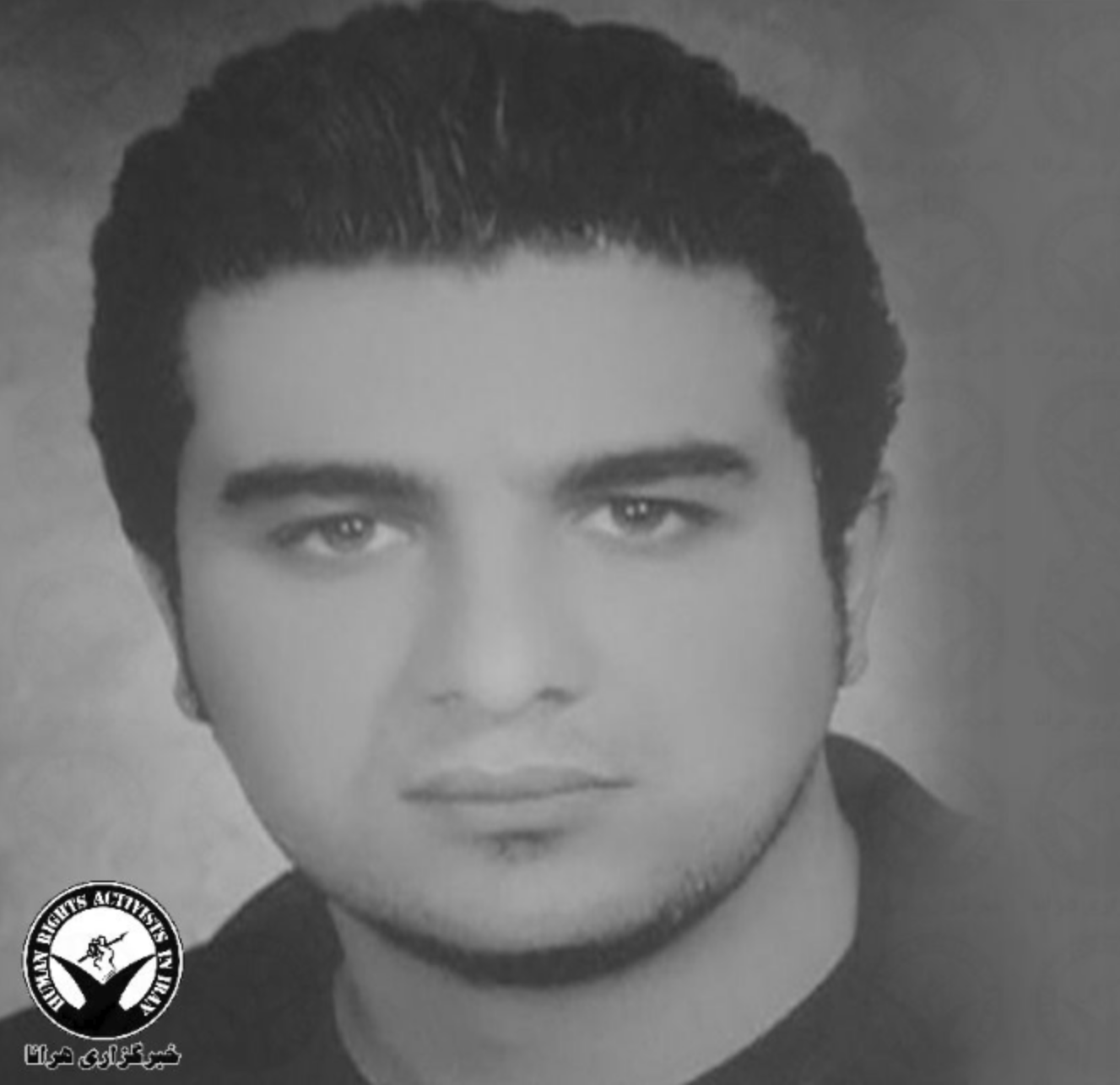
Human Rights Activists News Agency (HRANA) – Judge Mehdi Shams of Sarab Revolutionary Court in East Azerbaijan Province has overruled Sahand Ma’ali’s objection to his 10-month prison sentence ruled in absentia.
Per Iranian law, defendants sentenced in absentia have the right to bypass appeals court by objecting to trial court rulings. Now that Ma’ali’s objection has been denied, he has twenty days to file his dissent as an appeal with East Azerbaijan Appeals Court.
Ma’ali was initially convicted of “propaganda against the regime through the promotion of ethnic groups with the aim of inviting people to the Babak Fort gathering” after his arrest at a gathering of Azerbaijani activists on July 6th of this year. He was later released on bail.
Fort Babak, a monument built during the pre-Islamic Sasanian period, is the namesake of Babak Khorramdin, who led an uprising against the Abbasid caliphate in 893. In recent years, it has become a place of symbolic gathering for Azerbaijani activists, especially during the annual commemorations in the first week of July.
Ma’ali has a prior record with Iranian judicial authorities dating back to July 2nd, 2012 when security forces raided his residence and arrested him following inspections of his father’s home. They confiscated some of his belongings, including his personal computer, after forcing him to open his shop to another search and seizure. In July 2013, he was sentenced to one year in prison for “propaganda against the regime”.
Court Compounds Prison Sentence of Afrin Battle Detainees

Human Rights Activists News Agency (HRANA)- The 11-year prison sentences of Afrin Battle detainees Rahim Mahmoudi Azar and Mostafa Ghader Zeinab were compounded Sunday, September 30th by an additional one-year prison term each, ruled in Branch 103 of the General Court of Urmia, on a charge of “crossing the border illegally.”
Both men were fighting among the ranks of a Kurdish military group in Afrin, Syrian Kurdistan earlier this year when they were wounded and extradited to Iran. A close source told HRANA that starting March 8, 2018, they were interrogated for five weeks straight, first for a week at Evin Detention Center and then for a month in Urmia’s Intelligence Office.
In July, Branch 3 of Urmia Revolutionary Court in northwestern Iran sentenced each of them to 11 years in prison for their opposition-group connections, which in court translated to charges of “membership in anti-regime groups,” “collusion and conspiracy,” and “propaganda against the regime.” The sentence was later upheld in appeals court.
A source close to both men previously told HRANA that Zeinab and Azar sustained their injuries during a Turkish offensive on Afrin. It was at the hospital in Aleppo, he said, that their legal troubles began to unfold: “Upon realizing their nationalities, Syrian authorities handed them over to Iran’s Islamic Revolutionary Guard Corps (IRGC).”
Both men have been denied the right to appoint lawyers of their choice and attended their court session with a public defender.
Azar is currently detained in Urmia. Zeinab is free on bail.