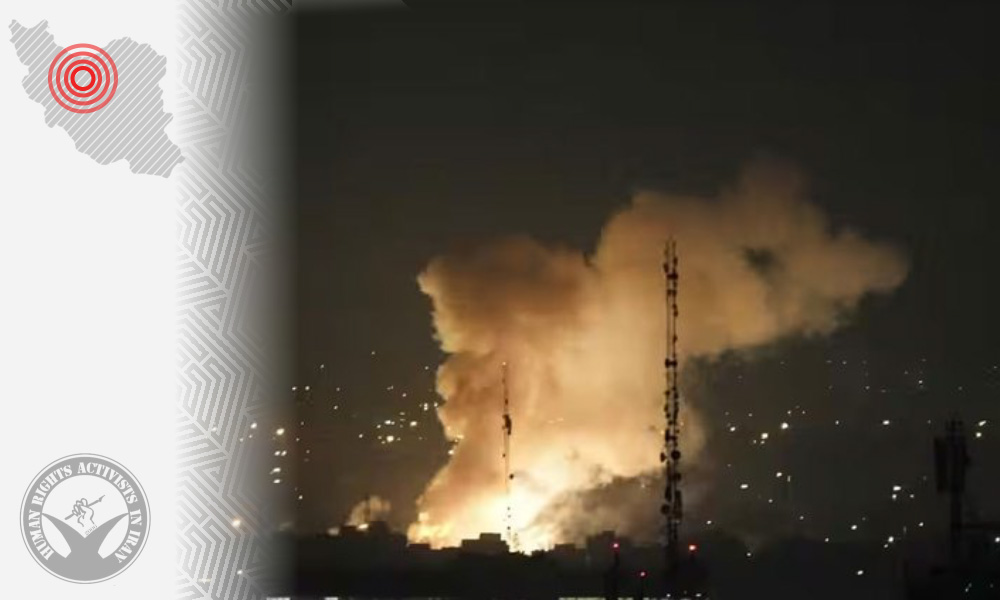
HRANA News Agency – Yesterday, June 14, military clashes between Iran and Israel continued for a second consecutive day. The conflict began early Friday morning with Israeli airstrikes on Iranian territory, which have so far targeted military, civilian, and residential areas across 18 provinces of Iran and were ongoing at the time of this report’s publication.
According to official and local sources, at least 93 people were killed or injured yesterday. As of 22:00 UTC on June 14, the total number of casualties in Iran over the past two days has reached at least 863.
Geographic Scope of the Strikes
Today, provinces including Lorestan, Kermanshah, East Azerbaijan, Alborz, Zanjan, Hamedan, Tehran, Bushehr, Qazvin, Fars, Khuzestan, Gilan, Hormozgan, Isfahan, and West Azerbaijan were hit by Israeli forces. On Friday, 12 provinces had already been targeted. A spokesperson for the Red Crescent Society announced the immediate formation of an emergency operations center following the Israeli strikes and stated that so far, 1,414 personnel across 362 rescue teams in 18 provinces have been involved in relief efforts.
F-35 fighter jets, ballistic missiles, air-launched cruise missiles, drones, and suicide micro-drones were among the main weapons reportedly used by Israel in these attacks. However, the country has not yet released further details about the types and quantities of weapons deployed.
Casualties and Human Losses
On the first day of the attacks, HRANA documented reports indicating at least 678 people were killed or injured. Among them, at least 35 were identified as women and children.
On Saturday, HRANA received new information regarding the human toll from yesterday, documenting the deaths of 8 military personnel and injuries to 83 civilians. Additionally, it was confirmed that one person died in Kermanshah Province, though their status as civilian or military has not yet been determined. Including this update, the total number of casualties from the first day of Israeli strikes on Iran rose to 770.
As of the time of this report, a total of 863 civilians or military personnel have been killed or wounded—215 killed and 648 injured. Among them, 51 military personnel were killed and 31 wounded. The classification of a significant portion of the 863 individuals as military or civilian remains under investigation.
The report continues with a detailed account of human losses on the second day of the attacks.
| Province | City | Date | Killed | Injured | Notes | Neighborhoods and Locations |
|---|---|---|---|---|---|---|
| Lorestan | Khorramabad | Unspecified (between June 13–14) | 11 | 0 | – | Unspecified |
| Province | City | Date | Killed | Injured | Notes | Neighborhoods and Locations |
|---|---|---|---|---|---|---|
| Tehran | Tehran | Unspecified (between June 13–14) | 4 | 0 | – | Unspecified |
| Hamedan | Asadabad County | June 14 | 3 | 5 | Includes 7 aid workers | Missile base/facilities |
| Unspecified | Unspecified | Unspecified (between June 13–14) | 7 | 1 | Includes two children | Unspecified |
| Lorestan | Unspecified | Unspecified (between June 13–14) | 2 | 0 | – | Unspecified |
| West Azerbaijan | Unspecified | June 14 | 2 | 0 | Ambulance attack | Unspecified |
| Kermanshah | Kermanshah | Unspecified (between June 13–14) | 1 | 0 | – | Unspecified |
| Lorestan | Borujerd | June 14 | Unspecified | Unspecified | Widespread human loss among workers | Farda Motors Factory |
| Province | Killed | Injured | Date | Key Targeted Locations |
|---|---|---|---|---|
| Zanjan | 3 | 0 | June 14 | Various centers |
| Markazi | 3 | 0 | June 14 | Basij Resistance Zone, Zarandieh |
| Hamedan | 5 | 7 | June 14 | Missile base/facilities in Asadabad |
| Tehran | 2 | 0 | Unspecified (between June 13–14) | Unspecified |
| Tehran | 1 | 0 | June 14 | FARAJA Logistics and Support Base |
| Unspecified | 4 | – | Unspecified (between June 13–14) | Unspecified |
| East Azerbaijan | 12 | 20 | Unspecified (between June 13–14) | Unspecified |
The identities of some victims, as well as whether they were directly participating in hostilities (DPH), remain under investigation.
Additionally, Tasnim News Agency, which is close to Iran’s security institutions, published a video of a teacher holding pictures of eight of his students. Without specifying their identities, he claims the children were killed on Friday during Israeli military attacks. No further details regarding this claim have been released.
Prominent Individuals Killed
On Saturday, state media reported that three additional nuclear scientists—Ali Bakaei Karimi, Mansour Asgari, and Saeed Borji—were killed during Saturday’s Israeli attacks on Iranian territory. With these confirmed names, the death toll among scientific and nuclear professionals in these attacks has reached at least 10.
Additionally, the identities of Gholamreza Mehrabi, Deputy Intelligence Chief of the Armed Forces General Staff, and Brigadier General Khosro Hassani, Deputy Intelligence Chief of the IRGC Aerospace Force, were confirmed among the military personnel killed in Friday’s attacks.
Continued Israeli Attacks on Civilian Infrastructure
Israeli airstrikes across various parts of Iran have continued, targeting several civilian, industrial, and medical centers. In Tehran, one of Israel’s projectiles struck the outer section of Hakim Children’s Hospital. According to the deputy director of Tehran University of Medical Sciences, the strike resulted in no casualties.
In Ilam Province, the fire station in the city of Musian was hit, while in Borujerd, Lorestan Province, the “Farda Motors” automobile factory suffered a direct strike. According to the company’s public relations office, the attack led to a massive fire and severe financial and human losses, with reports indicating several factory personnel were killed.
In Qazvin Province, videos from the Alborz Industrial Park showed explosions and ambulance sirens following a missile strike. In Tabriz, areas near the city’s petrochemical plant were bombed.
Parts of the city of Ashtianan in Lorestan and areas in Kermanshah were also targeted. Witnesses reported successive explosions and thick smoke.
The Iranian Ministry of Petroleum reported that a fire at the “Fajr Jam” refinery in Bushehr Province—caused by an Israeli drone strike—has been contained. This facility processed gas from the South Pars field and the Nar and Kangan reserves. The attack marked the first Israeli strike on Iran’s oil and gas infrastructure in this conflict.
There were also numerous reports of military activities, including air defense operations, across various cities such as Tabriz, Malard, southern and central Tehran, the Pasteur neighborhood in Tehran, Chaldoran, the airspace over Ahvaz Steel Industries, Urmia, Bukan, Bandar Abbas, Naqadeh, Shahroud, Isfahan, Maragheh, Oramanat, Javanrud, Mashhad, Ravansar, Malard, and Fadayan-e-Islam in Shahr-e-Rey. Military installations reportedly involved included Tabriz’s Second Tactical Air Base, the Imam Ali base in Khorramabad, the IRGC missile booster component factory in Shamsabad (Tabriz), the Imam Hassan base in Mahidasht, the Isfahan nuclear site, and the Natanz nuclear site.
Communication Disruptions and Secondary Effects
Following the attacks, Iran’s Ministry of Communications imposed temporary internet restrictions citing “the country’s special conditions.” WhatsApp, unblocked earlier in January, was once again filtered, and access to Cloudflare-based services was disrupted. These measures significantly hampered independent media operations, emergency data transmission, and immediate access to information for the second consecutive day.
From the early hours of the Israeli strikes, prosecutors and security officials warned citizens against sharing images or information about the events.
Over the past two days, state media reported the arrest of several citizens for sharing footage of the attacks or for “welcoming the Israeli strikes” on Iran. Five individuals were detained in Yazd, 14 in Hormozgan, 16 in Isfahan, 21 in Semnan, one in Rumeshkan, and several in Dezful. Additionally, on Saturday, student activist Motahareh Gonei was arrested in Tehran by security forces for posting related content.
International Humanitarian Law (IHL) Analysis
In the context of the international armed conflict between Iran and Israel, protecting critical civilian infrastructure is an absolute obligation under IHL. Article 52 of Additional Protocol I to the Geneva Conventions states that civilian objects must not be targeted unless they are used for military purposes.
According to available reports, some strikes have affected residential areas, power grids, healthcare facilities, and educational centers. Absent evidence of military use, such attacks could constitute unlawful acts.
Beyond targeting, Article 54 of the same protocol prohibits the deliberate destruction of essential facilities crucial to civilian survival. Destroying infrastructure such as water supplies, electricity, and clinics can have long-term effects on civilian life and contravenes fundamental IHL principles.
Hours after the attacks began, the Human Rights Activists in Iran issued a detailed statement calling on all parties to the conflict to “uphold their binding obligations under international humanitarian law” and immediately implement the following actions:
. Precisely identify military targets and avoid striking civilians;
. Issue effective warnings to allow time for shelter or evacuation;
. Avoid attacks on densely populated areas and vital infrastructure;
. Weigh military advantage against potential civilian harm.
The statement, raising questions about the necessity of military objectives, adequacy of warnings, and extent of civilian infrastructure damage, emphasized that “compliance with IHL is not optional; it is a legal and moral duty,” and warned that “any deviation from these principles constitutes a serious breach of IHL.”
Accordingly, the group not only demanded an immediate halt to indiscriminate and disproportionate attacks but also pledged to “continue documenting incidents, analyzing damage patterns, and pursuing accountability” on a daily basis.
International Reactions to the Israeli Attacks on Iran: Global Consensus on the Need for Restraint
Israel’s extensive strikes on Iranian territory drew widespread responses from governments and international institutions. Most statements condemned the attacks or expressed deep concern over escalating tensions, emphasizing the need for restraint and a return to diplomacy.
Countries including the UK, Germany, Japan, Australia, Russia, Saudi Arabia, Oman, Lebanon, Iraq, Jordan, China, the United Nations, and the International Atomic Energy Agency either explicitly condemned the strikes or warned of their dangerous consequences. Despite political differences, these entities agreed on one point: preventing regional escalation and preserving international stability.
Emphasis on Compliance with Humanitarian Norms
Amid ongoing strikes and their impact on civilian areas—including damage to relief and medical infrastructure—concerns have grown about potential violations of IHL obligations by the warring parties. In this context, the imperative for all sides to adhere to the principles of distinction, proportionality, and precaution, and to ensure humanitarian access, has gained even greater urgency.
HRANA had previously provided a detailed report on the first day of Israeli military strikes on Iranian soil. It will continue to monitor developments closely and publish the latest field data and analysis.
 |  | 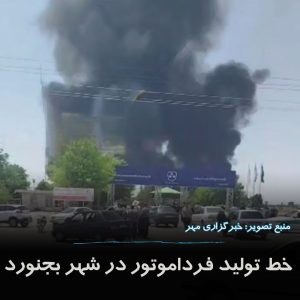 |
| Israeli drone strike on Hakim Children’s Hospital, Tehran | Musian Fire Station – Ilam Province | Farda Motors production line in Bojnourd |
 |  |  |
| Alborz Industrial Park, Qazvin | Ashtarian Machinery Plant, Lorestan | Kangan Port, Bushehr |
 |  |  |
| Areas around Tabriz Refinery | Phase 14 Refineries of South Pars Gas Field | Tabriz |