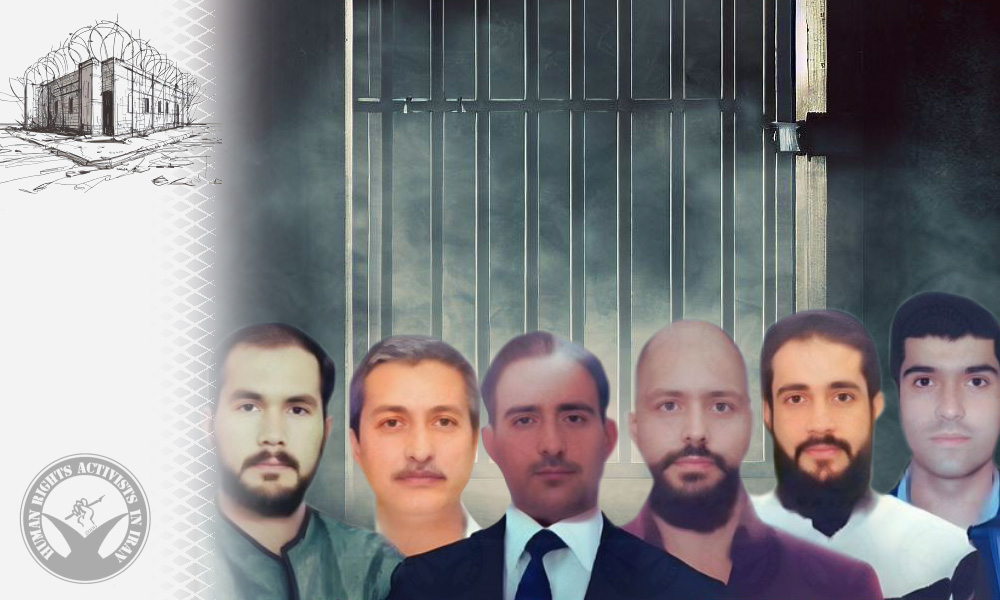
Mokhtar Alboshokeh Exposes Torture and Medical Neglect in Ahvaz Police Detention

HRANA News Agency – Mokhtar Alboshokeh, a political prisoner held in Sheiban Prison in Ahvaz, has described the physical and psychological torture he endured in one of the police detention facilities in Ahvaz in an open letter.

In the letter, he recounts how officers subjected him to verbal sexual harassment and repeatedly struck his abdomen despite being aware of his hernia condition. These violent acts exacerbated his illness, causing severe pain. Alboshokeh, who is serving a life sentence, also reveals that he has been deprived of essential medical treatment, despite medical recommendations. Instead of receiving appropriate care, he has been forced to rely on heavy painkillers and medications to endure the pain caused by his condition and the torture.

Previously, Alboshokeh was removed from prison on orders from the Iranian Cyber Police (FATA) and was subsequently beaten while in one of the police detention centers in Ahvaz. His letter details the worsening of his condition due to the violent acts and the resulting injuries.

Here is the full text of Mokhtar Alboshokeh’s letter:

“When you’ve been in prison for 14 years with a life sentence plus five more years, even a glimpse of the streets, cars in motion, the trees lining the boulevards, or the hurried faces of people seems like embarking on a luxurious tour to see the most beautiful sights in the world. That’s why, on December 6, 2024, when I was called and escorted to a car within the prison grounds, a spark of excitement ignited in me. This feeling lasted only until I left the prison gate with a group of plainclothes agents I didn’t recognize. The person in the front seat turned, punched me hard in the face, and instructed his colleague beside me, ‘Put a blindfold and handcuffs on this scum!’

Holding my aching face, I resisted while the two officers beside me wrenched my hands away, forcing them behind my back to handcuff me. Their aggressive actions caused severe pain as I caught the last fleeting glimpses of the world outside the prison before a blindfold plunged me into complete darkness. At that moment, it struck me: ‘Mokhtar, this isn’t a sightseeing trip. There will be no boulevards, trees, cars, or faces of passersby to marvel at.’ But even then, I didn’t anticipate the extent of torture awaiting me—especially after spending 14 years in prison!

I tried to reassure myself: ‘I’ve already spent 14 years in prison with a life sentence for a crime I didn’t commit. What more could they want from me to justify tormenting me further?’ While I was lost in these thoughts, a powerful punch to my lower abdomen left me doubled over in pain. Reflexively, I said, ‘Please, don’t hit me! I have a severe hernia.’ The officer next to me, seemingly thrilled by this information, sneered and said, ‘Oh, even better!’ He hurled vulgar sexual insults and added, ‘A hernia, huh? I’ll make you forget all about it!’ before landing another brutal punch to the same spot.

During the drive to their detention center, their relentless barrage of obscene insults directed at my mother, sister, and family was so psychologically painful that it almost distracted me from the physical pain of their punches and slaps. After arriving at the facility—later revealed to belong to the Ahvaz Cyber Police (FATA)—I endured severe torture for several days.

I lost track of time but eventually passed out from the repeated punches and kicks, especially to my abdomen. When I regained consciousness, I found myself chained to a hospital bed with handcuffs and leg shackles. A man, presumably a doctor, was pleading with the officers, saying, ‘This man has a severe hernia, and there’s a high risk of rupture. He needs to stay here and undergo immediate surgery.’ Ignoring him as though he were talking to a wall, the plainclothes officers dragged me off the hospital bed after re-blindfolding and handcuffing me, returning me to their torture chamber.

This cycle of torture, vulgar insults aimed at my family, losing consciousness, being taken to the hospital, the doctor’s pleas for urgent treatment, and the officers’ indifference repeated itself. All of this happened while I was on a hunger strike. Eventually, I was returned to Sheiban Prison in Ahvaz. And why did they do all this? Because they found my name in the contact list of a phone belonging to someone who had been arrested. I’ve been in their prison for 14 years!

When I returned to the prison ward, I initially thought I had been gone for over two months. My cellmates reminded me it had only been 12 days—from December 6 to December 18. Now, a month after those events, I feel an irreparable void inside me—not because of the physical torture, but because of the psychological torment of their relentless vulgar insults against my loved ones. It’s a wound that will never heal.”

Background on Mokhtar Alboshokeh

Mokhtar Alboshokeh was arrested by security forces in March 2011 in the city of Khalafabad (also known as Ramshir) in Khuzestan Province. In July 2012, he was sentenced to death by Branch 3 of the Ahvaz Revolutionary Court, presided over by Judge Seyyed Mohammad Bagher Mousavi, on charges of moharebeh (waging war against God), efsad-e-fel-arz (spreading corruption on earth), propaganda against the Islamic Republic, and actions against national security. His death sentence was later commuted to life imprisonment.
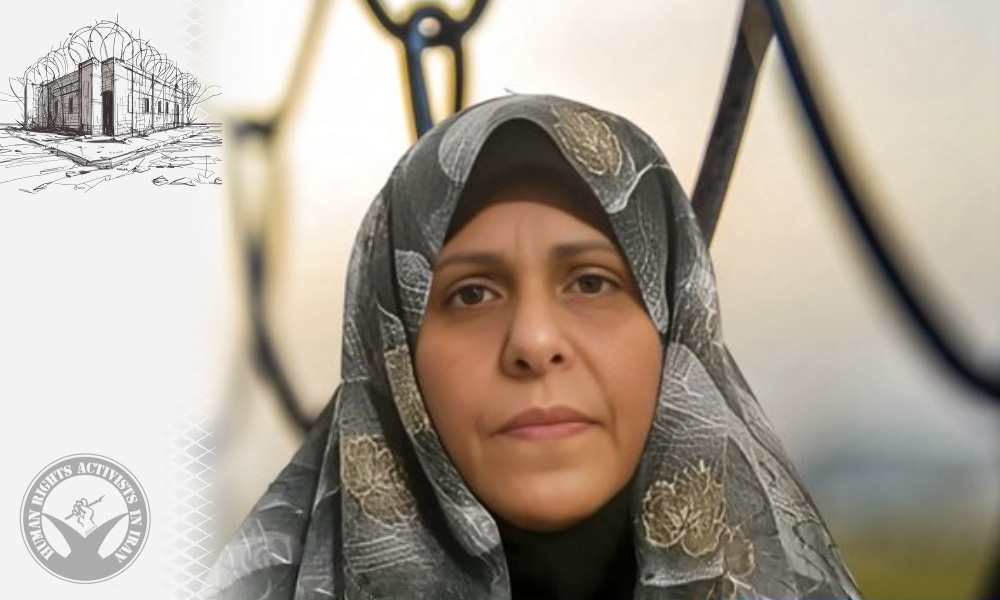
Report on the Latest Situation of Fatemeh Sepehri in Vakilabad Prison, Mashhad

HRANA News Agency – Fatemeh Sepehri, a political prisoner held in Vakilabad Prison, Mashhad, is enduring poor physical and environmental conditions despite needing regular medical care. Due to a heart condition and past surgery, she requires quarterly medical examinations.

According to HRANA, the news agency of Human Rights Activists in Iran, Sepehri’s specialized medical needs remain unmet in prison, contributing to her deteriorating condition.

Her brother, Asghar Sepehri, stated that Fatemeh was examined by a cardiac surgeon on December 25 due to her heart condition. Additionally, three days later, she was seen by an orthopedic specialist for severe pain in both hands. The doctor administered pain-relieving injections and prescribed 10 physical therapy sessions, attributing the pain to psychological stress and the pressures of the prison environment.

Since December 5, Sepehri has only been allowed two hours of daily outdoor time under the supervision of a guard. Her brother emphasized that these harsh conditions are exacerbating her physical and mental health challenges.

Following her heart surgery in October last year, Sepehri has repeatedly requested medical or conditional leave, all of which have been denied by security agencies and the prison’s overseeing judge.

In June of 2024, Sepehri and her brothers, Mohammad-Hossein Sepehri and Hossein Sepehri, were sentenced to a total of 18 years and six months in prison. The charges against her included “assembly and collusion against national security,” “insulting the Supreme Leader,” and “propaganda against the regime,” as well as an additional charge of “supporting a hostile government (Israel).”

Sepehri is currently serving a sentence from a prior case in Vakilabad Prison. She was temporarily released on medical leave on October 16, 2023, but was re-arrested at her home in Mashhad just three days later, and returned to prison.

In February 2023, the Mashhad Criminal Court sentenced her to an additional one year of imprisonment and a fine of 20 million tomans for “spreading falsehoods and disturbing public opinion.” She was also arrested on September 21 of that year at her home and transferred to Vakilabad Prison.

Fatemeh Sepehri is one of the signatories of a letter calling for the resignation of Ayatollah Ali Khamenei. In the initial trial, Branch 4 of the Mashhad Revolutionary Court sentenced her to five years of imprisonment, later reduced to three years and six months on appeal. In May, 2023, this sentence was conditionally suspended for five years, leading to her temporary release.

Continued Arrests of Citizens in Khuzestan: Eight More Detained

HRANA News Agency – In the ongoing wave of arrests in Khuzestan Province, eight more citizens—identified as Emad Mazraeh, Hossein Albuobaid, Hossein Shalibavi, Ma’leh Shavardi, Mohsen Berihi, Ahmad Zanbouri, Tareq Janami, and Bagher Shavardi—have been detained by security forces in the cities of Ahvaz and Shadegan in recent days.

  • Identities and Details:
    • Emad Mazraeh was arrested on January 10, and Hossein Albuobaid and Bagher Shavardi were arrested on January 13 in Shadegan. Security forces searched the homes of Mazraeh and Albuobaid and confiscated family members’ phones.
    • On Saturday, January 11, Hossein Shalibavi, Ma’leh Shavardi, Mohsen Berihi, Ahmad Zanbouri, and Tareq Janami were arrested in Ahvaz.

The reasons for these arrests and the current whereabouts of the detainees remain unknown.

Since last week, reports indicate that dozens of individuals have been arrested across Khuzestan Province. HRANA previously identified 30 of the detained individuals.

According to data from the Department of Statistics and Publications of HRA in 2024, Khuzestan Province ranked second in reported human rights violations by Iran’s regime, trailing only Tehran Province.

Letter from Six Sunni Prisoners: “Officials Beat Prisoners and Erase the Footage”

HRANA News Agency – Six Sunni prisoners detained in Vakilabad Prison, Mashhad, have written a letter exposing violence and inhumane behavior by prison officials.

The signatories—Isa Eidmohammadi, Farhad Shakeri, Habib Pir-Mohammadi, Abdolrahman Gorgij, Abdolbaset Avarsan, and Abdolhakim Azim Gorgij—have reported that prison officials assault prisoners and erase video evidence from surveillance cameras. They also criticized poor physical and mental health conditions, unfair sentences, and lack of attention to medical issues, calling for the United Nations and human rights organizations to respond.

These six Sunni prisoners protested the dire conditions of prisoners through their letter, demanding immediate action by international bodies to hold the Iranian government accountable and ensure transparency. In their letter, the prisoners highlighted issues such as prolonged uncertainty for detainees, harsh prison sentences, and neglect of medical needs, including both physical and psychological concerns. They expressed outrage at the violence and insults routinely inflicted by prison staff, emphasizing that officials often delete footage from prison surveillance cameras to conceal evidence of abuse.

The full text of this letter:

“Together, We Can Overthrow the Dictator…”

What is Happening in the Dictator’s Prisons?

In the name of the homeland, the love within every honorable and pure-hearted person.

Once again, crimes against humanity rage on.

In this era of democracy, freedom, and equality, the news and images from the dreadful prisons of the cursed criminal Bashar al-Assad clearly expose the bloodthirstiness of this tyrant, who has claimed the lives of millions. This alone illustrates the hatred such dictators harbor for freedom and equality. Moreover, this criminal is merely a pupil of the cruel regime of Khamenei, the dictator.

With the fall of these criminals, many more atrocities will come to light. Sadly, we have repeatedly witnessed the suffering of our defenseless compatriots in Iranian prisons. Despite testimonies and evidence from our fellow citizens, International organizations and human rights bodies have failed to take decisive action.

Every day, we witness new crimes committed by this dictatorial regime.

What happens in the tyrant’s prisons?

  • Fathers have remained in limbo for nearly a decade, only to find their children have grown into adults in their absence.
  • Long-term imprisonments have pushed families to the brink of collapse, poverty, and corruption.
  • Young people have gone gray in these prisons while their parents have suffered strokes from longing and grief.
  • Divorce, broken families, and countless other tragedies.

Meanwhile, the regime labels us as “delusional” while allowing political, ideological, and security prisoners to be beaten by its prison agents with impunity. They then brazenly erase footage from surveillance cameras and dismiss the prisoners’ accounts as fabricated lies against the regime’s officials. A recent instance of such a crime took place in Ward 6/1.

We, the political and ideological prisoners, demand that the United Nations and human rights organizations expose the horrors of the dictator’s prisons and hold these tyrants accountable, so that such inhumane acts are never repeated. Only then can we ensure a peaceful and beautiful future for the generations to come.

And a final word: Let us not forget that our loved ones have withered and perished under the yoke of tyranny. We will forever raise the cry of freedom for those still in captivity and for the families of those who gave their lives for the liberation of our homeland. Together, for the freedom of our country.

Details About the Authors of the Letter:

Isa Eidmohammadi, Farhad Shakeri, Abdolhakim Azim Gorgij, Abdolrahman Gorgij, and Abdolbaset Avarsan were arrested in 2015 by agents of the Ministry of Intelligence in connection with a shared case. A year later, they were transferred to Vakilabad Prison in Mashhad. In 2019, Branch 1 of the Mashhad Revolutionary Court, presided over by Judge Mahmoud Davoudabadi, sentenced Shakeri, Eidmohammadi, Abdolhakim Azim Gorgij, and Abdolrahman Gorgij to death on charges of “armed rebellion (Baghi) through membership in the Salafi group Party of Furqan and membership in the National Solidarity Front of Sunni Muslims in Iran.” Avarsan was sentenced to 15 years in prison for “armed rebellion through membership in ISIS.”

The death sentences were overturned by Branch 41 of the Supreme Court, presided over by Judge Ali Razini, and the case was referred to a parallel court for retrial. However, in August 2023, Branch 4 of the Mashhad Revolutionary Court, presided over by Judge Ahmadian Salami, once again sentenced the prisoners to death. In August 2024, Branch 39 of the Supreme Court upheld the death sentences.

As for Habib Pir-Mohammadi, another Sunni prisoner, he was arrested at his workplace on March 17, 2018. After 103 days of interrogation at The Ministry of Intelligence’s detention facility in Mashhad, he was transferred to Vakilabad Prison. On February 24, 2019, Branch 4 of the Mashhad Revolutionary Court, presided over by Judge Hadi Mansouri, sentenced him to a total of 22 years in prison on charges including “armed rebellion (Baghi),” “assembly and collusion against internal security,” and “propaganda against the regime.” Based on Article 134 of the Islamic Penal Code, 15 years of imprisonment as the most severe sentence will be enforced.

Detained Political Activist Akbar Bagheri Held Without Medical Care or Updates

HRANA News Agency – Akbar Bagheri, a political detainee suffering from multiple health conditions, has been held in detention for over two months, with no information available about his whereabouts. The uncertainty surrounding his health has raised serious concerns among his family and loved ones.

A source close to Mr. Bagheri’s family confirmed the news to HRANA, stating: “It has been over 60 days since Mr. Bagheri’s arrest. He suffers from blood-related conditions, intestinal issues, liver problems, and hemorrhoids. He has been denied access to his medications and has had no contact with his family.”

Despite the family’s persistent inquiries and his lawyer’s efforts to obtain information from judicial authorities, no clear details about his location or condition have been provided, further intensifying the family’s concerns.

Akbar Bagheri was arrested by security forces in Tehran on November 10, 2024. As of this report, the reasons for his arrest and the charges against him remain unknown.

Mr. Bagheri was previously arrested by security forces in Tehran in 2017 and transferred to Evin Prison. In the summer of 2018, he was sentenced by Branch 15 of the Tehran Revolutionary Court, presided over by Judge Salavati, to nine years in prison on charges of “propaganda against the regime” and “collusion and assembly against national security.” This sentence was upheld in the Court of Appeals.

Following the events at Evin Prison in October 2022, Mr. Bagheri was transferred along with several others to Rajai Shahr Prison in Karaj. He was ultimately released from Rajai Shahr Prison on May 8, 2023, under a general amnesty directive.

Subscribe to Our Newsletter

Now is definitely not the time to stop reading!

Report on the Execution of a Prisoner in Gachsaran

HRANA News Agency – On October 27, 2024, a prisoner previously sentenced to death on drug-related charges was executed in Gachsaran Prison, Kohgiluyeh and Boyer-Ahmad province.

The identity of the prisoner has been confirmed by HRANA as “Ebrahim Shooli.”

Based on information received by HRANA, Mr. Shooli had been arrested earlier on drug-related charges and subsequently sentenced to death by the judiciary.

As of the time of this report, prison officials and relevant authorities have not publicly confirmed the execution.

According to data compiled by HRANA, 52.69% of all executions in Iran in 2024 were related to drug-related charges. Notably, only 6% of the executions were officially announced, highlighting a significant lack of transparency. For a detailed analysis of these executions and the associated statistics, see HRANA’s full report.

Khaled Pirzadeh Attempts Suicide in Evin Prison Over Denial of Medical Treatment

HRANA News Agency – Khaled Pirzadeh, a political prisoner held in Evin Prison, attempted suicide by cutting his neck in protest against being denied adequate medical treatment. Following the attempt, he was transferred to a hospital and returned to prison hours later.

Zeinab Zobeidi, Mr. Pirzadeh’s wife, announced on her personal social media page that he took this action in protest against being deprived of vital medications and proper medical care. She stated that he was taken to a hospital for stitches but was returned to prison shortly after.

This incident occurred just two days after Mr. Pirzadeh released an audio message from prison, revealing that he had been denied necessary medical care, hospital transfers, and access to life-saving medications.

Pirzadeh was arrested by security forces in Ahvaz in September 2023 and was transferred on October 15 from The Ministry of Intelligence’s detention facility, known as Ward 209 of Evin Prison, to Ward 6 of the same prison.

In January 2024, he was sentenced by Branch 26 of the Tehran Revolutionary Court, presided over by Judge Iman Afshari, to a total of five years and eight months in prison.

Mr. Pirzadeh has previously been arrested and imprisoned due to his activities.

Identity of a French Citizen Imprisoned in Iran Revealed

HRANA News Agency – The full identity of Olivier Grondeau, a French citizen detained in Iran, has been disclosed. Previously identified only by his first name, Mr. Grondeau highlighted his dire situation, along with that of two other French detainees in Iran, in an audio message aired by the French public radio station France Inter. He also appealed to French authorities for urgent assistance.

According to HRANA, the news agency of Human Rights Activists in Iran, Olivier Grondeau, a 34-year-old French national, revealed in the audio recording that he and two other French prisoners are enduring harsh conditions in Iranian custody. This revelation follows earlier remarks by the French Foreign Minister, who criticized Iran for detaining three French nationals and had previously mentioned Mr. Grondeau only by his first name.

Mr. Grondeau’s mother told France Inter that her son was arrested in Shiraz in October 2022 (Mehr 1401) and subsequently sentenced to five years in prison on charges related to national security. She refuted the allegations, emphasizing that Olivier traveled to Iran solely as a tourist and out of a deep interest in Persian poetry.

The two other detainees, Cécile Kohler and her partner Jacques Paris, have been in Iranian custody since May 2022 (Ordibehesht 1401). Iranian authorities accuse them of inciting labor protests—an allegation their families vehemently deny.

In the audio message, Mr. Grondeau urged French officials to act swiftly, saying, “Cécile’s strength, Jacques’ strength, and Olivier’s strength are running out.” He appealed to authorities to “guarantee the lives of these three individuals.”

In response, the French government has summoned Iran’s ambassador and strongly condemned the detention of its three citizens.

Drug-Related Charges: A Prisoner Executed in Arak Prison

HRANA News Agency – At dawn yesterday, the death sentence of a prisoner previously convicted on drug-related charges was carried out in Arak Prison.

According to HRANA, the news agency of the Human Rights Activists in Iran, the execution took place on Sunday, January 12, 2025.

The prisoner has been identified as Pouya Asgari, 37, a resident of Arak. Based on information obtained by HRANA, Asgari was arrested in 2020 on drug-related charges and subsequently sentenced to death by the judiciary.

As of the time of this report, the execution has not been officially announced by prison authorities or relevant organizations.

According to data compiled by HRANA, 52.69% of all executions in Iran in 2024 were related to drug-related charges. Notably, only 6% of these executions were officially announced, highlighting a significant lack of transparency. For a detailed analysis of these executions and the associated statistics, see HRANA’s full report.


Teacher Union Activist Masoud Farhikhteh Sentenced to 6 Years in Prison and Additional Punishments

Masoud Farhikhteh, a teacher and union activist, has been sentenced by Branch 2 of the Revolutionary Court in Karaj to six years in prison, a two-year travel ban, and additional penalties, including a prohibition on membership in social groups and gatherings, as well as restrictions on movement in the provinces of Alborz, Tehran, Qazvin, Lorestan, and Kurdistan.

According to HRANA, quoting the Coordination Council of Iranian Teachers’ Trade Associations, Masoud Farhikhteh’s sentence was recently issued and communicated to him. Based on the ruling, Farikhteh received:

  • One year in prison for the charge of “propaganda against the regime.”
  • Five years in prison for “assembly and collusion to commit crimes against national security.”
  • Two-year travel ban, prohibition of membership in social groups, and restrictions on movement in specified provinces as supplementary punishments.

The charges were based on allegations including “active participation in illegal gatherings as a leader, organizing riots, publishing statements alongside opponents of the Islamic Republic, and inciting opposition groups nationwide to organize protests.”

Earlier this year, in a separate case, Farhikhteh was sentenced by the Revolutionary Court of Sanandaj to three months of imprisonment for “propaganda against the regime,” which was later converted into an 8 million toman fine. He was acquitted of this charge in August following an appeal in the Kurdistan Appeals Court.

Masoud Farhikhteh, a member of the board of directors of the Islamshahr Teachers’ Union, was arrested on May 1, 2023, by security forces at his home in Karaj and transferred to Ghezel Hesar Prison. He was eventually released on bail in May of the same year.