Iran’s State TV Airs Forced Confessions of Christian Converts

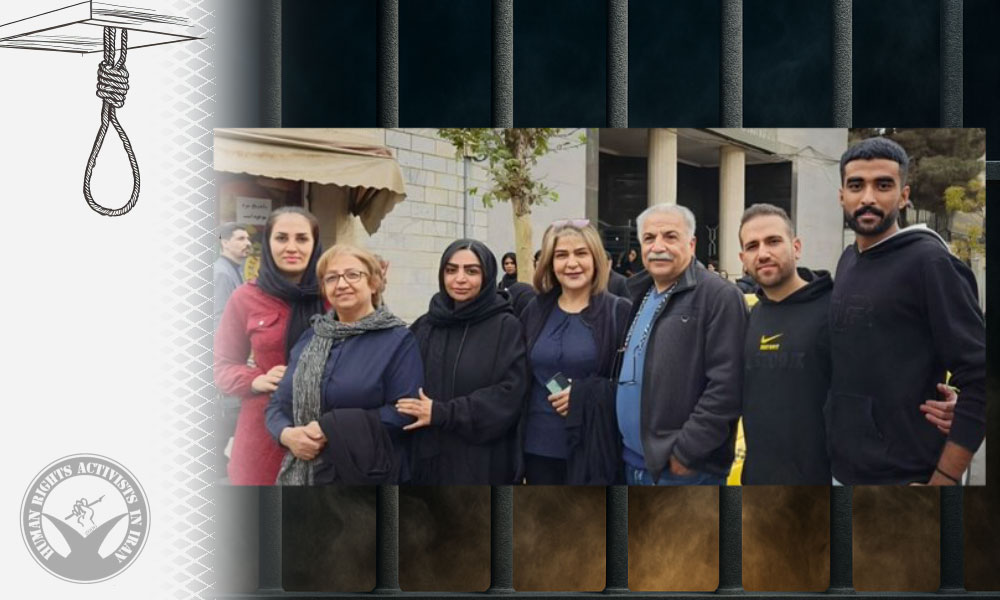
HRANA– Following the arrest of a group of Christian converts, IRIB’s 20:30 news program aired a propaganda documentary featuring security-related accusations and forced confessions from some of the detainees. This move is part of an ongoing campaign of case fabrication and pressure against Christian citizens in Iran.

According to HRANA, the news agency of Human Rights Activists in Iran, after the recent statement by the Ministry of Intelligence of the Islamic Republic regarding the arrest of a group of Christians, IRIB Channel 2 produced and broadcast a documentary centered on fabricating security cases against Christian converts.

The documentary, produced with the participation of Ameneh Sadat Zabihpour, a well-known IRIB figure linked to security agencies, presents a security-driven narrative. It levels accusations against Christian converts – referred to in the program as “Evangelists” – including alleged ties to foreign entities, participation in religious camps abroad, collaboration with opposition groups, and attempts to undermine national security.

The reporter frames activities such as traveling to Turkey, attending the “Armenia Camp,” communicating with Zionists, and planning attacks on “sensitive sites” in Iran as evidence of security threats, thereby portraying religious and personal activities as criminal.

In the final part of the documentary, footage was shown of detained individuals presented as suspects, who appeared under unknown circumstances making confessions. These confessions were recorded and broadcast under pressure or threats from security agencies. Images of what was described as “a shipment of weapons” were also displayed, without any independent evidence or documentation to substantiate the claim.

The Islamic Republic’s use of forced confessions and televised documentaries to legitimize repression of religious minorities and dissidents has long been condemned by human rights organizations. Broadcasting such confessions is a blatant violation of defendants’ rights, including the right to a fair trial.

The release of this documentary comes amid intensifying security and psychological pressure on Iran’s Christian community and efforts to create an atmosphere of fear and intimidation. In recent years, many Christian converts have faced similar charges and have been handed heavy sentences, including imprisonment, exile, or social deprivation.

Previously, the Ministry of Intelligence announced in a statement that at least 53 Christian converts had been arrested during the so-called “12-Day War” operation.

In 2024, HRANA documented 28 cases of forced confessions extracted from prisoners. The practice of obtaining and broadcasting coerced confessions from political dissidents and protesters by the Iranian regime’s security apparatus is as old as the regime itself. In 2022, amid nationwide protests, the number of such forced confessions surged to 391 cases.

Drug-Related Charges: Six Afghan Nationals Executed in Bandar Abbas Prison

HRANA– At dawn today, the death sentences of six prisoners previously convicted on drug-related charges were carried out in Bandar Abbas Prison.

According to HRANA, citing Haal Vsh, at dawn on Tuesday, August 19, six Afghan nationals were executed in Bandar Abbas Prison.

The identities of three of the executed prisoners have been reported as:

• Allah-Nazar Tajik, approximately 30 years old, father of one child
• Abdolraouf Noorzahi, approximately 50 years old, father of six children
• Abdolrahman Eshaqzahi, approximately 50 years old, and father of seven children

According to the report, all six prisoners had previously been arrested on drug-related charges and later sentenced to death by the Revolutionary Court.

They had been transferred to solitary confinement in Bandar Abbas Prison on August 17 in preparation for their executions. The identities of the other three prisoners have not yet been established.

As of the time of this report, prison authorities and judicial officials have not announced these executions.

According to HRANA’s report, in 2024, over 52 percent of executed prisoners had been convicted on drug-related charges. Over the past ten years, individuals convicted of drug trafficking have accounted for 40 percent of all executions. Unfortunately, HRANA’s statistics show no progress in reducing executions for drug-related offenses.

Larestan: Prisoner Executed in Public

HRANA – At dawn today, August 19, the death sentence of a prisoner convicted of murdering four members of a family in Beyram was carried out in public in Larestan, Fars province.

HRANA, the news agency of Human Rights Activists in Iran, has identified the executed prisoner as Sajjad Molaei Hekani.

According to information obtained by HRANA, in October of last year, Molaei Hekani, together with his wife, murdered a mother and her three children in Beyram during a robbery. Following his conviction, he was sentenced to public execution, while his wife, Mahsa Akbari, received a death sentence.

The Judiciary’s news agency reported: “The defendants were tried and convicted by Branch 5 of the Criminal Court One of Fars Province. Their sentences were later upheld by the Supreme Court, and the sentence of Ms. Akbari will be carried out inside prison in the presence of the victims’ family.”

In 2024, Iranian prisons witnessed the execution of 930 inmates. According to HRANA’s data, the number of executions carried out by the Iranian regime’s judiciary has risen steadily over the past five years.

Two Prisoners Executed in Dastgerd Prison of Isfahan

HRANA– At dawn yesterday, August 18, the death sentences of two prisoners previously convicted of murder were carried out in Dastgerd Prison of Isfahan.

HRANA has identified the prisoners executed yesterday as Behrouz Sedghi and Arash Mahjour.

According to information obtained by HRANA, Behrouz Sedghi, 28, and Arash Mahjour, 36, had previously been arrested on murder charges in separate cases and later sentenced to death by the criminal court.

As of the time of this report, the execution of these prisoners has not been announced by prison officials or judicial authorities.

According to HRANA’s statistics, in 2024, 61 inmates were hanged in Dastgerd Prison in Isfahan — a 74% increase compared to the previous year. This sharp rise reflects a disturbing escalation in executions at this facility.

Kianoosh Cheraghi Sentenced to Prison and Flogging

HRANA – Kianoosh Cheraghi, a resident of Dehloran, has been sentenced by Branch 101 of the Criminal Court Two in this city to 13 months and 16 days in prison and 40 lashes.

This verdict was recently issued by Branch 101 of the Dehloran Criminal Court Two. He was sentenced to 13 months and 16 days in prison, taking into account time previously spent in detention, on the charge of “spreading falsehoods online,” and to 40 lashes for the charge of “insulting officers on duty.”

The ruling stated that publishing critical videos of government officials on Cheraghi’s personal page was considered as evidence of “spreading falsehoods.”

Cheraghi was arrested on Tuesday, June 25, by security forces in Dehloran and transferred to The Ministry of Intelligence’s detention facility in Ilam.

Earlier, in late May this year, he had been released from Darreh Shahr Prison following the suspension of a previous prison sentence in another case. On March 24, 2025, however, he was arrested again to serve his prison term and transferred to Ilam Prison.

Kianoosh Cheraghi, 45, a resident of Dehloran and a former employee of the city’s Social Security Organization, has been sentenced in two separate cases to a combined three years in prison and supplementary punishments.

Subscribe to Our Newsletter

Now is definitely not the time to stop reading!

Hasti Amiri Sentenced to Prison, Fine, and Additional Punishments

HRANA – Hasti Amiri, a student at Allameh Tabataba’i University in Tehran, has been sentenced by Branch 26 of the Tehran Revolutionary Court to three years in prison, fines, and supplementary punishments.

This verdict was issued in absentia by Branch 26 of the Tehran Revolutionary Court and was notified to Amiri yesterday. Based on the ruling, she was sentenced to one year in prison for “propaganda against the regime,” and fined 3.3 million tomans for “appearing in public without mandatory hijab.” She was also sentenced to two years in prison and fined 50 million tomans for “spreading falsehoods with the intent to disturb public opinion.”

Judge Iman Afshari also imposed supplementary punishments, banning Amiri for two years from leaving the country and from membership in political and social groups.

On Saturday, April 26, 2025, Amiri was arrested after appearing at the Evin Courthouse and transferred to Evin Prison. She was released the following day after posting bail.

Hasti Amiri has previously been arrested and served prison time due to her activism.

Appeals Court Upholds 38 Years and 11 Months of Imprisonment for Six Baha’i Women

HRANA– The prison sentences of six Baha’i women residing in Hamedan, have been fully upheld by Branch 11 of the Hamedan Appeals Court. In the initial stage, they had been sentenced by the Hamedan Revolutionary Court to a combined total of 38 years and 11 months in prison.

The sentences of Neda Mohebi, Atefeh Zahedi, Farideh Ayoubi, Noora Ayoubi, Zarrindokht Ahadzadeh, and Zhaleh Rezaei were upheld on August 12 by Branch 11 of the Hamedan Appeals Court. The ruling was issued without scheduling a hearing, without informing the lawyers about a session, and under the advisement of Bahram Karari and Morteza Ramezani. Membership in the Baha’i community and “teaching and propagating against Sharia” were among the charges brought against them.

In June this year, following their initial trial, Branch 2 of the Hamedan Revolutionary Court sentenced Neda Mohebi to five years in prison for “teaching and propagating against Sharia” and two years and eight months for “membership in the Baha’i community.” Three years of her prison sentence were suspended for five years.

Atefeh Zahedi, Farideh Ayoubi, Noura Ayoubi, Zarindokht Ahadzadeh, and Zhaleh Rezaei were each sentenced to two years and eight months for “membership in the Baha’i community” and three years and seven months for “teaching and propagating against Sharia.” Two years of the sentences of Noora Ayoubi, Ahadzadeh, and Rezaei were suspended for five years.

These citizens had previously been released in December 2023 on bail. They were arrested on November 7, 2023, by security forces and transferred to The Ministry of Intelligence’s detention facility in Hamedan.

Over the past decade, the Iranian Bahá’í community has been disproportionately targeted by Iran’s security forces and judiciary—more than any other minority group. In the past three years, an average of 72 percent of the reports on religious rights violations collected by HRANA have documented the Iranian regime’s repression of the Bahá’í community.

Two Prisoners Executed in Adelabad Prison, Shiraz

HRANA – At dawn yesterday, the death sentences of two prisoners previously convicted on drug-related charges were carried out in Adelabad Prison, Shiraz.

HRANA has identified the two prisoners who were hanged at dawn on Sunday, August 17, as Ahmad Younesi and Mehdi Najafi.

Based on information obtained by HRANA, both prisoners had earlier been arrested on drug-related charges and subsequently sentenced to death by the judiciary.

As of the time of this report, the executions have not been announced by prison officials or state media.

According to HRANA’s statistics, in 2024, Adelabad Prison in Shiraz witnessed the execution of 92 inmates — an 88% increase compared to the previous year. This sharp rise places Adelabad as the second deadliest prison in Iran after Ghezel Hesar Prison in Karaj.

Sunni Prisoner Hamzeh Darvish Continues Hunger Strike

HRANA – Hamzeh Darvish, a Sunni prisoner held in Lakan Prison, Rasht, remains on hunger strike. He began his strike on August 2 in protest against authorities’ neglect of his demands.

Three days ago, a source close to his family confirmed the news to HRANA, saying: “Mr. Darvish is currently on the fourteenth day of his hunger strike.”

This Sunni prisoner went on strike on Saturday, August 2, in protest against what he describes as his continued unjust imprisonment, psychological and physical torture, the violation of the principle of separation of crimes, and the authorities’ disregard of his previous requests. He has demanded transfer to the political prisoners’ ward in Ghezel Hesar Prison, Karaj.

In December 2024, Darvish wrote a letter to the UN Special Rapporteur on the situation of human rights in Iran, urging attention to his case. Following this action, he was held in solitary confinement with handcuffs and shackles for one month by order of Gilan’s Prosecutor, Mehdi Fallah Miri.

Hamzeh Darvish, a prisoner from Talesh, was previously sentenced to 14 years in prison, later reduced to 10 years and 6 months in August 2024 after he submitted to the court’s ruling. He had already served another long-term prison sentence before this case.

Additionally, following a prison altercation on October 9, 2022, and a complaint filed by the Prisons Organization, a new legal case was opened against him. On May 11, 2020, this Sunni prisoner was transferred from Rajai Shahr Prison in Karaj to Lakan Prison in Rasht.

Darvish’s journey through adversity began in 2014 when he was deceived by ISIS forces into traveling to Turkey and later to Syria, as he claims. Following a period of confinement in an ISIS jail, he managed to escape and returned to Iran, where he surrendered himself to security forces.

53 Christians Arrested in Iran After 12-Day War with Israel

HRANA – Official media outlets have announced that following the 12-day war between Iran and Israel, 53 Christian citizens have been arrested in Iran. The arrests were carried out under allegations of “collaborating with Israel.”

According to HRANA, quoting Hamshahri, since the start of the 12-day Iran-Israel war, 53 Christian citizens have been arrested. The report claims that the arrests of these citizens are connected to the 12-day war between Israel and Iran.

It also alleges that these individuals were “followers of a branch of Christianity and had collaborated with Israel.”

No further details, including the identities of those arrested or the location of their detention, have been provided in the report.

Based on about 180 reports compiled by HRANA over the past decade, 11% of all victims of religious minority rights violations by Iran’s security-judicial apparatus were Christians—particularly Christian converts. In 2024, Christians made up over 9% of those targeted.