FARAJA Reports Mass Arrests After Israeli Strike on Evin Prison, Including Thousands of Foreign Nationals

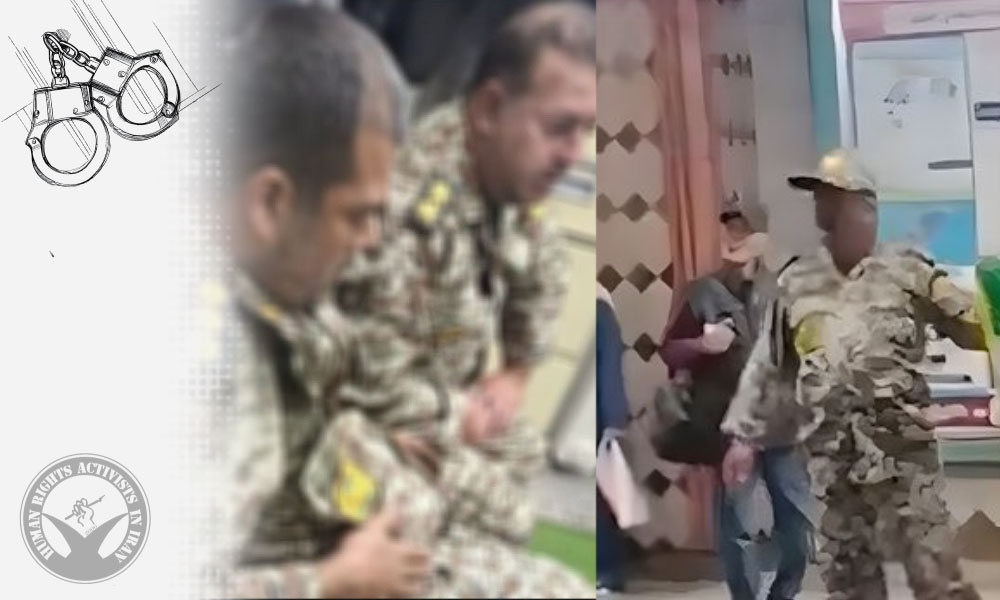
HRANA – The spokesperson for the Law Enforcement Command of the Islamic Republic of Iran (FARAJA) has announced the arrest of 2,774 foreign nationals and dozens of individuals accused of “anti-security activities” following Israel’s recent attack on Evin Prison.

According to Tasnim News Agency, Saeed Montazer-al-Mahdi presented a report on the agency’s activities during Israel’s attack on Evin Prison, including statistics on arrests and security measures.. He claimed that some detainees face charges of espionage and unauthorized filming. The FARAJA spokesperson also reported that 21,000 people were arrested during the 12-day war, attributing the arrests to a 41% increase in public tip-offs.

Montazer-al-Mahdi stated that following the attack, a total of 2,774 foreign nationals were arrested by FARAJA officers. He said examinations of the detainees’ mobile phones revealed that some had filmed or photographed highlands and sensitive sites, and had sent location data.

The spokesperson further said that during the 12-day war, calls to the 110 police hotline rose by about 41%, leading to 7,850 citizen reports and the arrest of 21,000 “suspects.”

He added that among them, 261 people were arrested on suspicion of espionage and 172 on charges of unauthorized filming. Additionally, during investigations, 30 individuals described as “special security cases” were identified through data retrieved from the mobile phones of suspects and detainees.

While combating espionage is not considered a human rights violation in itself, given the Iranian government’s history of using such charges as a tool against political opponents, such claims—especially when details and judicial procedures remain unclear—are often viewed with skepticism.

The social deputy of FARAJA also said that 30 individuals who had expressed support for Israel’s recent attack on social media were arrested. According to him, legal cases were opened against another 35 people deemed “prone to anti-security activities.”

Montazer-al-Mahdi added that 147 social media pages belonging to individuals who had merely expressed joy over Israel’s recent attacks were identified, but he did not provide further details on what measures were taken against them.

He reported that police forces prevented a gathering in Tehran’s Palestine Square, describing it as linked to Israel’s recent aerial and drone operations. He said calls to join the gathering had previously circulated online.

The spokesperson also claimed that after the bombing of Evin Prison, 127 political and security prisoners attempting to escape were identified and arrested by the northern Tehran police security unit. Among them, he said, were two prisoners who had disguised themselves in firefighter uniforms.

In another part of his remarks, Montazer-al-Mahdi stated that during the 12-day war, over 40,000 FARAJA officers were stationed on urban and intercity roads. He added that since the start of the current year, about 102,000 conscripts have been dispatched to service, with 30,000 of them appointed as police officers in the past month alone.

On June 23, during Israeli airstrikes on Tehran, Evin Prison was directly targeted. Several parts of the prison were hit, including the entrance gate, the judiciary building inside the compound, the infirmary, Ward 209, the bakery, and the visitation hall.

Prisoner Executed in Dastgerd Prison, Isfahan

HRANA– At dawn on Monday, August 11, 2025, the death sentence of a prisoner previously convicted on drug-related charges was carried out in Dastgerd Prison, Isfahan.

HRANA has identified the prisoner executed at dawn on Monday, August 11, as Hossein Rezaei. Based on information obtained by HRANA, Mr. Rezaei had previously been arrested on drug-related charges and later sentenced to death by the Revolutionary Court.

As of the time of this report, prison authorities and relevant institutions have not announced the execution.

According to HRANA’s statistics, in 2024, 61 inmates were hanged in Dastgerd Prison in Isfahan — a 74% increase compared to the previous year. This sharp rise reflects a disturbing escalation in executions at this facility.

Kerman Province: 104 Citizens Arrested in Connection with 12-Day Israel–Iran War

HRANA – The police chief of Kerman Province announced the arrest of 104 individuals in the province during the 12-day war between Israel and Iran. According to him, the arrests were made on charges such as “creating insecurity during the war.”

According to Tasnim News Agency, the police chief of Kerman Province stated: “During the 12-day war between Israel and Iran, 28 checkpoints were established across the province.”

Jalil Moghufeh’i added, “In this regard, 104 individuals suspected of being involved in causing insecurity during the war in Kerman Province were arrested and handed over to the relevant judicial authorities.”

The report did not provide further details regarding the identity, location of detention, or current status of those arrested.

Arbitrary arrests, transferring detainees to undisclosed locations, and leaving families in the dark about the fate of their loved ones are routine practices of the Iranian regime’s security agencies, such as the Ministry of Intelligence and the IRGC Intelligence Unit. This pattern of behavior stands in clear violation of the United Nations Standard Minimum Rules for the Treatment of Prisoners, known as the Nelson Mandela Rules.

Teachers’ Union Activist Masoud Farhikhteh Sentenced to Imprisonment by Court of Appeal

HRANA – Branch 12 of the Alborz Province Court of Appeal has reduced the prison sentence of teachers’ union activist Masoud Farhikhteh to four years, one month, and 17 days, down from the six years previously handed down by the trial court.

According to the Coordination Council of Iranian Teachers’ Trade Associations, the appellate court sentenced Farhikhteh to three years, six months, and one day in prison for “assembly and collusion to commit crimes against internal security,” and seven months and 16 days for “propaganda against the regime.”

Under Article 134 of the Islamic Penal Code, only the most severe sentence — three years, six months, and one day — will be enforceable.

Farhikhteh was originally sentenced in January 2025 by Branch 2 of the Karaj Revolutionary Court, following a trial held in July 2024.

In a separate case, the Sanandaj Revolutionary Court sentenced him in April 2024 to three months in prison for “propaganda against the regime,” later converting the sentence to an eight-million-toman fine. He was acquitted of this charge in August 2024 by the Kurdistan Province Court of Appeal.

A board member of the Islamshahr Teachers’ Union, Farhikhteh was arrested by security forces at his home in Karaj on May 1, 2023, and transferred to Ghezel Hesar Prison. He was released on bail in June of that year.

Political Prisoner Mahmoud Mehrabi Sentenced to Imprisonment and Additional Penalties

HRANA – Mahmoud Mehrabi, a political prisoner held in Dastgerd Prison, Isfahan, has been sentenced to a total of 10 years in prison along with complementary punishments.

According to his sister, Mahan Mehrabi, the sentence includes five years for “inciting and provoking people to war and killing,” three years for “ineffective incitement of regime forces to disobey orders,” one year for “propaganda against the regime,” and one year for “insulting the Supreme Leader and the founder of the Islamic Republic.”

Additional penalties include two years’ exile from his birthplace, a two-year ban on social media activity, a two-year travel ban, and a two-year prohibition on obtaining a passport.

Under Article 134 of the Islamic Penal Code, only the most severe sentence — five years in prison — will be enforceable.

In November 2024, Mehrabi was acquitted by the Isfahan Revolutionary Court of the charge of “corruption on earth,” which had previously led to a death sentence. This death sentence had been overturned in October 2024 by the Supreme Court, which accepted his request for retrial and referred the case to another branch for reconsideration.

In October 2023, Branch 2 of the Public and Revolutionary Prosecutor’s Office in Mobarakeh County issued an indictment against Mehrabi on charges including “corruption on earth through spreading falsehoods,” “propaganda against the regime on social media,” “ineffective incitement of military and law enforcement forces to refuse duties and surrender via social media,” “inciting people to war and killing to disrupt security,” and “insulting the Supreme Leader and Ruhollah Khomeini on social media.”

Mehrabi, about 36 years old, single, and a resident of Isfahan, worked in the electricity sector before his arrest.

Subscribe to Our Newsletter

Now is definitely not the time to stop reading!

Ramin Gorgani Arrested in Kamyaran by Security Forces

HRANA– On Sunday, August 10, 2025, Ramin Gorgani, a resident of Kamyaran County, was arrested by security forces in this county and transferred to one of The Ministry of Intelligence’s detention facilities in Sanandaj. During a search of his home, agents confiscated several of his personal belongings.

According to Kurdpa, an informed source reported that Mr. Gorgani’s arrest was carried out by security forces without the presentation of a judicial warrant, in one of the streets of Kamyaran. Following his arrest, he was transferred to one of The Ministry of Intelligence’s detention facilities in Sanandaj.

Additionally, after detaining him, agents went to his home, searched the premises, and seized some of his personal possessions.

As of the time of writing, no information has been obtained regarding the reasons for his arrest or the charges against him.

Ramin Gorgani has previously been arrested due to his activities.

Statistical Report on Violations of Baha’i Rights Over the Past Five Years

HRANA– This report presents a statistical and analytical review of actions taken by security and judicial authorities against the Baha’i community in Iran. It is based on the collection, analysis, and documentation of 636 reports published by HRANA over the past five years (August 2020 to August 2025) regarding violations of the rights of Baha’i citizens.

Over this five-year period, HRANA’s Statistics Department has documented at least 284 arrests of Baha’i citizens, along with 270 summonses to security and judicial bodies. There have also been 419 home searches, 57 incidents of preventing economic activity, 3 cases of cemetery destruction, 27 confiscations of homes and properties, 1 case of refusal to hand over a body, 4 cases of preventing burials, 108 instances of prison sentence enforcement, 127 travel bans, 9 physical assaults, 106 denials of access to education, 147 trials, and 19 interrogations in security or judicial institutions.

In total, 388 Baha’i citizens were sentenced to 17,948 months of imprisonment (equivalent to 1,495 years and 8 months). This includes 17,324 months of enforceable (ta’zir) prison terms and 624 months of suspended sentences. Of this total, appellate courts issued 6,012 months of prison terms. Additionally, 91 individuals were fined a combined 503,510 million tomans, and 103 were sentenced to deprivation of social rights. Twenty-five people were also sentenced to a combined 600 months of exile.

The data show that the third year of this period saw the highest number of reports (162), while the fourth year recorded the most arrests (76) and the longest cumulative prison sentences (5,220 months). These figures point to a continuation—and in some cases, intensification—of judicial actions against Baha’i citizens in the later years of the reporting period.

The table below illustrates changes in the number of reports, arrests, and total prison sentences issued between August 2020 and August 2025.

Annual Statistics of Reports, Arrests, and Prison Sentences of Baha’is (2020–2025)
Reporting YearNumber of ReportsArrestsTotal Prison Terms (months)
First Year (Aug 2020 – Aug 2021)90283361
Second Year (Aug 2021 – Aug 2022)104461588
Third Year (Aug 2022 – Aug 2023)162743687
Fourth Year (Aug 2023 – Aug 2024)161765220
Fifth Year (Aug 2024 – Aug 2025)119604092


Annual Number of Recorded Reports (Aug 2020 – Aug 2025)

Annual Number of Arrests of Baha’i Citizens (2020–2025)

Analysis of the five-year data shows that violations of Baha’i citizens’ rights have been recorded across a wide geographic range in Iran. Tehran Province tops the list with 117 reports, followed by Fars (78), Mazandaran (70), Isfahan (63), and Alborz (56).

Khorasan Razavi, Kerman, Yazd, and Gilan provinces also rank high, reflecting a notable concentration of security and judicial actions against the Baha’i community in these regions. At the same time, documented violations extend to provinces with smaller populations or limited media coverage—such as Kohgiluyeh and Boyer-Ahmad, Ardabil, Qom, and Chaharmahal and Bakhtiari—underscoring the nationwide scope of the repression.

Volume of Reported Violations of Baha’i Rights by Province

Some of the human rights violations described in this report are of a nature specifically tied to the Baha’i community in Iran. These include deprivation of economic and educational opportunities, obstruction in burial and funeral arrangements, destruction of cemeteries, confiscation of property, and structural discrimination based on religious belief. Such cases are specific to Baha’is and rarely appear in broader, general reports, underscoring the need for dedicated and specialized reporting on violations targeting this community.

Among the Baha’i citizens currently imprisoned are:
Farkhandeh Rezvan Pey, Nasrin Khademi Ghaqarakhi, Roya Azadkhosh, Sara Shakib, Boshra Motahar, Mojgan Pourshafe Ardestani, Maryam Khorsandi, Shurangiz Bahamin, Sanaz Rasteh, Firoozeh Rastinejad, and Azita Rezvani Khah (in Dolatabad Prison, Isfahan);
Behnam Momtazi (in Choobindar Prison, Qazvin);
Anisa Fanaeian (in Semnan Prison), Sepehr Ziaei (in Evin Prison);
Golnoosh Nasiri, Farideh Moradi (in Vakilabad Prison, Mashhad);
Arshia Rouhani, Arash Nabavi, Hamid Monzavi (in Dastgerd Prison, Isfahan);
Houshider Zarei (in Adelabad Prison, Shiraz);
and Paridokht Shojaei (in Kerman Prison).

Among Baha’i citizens who have faced judicial verdicts during the five-year period, some have been sentenced to heavy and long-term prison terms, in some cases exceeding 10 years. These verdicts have often been issued without observing fair trial standards and on charges such as “propaganda against the regime” or “forming illegal groups.” Such heavy sentences reflect the severity of judicial measures against the peaceful religious activities of Baha’i citizens and the continuation of a systematic policy of repression targeting this community.

Notable individuals facing heavy prison sentences include:

● Ne’matollah Shadpour, Nima Shadpour, and Shafigh Eslami, collectively sentenced to 51 years in prison;
● Shahdokht Khanjani, a Baha’i citizen from Semnan, sentenced to 16 years in prison;
● Sanaz Tafazoli, sentenced to 10 years and 9 months in prison
● Enayatollah Naeimi, sentenced to a total of 15 years in prison, and
● Vesal Momtazi and Anisa Samieian, a Baha’i couple, collectively sentenced to 9 years and 6 months in prison.

Judicial Officials with the Highest Number of Verdicts Against Baha’is in the Past Five Years
Monetary Fine (million
tomans)
Prison Term (months)Number of Sentences IssuedCourt BranchJudge NamePicture
542199641Branch 1 of the Shiraz Revolutionary CourtSeyed Mahmoud Sadati
50144732Branch 36 of the Tehran Court of AppealsAbbas‑Ali Houzan
1,800222028Branch 1 of the Isfahan Revolutionary CourtMohammad Reza Tavakoli
5105626Branch 37 of the Fars Province Court of AppealsSaeed Bolandzadeh
5607214Branch 9 of the Mazandaran Court of AppealsElias Shakeri
52513Branch 28 of the Tehran Revolutionary CourtMohammad Reza Amouzad
70512Branch 1 of the Mashhad Revolutionary CourtSeyed Hadi Mansouri
82811Branch 26 of the Tehran Revolutionary CourtIman Afshari
4083329Branch 3 of the Rasht Revolutionary CourtMehdi Rasekhi
1959Branch 4 of the South Khorasan Court of AppealsEbrahim Ramazani

Two Prisoners Executed in Arak Prison on Drug-Related Charges

HRANA– At dawn yesterday, Sunday, August 10, two prisoners were executed in Arak Prison. They had previously been sentenced to death on drug-related charges.

HRANA has identified one of the executed prisoners as Ahmadreza Torkashvand. The two had been arrested on charges related to drug offenses and later sentenced to death by the Revolutionary Court.

Further details, including the identity of the second executed prisoner, are under investigation by HRANA.

As of the time of this report, the executions have not been announced by prison officials or relevant authorities.

According to HRANA’s report, in 2024, over 52 percent of executed prisoners had been convicted on drug-related charges. Over the past ten years, individuals convicted of drug trafficking have accounted for 40 percent of all executions. Unfortunately, HRANA’s statistics show no progress in reducing executions for drug-related offenses.

20 Arrested on Espionage Charges in Connection with 12-Day Israel-Iran War

HRANA – The Judiciary spokesperson has announced the arrest of 20 people across several provinces, accusing them of spying for Israel during the recent 12-day war with Iran. He said the cases are currently under investigation, with results to be announced once inquiries are complete.

Quoting ISNA, HRANA reports that Asghar Jahangir stated the detainees face charges of espionage and collaboration with Mossad, alleging their activities were connected to the 12-day Israel-Iran conflict.

Citing an earlier statement from the Ministry of Intelligence, Jahangir noted that the cases remain under review by interrogators. That statement had also reported the summons and arrest of 98 citizens over media-related activities.

Jahangir added that some individuals detained before the conflict allegedly confessed to missions tied to the war, while charges against others were altered or dropped. “A person may be arrested on suspicion of espionage, but later, during the investigation, the charges may be dismissed,” he said.

Describing espionage cases as “complex and sensitive,” Jahangir claimed they must be handled carefully and with respect for the rights of the accused.

Although combating espionage is not considered a human rights violation, the Iranian government’s longstanding record of using such charges against political opponents means these claims—especially in the absence of clear details or transparent judicial proceedings—are widely met with skepticism.

Ali Younesi and Amirhossein Moradi Sentenced to Over 7 Years in Prison

HRANA– Branch 29 of the Tehran Revolutionary Court sentenced Ali Younesi to a total of six years and three months in prison, along with social deprivations and exile. Amirhossein Moradi was also sentenced by the same branch to 15 months in prison.

Their lawyer, Mostafa Nili, announced that these award-winning Sharif University students were sentenced by Branch 29 to 15 months in prison each for “propaganda against the regime.” Younesi was additionally sentenced to five years in Kerman Prison on the charge of “endorsing and supporting the Zionist regime.”

According to Nili, as a complementary punishment, during his imprisonment, Younesi will be banned from access to the Internet and from making phone calls to outside the prison, except in necessary cases and under the supervision of the prison director.

The trial session for Younesi was held on July 28, and for Moradi on July 20, 2025.

Ali Younesi, a computer engineering student, and Amirhossein Moradi, a physics student at Sharif University of Technology, were arrested on April 10, 2020, by Ministry of Intelligence agents and transferred to the Ministry’s detention facility known as Ward 209 of Evin Prison. Their arrest was carried out by plainclothes agents without a judicial warrant and accompanied by beatings.

On May 5, 2020, Judiciary spokesperson Gholamhossein Esmaili accused the students of cooperating with an opposition group (the People’s Mojahedin Organization of Iran). Shortly afterward, Aida Younesi, Ali’s sister, released a video denying the accusations and stating that they were based on their parents’ history of imprisonment in the 1980s.

On June 25, 2022, more than two years after their arrest, Moradi and Younesi were transferred from the Ministry of Intelligence’s detention facility (Ward 209 of Evin Prison) to the prison’s public ward.

In their initial trial, the two award-winning Sharif University students were sentenced to 10 years in prison for “destruction and arson of public property” as the most severe charge, five years for “assembly and collusion against national security,” and one year for “propaganda against the regime.” On June 2022, Branch 36 of the Tehran Court of Appeals upheld the lower court’s verdict in full.

In March 2024, their lawyer announced that after the Supreme Court accepted their request for retrial, a parallel branch reduced Younesi’s maximum prison sentence from 10 years to six years and eight months. Nili added that the same process had previously been applied to Moradi, reducing his enforceable sentence to six years and eight months as well.

Amirhossein Moradi won the silver medal in Iran’s 2017 National Astronomy Olympiad, while Ali Younesi won the silver medal in 2016 and the gold medal in 2017. Younesi also won gold in the 12th International Olympiad on Astronomy and Astrophysics, held in China, securing first place in the competition.