Nine Prisoners Executed in Ghezel Hesar Prison, Karaj

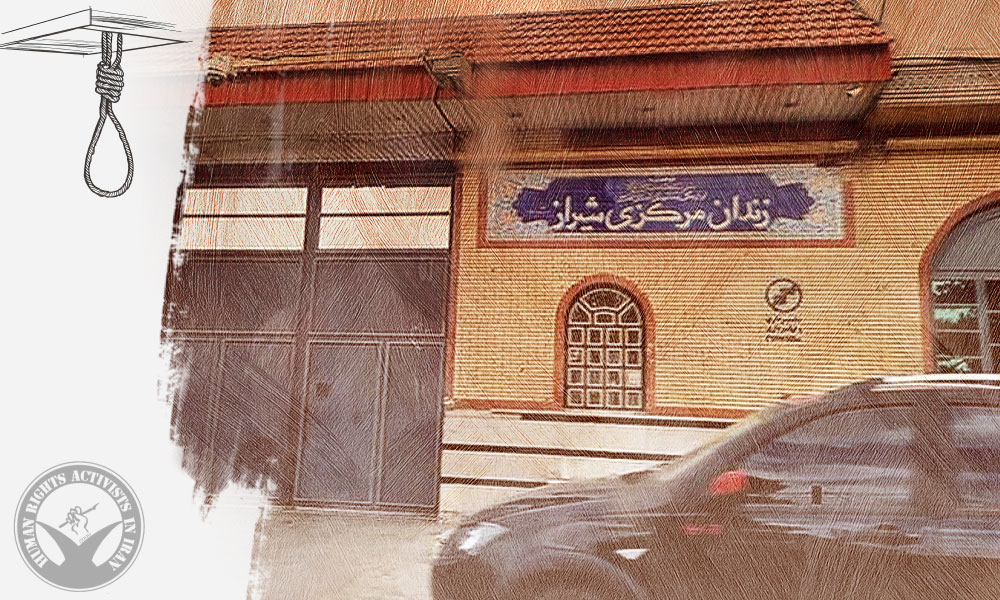
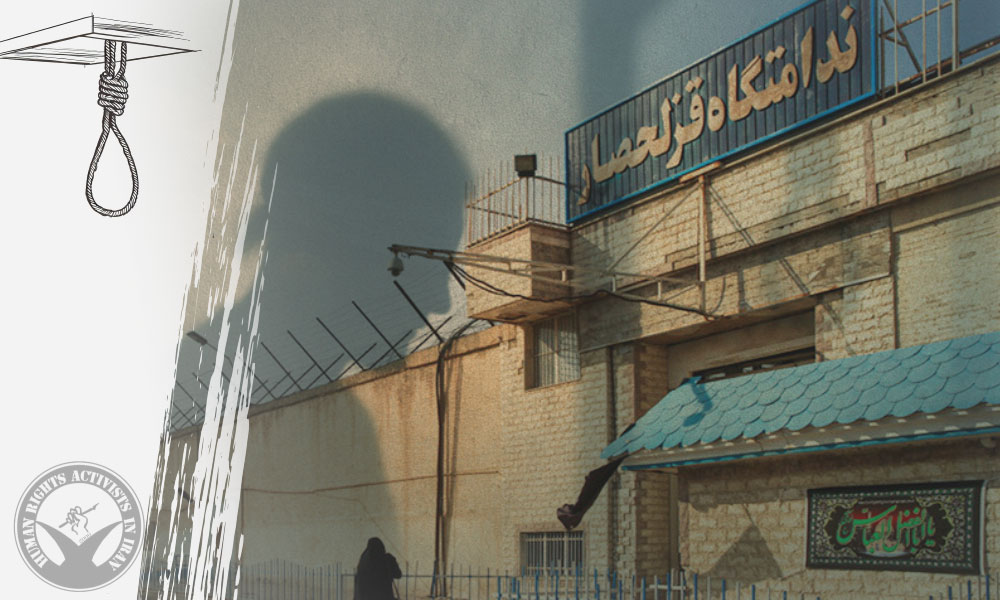
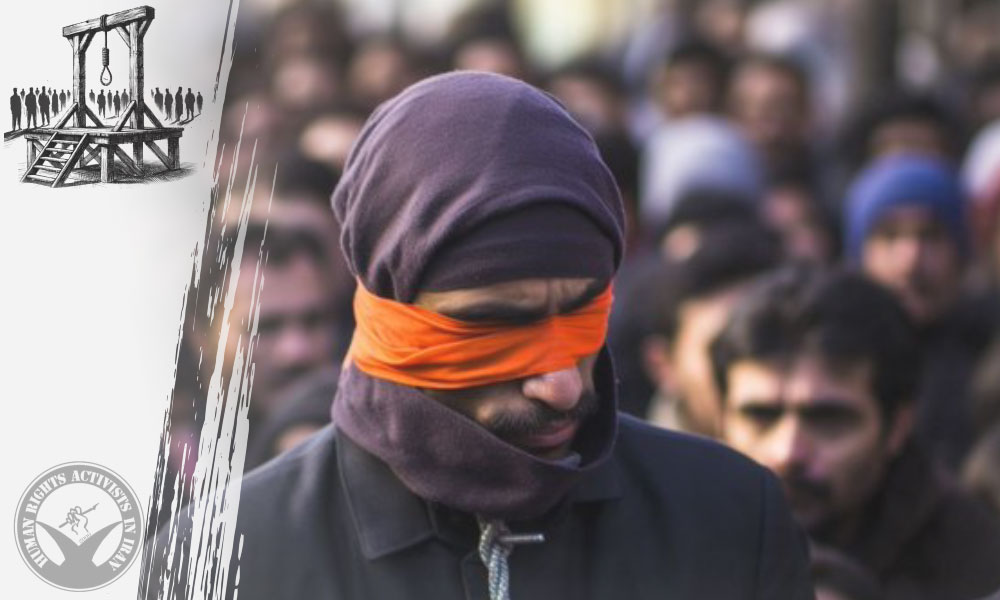
HRANA- On Wednesday, October 8, nine prisoners were executed by hanging in Ghezel Hesar Prison in Karaj.

According to HRANA, four of the executed individuals had been sentenced to death on drug-related charges, four on murder charges, and one on a charge of rape.

The identity of one of the prisoners has been confirmed as Ahmadi Mohammadi, who was convicted on drug-related charges. HRANA has also identified another prisoner as Mahmoud Valiollah, who had been arrested on a murder charge.

A close relative of Mr. Valiollah told HRANA: “Mahmoud was the father of a 16-year-old son and two daughters, aged 6 and 10. He had lived in Tehran for many years. In the summer of 2021, he shot and killed his wife. He was eventually arrested and sentenced to death by the Criminal Court.”

The Hamshahri daily reported that one of the other executed prisoners was a man who, in March 2024, killed the wife of one of his colleagues during a robbery. He was arrested, sentenced to death, and his sentence was carried out in prison.

According to the same source, another executed prisoner was a man named Pedram, who three years earlier had killed the woman he was romantically interested in in order to steal her Tiggo car and buried her body in the Taleqan desert. He was arrested, tried, sentenced to death, and executed at dawn on Wednesday.

Hamshahri also reported that another of those executed was a man who had been arrested about seven years ago on charges of killing a young woman over a financial dispute. Her body was later found along the Tehran–Qom highway. The man was executed early Wednesday morning following his trial and sentencing.

In addition, Hamshahri reported that one of the executed prisoners had been arrested on charges of raping one of his relatives.

Since the beginning of this year, 183 people have been executed in Ghezel Hesar Prison alone, a figure unprecedented in comparison to previous years.

Following Acquittal on Espionage Charges, Lennart Monterlos Released

HRANA – Lennart Monterlos (Lennart Christian Jean-Pierre Monterlos), a German national who also holds French citizenship, has been released following his acquittal by the Bandar Abbas Revolutionary Court. He had been arrested on charges of “espionage” during the 12-day conflict between Israel and Iran.

French President Emmanuel Macron announced the news today, stating: “Our compatriot, Lennart Monterlos, has finally been freed. He had been detained in Iran since June 16. The people of France share in the relief and happiness of him and his family. I thank everyone who worked for his release.”

President Macron also referred to the continued detention of Cécile Kohler and her husband Jacques Paris, two members of the French teachers’ and education union, calling their detention in Iran arbitrary and urging their immediate release.

ISNA News Agency, citing sources close to Monterlos’s case, reported that he is expected to return to France on Thursday.

On Monday, October 6, Mojtaba Ghahremani, the head of the Hormozgan Provincial Judiciary, announced that the Bandar Abbas Revolutionary Court had acquitted this German-French citizen of espionage charges.

Ghahremani stated: “Despite an indictment issued by the prosecutor’s office, the Revolutionary Court – based on legal principles and in light of doubts regarding the alleged offense -issued a verdict of acquittal. However, under the law, the prosecutor has the right to appeal the ruling.”

During that conflict, a German-language news outlet covering France and global affairs reported that Monterlus, an 18-year-old French national, had traveled to Iran by bicycle and had gone missing on June 16. Shortly thereafter, Iran’s Foreign Minister Abbas Araghchi confirmed in an interview with a French publication that this citizen had been arrested in Iran.

Nahid Behroozi, a Baha’i Citizen, Sentenced to Five Years in Prison

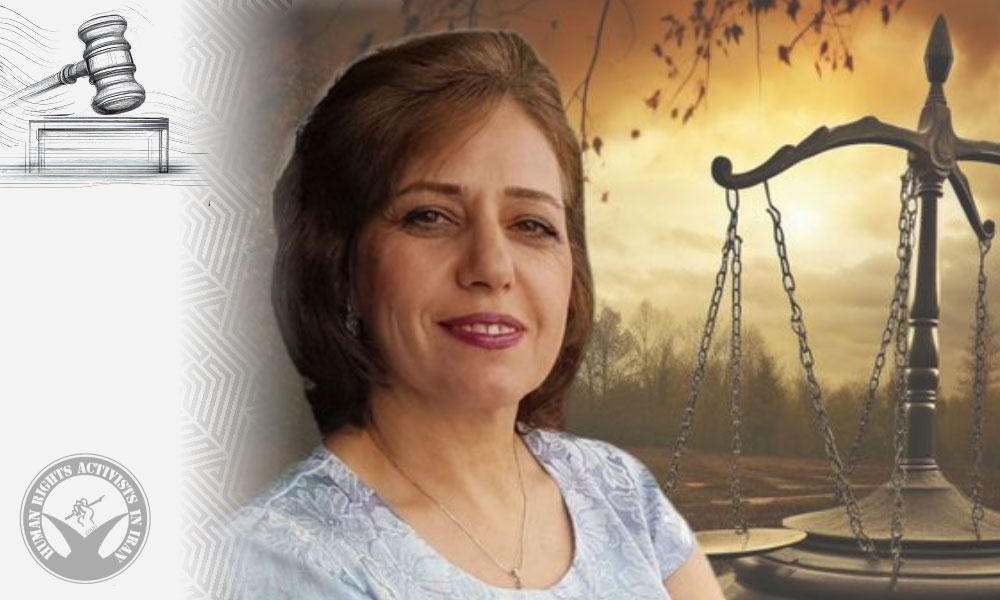
HRANA – Nahid Behroozi (Forouhari), a Baha’i citizen residing in Karaj, has been sentenced to five years in prison and additional penalties by Branch 4 of the Karaj Revolutionary Court.

According to the verdict, which was recently issued and officially communicated to her on Monday, October 6, 2025 (14 Mehr 1403), Ms. Behroozi was sentenced to five years of imprisonment under Article 500 (repeated) of the Islamic Penal Code for “educational or proselytizing activities deemed deviant and contrary to or disruptive of the sacred religion of Islam.”

In addition to the prison term, the court imposed complementary punishments, including ten years’ deprivation of social rights and the confiscation of her seized belongings—such as electronic devices and religious books.

Ms. Behroozi was arrested on July 29, 2024, by agents of the Fardis branch of the Ministry of Intelligence while on a street in Karaj. Following her arrest, security agents searched her home. After completing interrogation at The Ministry of Intelligence’s detention facility, she was transferred to Kachouei Prison on August 15, 2024. She was released from Kachouei Prison on October 1, 2024, upon posting bail.

Appeal Court Upholds 25-Year Prison Sentence for Baha’i Citizen Rouya Sabet

HRANA – The 25-year prison sentence of Rouya Sabet, a Baha’i citizen residing in Shiraz, has been upheld in full by Branch 37 of the Fars Province Court of Appeals.

The ruling, issued on September 23 by the appellate court, has since been officially communicated to Ms. Sabet. According to the verdict, she received 10 years in prison for each of the charges of “collaboration and communication with Israeli nationals and institutions” and “forming and running a group with the intent to act against national security.” She was also sentenced to five years in prison for “religious propaganda activity contrary to the Sharia of Islam.”

As complementary punishments, Ms. Sabet was handed a two-year travel ban (including passport cancellation), five years’ deprivation of social rights, and a ban on online activity.

The verdict is final. Under Article 134 of the Islamic Penal Code, the heaviest sentence, 10 years of imprisonment, will be enforceable.

On May 28, 2024, Branch 1 of the Shiraz Revolutionary Court had initially sentenced Ms. Sabet to 25 years in prison along with additional penalties on the same charges.

Rouya Sabet, a Baha’i citizen residing in the United Arab Emirates, was summoned and arrested by the IRGC Intelligence Organization in Shiraz on February 15, 2024, while visiting the city. She was released approximately five months later from Adelabad Prison in Shiraz after posting bail.

Four Prisoners Executed in Dastgerd Prison of Isfahan

HRANA- On Monday, October 6, four prisoners were executed in Dastgerd Prison, Isfahan.

HRANA has confirmed the identities of two of the executed prisoners as Abolfazl Lerni and Ahmad Arzani. All four prisoners had been arrested and sentenced to death on drug-related charges.

Further details, including the identities of the other two executed prisoners, are currently being investigated by HRANA.

As of this report’s publication, the executions have not been announced by prison officials or relevant authorities.

According to HRANA’s statistics, in 2024, 61 inmates were hanged in Dastgerd Prison in Isfahan – a 74% increase compared to the previous year. This sharp rise reflects a disturbing escalation in executions at this facility.

Subscribe to Our Newsletter

Now is definitely not the time to stop reading!

Ehsan Rostami Continues Hunger Strike in Evin Prison

HRANA – Ehsan Rostami, a cultural activist from Harsin, Kermanshah Province, remains held in Ward 209 of Evin Prison in a state of legal uncertainty. After a prolonged lack of information about his situation, his family recently learned of his ongoing hunger strike and have requested an in-person visit to ensure his well-being.

According to information received by HRANA, Rostami is currently on the seventh day of his hunger strike in Ward 209 of Evin Prison.

A source close to his family confirmed to HRANA:

“Mr. Rostami’s family had been unaware of his location and condition for a long time. They have now learned that he is being held in Ward 209 of Evin Prison in poor physical health and began a hunger strike on Wednesday, October 2, to protest the uncertainty surrounding his case and the pressure exerted by interrogators.”

Rostami’s family has reportedly visited the Evin Prosecutor’s Office to request a meeting with him to verify his health condition. However, judicial and security authorities have yet to provide a clear response.

Ehsan Rostami was arrested by security forces in Tehran on August 19. Since his detention, he has been denied family visits by order of Naser Jalayer Sartaghi, the investigator of Branch 5 of the Evin Prosecutor’s Office.

HRANA’s data from the past decade shows that during this ten-year period, over 2,050 political prisoners and prisoners of conscience in Iran prisons have been forced to go on hunger strike in protest of various abuses—including prolonged detention, being held in legal limbo, unfair trials, poor prison conditions, and being held in solitary confinement or alongside inmates convicted of violent crimes.

Four Prisoners Executed in Malayer, Sabzevar, Saveh, and Qom Prisons

HRANA- In recent days, four prisoners were executed in the prisons of Malayer, Sabzevar, Saveh, and Qom on charges related to drug offenses and murder.

According to HRANA, on Sunday, October 5, a prisoner identified as Sobhan Najafi was hanged in Malayer Prison, Hamadan Province. Based on information obtained by HRANA, Mr. Najafi had previously been arrested on a murder charge and later sentenced to death by a criminal court.

The following day, a prisoner named Reza Saqaei was executed in Sabzevar Prison, Razavi Khorasan Province, for drug-related offenses. On the same day, another prisoner, whose last name was verified by HRANA as Hosseini, was executed in Saveh Prison on murder charges.

Finally, on Tuesday, October 7, authorities at Qom Prison executed a prisoner identified as Farzad (last name unknown) for drug-related offenses.

As of this report’s publication, none of these executions have been announced by prison officials or judicial authorities.

From the beginning of this year until the end of September, the Iranian regime has executed 1,028 people, marking an unprecedented increase compared to previous years.

Two Prisoners Executed in Kermanshah Prison on Drug-Related Charges

HRANA – At dawn on Tuesday, October 7, 2025, two prisoners previously sentenced to death on drug-related charges were executed in Kermanshah Prison.

HRANA has confirmed the identities of the executed prisoners as Arsalan Khani and Ghasem (last name unknown).

Based on information obtained by HRANA, both men had been arrested on drug-related charges and later sentenced to death by Revolutionary Courts.

As of the time of this report, the executions have not been officially announced by prison authorities or other responsible institutions. According to HRANA reports, in 2024, only 6% of executions were announced by official bodies or domestic media outlets. Over the past five years, 77% of executions have gone unreported – commonly referred to as secret executions. In some of these cases, the lack of transparency is so severe that the death-row prisoners are denied even the chance for a final visit with their families.

From the beginning of this year until the end of September, the Iranian regime has executed 1,028 people, marking an unprecedented increase compared to previous years.

Forced Confession and Security Accusations Against Amirhossein Mousavi Broadcast on State TV

HRANA – The Islamic Republic of Iran Broadcasting (IRIB) has released a video featuring the forced confession of Amirhossein Mousavi, a political detainee held in Evin Prison.

According to HRANA, IRIB aired a video of Amirhossein Mousavi, in which efforts are made to portray him as involved in espionage and intelligence cooperation with Israel. Mousavi, appearing under apparent duress, describes his social media activities and voices remorse. The video claims he exchanged information with individuals linked to Israel during the 12-day war – despite the fact that his arrest took place roughly six months before that conflict began.

In September 2025, Mousavi’s case was referred to Branch 15 of the Tehran Revolutionary Court, presided over by Judge Abolghasem Salavati, following an indictment on charges of “assembly and collusion to act against national security” and “propaganda against the regime.” He also faces a separate charge of “insulting sacred beliefs,” which falls under the jurisdiction of the Tehran Province Criminal Court One. His lawyer previously announced that the first court hearing is scheduled for November 2, 2025.

A source close to Mousavi’s family told HRANA: “After ten months of investigation by Branch 5 of the Public and Revolutionary Prosecutor’s Office of District 33 in Tehran, his case was referred to the mentioned court branch with bail increased to 10 billion tomans.”

Earlier, Mousavi’s defense attorney, Reza Shafakhah, had shared updates regarding his client’s continued legal uncertainty and prolonged detention.

Mousavi, a Tehran resident approximately 41 years old, was arrested on December 18, 2024, at Mehrabad Airport while preparing to travel to Kish Island. His lawyer has stated that Mousavi’s account on the social media platform X (formerly Twitter) had been under surveillance for nearly six months and that his arrest stemmed from his activity there.

Before his arrest, Amirhossein Mousavi was active on X under the handle “James B Dean.”

Families of Six Executed Prisoners in Ahvaz Threatened Against Holding Mourning Ceremonies

HRANA – Security forces in Khuzestan Province have severely threatened the families of six executed Arab prisoners, warning them not to hold mourning ceremonies or communicate with media outlets and human rights organizations.

The six men – Ali Mojaddam, Mohammadreza Moghaddam, Moein Khanfari, Habib Deris, Adnan Ghobeishavi, and Salem Mousavi – were executed at dawn on Saturday, October 4, 2025, in Sepidar Prison, Ahvaz, without prior notice to their families or lawyers.

According to HRANA, agents of the Ministry of Intelligence contacted the families by phone on the day of the execution to inform them of the death of their loved ones. Prior to these calls, the families had received no information regarding the scheduled execution or the prisoners’ transfer to solitary confinement.

Sources close to the families told HRANA that, following the executions, security authorities summoned several relatives and tribal elders to intelligence offices, including the local headquarters of the Ministry of Intelligence, and explicitly forbade them from holding mourning ceremonies in mosques or public halls. The authorities also prohibited the recitation of the Quran, poetry, or other religious rituals over loudspeakers – traditional mourning practices among the Arab community in Khuzestan.

According to information obtained by HRANA, family members and tribal elders were compelled to sign written pledges promising not to organize any public gatherings. They were further warned that any communication with media or international human rights organizations would result in punitive measures.

The six Arab prisoners were arrested by security forces in February 2019 and later sentenced to death by a branch of the Ahvaz Revolutionary Court in March 2023. The judiciary of the Islamic Republic accused them of “membership in the armed wing of Harakat al-Nidal al-Arabi li-Tahrir al-Ahwaz and armed action against the foundations of the Islamic Republic.”

As of two days after the executions, the families remain unaware of the burial locations or the circumstances under which the sentences were carried out.