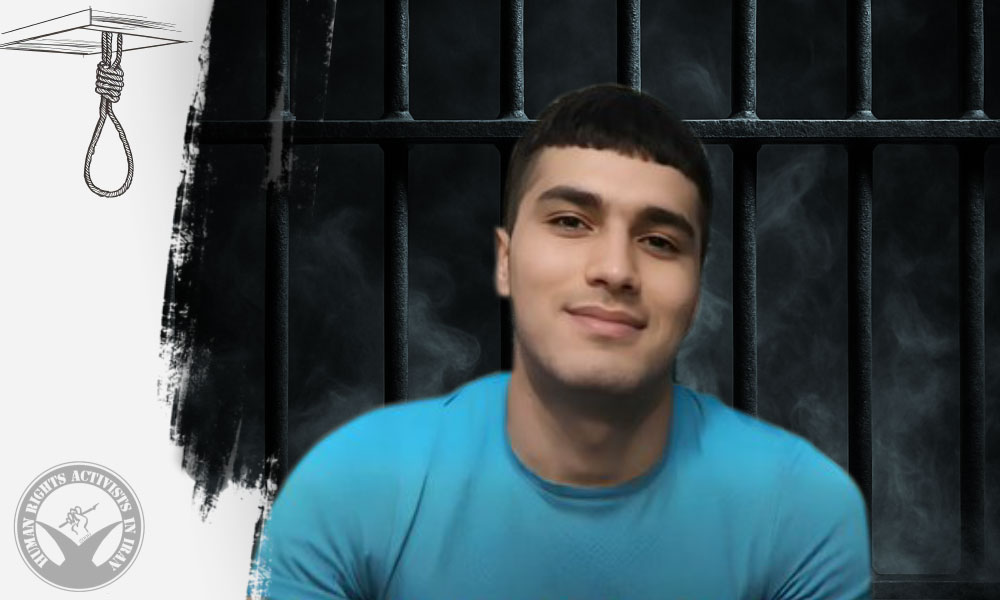
Report on the Arrest of Four Female Protesters During the January Protests

HRANA – Negin Azad, Kamelia Nazari, Saghar Ghodrat, and Ghazal Ghodrat, four citizens who were arrested during the January protests in Shiraz, were released from Adelabad Prison in March under electronic ankle monitor supervision after going through detention, trial, and sentencing.

A source close to Negin Azad’s family told HRANA that at the time of arrest, the women were shot with paintball pellets in front of their home, causing physical injuries. The source also stated that “although no reports of physical mistreatment inside the prison have been raised, there has been psychological pressure, and in some cases, such as injury to one detainee’s ear, adequate medical care was not provided.”

Their arrests took place during the nationwide January protests in Shiraz. Following their detention, a joint case was opened against them, and judicial proceedings on the charges began.

In the initial trial, the judicial authority sentenced each of the four women to five years in prison on the charge of “disrupting public order.” After they appealed, the Fars Province Court of Appeals reviewed the case and ultimately reduced the sentence, sentencing each of them to two years of imprisonment to be served outside prison under electronic monitoring.

According to information received by HRANA, the four women were released from Adelabad Prison in late March 2026 under the new ruling, with electronic monitoring in place. Their release does not nullify their convictions, and the sentences will continue to be enforced in an alternative form outside prison.

It should be noted that protests and strikes by shopkeepers and bazaar merchants began in Tehran on Sunday, December 28, 2025, and within two days spread beyond markets and commercial centers. With the participation of students, citizens, and various social groups, these protests became one of the largest protest movements of recent years. Following the crackdown by security and law enforcement forces, thousands were killed or injured, and tens of thousands were arrested or summoned by security agencies. For more information, readers may refer to HRANA’s comprehensive report titled “Crimson Winter,” documenting the first fifty days following the outbreak of Iran’s nationwide protests.

22 Citizens Arrested Over Alleged Connections with Foreign Media in Khuzestan

HRANA – The Khuzestan Police Information Center announced that 22 citizens have been arrested in the province for alleged connections with foreign media outlets.

According to ISNA, 22 citizens were arrested in Khuzestan Province. The Khuzestan Police Information Center described the detained individuals as “deceived elements and mercenaries affiliated with hostile media networks.”

According to the report, these citizens were arrested in various cities across the province with “judicial coordination.”

The report does not provide any information regarding the identities or place of detention of the arrested citizens.

It is worth noting that the U.S. and Israeli military attacks on Iran began on February 28, 2026, and on April 8, 2026, a two-week ceasefire between the parties was announced. Since the beginning of these attacks, HRANA has been documenting and recording related incidents across different parts of the country on a daily basis. For further information, readers may refer to HRANA’s detailed reports covering the forty days of the conflict.

Seven Citizens Arrested on Accusations of “Connections with Foreign Media and Disturbing Public Opinion”

HRANA – Gilan police announced the arrest of seven citizens in the province on charges described as “connections with foreign media outlets and disturbing public opinion.”

According to IRNA, the Gilan Police Information Center claimed that these individuals were affiliated with foreign media outlets and had been disturbing public opinion by publishing content and images on social media.

The report states that they were arrested over the past 48 hours and, after cases were filed, were referred to judicial authorities for legal proceedings.

As of the time of this report, no information is available regarding their identities or place of detention.

It is worth noting that the U.S. and Israeli military attacks on Iran began on February 28, 2026, and on April 8, 2026, a two-week ceasefire between the parties was announced. Since the beginning of these attacks, HRANA has been documenting and recording related incidents across different parts of the country on a daily basis. For further information, readers may refer to HRANA’s detailed reports covering the forty days of the conflict.

A Citizen Arrested in Marvdasht for Selling VPNs

HRANA – The police commander of Marvdasht County announced the arrest of a 24-year-old man for selling VPNs on social media.

According to Fars News Agency, a citizen was arrested in Marvdasht. Colonel Fariborz Mardani, the police commander of Marvdasht, stated that following cyber police intelligence monitoring on social networks, an unidentified Telegram channel engaged in extensive advertising for VPN sales was identified.

According to him, investigations showed that the admin of this channel had been selling VPNs online through various methods.

He added that after technical and specialized measures, and in coordination with judicial authorities, the identity of one of the main suspects in this case, a 24-year-old resident of Marvdasht, was identified, and he was arrested. The individual’s bank accounts have also been frozen.

Two Citizens Arrested by Police Forces in Tehran

HRANA – In a statement, the Tehran Police Information Center announced the arrest of two citizens over what it described as “sending information from sensitive military centers to foreign media outlets.”

According to Tasnim News Agency, the Information Center of the Greater Tehran Police Command reported that two citizens were arrested in Tehran. The statement claims that these individuals had recently “established contact with networks outside the country and used their mobile phones to send coordinates and sensitive information related to military centers.”

It further stated that the two citizens were arrested and that two of the locations they had allegedly transmitted were attacked during the war.

The report does not mention the identities of the individuals or their place of detention.

Subscribe to Our Newsletter

Now is definitely not the time to stop reading!

Qazvin: Woman Arrested on “Espionage” Charges

HRANA – A woman in Qazvin has been arrested on charges of “espionage through sending videos and sensitive information to foreign media outlets.” At the same time, a video containing this citizen’s forced confessions has also been published, although the circumstances under which it was recorded remain unclear.

According to Fars News Agency, a woman was detained over what has been described as “espionage through sending videos and sensitive information to foreign media outlets.”

Simultaneously, a video of this citizen’s forced confessions was released, though the conditions under which it was recorded are not known.

The report does not provide further details, including the identity of the accused or her place of detention.

It is worth noting that the U.S. and Israeli military attacks on Iran began on February 28, 2026, and on April 8, 2026, a two-week ceasefire between the parties was announced. Since the beginning of these attacks, HRANA has been documenting and recording related incidents across different parts of the country on a daily basis. For further information, readers may refer to HRANA’s detailed reports covering the forty days of the conflict.

War-Driven Industrial Damage Fuels Unemployment Crisis for Workers Across Multiple Provinces

HRANA – Following the recent military attacks, workers employed in various industrial sectors, particularly in the provinces of Tehran, Khuzestan, and Bushehr, have been facing unemployment, lack of access to relevant insurance coverage, and other challenges.

According to HRANA, citing ILNA, the spread of unemployment caused by the war has been more visible in the provinces of Tehran, Khuzestan, and Bushehr than in other parts of the country.

The report states that with the outbreak of the recent war, many of the country’s production and service units suffered serious damage. Some of these units were directly targeted by airstrikes, while others were pushed into crisis by the war-driven economic conditions. This crisis led to a significant rise in the number of unemployed people, workforce reductions in various units, business stagnation, and consequently a several-fold increase in unemployment insurance applicants across different provinces. Tehran, Khuzestan, and Bushehr are considered among the principal economic victims of the war, and the expansion of war-related unemployment has been more tangible there than elsewhere in the country.

Akbar Ghorbani, Executive Secretary of the Workers’ House for West Tehran and a labor market expert, said in this regard: some factories in Tehran Province, especially in western Tehran, which has always been highly industrially active, still have not resumed operations after the Nowruz holidays. He added that the Workers’ House remains in contact with its representatives and is monitoring workforce reductions in small, medium, and large units. According to him, one well-known company in western Tehran reported laying off 10 to 12 workers in each unit. Most of these layoffs are due to the current economic conditions. This has led to two major demands from the government and the Social Security Organization: first, strengthening the unemployment insurance fund with government credits, and second, assisting units directly and indirectly damaged by the war, while also imposing strict oversight to preserve the labor market in the country’s industrial units.

The labor relations expert further emphasized that there are also other cases in which the reason for the shutdown of industrial units is the employer’s exploitation of the existing conditions. Some employers, due to a particular economic outlook and fear of wartime conditions, have taken steps to reduce staff. Some employers have also carried out layoffs to increase pressure on the workforce, avoid wage payments, and evade compliance with this year’s wage increase resolution.

The report further cites Ghorban Darvishi, Executive Secretary of the Workers’ House in Khuzestan Province and a member of the Abadan Social Security Retirees’ Association, who pointed to the province’s problems during wartime and the ceasefire period. He said that in Khuzestan alone, at least 35 major production units were recently lost after military attacks. Most of these attacks targeted the Imam Port Special Economic Zone, the Mahshahr region, and the petrochemical sector. Khuzestan Steel and Oxin Steel also sustained damage. According to their estimates, if the problems caused by these layoffs are not managed, between 50,000 and 55,000 people could become directly unemployed due to the attacks and the economic and industrial pressures on the province.

Darvishi added that some of the province’s steel industries had already been facing serious difficulties even before the twelve-day war, and many workers had been staying home while still receiving wages. He warned that 100,000 unemployed people in one province means turning 100,000 sources of Social Security income into expenses for the fund. These industries urgently need immediate, out-of-turn unemployment insurance support. He also noted that some industries, due to falling sales and disappearing demand, had implemented widespread layoffs, the number of which may even exceed the directly war-related unemployment figures. This number also excludes construction workers in the province, a significant portion of whom have become completely unemployed. He stressed that many employers in units not directly damaged say they are unable to pay workers’ insurance and salaries even at last year’s rates.

Layoffs After Contract Expiration in the Second Phase of the Ilam Gas Refinery Project

According to ILNA, contract workers in the second phase construction project of the Ilam Gas Refinery in Chavar County reported the layoff of about 150 local coworkers from the beginning of Mehr last year up to the present. In this unit, located in Chavar County, around 350 workers are employed under the responsibility of the contractor company Jahanpars, and since the beginning of Mehr last year, more than 150 of them, who are local to the county, have become unemployed after the end of their employment contracts.

The report quotes one of the project’s contract workers as saying that 58 workers were laid off in Mehr last year, 52 at the end of Esfand, and 42 in Farvardin this year, all after their contracts expired. The worker also stated that some laid-off workers have still not received their wages for Bahman and Esfand of last year. The status of these workers’ unemployment insurance is also unclear. Meanwhile, the remaining coworkers are worried about their own job security.

This contract worker said that the layoffs are taking place even though at least three to four years remain until the completion of the second phase of the Ilam Gas Refinery project, and the parent employer appears to feel no obligation toward the workers. It is also unclear which authority or institution should be approached to pursue this issue.

Execution of a Prisoner in Ardabil Prison

HRANA – The death sentence of a prisoner who had previously been sentenced to execution on murder charges was carried out in Ardabil Prison.

According to a report by the Iran Human Rights Organization, at dawn on Sunday, March 1, 2026, one prisoner was executed in Ardabil Prison, while at the same time a female prisoner was spared the death penalty.

The identity of the executed prisoner has been reported as “Mahmoud Nourani Gargarri, 31 years old, from Ardabil and the father of a young child.” He had been arrested around three years ago on murder charges and was later sentenced to death by the criminal court.

At the time of writing, the execution of this prisoner has not been officially announced by prison authorities or the relevant institutions.

According to HRA’s Annual Report, in 2025 at least 2,063 citizens, including 61 women and 2 juvenile offenders, were executed. Of these, the sentences of 11 individuals were carried out in public. During the same period, 172 other individuals were sentenced to death.

Woman Arrested in Shiraz on Espionage Charges

HRANA – The deputy commander of Fars Province’s police force announced the arrest of a female citizen in Shiraz. The official cited the reason for her arrest as “espionage through sending videos and images of missile launch and impact sites, cooperation with international hostile networks, and distributing anti-government leaflets.”

According to IRNA, the deputy police commander of Fars Province said that a woman had been arrested in Shiraz. Yousef Malekzadeh stated that the reason for her arrest was “espionage through sending footage and images from enemy missile launch and impact locations, cooperation with international hostile networks, and distributing anti-government leaflets.”

The police official further claimed that the woman had extensive contact with two media outlets based outside the country. He added that she had also intended to financially support one of these networks and served as the admin of two Instagram pages that widely published stories and messages.

Malekzadeh continued by claiming that “sending images of launchers, the moment of missile launches, and launch sites along with their geographic locations to foreign-based networks, chanting slogans against the regime at night from rooftops and across the city with several others, supporting one of the regime’s opposition groups, and participating in the protests of last January” were among her other alleged activities.

However, the deputy commander did not disclose the woman’s identity or place of detention.

At Least 45 Citizens Arrested by The Ministry of Intelligence Across 7 Provinces

HRANA – At least 45 citizens have been arrested by agents of the Ministry of Intelligence in the provinces of Khuzestan, Gilan, Isfahan, Hormozgan, Hamedan, Kerman, and Kermanshah. Alleged links to Israeli and U.S. intelligence services, as well as media outlets based outside the country, were cited among the reasons for these arrests. A video containing the forced confession of one of these citizens has also been released, although the circumstances under which it was recorded remain unclear.

According to Tasnim News Agency, the Ministry of Intelligence of Iran claimed that 11 citizens, including the main network leader allegedly linked to Israeli intelligence services, were identified and arrested in Isfahan Province.

The statement further alleged that these citizens are accused of killing a Basij member and one Ministry of Intelligence agent in Khuzestan, as well as injuring several other Basij members. It also claimed that over the past two months, 11 other members of this “terrorist group” had been arrested, while five others were killed during an armed clash with security forces.

Separately, a video of the forced confession of one of these citizens has been published, though the conditions under which it was recorded are unknown.

The Ministry of Intelligence also announced the arrest of four citizens in Khuzestan and Kermanshah Provinces. The agency alleged that these individuals intended to carry out “sabotage” operations and were identified and arrested in the cities of Andimeshk and Qasr-e Shirin. According to the Ministry, “a number of weapons were discovered and seized from these citizens.”

In the same statement, the Ministry of Intelligence reported the arrest of 30 more citizens in four provinces, describing them as “members of a terrorist group linked to Israeli intelligence services.”

According to the agency, four citizens were arrested in Gilan Province, eight in Kerman Province, six in Hamedan Province, and 12 in Hormozgan Province. It also claimed that quantities of homemade bombs and weapons were discovered and confiscated from them.

The report did not provide further details, including the identities of these citizens or their place of detention.

It is worth noting that the U.S. and Israeli military attacks on Iran began on February 28, 2026, and on April 8, 2026, a two-week ceasefire between the parties was announced. Since the beginning of these attacks, HRANA has been documenting and recording related incidents across different parts of the country on a daily basis. For further information, readers may refer to HRANA’s detailed reports covering the forty days of the conflict.