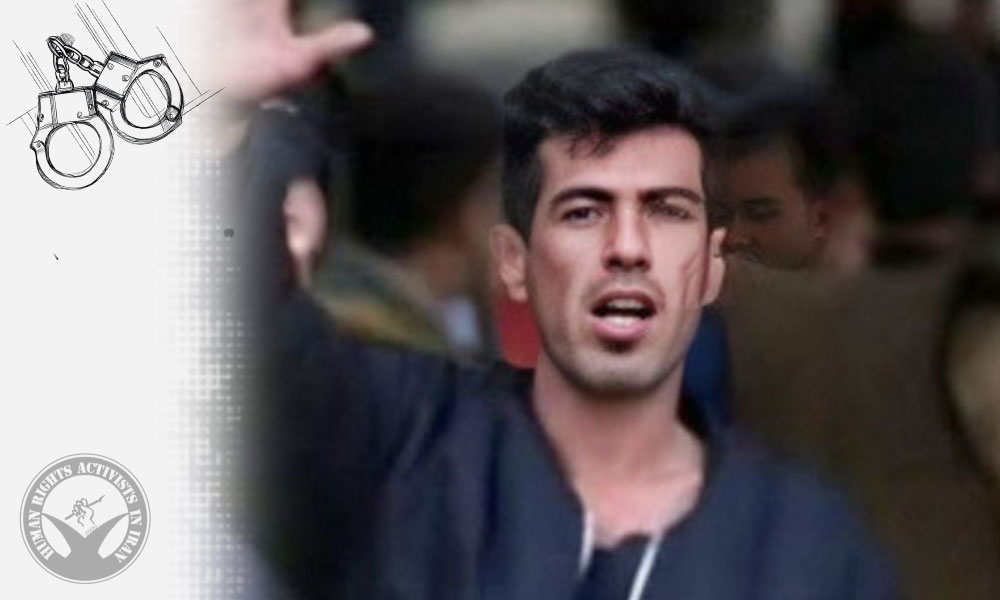
“Ekbatan Town” Case in the Revolutionary Court; 4 Defendants Sentenced to Death and 4 Others to Prison

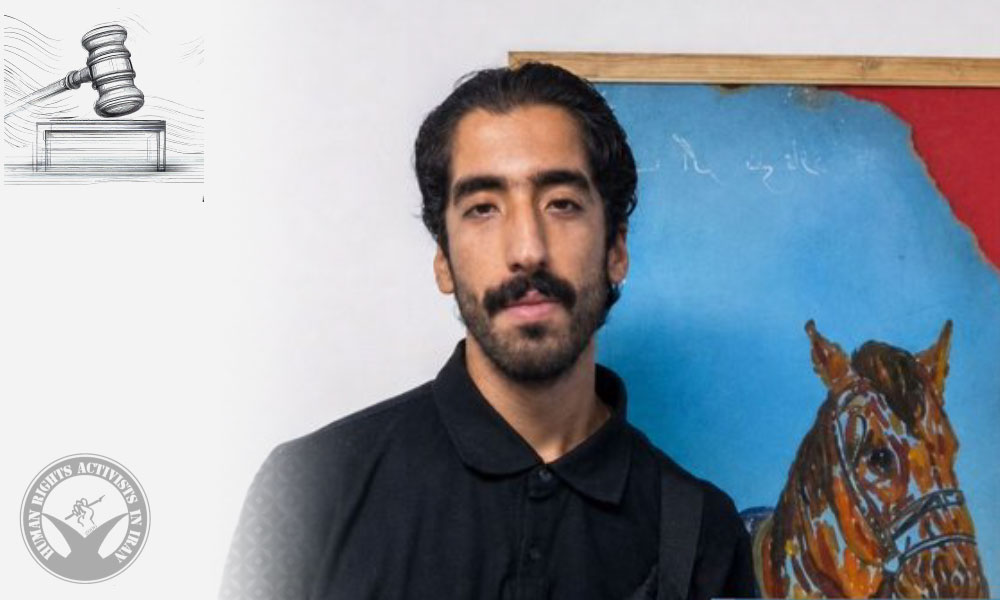
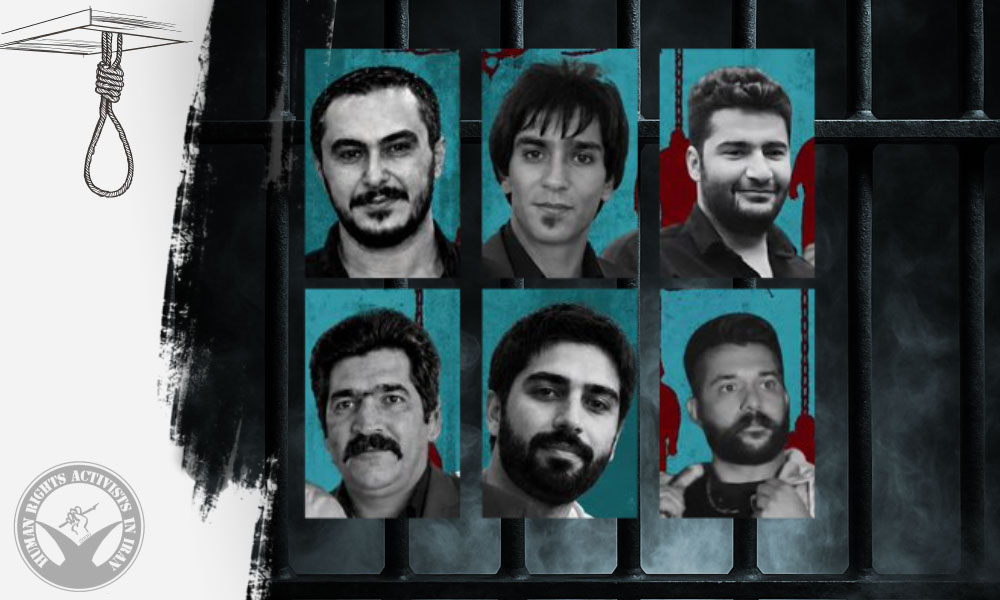
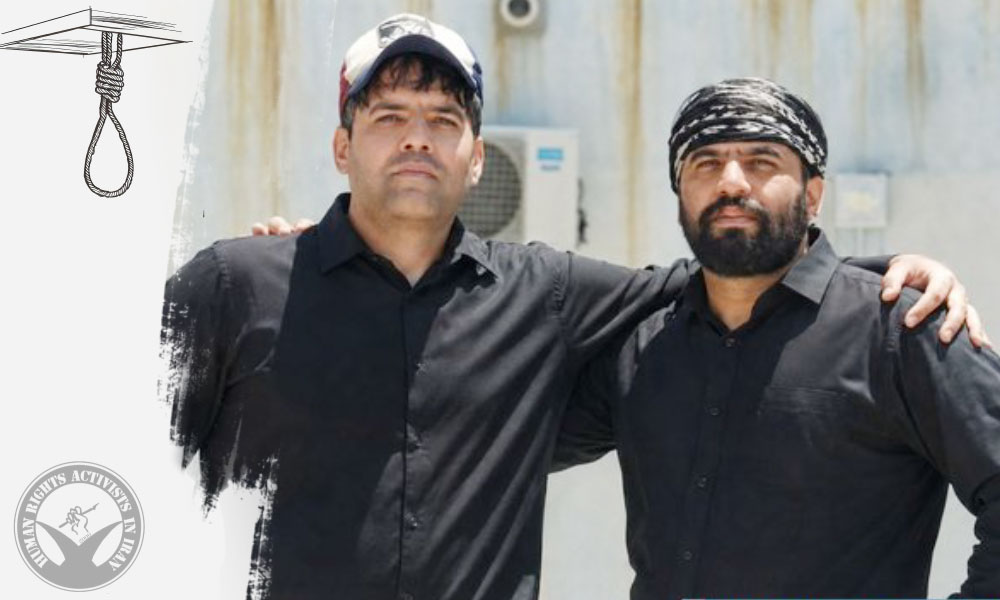
HRANA – Milad Armoun, Navid Najaran, Mehdi Imani, and Seyed Mohammad-Mehdi Hosseini, defendants in the so-called “Ekbatan Town” case and detainees from the 2022 nationwide protests, were sentenced to death by the Tehran Revolutionary Court on charges of “enmity against God” (moharebeh). Amir Mohammad Khosh-Eghbal, Alireza Bormarz Pournak, Alireza Kafaei, and Hossein Nemati, other defendants in the case, were each sentenced to seven years in prison along with additional punishments. Another part of this case had previously been reviewed in criminal court and recently resulted in prison sentences and the payment of blood money (diyeh) for some of the defendants.

According to HRANA, eight defendants in the Ekbatan case were sentenced by the Revolutionary Court. Based on a ruling issued by Branch 15 of the Tehran Revolutionary Court, presided over by Judge Abolghasem Salavati, Milad Armoun, Navid Najaran, Mehdi Imani, and Seyed Mohammadmehdi Hosseini were sentenced to death on charges of “enmity against God” (moharebeh). In addition, Amir Mohammad Khosh-Eghbal, Alireza Bormarz Pournak, Alireza Kafaei, and Hossein Nemati were each sentenced to five years in prison on charges of “assembly and collusion against national security”, two years for “propaganda against the regime,” a two-year ban on online activities, and a two-year residency ban from Tehran and Alborz provinces.

A source familiar with the case told HRANA that the verdict was verbally communicated to the defendants yesterday without the presence or prior notification of their lawyers. According to the source, the ruling has still not been officially served to the defense attorneys, effectively depriving them of the opportunity to file appeals.

Background:

At the beginning of November 2022, during the nationwide protests and following the killing of a Basij force member named Arman Aliverdi in Ekbatan Township, at least 50 young residents of Ekbatan Township were arrested by security and law enforcement forces. Indictments were ultimately issued against 14 of them.

The case was reportedly divided into two sections. One section was referred to Branch 15 of Tehran Revolutionary Court, presided over by Judge Abolqasem Salavati, and the other to Branch 13 of Tehran Criminal Court One. So far, no verdict has been issued for those defendants whose cases in the Revolutionary Court involve security-related charges and moharebeh.”

In May 2023, the spokesperson for Iran’s Judiciary announced that three defendants in the “murder of Arman Aliverdi” case had been charged with “enmity against God (moharebeh) through the use of cold weapons and acting against national security.” According to the indictment, these individuals were charged with “moharebeh,” “participation in intentional murder,” and “disrupting public order and peace.”

In late October 2023, after four court sessions were held, the court did not return the case to the prosecutor’s office for further investigation. Instead, Branch 13 of Tehran Criminal Court One intervened to conduct supplementary investigations, expedite proceedings, and determine the defendants’ status. Another part of the case was referred to Branch 15 of Tehran Revolutionary Court.

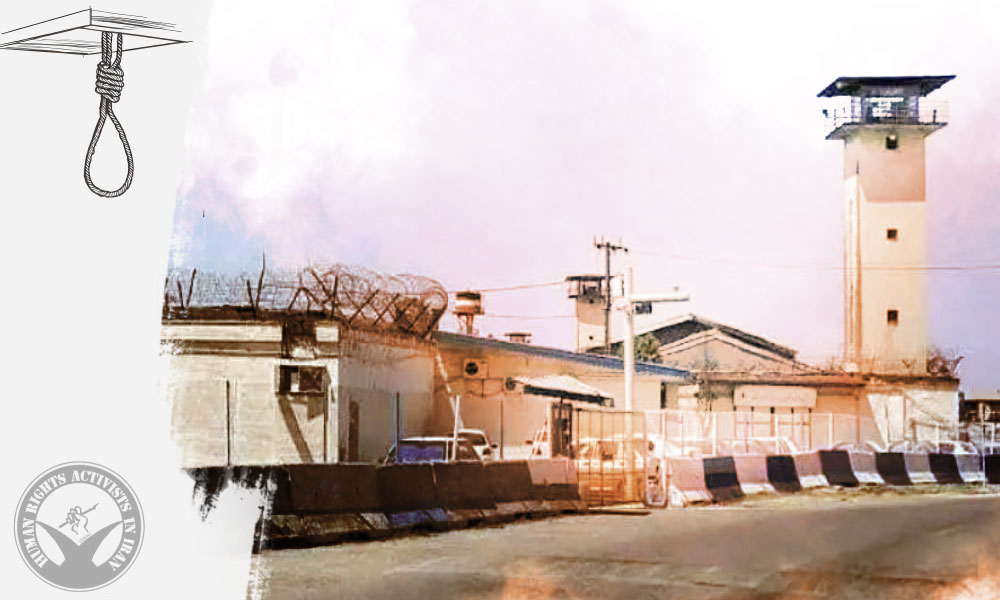
Further, Four of the defendants , Nemati, Barmarz Pournak, Kafaei, and Khosh-Eghbal, were released from Ghezel Hesar Prison on bail in February 2024.

The case involving Milad Armoun, Seyed Mohammad Mehdi Hosseini, Mehdi Imani, and Navid Najjaran, designated as confidential, had been returned in late April 2024 from Branch 13 of Tehran Province Criminal Court One to Branch 4 of the Prosecutor’s Office for Criminal Affairs in Tehran’s District 27 to address deficiencies in the case. In early September that year, after the deficiencies were addressed, the case was referred back to Branch 13 of Tehran Criminal Court One and Branch 15 of Tehran Revolutionary Court, presided over by Judge Abolqasem Salavati.

In November 2024, these individuals had each been sentenced to death by Branch 13 of Tehran Criminal Court. In September 2025, the Supreme Court overturned the death sentences and referred the case back to Branch 13 for retrial. Ultimately, on December 3 of that year, a new hearing was held in the same branch.

Following the overturning of the death sentences of six defendants in this case by the Supreme Court and the retrial in a parallel branch, new verdicts were recently issued by Branch 13 of Tehran Province Criminal Court One. According to the ruling, Milad Armoun, Alireza Kafaei, and Amir Mohammad Khosh-Eghbal were each sentenced to pay an equal share of the full blood money for one person and to serve five years in prison on charges of participation in intentional murder. Meanwhile, Alireza Barmarz Pournak, Hossein Nemati, and Navid Najaran, the three other defendants in the case, were acquitted of participation in intentional murder due to the lack of evidence showing they had inflicted blows on a specific part of Arman Aliverdi’s body.

Mojtaba Kian Executed on “Espionage” Charges

HRANA – The Judiciary Media Center announced the execution of Mojtaba Kian, a prisoner accused of espionage and intelligence activities in favor of Israel and the United States. The sentence was carried out at dawn today after being upheld by the Supreme Court.

According to a report by Mizan, Mojtaba Kian was executed at dawn on Sunday, May 24, 2026. The Judiciary Media Center claimed that during the recent war, Mr. Kian had sent information and location coordinates of a production facility linked to the defense industry to a media network affiliated with Israel and the United States. According to the report, after establishing contact with this network, he transmitted the information through a phone number provided to him, and three days later the location in question was targeted and destroyed in an attack.

The judiciary further claimed that the sentence was based on a body of evidence including the “defendant’s confessions during interrogation and trial,” the discovery of a mobile phone and sent messages, and the defendant’s awareness of the nature of the opposing party.

Subsequently, the court, citing the law on the “Intensification of Punishment for Espionage and Collaboration with Israel and Hostile States Against National Security and Interests,” sentenced him to death and confiscation of property on charges of “intelligence activities for Israel and the United States.” Following confirmation of the verdict by the Supreme Court, the execution was carried out at dawn today.

According to the published report, judicial proceedings in the case of Mojtaba Kian were conducted within a very short period by the Alborz Province Judiciary. Less than 50 days elapsed between his arrest and the execution of his sentence on May 24, 2026.

According to data collected by HRANA, alongside the onset of military conflict, the issuance and implementation of death sentences in political and security-related cases have sharply increased, with at least 35 prisoners executed on such charges during this timeframe.

According to HRA’s Annual Report, in 2025 at least 2,063 citizens, including 61 women and 2 juvenile offenders, were executed. Of these, the sentences of 11 individuals were carried out in public. During the same period, 172 other individuals were sentenced to death.

Assets of Seven Citizens Seized in Ilam Province

HRANA – The Chief Justice of Ilam Province has announced the seizure of the assets of seven citizens in the province. He accused the individuals of “espionage and collaboration with the Zionist regime.”

According to Mizan News Agency, the assets of seven citizens in Ilam Province have been confiscated. The Chief Justice of Ilam Province claimed that the measure was carried out within the framework of “protecting public rights” and based on laws related to “espionage and collaboration with the Zionist regime.” He added that the cases against these individuals are currently under review.

Omran Ali Mohammadi further stated that the confiscated assets included housing, vehicles, bank assets, and other property belonging to the citizens.

The report did not disclose the identities of the individuals or provide details regarding the legal proceedings against them.

Amid the military attacks on Iran, Judiciary Chief Gholamhossein Mohseni Ejei announced that judicial orders had been issued for the seizure and confiscation of assets allegedly linked to what he described as “elements cooperating with the enemy inside and outside the country.” He also threatened such individuals with execution, stating: “One of the punishments prescribed in such cases is execution, and following investigations, one of the legal punishments will be applied to those concerned.”

Following this directive by the judiciary, a smart financial inquiry system known as “Saham” was launched. With the activation of this system, prosecutor’s offices and courts across the country are now able to identify citizens’ assets and properties online in the shortest possible time and carry out the necessary confiscation measures.

Ghazal Marzban Sentenced to More Than 9 Years in Prison

HRANA – Ghazal Marzban, a Christian convert imprisoned in Evin Prison, has been sentenced to 9 years and 8 months in prison by Judge Iman Afshari.

Based on a ruling issued by Branch 26 of the Tehran Revolutionary Court, presided over by Judge Iman Afshari, and officially communicated to Ms. Marzban, she was sentenced to 9 years and 8 months in prison.

The charges brought against her include “propaganda against the regime” and “assembly and collusion against national security.”

Ms. Marzban was arrested by security agents at her home in Tehran on January 15, 2026. She was subsequently transferred to Evin Prison.

The citizen, who converted to Catholic Christianity, has previously served prison sentences related to her activities.

It should be noted that in recent years, this Christian convert has faced numerous difficulties obtaining Parkinson’s medication for her husband, some of which were reportedly linked to the couple’s Christian faith.

Ghazal Marzban Jourshari is a law graduate, originally from Lasht-e Nesha in Rasht Province, and currently resides in Tehran.

2026 Protests: Supreme Court Overturns Death Sentences of Mohammadreza Majidi-Asl and Bita Hemmati

HRANA – The death sentences issued against Mohammadreza Majidi-Asl and his wife, Bita Hemmati, both arrested during the January 2026 protests, have been overturned by Iran’s Supreme Court. The couple had previously been sentenced to death by Judge Iman Afshari.

According to HRANA, the Supreme Court has overturned the death sentences of two individuals detained during the January 2026 protests. The case of Mohammadreza Majidi Asl and Bita Hemmati has been referred to a parallel branch for retrial.

In April of this year, the couple, along with two co-defendants, Behrouz Zamaninejad and Kourosh Zamaninejad, were sentenced to death by Branch 26 of the Tehran Revolutionary Court, presided over by Judge Iman Afshari, on charges of “operational collaboration with the hostile government of the United States and hostile groups.”

The four defendants were also each sentenced to five years of discretionary imprisonment on charges of “assembly and collusion against national security.” The court additionally ordered the confiscation of all their assets as a supplementary punishment.

Another defendant in the case, Amir Hemmati, was sentenced to five years in prison on charges of “assembly and collusion against national security” and an additional eight months for “propaganda against the regime.”

According to the court ruling, the charges against the defendants included participation in protest gatherings on January 8 and 9, 2025, chanting anti-government slogans, throwing objects such as bottles, concrete blocks, and incendiary materials, and damaging public property. The ruling claimed these acts were intended to disrupt national security and were linked to hostile groups.

Judge Afshari also referred to the alleged use of explosive materials and unspecified weapons, injuries to deployed forces, and the dissemination of content aimed at undermining national security. However, the ruling did not specify the details of these allegations or clearly attribute them individually to each defendant.

A source familiar with the families told HRANA: “Mohammadreza Majidi-Asl and Bita Hemmati are a couple living in Tehran, and Amir Hemmati is a relative of theirs. Kourosh Zamaninejad and Behrouz Zamaninejad were also residing in the same residential building, and all were arrested simultaneously.”

According to information received by HRANA, the defendants were subjected to pressure during interrogations, raising concerns about forced confessions.

The initial death sentences were reportedly based on a combination of legal provisions, including Articles 131 and 134 of the Islamic Penal Code, as well as Articles 500 and 610, which concern “propaganda against the regime” and “assembly and collusion against national security.” The application of the death penalty in cases tied to public protests has drawn criticism from human rights organizations in recent years.

The individuals were arrested by security forces in Tehran on January 9, 2026. Bita Hemmati is currently being held in the women’s ward of Evin Prison. Further details regarding the whereabouts of Mohammadreza Majidi-Asl, Behrouz Zamaninejad , and Kourosh Zamaninejad are still under investigation by HRANA.

Subscribe to Our Newsletter

Now is definitely not the time to stop reading!

Baha’i Citizen Navid Irani Faces Continued Detention and Uncertainty in Mashhad

HRANA – Navid Irani (Zarrin), a Baha’i citizen living in Mashhad who was arrested during the 2026 protests in the city, remains imprisoned in an uncertain legal status in Vakilabad Prison in Mashhad, despite more than four months having passed since his arrest.

Based on information received by HRANA, Mr. Navid Irani continues to be held in limbo at Vakilabad Prison in Mashhad, despite four months and four days having passed since his arrest.

Navid Irani (Zarrin), a Baha’i citizen and photographer residing in Mashhad, was arrested on January 15 in connection with the 2025 protests in the city of Mashhad.

It should be noted that protests and strikes by shopkeepers and bazaar merchants began in Tehran on Sunday, December 28, 2025, and within two days spread beyond markets and commercial centers. With the participation of students, citizens, and various social groups, these protests became one of the largest protest movements of recent years. Following the crackdown by security and law enforcement forces, thousands were killed or injured, and tens of thousands were arrested or summoned by security agencies. For more information, readers may refer to HRANA’s comprehensive report titled “Crimson Winter,” documenting the first fifty days following the outbreak of Iran’s nationwide protests.

Judicial Case Filed Against Individuals Involved in a Feature Film

HRANA – The Judiciary Media Center has announced that a judicial case has been opened against those involved in the film “Tehran Kenaret” over what it described as the presence of “immoral content” in the movie. In connection with the case, the head of Iran’s Cinema Organization has also been summoned by the relevant judicial authority.

According to Mizan News Agency, a judicial case has been filed against the individuals involved in the production of the film.

The judiciary stated that the case was opened due to reasons including the presence of “immoral content contrary to public decency” in “Tehran Kenaret.” According to the Judiciary Media Center, the head of Iran’s Cinema Organization was also summoned for issuing a screening permit for the film.

The report adds that, by order of the judicial authority and under the supervision of the Ministry of Culture and Islamic Guidance, the cited content will be removed from the film, and a censored version will be screened in cinemas across the country.

The report did not provide further details, including the identities of the individuals involved.

January 2026 Protests; Omid Bayat Sarmadi Sentenced to 25 Years in Prison

HRANA – Omid Bayat Sarmadi, one of those arrested during the January 2026 protests, has been sentenced to 25 years in prison by the Tehran Revolutionary Court.

Kaveh Rad, the lawyer representing this prisoner, wrote in a published statement: “The preliminary verdict in Omid Bayat’s case has been issued and officially communicated to us. Unfortunately, Omid has been sentenced by the Tehran Revolutionary Court to 25 years of discretionary imprisonment. This ruling is not final and can be appealed before the Supreme Court. We will challenge it within the legal deadline.”

Omid Bayat Sarmadi was arrested by security forces on January 13, 2026, during the nationwide protests and was transferred to Greater Tehran Prison.

So far, no information has been obtained regarding the charges brought against Mr. Bayat.

At Least 12 Citizens Arrested by Security Forces

HRANA – In recent days, at least 12 citizens have been arrested by security forces in various cities across Iran. There is still no information available regarding their condition or whereabouts.

HRANA has identified the detainees as Mohammad Goudarzi, Farzad Fardad, Sattar Babaei, Mohsen Daqaqeleh, Sobhan Esparvini, Ali Rajaei, Amirmehdi Jalali, Ahmad Ghaedi Rahmati, Rajabali Chilan, Abolfazl Mojaradi, Reza Roshani, and Erfan Abbasifar.

According to information obtained by HRANA, these citizens were arrested on allegations related to support for the Mojahedin-e Khalq Organization (MEK). However, no information has been obtained regarding the specific charges brought against them.

At the time of this report, no details are available regarding the location of their detention, the agency responsible for their arrests, or their health conditions. The families of these citizens also remain unaware of their fate, a situation that has heightened their concerns.

Ramin Zaleh and Karim Maroufpour Executed

HRANA – The Judiciary announced that at dawn today, May 21, Ramin Zaleh and Karim Maroufpour were executed on charges including membership in anti-government groups and armed action.

According to Mizan, at dawn today, Thursday, May 21, Ramin Zaleh and Karim Maroufpour were executed. The Judiciary’s media center claimed that the individuals were accused of “membership in separatist groups, forming a group with the aim of disrupting national security, armed rebellion through the formation of criminal groups, armed actions intended to confront the Islamic Republic system, shootings, and attempted assassination in line with the objectives of the group.”

According to the report, following the defendants’ arrests and the issuance of indictments, their trial was held in the presence of attorneys and in accordance with legal procedures. Ultimately, “in light of the existing evidence, the defendants’ confessions, their armed actions against the country, and the carrying out of the group’s missions with full knowledge and awareness of the nature of the group,” Ramin Zaleh and Karim Maroufpour were sentenced to death.

Their appeals were also rejected by judges of the Supreme Court, and their death sentences were upheld.

The report did not provide further details, including the city or location where the executions were carried out.

Ramin Zaleh was arrested by security forces without a judicial warrant at his family home on July 22, 2024, and transferred to Naqadeh Prison. In December of last year, he was sentenced to death by Branch One of the Mahabad Revolutionary Court. Karim Maroufpour had also previously been arrested and transferred to Naqadeh Prison.

Simultaneously with the onset of military conflict, the issuance and implementation of death sentences in political and security-related cases have intensified. Including these prisoners, a total of 34 prisoners facing such charges have been executed since the beginning of the conflict between the US-Israel alliance and Iran.