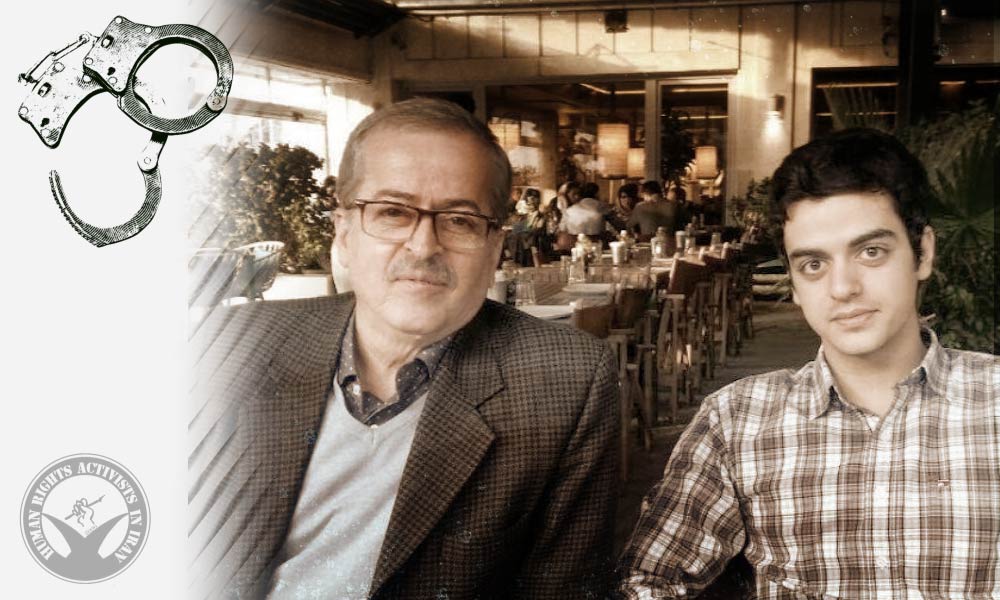
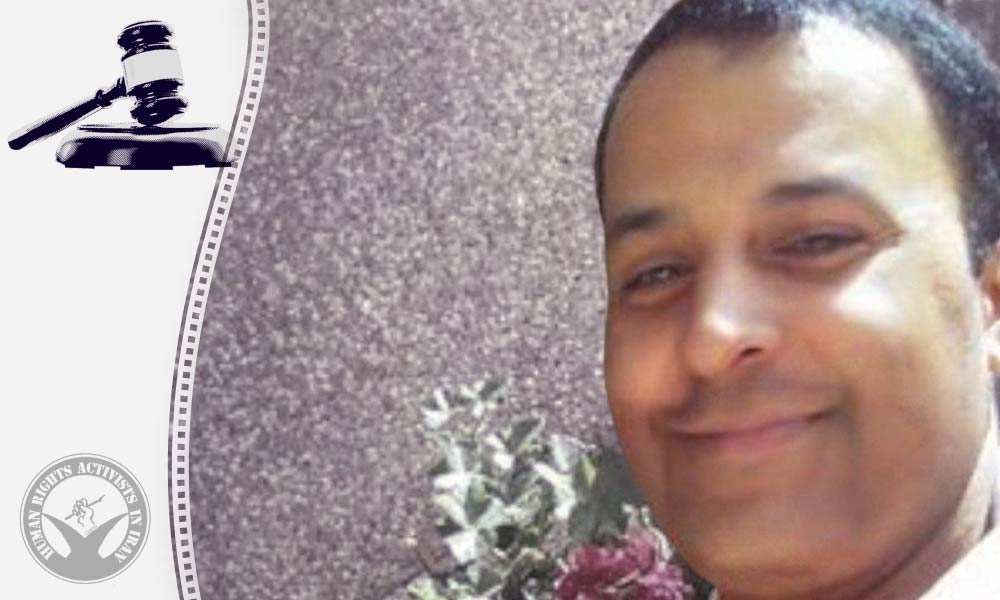
On December 28, 2022, security forces arrested Mir-Yousef Younesi, father of imprisoned student Ali Younesi, in Shahrud, Semnan Province.
According to HRANA, the news agency of Human Rights Activists, on December 28, 2022, Mir-Yousef Younesi was arrested in Shahrud.
Breaking this news on social media, his son Reza Younsei wrote: “Today, without showing any arrest warrant, six plainclothes agents arrested Mir-Yousef Younesi, Ali Younesi’s father, at my grandfather’s home in Shahrud.”
The reason for Younsei’s arrest and the charges are unknown.
Ali Younesi, a student of the Sharif University of Technology, is currently serving his sentence in Evin Prison. He is the winner of the silver medal of the National Astronomy Olympiad in 2016 and the gold medal of the 2017 Astronomy Olympiad. Ali Younesi has also won a gold medal in the 12th World Astronomy and Astrophysics Olympiad in China.
The Tehran Revolutionary Court recently sentenced lawyer Saeed Sheykh to three years in prison. Security forces arrested him in Tehran on October 12, 2022.
According to HRANA, the news agency of Human Rights Activists, Saeed Sheykh (Sheikh), attorney at law, was sentenced to two years for “assembly and collusion against national security” and one year for “propaganda against the regime.” If the verdict is upheld on appeal, applying article 134 of the Islamic Penal Code, two years in prison for “assembly and collusion” as the severest punishment will be enforceable.
On his page on social media, Sheykh wrote that he is still barred from leaving the country.
On October 12, 2022, in protest against the unconstitutional crackdown on peaceful protesters, a group of lawyers demonstrated before the Iran Bar Association in Tehran. The police and security forces used tear gas to scatter the lawyers and arrested several, including Saeed Sheykh.
Artist Sepideh Rashno received a five-year suspended prison sentence and additional punishment.
According to HRANA, the news agency of Human Rights Activists, Saman Rashno informed the public on social media that his sister, Sepideh Rashno, has been sentenced to five years of suspended imprisonment.
Saman Rashno wrote: “the charge of provoking promiscuity was dropped. But she was sentenced to five years of suspended imprisonment for three other charges, ‘assembly and collusion against national security,’ ‘propaganda against the regime,’ and ‘not wearing hijab in public.’ ”
As additional punishment, she has to appear at the judicial office quarterly, ask permission from judicial authorities if she wants to leave the country and study certain materials for the purpose of indoctrination.
On July 16, security forces arrested Rashno after a quarrel on a city bus with a woman who harassed and assaulted her for what she deemed as improper hejab.
On July 30, Official media outlets inside Iran released a forced confession video of Rashno. HRANA revealed that prior to this confession, Rashno had been hospitalized due to the risk of internal bleeding indicating she had been tortured to make the confession.
On August 30, 2022, Sepideh Rashno was released on an 800-million-tomans bail.
Security forces arrested Sahar Fathi in Kermanshah at recent protests and took her to an undisclosed location.
According to HRANA, the news agency of Human Rights Activists, Yarsan follower Sahar Fathi was arrested by security forces in Kermanshah.
An informed source told HRANA that Fathi was arrested for the second time during recent protests.
Yarsanism, Ahl-e Haqq is a syncretic religion founded by Sultan Sahak in the late 14th century in western Iran. As a religious minority, Yarsan followers are subjected to intimidation and prosecution by regime security and judicial systems.
The Zanjan Court of Appeals upheld the verdict against Mina Alikhani arrested at recent protests. Initially, the Criminal Court of Zanjan sentenced her to one year in prison and 74 lashes.
According to HRANA, the news agency of Human Rights Activists, Mina Alikhani, one of the people arrested at recent protests, was sentenced to one year and flagellation on the charge of “disturbing public order.”
Since the outbreak of nationwide protests, about 18500 people, including journalists, lawyers, teachers, students and civil rights activists, have been arrested. For more details and statistics on the nationwide protest across Iran, read HRANA’s comprehensive reporthere.
Documentary filmmaker and reporter Shahin Samadpour was arrested after an appearance at Evin Courthouse in Tehran.
It is worth mentioning that a while ago, Samadpour’s accounts on Instagram and Telegram went off following his report on Hananeh Kia’s family and her engaged man. 22-year-old Hananeh Kia was killed by security forces at recent protests.
The reason for Samadpour’s arrest and the charges are still unknown.
This leaflet contains the Annual Analytical and Statistical Report on Human Rights in Iran for the year 2022. The report, prepared by the Department of Statistics and Publications of Human Rights Activists in Iran (HRA), is the result of daily effort on the part of the organization and its members, and as part of a daily statistic and census project that started in 2009 by this organization.
This annual report on human rights violations in Iran is the result of collection, analyzation, and documentation of 13342 reports concerning human rights, gathered from 267 news sources during 2022 [January 1st to December 20th]. 55% of reports analyzed came from sources gathered and reported by Human Rights Activists News Agency (HRANA), while 13% came from official Iranian government sources or sources close to the government. 32% of reports came from other human rights news agencies.
This is the brief version and the full report is available for download in PDF format. Click here
The following 62-pages include statistical overviews and related charts regarding women’s rights, children’s rights, prisoners’ rights, etc. Despite a 128% increase in reports of human rights violations from provinces other than Tehran when compared to last year’s Annual Report, yet data from this year still indicates that smaller cities lack adequate reporting and monitoring of human rights.
This report is the result of the work of courageous human rights activists in Iran who pay a very high cost for striving to enact their humanitarian beliefs. However, for obvious reasons (i.e. existing governmental limitations, bans on the free exchange of information and government interference with the existence of human rights organizations in the country), this report by no means is free of errors and cannot solely reflect the actual status of human rights in Iran. Having said that, it should be emphasized that this report is considered one of the most accurate, comprehensive, and authentic reports on human rights conditions in Iran. It serves as an informative resource for human rights activists and organizations working on Iran who seek to better understand the challenges and opportunities that they may face.
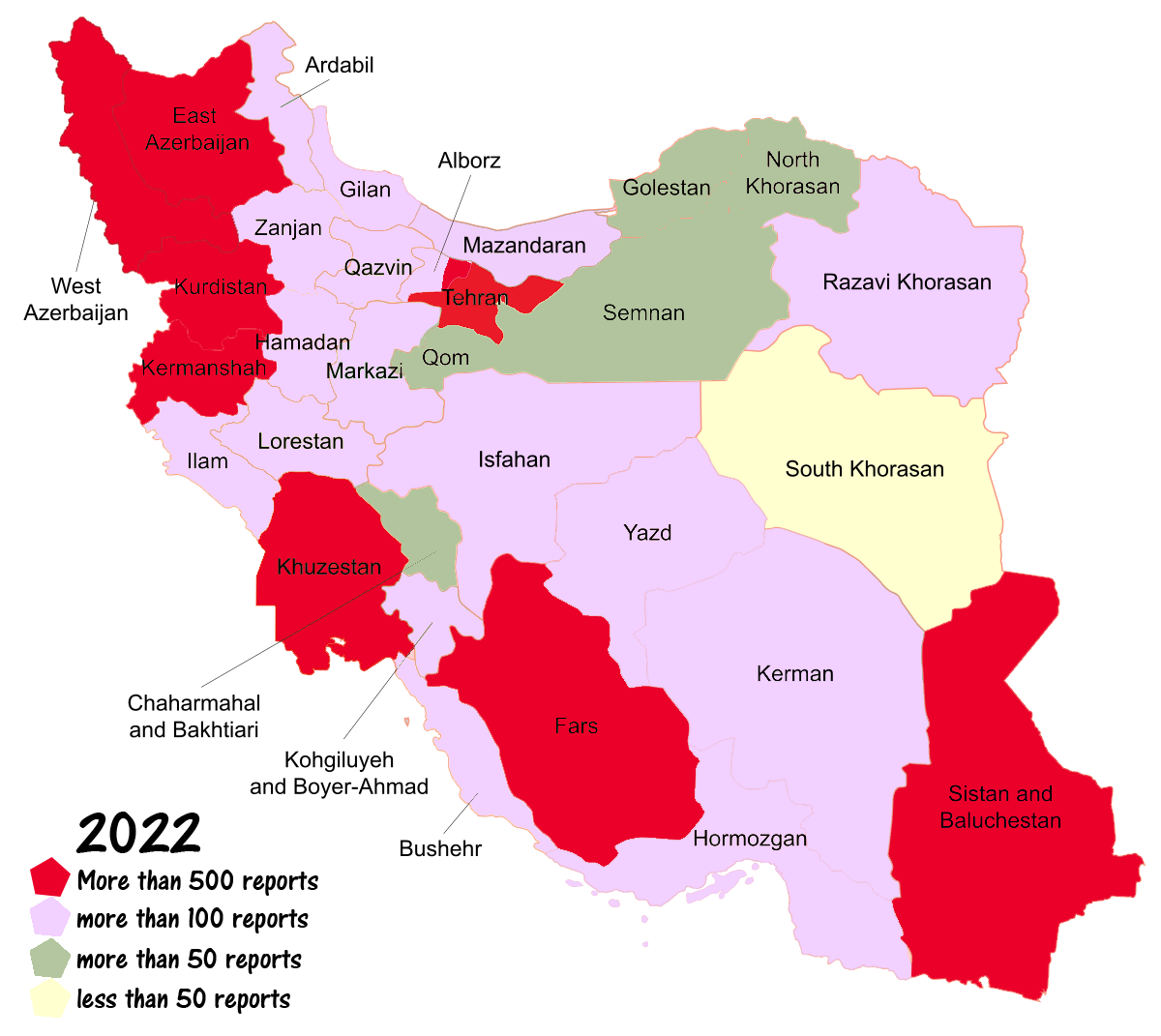
The following map illustrates the number of reports per province made by human rights organizations and news agencies. This is a direct reflection of each province’s civil rights capacities in 2022.
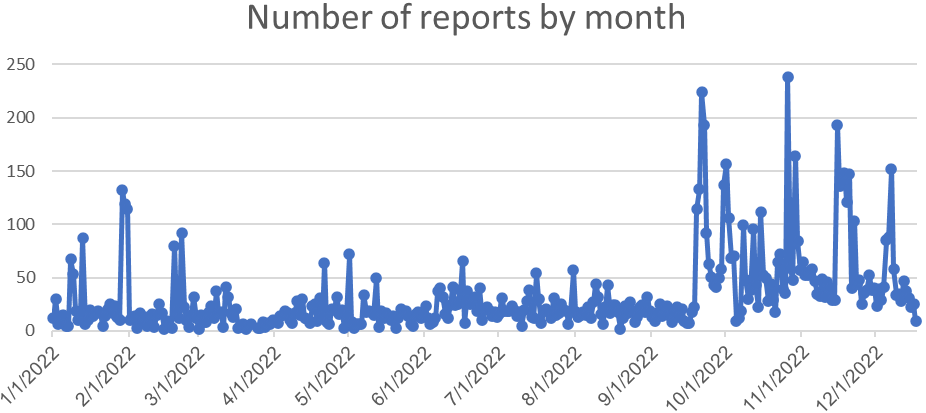
The highest number of reports were published in November, while the lowest number of reports published occurred in April.
55% of reports analyzed came from sources gathered and reported by Human Rights Activists News Agency (HRANA), while 13% came from official Iranian government sources or sources close to the government. 32% of reports came from other human rights news agencies.
In 2022, at least 3046 protests were held across 31 provinces. Of these, 1,289 were union rallies, 266 were workers’ rallies, 149 were rallies related to economic hardship, 1297 were rallies against the suppression of freedom of expression, and were 26 union student demands rallies, 1 gathering in the field of children and 18 gatherings in the field of the environment. In addition to the rallies, there were also 94 labor strikes and 225 union strikes, and 344 non-union strikes as well.
As indicated in the distribution map, there exists a major discrepancy between the capital Tehran, and other parts of the country in terms of the number of published reports. This is while the census of 2021 reported a population of 9,039,000 in Tehran, compared to a population of 75,016,000 in the rest of the country.
Statistics indicate that, the focus or ability to report of the human rights reporters has been 20% in the Tehran and 80% in the other parts of the country.
Categories of human rights violations based on the number of reports in 2022
To study categories of human rights violations in Iran, it is important to initially compare the categories based on the number of reports made in each category in the past year.
ETHNIC RIGHTS
In the field of ethnic and national rights, a total of 205 reports was registered by the Department of Statistics and Publication of Human Rights Activists in Iran (HRA) in 2022. According to these reports, at least 225 people were arrested, 73 of whom were arrested without a legal arrest warrant. It should be noted that, even though the charges against 164 of these detainees remain unknown yet based on other indications and precedent cases they have been considered in this category.
A total of 12 people were sentenced to 751 months in prison, which breaks down to 726 months of imprisonment and 25 months of suspended imprisonment. A total of 68 individuals were summoned by the security and judicial institutions. In addition, 3 people were fined two hundred and seventy million Rials.
In addition, the following reports have been registered; Trial of 8 people in security-judicial institutions, 1 case of travel ban outside the country, 16 cases of beatings, 33 cases of house searches, and 2 cases of carrying out imprisonment sentences.
Compared to the previous year there has been a 49% decrease in the arrest of ethnic minorities and an 80% decrease in prison sentences.
The highest number of violations occurred in the month of July while the lowest occurred in the month of November
RELIGIOUS RIGHTS
In this category, 199 reports have been registered by the Department of Statistics in 2022. These reports include 140 arrests, 102 summons by judicial and security institutions, 64 cases of deprivation from education, and 94 cases of police home raids.
More so, there has been 2 cases of demolition of religious sites, 39 cases of imprisonment, 51 issuances of travel bans (which violate of freedom of movement,) and 11 cases of individuals brought to trial for their religious beliefs.
79 members of religious minorities were sentenced by judicial institutions to a total of 3432 months of imprisonment (1921 months of imprisonment and 11 months of suspended inprisonment) and 888 months of exile. In addition, 23 people were fined three billion five hundred and ninety million Rials, 1 person was sentenced to 74 lashes, and 10 people were deprived of social rights.
The number of citizens arrested in the category of religious minorities has Increase by 145% in 2022 compared to 2021, and the prison sentences issued by the judiciary have Decrease by 2%
The highest number of violations have been reported in August, while the lowest occurred in March.
From the total human rights reports regarding the violation of religious minorities rights, 64.63% belonged to the violation of the rights of Baha’is, while 20.84% of the reports indicated violation of the rights of Christians, 8.84% Yarsanis, 4.63% Sunnis, and 0.63% “Others”, 0.42% Dervishes. Note that reports labeled as “Other” are those that did not belong to a specific group of religious minorities.
FREEDOM OF EXPRESSION
6311 reports of violations against freedom of thought and expression have been registered by the Department of Statistics in 2022. These violations included 22655 individuals arrested, 331 summons to judiciary and security authorities, 2 reports of publications banned, and 12 convictions for publications.
In this category, reports of the 201 trials were published including; 31 travel bans issued, 65 carrying out prison sentences, 34 house searches, 94 internet disruption, 140 beatings, 1297 assembly, 344 strikes.
In 2022, 711 arrestees were sentenced to at least a total of 14,896 months of imprisonment. This breaks down to 9720 months in prison and 376 months of suspended prison terms. It should be noted that 1815 months of this amount have been issued by the Court of Appeal.
Also, 62 people were sentenced to five billion and five hundred and ninety million Rials in fines, 35 people were sentenced to 1,824 lashes and 37 were deprived of social rights. Additionally, 2 people received a total of 99 lashes. Compared to 2021, reports regarding violations of freedom of expression have increased by 2000%, sentences issued by the judiciary have increased by 230% based on the number of people tried, and prison sentences increased by 46%.
TRADE UNIONS AND ASSOCIATIONS
2071 reports were registered by the Department of Statistics and Publications related to the rights of trade unions and other associations, that includes arrest of 309 members of trade unions, 123 summons to judicial and security institutions, trials for 37 individuals were held, 10030 individuals were fired or suspended, at least 124 months of wages were deferred, 3 cases of suicide, and 3834 facilities were shutdown.
Also, 25 people were sentenced to 940 months of imprisonment, of which 696 months are imprisonment and 244 months of suspended imprisonment. In addition, 252 months of this amount have been issued by the Court of Appeal. Additionally, A fine of 40 million Rials and 74 lashes has been issued for 1 person.
In 2022, at least 1289 protests and 225 union strikes were held. There were 43 reported instances of prevention of protest gatherings. Most of these protests were related to salary/wage demands from corporations, bad economic conditions, and lack of proper management of corporations.
In reports related to trade unions and associations compared to the previous year, there has been a 1000% Increase in the number of arrests, an 1150% Increase in sentences issued compared, and a 1300% increase in imprisonment sentences.
The highest number of violations occurred in the month of January while the lowest is in September.
ACADEMIA/ RIGHT TO EDUCATION
The Department of Statistics and Publication of Human Rights Activists in Iran registered 126 reports related to violations of academic rights in 2022. Accordingly, 10 students were arrested, and as mentioned in the religious rights section of this report, 64 students were prevented from continuing their education because of their religion. More so, there has been 5 other cases of hindering of education, and one person was sentenced to 12 months of imprisonment and 74 lashes.
In the category of academia and the right to education, there has been a 233% increase in the number of arrests and a 85% decrease in the issuance of prison sentences compared to the previous year.
For the school students there has been, 61 cases of preventing education, 6 cases of physical punishment, 7 cases of rape and sexual abuse, 2 cases of suicide, and 65 cases of poisoning. In addition, in the last year, at least 780,000 students dropped out of school.
The highest number of violations occurred in the month of August while the lowest instance is observed in the month of February.
RIGHT TO LIFE (DEATH PENALTY)
The Department of Statistics and Publication of Human Rights Activists in Iran registered 457 reports related to the death penalty in 2022. This included 92 death sentences, including the conviction of 6 people to public execution and 565 execution sentences were carried out, 2 of which have been carried out in public. Based on the announced identifications of some of the executed individuals, 501 were male and 11 were female. In addition, 5 juvenile offenders were executed in 2022, meaning they were under the age of 18 at the time they committed the crime.
According to these reports, 48.67% of the executions were based on murder charges, while 42.83% were related to drug-related charges, 2.65% were for sexual offenses, and 2.48% of the charges are unknown, 1.77% were executed on charges of Moharebeh (non-political), 1.06% on security charges (espionage, terror, or bombing), 0.53% on charges of Moharebeh or Baghi (political-security) in Iran.
The highest number of violations occurred in July while the lowest number occurred in April.
The following pie chart illustrates the number of death sentences issued and carried out across the country in 2022. The majority of death sentences were based on murder charges (48.67%), followed by drug charges (42.83%).
The execution of death sentences across Iran’s provinces in 2022, Sistan and Baluchestan province with 18.58% has the highest number of executions, followed by Alborz province which has two of the most populated prisons in Iran with 16.11% of the executions.
Rajai Shahr and Zahedan Prisons carried out the most death sentences.
Of those executed in 2022, 2% were female, and 89% were male, while the gender of the other 9% is unknown.
These executions are reported by independent sources and human rights organizations, indicating that 65% of executions are carried out in secret or without any public notice.
Executions carried out in 2022 compared to 2021 increased by 88%. The number of death sentences issued increased by 8%.
CULTURAL RIGHTS
The Department of Statistics and Publication of Human Rights Activists in Iran registered 17 reports related to violations of cultural rights in 2022. This included reports of 7 arrests, 27 individuals summoned to judicial and security organizations, 4 trials held, 1 house search, 4 cases of obstruction and interference with publications, 1 case of stopping an event and speech, 2 cases of confiscation of property and belongings.
In this category, arrests have increased by 16% compared to the previous year.
In a monthly comparison, the highest number of violations were reported in May, while the highest increase of number of reports were in January, February, September, October, November, and December.
The number of violations of cultural rights in 2022 compared to 2021.
WORKERS’ RIGHTS
The Department of Statistics of Human Rights Activists in Iran registered 1056 reports of violations of workers’ rights in 2022. This included 53 arrests. 36 workers activists or workers were sentenced to 117 months in prison, 510 lashes and 51,000,000 tomans in fines, and 31 people were summoned to judicial and security organizations.
Additionally, 14 cases of trials by judicial authorities, 10 cases of suicide, 5 cases of self-immolation, 1 cases of beatings, 12 cases of house searches, and 5 cases of carrying out imprisonment sentences, have been reported.
During 2022, a total of 1048 months of overdue payment of salaries to workers was reported, 8353 workers were laid off or fired, 9038 people reported unemployment, 1720742 lacked work insurance, 9168 workers were waiting for work-related decisions, and 14 factories were shut down.
In addition, 354 people have lost their lives in work-related accidents, and 1497 workers have been injured while at work. On a global scale amongst other counties, Iran ranks 102nd in work safety.
In a monthly comparison of workers’ rights violations in 2022, the highest number of violations happened January and the lowest in November.
Based on collected reports work accidents in the past year have been 17% due to fires, 16% in constructions, 11% in factories, 10% workers falling from heights, 10% accidents, 9% hard object hitting the victim, 8% falling during excavation and in wells, 5% electrocutions, 5% chocking, 4% in mines, 2% in farming, 1% in petrochemical and refineries, 1% heat strokes, 1% frostbites.
In 2022, there were at least 266 worker protests, with 2 reported of preventing the protests, and 96 workers strike took place. The majority of these protests were regarding wages.
Based on these reports, the arrest of workers has decreased by 17% compared to 2021. However, the issuance of prison sentences has increased by 300% compared to the previous year.
CHILDREN’S RIGHTS
A total of 434 reports of violations of children’s rights in 2022 were registered by the Department of Statistics of Human Rights Activists in Iran. However, it should be mentioned because of secrecy regarding these incidents, leading to underreporting, there is no accurate statistic in this field. Reports included at least 21564 cases of child abuse, 23 cases of rape and sexual abuse, 41 murders of children, 5 self-immolation, 54 cases of child suicide, 1 case of honor killing, and 43268 cases of child laborer.
In addition, there were more than 200,000 instances of child marriage and 5 million students are deprived of primary education. Many students in Iran have been deprived of education due to lack of access to e-learning facilities, as well as child marriages, poverty, cultural issues.
As mentioned in the section on the death penalty, at least 5 juvenile offenders have been executed in 2022.
There are no reliable statistics regarding the arrest of minors during the nation-wide protests, however from arrestees whose identities have been confirmed at least 167 were children.
In the monthly comparison in this category, the highest number of violations were reported in November and the lowest number in February.
WOMEN’S RIGHTS
The Department of Statistics of Human Rights Activists in Iran registered 124 reports of violations of women’s rights in 2022, including; 64 cases of domestic violence, 14 cases of rape and sexual harassment, 32 case of murder, 26 cases of honor killing (including murder of 4 men), 4 self-immolations, 5 cases of acid attacks, 5 cases of suicide, and 1708 cases where women’s rights activists were summoned to judicial and security organizations, 1701 Hijab related cases, 4 cases of imprisonment sentences being carried out and 62 cases of discrimination in social environments.
Based on this report, 322 women have been detained for reasons related to women’s rights. At least 3 women’s rights activists were sentenced to 64 months in prison and a fine of eighty million rials
Based on the number of reports per month, the highest number of reports were in July and the lowest in December.
The number of violations of human rights in the category of women’s rights in 2022 compared to 2021.
PRISONERS’ RIGHTS
The Department of Statistics of Human Rights Activists in Iran registered 1127 reports of violations of prisoner’s rights in 2022 including; 133 physical assault of prisoners, 4322 of deprivation of medical care, 204 of illegal transfer to solitary confinement, 102 of attempted hunger strikes, 166 of forced transportation or exile, 4983 of threats against prisoners, 46 of banning prisoners from having visitors, 652 of psychological and physical torture, 20 prisoners died due to illness, 2 arrestees were killed by prison authorities, and 14 prisoners committed suicide.
There were also 206 cases where prisoners lacked lawyers, 5977 reports of prisoners being held in unsuitable circumstances, 391 cases of forced confessions, 3523 cases of non-segregation of prisoners based on crimes, 2805 cases of denial of sick leave, and 362 cases of denial of having contact with outside the prison.
In this category, there have also been 405 cases of prisoners kept in an unsure state regarding their sentence and 954 cases of lack of adequate information on the prisoner.
The highest number of reports of violations of prisoner’s rights occurred in December and the lowest in March.
SECURITY FORCES’ VIOLENCE AND CITIZENS’ SAFETY
Death of civilians
This section is dedicated to the killing or injury of civilians by police or military institutions. In 2022, a total of 845 people were shot by military forces. At least 571 of the victims lost their life. This includes 22 Kolbar, 9 fuel carriers, and 540 civilians. 274 people were injured by military forces open fire, including 134 Kolbar, 128 civilians, and 12 fuel carriers.
Additionally, 39 Kolbars were affected by climate and geographic factors such as freezing and falling from heights, 34 of whom were injured, and 5 were killed.
Victims of landmines and explosions
The landmines left from the war threaten the lives of civilians living in border cities each year. The Iranian government continues to manufacture and plant anti-personnel mines against international agreements, arguing that the use of these type of landmines is the only effective way to keep its vast borders safe.
Based on reports, at least 5 civilians in the past year have lost their lives to landmines in border areas, while 32 other civilians have been injured.
Floggings
The International Covenant on Civil and Political Rights (ICCPR) has explicitly banned the use of inhuman or degrading punishments such as flogging. However, based on the reports gathered in 2022, flogging sentences were carried out for at least 9 accused, who were sentenced to a total of 317 floggings.
It should be noted that the judiciary issued at least a total of 12512 flogging sentences in the past year.
Intervention in personal affairs of civilians
In 2022, at least 64 civilians were arrested for attending or hosting personal gatherings and parties.
Victims of credit-financial and investment institutions
In 2022, at least 149 groups of civilians –mostly consisting of those who have lost money due to poor economic conditions, or those whose rights have been violated– have organized protests. These protests took place in 24 provinces. The provinces with the most protests were Tehran, Eastern Azerbaijan, Khuzestan, and Khorasan Razavi.
The highest number of reports related to violence from security forces and citizens’ safety occurred in September and the lowest was in December.
The number of Military violence in 2022 in comparison with 2021
SENTENCES
The judiciary of the Iranian government, including both in initial trial and appeal, issued 17872 months of imprisonment in 2022. These reports included 751 months of imprisonment for ethnic minorities, 3432 months of imprisonment for religious minorities, 14896 months of imprisonment related to freedom of expression, 940 months of imprisonment related to union activity, 117 months of imprisonment for workers, 64 months of imprisonment in women’ rights category, 12 months of imprisonment for students, and 2460 months in prison for Environmental activists were sentenced. Also, these citizens were sentenced to one billion and eleven million Toman in fines and 12512 lashes.
These statistics only include the court sentences that indicated detailed information or characteristics of the verdicts.
The highest number of reports was in December and the lowest in July.
In 2022, the number of convictions of citizens and activists increase by 37%. However, the convictions in the following categories decreased: Religious Minorities by 2%, Ethnic Minorities by 80%, Women’s Rights by 25% and Students by 85%.
The following categories saw an increase in convictions: Freedom of Expression by 230%, Unions by 1150% and, Workers by 300%.
ARRESTS
In 2022, security forces arrested 23977 individuals due to political or civil rights-related activities.
The statistical analysis exhibited 309 cases of arrest in the trade union category, 225 arrests in the category of ethnic minorities, 140 arrests in the category of religious minorities, 22655 arrests in the category of freedom of expression, 167 arrests related to children’s rights, 10 arrests of university students, 7 arrests in the field of cultural rights, 53 arrests in the category of workers’ rights, and 23 arrests in the field of Environment.
324 women were prosecuted for their activities, including the promotion of their desired lifestyle. Also, 64 citizens have been arrested for organizing or participating in a private party.
Based on the number of reports per month, the highest number of reports in this category fell in October and the lowest in March.
In 2022, the number of arrests increased by 1330% in total. Broken into categories, the number of arrests decreased in the Ethnic Minority category by 49%, in Cultural rights increased by 16%, Religious minorities increased by 145%, Unions increased by 1000%, Students increased by 233%, Workers’ Rights decreased by 17%, and Freedom of Expression increased by 2000%.
SEXUAL AND GENDER MINORITIES
The rights of sexual and gender minorities have been analyzed in this Annual Report of Human Rights Activists in Iran as a subset of other categories. The main reason for this is that the small handful of reports in this regard do not allow analysis.
Creating an independent categorization, even with a small number of reports, is in fact an attempt to increase surveillance of this group.
The rights of sexual and gender minorities in the country are systematically violated in various ways. The criminalization of homosexuality and the non-recognition of transgender identity before gender reassignment procedures are two of many systematic violations that are codified into domestic law.
There are many obstacles in reporting on this topic, including open hatred against members of the community, cultural taboos, legal barriers, and the weakness of Iranian civil rights organizations in monitoring and reporting violations. The government’s policy in dealing with sexual minority issues in Iran exacerbates the vulnerability of these groups.
Among the few reports published in this area, we can mention 2 cases of assaults and 1 case of suicide, that have directly been linked to the sexual orientation of the victim.
In some cases, security and law enforcement agencies acknowledge the detention and harassment of members of this community. For example, in June of this year, Reza Molouki, head of the FATA police in the east of Tehran Province announced the identification and arrest of a citizen on charges of “corruption on earth”, calling his relationship with a homosexual illegitimate.
Trans citizens face legal problems in addition to cultural issues in the process of changing their identity documents or seeking exemption from conscription. In one report, a citizen living in Tehran, after obtaining a military exemption due to their gender identity, lost their employment and was unable to renew their license as an expert of the Food and Drug Administration.
In 2019, the World Health Organization updated its guidelines on disorders related to sexuality and gender identity in the ICD-11. In doing so, transgender identity was no longer recognized as a “disorder” by the WHO.
This is the brief version and the full report is available for downloadin PDF format.
_________________________
For further inquiries please contact Skylar Thompson, Senior Advocacy Coordinator Human Rights Activists in Iran (HRA) at [email protected]
The Revolutionary Court of Borujerd recently sentenced Mohsen Omrani to two years in prison.
According to this verdict, Omrani has been sentenced to 18 months for “insulting the Supreme Leader of Iran,” and six months for “propaganda against the regime.” As of yet, the examples of these charges are unknown.
While on furlough during serving his previous sentence, Omrani was arrested on October 8, 2022, in the village of Chenarestan, Borujerd County. After completing the interrogation, he was transferred to Borujerd Prison.
In January of this year, Omrani was also sentenced to four months on the charge of “propaganda against the regime.” The next month, this verdict was upheld on appeal.
The Revolutionary Court sentenced Amir-Emad Mirmirani (known as Jadi) to six years in prison. Mirmirani was arrested for his social media posts during recent nationwide protests.
According to HRANA, the news agency of Human Rights Activists, Amir-Emad Mirmirani was sentenced to six years in prison.
The Revolutionary Court of Tehran sentenced Mirmirani to five years for “assembly and collusion against national security” and one year for “propaganda against the regime.” Mirmirani’s content published on social media was presented as an example of the charges mentioned above. If this verdict is upheld on appeal, five years for “assembly and collusion,” as the account with the severest punishment, will be enforceable to him.
In October of this year, Mirmirani was arrested and jailed at Great Tehran Penitentiary, where he was held for 70 days until he was released on bail.
Mirmiran is a software developer and educator in the field of Free and open-source software and Linux.
The public relations office of Kerman IRGC announced the arrest of seven allegedly “protest leaders,” of which several are dual-national.
According to HRANA, the news agency of Human Rights Activists, quoting ISNA, IRGC intelligence arrested seven people in Kerman and accused them of “leading protests.”
This IRGC official claimed that these individuals are members of an organization called Zagros, led by some from England.
This report did not disclose the detainee’s identities and the location they have been held.