Kurdistan Province: Nine Suspects Arrested by Ministry of Intelligence Agents on Security-Related Charges

HRANA – Iran’s Ministry of Intelligence has announced the arrest of nine individuals accused of security-related offenses in Kurdistan Province. The ministry also claimed to have seized firearms and 70 Starlink communication devices from the suspects.

According to HRANA, citing Mehr News Agency, the Ministry of Intelligence announced in a statement that it had arrested nine individuals on security-related charges in Kurdistan Province.

According to the statement, the detainees are accused of “membership in separatist groups and organizing armed activities aimed at creating insecurity in Kurdistan Province.”

The Ministry of Intelligence also announced the arrest of a key leader of these groups who, according to the ministry, had been residing abroad. The statement alleged that the individual, acting under the direction of a regional intelligence service, was responsible for establishing and leading an armed network in Kamyaran County.

The statement further claimed that firearms and 70 Starlink communication devices had been discovered and confiscated from the suspects.

The ministry’s statement did not disclose the identities of those arrested, the exact dates of their arrests, or their current places of detention.

January 2026 Protests: Supreme Court Upholds Death Sentence Against Defendant in Rasht

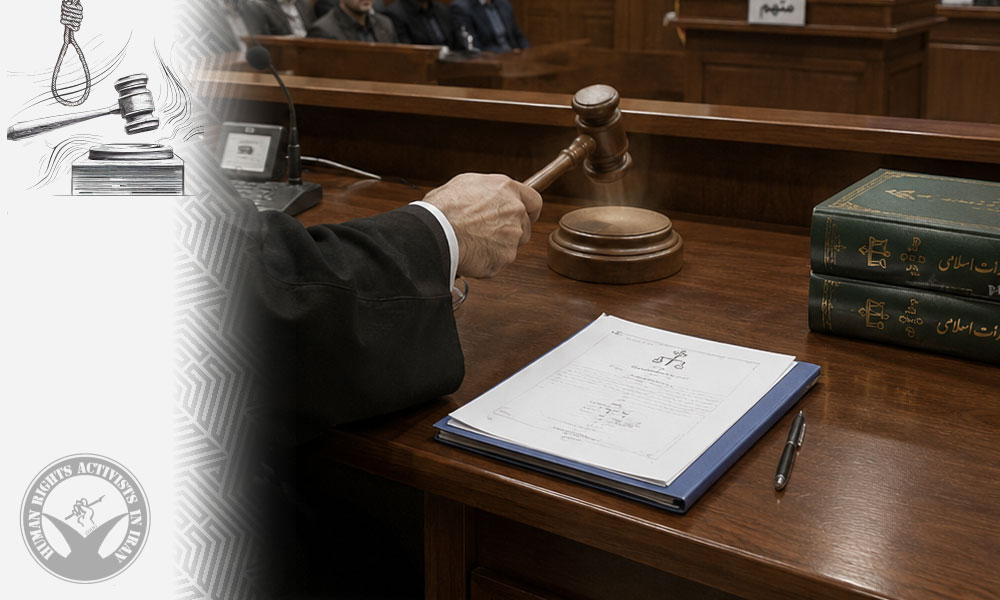
HRANA – Seyed Ali Kazemi, spokesperson for Iran’s judiciary, has announced that the Supreme Court has upheld the death sentence of an individual arrested in connection with the January 2026 protests in Rasht. He alleged that the defendant was involved in attacks and arson at several public and medical facilities in the city. Branch 39 of the Supreme Court upheld the sentence.

According to HRANA, citing Tasnim News Agency, the judiciary spokesperson announced that Branch 39 of the Supreme Court has upheld a death sentence against a defendant.

Without disclosing the defendant’s identity, Seyed Ali Kazemi alleged that the individual was involved in attacks on eight locations in Rasht, including Imam Sajjad Clinic, Refah and Sepah banks, Quds Mosque, the Gilan Provincial Department of Education, the Iran Insurance building, and the Rasht Civil Court. According to Kazemi, a nurse named Marzieh Nabi-Nia lost her life in the fire at Imam Sajjad Clinic.

The judiciary spokesperson stated that the defendant had been sentenced to death and that Branch 39 of the Supreme Court upheld the ruling in October-November 2026.

He further alleged that the defendant, along with two other individuals, had prepared and stored a large number of Molotov cocktails and incendiary materials in the basement of a residential building in Rasht at least 10 days before January 8, 2026.

Regarding the circumstances of the arrest, Kazemi stated that Basij forces apprehended the defendant while he was allegedly attempting to attack a mosque.

In another part of his remarks concerning the fire at Imam Sajjad Clinic, the judiciary spokesperson claimed that the seven-story building had been set ablaze using four to five Molotov cocktails. He added that an ensuing explosion damaged both the clinic and several neighboring buildings.

Kazemi stated that the ruling concerning charges related to national security and public property had become final, while proceedings regarding other aspects of the case remain ongoing.

Background: The January 2026 Protests

It should be noted that protests and strikes by shopkeepers and bazaar merchants began in Tehran on Sunday, December 28, 2025, and within two days spread beyond markets and commercial centers. With the participation of students, citizens, and various social groups, these protests became one of the largest protest movements of recent years. Following the crackdown by security and law enforcement forces, thousands were killed or injured, and tens of thousands were arrested or summoned by security agencies. For more information, readers may refer to HRANA’s comprehensive report titled “Crimson Winter,” documenting the first fifty days following the outbreak of Iran’s nationwide protests.

Semnan: Three Baha’i Citizens Arrested, Homes of Five Families Searched by Intelligence Agents

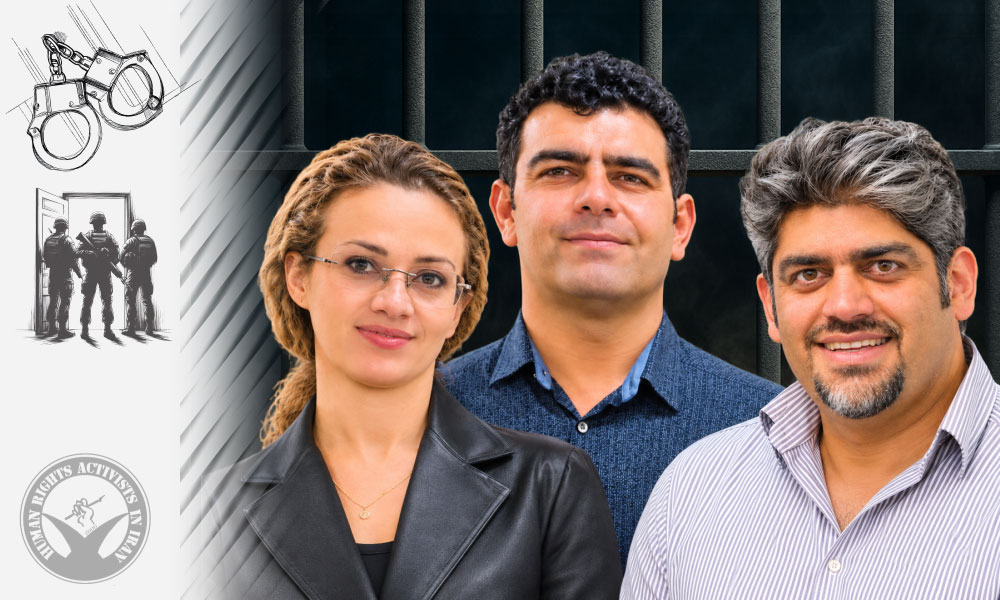
HRANA – On Sunday, November 15, agents of the Ministry of Intelligence searched the homes of five Baha’i families in Semnan, as well as the business premises of one of them. Three Baha’i citizens, Behfar Khanjani and a married couple, Hesam Tabianian and Zohreh Nik-Ayin, were arrested. During the searches, agents confiscated personal belongings, electronic devices, and books and other items associated with the Baha’i faith.

According to HRANA, on Sunday, November 15, 2026, intelligence agents searched the homes of five Baha’i families in Semnan and arrested three individuals.

Based on information received by HRANA, agents of the Ministry of Intelligence stopped Behfar Khanjani while he was traveling, physically assaulted him, handcuffed him, and took him to his residence. The agents searched his family home and arrested him. The search lasted six hours.

According to relatives of the family, Khanjani’s daughter, who was home alone when the agents suddenly entered, was severely frightened. During the search, agents confiscated the mobile phones belonging to Khanjani and his wife, along with laptops found in the residence.

In another incident, agents searched the home of Hesam Tabianian and his wife, Zohreh Nik-Ayin, and arrested both of them. The couple’s mobile phones and a laptop were confiscated. Agents also searched Tabianian’s shop and his mother’s residence.

Separately, agents stopped Lida Pirasteh’s vehicle on the street, presented a search warrant, and accompanied her to the home she shares with her husband, Badi Nobakht. They searched the residence and confiscated family members’ mobile phones and laptops. Pirasteh was also summoned to the Ministry of Intelligence.

On the same day, agents searched the residence of Babak and Parvaneh Shabirian. The judicial warrant presented for the search was issued in the name of Parvaneh Shabirian. Agents informed the Baha’i couple that they would be summoned at a later date.

During these searches, in addition to personal belongings and electronic devices, agents confiscated items associated with the Baha’i faith, including books, photographs, and jewelry. Satellite television receivers were also seized from some of the residences.

At the time of this report, no information has been obtained regarding the reasons for the searches or the arrests.

Behfar Khanjani and Zohreh Nik-Ayin have previously faced judicial proceedings and served prison sentences.

Over the past decade, Iran’s Baha’i community has been subjected to more security-related and judicial persecution than any other religious minority in the country. According to HRA’s annual reports, an average of 62.41% of all reported violations of the rights of religious minorities during the past year involved violations of the rights of Baha’i citizens.

Appeals Court Upholds Prison Sentence Against Baha’i Citizen Arman Misaghian

HRANA – Branch 21 of the Tehran Province Court of Appeals has upheld the two-year prison sentence and supplementary penalties imposed on Arman Misaghian, a Baha’i citizen.

According to HRANA, the sentence issued against Arman Misaghian has been upheld in full on appeal.

Based on information received by HRANA, Branch 21 of the Tehran Province Court of Appeals upheld Misaghian’s sentence of one year in prison for the charge of “propaganda against the regime” and an additional year for “insulting the Supreme Leader.”

The court also upheld supplementary penalties prohibiting the Baha’i citizen from driving, signing commercial documents, and participating in groups for a period of two years.

The ruling was communicated to Arman Misaghian late last week.

Misaghian had previously received the same sentence in the initial proceedings before Branch 29 of the Tehran Revolutionary Court, presided over by Judge Seyed Ali Mazloum.

No information has been obtained regarding the specific acts or evidence underlying the charges brought against this Baha’i citizen.

Over the past decade, Iran’s Baha’i community has been subjected to more security-related and judicial persecution than any other religious minority in the country. According to HRA’s annual reports, an average of 62.41% of all reported violations of the rights of religious minorities during the past year involved violations of the rights of Baha’i citizens.

Supreme Court Rejects Appeal of Imprisoned Lawyer Javad Alikordi

HRANA – The Supreme Court has rejected the appeal filed by Javad Alikordi, an attorney currently held in Vakilabad Prison in Mashhad, and upheld the sentences previously issued against him.

According to HRANA, the Supreme Court has rejected Javad Alikordi’s appeal.

Abbas Mousavi, Mr. Alikordi’s defense attorney, announced in a statement that the Supreme Court had rejected his client’s request for a retrial and upheld his sentences, including imprisonment, internal exile, permanent disbarment from practicing law, and a travel ban.

Mr. Mousavi further stated: “The only remaining opportunity to avoid or reduce these severe punishments is to request a retrial under Article 474 of the Criminal Procedure Code, provided that the legal grounds for such a request are met.”

In June of this year, Javad Alikordi was sentenced by Branch 1 of the Mashhad Revolutionary Court to five years in prison on the charge of “assembly and collusion to act against national security” and 13 years in prison on the charge of “propaganda activities against national security.” The court also sentenced him to permanent disbarment from practicing law, a two-year travel ban, and two years of internal exile in Sistan and Baluchestan Province.

On June 10, 2026, a court hearing addressing the charges against Mr. Alikordi was held at Branch 1 of the Mashhad Revolutionary Court.

Previously, an interrogation session concerning these charges had been held at Branch 902 of the Mashhad Prosecutor’s Office. Following the issuance of an indictment, the case was referred to Branch 1 of the Mashhad Revolutionary Court.

Javad Alikordi was arrested by security forces at his workplace in Mashhad on December 12, 2025. He was initially transferred to a security detention facility and subsequently moved to Vakilabad Prison in Mashhad.

Mr. Alikordi had previously been convicted in a separate case involving political and security-related charges, with part of his sentence suspended.

He is the brother of Khosrow Alikordi, an attorney and human rights defender who passed away in December 2025.

Subscribe to Our Newsletter

Now is definitely not the time to stop reading!

Hossein Rasouli-Nasab’s Death Sentence Commuted to Prison Term

HRANA – The death sentence of Hossein Rasouli-Nasab, who was arrested during the January 2026 protests and is currently held in Vakilabad Prison in Mashhad, has been commuted to a prison term following the application of a pardon and a one-degree reduction in his sentence.

According to HRANA, Hossein Rasouli-Nasab’s death sentence has been commuted to imprisonment. Relatives of Mr. Rasouli-Nasab announced on social media that his death sentence had been commuted to a prison term following the application of a pardon and a one-degree reduction in his punishment.

HRANA is working to verify the exact length of his new prison sentence.

His death sentence had previously been upheld by the Supreme Court, and his case had been referred to the Sentence Enforcement Unit.

Hossein Rasouli-Nasab was sentenced to death in a joint case alongside Mehdi Zarif, Matin Shabani, Hassan Golshan-Nejad, Ali Zaghi, and Iliya Akbari by Branch 5 of the Mashhad Revolutionary Court, presided over by Judge Hossein Yazdankhah, with Seyed Reza Javad Mousavi serving as an advisory judge.

The charges brought against the defendants in this case included “moharebeh (enmity against God) through participation in the destruction of public property and the setting fire to religious centers” and “assembly and collusion against national security.”

Mr. Rasouli-Nasab, who is married and the father of two children, was arrested in Shandiz during the January 2026 protests. Following interrogation, he was transferred to Vakilabad Prison in Mashhad.

The case stems from protests held on January 8 and 9, 2026, in Shandiz. A source familiar with the matter previously told HRANA that a mosque and a Quranic education center were set on fire during these protests, and judicial cases were opened against several citizens in connection with these incidents.

Background: The January 2026 Protests

It should be noted that protests and strikes by shopkeepers and bazaar merchants began in Tehran on Sunday, December 28, 2025, and within two days spread beyond markets and commercial centers. With the participation of students, citizens, and various social groups, these protests became one of the largest protest movements of recent years. Following the crackdown by security and law enforcement forces, thousands were killed or injured, and tens of thousands were arrested or summoned by security agencies. For more information, readers may refer to HRANA’s comprehensive report titled “Crimson Winter,” documenting the first fifty days following the outbreak of Iran’s nationwide protests.

Nazanin Abedini, a Baha’i Citizen, Sentenced to Prison and Deprivation of Social Rights

HRANA – Nazanin Abedini Kafshgari, a Baha’i citizen residing in Qaem Shahr, has been sentenced by the Sari Revolutionary Court to three years in prison and eight years of deprivation of social rights.

According to HRANA, Nazanin Abedini Kafshgari has been sentenced to imprisonment and deprivation of social rights.

According to a verdict issued on November 10, 2026, by Branch 1 of the Sari Revolutionary Court, presided over by Judge Ammar Ramezani, Ms. Abedini was sentenced to three years in prison and eight years of deprivation of social rights.

In this case, Ms. Abedini faced charges of “propaganda against the Islamic Republic” and “propaganda in favor of groups or organizations opposed to the Islamic Republic of Iran.” However, in its ruling, the court classified her educational and religious activities, including teaching Baha’i beliefs to children and engaging in online activities, as falling under Paragraph 2 of Article 500 bis of the Islamic Penal Code, and issued its verdict on that basis.

According to the verdict, reports from the Ministry of Intelligence offices in Qaem Shahr, Juybar, and Simorgh, along with the contents of her mobile phone, photographs, texts, and educational materials, were among the evidence cited by the court in issuing the sentence.

A source close to the family told HRANA about the legal proceedings: “This case was brought against Ms. Abedini solely because she taught music to children. The first hearing was held in June 2026 at the Qaem Shahr Revolutionary Court, presided over by Judge Reza Majazi. Following the judge’s transfer and the absence of a Revolutionary Court judge in Qaem Shahr, the case was referred to the Sari Revolutionary Court. That court issued its verdict without holding a new hearing or allowing the defendant and her lawyer to present their defense again.”

Seyedeh Nazanin Abedini Kafshgari, approximately 39 ,a children’s music instructor, was previously arrested by security forces in Qaem Shahr on June 25, 2025. She was released from Sari Prison after approximately one month under a judicial security arrangement. Her arrest involved the use of violence by officers, who broke down the entrance door of her home. During her detention, she was also held alongside prisoners convicted of violent crimes, in violation of the principle of separating prisoners according to the nature of their offenses.

On September 22, 2025, security agents searched Ms. Abedini’s personal belongings at Imam Khomeini International Airport as she returned to Iran from Turkey. The agents confiscated her passport, two mobile phones, two books, a personal notebook, and several sheets of music. According to a source close to the family, the search and confiscation were carried out without presenting a judicial warrant.

Female Prisoner Executed at Adelabad Prison in Shiraz

HRANA – Yesterday, November 15, 2026, a female prisoner who had previously been sentenced to death on non-political charges was executed at Adelabad Prison in Shiraz.

According to HRANA, a female prisoner was executed at Adelabad Prison in Shiraz. HRANA has identified the prisoner, who was hanged at dawn yesterda, Sunday, November 15, as Fatemeh Farhadi.

Based on information received by HRANA, Ms. Farhadi had previously been arrested on non-political charges and was subsequently sentenced to death by the relevant judicial authority.

As of the time of this report, the execution of this female prisoner has not been announced by prison officials or the relevant authorities.

According to HRANA, 1,062 people were executed by hanging in Iran between January 1 and October 31, 2026, amid a sharp increase in executions over the past two years.

Fariba Asadi Sentenced to Six Years in Prison and Additional Penalties

HRANA – Fariba Asadi, a civil rights activist and one of those arrested in connection with the January 2026 protests, has been sentenced to six years in prison and additional penalties.

According to HRANA, Fariba Asadi has been sentenced to imprisonment and other penalties.

Based on information received by HRANA, Ms. Asadi was sentenced to six years in prison on charges of “assembly and collusion, acting against national security, and participating in protests.”

Additionally, as supplementary punishment, the court imposed a two-year ban on leaving the country, membership in social groups and organizations, and employment in government and public-sector positions.

The court hearing to address the charges against Fariba Asadi was held on September 7, 2026, at Branch 2 of the Karaj Revolutionary Court, presided over by Judge Sabzevari.

Fariba Asadi, a civil rights activist residing in Karaj, was arrested by IRGC Intelligence agents on January 26, 2026. She was subsequently transferred to Kachooei Prison in Karaj and released on bail of three billion tomans after approximately three months in detention.

Ms. Asadi has previously faced judicial proceedings and arrest in connection with her activities.

Three Members of Bushehr Teachers’ Trade Association Sentenced to Prison and Additional Penalties

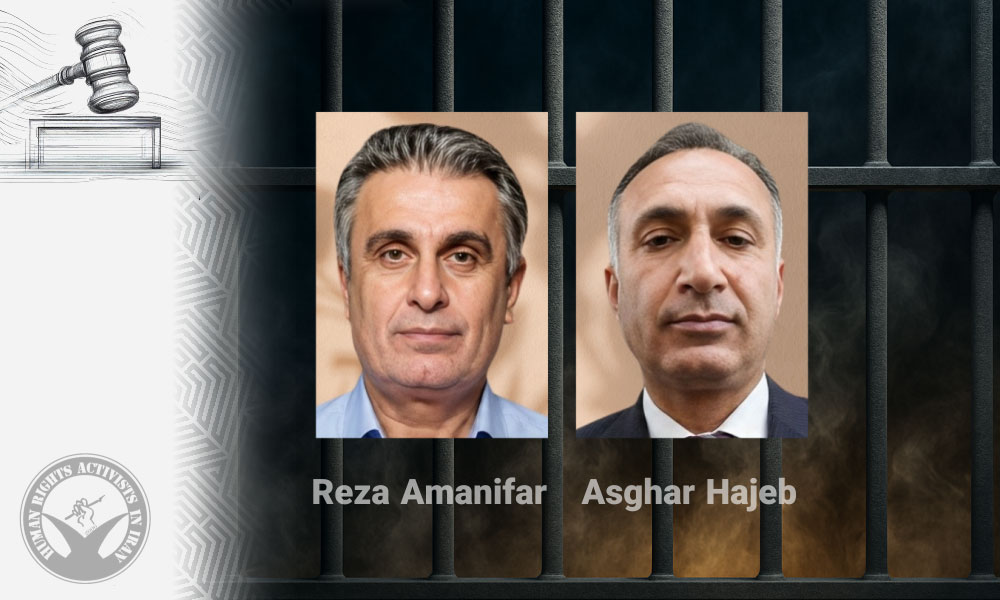
HRANA – Reza (Abdolreza) Amanifar, Asghar Hajeb, and Roghayeh Torabpour, members of the Bushehr Province Teachers’ Trade Association, have been sentenced to a combined total of 12 years, six months, and one day in prison, along with additional penalties.

According to HRANA, citing the Coordinating Council of Iranian Teachers’ Trade Associations, three teachers’ union activists in Bushehr Province have been sentenced to imprisonment and additional penalties.

According to the report, a judicial authority sentenced Reza (Abdolreza) Amanifar, Asghar Hajeb, and Roghayeh Torabpour to prison terms and additional penalties on charges of “collaboration in political, cultural, and propaganda activities against national security.”

Under the verdict, Amanifar was sentenced to 10 years and one day in prison, Hajeb to two years in prison, and Torabpour to six months in prison, with time already served in detention credited toward her sentence. As additional penalties, each of the three was also sentenced to permanent dismissal from government and public service positions and confiscation of their electronic devices.

The report did not provide further details, including the date the verdict was issued or the judicial authority responsible for issuing it.

In September of this year, Reza (Abdolreza) Amanifar and Asghar Hajeb were summoned to court in separate cases.

On April 4, 2026, Reza Amanifar was arrested by security forces in Bushehr and remains in prison.

Hajeb was also arrested by security forces on April 22, 2026, and was subsequently released from prison on bail on May 26, 2026.

Abdolreza Amanifar, an inspector for the Coordinating Council of Iranian Teachers’ Trade Associations and a member of the Bushehr Teachers’ Trade Association, and Asghar Hajeb, a member of the Bushehr Province Teachers’ Trade Association, have both previously faced judicial action in connection with their activities.