Iran: One Protest Continues as Two More Begin

Human Rights Activists News Agency (HRANA) – Over the last few days, three distinct protests were organized to express the yet-unmet demands of three separate collectives: the Citizens of Zabul, the residents of Bibayani village (of the Dasht-e Zahab tributary of Sar-e Pol Zahab), and a number of shareholders of the bankrupt Caspian Institution in Tehran.

Caspian Institution

HRANA reported today that Caspian Institution shareholders were gathering in front of Tehran’s Majlis building. The group, who started staging protests two years ago, includes a mix of investors and shareholders from financial and credit institutions. When their public demonstrations first began, the government and Central Bank of the Islamic Republic of Iran (CBI) committed to paying the dividends owed to investors. According to the CBI, over 95% of reclamations against the Caspian Institution have been resolved.

Bibayani Village Residents Protest Water Crisis

HRANA reported today on a group of Bibayani village residents who were gathering before the Kermanshah Provincial Governor’s office. Sar Pol-i Zahab is a town bordering the province of Kermanshah.

Protestors Seal the Entrance to the Zabul City Council Building

According to a September 2nd report from Radio Zamaneh, a group of Zabul residents (in the province of Sistan and Baluchestan), in protest to financial corruption and abysmal public services in their municipality, used mud to seal shut the entrance to the municipality building on Saturday, September 1, 2018.

Some time ago, judicial officials reported on the arrest of 11 city council members and municipal employees on charges of financial corruption and embezzlement.

News agencies affiliated with the government reported that these protestors were decrying pollution and lack of public services. Images published on social media tell a different story: shared photos feature protesters brandishing signage reading “When embezzlement is ousted, Zabul will be a paradise”.

Demonstrators on the scene were reportedly chanting slogans such as “When the council is dissolved, Zabul will be a paradise,” and “We don’t want an incompetent council.”

Three Retribution Execution Sentences Carried Out in Zahedan

Human Rights Activists News Agency (HRANA) – Three prisoners held at Zahedan Prison were executed in the early morning hours of September 3, 2018 — sooner than expected — allegedly in a vindictive response to recent skirmishes between security forces and Jundullah, an armed opposition group based in the Sistan & Baluchestan province.

Though all three prisoners were already on death row, the carrying out of their sentence so soon after the clash gives reason to read the timing as a retaliatory gesture.

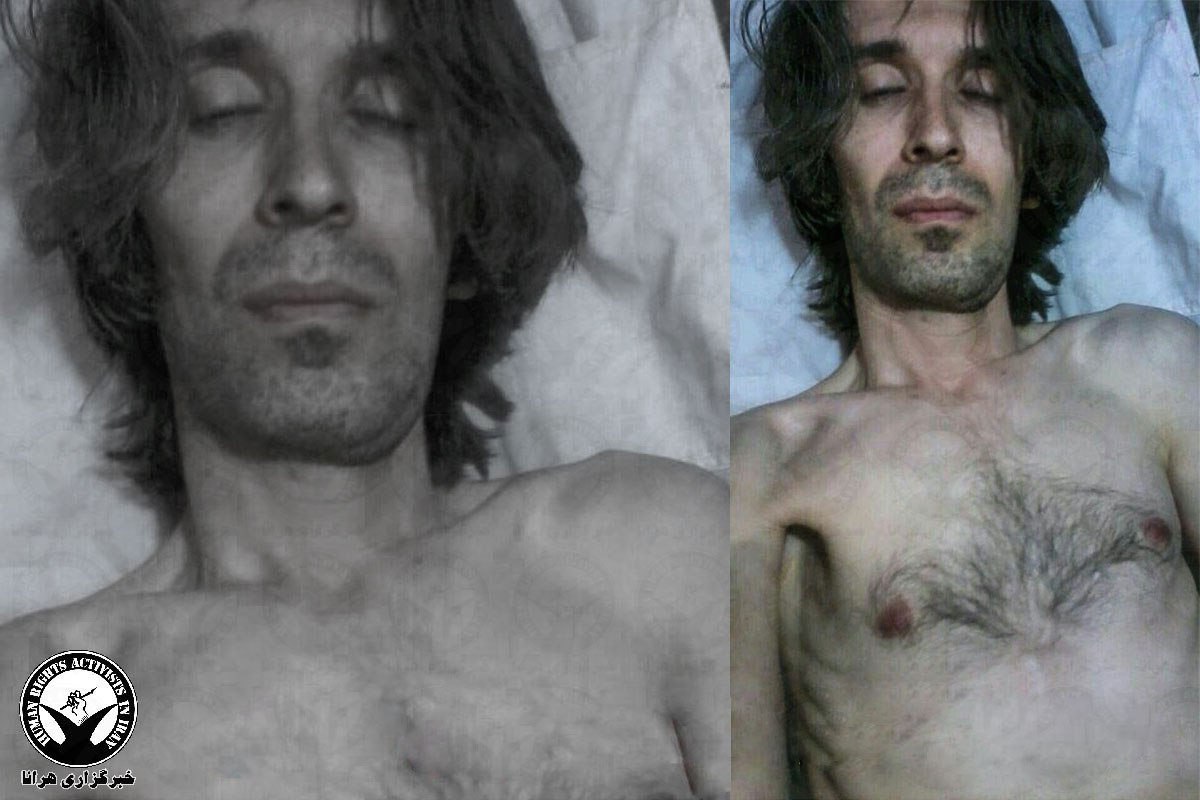
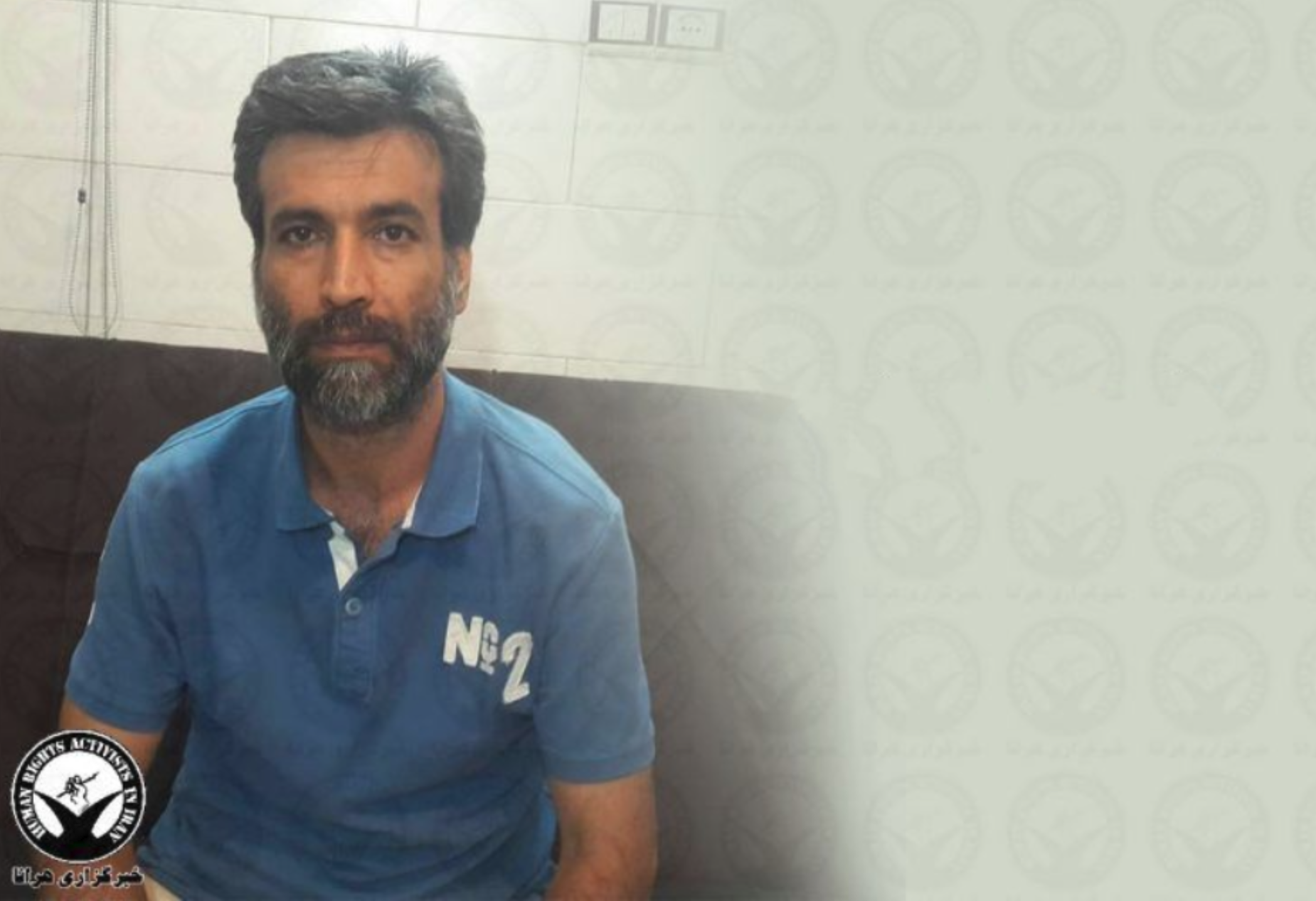
Indeed, on September 1, 2017, one day following the skirmishes, all three were transferred to solitary confinement per protocol for prisoners whose execution is imminent. The executed prisoners were identified as Dormohammad Shahbakhsh, 21, a resident of Zahedan, held in Ward 5; Ismaeil Shahbakhsh (pictured above), known as Beheshti, age 23, held in Ward 4; and Hayatullah Nutizehi (Ayatollah Nikzehi), known as Akbar, age 24, a resident of Pakistan.

Sistan & Baluchestan has a history of politically-motivated executions. At least 16 prisoners were put to death in similar circumstances in October of 2013. At that time, Zahedan Prosecutor Mohammad Marziyeh stated that those executed were “terrorist groups who were enemies of the regime”, adding, “they were executed Saturday morning in response to terrorist activities in Saravan the night before.” He did not reveal the names of the prisoners.

Shahbakhsh, Beheshti, and Nutizehi were sentenced to death by Branch 2 of the Zahedan Revolutionary Court back in November of 2017. Their conviction and sentence were upheld in Iran’s Supreme Court one month later. They stood accused of participating in a firefight with police forces on July 7, 2015, which led to the death of a police officer. Although all three denied having a hand in the officer’s death, they were charged as accessories to murder. At the time of their arrest, Ismaeil Shahbakhsh and Hayatullah Nutizehi had also sustained gunshot wounds.

The three wrote an open letter last autumn detailing mistreatment and torture at the hands of their interrogators. They wrote of having surrendered during the 2015 clash when security forces promised them immunity, only to then arrest, torture, and arrange for the three to be put to death. The letter also details instances of their torture by interrogators, such as having pepper rubbed into their wounds or their genitalia pricked by needles.

News of their execution has yet to be announced by the Iranian authorities.

Intelligence Agents Detain Man in Ahvaz

Human Rights Activists News Agency (HRANA) – An Ahvaz (southwestern Iran) resident, identified as Shaker Hazbavi, was arrested by Iranian intelligence agents on Tuesday, August 21, 2018.
Hazbavi was previously arrested by security forces on Saturday, August 11, 2018, and subsequently released. Ten days later, on August 21, he was arrested again.
At the time of this report, no further information was available on his location or the reasons behind his arrest.

Baha’i Citizen Sima Kiani Released from Evin Prison

Human Rights Activists News Agency (HRANA)- On Saturday, September 1, 2018, Baha’i citizen Sima Kiani was released from Evin Prison three months earlier than scheduled.

Kiani was originally sentenced to one year behind bars. An informed source told HRANA that the prosecutor, taking into consideration the poor health of her elderly parents, granted her release after nine months.

Previously, in February 2018, HRANA reported on Kiani’s verdict and transfer to Evin Prison to begin her sentence. She was convicted of “propaganda against the regime”.

Kiani was arrested for the first time in March 2017, and was released on a bail of 2 billion rials (approximately $20,000 USD) in April 2017 to await the February 2018 trial.

At the time of her arrest, Iranian authorities reportedly confiscated her personal computer, as well as all of her books, articles, and CDs.

Baha’is in Iran do not have freedom of religion. This systematic repression is in violation of Article 18 of the International Declaration of Human Rights as well as Article 18 of the International Covenant for Civil and Political Rights. These documents assert the rights of every individual to freedom of religion, religious conversion, and expression of their religious belief as individuals or groups, publicly or privately.

Unofficial reports indicate that there are over three hundred thousand Baha’is living in Iran. However, the Iranian constitution only recognizes Islam, Christianity, Judaism, and Zoroastrianism as permissible religions, effectively rendering the Baha’i faith illegal. This loophole allows the Iranian government to systematically violate the rights of Baha’is with impunity.

Students Protest Elimination of Fixed Exchange Rate

Human Rights Activists News Agency (HRANA)- A group of students assembled on September 1st, 2018, in front of Iran’s Central Bank on Mirdamad Street in Tehran to protest a decision that would deny access to foreign currencies at a special exchange rate.

A memorandum issued by Iran’s Central Bank that aims to eliminate a lower exchange rate fixed for students and certain importers by September 21 has caused discontent among many Iranians. If the decision in the memorandum holds, many students, including those studying abroad, will have to pay more than double the rate they have been paying for foreign currencies.

The Iranian authorities have historically offered limited quantities of foreign currencies, most notably the American dollar, at a rate less than half of the current market exchange rate.

The Central Bank recently announced that the lower exchange rate will remain in effect for eligible consumers until the end of the year. After that–and unless the decision is overturned–they will be at the mercy of the open market’s steeper prices.

The Iranian currency, known as the rial or toman, has lost more than half of its value since April 2018 alone.

Subscribe to Our Newsletter

Now is definitely not the time to stop reading!

Activist in Tabriz Sentenced to Six Months in Prison

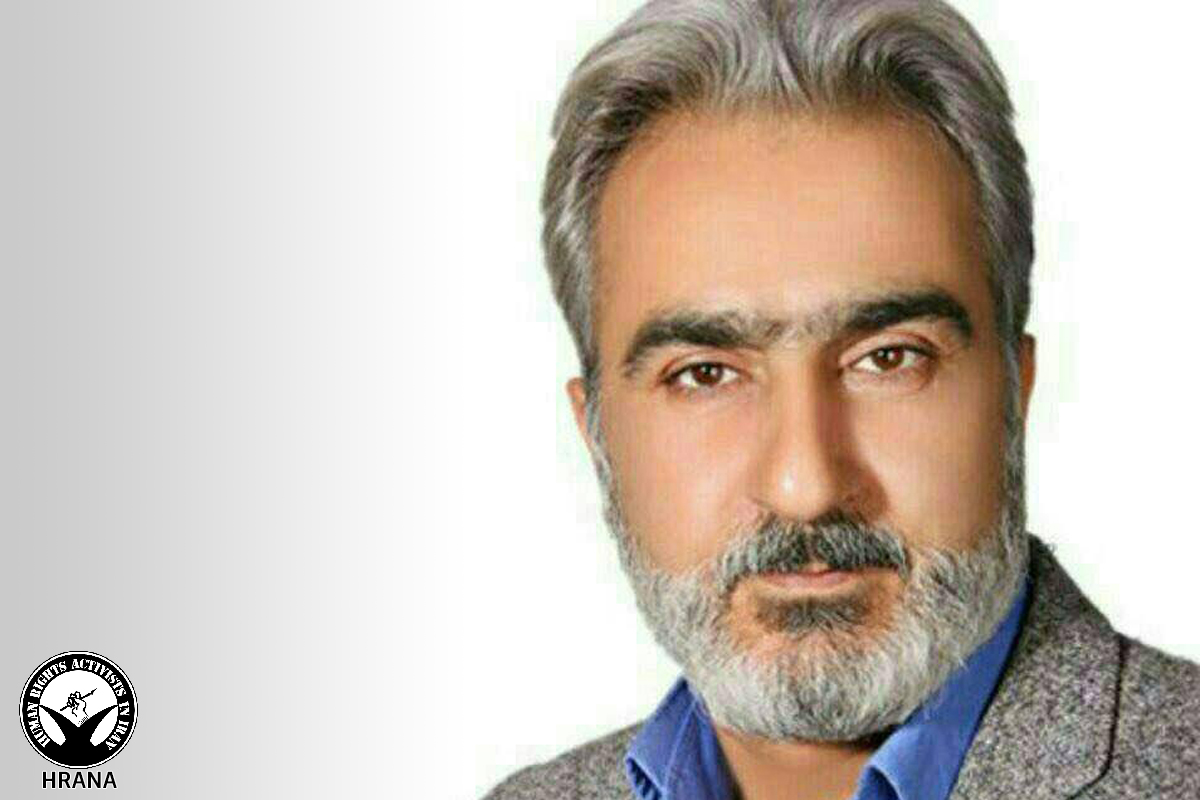
Human Rights Activists News Agency (HRANA)- Civil rights activist Amir Chamani has been sentenced to a six-month prison term on charges of “Propaganda against the regime” and “Cooperation with opposition groups.” Abbas Jamali, Chamani’s lawyer, confirmed news of the sentence to HRANA.
“I heard the sentence today [Saturday, September 1, 2018],” Jamali said, adding that among evidence cited against his client were notes and articles by Chamani which criticized the country’s economic and cultural conditions. “My client was also accused of insulting the supreme leader, but he was fortunately acquitted of this charge,” Jamali said.
Presiding over Chamani’s case was Judge Hamalbar of Branch One of the Revolutionary Court of Tabriz, the capital of East Azerbaijan province in northwestern Iran, home to Iran’s Azerbaijani ethnic minority.

Abbas Jamali (left) and Amir Chamani (right)

Chamani had published a note last week announcing his upcoming trial.
Chamani has previously been pursued on similar charges. On July 5th, 2012, from Judge Hamlbar of Branch One of the Tabriz Revolutionary Court, Chamani received a sentenced of six months’ imprisonment for insulting both Iran’s Supreme Leader Ayatollah Khamenei and the late Ayatollah Khomeini, founder of the Islamic Republic. He received a three-month-and-one-day sentence for “propaganda against the regime” in the same trial.
In another instance, after turning himself in for charges of insulting the President, Chamani was sentenced on January 13, 2013, to 40 lashes by the Tabriz Criminal Court. He was dealt the lashes on June 5, 2013, just over a week before the 2013 Iranian Presidential elections, and was not released from custody until October 2nd of the same year.

Hunger Striking Dervishes Pen Open Letter from Prison

Human Rights Activists News Agency (HRANA) – After a violent raid on their sit-in last week, 12 imprisoned Dervishes who began hunger strike after being transferred to solitary confinement have written a letter outlining their demands.

According to Majzooban Noor, a website reporting on Dervish issues, the names of the 12 Dervishes are: 1. Ali Bolboli 2. Salehodin Moradi 3. Mohammad Reza Darvishi 4. Abbas Dehghan 5. Ali Mohammad Shahi 6. Mojtaba Biranvand 7. Ali Karimi 8. Jafar Ahmadi 9. Ibrahim Allahbakhshi 10. Heydar Teymouri 11. Majid Yarahmadi 12. Saeed Soltanpour.

Heydar Teymouri, Majid Yarahmadi, and Saeed Soltanpour followed suit after nine of their above comrades initiated the strike.

The first nine to go on hunger strike had previously written an open letter to make three demands of authorities: that their leader Noor Ali Tabandeh be released from house arrest in Tehran; that Dervish women be released from Gharchak Prison; and that separated Dervish prisoners be freed from solitary confinement and reunified into the same ward.

Below is the full text of the letter, translated into English by HRANA:

A leader who cares for his country will not wish to see pain afflicting his people
A country of callous leaders will never see peace and calm

For the past six months, we Dervishes have chosen the path of patience, hoping that those who oppose us will come to their senses and end the harassment and persecution of this country’s citizens, be they first-class citizens or second-class citizens like us. Instead, all we have witnessed is a rise in senselessness, a fall from judiciousness, in those who are supposed to be addressing our concerns.

For the past six months, officials and their collaborators have kept our revered master and spiritual leader, Dr Noor Ali Tabandeh, under house arrest. They have thus deprived followers of benefiting from his teachings. Our respected Dervish sisters, who have been imprisoned since February and were wounded there in June, their bodies bloodied, have been taken without trial to Gharchak Prison. In the unsanitary and disease-ridden environment of Gharchak, they are denied access to proper medical care and have been savagely attacked and beaten. Without access to a lawyer, due process, or a fair trial, they have been sentenced to years in prison and deprived of their civil rights.

When, alongside our imprisoned brothers, we staged a sit-in to protest the unfair house arrest of our leader and the ordeal of our sisters, instead of hearing our voices and heeding our demands, guards subjected us to batons, electrical shock, and tear gas.

They separated us and demonstrated that even inside the walls of the prison, they pursue the dirty politics of sowing division among Gonabadi Sufis, a group that symbolizes unity and solidarity.

Seeing that nobody hears our voice, and since the repression against Dervishes takes on a new dimension every day, we hereby announce that until the house arrest of our leader, Majzoob Ali Shah [Noor Ali Tabandeh], is lifted, and our imprisoned sisters are released, and our brothers imprisoned in Fashaouyeh (Great Tehran Penitentiary) are returned from solitary confinement and reunified in the same ward, we will remain on hunger strike. We seek the help of freedom and justice fighters in making our voice heard.

Signed:
Ali Bolboli, Salehodin Moradi, Mohammad Reza Darvishi, Abbas Dehghan, Ali Mohammad Shahi, Mojtaba Biranvand, Ali Karimi, Jafar Ahmadi, Ibrahim Allahbakhshi

Women’s Rights Activist Najmeh Vahedi Detained

Human Rights Activists News Agency (HRANA)- Women’s rights activist Najmeh Vahedi was arrested at her home by security forces on September 1, 2018. At the time of this report, no further information was available on her condition or the reasons behind her arrest.

HRANA previously reported on the case of Hoda Amid, an attorney and women’s rights activist, who was detained the same day.

Hoda Amid

Vahedi and Amid had reportedly held educational training workshops for women inquiring about their rights in marriage contracts.

Vahedi and Amid’s arrests are part of a crackdown on lawyers and activists that has muscled up in recent months, including the arrest of prominent human rights lawyer Nasrin Sotoudeh on June 13th.

17 Days After Arrest, Detained Labor Activist’s Whereabouts Unknown

Human Rights Activists News Agency (HRANA) – As far as his family knows, labor activist Behnam Ebrahimzadeh could be seriously suffering, or worse: seventeen days after his arrest near Kermanshah in western Iran, authorities have yet to release word of his wellbeing or whereabouts.

“Mr Ebrahimzadeh has had no contact with his family for 17 days, and his family is unaware of his fate, which makes them very anxious,” a source close to the family revealed to HRANA.

Ebrahimzadeh was arrested on Friday, August 17, 2018, and transferred to a Revolutionary Guard Intelligence Detention Center in Kermanshah the same day.

Ebrahimzadeh, who was born in 1977 in Oshnavieh (West Azerbaijan province), has been detained several times since 2008 in cases related to his labor activism. His imprisonments have previously gained international attention.

On Friday, August 31, 2018, President of the Canadian Union of Postal Workers Mike Palecek issued a statement addressed to Iranian authorities, condemning Ebrahimzadeh’s most recent arrest and demanding his immediate release.

In a previous report, a source close to Ebrahimzadeh told HRANA: “He was arrested by security forces around Kermanshah while en route to assist survivors of the Kermanshah earthquake, and taken to an unknown location on Friday, August 17, 2018. After three days of persistent inquiry, his family learned of his detention, but no information about the reason for his arrest is available.”

In May 2017, HRANA announced Ebrahimzadeh’s release from Rajai Shahr Prison after serving seven years in prison.

Dervish Prisoners Begin Hunger Strike Following Transfer to Solitary Confinement

Update: As of Tuesday, September 4th, five other Dervish prisoners have joined the hunger strike. Their names are Babak Taghian, Ehsan Malekmohammadi, Salemi Salemi, Reza Bavi, and Akbar Dadashi.

Human Rights Activists News Agency (HRANA) – Twelve of the Dervish prisoners at Great Tehran Penitentiary who were violently disbanded and sent to solitary confinement on August 29th after staging a sit-in have started a hunger strike, while at least 20 of those attacked are reportedly in poor health.

Prison guards used batons, electrical shock, and tear gas on the prisoners to break up their peaceful protest, which had been in effect in Ward 3 since June 13th. The Twitter account of Majzooban Noor — a news agency publishing a feed on Dervishes, a religious minority — described the prison officials’ plan of attack, which involved filtering non-Dervish detainees from the quarantine area before charging those involved in the protest.

According to Majzooban Noor, prison officials then welded shut the gate of the prison yard to surround a number of Dervishes, using tear gas on those who attempted to come to their aid. The prisoners involved in the sit-in, along with 18 Dervishes from Ward 4, were subsequently taken to solitary confinement.

The August 29th raid occurred during a visit to the prison by Mostafa Mohebbi, the Director General of the organization Prisons of Tehran, who had come to inspect the Great Tehran Penitentiary following reports of deplorable conditions there.

Mohebbi reportedly watched as the heads of the prison — identified only as Director Farzadi and his deputy, “Farrokhnejad” — personally inflicted skull and arm fractures, among other injuries, on the confined Dervish prisoners.

Alireza Roshan, the director of Majzooban Noor, told HRANA that while many Dervishes were transferred to solitary confinement, others were individually dispersed among other Wards of the prison. He identified nine solitary confinement prisoners who started hunger strike upon their transfer: Ali Bolboli, Salehodin Moradi, Mohammad Reza Darvishi, Abbas Dehghan, Ali Mohammad Shahi, Mojtaba Biranvand, Ali Karimi, Jafar Ahmadi, and Ibrahim Allahbakhshi.

“Their demands[…]are the reunification of the [Dervish] prisoners to one ward, the release of the female Dervishes [held in Gharchak Prison], and the lifting of the house arrest of Noor Ali Tabandeh, the group’s leader, who has been under house arrest since February 2018,” Roshan revealed.

Three other Dervishes have since followed suit, according to Majzooban Noor, making for a total of twelve Dervishes currently starving themselves in protest. These three were identified as Heydar Teymouri, Majid Yarahmadi, and Saeed Soltanpour.

Roshan said prison regulations stipulate that certain prisoners be kept apart depending on their offenses and beliefs, and that prison officials are responsible for ensuring the collective safety of their detainees.

“Nevertheless,” said Roshan, “Great Tehran Penitentiary officials hold the Dervishes, [who are political prisoners], in a general ward alongside prisoners who have allegedly committed common crimes.”

The following is a bulletin from Majzooban Noor on Dervish prisoners whose health is now at risk:

  1. Kasra Nouri 2. Reza Entesari 3. Pouria Nouri 4. Mehdi Eskandari 5. Saeed Soltanpour 6. Mehrdad Rezaei 7. Alborz Eskandari 8. Ali Abidavi 9. Hasan Shahreza 10. Sekhavat Salimi 11. Amir Nouri 12. Jafar Ahmadi 13. Babak Moradi 14. Majid Moradi 15. Mohammad Reza Darvishi 16. Heydar Teymouri 17. Ali Mohammad Shahi 18. Amin Soleimani 19. Sajjad Baradaran 20. Akbar Dadashi

Prison guards reportedly pulled out some of the Dervishes’ hair, including their facial hair, during the August 29th raid.

Human rights activists and families of the victims have recently raised concerns over a lack of transparency from prison authorities on the current condition of the Dervishes.

The families of the affected Dervishes have written a letter to judicial authorities to demand immediate face-to-face visits with their imprisoned loved ones. The families are reportedly suspicious that authorities have enforced solitary confinement and delays on family visits in order that wounds and traces of violence have ample time to fade from the Dervishes’ bodies.

Six of the dervishes who were beaten – Salehodin Moradi, Ali Bolboli, Mohammad Reza Darvishi, Sekhavat Salimi, Ali Karimi, and Ibrahim Allahbakhshi – have been transferred to Ward 1 of the Great Tehran Penitentiary, quarters for those convicted of common crimes.

Others — including Reza Entesari, Sina Entezari, Kasra Nouri, Mehdi Eskandari, Reza Bavi, Amir Nouri, and Mohammad Sharifi Moghaddam — are being held in solitary confinement.

*There are various divisions among Dervish religious groups in Iran. The use of Dervish in this article refers to Nematollahi Gonabadis, who in recent years have declared themselves followers of Twelver Shia Islam, Iran’s official state religion.

HRANA previously reported on how the sit-in was violently broken up