Open Letter: Arash Sadeghi Sounds Alarm of Renewed Assassination Campaign

Human Rights Activists News Agency (HRANA) – From Karaj’s Rajai Shahr Prison, civil rights activist Arash Sadeghi has written an open letter in response to the assassination of Eqbal Moradi, an Iraqi Kurdistan political activist and the father of political prisoner Zanyar Moradi. In his letter, Sadeghi traces the domestic and foreign assassination campaigns that Iran has been orchestrating since February 1979.

As previously reported by HRANA, the dead body of Eqbal Moradi was found near the Iran-Iraq border in Penjwen, Iraqi Kurdistan. The three bullet wounds on his body marked the last of many attempts on his life.

The full text of Sadeghi’s letter, translated into English by HRANA, is below:

“The campaign to eliminate critics inside and outside the country started in the month of February 1979. It claimed the lives of hundreds of people associated with the previous regime, in addition to Sunnis, Baha’is, dissidents, and members of revolutionary political groups that challenged the new regime’s leadership. It continued during the vast oppression of the 1980’s, and with the mass murder of political prisoners in the Summer of 1988. After the [Iran/Iraq] war ended, it continued with a string of assassinations (known as ‘Chain Murders’) targeting the regime’s detractors and opponents.

Many names can be found on the blacklist: Mohammad Mokhtari, Dariush Forouhar, Parvaneh Eskandari, Mohammad Jafar Pooyandeh, Ali Akbar Sirjani, Pirooz Davani, Hamid and Karoon Hajizadeh, Masoumeh Mossadegh, Zohreh Izadi, and dozens of other dissidents.

But assassinations didn’t reserve themselves for critics and dissidents within Iran. In the past four decades, they followed dozens of opposition figures to European countries.

Ashraf Pahlavi’s son Shahriar Shafiq was the first to go down, killed in Paris in December of 1979. He had been convicted in absentia of “corruption on earth” [a capital crime in Iran] by Sadeq Khalkhali [a notorious judge of the early revolutionary period].

Abdul Rahman Ghassemlou and Abdollah Ghaderi were assassinated in Vienna, Austria during a negotiation with diplomats of the Islamic Republic.

Gholam Keshavarz was killed in Cyprus; Sedigh Kamangar in Ranya, Iraq; and Kazem Rajavi in Switzerland.

Efat Ghazi [spouse of a prominent Kurdish activist and daughter of the President of Iran’s ephemeral Republic of Mahabad] was assassinated in Vasteras, Sweden.

Abdolrahman Boroumand and Shapour Bakhtiar were killed in France.

Fereydoun Farrokhzad was assassinated in Bonn, Germany.

Mohammad Sadegh Sharafkandi, Fattah Abdoli, Homayoun Ardalan, and Noori Dehkordi were assassinated in a restaurant called Mykonos in Berlin. Then there was the bombing of the Jewish community center in Argentina…

Based on the statements of German prosecutors, the foreign-soil murders — right up to the Mykonos killings — were led by the [Iranian] regime’s top political figures. And it was only after trial, and the diplomatic crisis with European countries, that the assassination campaign came to a brief pause.

The chain murders came right behind the 1988 [mass] executions. It was only in the Khatami era, with its relatively open media atmosphere, that the public was sensitized to these murders. Ultimately it was declared that the assassinations were the work of high-ranking security officials, chiefly Saeed Emami. From the autumn of 1998, the murders carried on into the early 2000’s.

The overseas assassination campaign is back up and running; once again the alarm bell is sounding, and the campaign is accelerating forward.

This time around, they targeted Eqbal Moradi. We heard the shocking and bitter news of Eqbal’s death – he is the father of Zanyar Moradi, a political prisoner sentenced to death. [Eqbal] Moradi was an active human rights defender in the city of Penjwen. He collaborated with several human rights organizations, including the international “No To Executions” campaign, and raised funds for political prisoners and their families.

Rare is the human rights activist who hasn’t heard of Eqbal Moradi. I got to know him years ago, and I saw what he did for his dear son, his nephew (Loghman Moradi), and for all political prisoners. When Zanyar was 19 he was taken hostage with his cousin Loghman, simply because the Iranian security apparatus held a grudge against his father.

Zanyar and Loqman were sentenced to die without a fair trial. It’s now been ten years since they’ve been in prison. A flagrant injustice in the trial of Zanyar (a man I consider to be a symbol of resistance and honor): when witnesses were ready to attest to both [him and his cousin’s] innocence, the judge — who is but a rubber-stamp for the security apparatus — refused to accept their testimonies, without giving any legal reasons.

A flagrant injustice: they are hostages to a sinister plot of the security apparatus. Now the father is gone, and his death sounds the alarm of a renewed assassination campaign through Iraqi Kurdistan.

Make no mistake, the renewal of the assignation campaign in Iraqi Kurdistan would be rooted in the regime’s grudge against the opposition; they see the elimination of critics as legitimate, an expedient protection of the regime and of religious law. In the past year, four more Kurdish activists have been assassinated in Iraqi Kurdistan, in addition to Ahmad Mawlana Abu Nahez — known as Ahmad Neysi — an Ahwazi activist who was assassinated in the Netherlands.

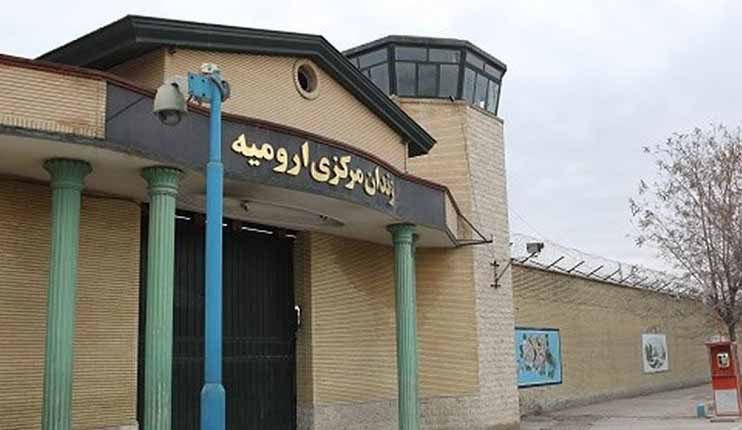
Unfortunately, ever since the establishment of the Kurdish Regional Government (KRG), it has lacked a strong and independent government and suffered from partisan divisions. This, paired with the political-military presences in neighboring countries — especially the Islamic Republic, whose Hamzeh Base in Urmia [close to the border with Iraq] answers to the Quds Force, an operating arm of the assassination campaign abroad — has made Iraqi Kurdistan an easy target.

The silence of some countries in response to these assassination cases, or other countries’ official or unofficial endorsement of them, will empower Iran, with all of its human rights violations in-country, to eliminate dissidents abroad with greater ease.

This places a heavy burden on the officials of European countries.

In recent years, they’ve sent thousands of their own citizens to countries such as Iraq, Syria, and Afghanistan to show their commitment to fighting state-sponsored terrorism and human rights violations.

If Western officials are serious about this commitment, they cannot rightly plead economic and trade interests as an excuse to turn a blind eye to operatives of this overseas assassination campaign, the very same people who eliminate dissidents within Iran’s borders. Any kind of silence or cooperation with the Islamic Republic enables domestic oppression and threatens the opposition abroad.

Arash Sadeghi
Wednesday, August 1, 2018
Gohardasht [Rajai Shahr] Prison, Karaj

Dervish Woman Handed Prison Sentence on National Security Charges

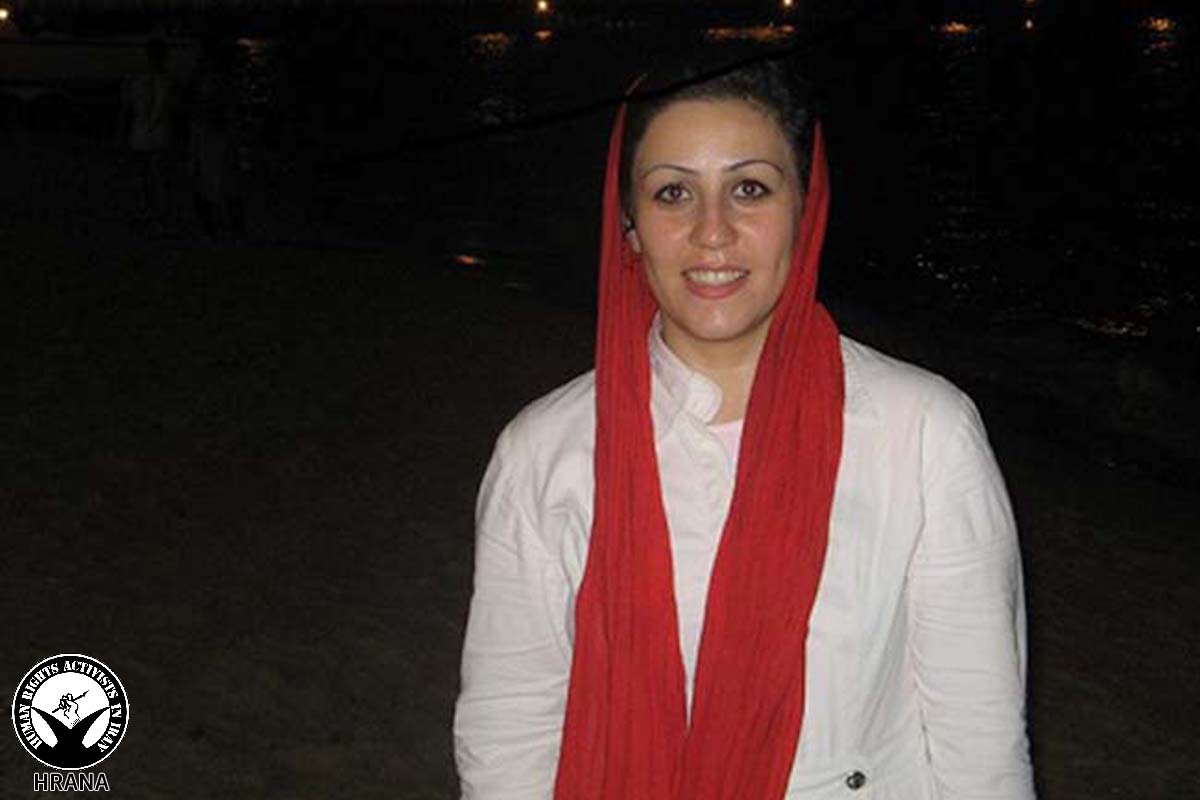
Human Rights Activists News Agency (HRANA) When 324 members of the Dervish Muslim minority [1] were arrested February 3, 2018, Sepideh Moradi was among them. According to Human Rights Watch, a sense of injustice over intensified government surveillance of their spiritual leader prompted Moradi and her comrades to organize a protest, which flagged them as threats in the eyes of authorities.

Sure enough, Dervish news agency Majzooban Noor reported that when a detained Moradi–in protest of a lack of due process and legal representation for Dervishes–refused to attend her trial on July 28th, she was sentenced in absentia by Judge Salavati and is now beginning a five-year sentence at Gharchak Varamin Prison [2] for “Collusion to Act against National Security.”

Salavati leaned on section 23 of the Islamic Penal Code to stiffen Moradi’s sentence with two-year bans on travel, membership in political groups and parties, and media or cyber activity. She had already been barred from pursuing her master’s degree in Computer Science on a prior charge.

“The accused is the daughter of Hamidreza Moradi, an extremist figure and one of the directors of the Majzooban Noor website,” her verdict read. “She was raised in a dogmatic Dervish family, and joined the Gonabadi Dervish sect under the influence of their deviant beliefs.”

Moradi and her fellow women Dervishes reportedly endured mistreatment and torture over the course of their interrogation and detention. At one point Moradi went on hunger strike to protest a violent raid conducted June 13th by the Special Guard Force of the prison. HRANA previously published the identities of these attackers.

She received medical care from an outside facility on July 25th after weeks of follow-ups; as of the date of this report, no further information was available on her health condition.

Tehran General Prosecutor Jafari Dolatabadi announced on July 24th that 330 sentences had thus far been handed down in Dervish cases. He added: “In the cases of those 25 who refused to attend their court sessions in attempts to thwart trial proceedings, the court […] followed through with procedure. Their verdicts were delivered in person.”

[1] There are various divisions among Dervishes in Iran; those featured in this article are Nematollahi Gonabadis who consider themselves followers of Twelver Shia Islam, the official state religion in Iran. According to Human Rights Watch, Noor Ali Tabandeh, spiritual leader of the Nematollahi Gonabadi Dervish faith, published a video on March 8th stating that he is not allowed to leave his residence in Tehran.

[2] For more information on deplorable conditions in Gharchak prison, please refer to pages 18 to 20 of the following document compiled by UK Home Office:
https://assets.publishing.service.gov.uk/government/uploads/system/uploads/attachment_data/file/565834/CIG-Iran-Prison-Conditions-v1-February-2016.pdf

Protests and Marches in at Least Six Iranian Cities

Human Rights Activists News Agency (HRANA) – Throughout Sunday and Monday in Iran, multiple protests were reported across Iran. Protesters included: a group of Azadi Sports Complex workers (in Tehran), a group of Falat-e Ghare oil workers (in Khark island in the Persian Gulf), several Northeastern Railroad workers, a group of Tehran’s Shad Abad Iron Market merchants, a group of landowners in Savojbalagh (whose properties have been recently designated as a “national resource”), and a group of residents of Asr Abad village in Marivan (western Iran).

Azadi Sports Complex

According to the state-run Fars News Agency, Azadi Sports Complex workers were protesting the dismissal of six of their colleagues in addition to unpaid severance pays.

Azadi complex is under provisional direction following the sacking of its last director in July. Twenty protesting workers first gathered in Azadi Sports Complex to voice their demands and then headed to the Ministry of Sport and Youth. Following the rally in front of the Ministry, Zhaleh Faramarzian, a Ministry VP, met and spoke with a representative of the protesters. When Ms Faramarzian reportedly promised to help resolve their issues, the protestors marched to the Development and Maintenance of the Athletic Facilities Office to hold discussions with its president, Hassan Karimi.
As a result of these discussions, it was agreed that the six dismissed workers would return to work and the other demands would be met as soon as possible.

Falat-Ghareh Oil Workers Go on Strike

Workers at the Falat-Ghareh located in Khark Island in the Persian Gulf launched a strike and rallied in protest to a $50* cut to their salaries. According to the state-run Tasnim News Agency, the employer is refusing to heed to the demands of the workers.

Railroad workers continue their strike

The news website Radio Zamaneh reports on the continued strikes of railroad workers and that the North East railroad workers blocked railroad tracks to stop train services.

There are reports of continued strikes in the cities of Sarakhs, Shahroud, Damghan, and Semnan. The workers in these areas have reportedly not received their salaries, insurance, and severance pays for the past three months.

Railroad workers in Iran who number 7,000 nationally demand that temporary and contractual agreements are scrapped and replaced by permanent positions. They also ask for their unpaid salaries and benefits and seek insurance coverage [by the employer].

Iron Market Strike Continues

Radio Zamaneh reports that for the second day in a row, merchants at Tehran’s Shad Abad Iron Market went on strike. A video clip disturbed on social networks shows closed shops at this market.

Land Owners of Kowsar Remain in Limbo over Legal Status of Their Properties

According to Radio Zamaneh, a group of landowners at Savojbalagh assembled in front of Alborz Province’s Agricultural Jihad Ministry to protest broken promises by officials and the legal limbo surrounding the status of their properties.

The owners of these 1,200 pieces of land had purchased their properties from Habitation Coops. However, the lands were declared “national” property in 2016. The owners have been passed between the Natural Resources Office and the Housing and Urban Planning Organization.

Back in March, the Savojbalagh county director claimed that the issues surrounding the properties were resolved and the landowners would receive good news.

Residents of Asr Abad Village Protest Their Village Being Used as Landfill

According to Radio Zamaneh, Asr Abad residents protesting the burial of the city of Varamin’s garbage in their village have blocked the burial for the past three days. Photos of the large piles of garbage in a parking lot have been distributed. Marivan’s Governor had promised to remove the trash but no concrete action has been taken.

—-

* Calculated based on an exchange rate of $1=10,000 tomans

Mazandaran Paddy Fields Running Dry

Human Rights Activists News Agency (HRANA) – Valuja is a village located 24 miles away from Sari, the capital of the Mazandaran province. This northern Iranian province is known for its humid and rainy weather. During the past years, the villagers have had the right to a share of the water from Nakarod River and were able to collect surface water for agricultural and fish farm usages through dike construction that could supply water for lands as big as 172 to 247 acres.

Villagers and local committees previously managed the consumption of the dikes’ water storage. However, because of the decrease in rainfall, reduction of the dam’s water supply and the lack of enforcement by Mazandaran’s provincial water management of the villagers’ right to a share of the water, 2,471 acres of agricultural soil has turned into arid lands and 617 acres of paddy fields have dried up.

Photos published by state-run Tasnim News Agency:

Status of Activist Molavi Nasser Rigi Still Unknown

Human Rights Activists News Agency (HRANA) – According to the Baluch Activists Campaign, though Sunni cleric Molavi Nasser Rigi was arrested by Revolutionary Guard agents more than three weeks ago, his whereabouts remain unknown.
Rigi is a civil rights activist and member of a charity called “School Ambassadors.” He was active in several social initiatives, including the collection signatures for a petition in support of the Iranshahr girls.
He was arrested July 15th in response to allegedly fake social media accounts created in his name, which indicate he is a member of “SAHAB” (Baluchistan Protest Coordinator organization) and responsible for torching the Pasteur Pharmacy in Iranshahr (in Sistan and Baluchestan province). He denied the accusations, demanding the arrest of those responsible for disseminating the misinformation.
Iranshahr residents previously held mass protests in response to the statements of Sunni Imam Molavi Tayeb, who announced after leading a Friday prayer that 41 girls from Iranshahr had been abducted and raped. Security forces detained many of the protesters, including Abdullah Bozorgzadeh.

Subscribe to Our Newsletter

Now is definitely not the time to stop reading!

Photo Report: Air Pollution in Zabol Reaches 12 Times the Standard Limit

Human Rights Activists News Agency (HRANA) – Gust winds of 108 km/hour in the city of Zabol (Sistan & Baluchistan province) has resulted in the density of suspended particles to reach 12 times higher than the standard limit.

Photo Report: Rising Fish Fatalities at Fish Farming Complex in Southern Iran

Human Rights Activists News Agency (HRANA) – Low water levels and increasing salt concentration in Karoun river, a major river in southern Iran, has resulted in rising fish fatalities at the Khorramshahr Fish Farming Complex.

This complex started its activities as a conglomerate of 55 cooperatives in 1998 and expanded to include 88 cooperatives in 2016. The farm grows a variety of fish such as phytophagous, carp, amur, and bighead, and it has more than 1,000 employees.

Khorramshahr is a city located in the southern province of Khuzestan, which is rich in natural resources.

State-run Mehr News Agency has published the following photos from the complex:

Telegram Activist Transferred to Intelligence Ward in Evin Prison

Human Rights Activists News Agency (HRANA) – Alireza Tavakoli, a Telegram activist who was held in Tehran’s Evin Prison for more than two years, was transferred yesterday from Ward 8 to a ward in the prison known as “209”, which is operated by the Ministry of Intelligence and does not fall under prison jurisdiction.

A source close to Mr Tavakoli told HRANA: “Alireza Tavakoli was transferred from Ward 8 to Ward 209, and the Ministry of Intelligence is likely to open a new prosecution against him.”

In July, Mr Tavakoli had written an open letter to Seyed Mahmoud Alavi, a cleric and Intelligence Minister appointed by Hassan Rouhani, regarding his five-year prison sentence, calling the verdict “outrageous”.

Alireza Tavakoli was arrested in 2016 on blasphemy charges along with two other Telegram activists, Mohammad Mohajer and Mohammad Mehdi Zaman Saleh. They were sentenced to a 12-year prison term each, but their sentences were reduced by an appeals court to five years each.

Mr Tavakoli suffers from joint and intestinal pain. Recently, judicial authorities opposed a request by the Ministry of Intelligence to conditionally release Alireza Tavakoli, Mohammad Mohajer and Mohammad Mehdi Saleh.

The Case of Ahmadinejad’s Former VP Sent to Revolutionary Court

Human Rights Activists News Agency (HRANA) – Abbas Pouriani, the head of Iran’s Revolutionary Courts, has announced that the case file for Esfandiar Rahim Mashaei was sent to the Revolutionary Court, according to the state-run news agency, Young Journalists Club. Mr Mashaei is a close ally of Mahmoud Ahmadinejad and his former Vice President.

Earlier, Adel Heidari, Mr Mashaei’s lawyer, had stated: “After the prosecution was completed and the indictment was issued, I was not given the opportunity to access [my client’s case] or meet with my client, despite several follow-ups.”

“My client was arrested after setting the judicial verdict for Hamid Baghaie on fire in front of the British embassy. He has been detained for almost four months and the response we received to our objection to his arrest was the approval of [my client’s] continued detention. Due to the termination of an investigation by the Prosecutor’s office…[my] client should have been released. His continued detention is no longer justified,” said Mr Heidari.

On March 17, 2018, the Public and Revolutionary Prosecutor’s office announced Mr Mashaei’s arrest by police forces for the purpose of conducting further investigation on his case. On July 1, 2018, Abbas Jafari Dolatabadi, the Tehran Prosecutor, announced that the indictment of Rahim Mashaei had been issued.

Two days before his arrest, Mr Mashaei demonstrated in front of the British embassy in Tehran in objection to the judicial verdict issued to his ally, Hamid Baghaei, Mr Ahmadinejad’s former deputy president. Mr Mashaei accused Iran’s Judiciary of taking orders from Britain and the Queen of England to issue the verdict against Mr Baghaei.

Three released, 16 arrested and interrogated in string of crackdowns across northwestern Iran

Human Rights Activists News Agency (HRANA) – Three detained residents of Kermanshah, Paveh, and Marivan have been released on bail. In Oshnavieh, Kamyaran, Ravansar, Urmia, and Marivan, at least 16 individuals were arrested on charges of membership in Kurdish opposition parties.
According to the Center for Democracy and Human Rights of Kurdistan, on Sunday, August 6, 2018, Amir Hossein Darabi, a news correspondent from Kermanshah, was released on a bail of approximately $1,900 USD. Security forces had arrested Darabi Tuesday, June 26th for “criticizing officials of the Islamic Republic” by “investing and squandering money in countries like Yemen”.
Meanwhile in Marivan, Atta Fatahi, who had been arrested on July 11th for “cooperating with one of the Kurdish opposition parties,” was released on bail after 25 days of detention.
Soran Ahmadi from Paveh province had been arrested on the same charges on July 12th. He posted bail and was released Saturday, August 11th.
The same charge would also be the cause of more detentions on August 4th in Oshnavieh, where the Intelligence Office arrested Yousef Ahmadi from Tajoddinabad, Kurosh Azizi from Qarehsoghol, Mansour Omarzadeh from Dashtibil, Maqdir Mohammadzad from Singan village, and Abu Bakr Minapak from Sujeh.
In Urmia, Anzal resident Mohsen Alipour was arrested by security forces and transferred to an undisclosed location on charges of “propagating in favor of Kurdish opposition parties.”
A few days ago, plainclothes Kamyaran intelligence forces arrested two individuals — Farouk Mohammadi from Shahu village and Rahim Khateri from Shirvaneh village — for “contacting Kurdish opposition parties.” They were transferred to an undisclosed location.
Last week, Bagher Safari, 60, was summoned and interrogated at the Intelligence Office of Ravansar province.
In the first week of August, several more were arrested following inspections of their homes, according to numerous reports from Marivan: Mohammad Mamlekati, Mohammad Irankhah, and Mohammad Hosseini from Dari village; Osman Delaoviz and Mohammad Karami from Gouveizeh Kaviri village; Akbar Samadi and Jamal Ebrahimi from Marivan.