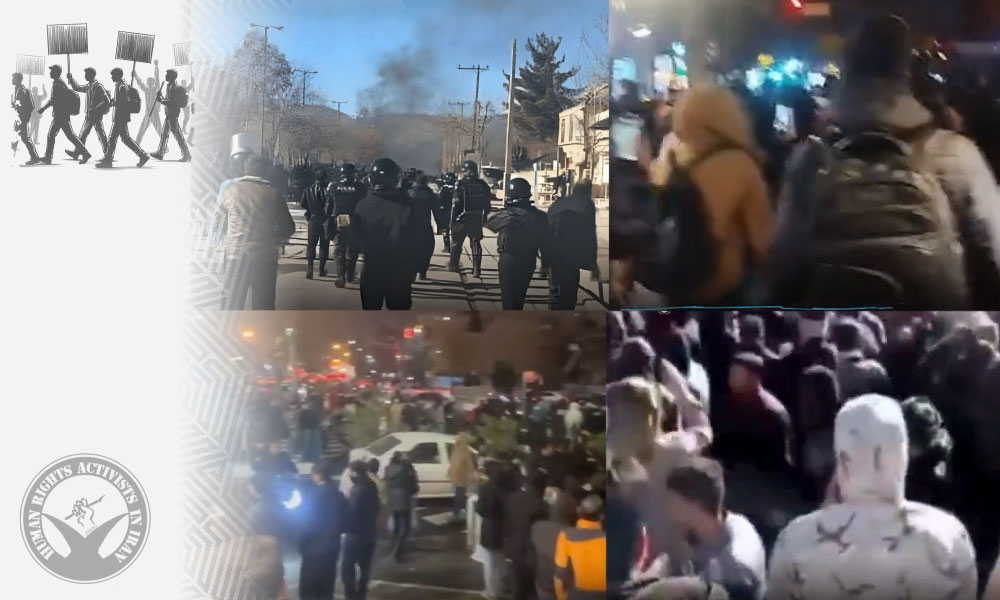
HRANA – Protests and strikes in cities across Iran entered their seventh day today, January 3. Analysis of updated and verified data indicates that despite an intensified security climate, the expanded presence of law enforcement-security forces, and continued on-the-ground confrontations in some areas, the nationwide scope of the protests has remained extensive, with demonstrations continuing in diverse forms. Over the past seven days, protests have been recorded at least 174 locations in 60 cities across 25 provinces. During this period, at least 582 individuals were arrested, and at least 15 protesting citizens lost their lives.
Protests that initially began with strikes and trade-related gatherings continued into their seventh consecutive day, taking the form of street demonstrations, limited trade actions, and student protests at several universities. As on previous days, reports indicated that law enforcement–security forces resorted to violence, employed crowd-control measures, carried out arrests, and imposed a heightened security atmosphere in a number of cities.
Background of the Protests
The protests emerged in a context where economic pressures on broad segments of society have reached a critical stage, and clear signs of disruption in the cycle of daily livelihoods are visible. Repeated surges in exchange rates, prolonged market instability, and the continuous decline in purchasing power have darkened and rendered unpredictable the economic outlook for households and trade activists alike, turning financial insecurity into a widespread experience.
In the days leading up to the start of the protests, reports indicated that exchange rates had crossed new thresholds, alongside a downturn in the capital market and capital outflows. Analysts have interpreted this trend as a shift of liquidity toward safer markets such as gold and foreign currency, and a decline in public trust in economic policies. At the grassroots level, the consequences have included the closure or partial shutdown of trade units, increasing difficulty in sustaining small businesses, and the spread of protest and strike waves in various cities, protests rooted not in a single short-term factor, but in the long-term accumulation of livelihood pressures and the erosion of hope for improved conditions.
Geography of the Protests
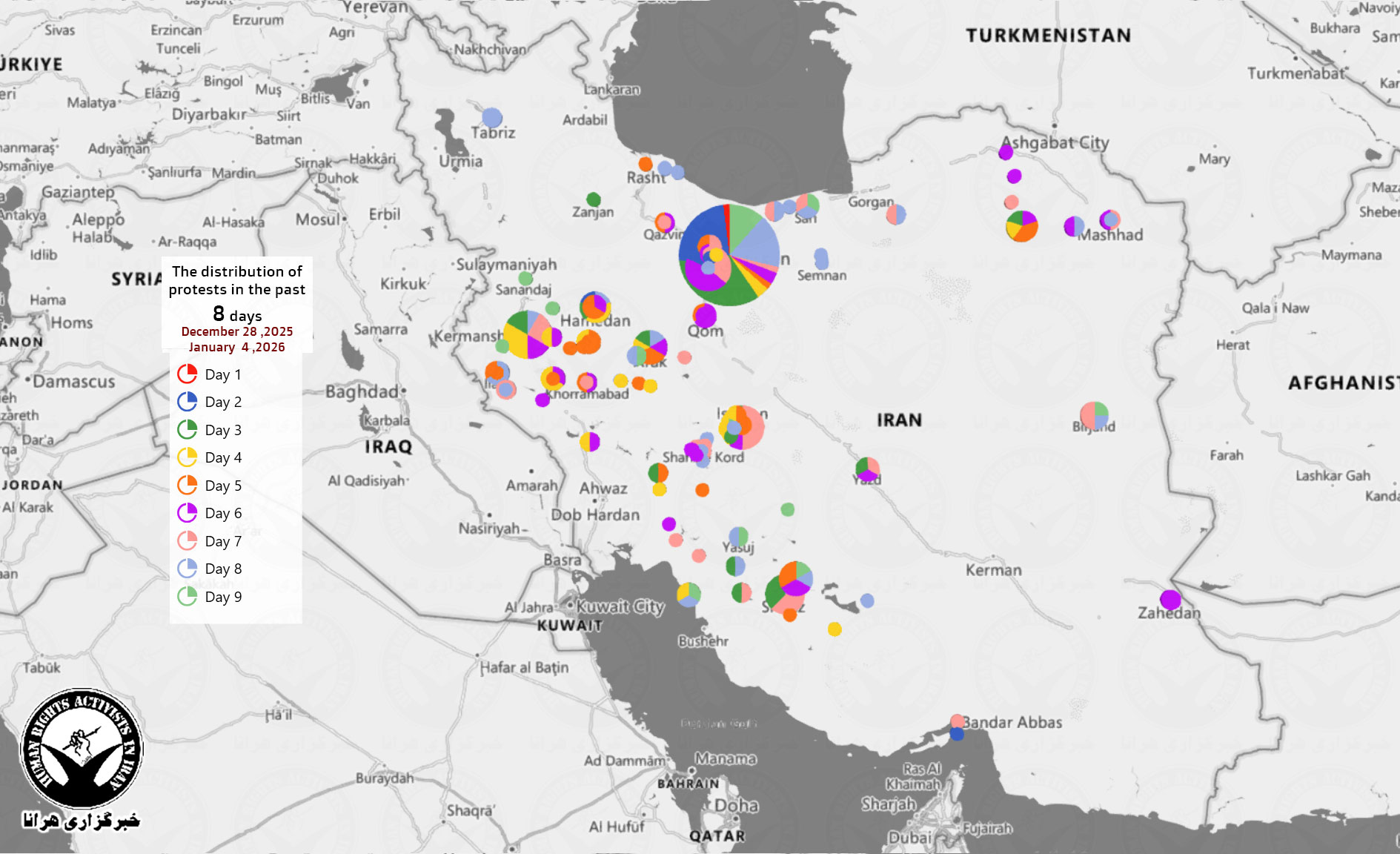
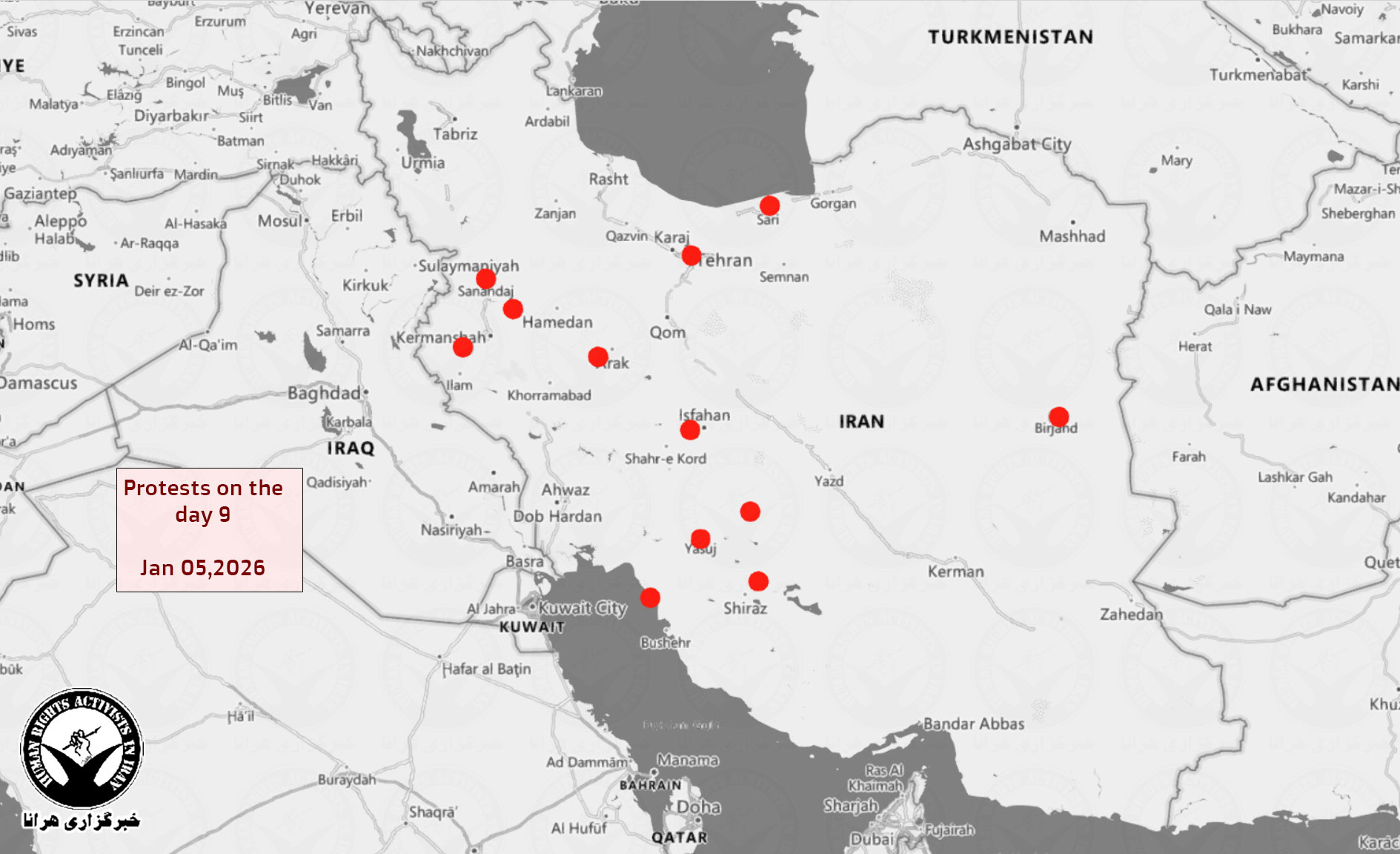
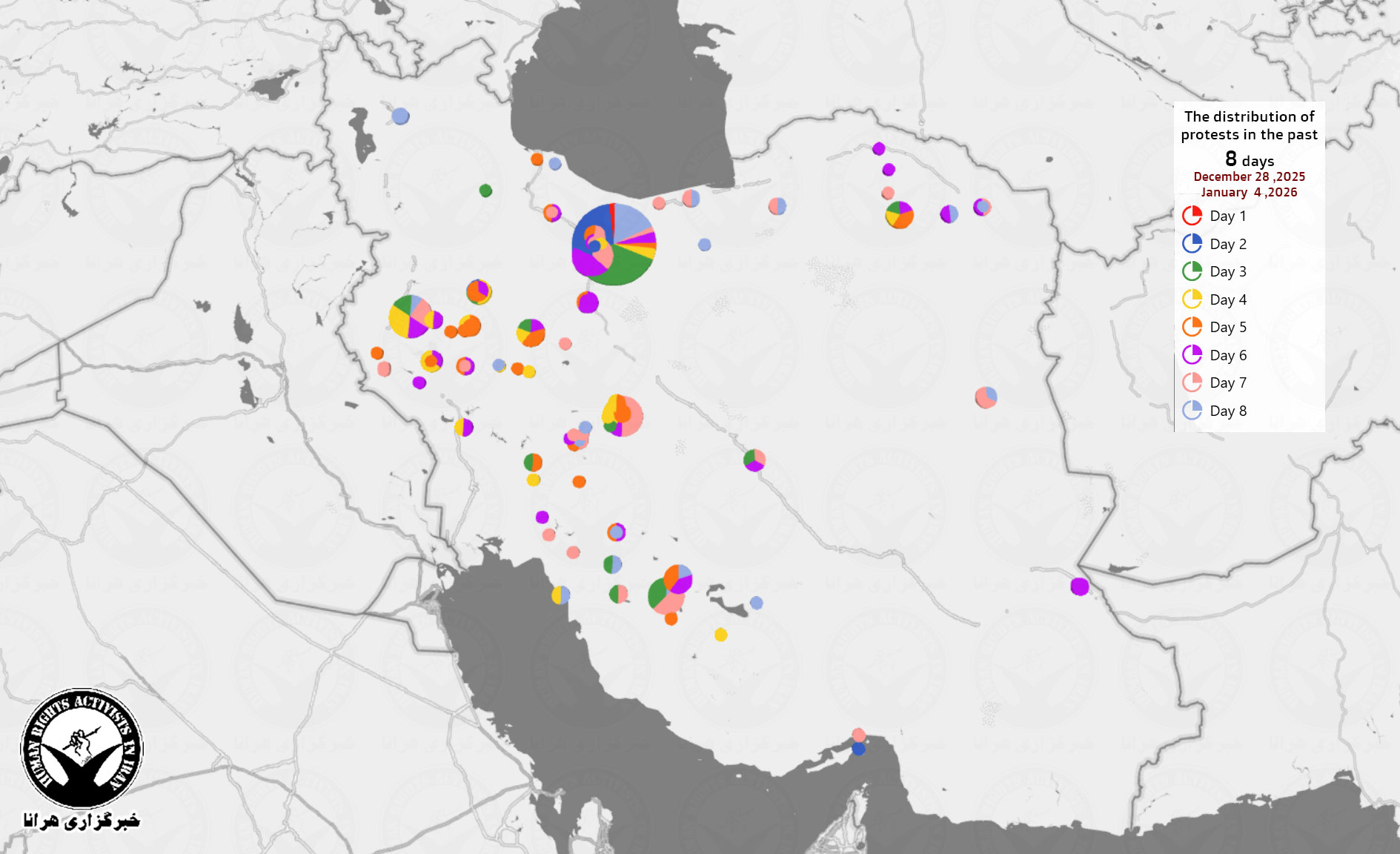
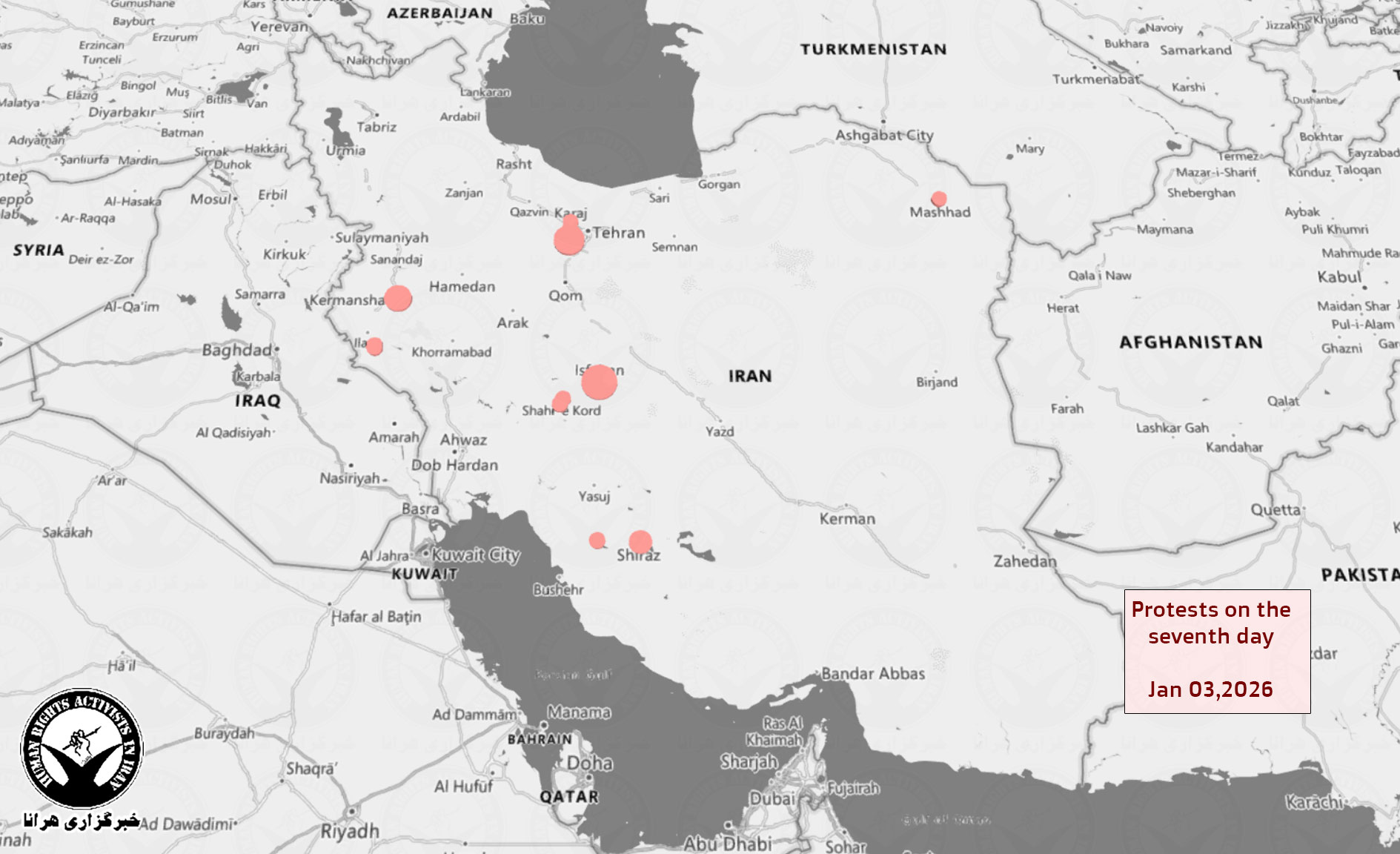
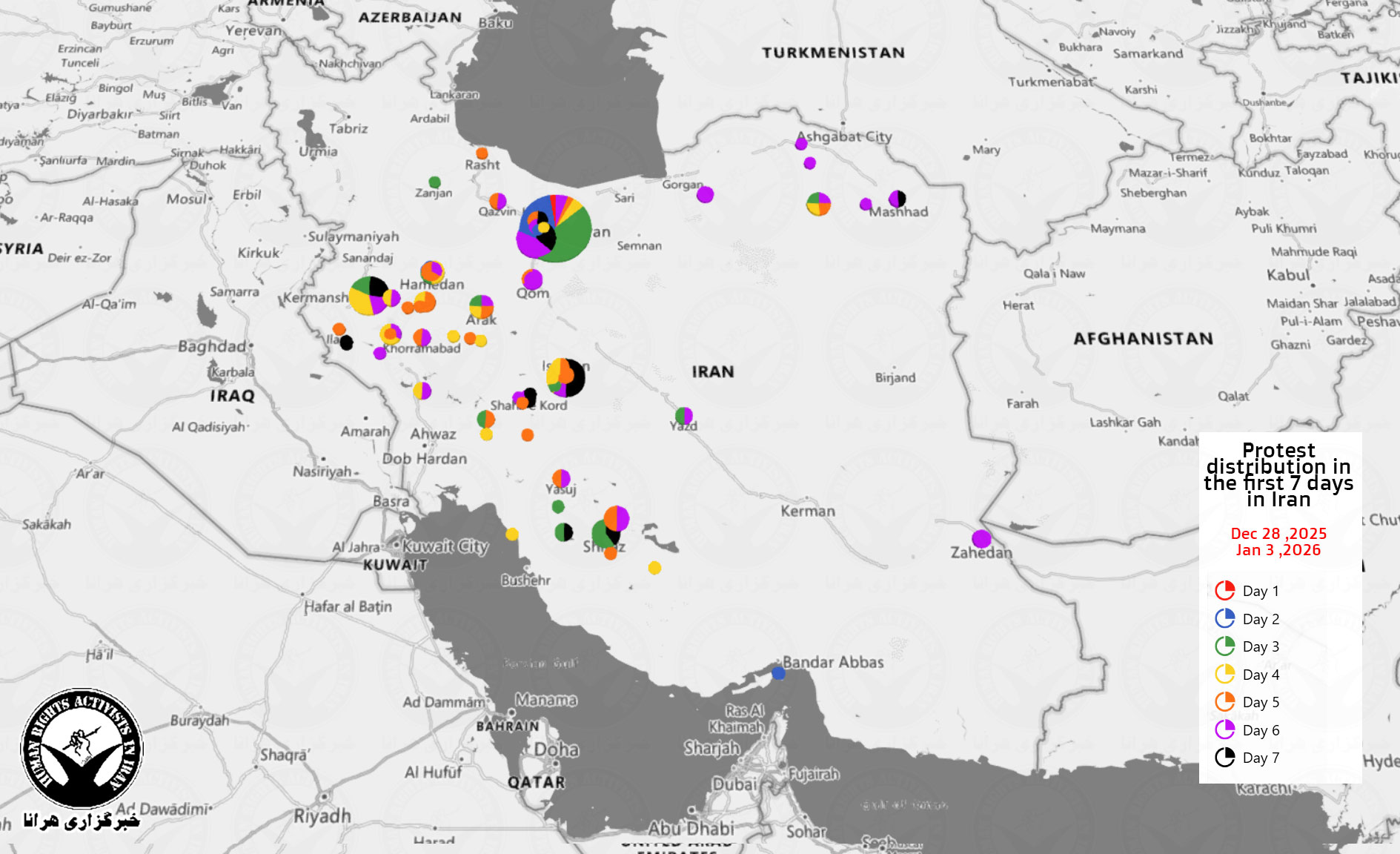
Based on updated and aggregated information, at least 174 locations in Iran have witnessed protests, street gatherings, or trade strikes over the past seven days. These protests have been reported across 25 provinces, and during this period, 18 universities have also seen student protest activities.
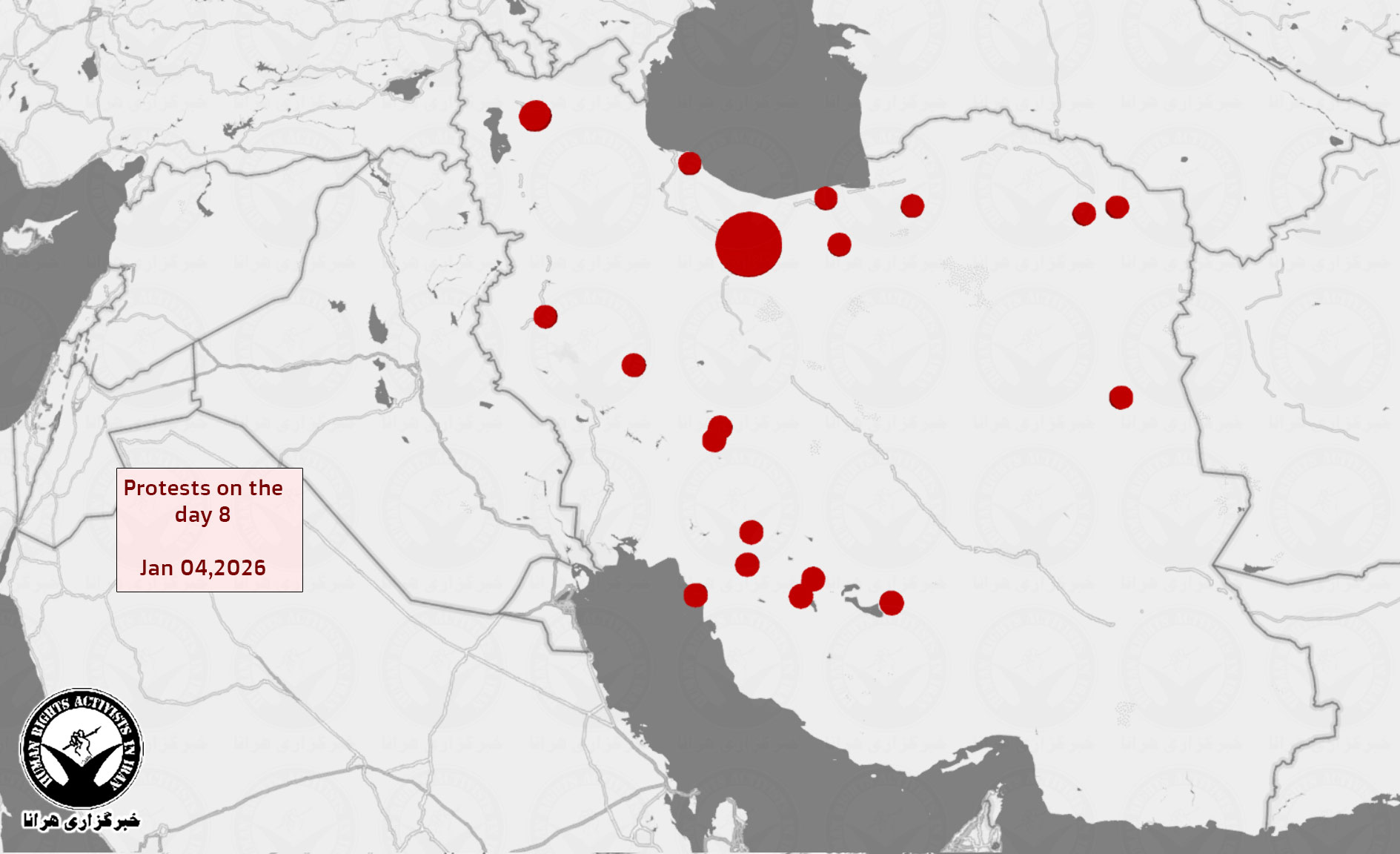
In the past 24 hours, which constitute the seventh day of protests, protest gatherings were recorded in 12 cities across 8 provinces, including Kazerun, Malekshahi, Kermanshah, Shiraz, Mashhad, Arkavaz, Isfahan, Tehran, Hafshejan, Karaj, Shahrekord, and Fardis. Among these, two protest actions on the seventh day were reported by university communities, falling within the same 18 universities included in the cumulative seven-day statistics. Available data indicate that despite daily fluctuations in the intensity and spread of protests, universities have continued to serve as one of the focal points of dissent.
An examination of the geographic distribution of protests shows that these activities have not been limited to major metropolitan areas, but have also encompassed smaller cities and various regions of the country, reflecting the horizontal expansion of the protests and the participation of diverse social groups in this wave of demonstrations.
According to verified reports up to the time of publication, a total of 174 protests have been reported over the past seven days in 60 cities across 25 provinces. Eighteen student gatherings at 15 universities are also included in these figures.
Methods of Protest and Slogans
A review of verified videos and reports indicates that, as in previous days, the protests on the seventh day reflected a broad spectrum of demands. The slogans voiced during these gatherings ranged from livelihood and economic grievances to criticism of governance, opposition to restrictions on individual and social freedoms, and calls for justice.
In some gatherings, protests took the form of trade strikes, the closure of commercial units, or short-term street assemblies, while in others, limited and dispersed marches were reported. The repetition and prevalence of these themes across different cities indicate that the boundary between trade-related and everyday demands and political demands has become blurred, and that the ongoing protests have taken shape on the basis of accumulated, multilayered grievances.
Within the framework of its human rights mission, HRANA focuses its reporting on slogans and demands that are directly related to violations of or calls for human rights, fundamental freedoms, and citizens’ civil rights. The persistence of these demands in various parts of the country reflects the depth of public discontent and the overlap of economic, social, and political demands within the context of the ongoing protests.
Conduct of Law Enforcement-Security Forces and Details of Violence
On the seventh day of nationwide protests, published reports and videos continue to indicate the persistence of a heavy security atmosphere and the use of repressive measures by law enforcement- security forces to prevent the formation or expansion of protest gatherings. Videos released from various cities show violent confrontations, gunfire, the use of tear gas, and the arrest of protesters.
In a number of cities, reports have emerged of citizens being injured as a result of gunfire by law enforcement-security forces. In some cases, citizens have refrained from seeking medical treatment out of fear of arrest. Videos have also been published showing the violent arrest of citizens, including women protesters, in public spaces, indicating the use of physical force during arrests.
Field reports suggest that in some cities, protest gatherings have extended into symbolic spaces or main thoroughfares, prompting law enforcement-security forces to use crowd-control tools to disperse protesters. At the same time, the widespread deployment of security forces in main streets, squares, and around sensitive urban centers has been reported, with the security atmosphere intensifying in parts of these cities.
Alongside these developments, official accounts provided by local authorities regarding some of the deaths have been met with doubt by eyewitnesses and contradicted by unofficial reports. Details surrounding the circumstances of these deaths remain under review and subject to verification.
Fatalities
According to updated information from HRANA, the deaths of at least 16 people during the seven days of protests have been confirmed. Among the fatalities, at least one was a member of law enforcement-security forces, while the remaining cases involve protesting citizens.
In several instances, official narratives presented by authorities have conflicted with eyewitness accounts and unofficial information, and details regarding how these individuals lost their lives are still being investigated and verified. For example, on the evening of Friday, January 2, 2026, during popular protests in the city of Qom, one protester lost their life. While the Provincial Security Council confirmed the death of this citizen, it claimed that the individual died as a result of the explosion of fireworks they were carrying. However, eyewitnesses have challenged the official account, stating that the protester’s death occurred as a result of actions by security forces present at the scene.
Separately, the political and security deputy governor of Qom reported the death of a 17-year-old teenager from Qom during protests the previous night, claiming that the teenager was killed by gunfire from protesters.
HRANA has also been able to confirm the identities of two other protesting citizens who died as a result of violence by law enforcement–security forces: Amirhossein Bayati in Hamedan and Ahad Ebrahim-Pour in Delfan.
The agency emphasizes that due to severe restrictions on information, security pressure on families, and a closed media environment, the number of fatalities may increase or details in some cases may change. This section will be updated if new information becomes available.
Arrests and Security Pressures
Over the past seven days of protests, at least 582 protesting citizens have been arrested, although the actual number of detainees is estimated to be significantly higher.
Simultaneously with street protests by citizens, reports received by HRANA from Karaj Central Prison indicate that prisoners in Wards 15 and 16 were forcibly transferred to other wards by prison authorities, and these two wards have been designated to hold detainees from the recent protests.
Today, HRANA also received reports from Qom Prison indicating that approximately 200 detained citizens have been transferred to this facility. These individuals were arrested during the protests, and HRANA is currently investigating their identities.
Meanwhile, reports from Yasuj indicate that at least 81 people have been arrested in recent days, 70 of whom are under the age of 18 and have been transferred to the Juvenile Rehabilitation Center and Yasuj Prison. Eleven other detainees remain held in security detention facilities.
According to published information, a significant portion of those arrested are teenagers. In Sabzevar, Zahra Mahdavi, Faraz Ziaei, Meysam Zakeri, Nazanin Zahra Mousavi, Saba Mahroomi, and Houman Balashabadi, all 17 years old, were arrested and transferred to the Mashhad Juvenile Rehabilitation Center. In Izeh, Shahpour Alborzi and Hessam Mohammadi, both 16 years old, were arrested by security forces. In Yasuj, Ilya Akvanian, a 15-year-old teenager, was also arrested.
Intelligence forces of the IRGC in Isfahan arrested two teenage girls during yesterday’s protests in the city. At the same time, a video of their forced confessions was published, though it is unclear under what conditions it was recorded. In the video, the two teenagers claim they received money from an individual to participate in street protests.
As arrests continued, a number of students and citizens were detained in various cities. Majid Jamshidzadeh, an undergraduate industrial design student at Iran University of Science and Technology, was arrested in Tehran and transferred to an unknown location. Amir Mohammad Rostami, an architecture student approximately 26 years old, was arrested during protests in Nazi Abad, Tehran, and was beaten at the time of arrest. Mohammad Saebi, a former member of the University of Tehran’s student trade council, was arrested by security forces in Yazd. Amirhossein Khaleghi, a law student at Rajaee University in Qazvin, was arrested at Khayyam Square in Qazvin, and Yousef Rezaei, a petroleum engineering student in Yasuj, was also arrested in the city. No information is available regarding the location of detention or charges against these two students. In addition, Erfan Tajabadi, Erfan Abed in Sabzevar, and Pouria Keyshams, Arman Soleimani, Nemat Heydari, and Mohammad Karimi in Masjed Soleyman; Peyman Yousefi in Dezful; and Parsa Akaber in Yasuj are among other reported detainees.
In Mashhad, Mohammad Taheri Parsa; in Nahavand, Amir Mohammad Khazaei and Alireza Khazaei; in Kashmar, Reza Abdi; and in Esfarayen, Ali Ghavidel, Abbas Beidi, Arian Heydari, Issa Shakouri, Peyman Mirzaei, and Alireza Ja’fari were arrested. In Kermanshah, Sepideh Kermanshahi, Setareh Mohammadi, Sayeh Shooshtari Kermanshahi, and Reza Shooshtari were among those detained and later released on bail. In Dehloran, Reza Seifi and Ilya Ghasemi were arrested, while in Darreh Shahr, Mohammad Taha Zeynivand, Peyman Hassanvand, Amin Shokri-Pour, Shahrooz Shokri-Pour, and Esmail Zohrabi were detained. In Zahedan, Zobair Barahoui, Hanif Barahoui, Omar Gamshadzehi, Ehsan Naroui, and Abdulrahman Naroui were arrested, and in Gachsaran, Mohammad Miri was also listed among detainees.
Additionally, Soheila Hejab, a civil activist, was violently arrested in Fardis, Karaj, and transferred to Kachouei Prison. Her physical condition has been reported as poor. In Harsin, four citizens, Yousef Safari, Peyman Hosseini, Morteza Hosseini, and Ehsan Hosseini, were arrested on the evening of January 1 and transferred to the IRGC detention facility in Kermanshah. Reza Abdi, 35 years old, from Kashmar and the father of two children, was also arrested today by agents of the Ministry of Intelligence in the city due to his online activities.
With the identification of six additional citizens, Mohammadreza Borichi, Kian Salarnejad, Zobair Barahoui, Hanif Barahoui, Omar Gamshadzehi, Ehsan Naroui, and Abdulrahman Naroui, the number of detainees from yesterday’s protest gathering in Zahedan has risen to 10. Previously, the arrest of three others had been reported. Among them, Kian Salarnejad is a student of industry and mining engineering at the University of Sistan and Baluchestan.
In most of these cases, no information has been released regarding the detainees’ place of detention or the charges against them.
Kurdpa News Agency published the identities of 47 citizens arrested in Kermanshah and Ilam provinces. Among them are four teenagers, Fardin Hatami, Reza Khosravi, Mohammadjavad Zarei, and Abolfazl Zarei, from Moromori in Abdanan, as well as Mohammadmehdi Karami, a 17-year-old teenager arrested in Harsin. According to the report, Arshia Joushan and Omid Beiranvand were arrested in Dehloran. In the same city, Kourosh Nouri along with Alireza Salehi, Farzad Shokri, Milad Kiadi, Omid Malekmohammadi, Sharif Azad, Shayan Momeni, Amirhossein Alizadeh, Fardin Aghaei, Ali-Mohammad Heyati, Abolfazl Jamkhaneh, Sajjad Azad, Abdullah Azad, Erfan Farahmand, Alireza Rahmani, and Amirreza Rahmani were also arrested. Meanwhile, additional arrests were reported in other cities in Ilam Province, including Abolfazl Ghasemi, Sattar Zeidi, Reza Heydari, Saman Gholami, and Shayan Aslmarz in Darreh Shahr, and Rahim Sadeghi in Sarableh, who was transferred to an unknown location. In Kermanshah Province, Younes Jamshidi, Milad Shirazi, and Navid Rostami were arrested, and in Harsin, Rahman Azarang, Sajjad Kakaei, Shapour Rashidi, and Mehdi Bali were arrested along with Mohammadmehdi Karami. Later, Zahed Afshari, Yousef Kakavand, and Noureddin Mousazadeh were also arrested. In Sarpol-e Zahab, seven citizens, Mehdi Karimi, Jabbar Jamshidi, Ghaem Badri, Masoud Aghaei, Ahad Moradi, Esfandiar Sarvari, and Askar Najafi, were arrested by plainclothes security forces and transferred to unknown locations.
During the protests in Esfarayen, Ali Ghavidel, Abbas Beidi, Arian Heydari, Issa Shokouri, Nader Tavakoli, and Peyman Mirzaei were arrested by security forces on the evening of 11 Dey. It has also been reported that Alireza Jafari was arrested today in the city. Additionally, Mohsen Heydarbigy, Morad Haseli, Amin Nourmanesh, and Farhad Mohammad Rashid were arrested in Badreh County.
As part of continued responses by security institutions, the police commander of Shushtar announced the arrest of several protesters during Thursday night protests in the city, claiming that “a handgun, 12 machete blades, and a magazine blade” were seized from them. At the same time, the IRGC “Ruhollah” Public Relations Office in Markazi Province announced the arrest of two citizens by IRGC intelligence agents, alleging that they were “administrators of two hostile and riot-inciting channels.” Images published by state broadcaster IRIB show IRGC intelligence taking control of two Telegram groups and posting messages threatening members with identification and arrest.
Separately, the Public and Revolutionary Prosecutor of Chardavol announced the arrest of several citizens during last night’s protests in Sarableh, stating that others had been identified and “would be arrested today and tomorrow.” Mohammad Sohrabzadeh described these citizens as “organized elements” and claimed they had engaged in “gunfire” during the protests, without specifying their identities or number.
Meanwhile, the IRGC Abolfazl Public Relations Office in Lorestan reported the arrest of three citizens in Khorramabad, alleging that they were in contact with an overseas media outlet with the aim of “destroying public property.” The identities of the detainees were not disclosed, and a video of their forced confessions was released. Another video of a forced confession by a detained citizen was also published by media outlets close to security institutions. In the video, recorded under unclear conditions, a young man expresses regret over posting protest-related content on his personal Instagram account.
Reactions
On the seventh day of protests, Ali Khamenei, the Supreme Leader of the Islamic Republic of Iran, in his first remarks since the start of the new wave of nationwide protests, emphasized the need to confront what he described as “riots.” He stated that protest, in his view, is acceptable and that dialogue with protesters is possible, but added that “a rioter must be put in their place,” stressing that dialogue with “rioters” is futile. In another part of his remarks, he referred to recent protests by shopkeepers and bazaar merchants, describing the bazaar as “one of the most loyal segments to the system.” He claimed that the Islamic Republic cannot be confronted in the name of the bazaar and alleged that some individuals are exploiting the economic demands of merchants to undermine and destabilize the country. He also described sharp fluctuations in exchange rates and the devaluation of the national currency as “unnatural,” attributing them to “the enemy.”
Today, Mai Sato, the UN Special Rapporteur on the situation of human rights in Iran, warned about the escalation of confrontations by security forces against protesters in various parts of the country. She stated that signs of a growing pattern of confrontation and violence nationwide are evident. Emphasizing the need to respect citizens’ fundamental rights, she called on Iranian authorities to uphold freedom of expression, freedom of association, and the right to peaceful assembly, and to refrain from using excessive force against protesters. Sato also warned that a repetition of violent crackdowns similar to those during the “Woman, Life, Freedom” movement could have serious consequences for the country’s civic space, stressing that citizens must be able to express peaceful protests without fear of repression.
Amnesty International also expressed serious concern over reports of protesters being killed in Iran and urged Iranian authorities to respect the rights to freedom of expression and peaceful assembly, and to refrain from using violence and unlawful lethal force against protesters.
Conclusion
The ongoing protests, which began in Tehran’s Grand Bazaar, have entered their seventh day marked by expanded geographic spread, increased public participation, and an intensified security presence. The combination of livelihood and political demands, the rise in arrests, and authorities’ efforts to simultaneously manage the crisis through economic and security measures underscore the government’s heightened sensitivity to the continuation of these protests.
HRANA continues to collect, verify, and complete information related to these protests and will publish supplementary reports should the gatherings persist or expand.