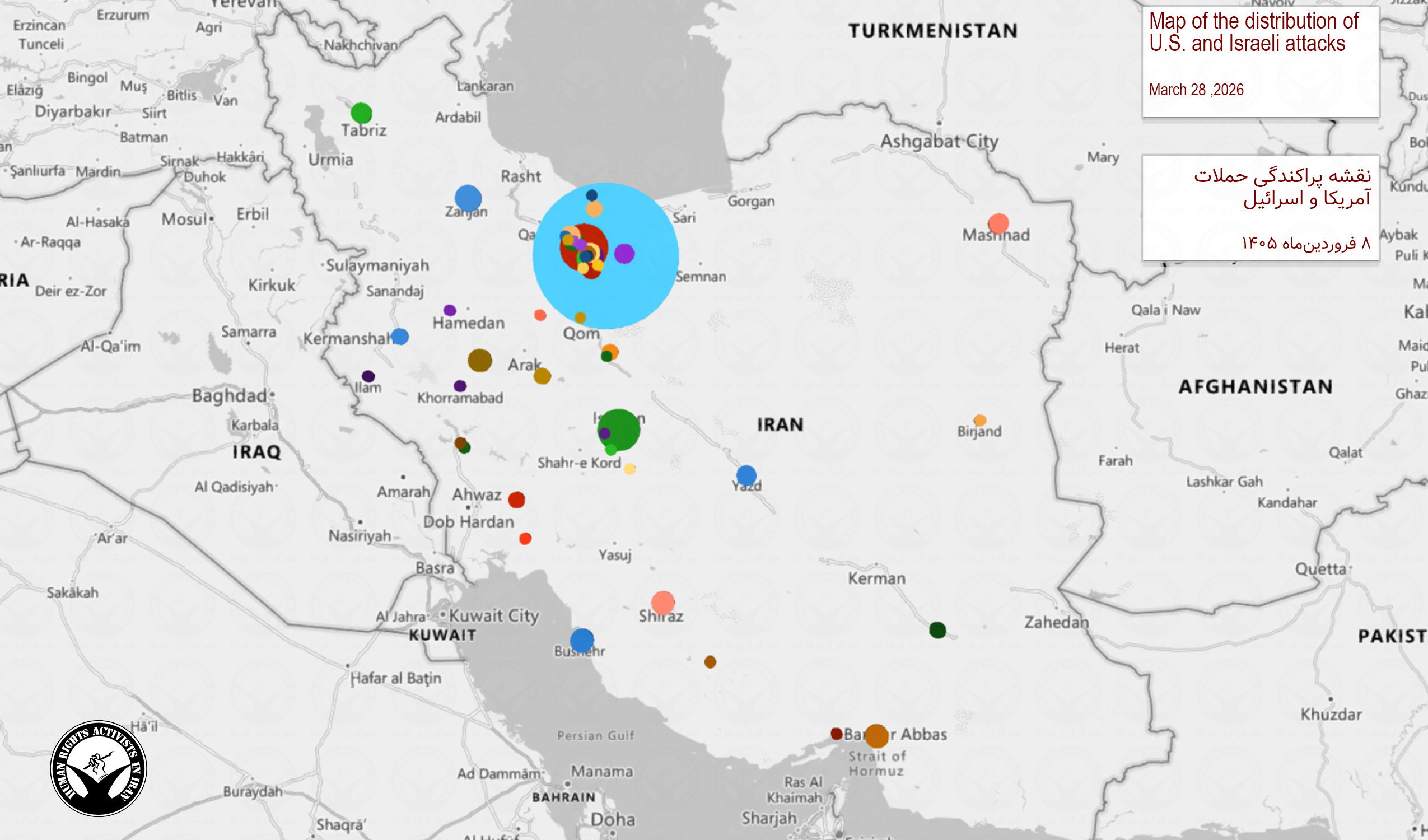
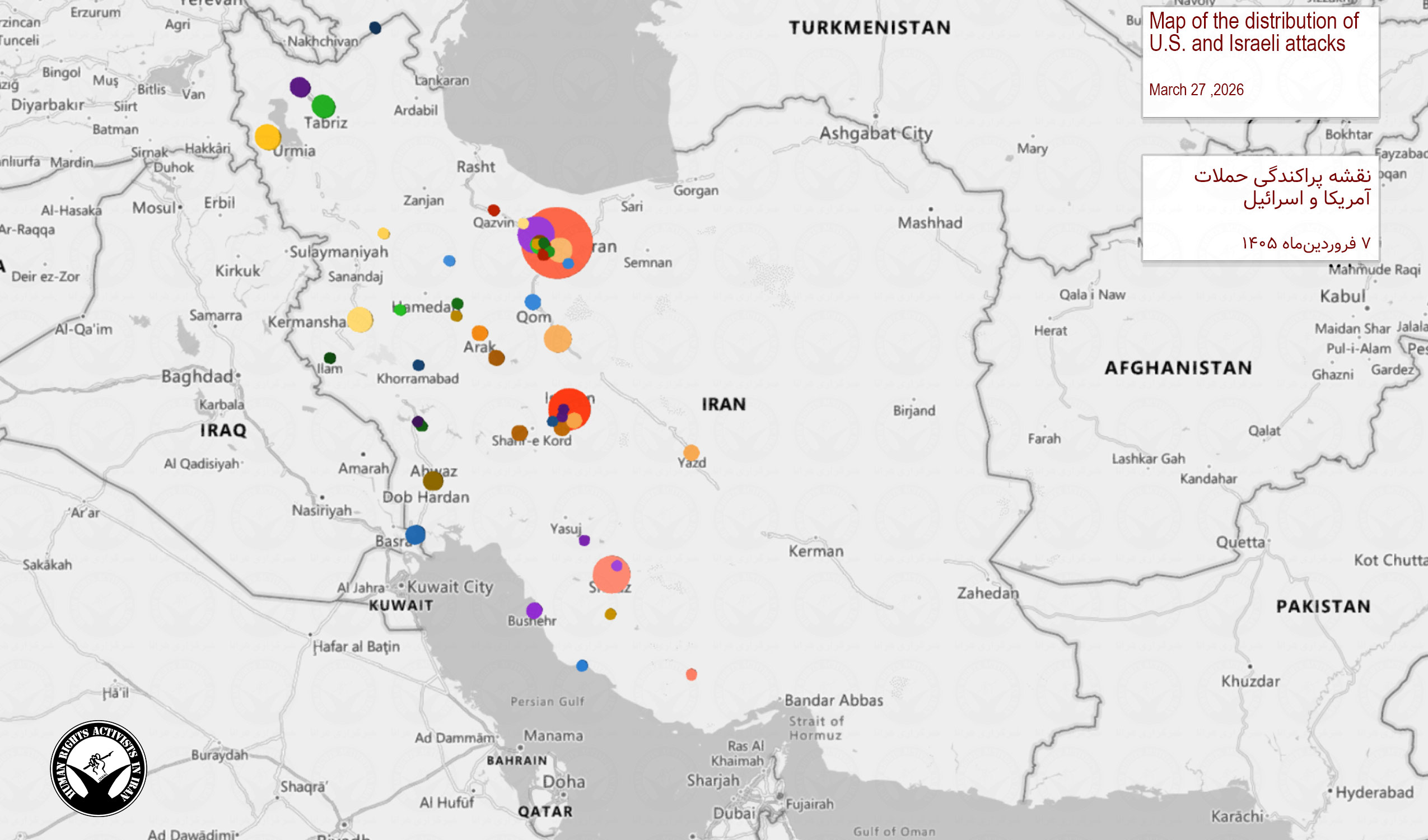
Day 20 of the U.S.-Israeli War on Iran: The Fire of War Reaches the Caspian Sea

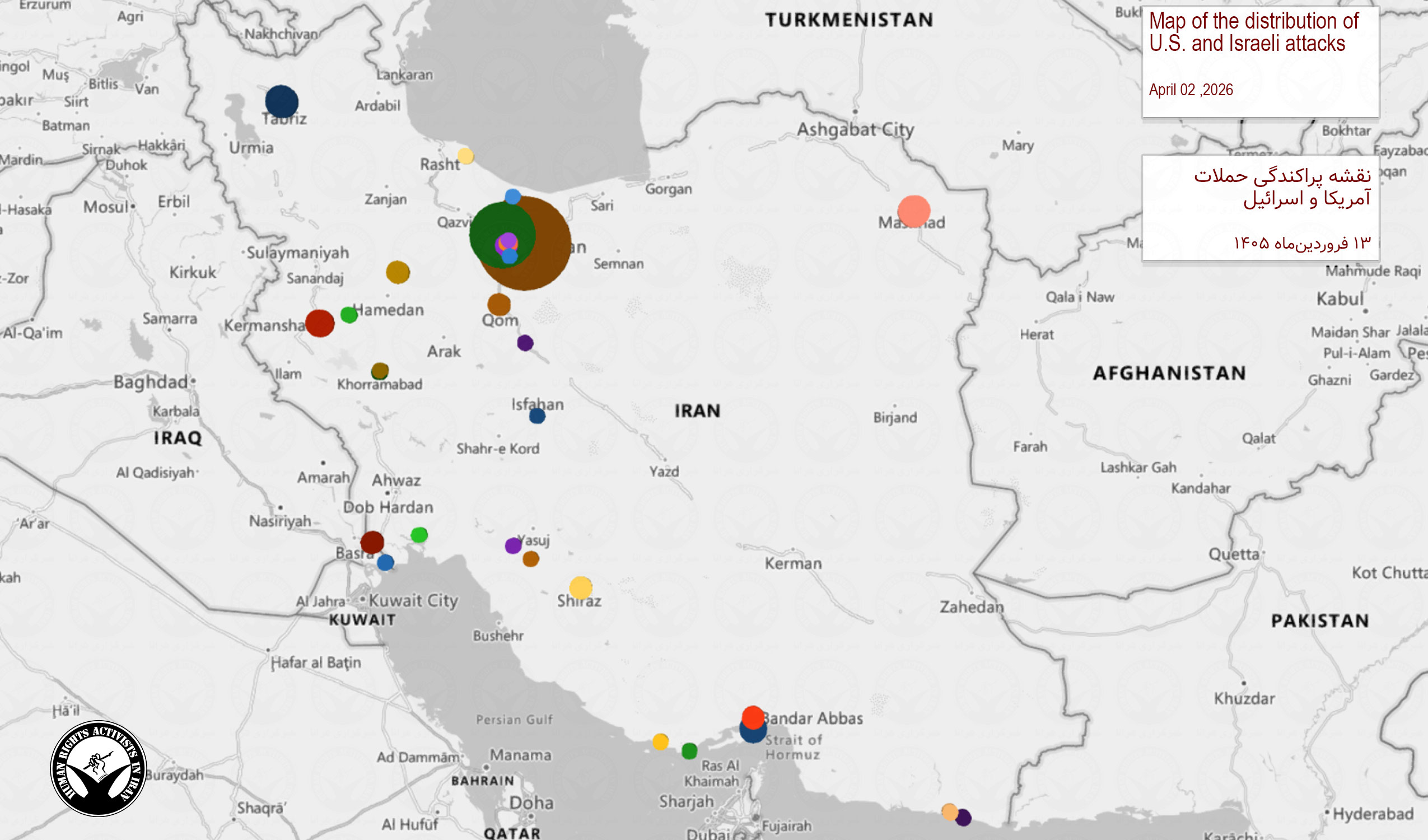
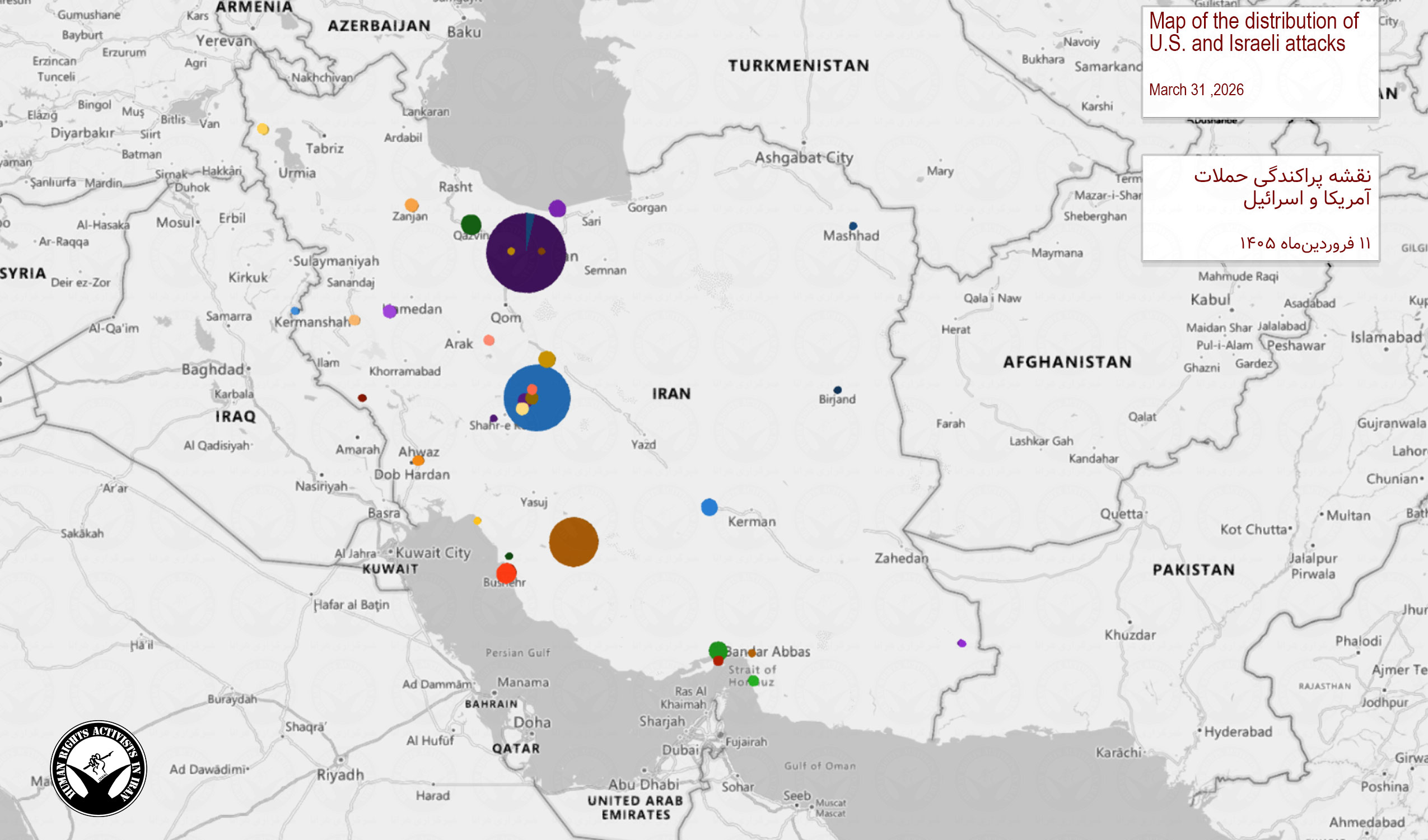
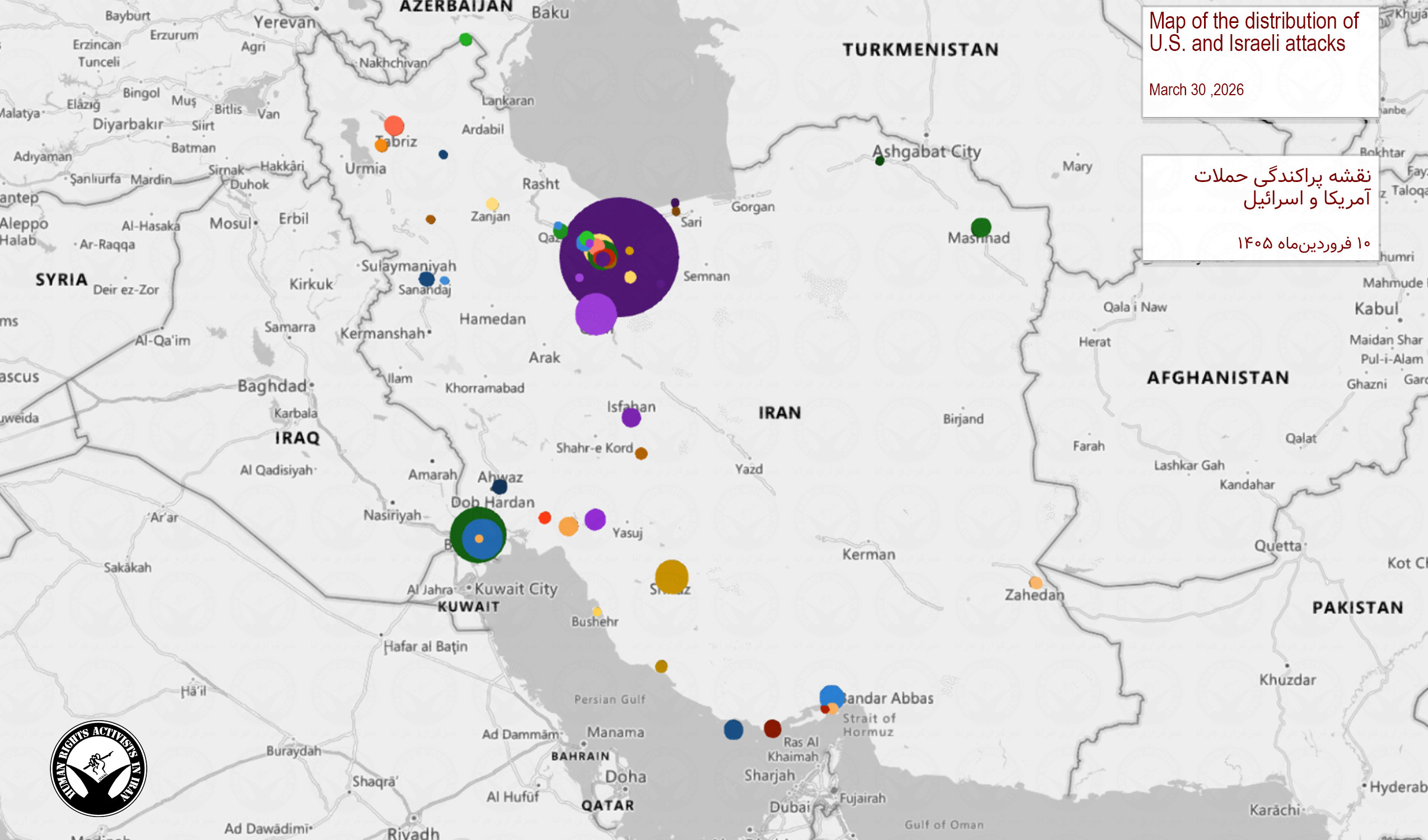
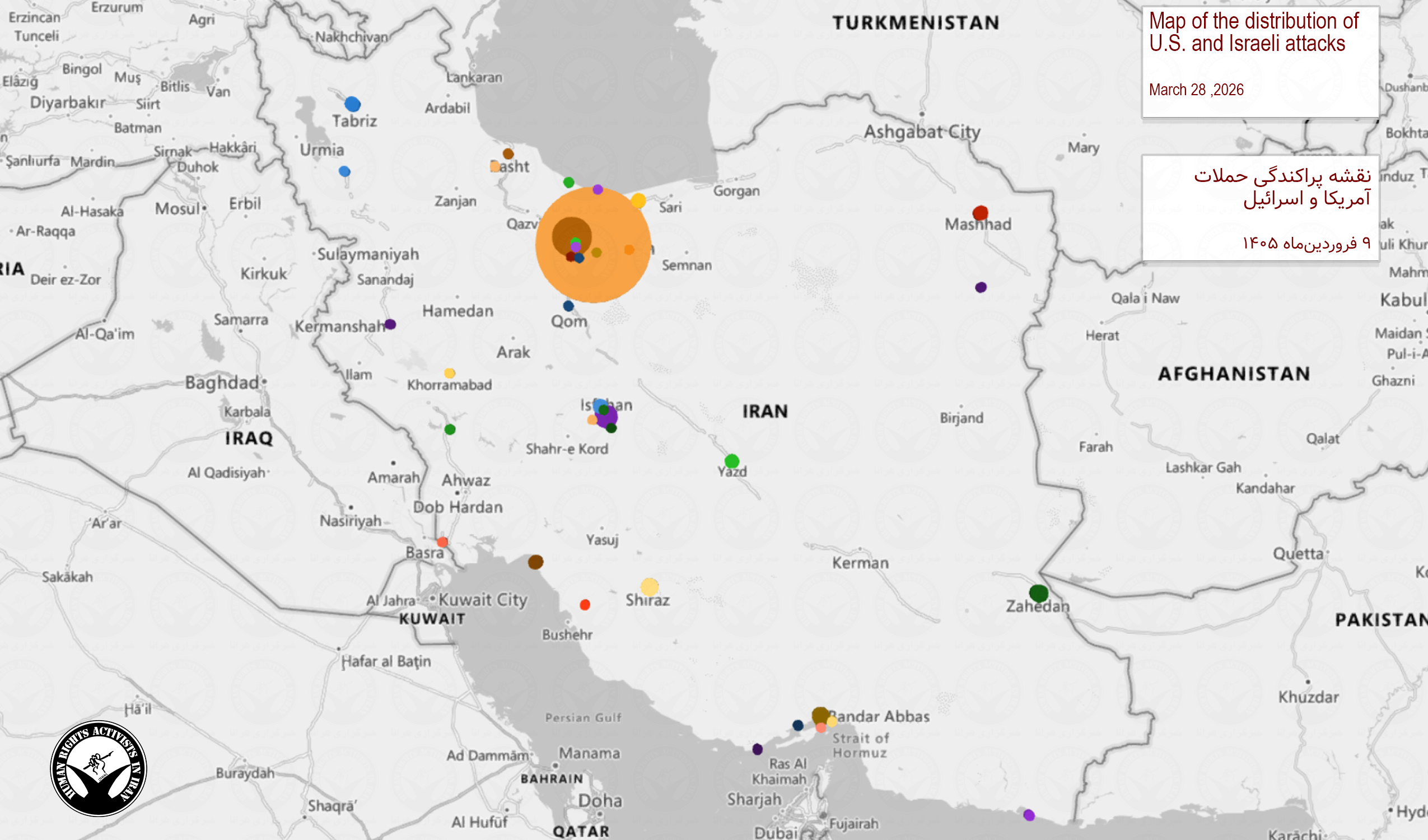
HRANA– In the last 24 hours, and as of March 19, 2026, at 17:00 ET, HRANA has recorded at least 70 attacks across 63 incidents in 12 provinces, resulting in a total of at least 75 casualties (killed and injured, both civilian and military). Today’s attacks, for the first time, targeted areas in the Caspian Sea region. At the same time, extensive strikes were carried out on Iran’s oil and gas facilities in Asaluyeh.

According to information recorded and verified by HRANA, from the first minutes of the day until the end of March 19, 2026 (Tehran time), at least 25 civilians were killed and 5 civilians injured.

Aggregated data since the beginning of the conflict on February 28, 2026, based on incidents recorded in the incident tab and using minimum values for figures marked “more than”:

• Civilian fatalities: 1,394 people (including at least 210 children)

• Military fatalities: 1153 people

• Unclassified fatalities (civilian/military): 639 people

1. Overview of Incidents in the Last 24 Hours

In the last 24 hours, incidents were reported across multiple provinces, reflecting a geographically dispersed pattern of hostilities.  In a large portion of the incidents, the method/type of attack has not yet been confirmed and has been recorded as “undetermined.” In cases where the attack type was identifiable, airstrikes and drone attacks were reported.

Preliminary analysis indicates that Tehran Province, accounting for 36% of all recorded attacks, ranks first among the provinces targeted. Fars Province follows with 13%, while the provinces of Azerbaijan and Hormozgan each account for 10%, placing them next. The list continues with Hormozgan, Isfahan, and Alborz provinces, respectively.

Distribution of attacks

In the past 24 hours, the recorded attacks have damaged 14 distinct objects or facilities. These include a range of different types of targets. In some cases, damage caused by nearby strikes or secondary consequences of the attacks has also been reported.

Examples of targets recorded over the past 24 hours:

• Haidar Karrar Base (Absard)

• Basij Qaramaq Base (Tabriz)

• Sarastan Launcher (Khorramshahr)

• Missile Site (Borazjan)

• Non-residential Area (Kerman vicinity)

For a number of the listed targets, the exact nature of the target (civilian/military/dual-use) is still under review, and classifications may be revised as additional information becomes available.

Facilities Protected Under International Humanitarian Law:

Under international humanitarian law, medical facilities, educational institutions, humanitarian facilities, religious sites, and emergency service centers are among the many objects that maintain special protected status and are afforded special protection. In the past 24 hours, HRANA has preliminarily recorded the following cases:

• Electronics Industries (Shiraz)

• Refinery (Shahr-e Rey)

• Majidiyeh Residential Area (Tehran)

• Customs Administration (Bandar Anzali)

• Bandarass Coastal Recreational Complex (Bandar Anzali)

3. Civilian Casualties

In the past 24 hours, at least 25 civilians, including 3 children, have been killed, and 5 civilians, including one woman, have been injured. All classifications are preliminary and may be updated as new information becomes available.

4. Military Casualties

During the reporting period, 15 military personnel were killed. Military casualties are generally reported in the context of attacks on Army and Islamic Revolutionary Guard Corps (IRGC) bases. Where possible, organizational affiliation and operational context are being assessed; however, not all details have yet been independently verified.

In some incidents, individuals have been killed in the vicinity of military targets; however, their official status has not yet been definitively determined. These cases remain under review, and if reliable information indicating a different status becomes available, the classification may be revised accordingly.

It is believed that military casualties are significantly higher than the figures reported in these reports. However, due to the sensitive nature of military information and the limited access of human rights groups and media to locations where military forces are present, this section largely reflects reports of senior officers or military personnel who were present in urban areas.

5. Confirmed but Unspecified Casualties

Of the reported casualties in the past 24 hours, 12 deaths and 18 injuries remain classified as unverified, meaning that HRANA has not yet been able to determine with sufficient certainty whether these individuals were civilians or military personnel.

Burials: Today, 18 burials resulting from attacks in previous days have been recorded.

A Note on HRANA Methodology

Note that, in line with HRANA policy, this report reflects only incidents that occurred within the territorial borders of Iran.

The information contained in this report is compiled through HRANA’s established documentation network. Data is collected from a combination of field reports, local contacts, medical and emergency sources, civil society networks, and open source materials, including publicly available images, videos, and official statements where relevant. Each reported incident is logged and assessed through an internal review process before publication.

Given the evolving nature of hostilities, information is gathered on a rolling basis and reflects the status of documentation at the time of publication.

The figures presented in this report may not reflect the full scope of harm. Ongoing hostilities, damage to infrastructure, communication disruptions, restricted access to affected areas, and security risks for sources may limit the ability to document incidents comprehensively.

Delays in medical reporting, difficulties in confirming identities, and restricted access to certain provinces may result in temporary undercounting. As access improves or additional evidence emerges, casualty figures and incident classifications may be revised accordingly.

HRANA remains committed to transparency, methodological rigor, and the continual updating of its findings as new verified information becomes available.

A Statistical Overview of Human Rights Violations in Iran in the Hijri Year 1404

HRANA – The year 1404 (Hijri calendar) paints a stark picture of ongoing human rights violations in Iran. The ongoing threat to freedom of thought and expression, bloody crackdown on peaceful protesters, increasing pressure on ethnic groups and religious minorities, the prosecution and harassment of human rights activists, the execution of juveniles, the issue of child labor, violations of women’s rights, and the poor conditions of detention centers and prisons are only some examples of the daily violations of human rights in Iran.

The comprehensive report by HRA’s Statistics and Documentation Center, presented below, outlines a deeply concerning human rights situation in Iran over the past year.

During this period (March 21, 2025 to March 20, 2026), a total of 78,907 citizens were arrested in Iran on ideological or political grounds, or in clear violation of fundamental human rights principles. Notably, 78,126 of these arrests were linked to cases involving freedom of thought and expression.

During the same period, the nationwide protests between December 2025 and February 2026 can be regarded as one of the most complex and multi-layered waves of unrest in the past two decades. These demonstrations differed markedly from previous protests in their geographical reach, the extent of repression, and the nature of the government’s response.

Taken together, these developments point to one of the most significant periods of repression in recent years, particularly in terms of the scale of arrests. However, due to internet shutdowns during the protests and subsequent restrictions, the actual number of arrests is likely higher than recorded, with some cases remaining outside statistical coverage due to limited access to information. For more details, refer to HRANA’s comprehensive report titled “Crimson Winter,” which documents the first fifty days after the start of Iran’s nationwide protests.

Freedom of Thought and Expression

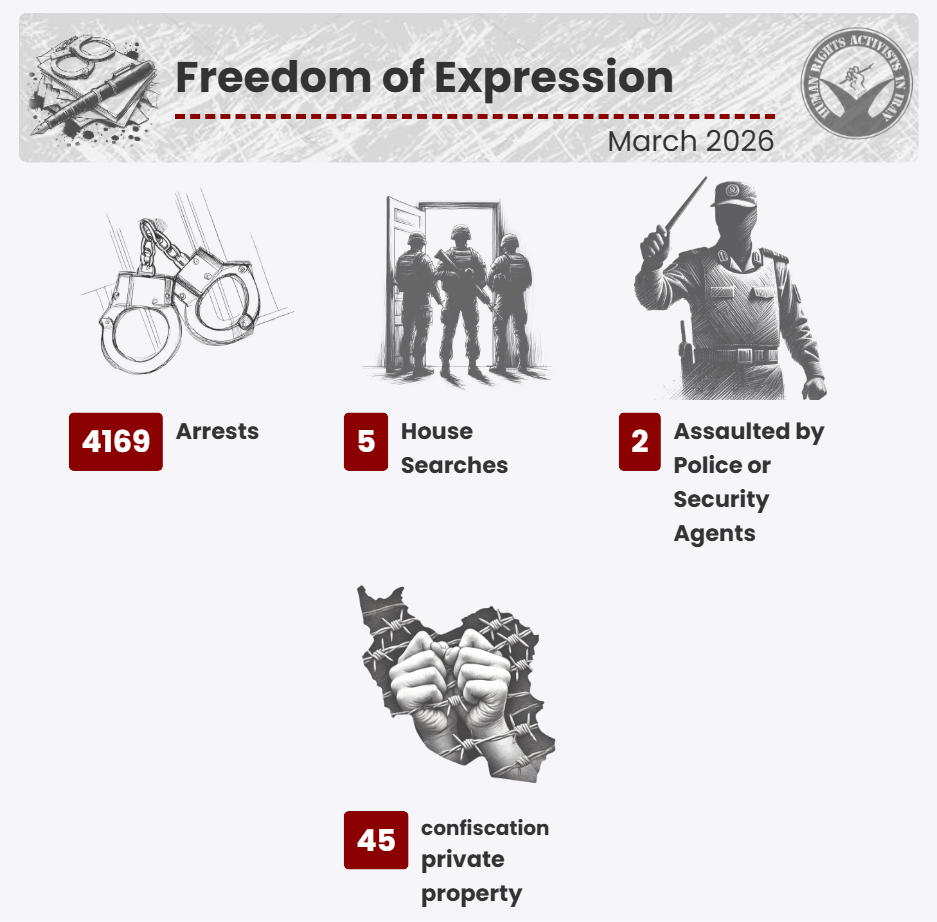
In 1404, at least 78,126 individuals were arrested for expressing their thoughts and opinions, of whom at least 228 were detained without a judicial warrant. Additionally, there were 250 cases of physical assault, 126 trials, 75 home searches, 15 instances of publications being declared criminal, 26 cases of internet filtering, 1 case of confiscation of a home and property, 793 protest gatherings, 11,744 summonses to security and judicial bodies, and 74 cases of prison sentences being carried out.

Over the past year, in violation of citizens’ right to freedom of expression, Iran’s judiciary issued a total of at least 13,812 months of imprisonment for 332 individuals. Of this amount, 13,173 months were discretionary prison sentences, and 639 months were suspended sentences. Notably, 1,693 months of these sentences were issued by appellate courts and 816 months by the Supreme Court.

In addition, 64 individuals were fined a total of 2,640.8 million tomans, 13 individuals were sentenced to 624 lashes, 13 individuals were sentenced to 492 months of exile, and 46 individuals were sentenced to deprivation of social rights.

Over the past year, Iran witnessed nationwide protests between December 2025 and February 2026, widely known as the January protests, which are considered one of the most widespread, complex, and multi-layered waves of unrest in the past two decades. These protests differed significantly from previous movements not only in terms of their geographical scope, intensity of violence, and scale of repression, but also in their underlying dynamics, the composition of participants, and the nature of the government’s response.

According to aggregated data from HRANA, during these protests, the number of confirmed fatalities reached 6,724 protesters, including 236 children. In addition to these confirmed figures, 11,744 cases remain under review, with the verification process still ongoing. Furthermore, at least 25,877 individuals sustained severe injuries, and the total number of arrests has been reported at 53,777.

Overall, 203 cities across all 31 provinces of the country witnessed protests on 682 occasions. In some cases, due to the heavy presence and strict control of security and military forces, protesters were unable to take to the streets, and demonstrations took other forms. Based on the 2016 census, the population of these 203 cities is estimated at 44,866,746—accounting for more than half of the country’s total population.

In addition to 627 instances of widespread street protests, 36 universities also became sites of student demonstrations, with 55 protest gatherings recorded across academic settings.

Annual Statistical Comparison of Arrests in the Past Five Years (Freedom of Thought and Expression)
YearNumber of ArrestsArrests per
Million People
Percentage Change
Compared to Previous Year
14001,41916+ %5,405
140128,64732+ %172,7
14022,49638.6+ %3,030
14031,30014.2+ %5,909
140478,126845,4

Workers’ Rights

Over the past year, a total of 1,709 reports were recorded related to labor rights, based on which 20 individuals were arrested. Additionally, 2 workers or labor activists were sentenced to a combined 75 months of discretionary imprisonment and fines totaling 30 million tomans. It is also noteworthy that 9 summonses to security and judicial authorities, 5 interrogations, 2 trials, 2 cases of self-immolation, 724 protests, and 390 strikes were recorded.

In 1404, reports of delayed or unpaid wages amounted to at least 672 months across 188 industrial and service units. Additionally, there were 2,457 dismissals or layoffs, 658 cases of unemployment, 560 months without work insurance coverage, 9 factory closures, and 2,259 workers left in uncertain conditions.

Workers’ Rights-1404

Trade and Labor Unions

In 1404, a total of 914 reports related to trade and unions groups were recorded by HRA’s Statistics and Documentation Center. According to these reports, a total of 39 union activists were arrested. Additionally, there were 44 summonses to judicial and security authorities, 191 cases of business closures (sealed premises), 2 instances of physical assault, 1 license revocation, 17 trials in judicial bodies, 4 interrogations by security institutions, 18 dismissals or layoffs, 407 cases of forced retirement, 757 protests, at least 41 strikes, at least 105 months of delayed wages, 4 home searches, and 4 cases of prison sentences being carried out.

Furthermore, 46 individuals were sentenced to a total of 347 months of imprisonment, including 344 months of discretionary sentences and 3 months of suspended sentences. Of this total, 89 months were issued by appellate courts. In addition, 2 individuals were sentenced to 120 months of exile, 2 individuals to 148 lashes, and 27 individuals were fined a total of 359.1 million tomans.

Trade and Labor Unions-1404

Prisoners’ Rights

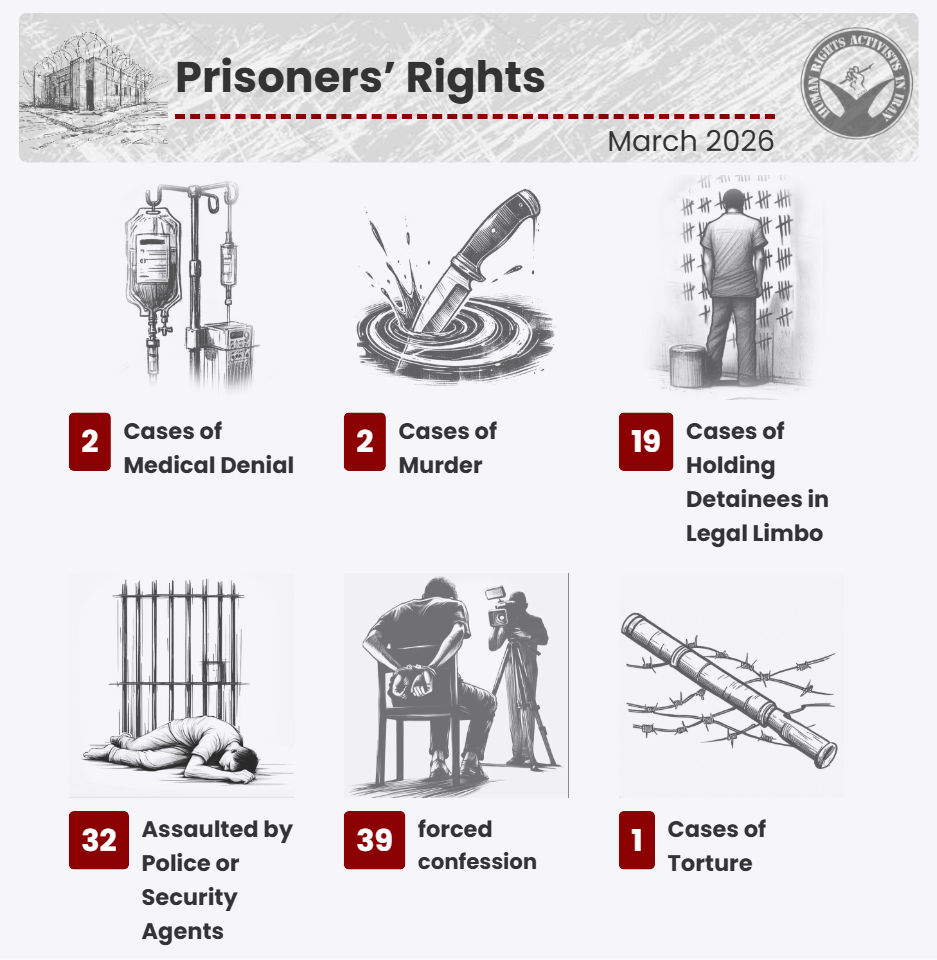
Regarding prisoners’ rights in 1404, documented violations included 25 cases of physical assault against prisoners, 182 instances of denial or lack of access to medical care for prisoners and detainees, 307 transfers to solitary confinement, and 172 hunger strikes by prisoners and detainees.

Additionally, there were 38 cases of forced transfers, 187 instances of threats and pressure against political and ideological prisoners, 28 cases of denial of visitation, 14 deaths due to illness, 17 suicides, and 4 cases of murder of prisoners.

Further violations included 108 cases of denial of access to legal counsel, 256 instances of deprivation of the right to phone contact, 14 cases of failure to separate prisoners based on charges, 2,520 cases of detention in inappropriate conditions, 398 instances of forced confessions, and 11 cases of denial of medical leave.

Moreover, 716 cases of enforced disappearance (lack of information on detainees’ whereabouts) and 1,390 cases of detainees being kept in uncertain or unresolved legal status were documented.

Prisoners’ Rights-1404

Executions

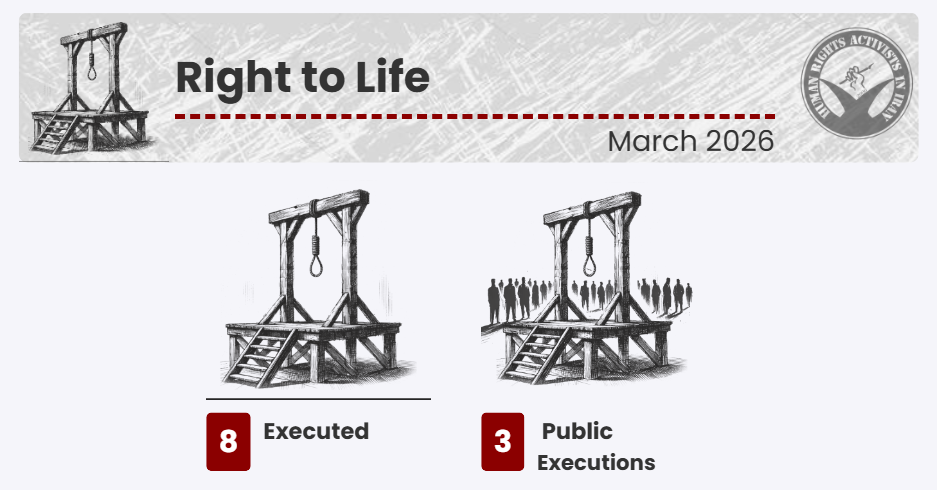
As in previous decades following the 1979 revolution, executions remain one of the most prominent manifestations of human rights violations in Iran. In 1404, at least 2,488 individuals were executed, including 63 women and 2 juvenile offenders. Of these, 13 executions were carried out in public.

During the same period, 130 individuals, including 10 women and 1 juvenile offender, were sentenced to death, of whom 4 were sentenced to public execution. It should also be noted that, within this timeframe, the initial death sentences of an additional 45 individuals were upheld by the Supreme Court.

Annual Statistical Comparison of Executions in the Past Five Years
YearNumber of
Executions
Executions
per Million People
Percentage Change
Compared to Previous Year
14003514.0+ %608.8
14016206.9+ %301.2
14027718.5+ %222.6
1403106912.0+ %132.7
1404248826.94


Execution Rate by Province (Executions Per 100,000 People)
ProvincePopulationNumber of
Executions
Execution
Rate
Razavi Khorasan7,109,0002353.31
Alborz3,028,0002006.61
Isfahan5,429,0001783.28
Fars5,136,0001492.9
Lorestan1,792,0001307.26
Khuzestan5,115,0001292.52
Kerman3,413,0001012.96
Hamedan1,769,000985.54
East Azerbaijan4,092,000842.05
South Khorasan845,000799.35
Markazi1,472,000795.37
Qom1,454,000795.43
Sistan and
Baluchestan
3,280,000762.32
Yazd1,314,000755.71
Gilan2,569,000742.88
Semnan787,000729.15
Mazandaran3,415,000681.99
West Azerbaijan3,529,000651.84
Kermanshah1,999,000623.1
Qazvin1,346,000584.31
Zanjan1,119,000534.74
Golestan2,016,000512.53
North Khorasan875,000434.91
Kohgiluyeh and
Boyer-Ahmad
759,000435.67
Bushehr1,277,000413.21
Hormozgan2,018,000391.93
Ilam597,000294.86
Kurdistan1,689,000281.66
Ardabil1,299,000221.69
Chaharmahal and
Bakhtiari
997,000191.91
Annual Statistical Comparison of Arrests in the Past Five Years (Ethnic Minorities’ Rights)
YearNumber of ArrestsArrests per
Million People
Percentage Change
Compared to Previous Year
14003584.05– %42.1
14012424.73– %14.4
14023714.09– %44.2
14033323.63– %37.6
14042072.24


Ethnic Minorities’ Rights-1404

Religious Minority Rights

In 1404, a total of 190 reports on violations of religious minority rights in Iran were recorded, according to which 169 citizens were arrested. Additionally, a total of 6,927 months of discretionary imprisonment and 798 months of suspended sentences were issued for 95 individuals. Of this total, 3,837 months were handed down by lower courts and 3,888 months by appellate courts.

Furthermore, 26 individuals were fined a total of 4,739 million tomans, and 9 individuals were sentenced to 288 months of exile.

In addition, 141 summonses to judicial and security authorities, 37 trials, 51 interrogations, 1 case of cemetery destruction, 126 home searches, 33 travel bans, 40 cases of prison sentences being carried out, 33 cases of confiscation of homes and property, and 10 cases of prevention of economic activity were reported.

Annual Statistical Comparison of Arrests in the Past Five Years (Religious Minorities’ Rights)
YearNumber of ArrestsArrests per
Million People
Percentage Change
Compared to Previous Year
1400670.76+ %152.2
14011751.95– %3.4
14021481.63+ %14.1
14031241.35+ %36.2
14041691.83
Judicial Authorities Issuing the Most Sentences in Religious Minorities’ Rights
Judge NameCourt BranchNumber
of Cases
Prison Sentences
(Months)
Fine
(Million
Toman)
SabzevariBranch 2 of Revolutionary Court, Karaj880
Abbasali HouzanBranch 36 of the Court of Appeals, Tehran Province81002910
Ashkan RameshBranch 1 of Revolutionary Court, Varamin5495
Abolghasem SalavatiBranch 15 of Revolutionary Court, Tehran5660
Hassan FathnejadBranch 3 of Revolutionary Court, Tabriz22882000


Religious Minority Rights

Protests and Strikes

At least 2,551 protest gatherings took place across Iran. These included 724 labor protests, 757 guild and trade union gatherings, 793 protests related to freedom of thought and expression, 40 demonstrations concerning the right to education, and 32 related to environmental issues.

Additionally, 205 protest gatherings were held across all 31 provinces by citizens—many of them defrauded investors or individuals whose civil rights had been violated. Alongside these demonstrations, at least 41 union strikes and 390 labor strikes were also recorded.

Killing of Citizens

Throughout 1404, a total of 32,820 citizens were targeted by gunfire from military forces. Of these, 6,822 lost their lives, including 15 Kolbars (border porters), 23 Sookhtbars (fuel carriers), and 6,784 other citizens.

Additionally, 25,998 citizens were injured as a result of indiscriminate shootings by military personnel, including 22 Kolbars, 25,963 ordinary citizens, and 13 Sookhtbars.

It should also be noted that 8 other Kolbars were affected by environmental and geographical conditions, such as hypothermia, pursuit by military forces, and falls from height, resulting in 4 being injured and 4 losing their lives. Moreover, 84 Sookhtbars were involved in incidents during pursuits by military forces, of whom 76 were killed and 8 injured.

Furthermore, during the war involving the United States and Israel against Iran, which began on February 28, 2026 (9 Esfand 1404), an attack on the “Shajareh Tayyebeh” girls’ school in Minab resulted in the deaths of a number of students. According to reported figures, at least 168 people were killed and 95 others injured in this attack.

Since the onset of these hostilities, the number of civilian casualties has reached 1,369, including at least 207 children. Additionally, the status of 627 other individuals remains unclear, as it has not been determined whether they were civilians or military personnel.

Killing of Citizens-1404

Landmine and Explosion Victims

Landmines left over from past conflicts continue to threaten the lives of residents in border regions each year. The Iranian government also continues to produce and deploy anti-personnel mines and, contrary to international conventions, maintains that their use is the only effective way to secure the country’s long borders.

According to data from the past year, at least 19 citizens lost their lives due to landmine explosions in border areas, while 20 others were injured.

Landmine and Explosion Victims-1404

Flogging and Amputation Sentences

The International Covenant on Civil and Political Rights explicitly prohibits the use of degrading punishments that violate human dignity, such as flogging and amputation. Nevertheless, according to data collected in 1404, sentences of flogging were carried out for at least 2 defendants, who had been collectively sentenced by Iranian judicial authorities to 48 lashes.

In addition, the judiciary issued sentences totaling 3,684 lashes for at least 82 individuals. Furthermore, amputation sentences were carried out for 6 defendants who had been convicted by Iranian courts, while 5 others were also sentenced to amputation.

Flogging and Amputation Sentences-1404

Arrests

Over the past year, the arrest of 78,907 citizens in Iran represents a clear violation of the rights to freedom of expression, political freedom, and other fundamental human rights. Among these, 78,126 cases were directly related to the exercise of freedom of thought and expression.

Other notable cases include the arrest of 20 workers and labor activists, 343 individuals under the age of 18, 39 union activists, 169 members of religious minorities, and 207 individuals from ethnic minority backgrounds.

Regarding the latter group, although the charges against 234 individuals remain unclear, these arrests have been classified as violations of ethnic and national minority rights based on available indicators and the documented pattern of conduct by security institutions.

Additionally, at least 3 arrests were recorded for non-compliance with compulsory hijab and for women singing in public spaces.

Statistical Comparison of Arrests over the Past Five Years
YearNumber of ArrestsArrests per
Million People
Percentage Change
Compared to Previous Year
1400188421.3+ %4,088
140129,95033.4+ %163.4
14023,86442.7+ %1,942
14032,49127.2+ %3,067
140478,907847.5

Arrests-1404

Convictions

In 1404, judicial authorities across the country issued rulings in 483 cases, sentencing defendants in political or security-related cases to a total of 20,832 months of discretionary imprisonment and 1,440 months of suspended sentences. Of this total, 15,585 months were issued by lower courts, 5,847 months by appellate courts, and 840 months by the Supreme Court.

In addition, the judiciary imposed fines totaling 7,409.8 million tomans, as well as 3,684 lashes, 59 travel bans, 101 cases of deprivation of social rights, and 900 months of internal exile.

Five-year comparison of convictions based on the number of individuals
YearNumber of individuals
Convicted
Percentage Change
Compared to Previous Year
1400310+ %55.8
14011,075– %55
1402843– %42.7
1403744– %35
1404483
Five-Year Comparison of Convictions Based on the Total Months of Imprisonment Issued
YearNumber of months of
imprisonment
Percentage Change
Compared to Previous Year
140013,316+ %67.2
140133,671– %33.8
140233,790– %34
140327,857– %20
140422,272

Convictions-1404

Judicial officials with the highest number of sentences issued over the past year
PictureJudge NameCourt BranchNumber
of Cases
Prison Sentences
(Months)
Fine
(Million
Toman)
Iman AfshariIman AfshariBranch 36 of Revolutionary Court, Tehran17705313.3
AnsariAli AnsariBranch 101 of Criminal Court No. 2, Oshnavieh15326
Abbasali HouzanBranch 36 of the Court of Appeals, Tehran Province1313711110
Ehsan Adibi MehrBranch 1 of Revolutionary Court, Ahvaz11720
SabzevariBranch 2 of Revolutionary Court, Karaj11172
SalavatiAbolghasem SalavatiBranch 15 of Revolutionary Court, Tehran111296
Yaser GuzaliBranch 1 of Revolutionary Court, Mahabad9268
VelaeiBranch 101 of Criminal Court No. 2, Miandoab927
Ahad SiamiBranch 2 of Revolutionary Court, Mahabad6720
Ashkan RameshBranch 1 of Revolutionary Court, Varamin5495

In conclusion, it should be noted that the statistics presented in this report cannot be considered a complete reflection of the human rights situation in Iran. This is due to the fact that the Iranian government does not allow independent human rights organizations to operate freely or access necessary sources.

Therefore, these findings should be regarded as a minimum estimate of the human rights situation in Iran, based solely on data reported by civil institutions, including HRANA, and compiled and documented by the organization’s Statistics Center.

For further information, readers are encouraged to consult the organization’s 2025 annual report, which has been recently published.

Day 19 of the U.S.-Israeli War on Iran: Widespread Strikes on Oil and Gas Facilities

HRANA– In the last 24 hours, and as of March 18, 2026, at 17:00 ET, HRANA has recorded at least 79 attacks across 40 incidents in 11 provinces, resulting in a total of at least 125 casualties (killed and injured, both civilian and military). Today’s attacks targeted areas in the Caspian Sea region for the first time. At the same time, extensive strikes were carried out against Iran’s oil and gas facilities in Asaluyeh.

According to information recorded and verified by HRANA, from the first minutes of the day until the end of March 18, 2026 (Tehran time), at least 15 civilians were killed and 105 civilians injured.

Aggregated data since the beginning of the conflict on February 28, 2026, based on incidents recorded in the incident tab and using minimum values for figures marked “more than”:

• Civilian fatalities: 1,369 people (including at least 207 children)

• Military fatalities: 1138 people

• Unclassified fatalities (civilian/military): 627 people

1. Overview of Incidents in the Last 24 Hours

Day 18 of the U.S.-Israeli War on Iran: Report of 179 Strikes

HRANA– In the last 24 hours, and as of March 17, 2026, at 17:00 ET, HRANA has recorded at least 179 attacks across 89 incidents in 17 provinces, resulting in a total of at least 19 casualties (killed and injured, both civilian and military). Reports today indicate that drone attacks targeting police forces and checkpoints, even in densely populated urban areas, have occurred more frequently than in previous days.

Day 17 of the U.S.-Israeli War on Iran: Increase in Civilian Casualties

HRANA– In the last 24 hours, and as of March 16, 2026, at 17:00 ET, HRANA has recorded at least 243 attacks across 117 incidents in 17 provinces, resulting in a total of at least 66 casualties (killed and injured, both civilian and military). Reports today indicate that 65% of the attacks have been concentrated on Tehran Province.

According to information recorded and verified by HRANA, from the first minutes of the day until the end of March 16, 2026 (Tehran time), at least 21 civilians were killed and 31 civilians injured.

Aggregated data since the beginning of the conflict on February 28, 2026, based on incidents recorded in the incident tab and using minimum values for figures marked “more than”:

• Civilian fatalities: 1,351 people (including at least 207 children)

• Military fatalities: 1126 people

• Unclassified fatalities (civilian/military): 622 people

Note on Official Statements: Alongside HRANA’s independent reporting, several aggregated figures from official sources were also reported today by state-affiliated media, including:

U.S. Central Command (CENTCOM) claimed in a statement that more than 6,000 locations in Iran have so far been targeted by U.S. warplanes.

Tavakoli, head of Tehran Emergency Services, said in a televised interview: “Since the beginning of the war, we have had 5,700 injured and 503 killed.” The figures appear to be limited to Tehran.

Government spokesperson Mohajerani, during a press conference, stated: “The number of women killed in the Ramadan War has reached 226, while 3,002 women have been injured. Two pregnant mothers were also killed.”

Since these figures are presented in aggregate form and cannot be precisely matched with specific incidents, they have not been included in the event-based calculations used in HRANA’s independent reporting in this overview. They are mentioned here solely as a record of official statements.

1. Overview of Incidents in the Last 24 Hours

Subscribe to Our Newsletter

Now is definitely not the time to stop reading!

Day 16 of the U.S.-Israeli War on Iran: Over 450 Attacks Recorded

HRANA– In the last 24 hours, and as of March 15, 2026, at 17:00 ET, HRANA has recorded at least 454 attacks across 165 incidents in 16 provinces, resulting in a total of at least 49 casualties (killed and injured, both civilian and military). Today’s reports indicate that after a one-day pause, Tehran Province has once again returned to the top of the list of provinces exposed to attacks, accounting for 48% of the total.

According to information recorded and verified by HRANA, from the first minutes of the day until the end of March 15, 2026 (Tehran time), at least 11 civilians were killed and 22 civilians injured.

Aggregated data since the beginning of the conflict on February 28, 2026, based on incidents recorded in the incident tab and using minimum values for figures marked “more than”:

• Civilian fatalities: 1,330 people (including at least 206 children)

• Military fatalities: 1122 people

• Unclassified fatalities (civilian/military): 613 people

1. Overview of Incidents in the Last 24 Hours

Day 15 of the U.S.-Israeli War on Iran: Attacks on Isfahan

HRANA– In the last 24 hours, and as of March 14, 2026, at 17:00 ET, HRANA has recorded at least 285 attacks across 94 incidents in 18 provinces, resulting in a total of at least 30 casualties (killed and injured, both civilian and military). While Tehran had experienced the highest volume of attacks since the start of the war, the largest number of attacks today were carried out in Isfahan.

According to information recorded and verified by HRANA, from the first minutes of the day until the end of March 14, 2026 (Tehran time), at least 24 civilians were killed and four civilians injured.

Aggregated data since the beginning of the conflict on February 28, 2026, based on incidents recorded in the incident tab and using minimum values for figures marked “more than”:

• Civilian fatalities: 1,319 people (including at least 206 children)

• Military fatalities: 1122 people

• Unclassified fatalities (civilian/military): 599 people

Note on Official Statements: Alongside HRANA’s independent reporting, an aggregated official figure was also reported today in Iran’s state media:

The head of Kurdistan Province’s Emergency Medical Services stated: “In the American–Zionist attack on the province, 112 people were killed. Following these attacks, 969 Kurdish citizens were injured and received medical treatment. Currently, 27 individuals are hospitalized in general wards and 5 in intensive care units (ICU).”

Since these figures are presented in aggregate form and cannot be precisely matched with specific incidents, they have not been included in the event-based calculations used in HRANA’s independent reporting in this overview. They are mentioned here solely as a record of official statements.

1. Overview of Incidents in the Last 24 Hours

Statistical Overview as the Second Week of War in Iran Concludes: Nearly 6,000 Attacks Recorded Nationwide

HRANA – As the second week since the outbreak of war and military clashes in Iran, beginning on February 28, 2026, comes to an end, aggregated data recorded by HRANA provides a broad picture of the geographic scope, intensity of the attacks, and the human consequences of these hostilities. The conflict has so far resulted in 4,765 human casualties, including 205 children, and has caused damage to 20 hospitals, 36 schools, and 98 residential buildings or neighborhoods. At least 3.2 million people have been internally displaced across Iran. During the same period, 203 individuals have been arrested by security forces in connection with the ongoing developments.

Over the past fourteen days, cities across Iran, particularly the country’s capital, have witnessed one of the most extensive waves of military attacks in recent decades. Verified data collected by HRANA indicates that the attacks have simultaneously targeted a wide range of military objectives, civilian infrastructure, and residential areas.

This report represents the first preliminary statistical overview of the first two weeks of the war. It has been compiled based on thousands of field reports, media data, local sources, and multi-stage verification processes. All figures presented in this report are based on the minimum numbers that could be confirmed and may be updated as further investigations continue and new information becomes available.

Status of Report Verification

Over the past two weeks, a very large volume of information and reports from various parts of Iran has been submitted to HRANA’s monitoring system. After an initial review and cross-checking with multiple sources, these data were classified into three levels of credibility.

According to the assessments conducted, approximately 57% of the reports have been fully verified, with their details matched against independent sources. Around 9% of the data are in the preliminary verification stage, meaning that initial evidence supports their credibility but additional information is still required for full confirmation. Meanwhile, 34% of the reports remain under review, and the verification process for them is ongoing.

This complexity in the verification process is largely driven by severe communication restrictions. Widespread internet shutdowns in Iran, security limitations, and the difficulty of accessing the locations where attacks occurred have posed significant challenges to the independent verification of information.

Overview of Attacks During the First Two Weeks of the War

According to refined data compiled by HRANA, from the beginning of the conflict through the end of the fourteenth day of the war, a total of 5,480 attacks were recorded across 2,061 separate incidents in various parts of Iran. The gap between the number of incidents and attacks indicates that many incidents included multiple attacks within the same geographic area or a short time frame.

In total, these attacks resulted in 4,765 recorded human casualties, a figure that includes both military and civilian fatalities and injuries. The geographic scope of the attacks has also been significant. Recorded data show that all 31 provinces of Iran were targeted at least once. In total, 209 cities across the country experienced either direct attacks or damage resulting from them during this period.

Such a broad scope indicates that the military operations have not been limited to specific regions or border areas but have effectively affected large parts of the country’s territory.

distribution of attacks

distribution of attacks -cities

Human Casualties

According to aggregated data compiled by HRANA, at least 4,765 human casualties were recorded during the first two weeks of the war. Among these victims, civilian casualties account for a significant portion of the overall figures. Based on available data, 1,298 civilians have lost their lives, including at least 205 children. In addition, 654 civilians were injured during the attacks.

Regarding military casualties, the recorded data indicate that 1,122 military personnel were killed, while 29 members of the armed forces were injured. However, it should be noted that access to information regarding military casualties is subject to serious limitations in many cases. As a result, the actual number of military casualties may be higher than the figures documented in this report.

Vulnerable groups also constitute a notable portion of the recorded victims. Available data show that at least 14 children were injured during the attacks. Additionally, 30 women are recorded among the injured, and 29 women among those killed.

In a considerable number of cases, the status of victims, whether civilian or military, has not yet been definitively determined. At present, 599 deaths are classified as “undetermined,” meaning that available sources have not yet made it possible to conclusively identify whether these individuals were civilians or members of the military. Similarly, 1,092 injured individuals are currently categorized under the same classification. This situation is largely due to limited information in the immediate aftermath of attacks, the lack of independent access to certain areas, and the difficulty of accurately identifying victims under crisis conditions.

Burials

Alongside the recorded casualty figures, data collected from local sources, field reports, and information published in the media indicate that at least 732 burials have so far been documented in various parts of Iran. This figure does not necessarily correspond to the number of deaths occurring on those same days, as in many cases victims are buried several days after their deaths. Therefore, some of the recorded burials may relate to individuals who were killed earlier during the course of the war.

Geographic Distribution of Attacks

Analysis of the geographic distribution of attacks indicates that the primary concentration of strikes has occurred in several key provinces across the country.

The ten provinces with the highest share of recorded attacks are:

1. Tehran Province – 39.53%

2. Isfahan Province – 9.61%

3. Khuzestan Province – 5.75%

4. Alborz Province – 5.01%

5. Hormozgan Province – 4.32%

6. East Azerbaijan Province – 3.92%

7. Kermanshah Province – 3.81%

8. Fars Province – 3.24%

9. Kurdistan Province – 3.13%

10. Lorestan Province – 2.56%

Among these provinces, Tehran stands out with a significantly higher share of the recorded attacks. This trend has also been reflected in many daily reports, indicating a substantial concentration of military operations in the capital and its surrounding areas.

Following Tehran, central and industrial provinces, including Isfahan and Khuzestan, have also experienced a considerable share of the attacks.

Nature of Targeted Sites

Analysis of the available data indicates that in a significant number of cases there is still insufficient information to precisely determine the nature of the targeted sites. In approximately 59% of the attacks, the type of target could not be identified. This limitation is largely due to communication restrictions, the lack of sufficient visual evidence or field reports, and the difficulty of independently assessing the locations where the attacks occurred.

Among the cases where the target could be identified, around 17% of the attacks were directed at military targets. In approximately 3% of the cases, the attacks targeted dual-use facilities, meaning sites used for both military and civilian purposes. In contrast, about 21% of the recorded attacks caused damage to civilian targets or protected facilities.

These data indicate that, alongside military targets, a substantial portion of the recorded damage involved civilian infrastructure or urban areas. This issue will be examined in greater detail later in this report in the section analyzing damage to infrastructure and residential areas.

Damage to Civilian Infrastructure and Residential Areas

Data recorded over the past two weeks indicate that, alongside military targets, a significant number of attacks have also caused damage to civilian infrastructure and urban areas. A review of field reports and information published by various sources shows that healthcare facilities, schools, and residential areas have in multiple instances been affected.

At least 20 hospitals or medical centers were damaged during the attacks over the past two weeks. In some cases, the damage resulted from direct strikes, while in others it was caused by nearby explosions or blast waves affecting these facilities. Damage to medical centers can significantly affect the capacity of healthcare services during a crisis and may severely limit civilians’ access to medical care.

At least 98 residential buildings or residential areas were damaged in air or missile attacks. In many instances, strikes occurred near urban areas, with blast waves or debris causing extensive damage to nearby homes. Beyond the human casualties, these incidents have resulted in significant destruction of housing and the forced displacement of residents in affected communities.

Schools are also among the infrastructures that have been damaged during these attacks. At least 36 schools across different parts of the country have sustained damage. In seven of these incidents, the damage to schools was accompanied by the death or injury of several students. Given the role of schools in providing educational and social services to children, damage to these facilities may have long-term consequences for local communities.

Under the principles of international humanitarian law, medical centers, schools, and residential areas are considered civilian objects and benefit from a certain level of special protection. However, in many of the recorded cases it remains unclear whether the damage resulted from direct strikes or from nearby explosions and secondary effects. For this reason, the final classification of some of these incidents remains under review.

Communication Conditions and Widespread Internet Disruptions

Alongside the escalation of hostilities, Iran has experienced one of the longest and most extensive internet disruptions in recent years. Data published by the international internet monitoring organization NetBlocks indicate that the widespread internet outage in Iran has entered its fourteenth consecutive day.

According to the organization’s latest assessment, 312 hours after the onset of the large-scale disruption, internet connectivity in Iran remains at around one percent of its normal level. This situation has effectively restricted a large portion of the country’s population from accessing the open internet and has placed severe limitations on the flow of independent information.

NetBlocks emphasized in its report that under conditions where internet access is severely restricted, many citizens are unable to receive critical updates about local security conditions, safety warnings, and information related to ongoing attacks. In such an environment, the flow of public information becomes largely limited to official media and sources, while access to independent accounts or field reporting is significantly reduced.

The internet shutdown has also had a significant impact on the documentation of wartime events and the recording of potential human rights violations. Many images, videos, and field reports that would typically be shared through social media are reaching media outlets and independent organizations with delays or in a much more limited capacity under these conditions.

Large-Scale Population Displacement

Alongside the direct damage caused by the attacks, reports have also emerged of large-scale population displacement within Iran. According to assessments by the United Nations High Commissioner for Refugees (UNHCR), the ongoing conflict in Iran has temporarily displaced around 3.2 million people inside the country.

This figure is estimated to correspond to approximately 600,000 to one million households. According to the agency, a significant portion of these movements has occurred from major cities, particularly Tehran, toward northern and rural regions of the country, areas that have experienced less intense attacks compared to large urban centers.

Among the affected populations, refugees residing in Iran have faced additional challenges. In particular, Afghan nationals, who constitute a large share of the refugee population in Iran, are in a situation where their access to essential services, shelter, and social support is more limited than that of other population groups. The increase in internal displacement may place considerable pressure on the resources and infrastructure of host communities.

Arrests and the Domestic Security Climate

Alongside the continuation of foreign attacks, reports have also emerged of increased security measures within the country. Data collected by HRANA indicate that at least 239 individuals have been arrested by Iranian security and law enforcement forces over the past fourteen days.

A significant number of these individuals have been accused of filming or photographing explosions or the aftermath of attacks in various cities and sending the material to foreign-based media outlets. In some cases, the arrests have also been carried out as part of efforts to control the flow of information and prevent the publication of images related to the attacks.

In this context, IRGC Intelligence Organization also issued an official statement warning against any street protests during wartime conditions. The statement declared that if any public gatherings or protests were to occur, the response would be more severe than the measures taken during the Dey protests. In the statement, protesters from that period were described as “neo-ISIS,” and it was asserted that the street protests at that time had been viewed as a prelude to military attacks.

These positions reflect concerns among Iran’s security institutions about the possibility of internal unrest, at a time when the country is simultaneously facing external military conflict.

Official Statistics Released by Iranian Authorities

Alongside the independent data recorded by HRANA, several Iranian officials and state institutions have also released figures regarding the consequences of the war. These statistics are often presented in aggregated form and in many cases do not distinguish between military and civilian casualties.

The head of the Iranian Red Crescent Society stated that 21,720 civilian areas had been targeted during the attacks. According to this report, nine hospitals have been rendered non-operational, and 69 schools have been damaged. It was also reported that among healthcare personnel, 12 individuals have been killed and 78 injured.

Iran’s Ministry of Health has also announced that approximately 15,000 people have been injured during the conflict, although the report does not specify how many of these individuals were civilians or members of the military.

Meanwhile, the Foundation of Martyrs and Veterans Affairs reported that at least 1,230 people had been killed as of March 5 as a result of the attacks. This figure likewise does not provide a breakdown between military and civilian casualties.

Given the aggregated nature of these figures and the lack of a clear methodology to match them precisely with recorded incidents, these data have not been incorporated into HRANA’s event-based calculations and are instead included solely as official statements.

Concerns Raised by International Human Rights Bodies

As the conflict continues, several international organizations have expressed concern about the human rights consequences of the war in Iran. In a report submitted to the United Nations Human Rights Council, the UN Independent International Fact-Finding Mission on Iran warned that the country’s already serious human rights crisis may worsen as a result of military attacks and escalating regional tensions.

The report emphasized that patterns of state repression in Iran remain ongoing. Among the issues highlighted were the use of lethal force against protesters, widespread arrests, severe restrictions on freedom of expression, and internet shutdowns during times of crisis.

According to the mission, the continuation of military hostilities could increase pressure on civil society, human rights defenders, and independent media in Iran.

Note on HRANA’s Methodology

The information presented in this report has been collected through HRANA News Agency’s documentation network. Data are compiled from a combination of field reports, local sources, medical and emergency sources, civil society networks, and publicly available materials, including images, videos, and relevant official statements. Each reported incident undergoes an internal review process prior to publication.

Given the evolving nature of the conflict, information is continuously collected, and the data presented reflect the status of documentation at the time of publication.

The figures provided in this report may not represent the full scope of the damage. Ongoing hostilities, damage to infrastructure, communication disruptions, limited access to affected areas, and security risks for sources may restrict the ability to comprehensively document events.

Delays in medical reporting, difficulties in verifying identities, and limited access to certain provinces may lead to temporary underestimation of casualty figures. As access improves or additional evidence becomes available, casualty figures and event classifications may be revised accordingly.

HRANA remains committed to transparency, methodological rigor, and the continuous updating of its findings as new verified information becomes available.
It should also be noted that, in accordance with its reporting methodology, HRANA focuses exclusively on documenting events occurring within Iran’s borders, and its reports do not include information regarding casualties or incidents outside the country.

Humanitarian Commitments

On March 3, Human Rights Activists in Iran (HRA) issued a statement condemning the ongoing conflict between the United States–Israel and Iran. In its statement, HRA warned of the rising number of casualties and stressed that attacks on medical facilities and vital infrastructure constitute a serious violation of international humanitarian law.

HRA called for the immediate cessation of attacks, the protection of civilians, and the full restoration of internet access in Iran.

Report on the Arrest of Several Individuals in Fars and Lorestan Provinces

HRANA – The deputy commander of the Law Enforcement Forces in Fars Province announced that a citizen was arrested for setting up a network in several provinces across the country to sell unfiltered internet via Starlink. Meanwhile, IRGC Intelligence reported the arrest of several citizens in Fars Province for what it described as “sending images to a foreign-based media outlet.” The Lorestan Police Information Center also announced that seven citizens in the province were arrested on charges of espionage.

According to Mehr News Agency, a citizen was arrested in Shiraz. Regarding the case, the deputy commander of the Fars Provincial Police stated that the 37-year-old citizen was arrested for establishing a network across several provinces in order to sell unfiltered internet via Starlink. The individual’s Starlink device and related equipment were also discovered and confiscated.

In a separate development, the Islamic Republic of Iran Broadcasting (IRIB) News Agency published a statement from the IRGC Intelligence announcing that several citizens in Fars Province were arrested for “sending images to a foreign-based media outlet.”

The statement claimed that the individuals were collecting images on the social media platform Telegram under the title “Leon” and sending them to the Iran International network. It alleged that by broadcasting these images they intended to provoke public opinion and incite unrest in the streets. The organization also described the detainees as being connected to one of the groups opposed to the government.

According to Fars News Agency, the Lorestan Police Information Center reported the arrest of seven citizens in the province on charges of espionage. According to the statement, the individuals had taken photographs of certain locations.

Although countering espionage is not considered a violation of human rights, given the Iranian government’s record of instrumentally using such accusations to confront political opponents, these kinds of claims, particularly when details and the judicial process remain unclear—are consistently viewed with skepticism.

The reports did not mention the date of the arrests or the identities of the detainees.

Since February 28, Iranian territory has been targeted by military attacks carried out by Israel and the United States. For more information, see HRANA’s report on the thirteenth day following the start of these attacks, published last night.

Day 13 of the U.S.-Israeli War on Iran: More Than Three Million Displaced

HRANA– In the last 24 hours, and as of March 12, 2026, at 17:00 ET, HRANA has recorded at least 312 attacks across 109 incidents in 15 provinces, resulting in a total of at least 124 casualties (killed and injured, both civilian and military). Today’s reports indicate that, alongside Tehran, the provinces of Khuzestan, Isfahan, and Alborz were among the main areas targeted by the attacks. Meanwhile, the United Nations High Commissioner for Refugees announced today that approximately 3.2 million people have been temporarily displaced within Iran as a result of the ongoing conflict.

According to information recorded and verified by HRANA, from the first minutes of the day until the end of March 12, 2026 (Tehran time), at least ten civilians were killed and 91 civilians injured. Additionally, 21 deaths have been recorded for which the classification (civilian or military) is not specified in the available data. To avoid potential misclassification, these cases are presented in this report under the category of “unspecified.”

Aggregated data since the beginning of the conflict on February 28, 2026, based on incidents recorded in the incident tab and using minimum values for figures marked “more than”:

• Civilian fatalities: 1,286 people (including at least 200 children)

• Military fatalities: 199 people

• Unclassified fatalities (civilian/military): 373 people

This remainder of this report provides a preliminary analytical overview of documented incidents over the past 24 hours. All figures and classifications are based on information available at the time of publication. As verification continues and more information becomes available, casualty figures and classifications may be updated.

Alongside the independent reports of HRANA, organizations such as the United Nations High Commissioner for Refugees have also presented their findings on the latest developments in Iran.

The agency announced that, as a result of the ongoing conflict in Iran, approximately 3.2 million people (equivalent to about 600,000 to 1 million households) have been temporarily displaced within the country. According to the organization, most of the displaced have moved from Tehran and other major cities to northern and rural areas. Among the affected population, refugees residing in Iran, particularly Afghan nationals, are also in a vulnerable situation due to insecurity and limited access to essential services.

1. Overview of Incidents in the Last 24 Hours