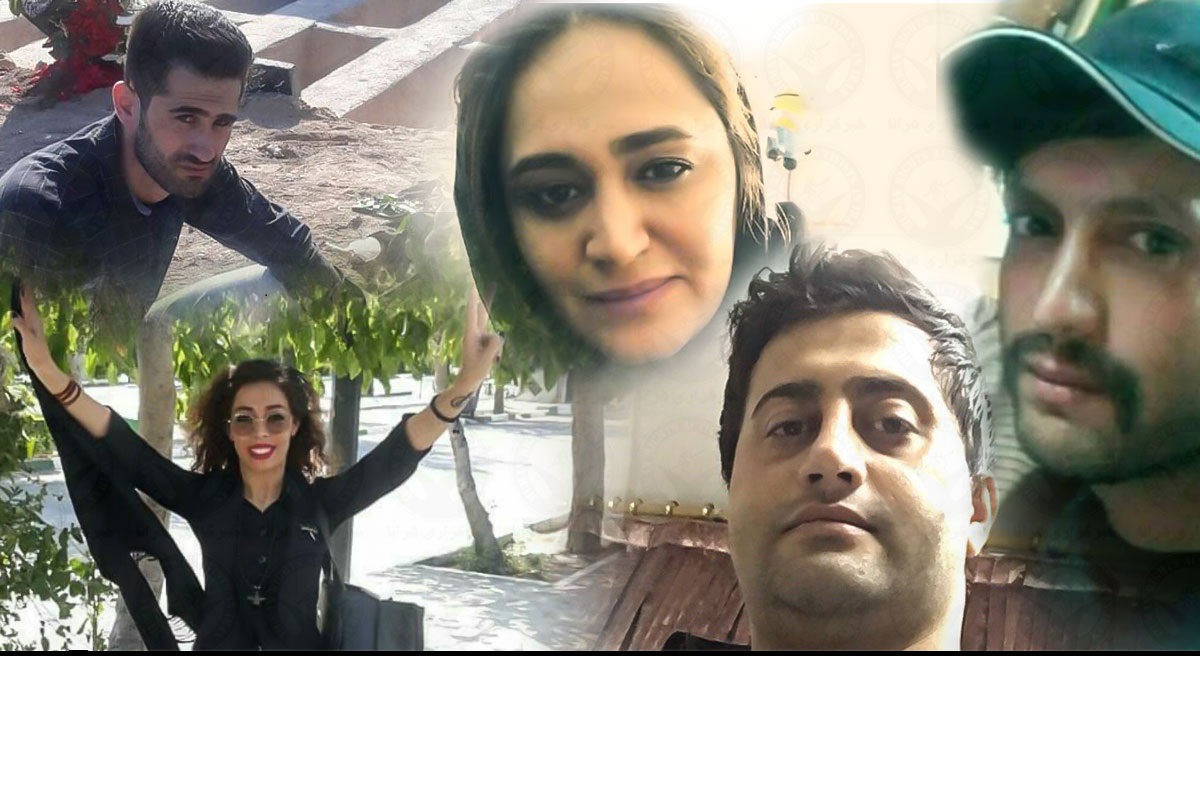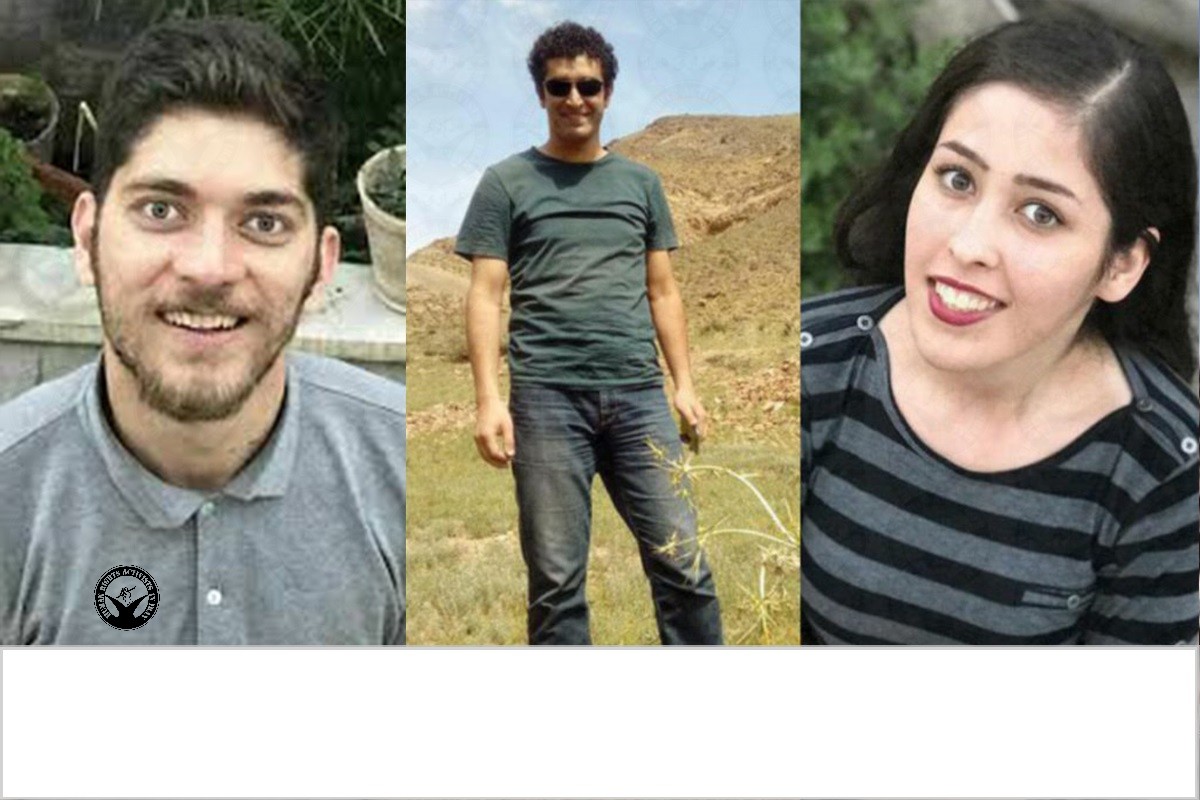
Human Rights Activists News Agency (HRANA)- On August 3rd of this year, Ministry of Intelligence forces arrested Houshmand Alipour and Mohammad Ostadghader, whose taped confessions were broadcast on national television. Since then, Alipour has been cut off from both the services of a lawyer and visits from his family. He stands accused of membership in Kurdish opposition groups.
A family-appointed attorney learned on a phone call with the Sanandaj Intelligence Office that Alipour’s October 4th investigation court date was postponed, an informed source told HRANA. The prosecutor investigator has already interrogated Alipour, who will spend two more weeks at the Intelligence Office. Alipour’s family and lawyer deny rumors that he has been executed, the source said.
Alipour’s brother Hejar added that while Alipour has had contact with his family over the phone, they remain anxious to see him in person, and are worried about his continued interrogation and detention in the absence of any legal defense.
HRANA previously published a letter from Hejar Alipour, in which he pleads his brother’s case.
Alipour is from Sardasht, western Iran.
Category: Prisoners
Kept Apart for 9 Years: a Mother Wishes her Daughter “Happy Birthday” from Evin Prison
Human Rights Activists News Agency (HRANA) – Evin political prisoner Maryam Akbari Monfared wished her daughter a happy 13th birthday in letter she wrote from behind bars, where she has spent every one of her daughter’s birthdays for the past nine years.
Monfared, along with fellow prisoners of conscience Golrokh Ebrahimi Iraee and Atena Daemi, was recently punished with a three-week ban on family visits per verbal orders from the director of the Evin Prison Women’s Ward. All three were told they were being disciplined for protesting authorities’ attempts to unlawfully interrogate them this past September.
The full letter of Monafred’s letter to her daughter, translated into English by HRANA, is below:
In the middle of a cold, rainy December night, they tore you from my arms. You were only three and a half years old, and you had your arms locked around my neck. You were in a deep, angelic sleep.
Nine years have passed since then. All these years, I have celebrated your birthday in the prison visiting room. All my cellmates have shared in my joy. Every year, I prepared for your birthday days ahead of time, as best I could. I have watched you grow from the other side of the visiting room glass, and I drew lines on the concrete for every year that you grew.
While I was in prison you started school, and then you were no longer a little girl. And now, this year, you’re turning 13. We spoke about our wishes a week ago on the phone: you asked me whether you could come for a visit the following week, on your birthday. “Why wouldn’t you?!” I replied. “Of course you can!” Little did I know that our rare joys were being watched with malice from afar.
Before you arrived Wednesday, the Ward Director Ms. Abdolhamidi told me I’d been banned from visits for three weeks. When you came, you jumped into my arms and told me, ‘Mom, it’s my birthday next week! I’ll come to visit you and it will just be you and me.’”
It was more than I could bear to tell you that our visit next week would be canceled. My heart burned with anger and loathing for [the authorities], who would rob even the smile off your face. Flames of rage are still burning inside me.
Tomorrow is your birthday. I’ve been talking to my friends about it all day. I close my eyes and travel back in time to Iran Hospital, October 8th, 2005.
It is 6 a.m., and I am sitting in the hospital lobby. It is 10 days past your due date, but looking back now, it seems you were stalling your arrival in this world, that you foresaw that you would be targeted by the storms of life. But finally, you came, and your very first cries at 12 p.m. brought a smile to my face. I still feel your beautiful face and your first cry, and sense the sweet feeling of taking you into my arms for the first time.
I opened my eyes and there you were, a beautiful doll in a pistachio-green blanket with snowflakes on it. The delight of breastfeeding you, the joy of when you first opened your eyes; the first steps you took towards a beautiful life and future, and the music of your first word.
My dear Nazanin: I was not with you on your 13th birthday. I know that by now you understand why we’re apart. I know that you’ve suffered a lot these past nine years. Yet, we have promised each other to smile until smiles light the faces of all of Iran’s children. We promised each other to cherish our brief visits, for all of the times that we miss being together. We have pledged together to vanquish a monster.
My dear Sara: our future is bright. I hope for the daybreak whose first morning rays will be freedom, when I will tousle your hair and embrace you without the pain and the stress of knowing our visit could end the next moment. Let us laugh until daybreak […]
Maryam Akbari Monfared
October 6, 2018
Evin Prison Women’s Ward
****
Maryam Akbari Monfared was arrested December 2009 during protests following Iran’s contentious election cycle of that year. In June 2010, Judge Salavati of Revolutionary Court Branch 15 sentenced her to 15 years in prison on the charge of “moharebeh” (enmity against God), on the premise that she was a member of the People’s Mujahedin of Iran (MEK). Monfared denied the charge.
Two of Monfared’s brothers were executed in 1981 and 1984 for membership in the MEK after being convicted in revolutionary courts. A younger brother and sister were also executed in 1988 as part of a mass execution of political prisoners.
Governance by Deprivation in Evin Prison: 3 in Women’s Ward Denied Visits for 3 Weeks
Human Rights Activist News Agency (HRANA) – On October 2nd, Evin authorities punished three prisoners with a 3-week ban on visitation.
The head of the Evin Women’s Ward dictated the disciplinary measure to prisoners Maryam Akbari Monfared, Golrokh Iraee, and Atena Daemi, reportedly after the three chanted slogans and got involved in a verbal altercation last September in the prison’s visitation room when they had resisted authorities’ attempts to unlawfully interrogate them. The prison’s disciplinary council condemned them to the three-week ban in absentia.
A source told HRANA that Monfared, Iraee, and Daemi got a “no” when they asked to be shown the ban order in writing. The warden offered the pretext that authorities were acting on a verbal order from Prison Chief Chaharmahali and the prosecutors.
Akbari Monfared is a mother of three daughters, two of whom are currently in college and one of whom is school-age. Though her visitation hours were recently slated to change in accordance with her children’s academic schedules, Prosecution Representative Rostami put a stop to the change. She hasn’t had a furlough day in all of her nine years in prison.
Daemi and Iraee got their own backlash from authorities when the prison chief ordered their bodies to be searched multiple times without cause, presumably in reprisal for their public reaction to the September 8th executions of political prisoners Hossein Panahi, Zanyar Moradi, and Loghman Moradi.
Reza Khandan Spurns Second Illegitimate Court Summons
Human Rights Activists News Agency (HRANA)- In the face of the legal obligation to summon defendants a minimum of one week before their hearings, authorities summoned imprisoned civil rights activist Reza Khandan Friday, October 5th for a hearing in Revolutionary Court Branch 15 the very next day.
Khandan, who is married to imprisoned civil rights activist and lawyer Nasrin Sotoudeh, said he refused to respond to the unlawful summons. “Almost all prisoners are sent to the court in this manner. Some of them even attend court without a defense lawyer, because they can’t contact one on such a limited time frame.”
In a note yesterday, Khandan’s lawyer Mohammad Moghimi wrote that his client was within his right not to show up, as provisioned in Section 343 of Criminal Procedure Code. “[…] Such a trial is illegitimate,” Moghimi said.
Khandan was arrested by security forces in his home on Tuesday, September 4th after ignoring a September 3rd summons unlawfully issued by phone. He was charged at Branch 7 of the Evin prosecutor’s office and sent to prison the same day.
On September 22, 2018, HRANA reported on the referral of Reza Khandan’s case from Revolutionary Court to Evin Court in order to resolve deficiencies in his case file.
According to HRANA reports, Ministry of Intelligence security forces searched the homes of Mohammadreza (Davoud) Farhadpour, Jila Karamzadeh Makvandi, and Khandan’s sister on Saturday, August 18th. The forces reportedly confiscated pin-back buttons reading “I am against forced veiling” along with letters that Sotoudeh had written to Khandan from prison.
January Protestors: 8 Months in Prison for Alireza Moeinian
Human Rights Activists News Agency (HRANA) – Civil rights activist and Tabriz resident Alireza Moeinian, who was among those detained amid the January protests, has been sentenced to 8 months in prison by Judge Ahrari of Tabriz Revolutionary Court Branch 2.
Initially arrested January 1st and detained in Evin Prison’s Ward 209, Moeinian was able to go free at end of his initial interrogation sessions by providing a salary slip as a surety bond in place of cash bail, an informed source told HRANA.
Later, on April 23rd, 2018, Branch 19 of the Tabriz Prosecutors’ office summoned him to read him his charges: propaganda against the regime and participation in an illegal gathering. His bail was set at 1 billion rials (approximately $10,000 USD).
A large number of participants in recent protests referred to as the “January protests”, were detained and interrogated across the country. The protests resulted in the death of 25 individuals and the detention of around five thousand.
Of the January protests, Ministry of the Interior Rahmani Fazli said, “A number of protests took place in 100 Iranian cities; in forty of those cities, the protests turned violent.”
Tabriz is located in northwestern Iran.
Open Letter from Prisoners to UN Envoy: Death Penalty is a “Weapon of Terror”
Human Rights Activists News Agency (HRANA)- On Wednesday, October 3, 2018, a letter was published to the attention of Javaid Rehman, the United Nations Special Rapporteur on the Situation of Human Rights in Iran. Its authors were reaching out from the walls of Rajai Shahr Prison of Karaj, on the western outskirts of Tehran, to raise the specter of rising execution numbers and public hangings that still mar the face of the country.
The full text of their letter, translated into English by HRANA, is below:
Javaid Rehman
Special Rapporteur on the Situation of Human Rights in the Islamic Republic of Iran
Dear Mr. Rehman,
The death penalty is not simply a social predicament for us Iranians; it is a living nightmare. We live it and re-live it in the faces of children who witness public hangings, and in the faces of prisoners on death row. In the past few weeks alone, our fellow prisoners Mohammad Salas, Zanyar Moradi, Loghman Moradi, and Ramin Hossein Panahi were executed. Our families used to see each other during weekly visits. This time around, the visit was transformed to a day of mourning – further proof that the death penalty, a medieval legacy of human societies, is a collective punishment. With all of the shock and mental anguish that their executions put our families through, one can only imagine how the families of the victims are feeling.
[The aftereffects of] the death penalty are not the lot of political prisoners alone; every death-row prisoner feels them. The whole of society bears their cruelty. The efforts of Special Human Rights Rapporteurs, particularly the late Asma Jilani Jahangir [Rapporteur between 2016 and 2018], who helped abolish the death penalty for drug-related offenses, are admirable. However, the widespread nature of executions calls for more drastic and concrete measures. Especially in today’s Iran, capital punishment is not simply a legal apparatus, but also a political weapon of terror used to suppress citizens expressing discontent with Iran’s economic, political, and social conditions.
We political prisoners believe that Iranian people will not be freed from this inhumane punishment without a serious international intervention. In our view, the economic and diplomatic needs of the Iranian regime are the ideal starting place for negotiations with authorities to put an end to capital punishment. We beseech you, as the Special Rapporteur, to ask the international community to make their dealings and diplomatic ties with the Iranian regime contingent on abolishing the death penalty and respecting human rights principles in Ian.
We thank you, in advance, for your efforts.
Sincerely,
1- Mohammad Amirkhizi
2- Majid Asadi
3. Payam Shakiba
4- Hassan Sadeghi
5- Arash Sadeghi
6. Abul Qassim Pulat
7- Abraham Firoozi
8- Mohammad Ali Mansouri
9- Saeed Masoori
CC: World Coalition against the Death Penalty (www.worldcoalition.org)
Activist Eghbal Ahmadpour Sentenced to Five Years in Prison
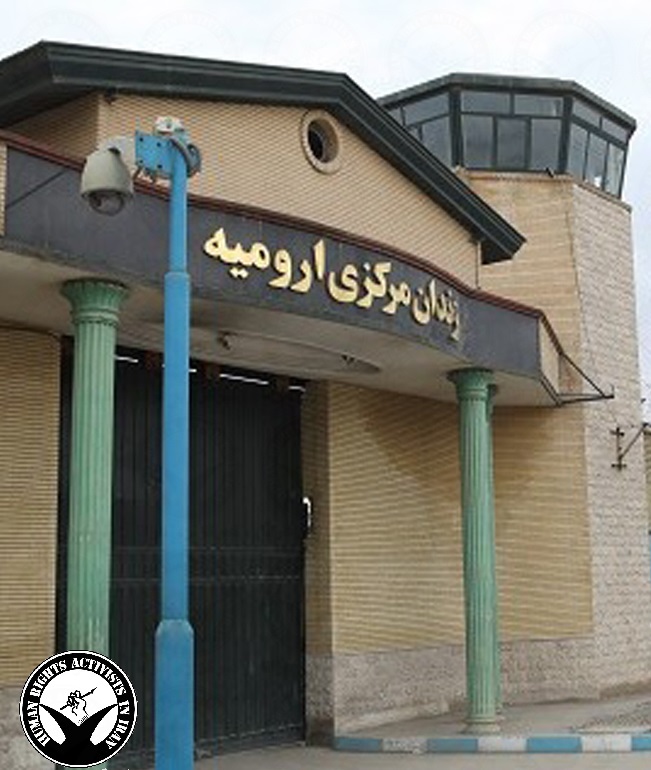
Human Rights Activists News Agency (HRANA)- Urmia Revolutionary Court Branch 3 sentenced Anbi village resident Eghbal Ahmadpour to five years in prison on a charge of “acting against national security through membership in Kurdish opposition parties” on Thursday, October 4, 2018. He was denied access to a trial lawyer.
Security forces arrested Ahmadpour on September 11, 2018. According to an informed source, he was interrogated and held in solitary confinement for 12 days before being sent to Urmia Prison Ward 13, known as the youth ward.
According to registered data from 2,945 reports by the Statistics, Publications, and Achievements Division of HRAI, in the past year (from March 21, 2017, to March 18, 2018), 6883 citizens were arrested in Iran on ideological or political grounds.
Anbi village is in Urmia county.
Rajai Shahr Authorities Botch Arash Sadeghi’s Recovery from Cancer Surgery
Human Rights Activists News Agency (HRANA)- Authorities are botching the post-op course of imprisoned civil rights activist Arash Sadeghi, who underwent surgery for bone cancer on September 12th.
While attempting to recover in Rajai Shahr prison of Karaj, Sadeghi contracted an infection on his surgical site. On September 22nd, authorities were adamant about escorting him to the hospital at noon, despite his specialist’s explicit indications that he could only give consultations in the morning.
According to a close source, authorities told Sadeghi that his specialist’s schedule had changed, which upon their arrival at the hospital proved untrue. Sadeghi’s only recourse was a general practitioner, who added 12 antibiotics to his medication regimen.
Sadeghi is currently taking only prescribed antibiotics, and will possibly be transferred to a hospital next week. En route back to Rajai Shahr from his September 22nd consultation, Security Unit Commander Maghsoud Zolfali and Prison Director Gholamreza Ziyai threatened to block his transfer.
HRANA previously reported on Sadeghi’s ongoing medical ordeal.
Barring Any New Charges, Activist Saeed Shirzad to be Released in 2020
Human Rights Activists News Agency (HRANA) – Rajai Shahr political prisoner Saeed Shirzad will remain in prison through 2020, according to HRANA reports.
His most recent convictions stem from a prison protest that broke out last August among a group of wardmates, including Shirzad, who protested their transfer to an enhanced-security ward under the jurisdiction of Iran’s security establishment. For Shirzad and his fellow prisoners Amir Ghaziani, Saeed Pourheidar, and Ebrahim Firoozi, the protests incurred charges of “destruction of prison property,” ruled in January of 2018 in in Tehran province’s Criminal Court No. 2, Branch 116.
Rather than add prison time for the latter charge, Branch 3 of the Evin Prison Prosecutor’s Office set them a bail of 700 million IRR (approximately $7,000 USD).
In April of that same year authorities gave Shirzad more grief for the protests, issuing him an additional six-month prison term in the same court for “disturbing prison order.”
The “disturbing public order” sentence, along with the enactment of a one-year suspended sentence pursuant to a 2012 arrest, will compound Shirzad’s current five-year sentence by an additional year, slating his release for 2020.
According to HRANA reports, Shirzad’s five-year sentence was ruled on charges of “assembling and colluding against national security,” in connection to civic activities including visits to the families of political prisoners. [Though he began serving this sentence four years ago, it was not finalized until 2017].
Since his arrest in the Tabriz refinery where he worked on June 2nd, 2014, Shirzad’s prison time has been fraught with both oppression and physical pain. On July 11th, 2018, HRANA reported on prison authorities’ refusal to comply with medical orders for more specialized treatment of Shirzad’s lumbar disc disease and spastic lower back inflammation. As authorities continued to reject his requests for the recommended medical transfer — even out of Shirzad’s own pocket — his condition has deteriorated, and he now relies on a walker. HRANA also covered Shirzad’s gestures of protest against his condition and treatment in the system, including hunger strike and sewing his mouth shut.
Due to multiple postponements of his court date, he was also subject to a judicial lag of 15 months between his June 2014 arrest and September 2015 trial in Tehran Revolutionary Court Branch 15, presided by Judge Salavati. During that period he was detained without a conviction first in Evin, and then in Rajai Shahr Prison.
On April 15th, 2017 — a year and half after his already-delayed initial trial — his appeals session convened in Branch 54 of Tehran Appeals Court and ultimately ruled to uphold his 5-year prison sentence.
Shirzad’s rap sheet with authorities dates back to August 21, 2012, when he was arrested and given his one-year suspended sentence for assisting earthquake victims in Ahar, East Azerbaijan province, where he was reportedly involved in the operations of Sarand-based rescue camps. Though he was released on bail 19 days later, his more recent offenses — viewed as a kind of parole violation in the judicial system — kicked the suspended sentence into effect.
Rajai Shahr Prison, where Shirzad is currently held, is located in the northwestern Tehran suburb of Karaj.
Court Compounds Prison Sentence of Afrin Battle Detainees
Human Rights Activists News Agency (HRANA)- The 11-year prison sentences of Afrin Battle detainees Rahim Mahmoudi Azar and Mostafa Ghader Zeinab were compounded Sunday, September 30th by an additional one-year prison term each, ruled in Branch 103 of the General Court of Urmia, on a charge of “crossing the border illegally.”
Both men were fighting among the ranks of a Kurdish military group in Afrin, Syrian Kurdistan earlier this year when they were wounded and extradited to Iran. A close source told HRANA that starting March 8, 2018, they were interrogated for five weeks straight, first for a week at Evin Detention Center and then for a month in Urmia’s Intelligence Office.
In July, Branch 3 of Urmia Revolutionary Court in northwestern Iran sentenced each of them to 11 years in prison for their opposition-group connections, which in court translated to charges of “membership in anti-regime groups,” “collusion and conspiracy,” and “propaganda against the regime.” The sentence was later upheld in appeals court.
A source close to both men previously told HRANA that Zeinab and Azar sustained their injuries during a Turkish offensive on Afrin. It was at the hospital in Aleppo, he said, that their legal troubles began to unfold: “Upon realizing their nationalities, Syrian authorities handed them over to Iran’s Islamic Revolutionary Guard Corps (IRGC).”
Both men have been denied the right to appoint lawyers of their choice and attended their court session with a public defender.
Azar is currently detained in Urmia. Zeinab is free on bail.